
Evidence for Common Ancestry What evidence can scientists

- Slides: 15
Evidence for Common Ancestry
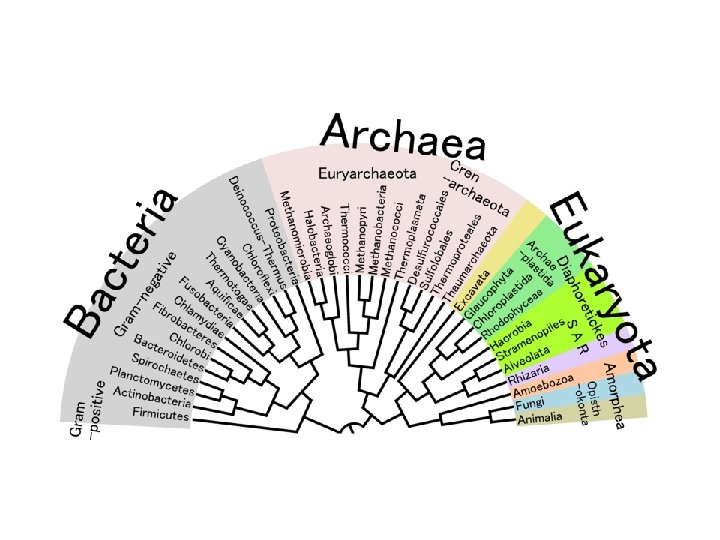
What evidence can scientists use to predict which species share a common ancestor? We talked about 2 types of evidence Friday: 1) Biogeography clues 2) Similar nucleotide sequences Today, we will learn about 4 other types: 3) Fossils 4) Homologous structures 5) Vestigial structures 6) Developmental Biology
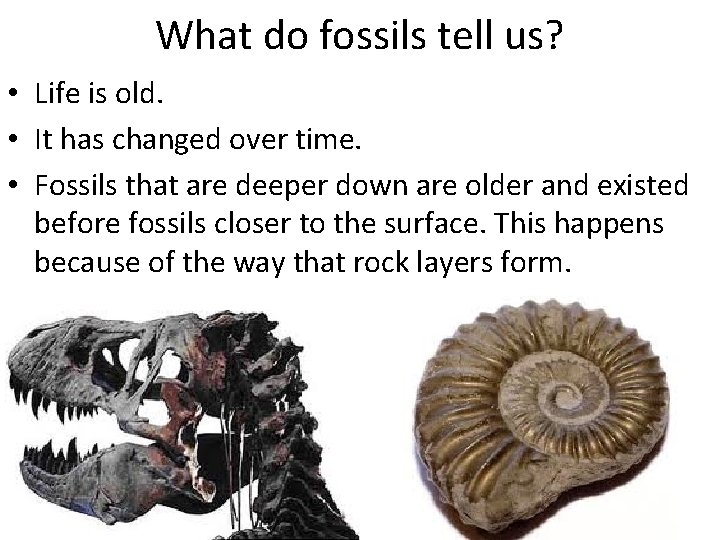
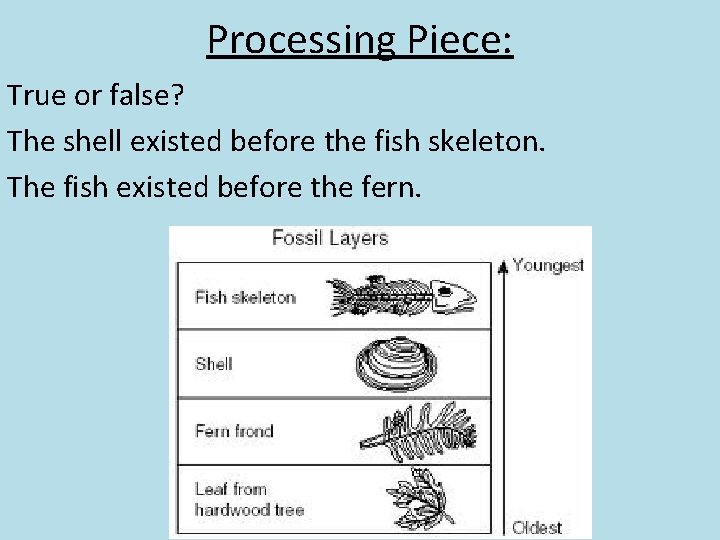
What do fossils tell us? • Life is old. • It has changed over time. • Fossils that are deeper down are older and existed before fossils closer to the surface. This happens because of the way that rock layers form.
Processing Piece: True or false? The shell existed before the fish skeleton. The fish existed before the fern.
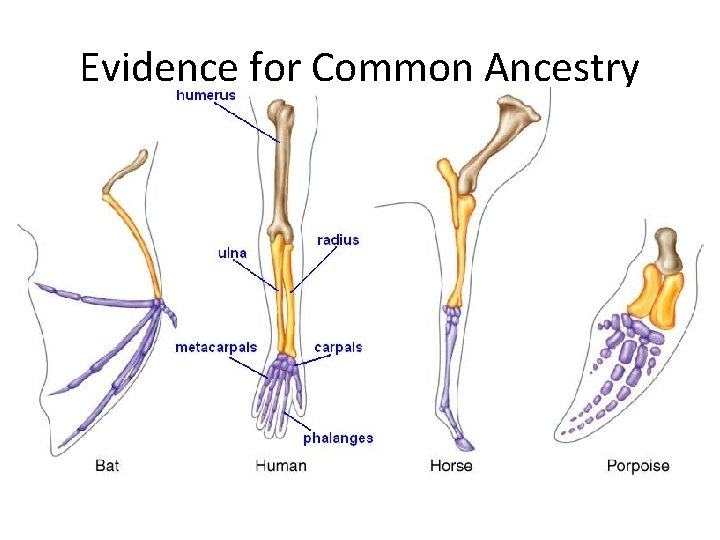
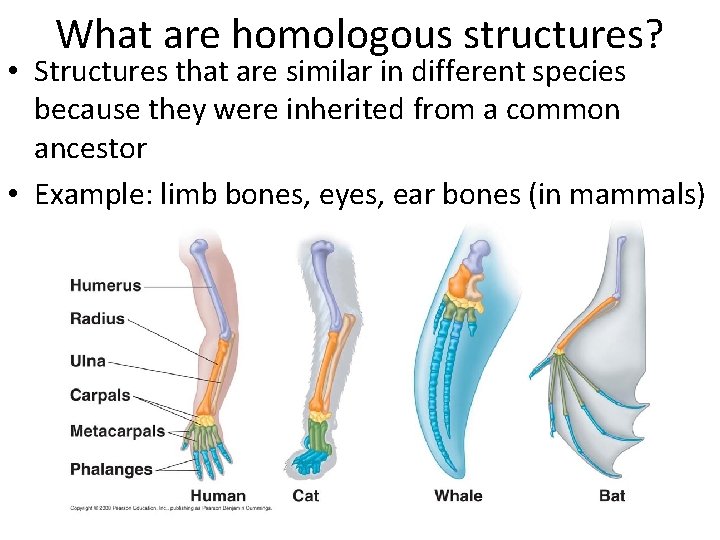
What are homologous structures? • Structures that are similar in different species because they were inherited from a common ancestor • Example: limb bones, eyes, ear bones (in mammals)
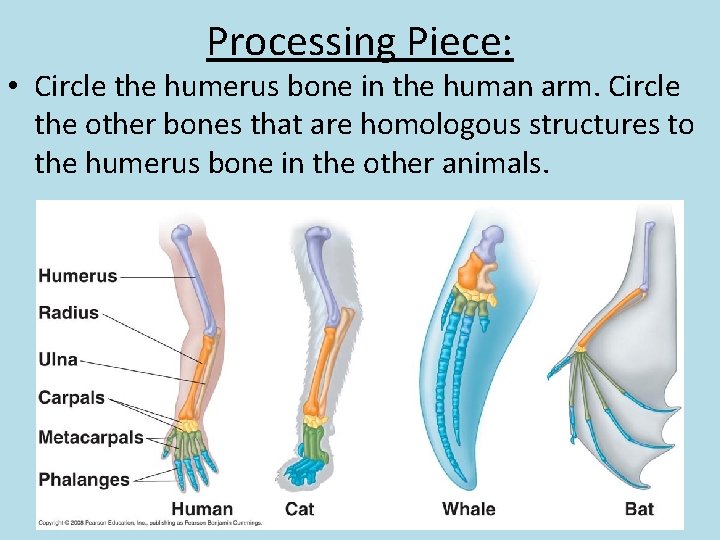
Processing Piece: • Circle the humerus bone in the human arm. Circle the other bones that are homologous structures to the humerus bone in the other animals.
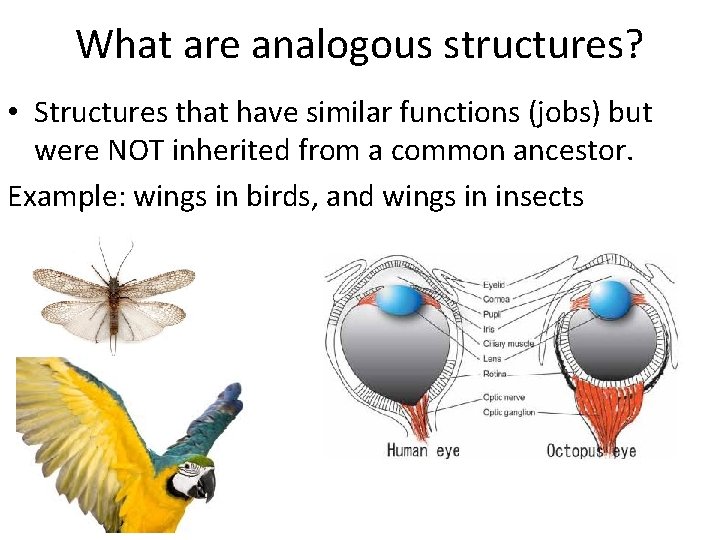
What are analogous structures? • Structures that have similar functions (jobs) but were NOT inherited from a common ancestor. Example: wings in birds, and wings in insects
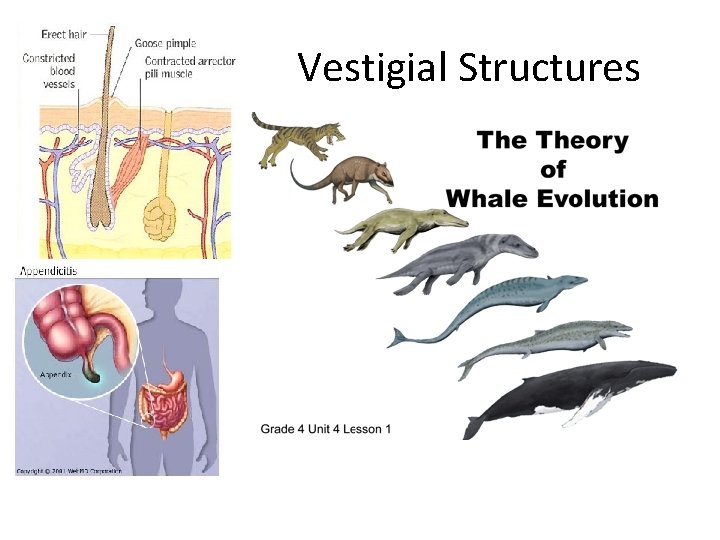
What are vestigial structures? • Structures that were important in an ancestor, but are useless in the modern species Example: appendix, eyes in blind cave fish, erector pili (muscles that give you goosebumps), hind leg bones in whales
Vestigial Structures
What are Goosebumps?
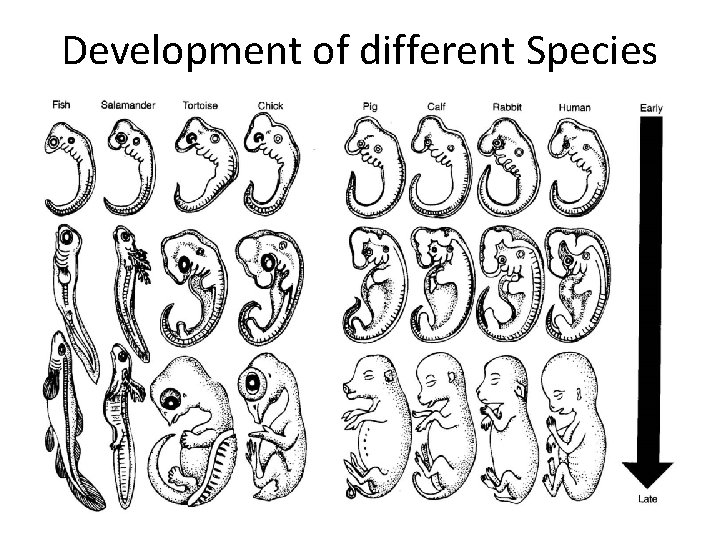
What does developmental biology tell us? • Developmental biology = how an organism develops from a zygote to an adult • Distantly related organisms go through similar developmental stages. This implies that they shared a common ancestor. • Example: The embryos of animals that live on land go through a stage where they look like very much like fish embryos, with gill folds and a fish-like tail.
Development of different Species
Exit Ticket: 1) Which type of fossil is probably older: one that is closer to the surface, or one that is deeper down? 2) Define each of the following as homologous structure, analogous structure, or vestigial structure: a) Eyes on a blind cave fish b) Similar bones in the arms and legs of different species c) Wings on birds and wings on insects