
Evidence Based Practice Measuring the Value Electronic Documentation
Evidence Based Practice – Measuring the Value: Electronic Documentation & Bedside Medication Verification System Katie Mc. Vicar, BSc. N L 4 Mo. Mac & Elizabeth Young, BSc. N L 4 Mo. Mac Liz Bonney Director, Medical and Rehabilitation Services BCHS Wendy Benson, RN MEd, Manager EPR Education LHSC/SJHC Barb Longo, RN, IT Consultant PCS/BMV BCHS

The Brant Community Healthcare System
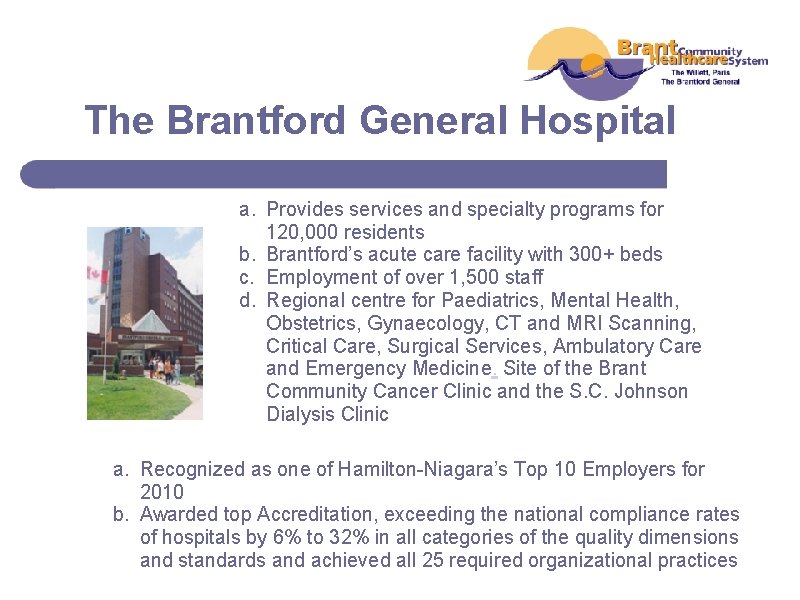
The Brantford General Hospital a. Provides services and specialty programs for 120, 000 residents b. Brantford’s acute care facility with 300+ beds c. Employment of over 1, 500 staff d. Regional centre for Paediatrics, Mental Health, Obstetrics, Gynaecology, CT and MRI Scanning, Critical Care, Surgical Services, Ambulatory Care and Emergency Medicine. Site of the Brant Community Cancer Clinic and the S. C. Johnson Dialysis Clinic a. Recognized as one of Hamilton-Niagara’s Top 10 Employers for 2010 b. Awarded top Accreditation, exceeding the national compliance rates of hospitals by 6% to 32% in all categories of the quality dimensions and standards and achieved all 25 required organizational practices
Purpose a. The purpose of the study was to evaluate the implementation of e-doc and bedside medication verification (BMV) systems using self-reported quantitative and qualitative data in an effort to maximize the benefits and facilitate implementation of future clinical informatics
PCS/BMV Implementation Will Accomplish 1. Improved patient care following best practice guidelines 2. Measurable, improved patient outcomes 3. Support care givers 4. Seamless to the end user 5. No duplicated effort (e. g. double entry of data into one or more applications)
Students Role a. Conduct literature review b. Develop standardized survey questions c. Obtain permission for the use of Clinical Information System Implementation Evaluation Scale (CISIES) d. Planning and facilitation of focus groups e. Data analysis
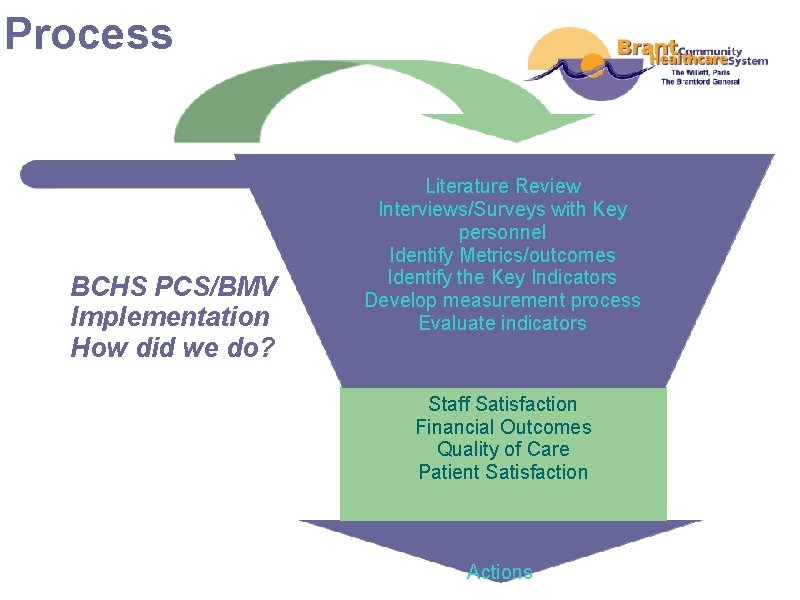
Process BCHS PCS/BMV Implementation How did we do? Literature Review Interviews/Surveys with Key personnel Identify Metrics/outcomes Identify the Key Indicators Develop measurement process Evaluate indicators Staff Satisfaction Financial Outcomes Quality of Care Patient Satisfaction Actions
Why Evaluate? a. to see if the project is working b. to see if it achieved what was planned c. to learn from our experience d. to know what changes to make e. to identify strengths and weaknesses f. to justify the resources used g. to share experiences
Measurement Instruments a. Clinical Information System Implementation Evaluation Scale (CISIES) Dr. Brian Gugerty (administered through LMS) b. Bedside Medication Verification Evaluation Survey (administered through LMS) c. Administered in confidential manner – 3 -12 months post Go-Live d. Focus Groups (formal and informal)
Patient Care System What is it? a. An electronic documentation system that provides improved accuracy and quality of documentation, efficiency in communications, and better accessibility to and retrieval of a patient’s data • Point of Care technology Benefits • • Patient data logical and concise format Reduces chart fragmentation Multiple Users – documenting - viewing etc More complete documentation - charting screens provide cues and prompts following a standardized format that includes elements of assessment, patient care, communication, teaching and care planning
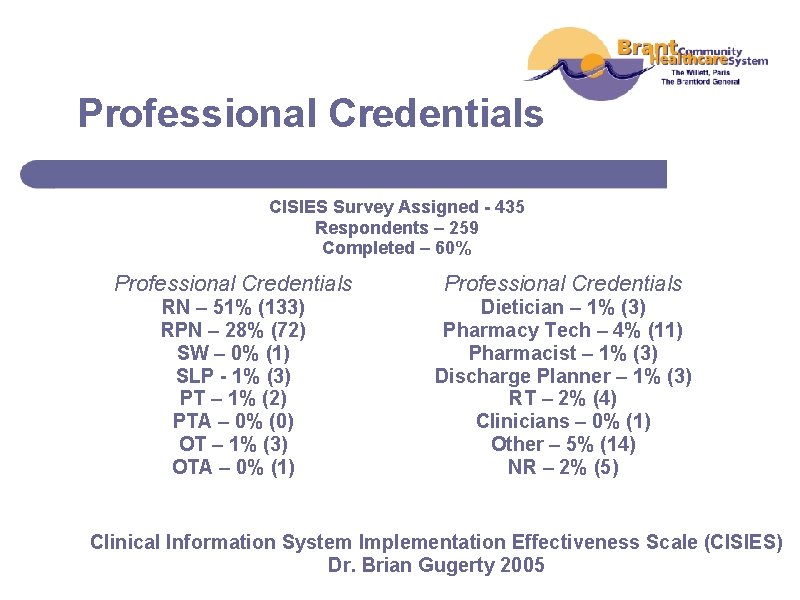
Professional Credentials CISIES Survey Assigned - 435 Respondents – 259 Completed – 60% Professional Credentials RN – 51% (133) RPN – 28% (72) SW – 0% (1) SLP - 1% (3) PT – 1% (2) PTA – 0% (0) OT – 1% (3) OTA – 0% (1) Dietician – 1% (3) Pharmacy Tech – 4% (11) Pharmacist – 1% (3) Discharge Planner – 1% (3) RT – 2% (4) Clinicians – 0% (1) Other – 5% (14) NR – 2% (5) Clinical Information System Implementation Effectiveness Scale (CISIES) Dr. Brian Gugerty 2005
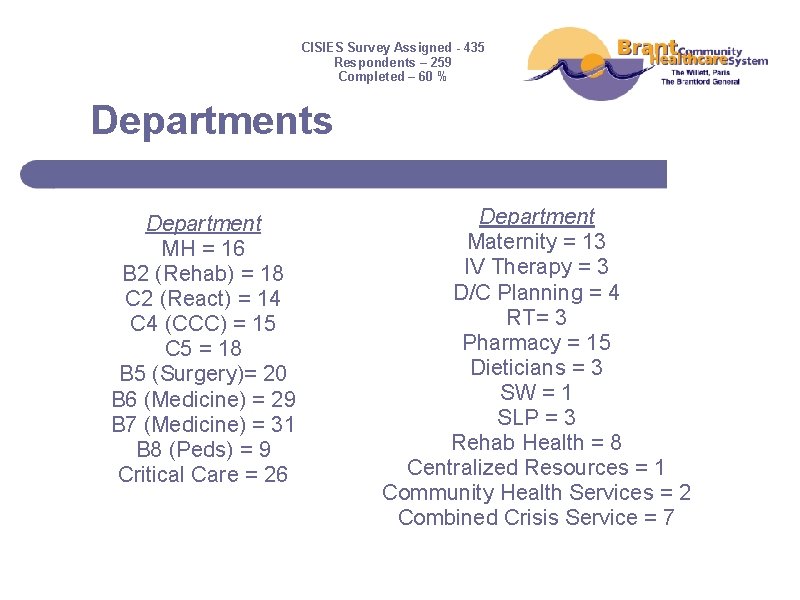
CISIES Survey Assigned - 435 Respondents – 259 Completed – 60 % Departments Department MH = 16 B 2 (Rehab) = 18 C 2 (React) = 14 C 4 (CCC) = 15 C 5 = 18 B 5 (Surgery)= 20 B 6 (Medicine) = 29 B 7 (Medicine) = 31 B 8 (Peds) = 9 Critical Care = 26 Department Maternity = 13 IV Therapy = 3 D/C Planning = 4 RT= 3 Pharmacy = 15 Dieticians = 3 SW = 1 SLP = 3 Rehab Health = 8 Centralized Resources = 1 Community Health Services = 2 Combined Crisis Service = 7
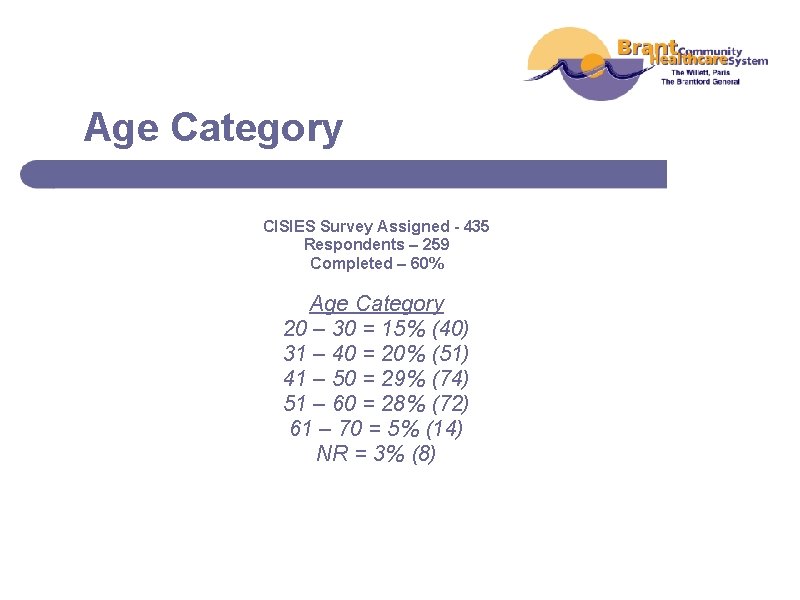
Age Category CISIES Survey Assigned - 435 Respondents – 259 Completed – 60% Age Category 20 – 30 = 15% (40) 31 – 40 = 20% (51) 41 – 50 = 29% (74) 51 – 60 = 28% (72) 61 – 70 = 5% (14) NR = 3% (8)
Sample CISIES Statements 1. The PCS system has improved my practice. 2. The PCS system has added to my workload. 3. The PCS system facilitates communication of patient information among members of our health care team. 4. Overall, the introduction of the PCS system has been effective.
Results: Top CISIES Items that Received the Highest Scores 1. A strong commitment to the use of the system; 2. Satisfaction with system’s impact on team communication; 3. Satisfaction with their department’s role in the introduction of the system; 4. Satisfaction with the training they received about the system; 5. Satisfaction with patient information being more confidential and secure; and 6. Believed that they did get sufficient help to fix problems with the system.
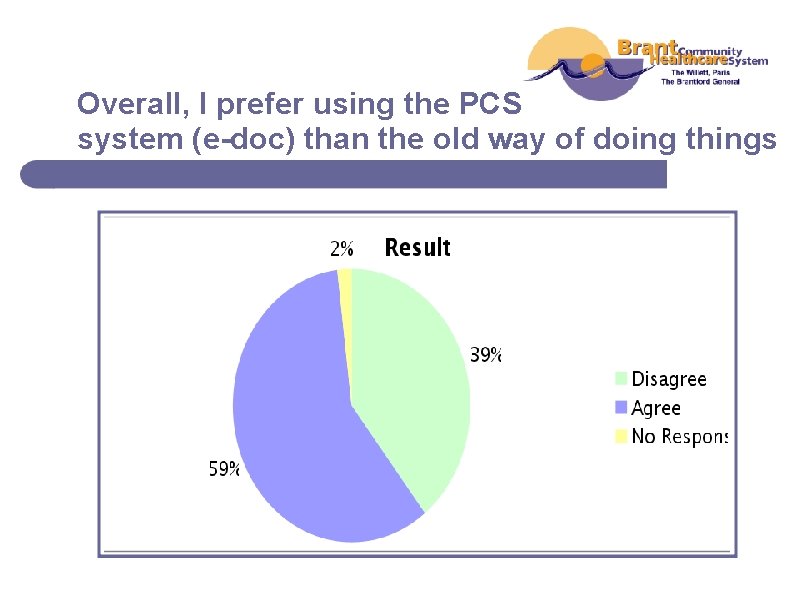
Overall, I prefer using the PCS system (e-doc) than the old way of doing things
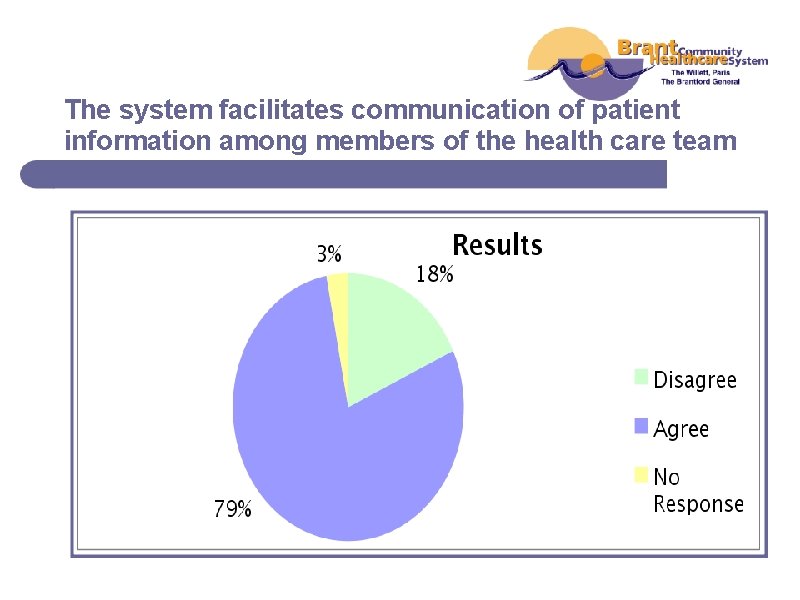
The system facilitates communication of patient information among members of the health care team
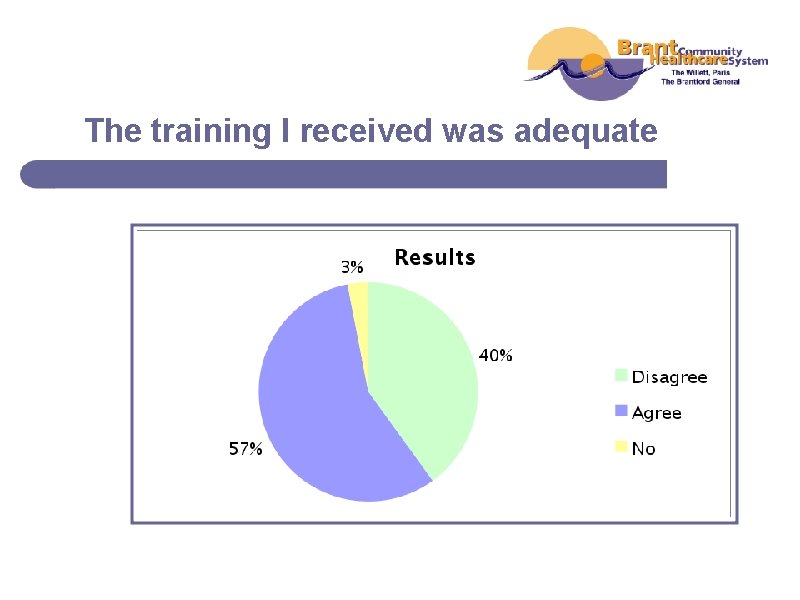
The training I received was adequate
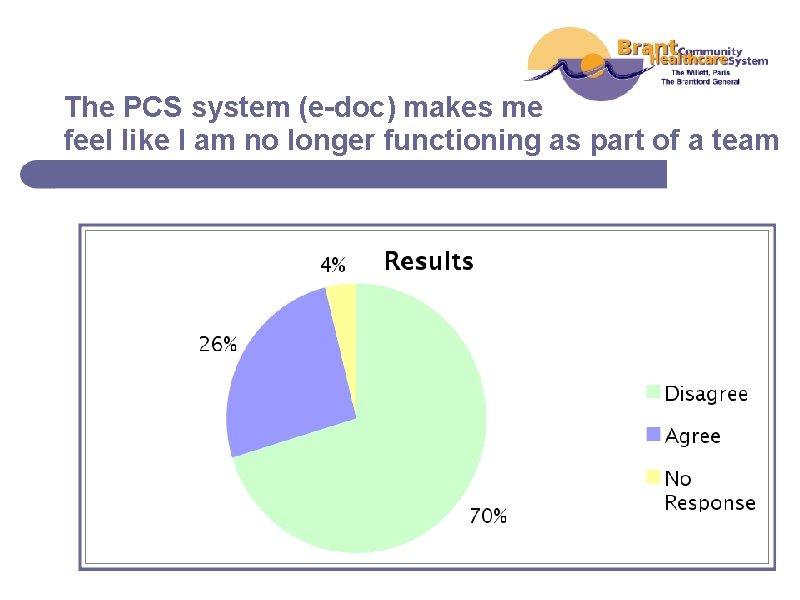
The PCS system (e-doc) makes me feel like I am no longer functioning as part of a team

I feel confident in my ability to assist others in using the system
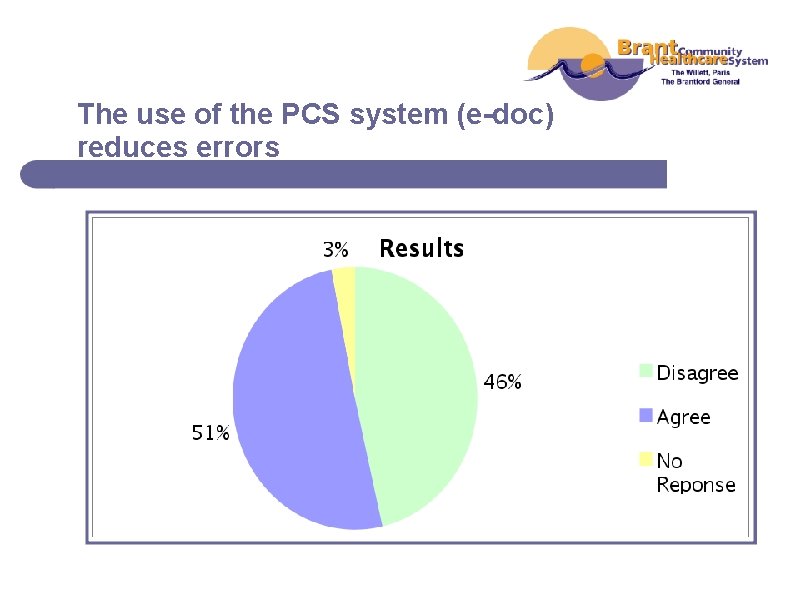
The use of the PCS system (e-doc) reduces errors
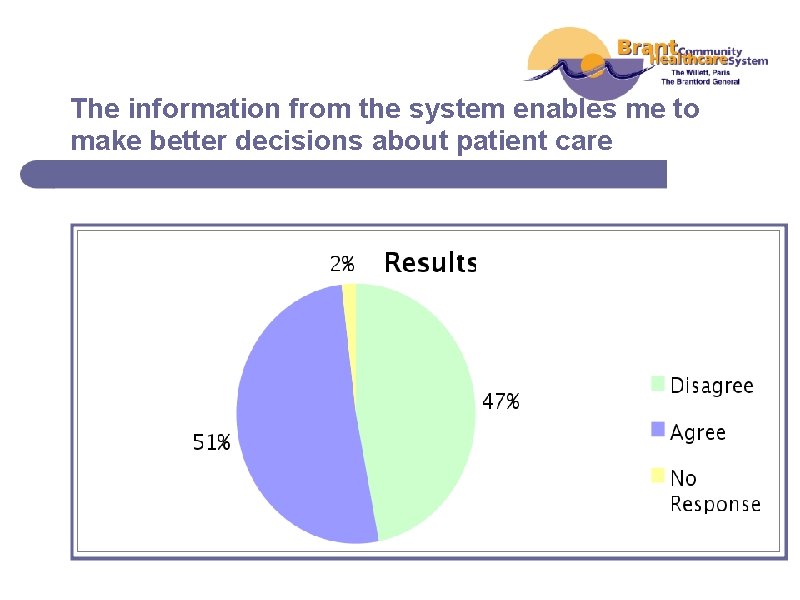
The information from the system enables me to make better decisions about patient care
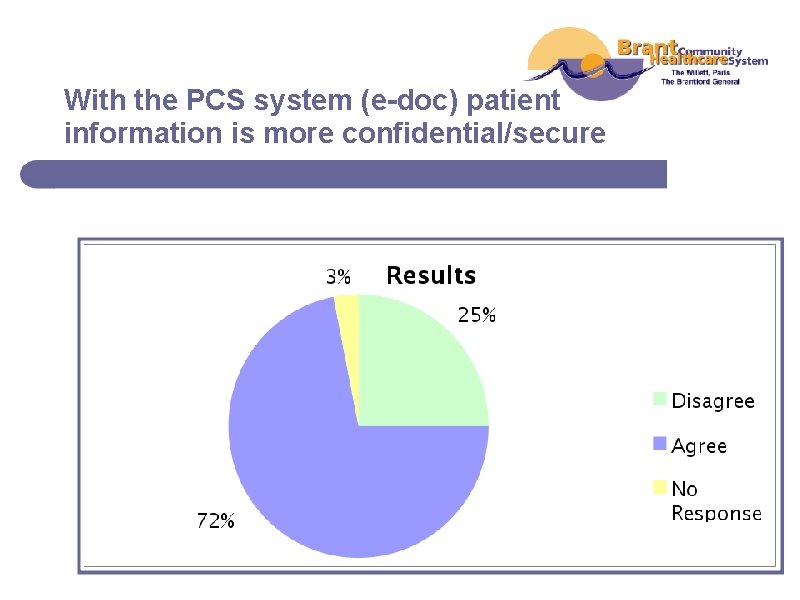
With the PCS system (e-doc) patient information is more confidential/secure
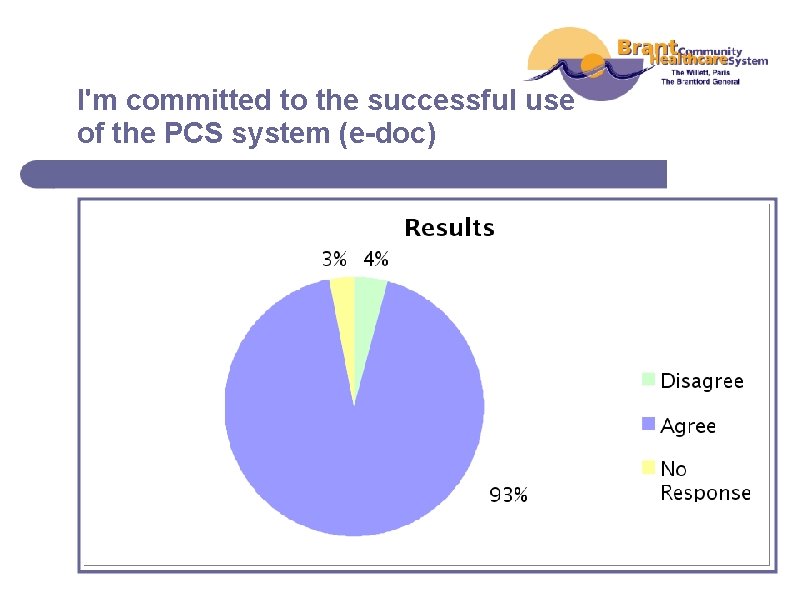
I'm committed to the successful use of the PCS system (e-doc)
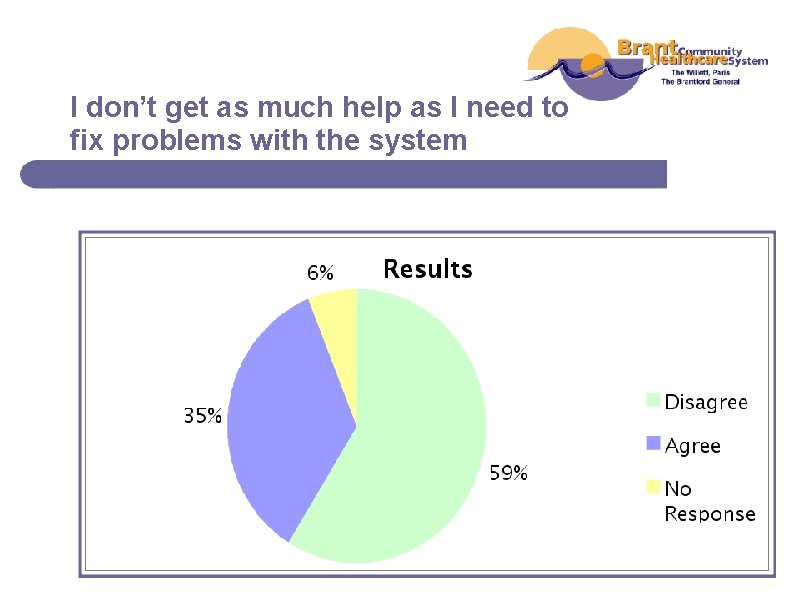
I don’t get as much help as I need to fix problems with the system
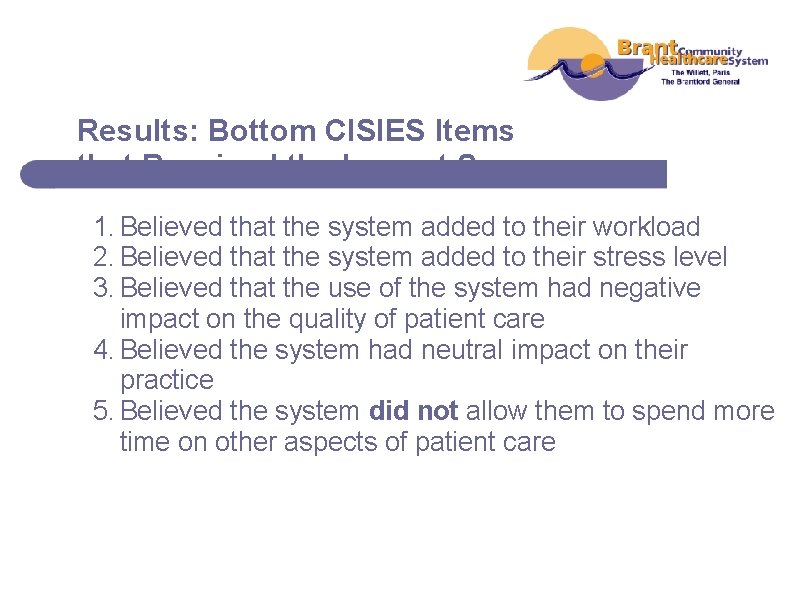
Results: Bottom CISIES Items that Received the Lowest Scores 1. Believed that the system added to their workload 2. Believed that the system added to their stress level 3. Believed that the use of the system had negative impact on the quality of patient care 4. Believed the system had neutral impact on their practice 5. Believed the system did not allow them to spend more time on other aspects of patient care
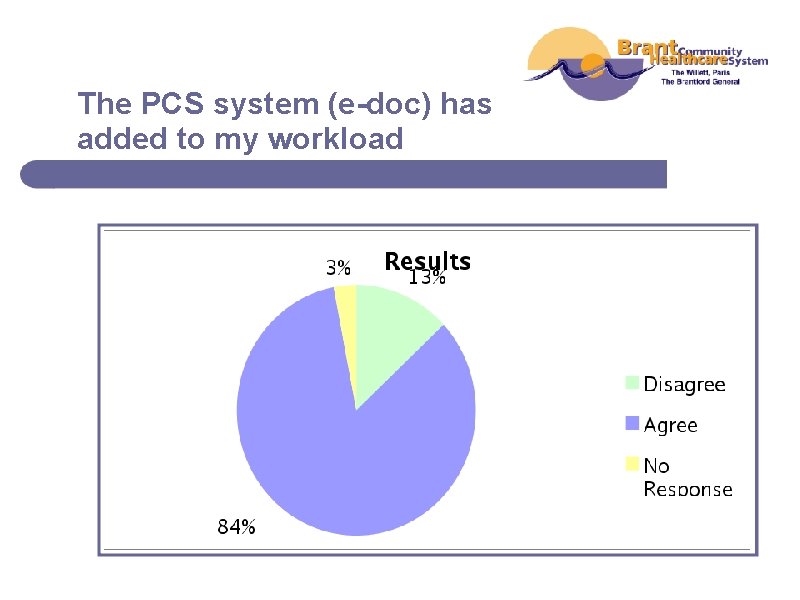
The PCS system (e-doc) has added to my workload
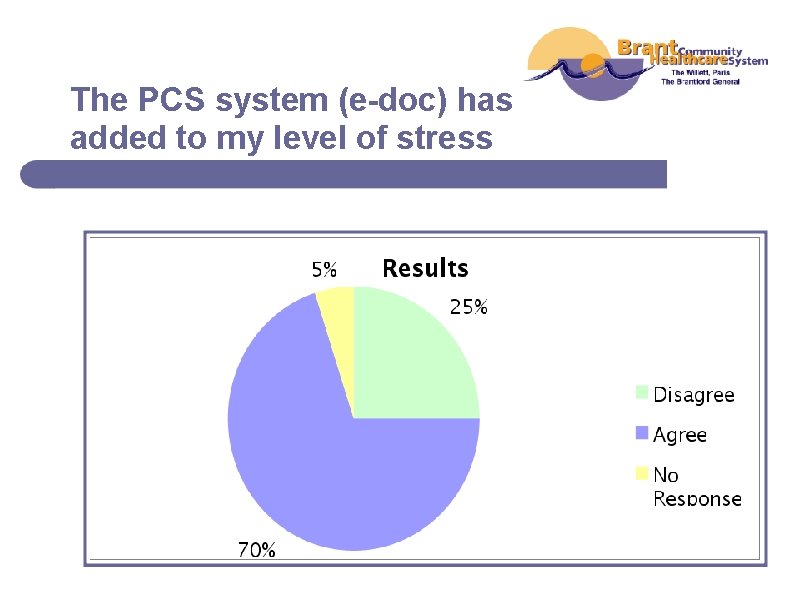
The PCS system (e-doc) has added to my level of stress
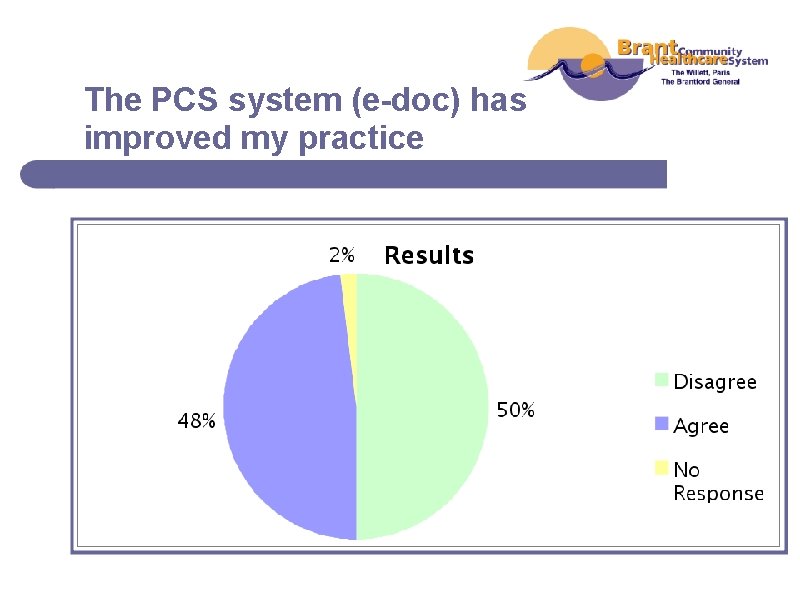
The PCS system (e-doc) has improved my practice
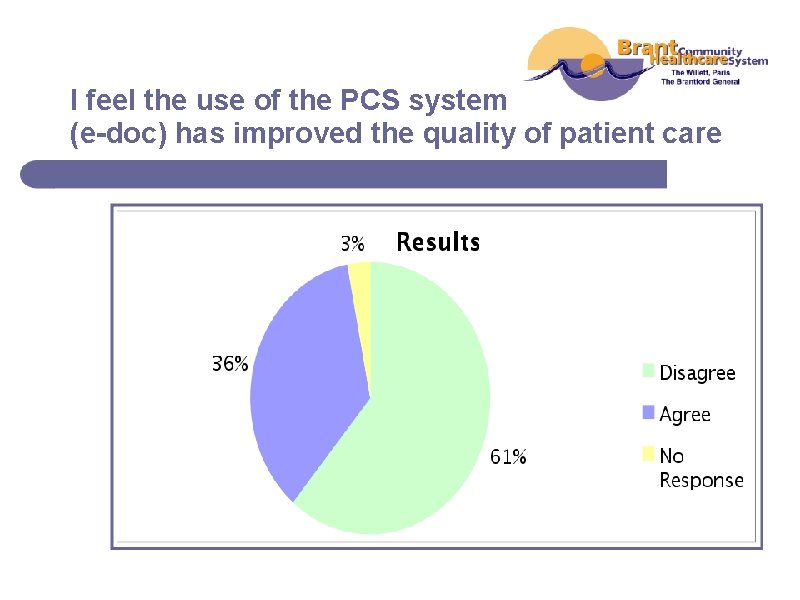
I feel the use of the PCS system (e-doc) has improved the quality of patient care
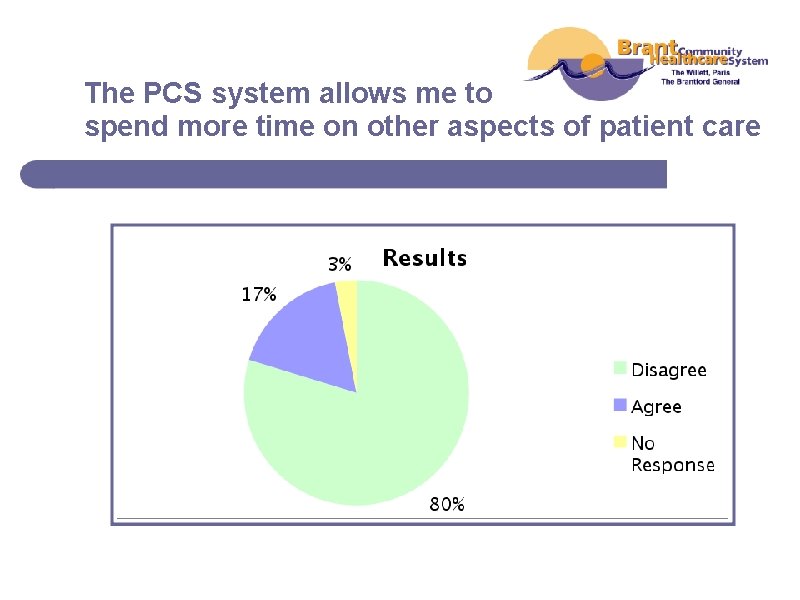
The PCS system allows me to spend more time on other aspects of patient care
PCS Focus Group Questions 1. What do you like best about the PCS application – electronic documentation? 2. What do you like least about the PCS application – electronic documentation? 3. Are policies and procedures clear as to what is expected regarding electronic documentation? 4. Do you feel the quality of documentation has improved since electronic documentation? And if so how? 5. Would you choose to go back to manual documentation? And if so why? 6. Do you document at Point of Care? If not, why not?
What do you like the best? a. “Flexibility, you access chart anywhere you want. It is all together” b. “All information available and don’t have to go through whole bunch of paper” c. “Less writing, Doctors love it” d. “It is nice when you go to the spreadsheet part and you can see the trends – less writing” e. “You have your own station, more thorough”
What do you like the least? a. “It takes a long time to input the information” b. “COWS are heavy and awkward to roll, height is not good for everyone” – “The physical aspect - bifocals and the glare on the screen” c. “Information does not come over from floor to floor” d. “It is difficult to navigate” e. “Triple documenting, having to document in more than one place” f. “No spell check” g. “How slow it is” h. “Time outs”
Has quality of documentation improved? And if so how? a. “Yes, you have more assessment tools at your fingertips vs. going through file system to find” b. “I do, I am doing the audits. I think we are able to chart more and capture more of what we are doing” c. “I find compared to what we had with the paper charting, everything is there and it is more accurate charting” d. “I say some areas it has and some areas it hasn’t. Once again, it depends on the person charting. Time will tell” e. “Yes. As long as you know where to find it. It has decreased blocked charting”
Would you go back to manual documentation? And if so why? a. “No, I think if some of the bugs are worked out, it has good potential to be a good system” b. “No too much paper” c. “No! It is a whole lot easier on the computer” d. “No. I would not go back. I think it is a lot faster to chart” e. “At this point after six months, probably not. There is less writing. Information is all in one place” f. “Right now, yes! I have written down everything I have to chart from 10 am”
Bedside Medication Verification (BMV) What is it? a. Allows caregivers to utilize bar code scanning technology prior to administering medications, to confirm patient identity and medication information Benefits? • • Ensures 5 rights Allergy Alert, Drug Interactions and Duplication Data Integration e. g. Test Results, Pain scores Multiple access points
BMV Survey: Credentials/Age Surveys Assigned - 127 Respondents – 74 Completed – 62% Professional Credentials RN – 39% (30) RPN – 57% (44) PTA – 1% (1) Other – 3% (2) Age Category 20 – 30 = 17% (13) 31 – 40 = 21% (16) 41 – 50 = 18% (14) 51 – 60 = 32% (25) 61 – 70 = 8% (3) NR = 4% (3)
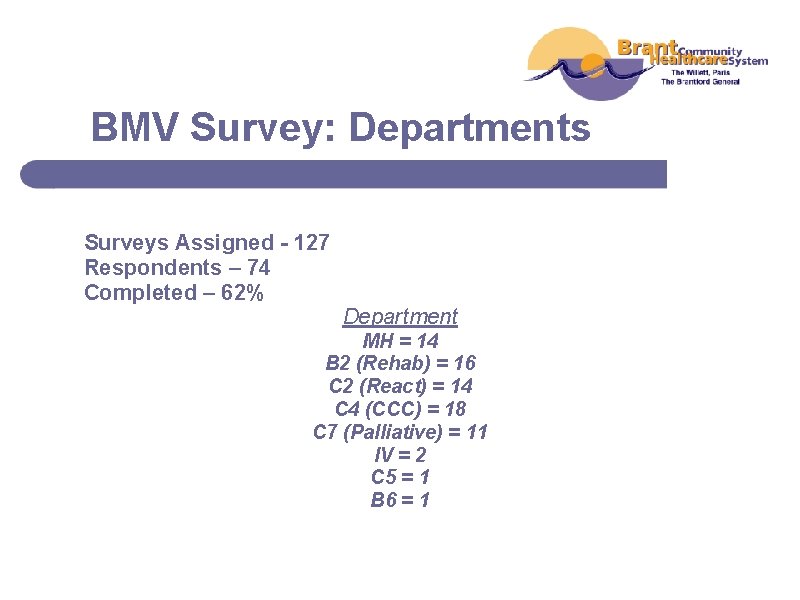
BMV Survey: Departments Surveys Assigned - 127 Respondents – 74 Completed – 62% Department MH = 14 B 2 (Rehab) = 16 C 2 (React) = 14 C 4 (CCC) = 18 C 7 (Palliative) = 11 IV = 2 C 5 = 1 B 6 = 1
Sample BMV Survey Statements 1. You felt very prepared for the implementation of the bedside medication verification system (BMV)? 2. You felt that there was enough education/tech support during your learning and adjustment period? 3. You feel that the BMV system facilitates patient care? 4. You feel that the potential for medication errors has decreased? 5. You feel YOUR potential for medication errors has decreased?
Results: Top BMV Items that Received the Highest Scores 1. A strong belief that the potential for medication error has decreased both for organization and self; 2. Satisfaction with BMV system is making a difference in patient care; 3. Satisfaction with Management listening too and addressing concerns; 4. Satisfaction with their department’s preparedness for the implementation; 5. Satisfaction with the training, support they received about the system; and 6. Feel the potential for transcription errors has decreased (more neutral).
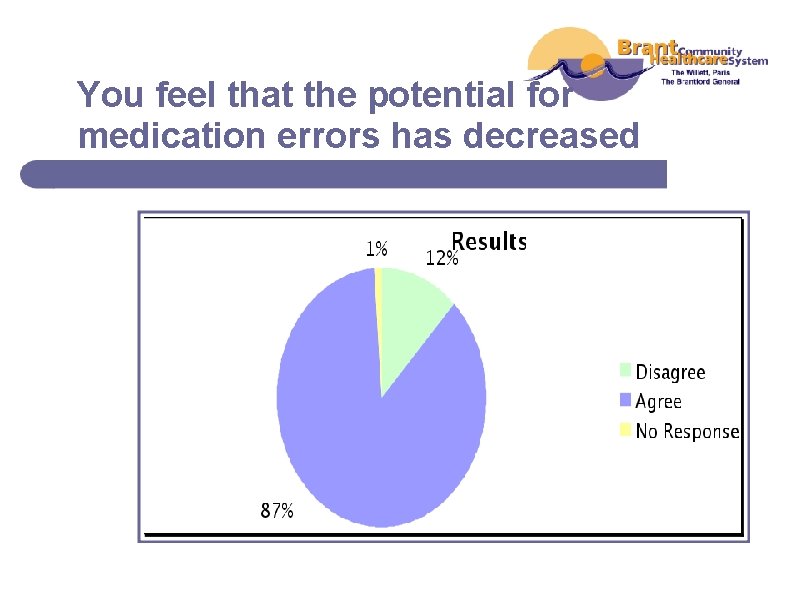
You feel that the potential for medication errors has decreased
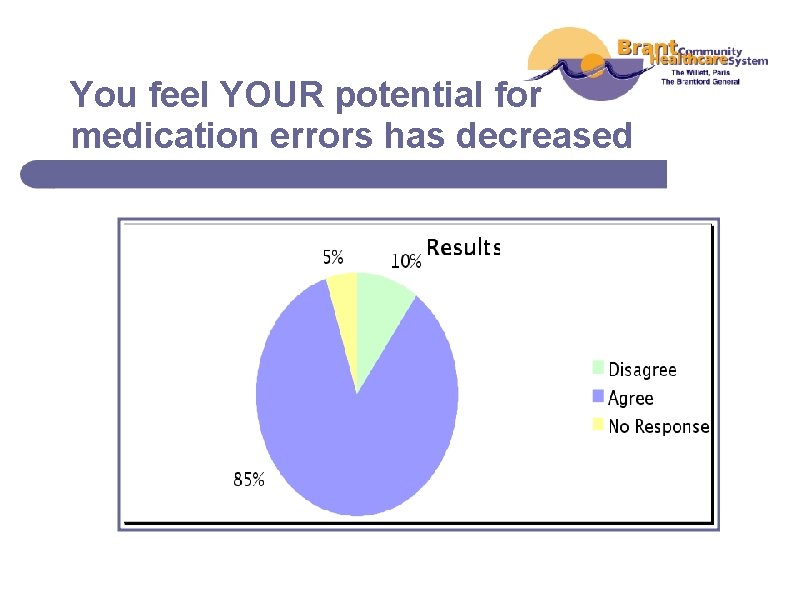
You feel YOUR potential for medication errors has decreased
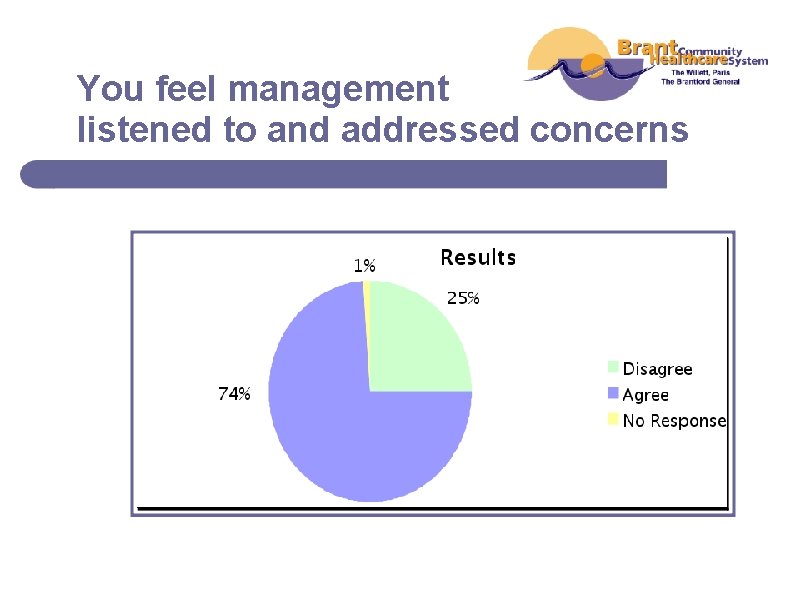
You feel management listened to and addressed concerns
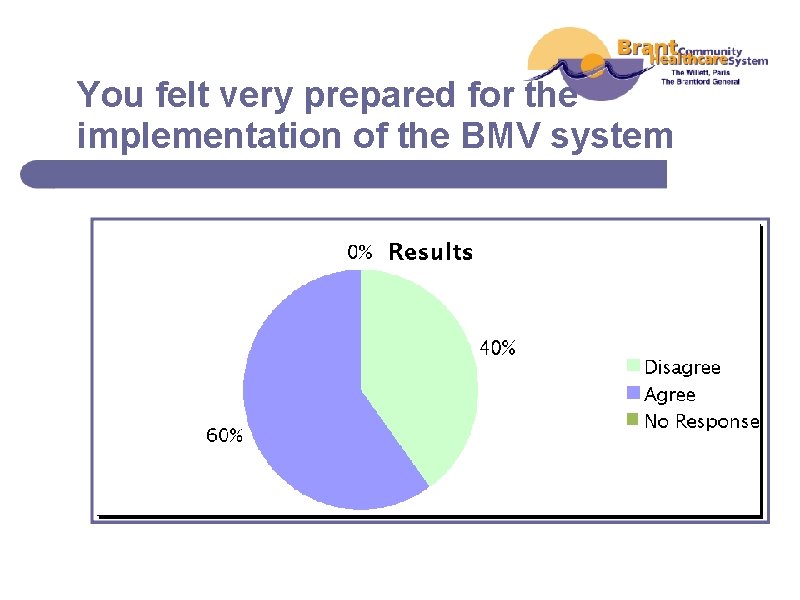
You felt very prepared for the implementation of the BMV system
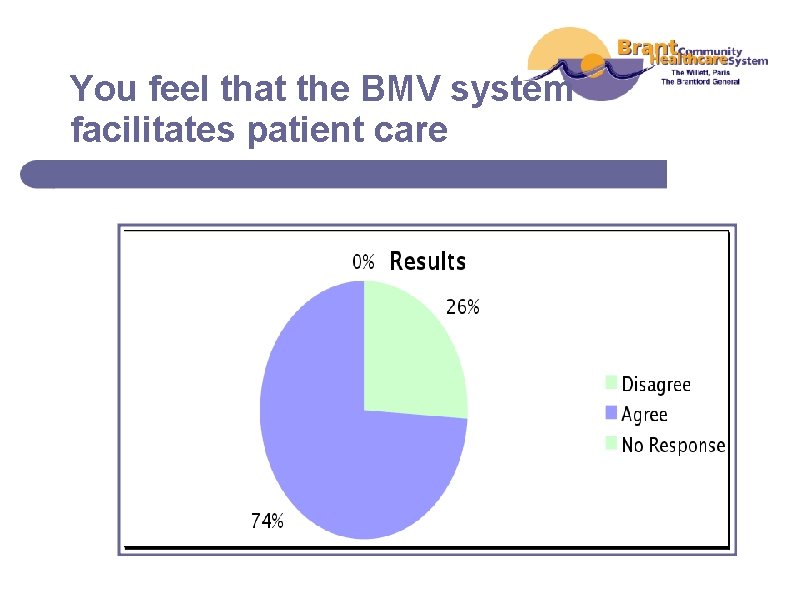
You feel that the BMV system facilitates patient care
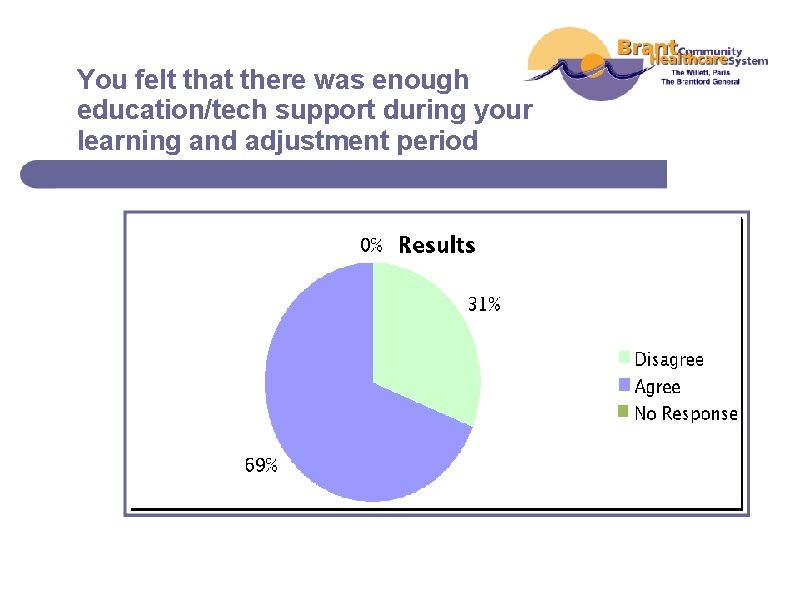
You felt that there was enough education/tech support during your learning and adjustment period
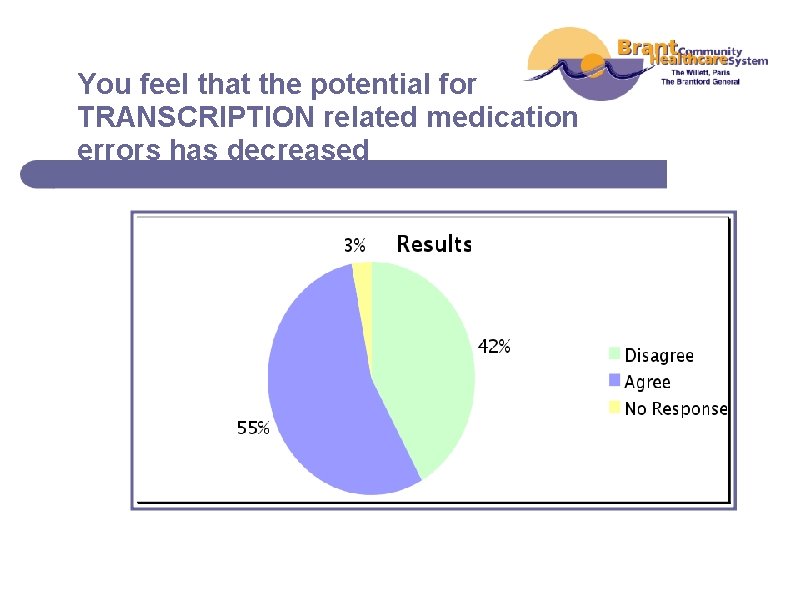
You feel that the potential for TRANSCRIPTION related medication errors has decreased
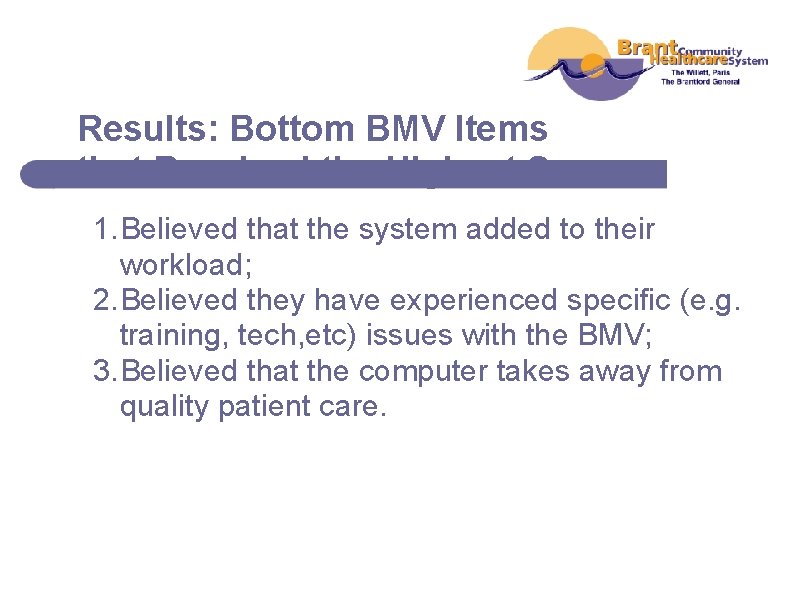
Results: Bottom BMV Items that Received the Highest Scores 1. Believed that the system added to their workload; 2. Believed they have experienced specific (e. g. training, tech, etc) issues with the BMV; 3. Believed that the computer takes away from quality patient care.
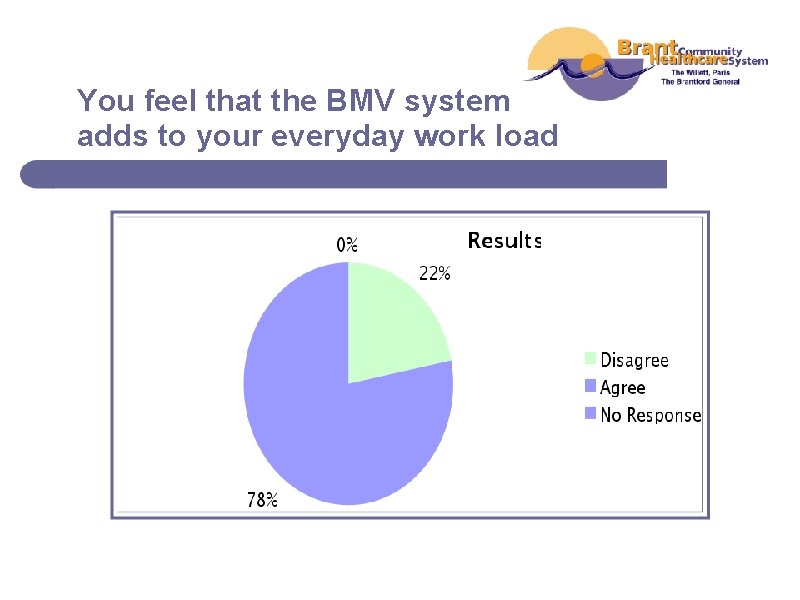
You feel that the BMV system adds to your everyday work load
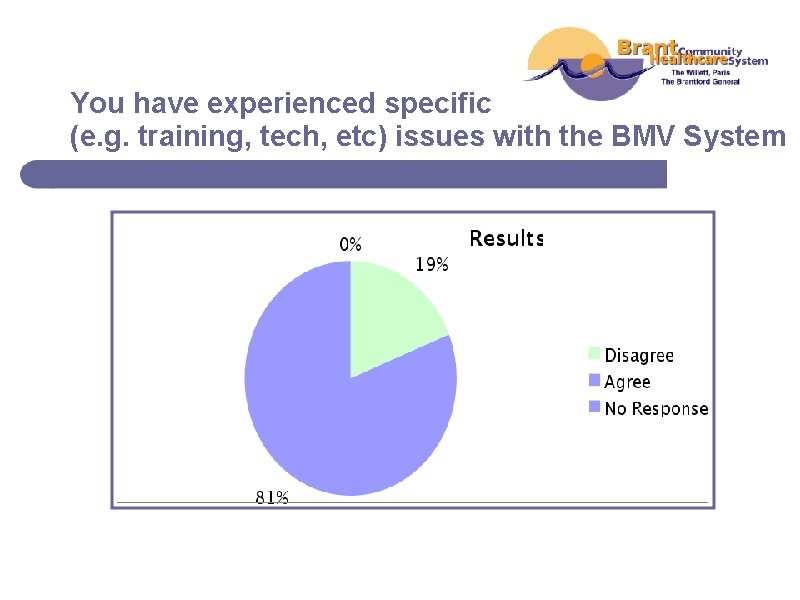
You have experienced specific (e. g. training, tech, etc) issues with the BMV System
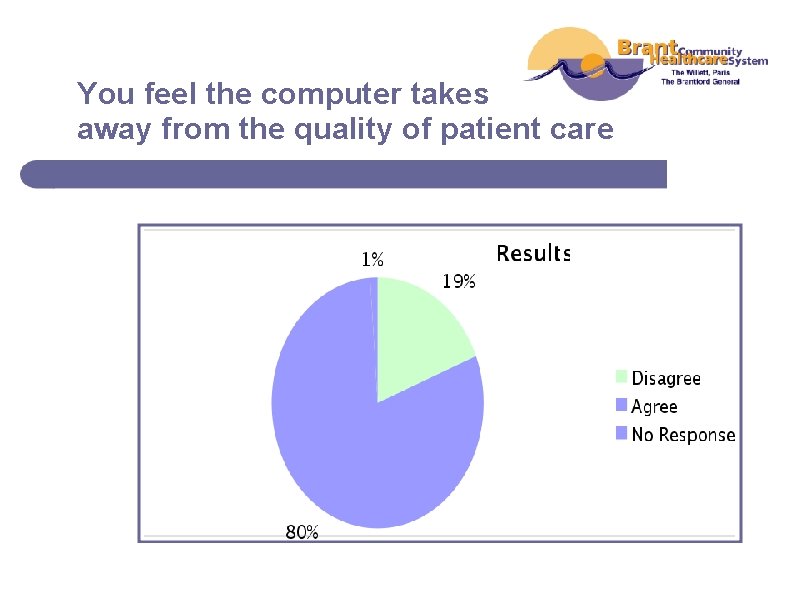
You feel the computer takes away from the quality of patient care
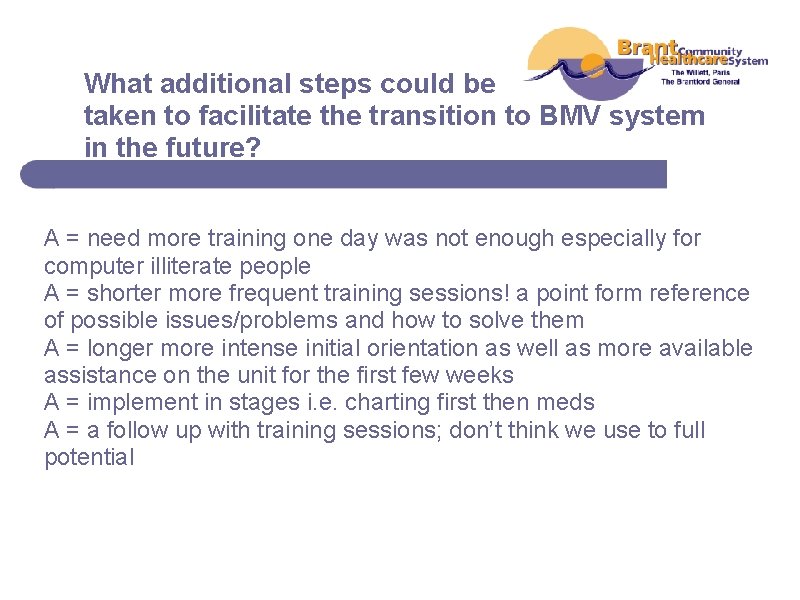
What additional steps could be taken to facilitate the transition to BMV system in the future? A = need more training one day was not enough especially for computer illiterate people A = shorter more frequent training sessions! a point form reference of possible issues/problems and how to solve them A = longer more intense initial orientation as well as more available assistance on the unit for the first few weeks A = implement in stages i. e. charting first then meds A = a follow up with training sessions; don’t think we use to full potential
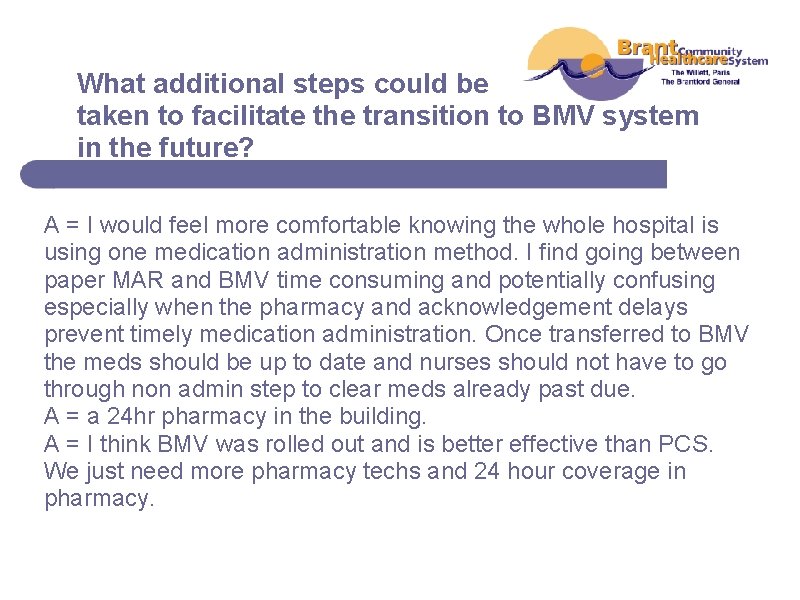
What additional steps could be taken to facilitate the transition to BMV system in the future? A = I would feel more comfortable knowing the whole hospital is using one medication administration method. I find going between paper MAR and BMV time consuming and potentially confusing especially when the pharmacy and acknowledgement delays prevent timely medication administration. Once transferred to BMV the meds should be up to date and nurses should not have to go through non admin step to clear meds already past due. A = a 24 hr pharmacy in the building. A = I think BMV was rolled out and is better effective than PCS. We just need more pharmacy techs and 24 hour coverage in pharmacy.
Please list any additional concerns, comments or suggestions relating to BMV system A = can still be possible issues/errors if pharmacy unable to input information properly/safely due to their increased workload!!! A = it was nice to have an extra person doing care and answering bells while learning the new systems due to being so slow at the beginning. Doing BMV and PCS chart was not too bad to learn , now we need review and improve. A = all in all it has been quite the transition using the BMV. I know I personally have caught more transcription errors in the last 8 months then I have in my 9 years of nursing. I find that the med profile can be slow and sluggish and tends to freeze in the middle of scanning a medication which just adds more stress to your already busy day.
BMV Focus Group Questions 1. What do you like best about BMV system? 2. What do you like least about BMV system? 3. Do you have suggestions about ways to make the PCS/BMV implementation process easier?
What do you like best about BMV system? a. “The decreased room for error. Having the protocols, associated data & medication information right there at point of dispensing”. b. “Made it much easier for us, don’t have to decipher physician’s writing anymore”. c. “You do not have to transcribe the orders because the pharmacist does it”. d. “We like that it decreases the room for error as long as there are no transcription errors. More accurate”.
What do you like least about BMV system? a. “Nothing really. Errors are picked up pretty quick…” b. “Sometimes the bar code won’t scan, even though it is the same pill that has been given before” c. “The COWS are heavy and awkward to roll. We don’t think the height is very good. When they mess up and your computer goes down and you have to reboot it in the middle of a medication pass” d. “I do like the BMV. I like it except sometimes there are dead spots…”
Suggestions how to make the PCS/BMV implementation process easier? a. “More assistance, slower implementation and more training” b. “Something that would help with BMV if it could warn you when you have a new order to acknowledge” c. “Have a refresher – say advance training, as we are able to absorb more now” d. “I liked that the EDGE team provided us enough training and enough resources because if you want to make this kind of change you have to have the resources to implement it” e. “We need more technicians to enter the drugs because you want them in a timely fashion” f. “More pharmacy. 24 hour pharmacy coverage”
Focus Group Themes a. Admission Data Base (time to complete) b. Communication c. Ergonomics (hardware) d. Reviews (circle back training) e. Computer Availability f. Pharmacy Resources g. Hard/software issues (battery)
How Did BCHS Make Use of the Findings? 1. Established plan/format for PCS/BMV reviews 2. FAQ format established to address communication issues between IT and Clinical staff 3. Next IT rollout made sure 2: 1 support available to end-users & recommended to Managers they bring in extra staff during Go-Live 4. Implemented new pharmacy model with 24/7 resources 5. Collaborate with IT, Maintenance, Housekeeping, Organization Health (ergonomics) to address Hardware issues (P&P developed) 6. Established a EDGE Champion Team (Change Control)

Thank You! Questions or Comments? Contact Information: wendy. benson@lhsc. on. ca blongo@bchsys. org
- Slides: 62