
Evidence Based Practice in Marking and Feedback Adam
Evidence Based Practice in Marking and Feedback Adam Boxer
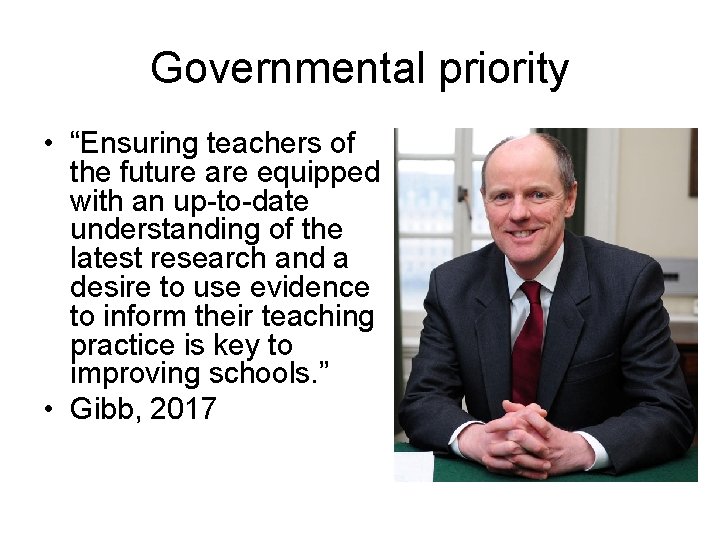
Governmental priority • “Ensuring teachers of the future are equipped with an up-to-date understanding of the latest research and a desire to use evidence to inform their teaching practice is key to improving schools. ” • Gibb, 2017
• Schools have become expert at “faking improvement” • Put in a policy and use flawed evaluative methods to “prove” that it is having an effect • Fraught with methodological problems • This is not a deliberate process • Coe, 2013
Marking through the lens of: 1. Feedback as promoting student outcomes 2. Impact on workload 3. Ofsted’s requirements 4. Other affective justifications 5. Recommendations
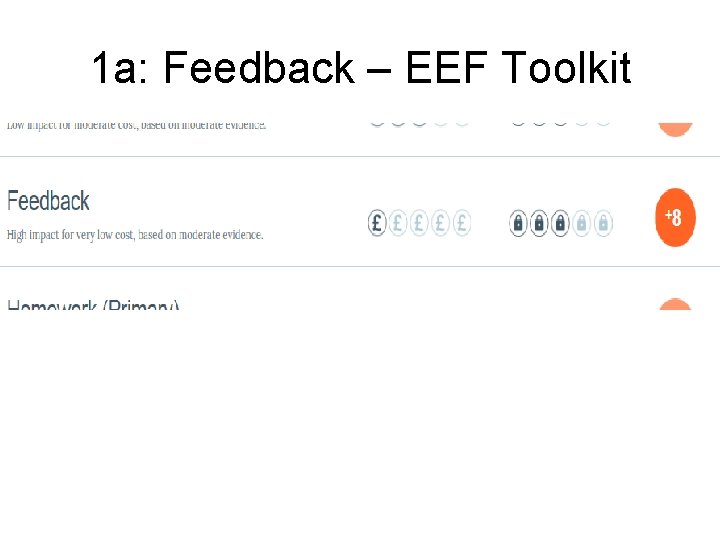
1 a: Feedback – EEF Toolkit
Problems with meta-analyses – Statistical errors – Mask negative effects
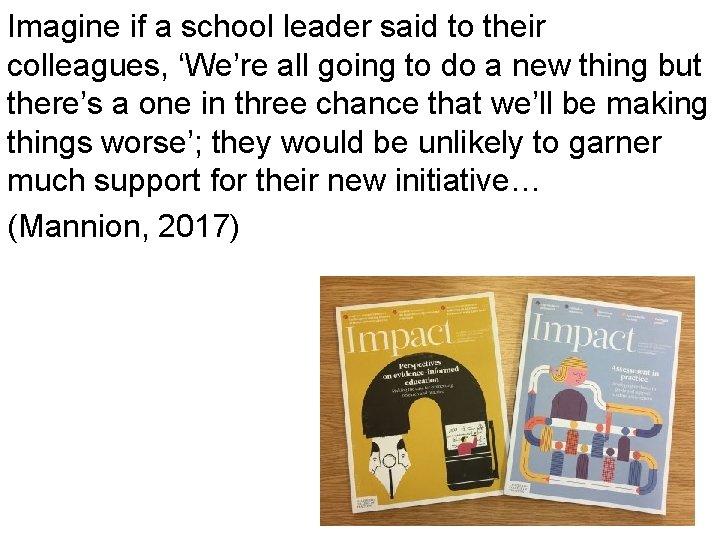
Imagine if a school leader said to their colleagues, ‘We’re all going to do a new thing but there’s a one in three chance that we’ll be making things worse’; they would be unlikely to garner much support for their new initiative… (Mannion, 2017)
The key point • Feedback is incredibly complicated • Policies must take into account the full range of evidence
1 b: Marking and feedback • Marking is a sub-set of feedback • Carries the problems as mentioned above • Will only ever account for a small amount of feedback offered by teachers
1 b: Marking and feedback
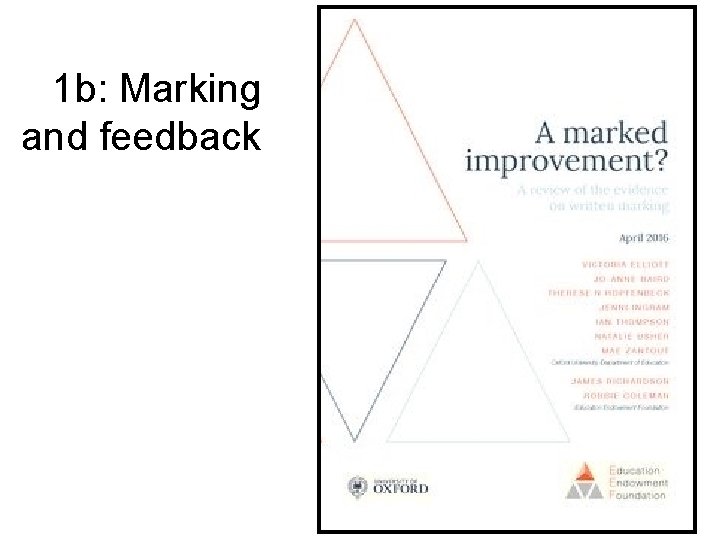
1 b: Marking and feedback • The evidence is very clear: – “The quality of existing evidence focused specifically on written marking is low” – “This is surprising and concerning bearing in mind the importance of feedback to pupils’ progress and the time in a teacher’s day taken up by marking. ” (EEF, 2016) • This means that any marking policy is based on no reliable evidence
1 c: The cognitivist argument – what have you proved by your marking? Predicated on the problem of transfer and the role of cues in memory (Willingham, 2002) See also Soderstrom and Bjork (2015) on difference between learning and performance
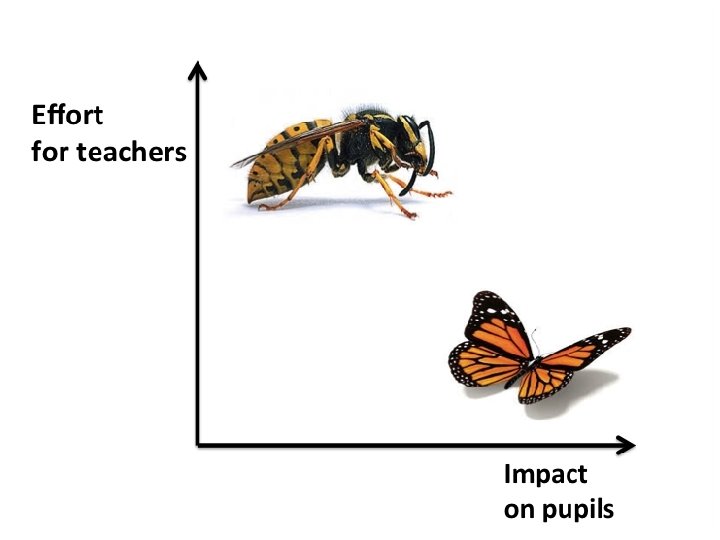
2. Impact on workload a) Absolute workload b) Absolute cost
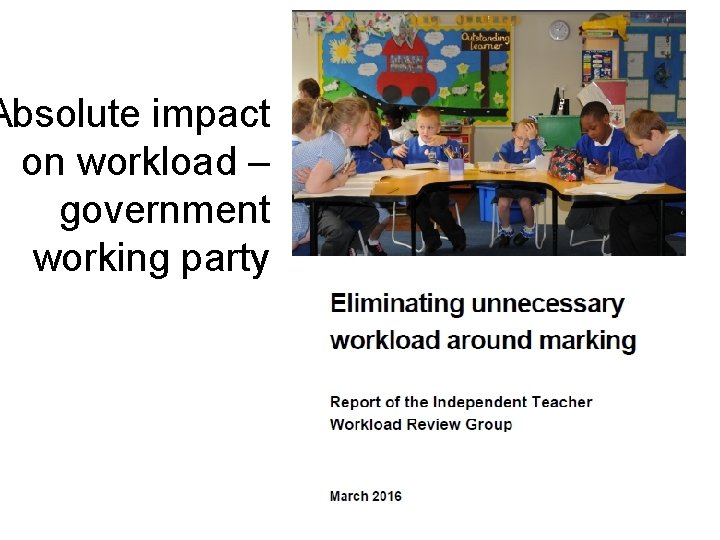
Absolute impact on workload – government working party
![Absolute impact on workload – government working party • Marking…[is] an unhelpful burden for](http://slidetodoc.com/presentation_image_h/99e7667c4f58cf254ea024b68b95f8b5/image-15.jpg "Absolute impact on workload – government working party • Marking…[is] an unhelpful burden for")
Absolute impact on workload – government working party • Marking…[is] an unhelpful burden for teachers…the time it takes is not repaid in positive impact on pupils’ progress. • teachers have less time to focus on the most important aspect of their job – teaching pupils. • cutting out the unnecessary frequency and depth of marking to create a manageable workload has clear benefits
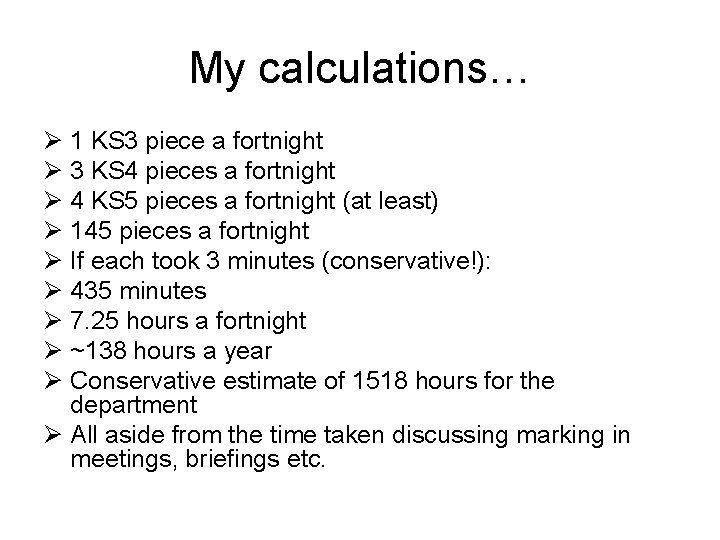
My calculations… Ø 1 KS 3 piece a fortnight Ø 3 KS 4 pieces a fortnight Ø 4 KS 5 pieces a fortnight (at least) Ø 145 pieces a fortnight Ø If each took 3 minutes (conservative!): Ø 435 minutes Ø 7. 25 hours a fortnight Ø ~138 hours a year Ø Conservative estimate of 1518 hours for the department Ø All aside from the time taken discussing marking in meetings, briefings etc.
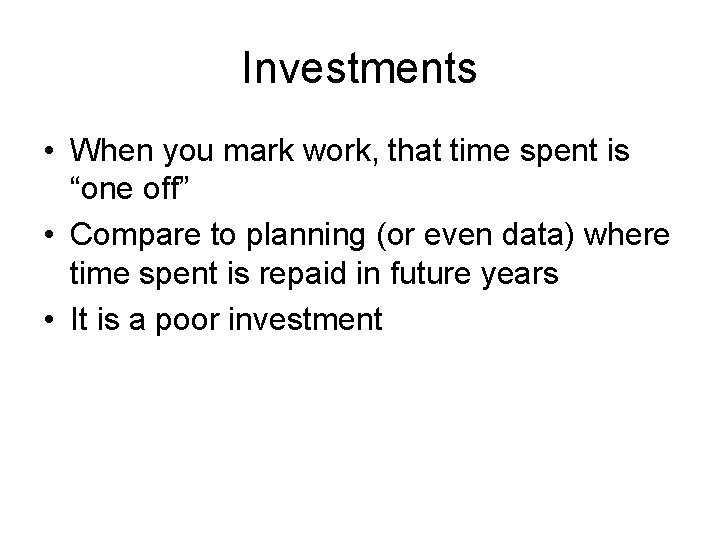
Investments • When you mark work, that time spent is “one off” • Compare to planning (or even data) where time spent is repaid in future years • It is a poor investment
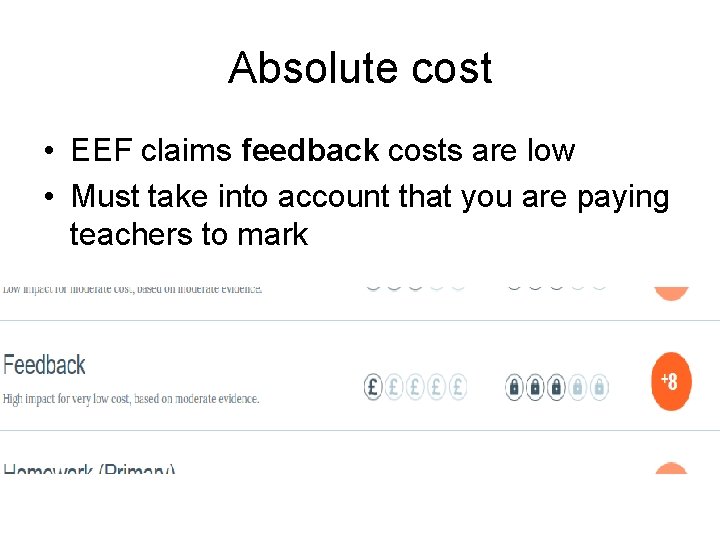
Absolute cost • EEF claims feedback costs are low • Must take into account that you are paying teachers to mark

“It’s time to decide what not to mark this weekend” Stephen Tierney, 2017
Ofsted and performance management 3 a. Ofsted’s use of marking 3 b. Use of marking in performance management
• “…there is remarkably little high quality, relevant research evidence to suggest that detailed or extensive marking has any significant impact on pupils’ learning. • inspectors should not report on marking practice, or make judgements on it, other than whether it follows the school’s assessment policy. ” • (Harford, 2016)
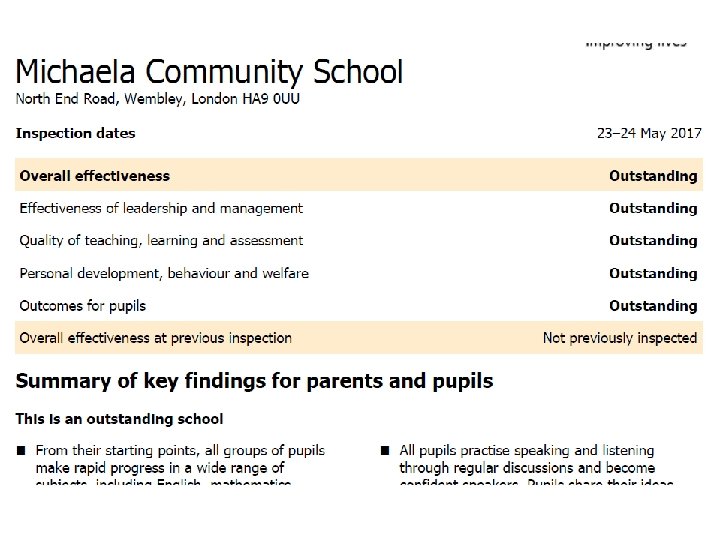
But do they really? • Case study: Michaela Community School
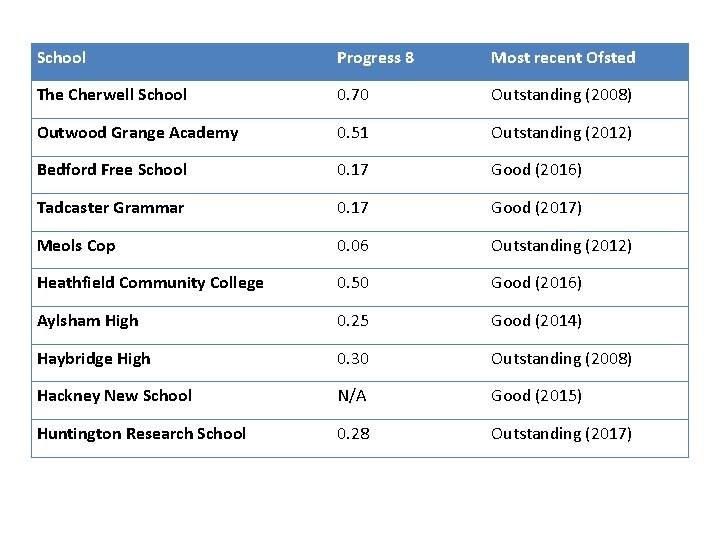
School Progress 8 Most recent Ofsted The Cherwell School 0. 70 Outstanding (2008) Outwood Grange Academy 0. 51 Outstanding (2012) Bedford Free School 0. 17 Good (2016) Tadcaster Grammar 0. 17 Good (2017) Meols Cop 0. 06 Outstanding (2012) Heathfield Community College 0. 50 Good (2016) Aylsham High 0. 25 Good (2014) Haybridge High 0. 30 Outstanding (2008) Hackney New School N/A Good (2015) Huntington Research School 0. 28 Outstanding (2017)
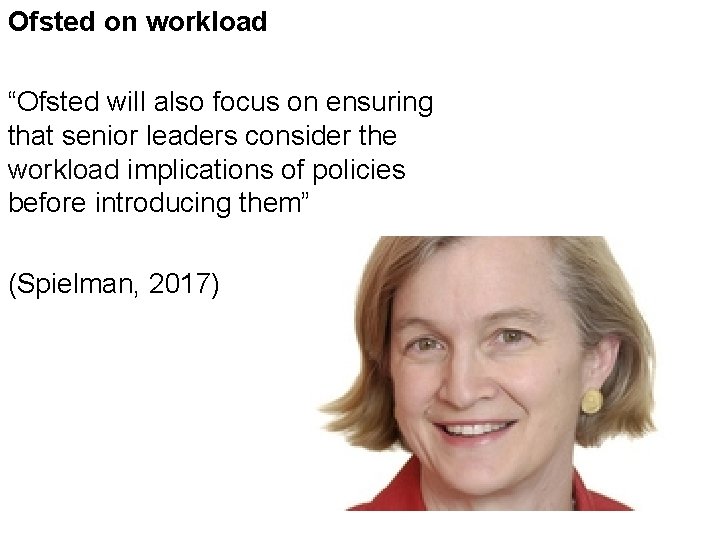
Ofsted on workload “Ofsted will also focus on ensuring that senior leaders consider the workload implications of policies before introducing them” (Spielman, 2017)
JCo. SS’s previous inspection • “…ensuring that all pupils’ work is thoroughly marked in line with the school’s policy to help them improve” • All changes mentioned above by Sean Harford are “regardless of any area for improvement identified at the previous inspection
3 b – Use of marking in performance management • Ofsted: • “Inspectors will also not seek to attribute the degree of progress that pupils have made to marking that they might consider to be either effective or ineffective. Finally, inspectors will not make recommendations for improvement that involve marking…” (Harford, 2016)
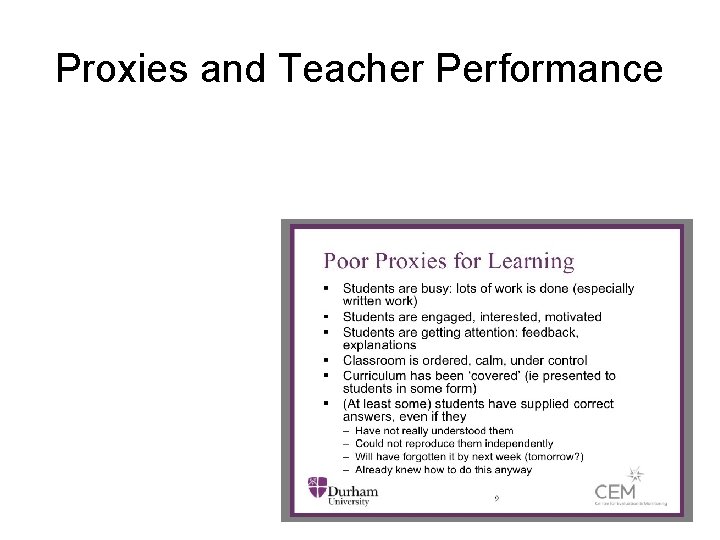
Proxies and Teacher Performance
• Government workload review: • “providing written feedback on pupils’ work – has become disproportionately valued by schools” • “[marking] is serving a different purpose such as demonstrating teacher performance or to satisfy the requirements of other, mainly adult, audiences. • Too often, it is the marking itself which is being monitored and commented on by leaders rather than pupil outcomes and progress as a result of quality feedback. ”
Campbell’s Law “The more any quantitative social indicator is used for social decision-making, the more subject it will be to corruption pressures and the more apt it will be to distort and corrupt the social processes it is intended to monitor” (Campbell, 1976)
Goodheart’s Law When a measure becomes a target, it ceases to be a good measure (Strathern, 1997)
Affective justifications • It shows students you care • Parents want it
My personal, anecdotal experience
Recommendations • Radically de-emphasise (eliminate? ) the role of marking in assessing teacher and faculty performance • Any policy must be: – Evidence based – Subject specific – Workload proportional to impact
“Ultimately, the Df. E can do very little to reduce workload – it is up to school leaders to set a culture where staff are cared for, well-trained and valued and policies are based on common sense and the principle that we shouldn’t be doing things unless they clearly help improve student outcomes. ” (Tomsett, 2017)
- Slides: 36