
Everyday Mathematics Stacey Soucy Enrichment Program Coordinator Math
- Slides: 18
Everyday Mathematics Stacey Soucy Enrichment Program Coordinator Math Coach http: //www. tinyurl. com/Sippican. EDM
Timeline /2010 -2011: Kindergarten- Gr. 2 & Gr. 6 /Pilot in grade 3 & 4 /2011 -2012: Grades 3 & 4 & 5
University of Chicago School Mathematics Project Research(USCMP) /Children come to school knowing more than they currently get credit for. /Children can learn much more than what is usually expected of them. /Mathematics means more when it is rooted in real-world problems and situations.
What Everyday Mathematics does… / Acknowledges mathematics children’s experiences and intuitions about / Provides problem solving experiences in real-life contexts while allowing for diversity and various learning styles / Promotes practice through meaningful games and activities / Integrates / Provides content throughout the curriculum repeated exposures, ensuring that children encounter and apply concepts over time, deepening mathematical understanding
What Everyday Mathematics DOES NOT do… /Encourage /Teach one word answer or strategy by telling /Encourage rote practice or memorization of rules in isolation
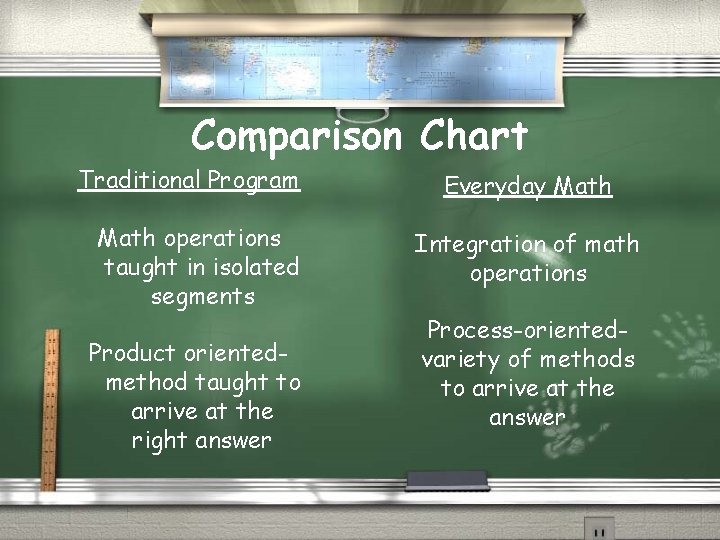
Comparison Chart Traditional Program Math operations taught in isolated segments Product orientedmethod taught to arrive at the right answer Everyday Math Integration of math operations Process-orientedvariety of methods to arrive at the answer
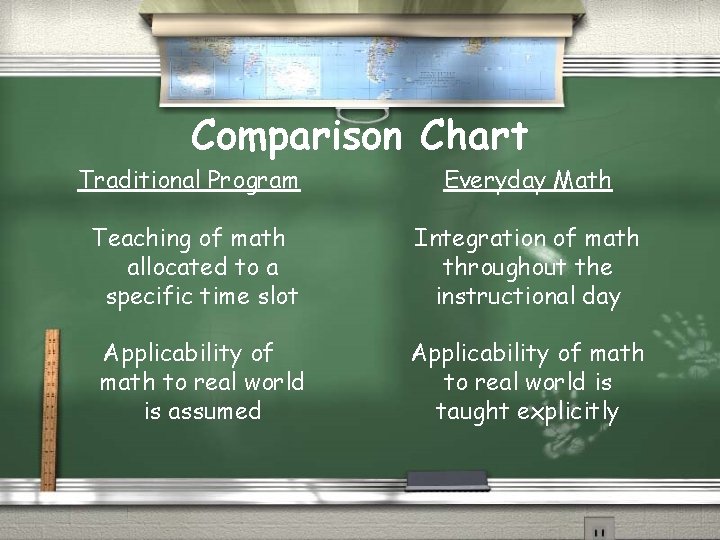
Comparison Chart Traditional Program Everyday Math Teaching of math allocated to a specific time slot Integration of math throughout the instructional day Applicability of math to real world is assumed Applicability of math to real world is taught explicitly
BASIC FACTS Students will learn and practice all of the basic facts in many different ways without having an overwhelming number of drill page /Games /Fact Triangles /Addition/Subtraction and Multiplication/Division Facts Tables /Dominoes
/Everyday Differentiation Mathematics offers many opportunities for teachers to meet the varying needs of each student. /The program is flexible in that it is possible to adjust or modify most activities according to student needs. A differentiated classroom is a rich learning environment that provides students with multiple avenues for acquiring content, making sense of ideas, developing skills, and demonstrating what they know.
Daily Differentiation Options /Mental Math and Reflexes /Math Message preview /“Adjusting the Activity” embedded in the lessons /Games /Math Boxes /Journal pages /Projects /Part 3 of lesson: Readiness and Enrichment
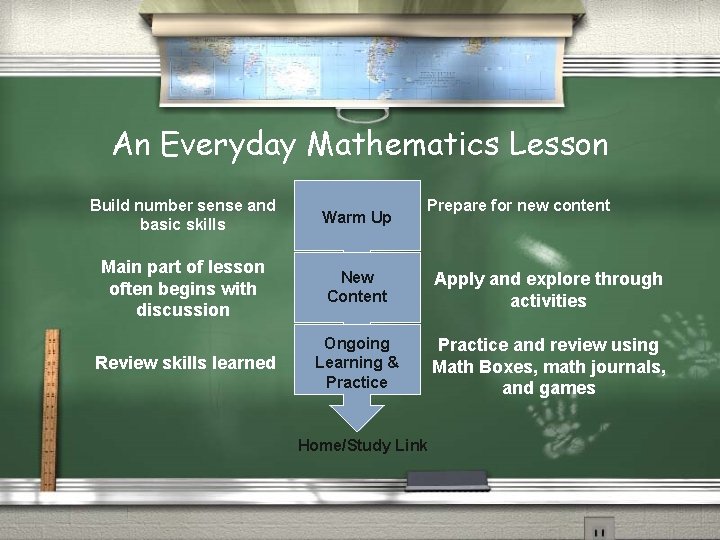
An Everyday Mathematics Lesson Build number sense and basic skills Warm Up Prepare for new content Main part of lesson often begins with discussion New Content Apply and explore through activities Review skills learned Ongoing Learning & Practice and review using Math Boxes, math journals, and games Home/Study Link
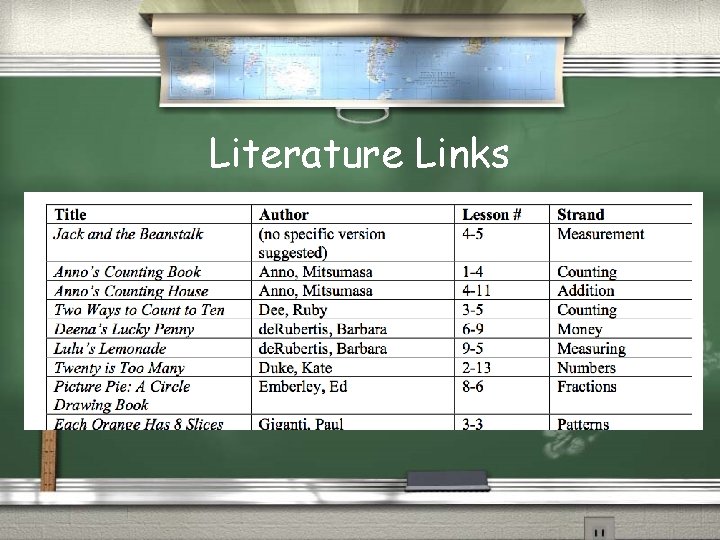
Literature Links
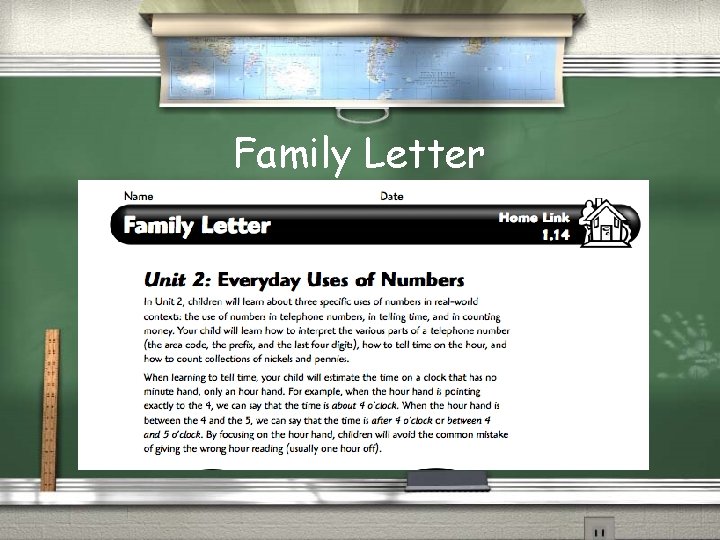
Family Letter
Trust the Spiral /Topics are introduced in an informal way and then presented numerous times in different contexts with gradually more formal, directed instruction. / Mastery of concepts and skills comes with repeated exposure and practice, not just one lesson. / When students revisit topics, they make new connections and gain different insights. / Students regularly review and practice new concepts through activities, games, and assignments.
How can I help my child? /Work with your child on the home and study links /Encourage your child to teach you the games /Provide extra fact practice /Volunteer on “Game Days” /Point out math in your daily lives /Involve children with household and life tasks relating to math
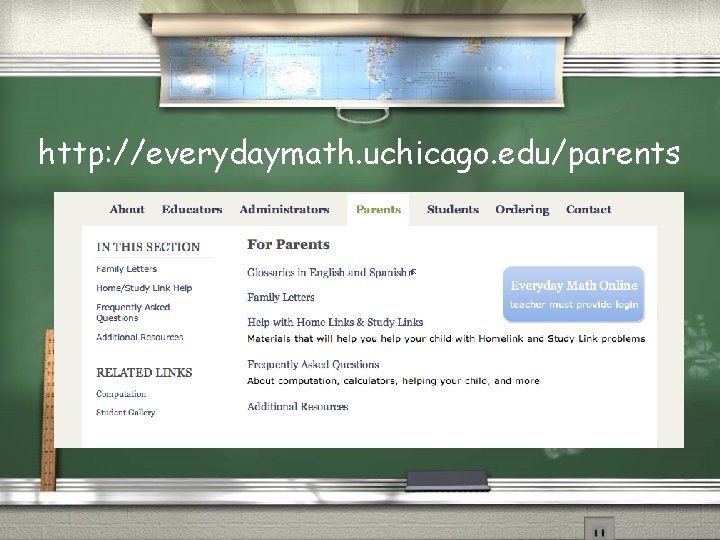
http: //everydaymath. uchicago. edu/parents
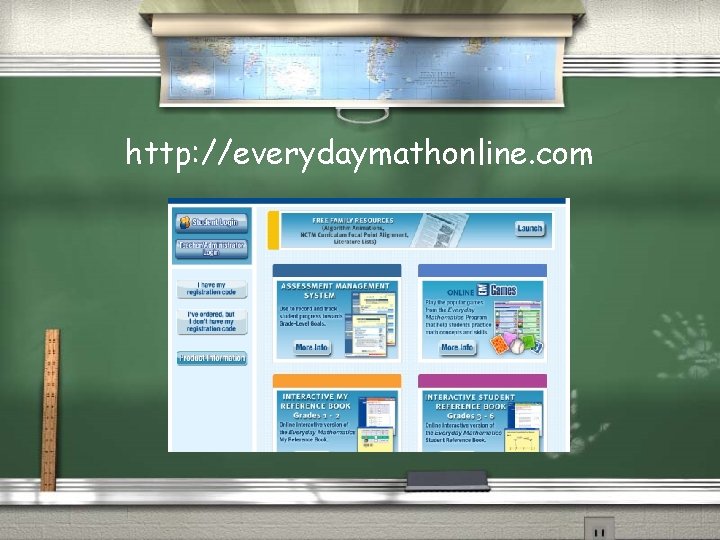
http: //everydaymathonline. com
Stacey Soucy ssoucy@orr. mec. edu www. tinyurl. com/Sippican. EDM 508 -748 -0100 x 108