
EVENT IMPACT ASSESSMENT Donald Getz 2018 Figure 1
- Slides: 13
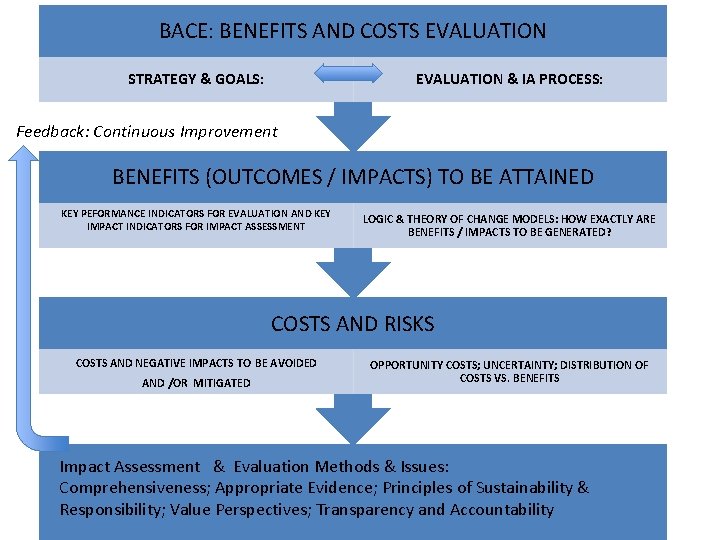
EVENT IMPACT ASSESSMENT Donald Getz, 2018 • • • Figure 1. 5 Four Applications of IA for Events and Tourism Figure 1. 7: The Subjects and Objects of Impact Assessment Figure 2. 1: Outcomes System Model Adapted From Duignan Figure 2. 2: Logic Model for Event and Tourism Evaluation and Impact Assessment Figure 2. 3: Theory of Change Model Figure 2. 5: The Forces-Pressure-State-Impact-Response Model Figure 3. 6: Sample Decision Tree Figure 4. 5: Indicators for Measuring the Social-Capital Outcomes of Events Figure 5. 2: Mind Mapping for Consultations in CIA Figure 7. 1: Event Settings Spectrum and Key Impact Variables Figure 8. 4: The Direct and Indirect Contribution of Event Tourism Figure 9. 2: The BACE MODEL
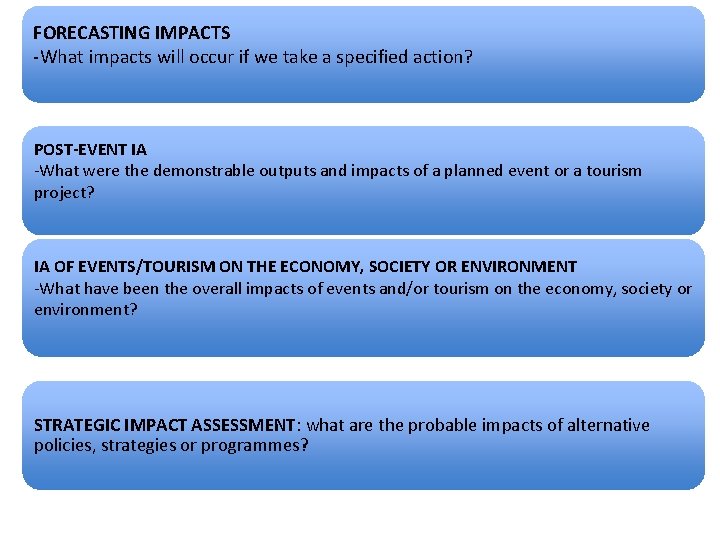
FORECASTING IMPACTS -What impacts will occur if we take a specified action? POST-EVENT IA -What were the demonstrable outputs and impacts of a planned event or a tourism project? IA OF EVENTS/TOURISM ON THE ECONOMY, SOCIETY OR ENVIRONMENT -What have been the overall impacts of events and/or tourism on the economy, society or environment? STRATEGIC IMPACT ASSESSMENT: what are the probable impacts of alternative policies, strategies or programmes?
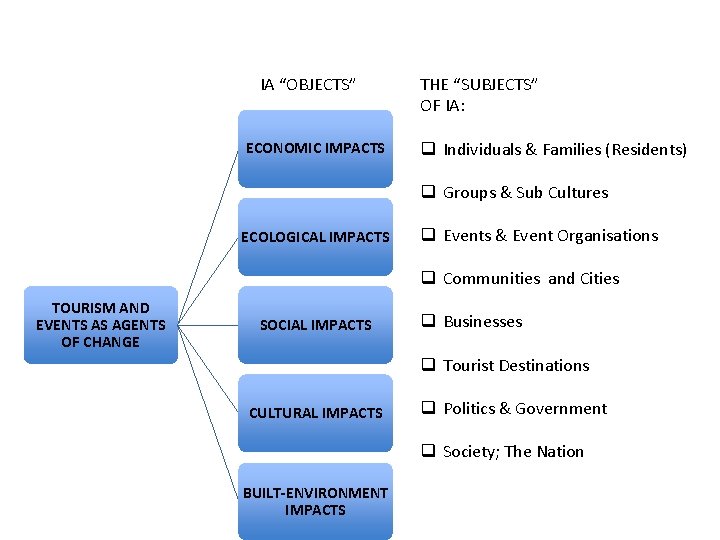
IA “OBJECTS” ECONOMIC IMPACTS THE “SUBJECTS” OF IA: q Individuals & Families (Residents) q Groups & Sub Cultures ECOLOGICAL IMPACTS q Events & Event Organisations q Communities and Cities TOURISM AND EVENTS AS AGENTS OF CHANGE SOCIAL IMPACTS q Businesses q Tourist Destinations CULTURAL IMPACTS q Politics & Government q Society; The Nation BUILT-ENVIRONMENT IMPACTS
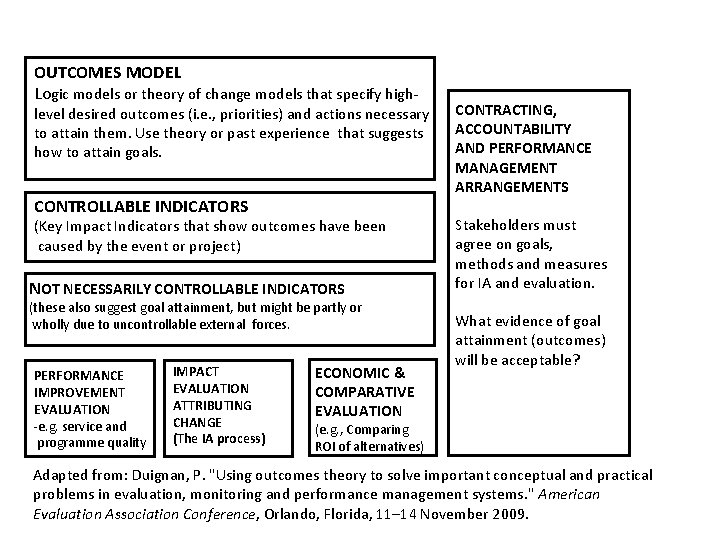
OUTCOMES MODEL Logic models or theory of change models that specify high- level desired outcomes (i. e. , priorities) and actions necessary to attain them. Use theory or past experience that suggests how to attain goals. CONTROLLABLE INDICATORS (Key Impact Indicators that show outcomes have been caused by the event or project) NOT NECESSARILY CONTROLLABLE INDICATORS (these also suggest goal attainment, but might be partly or wholly due to uncontrollable external forces. PERFORMANCE IMPROVEMENT EVALUATION -e. g. service and programme quality IMPACT EVALUATION ATTRIBUTING CHANGE (The IA process) ECONOMIC & COMPARATIVE EVALUATION CONTRACTING, ACCOUNTABILITY AND PERFORMANCE MANAGEMENT ARRANGEMENTS Stakeholders must agree on goals, methods and measures for IA and evaluation. What evidence of goal attainment (outcomes) will be acceptable? (e. g. , Comparing ROI of alternatives) Adapted from: Duignan, P. "Using outcomes theory to solve important conceptual and practical problems in evaluation, monitoring and performance management systems. " American Evaluation Association Conference, Orlando, Florida, 11– 14 November 2009.
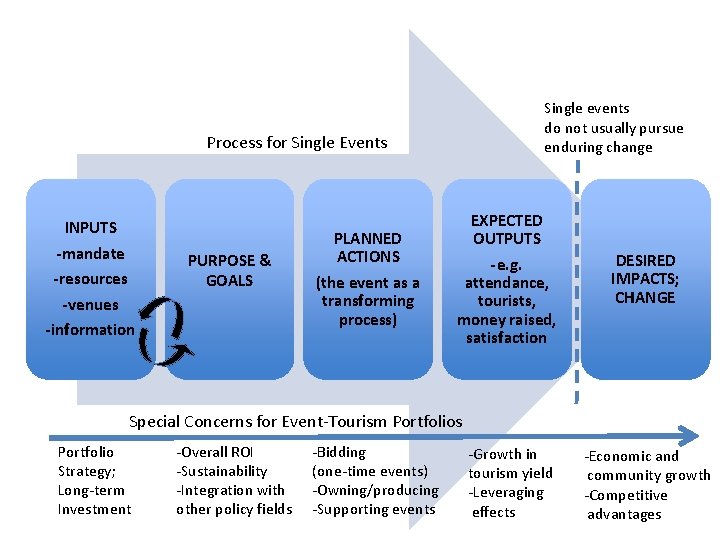
Single events do not usually pursue enduring change Process for Single Events INPUTS -mandate -resources -venues PURPOSE & GOALS -information PLANNED ACTIONS (the event as a transforming process) EXPECTED OUTPUTS -e. g. attendance, tourists, money raised, satisfaction DESIRED IMPACTS; CHANGE Special Concerns for Event-Tourism Portfolios Portfolio Strategy; Long-term Investment -Overall ROI -Sustainability -Integration with other policy fields -Bidding (one-time events) -Owning/producing -Supporting events -Growth in tourism yield -Leveraging effects -Economic and community growth -Competitive advantages
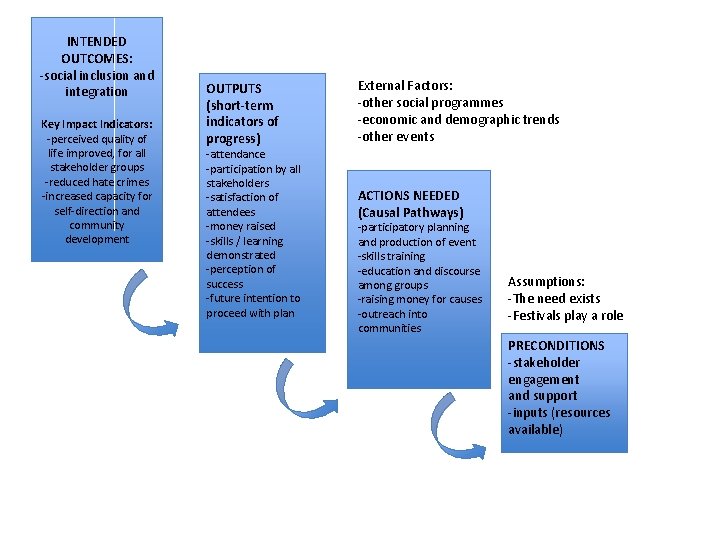
INTENDED OUTCOMES: -social inclusion and integration Key Impact Indicators: -perceived quality of life improved, for all stakeholder groups -reduced hate crimes -increased capacity for self-direction and community development OUTPUTS (short-term indicators of progress) -attendance -participation by all stakeholders -satisfaction of attendees -money raised -skills / learning demonstrated -perception of success -future intention to proceed with plan External Factors: -other social programmes -economic and demographic trends -other events ACTIONS NEEDED (Causal Pathways) -participatory planning and production of event -skills training -education and discourse among groups -raising money for causes -outreach into communities Assumptions: -The need exists -Festivals play a role PRECONDITIONS -stakeholder engagement and support -inputs (resources available)
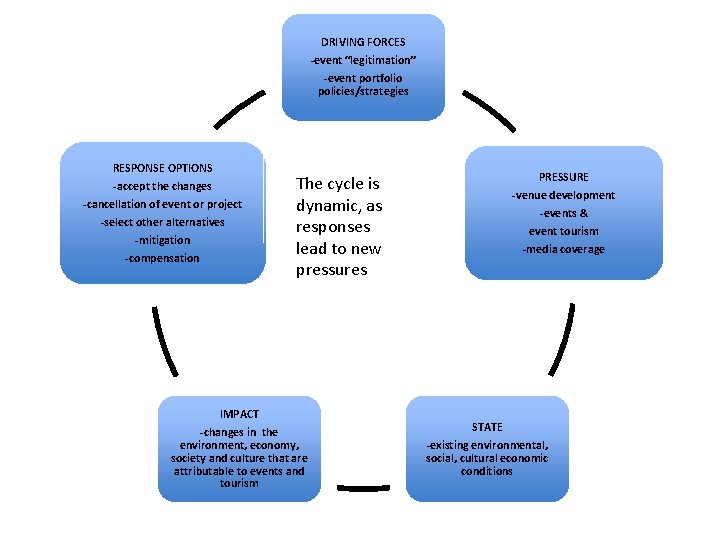
DRIVING FORCES -event “legitimation” -event portfolio policies/strategies RESPONSE OPTIONS -accept the changes -cancellation of event or project -select other alternatives -mitigation -compensation The cycle is dynamic, as responses lead to new pressures IMPACT -changes in the environment, economy, society and culture that are attributable to events and tourism PRESSURE -venue development -events & event tourism -media coverage STATE -existing environmental, social, cultural economic conditions
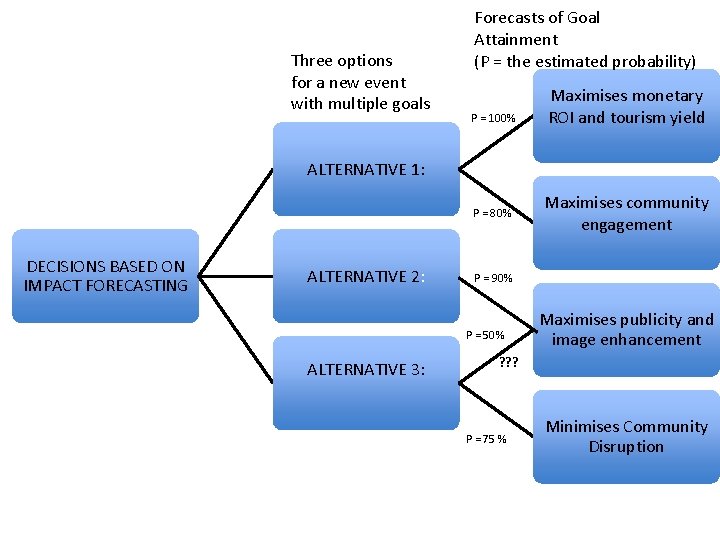
Three options for a new event with multiple goals Forecasts of Goal Attainment (P = the estimated probability) P = 100% Maximises monetary ROI and tourism yield ALTERNATIVE 1: P = 80% DECISIONS BASED ON IMPACT FORECASTING ALTERNATIVE 2: P = 90% P = 50% ALTERNATIVE 3: Maximises community engagement Maximises publicity and image enhancement ? ? ? P = 75 % Minimises Community Disruption
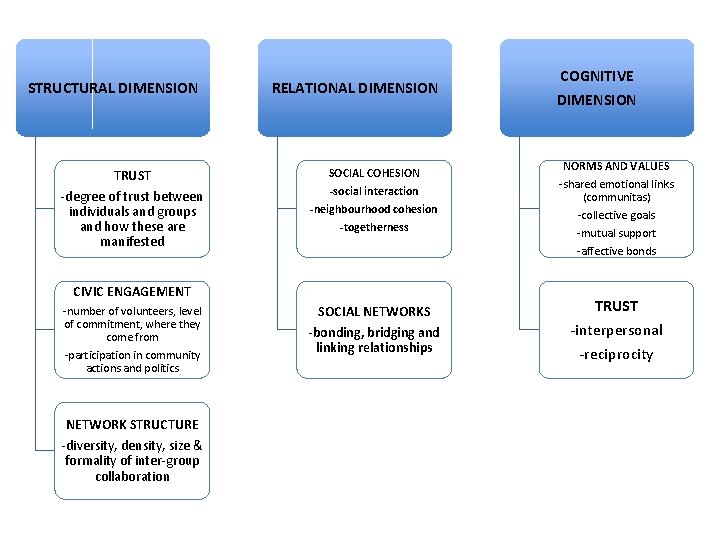
STRUCTURAL DIMENSION TRUST -degree of trust between individuals and groups and how these are manifested RELATIONAL DIMENSION SOCIAL COHESION -social interaction -neighbourhood cohesion -togetherness CIVIC ENGAGEMENT -number of volunteers, level of commitment, where they come from -participation in community actions and politics NETWORK STRUCTURE -diversity, density, size & formality of inter-group collaboration SOCIAL NETWORKS -bonding, bridging and linking relationships COGNITIVE DIMENSION NORMS AND VALUES -shared emotional links (communitas) -collective goals -mutual support -affective bonds TRUST -interpersonal -reciprocity
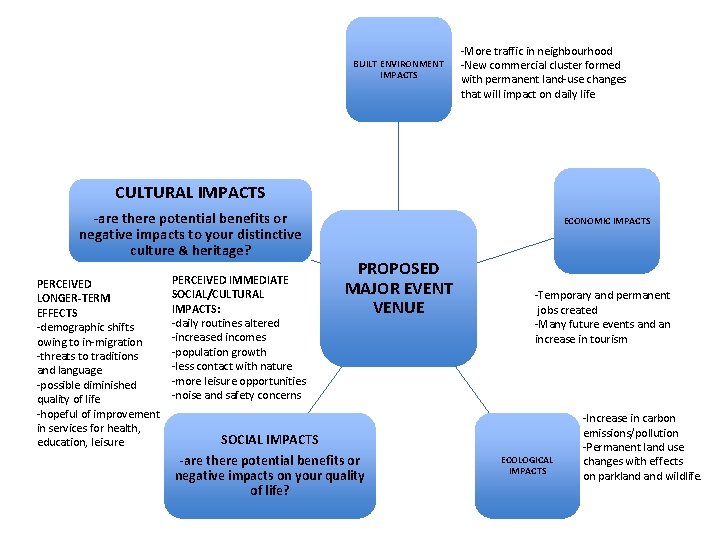
BUILT ENVIRONMENT IMPACTS -More traffic in neighbourhood -New commercial cluster formed with permanent land-use changes that will impact on daily life CULTURAL IMPACTS -are there potential benefits or negative impacts to your distinctive culture & heritage? PERCEIVED LONGER-TERM EFFECTS -demographic shifts owing to in-migration -threats to traditions and language -possible diminished quality of life -hopeful of improvement in services for health, education, leisure PERCEIVED IMMEDIATE SOCIAL/CULTURAL IMPACTS: -daily routines altered -increased incomes -population growth -less contact with nature -more leisure opportunities -noise and safety concerns ECONOMIC IMPACTS PROPOSED MAJOR EVENT VENUE SOCIAL IMPACTS -are there potential benefits or negative impacts on your quality of life? -Temporary and permanent jobs created -Many future events and an increase in tourism ECOLOGICAL IMPACTS -Increase in carbon emissions/pollution -Permanent land use changes with effects on parkland wildlife.
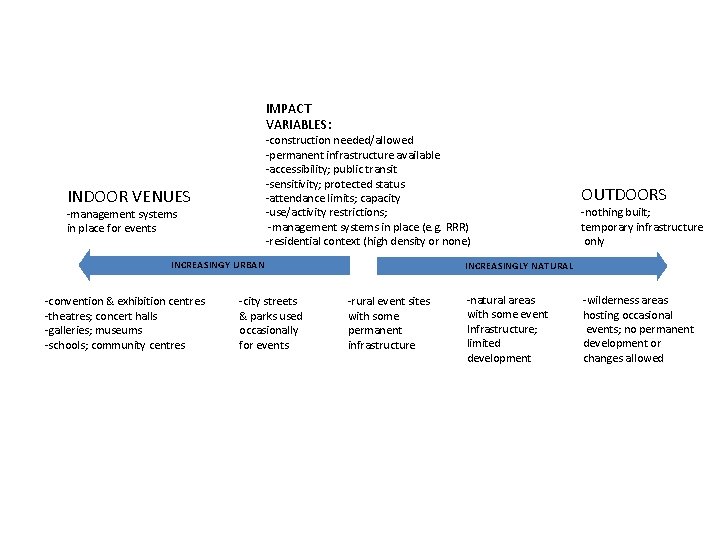
IMPACT VARIABLES: -construction needed/allowed -permanent infrastructure available -accessibility; public transit -sensitivity; protected status -attendance limits; capacity -use/activity restrictions; -management systems in place (e. g. RRR) -residential context (high density or none) INDOOR VENUES -management systems in place for events INCREASINGY URBAN -convention & exhibition centres -theatres; concert halls -galleries; museums -schools; community centres -city streets & parks used occasionally for events OUTDOORS -nothing built; temporary infrastructure only INCREASINGLY NATURAL -rural event sites with some permanent infrastructure -natural areas with some event Infrastructure; limited development -wilderness areas hosting occasional events; no permanent development or changes allowed
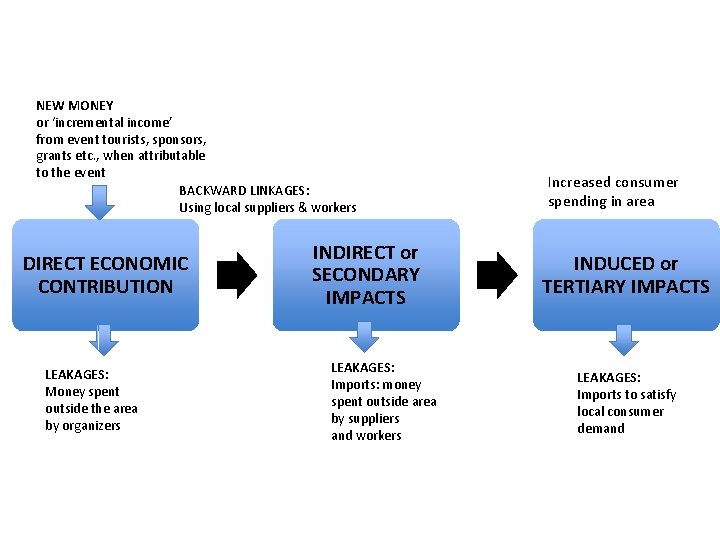
NEW MONEY or ‘incremental income’ from event tourists, sponsors, grants etc. , when attributable to the event BACKWARD LINKAGES: Using local suppliers & workers DIRECT ECONOMIC CONTRIBUTION LEAKAGES: Money spent outside the area by organizers INDIRECT or SECONDARY IMPACTS LEAKAGES: Imports: money spent outside area by suppliers and workers Increased consumer spending in area INDUCED or TERTIARY IMPACTS LEAKAGES: Imports to satisfy local consumer demand
BACE: BENEFITS AND COSTS EVALUATION STRATEGY & GOALS: EVALUATION & IA PROCESS: Feedback: Continuous Improvement BENEFITS (OUTCOMES / IMPACTS) TO BE ATTAINED KEY PEFORMANCE INDICATORS FOR EVALUATION AND KEY IMPACT INDICATORS FOR IMPACT ASSESSMENT LOGIC & THEORY OF CHANGE MODELS: HOW EXACTLY ARE BENEFITS / IMPACTS TO BE GENERATED? COSTS AND RISKS COSTS AND NEGATIVE IMPACTS TO BE AVOIDED AND /OR MITIGATED OPPORTUNITY COSTS; UNCERTAINTY; DISTRIBUTION OF COSTS VS. BENEFITS Impact Assessment & Evaluation Methods & Issues: Comprehensiveness; Appropriate Evidence; Principles of Sustainability & Responsibility; Value Perspectives; Transparency and Accountability