
Event Chain Methodology Schedule risk analysis technique that
- Slides: 21
Event Chain Methodology Schedule risk analysis technique that focuses on managing risk events affecting project schedules and relationship between them
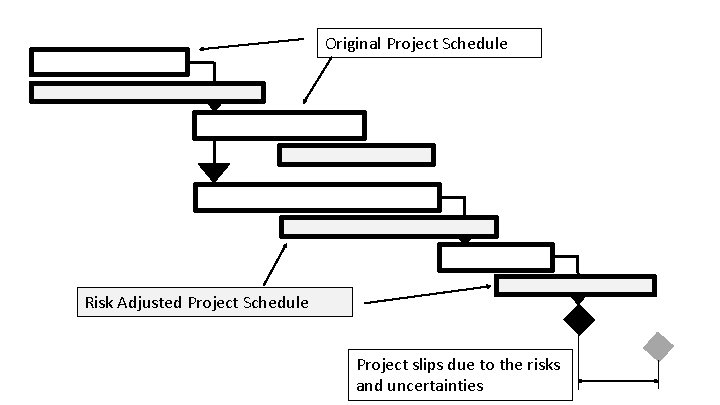
Original Project Schedule Risk Adjusted Project Schedule Project slips due to the risks and uncertainties
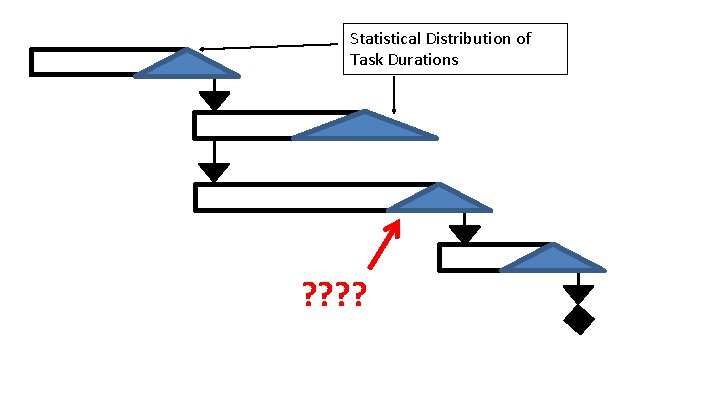
Statistical Distribution of Task Durations ? ?
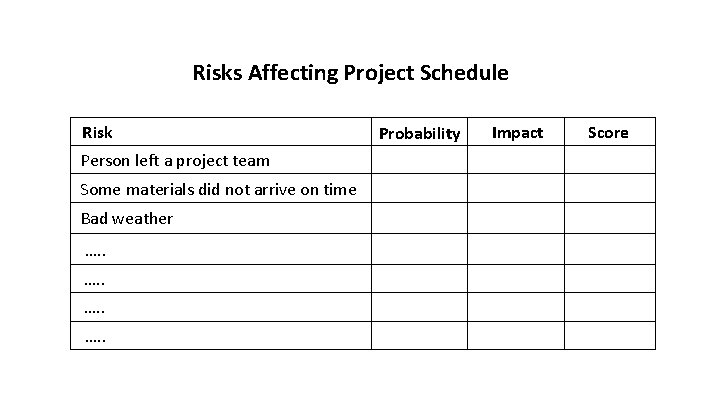
Risks Affecting Project Schedule Risk Person left a project team Some materials did not arrive on time Bad weather …. . Probability Impact Score
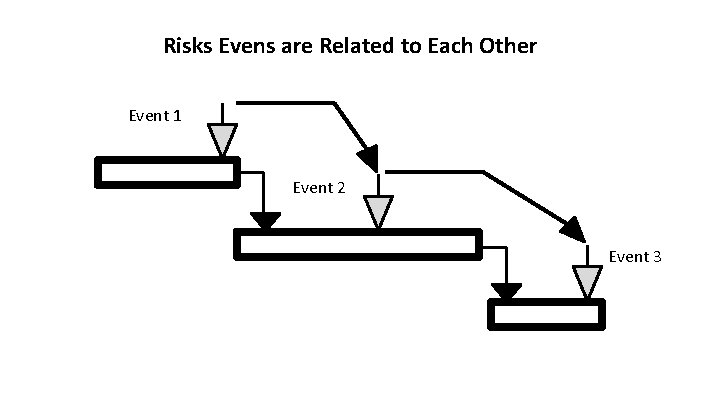
Risks Evens are Related to Each Other Event 1 Event 2 Event 3
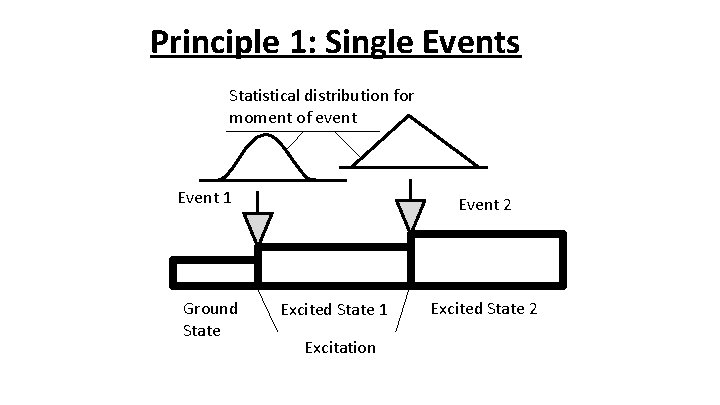
Principle 1: Single Events Statistical distribution for moment of event Event 1 Ground State Event 2 Excited State 1 Excitation Excited State 2
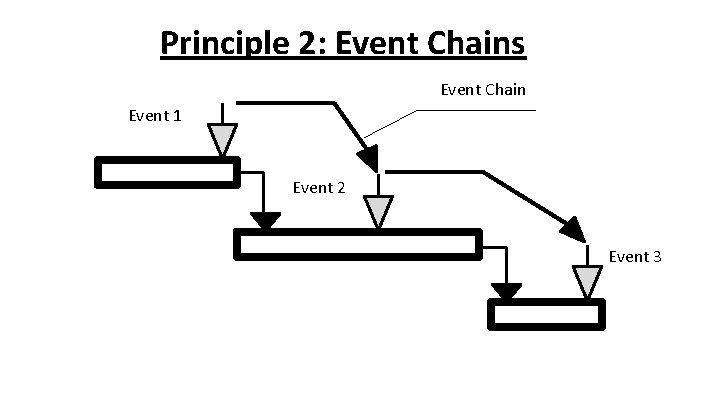
Principle 2: Event Chains Event Chain Event 1 Event 2 Event 3
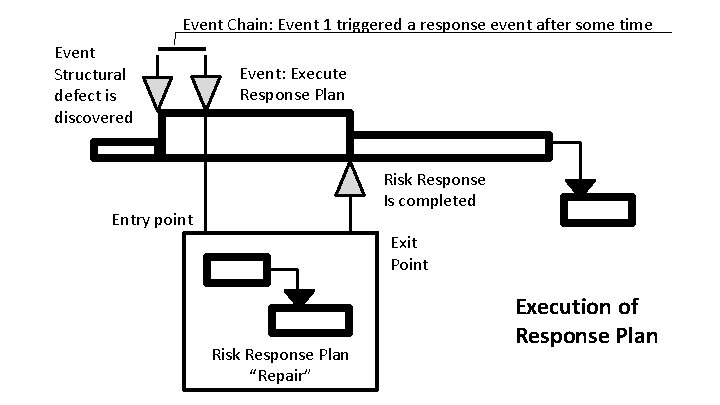
Event Chain: Event 1 triggered a response event after some time Event Structural defect is discovered Event: Execute Response Plan Risk Response Is completed Entry point Exit Point Risk Response Plan “Repair” Execution of Response Plan
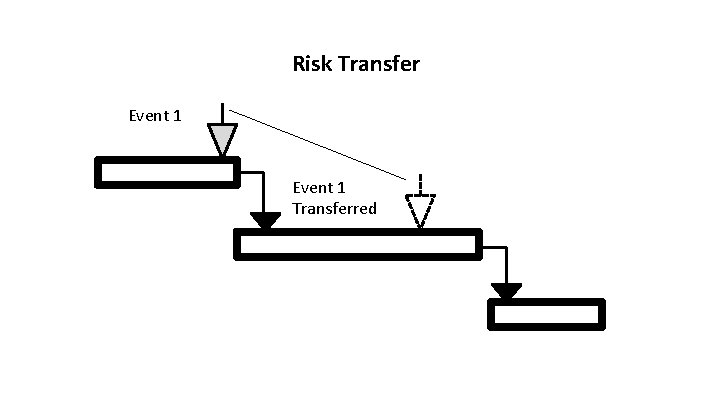
Risk Transfer Event 1 Transferred
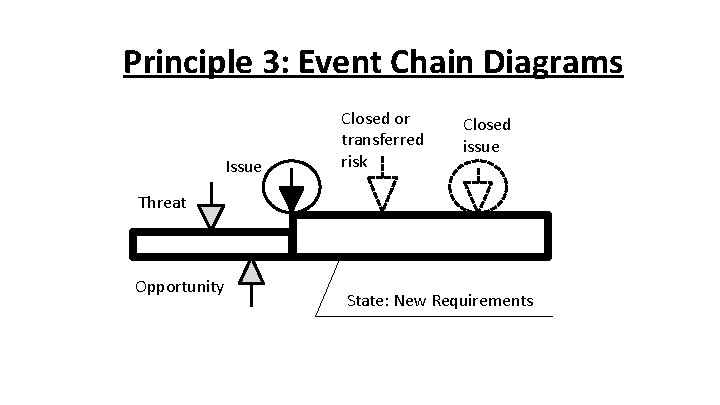
Principle 3: Event Chain Diagrams Issue Closed or transferred risk Closed issue Threat Opportunity State: New Requirements
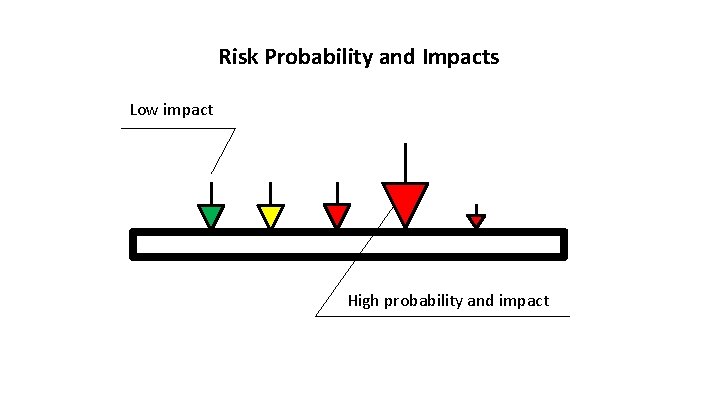
Risk Probability and Impacts Low impact High probability and impact
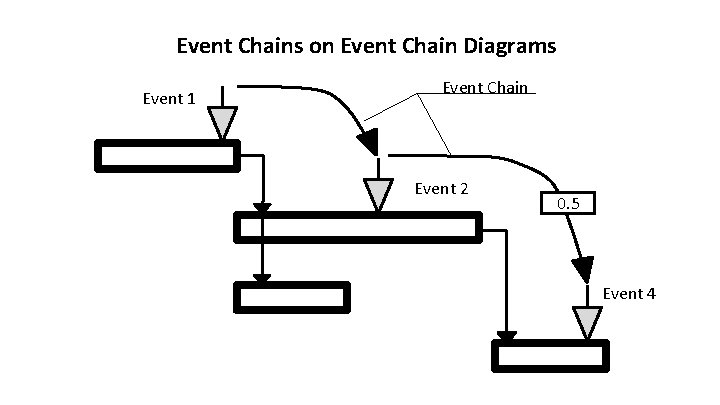
Event Chains on Event Chain Diagrams Event 1 Event Chain Event 2 0. 5 Event 4
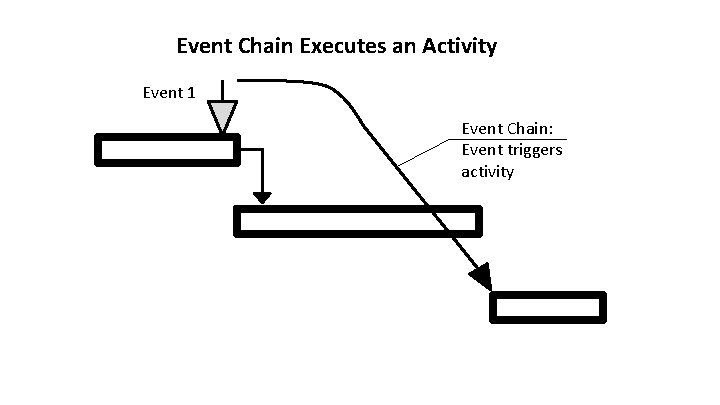
Event Chain Executes an Activity Event 1 Event Chain: Event triggers activity
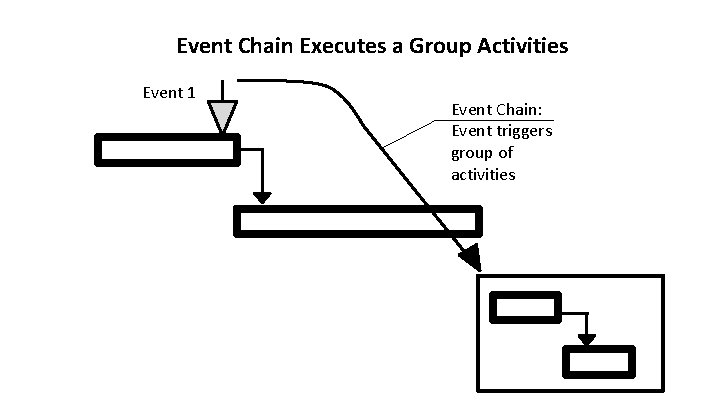
Event Chain Executes a Group Activities Event 1 Event Chain: Event triggers group of activities
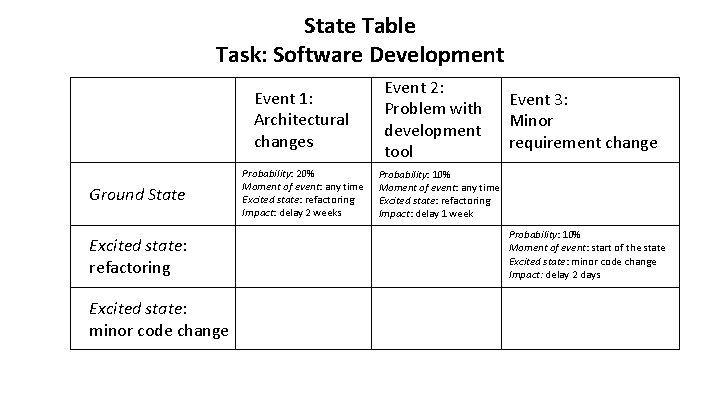
State Table Task: Software Development Event 1: Architectural changes Ground State Excited state: refactoring Excited state: minor code change Probability: 20% Moment of event: any time Excited state: refactoring Impact: delay 2 weeks Event 2: Problem with development tool Event 3: Minor requirement change Probability: 10% Moment of event: any time Excited state: refactoring Impact: delay 1 week Probability: 10% Moment of event: start of the state Excited state: minor code change Impact: delay 2 days
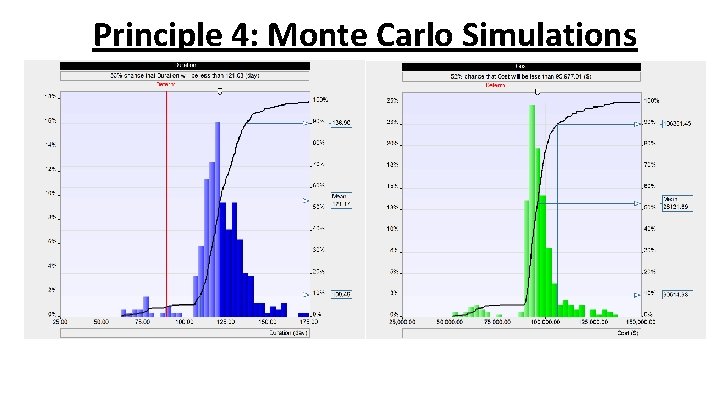
Principle 4: Monte Carlo Simulations
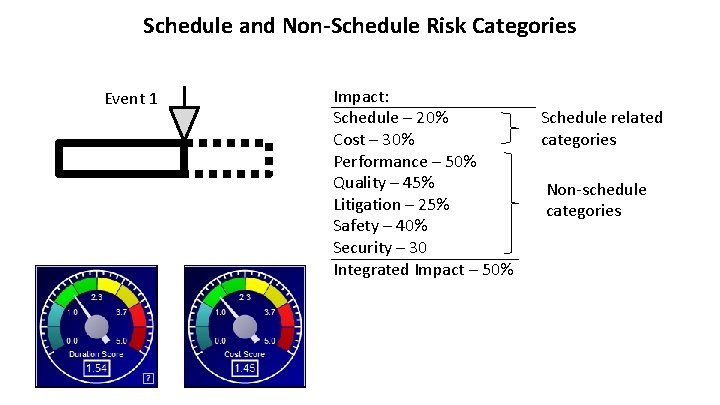
Schedule and Non-Schedule Risk Categories Event 1 Impact: Schedule – 20% Cost – 30% Performance – 50% Quality – 45% Litigation – 25% Safety – 40% Security – 30 Integrated Impact – 50% Schedule related categories Non-schedule categories
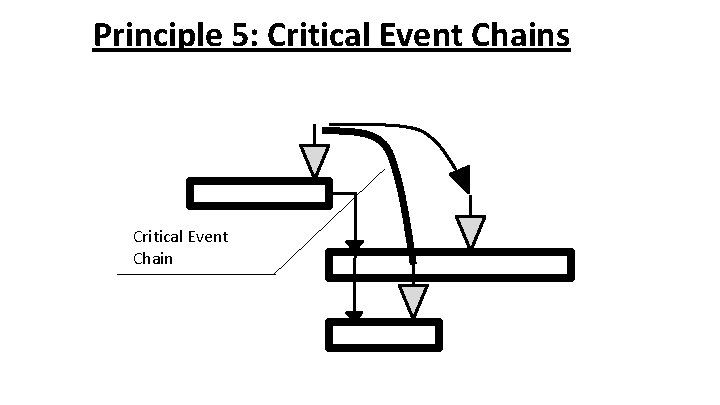
Principle 5: Critical Event Chains Critical Event Chain
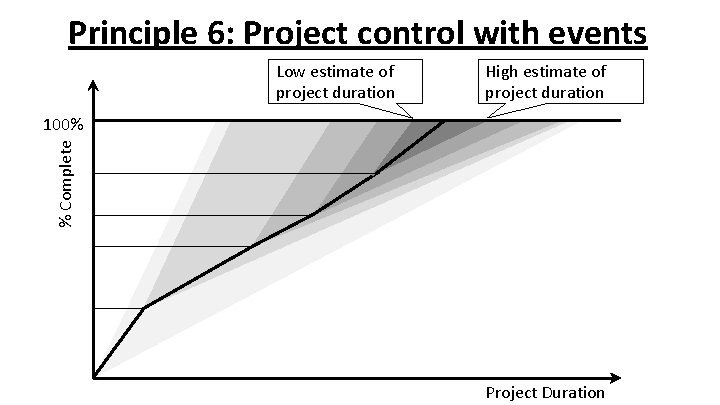
Principle 6: Project control with events Low estimate of project duration High estimate of project duration % Complete 100% Project Duration
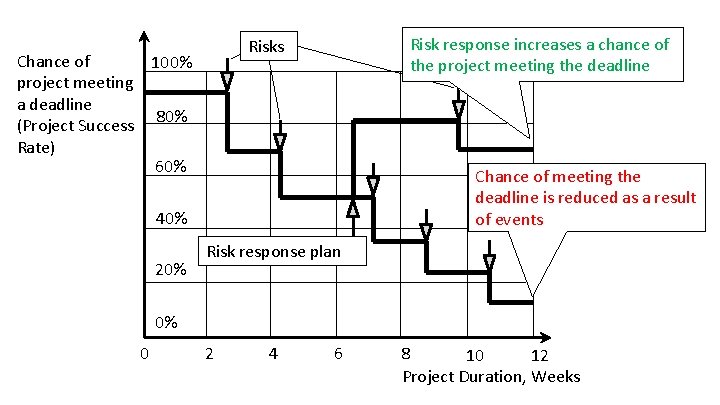
Risk response increases a chance of the project meeting the deadline Risks Chance of 100% project meeting a deadline 80% (Project Success Rate) 60% Chance of meeting the deadline is reduced as a result of events 40% 20% Risk response plan 0% 0 2 4 6 8 10 12 Project Duration, Weeks
Project Risk Analysis Made Ridiculously Simple A Step by Step Guide to Project Risk Analysis by Lev Virine and Michael Trumper Hardcover: 284 pages Publisher: World Scientific Publishing Co (March 5, 2017) Language: English ISBN-10: 9814759376 ISBN-13: 978 -9814759373 Web site: www. projectdecisions. org