
EVAT 554 OCEANATMOSPHERE DYNAMICS LECTURE 15 SVERDRUP TRANSPORT
- Slides: 23
EVAT 554 OCEAN-ATMOSPHERE DYNAMICS LECTURE 15 SVERDRUP TRANSPORT (Reference: Peixoto & Oort, Chapter 8, 10)
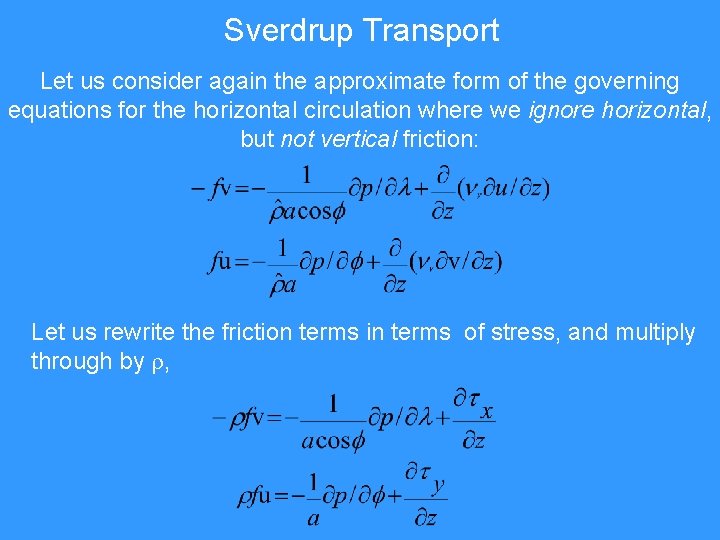
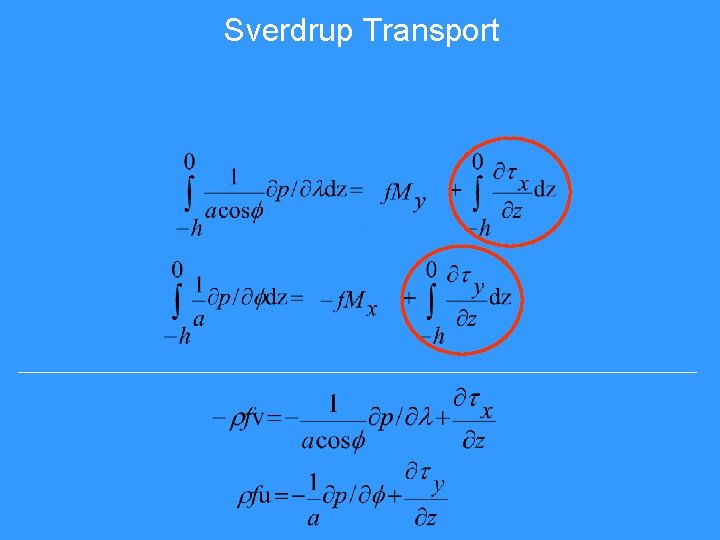
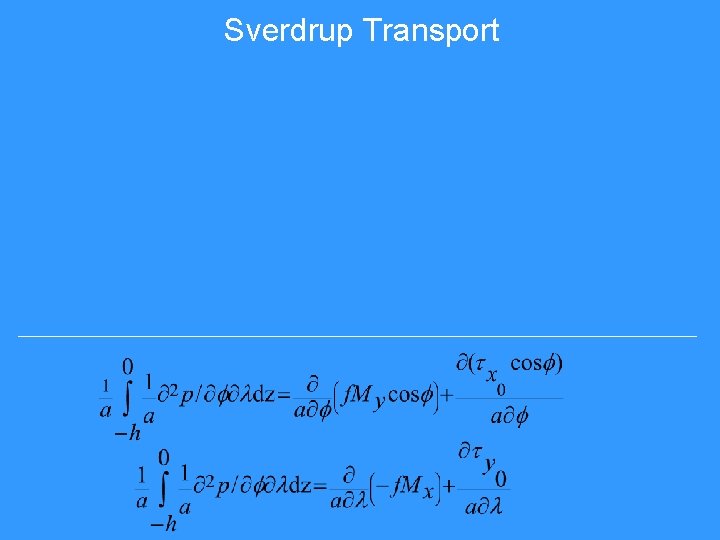
Sverdrup Transport Let us consider again the approximate form of the governing equations for the horizontal circulation where we ignore horizontal, but not vertical friction: Let us rewrite the friction terms in terms of stress, and multiply through by r,
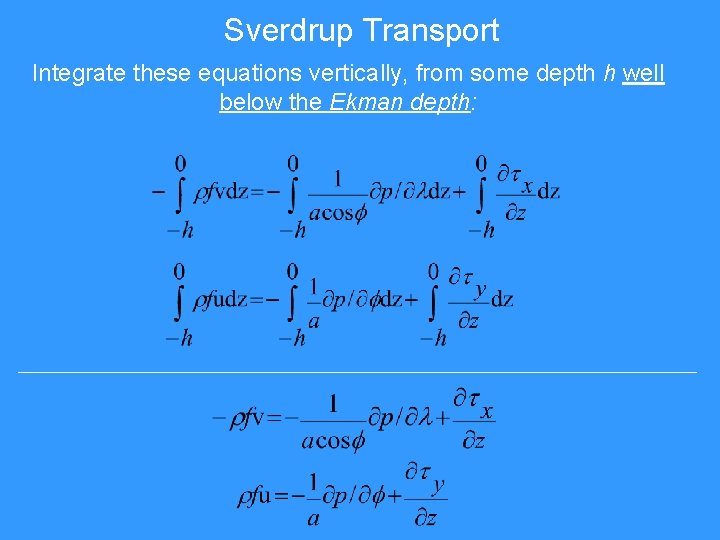
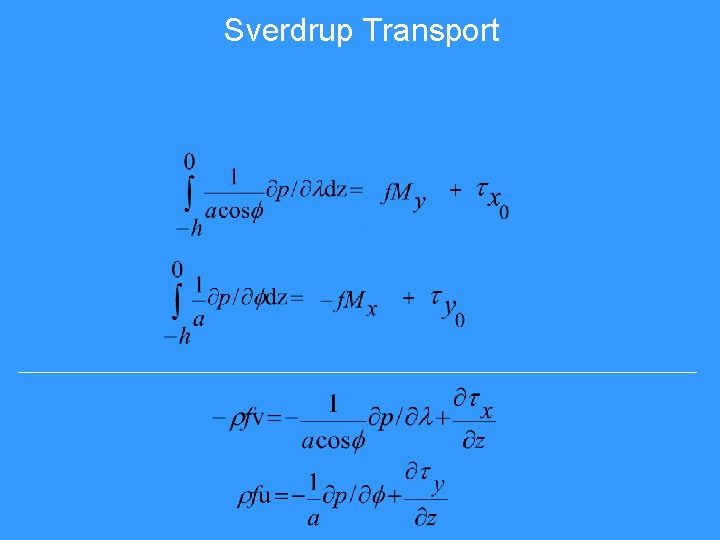
Sverdrup Transport Integrate these equations vertically, from some depth h well below the Ekman depth:
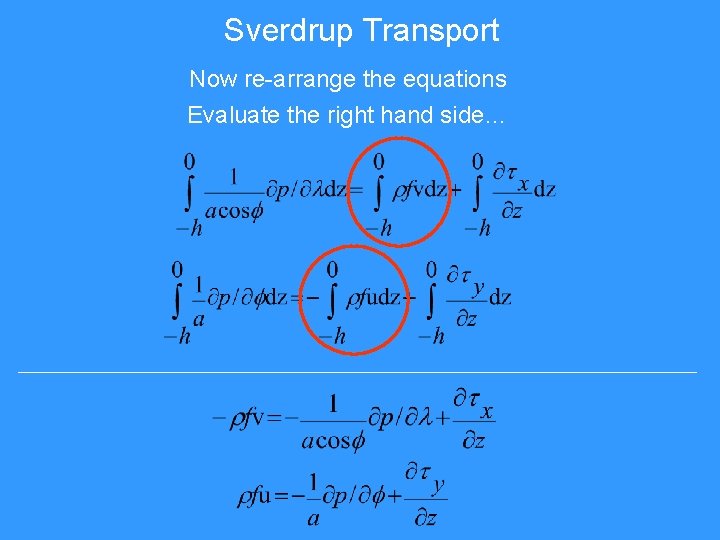
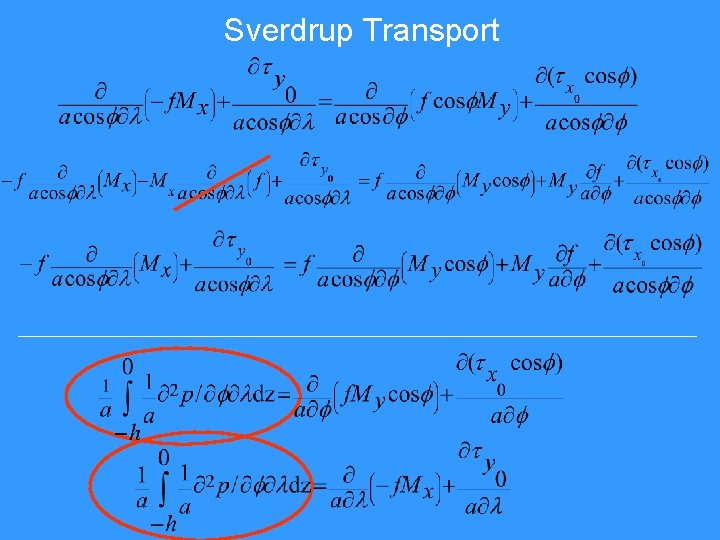
Sverdrup Transport Now re-arrange the equations Evaluate the right hand side…
Sverdrup Transport
Sverdrup Transport
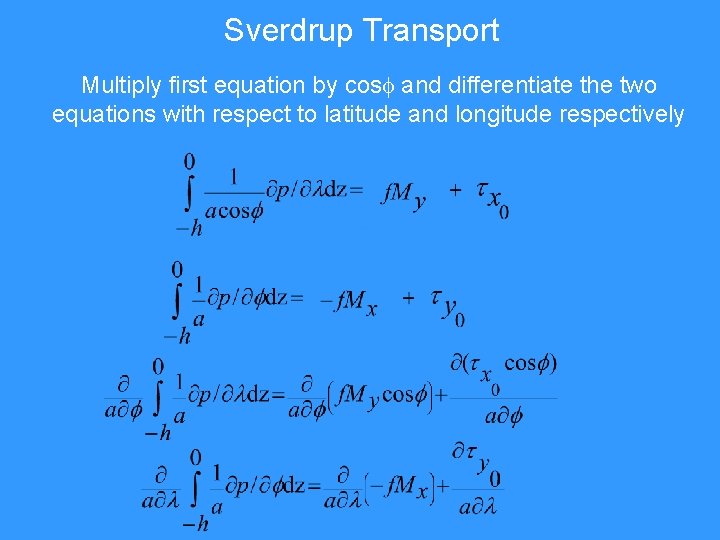
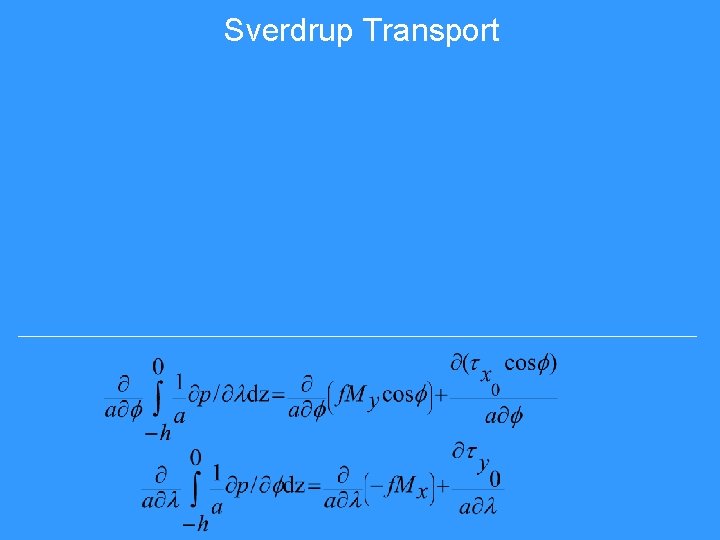
Sverdrup Transport Multiply first equation by cos and differentiate the two equations with respect to latitude and longitude respectively
Sverdrup Transport
Sverdrup Transport
Sverdrup Transport
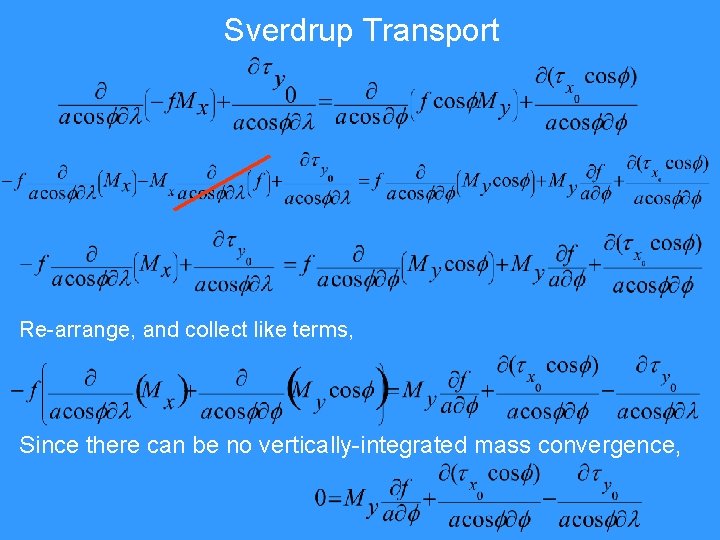
Sverdrup Transport Re-arrange, and collect like terms, Since there can be no vertically-integrated mass convergence,
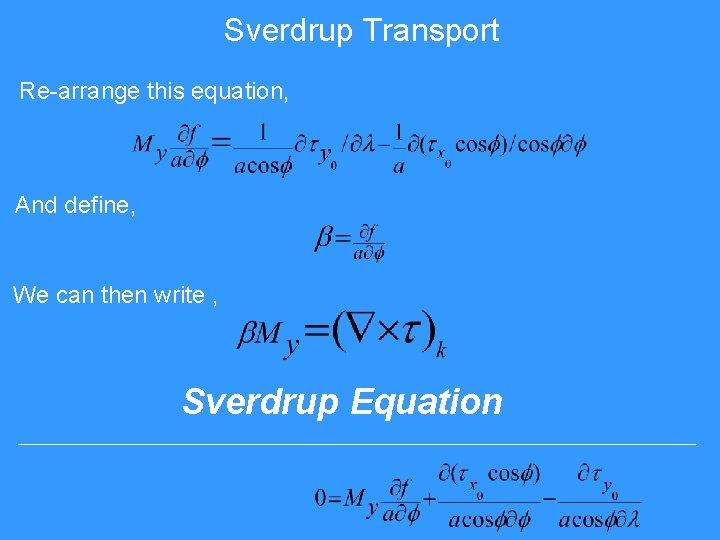
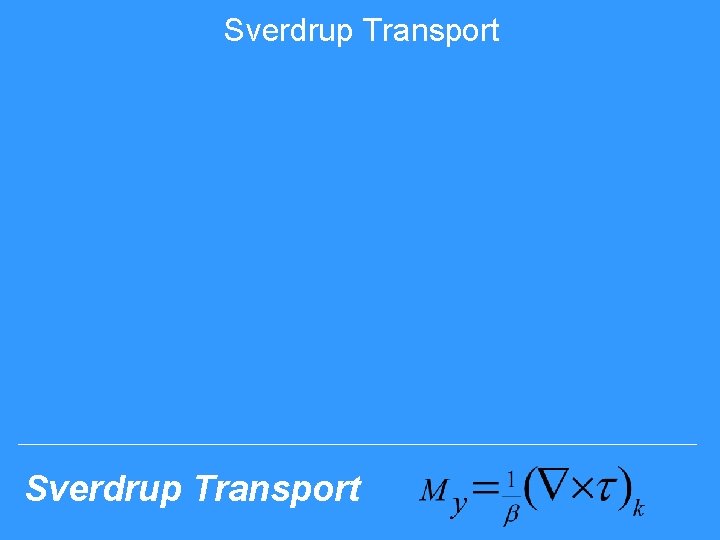
Sverdrup Transport Re-arrange this equation, And define, We can then write , Sverdrup Equation
Sverdrup Transport
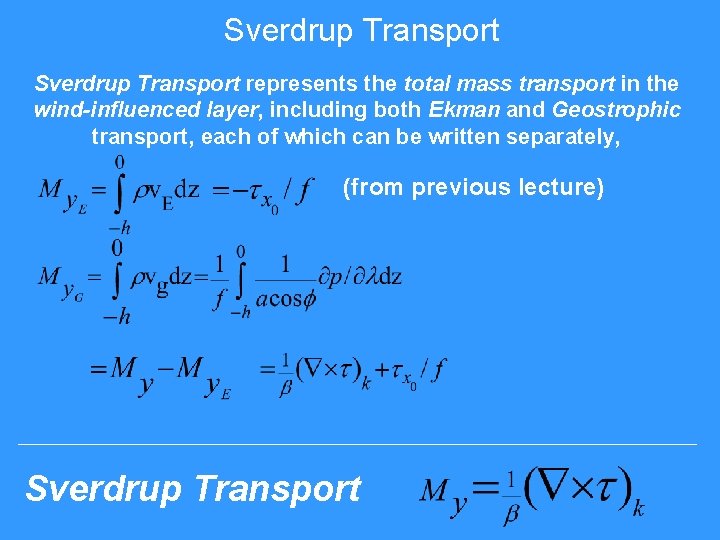
Sverdrup Transport represents the total mass transport in the wind-influenced layer, including both Ekman and Geostrophic transport, each of which can be written separately, (from previous lecture) Sverdrup Transport
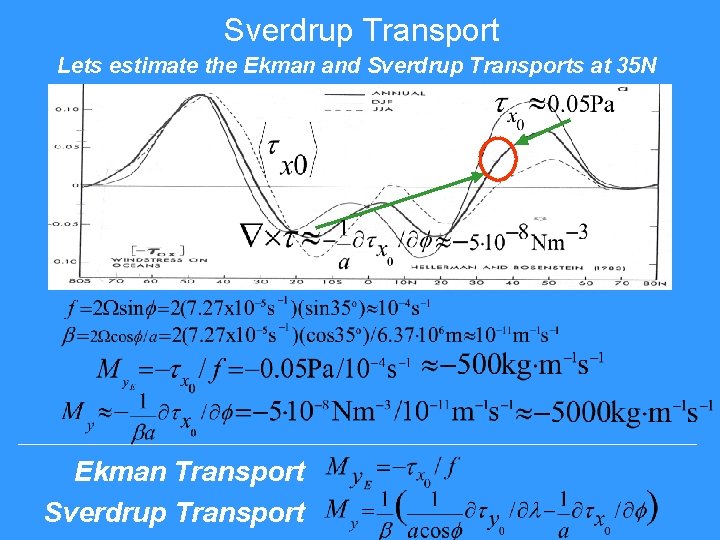
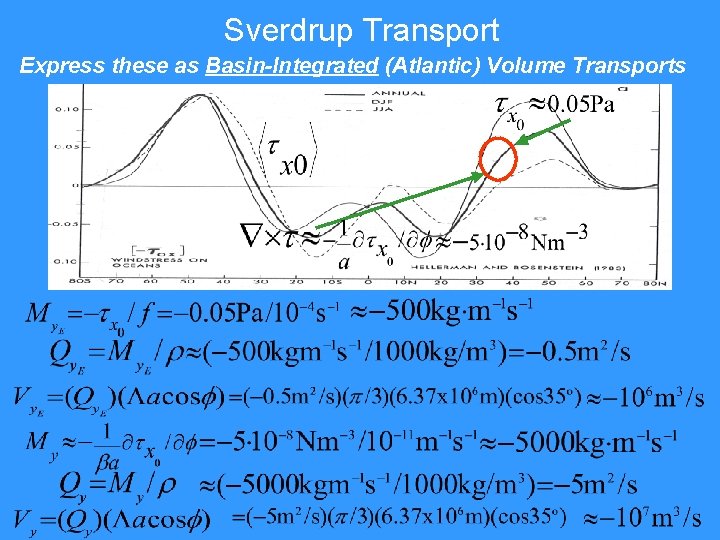
Sverdrup Transport Lets estimate the Ekman and Sverdrup Transports at 35 N Ekman Transport Sverdrup Transport
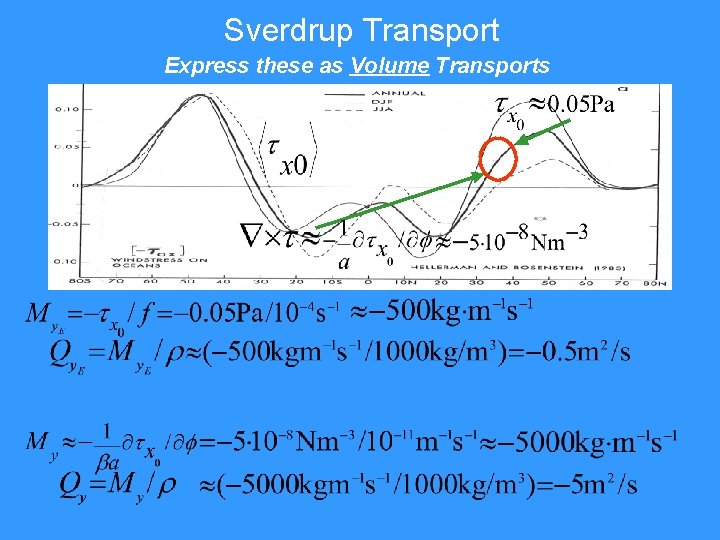
Sverdrup Transport Express these as Volume Transports
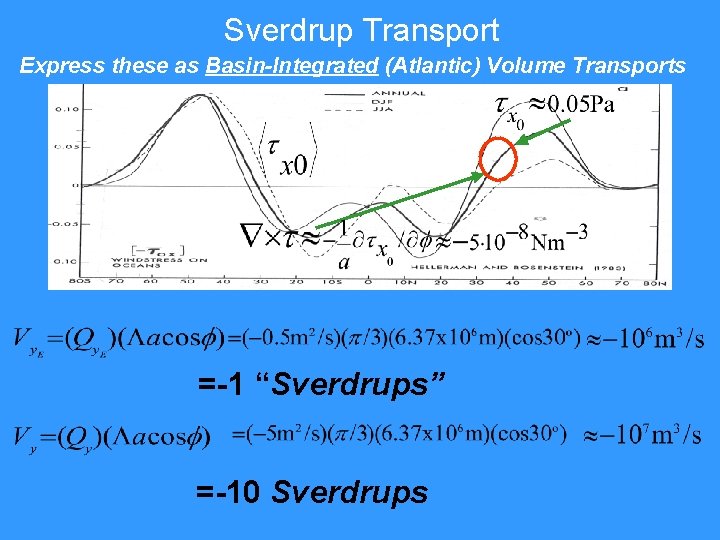
Sverdrup Transport Express these as Basin-Integrated (Atlantic) Volume Transports
Sverdrup Transport Express these as Basin-Integrated (Atlantic) Volume Transports =-1 “Sverdrups” =-10 Sverdrups
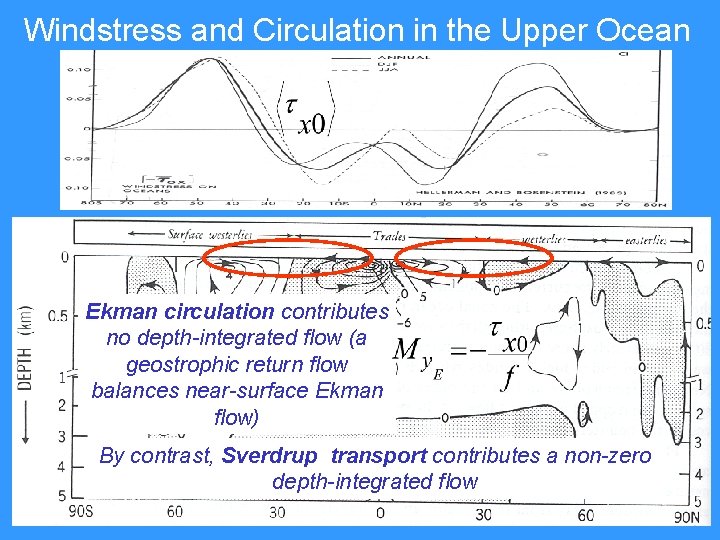
Windstress and Circulation in the Upper Ocean Ekman circulation contributes no depth-integrated flow (a geostrophic return flow balances near-surface Ekman flow) By contrast, Sverdrup transport contributes a non-zero depth-integrated flow
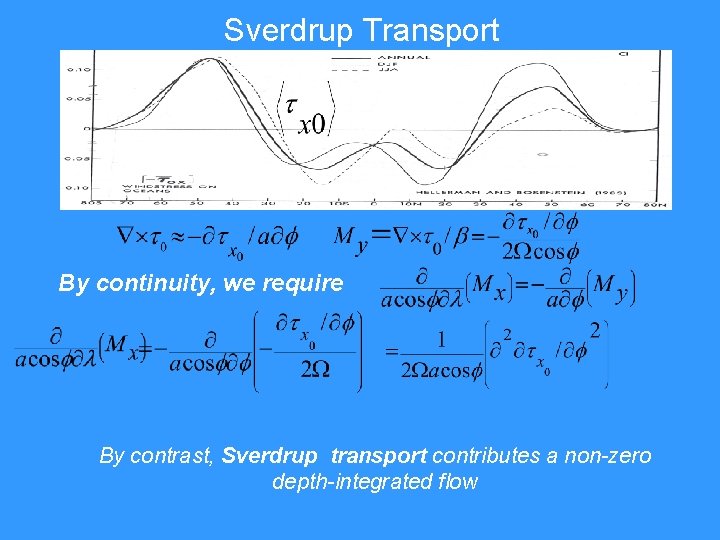
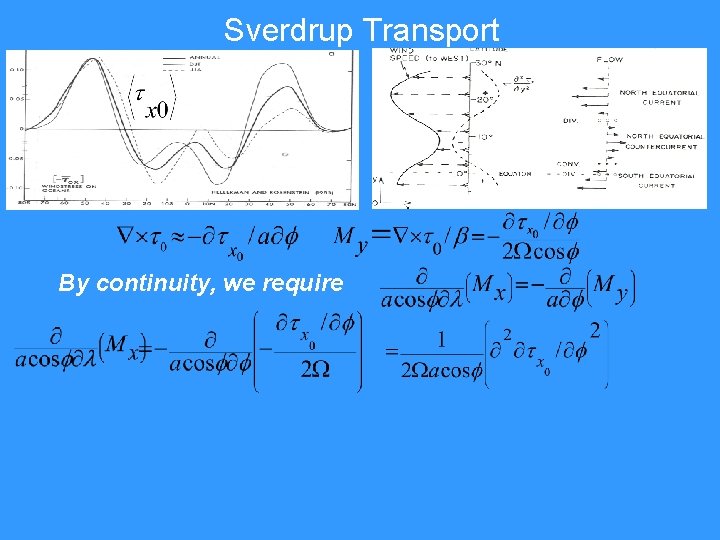
Sverdrup Transport By continuity, we require By contrast, Sverdrup transport contributes a non-zero depth-integrated flow
Sverdrup Transport By continuity, we require
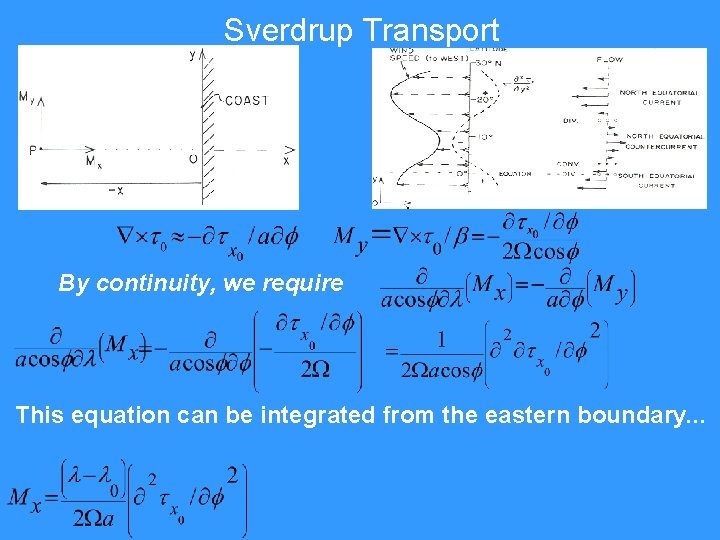
Sverdrup Transport By continuity, we require This equation can be integrated from the eastern boundary. . .
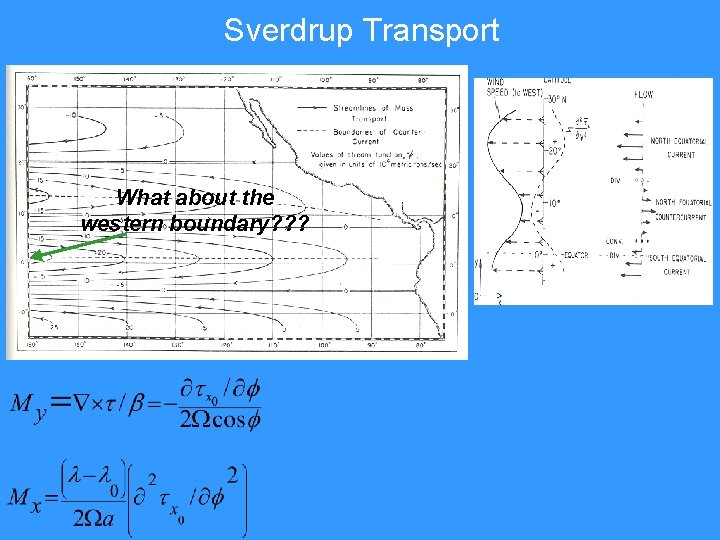
Sverdrup Transport What about the western boundary? ? ?