
Evaluation Simulation for Channel Coding and HARQ Document
![Conclusion [1] C 802. 16 m-09/010 r 2 Amendment to IEEE Standard for Local](https://slidetodoc.com/presentation_image_h2/1347e6a4f82fc85034662a0ccdd6c6e3/image-44.jpg "Conclusion [1] C 802. 16 m-09/010 r 2 Amendment to IEEE Standard for Local")
- Slides: 44
Evaluation Simulation for Channel Coding and HARQ Document Number: IEEE C 80216 -09/1259 Date Submitted: 2009 -07 -06 Source: Jin Xu, Bo Sun, Qianzi Xu, Xianwei Gong ZTE Corporation Venue: IEEE 802. 16 m Session #62 E-mail: {sun. bo 1, xu. jin 7}@zte. com. cn RE: Category: AWD comments / Area: Chapter 15. 3. 12 (Channel coding HARQ-PHY) “Comments on AWD 15. 3. 12 Channel coding HARQ-PHY” Base Contribution: C 80216 m-09_0868 r 2. doc Purpose: To be discussed and adopted by TGm for use in the IEEE 802. 16 m Amendment Working Document Notice: This document does not represent the agreed views of the IEEE 802. 16 Working Group or any of its subgroups. It represents only the views of the participants listed in the “Source(s)” field above. It is offered as a basis for discussion. It is not binding on the contributor(s), who reserve(s) the right to add, amend or withdraw material contained herein. Release: The contributor grants a free, irrevocable license to the IEEE to incorporate material contained in this contribution, and any modifications thereof, in the creation of an IEEE Standards publication; to copyright in the IEEE’s name any IEEE Standards publication even though it may include portions of this contribution; and at the IEEE’s sole discretion to permit others to reproduce in whole or in part the resulting IEEE Standards publication. The contributor also acknowledges and accepts that this contribution may be made public by IEEE 802. 16. Patent Policy: The contributor is familiar with the IEEE-SA Patent Policy and Procedures: <http: //standards. ieee. org/guides/bylaws/sect 6 -7. html#6> and <http: //standards. ieee. org/guides/opman/sect 6. html#6. 3>. Further information is located at <http: //standards. ieee. org/board/pat-material. html> and <http: //standards. ieee. org/board/pat >.
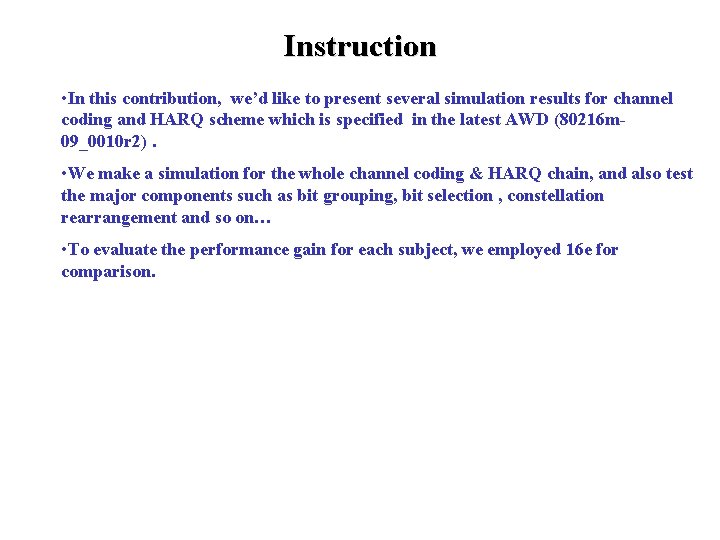
Instruction • In this contribution, we’d like to present several simulation results for channel coding and HARQ scheme which is specified in the latest AWD (80216 m 09_0010 r 2). • We make a simulation for the whole channel coding & HARQ chain, and also test the major components such as bit grouping, bit selection , constellation rearrangement and so on… • To evaluate the performance gain for each subject, we employed 16 e for comparison.
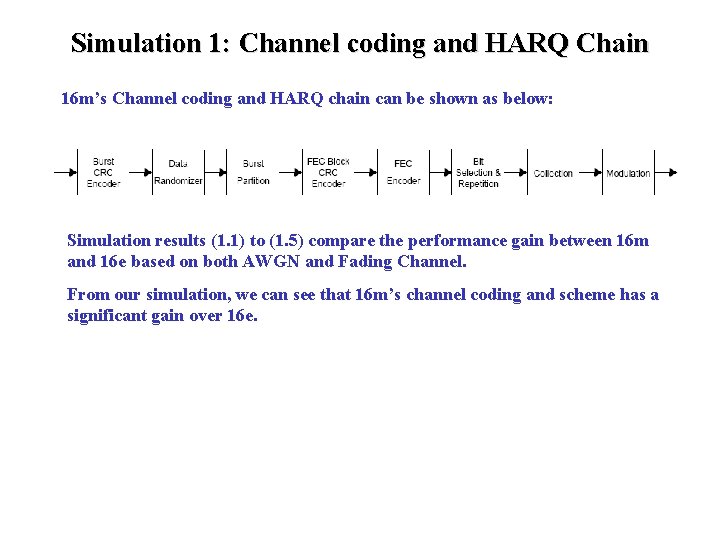
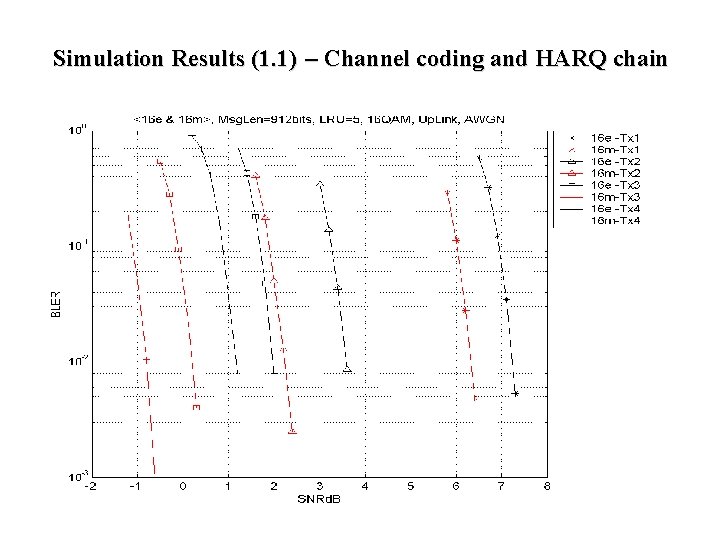
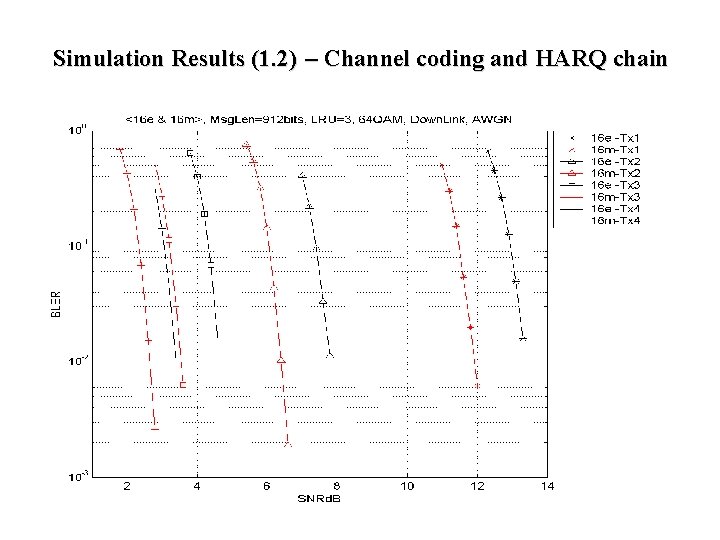
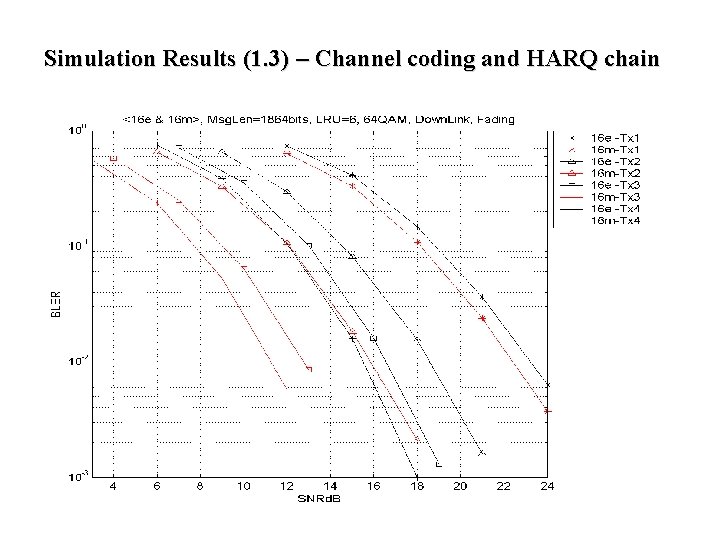
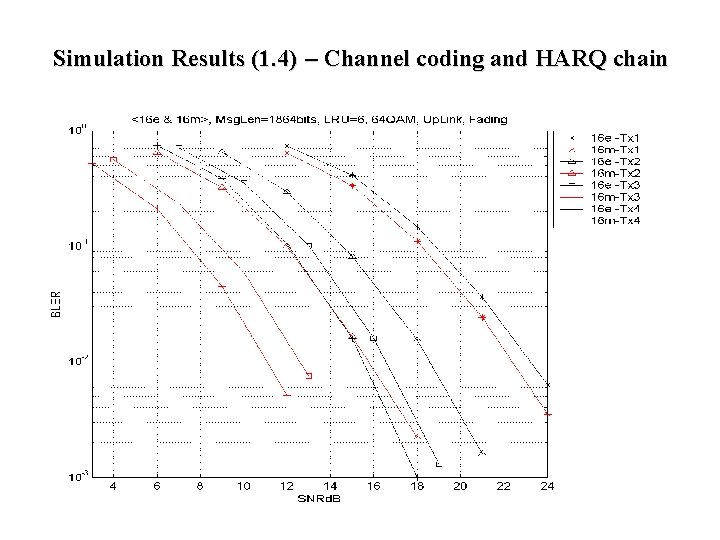
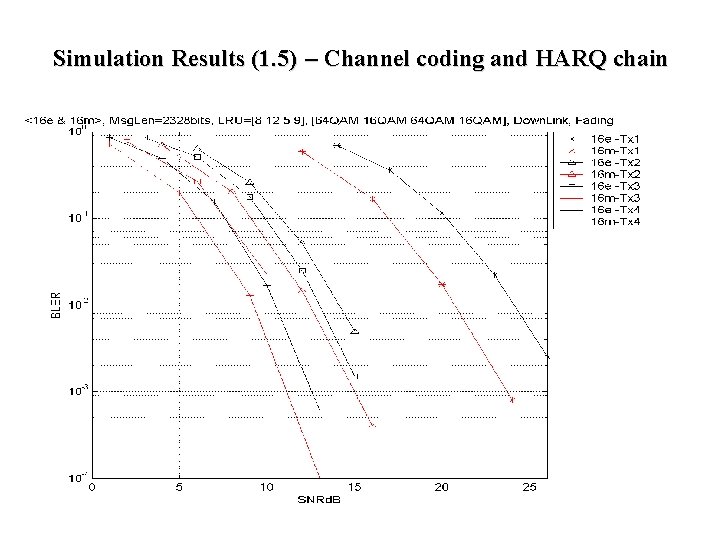
Simulation 1: Channel coding and HARQ Chain 16 m’s Channel coding and HARQ chain can be shown as below: Simulation results (1. 1) to (1. 5) compare the performance gain between 16 m and 16 e based on both AWGN and Fading Channel. From our simulation, we can see that 16 m’s channel coding and scheme has a significant gain over 16 e.
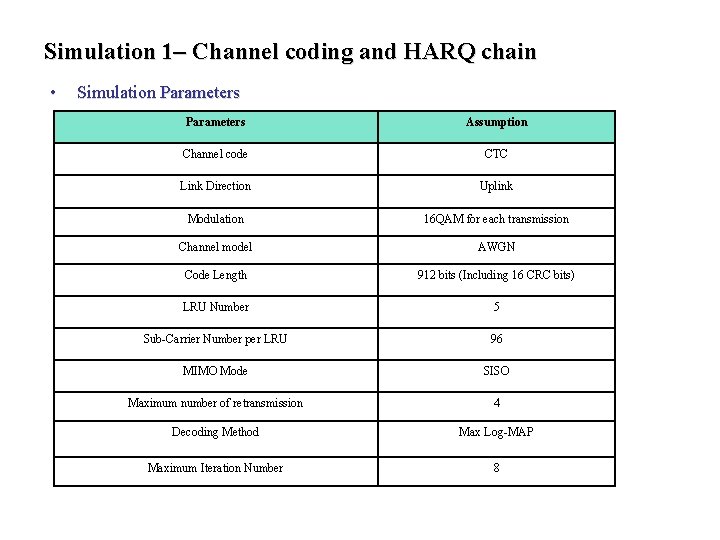
Simulation 1– Channel coding and HARQ chain • Simulation Parameters Assumption Channel code CTC Link Direction Uplink Modulation 16 QAM for each transmission Channel model AWGN Code Length 912 bits (Including 16 CRC bits) LRU Number 5 Sub-Carrier Number per LRU 96 MIMO Mode SISO Maximum number of retransmission 4 Decoding Method Max Log-MAP Maximum Iteration Number 8
Simulation Results (1. 1) – Channel coding and HARQ chain
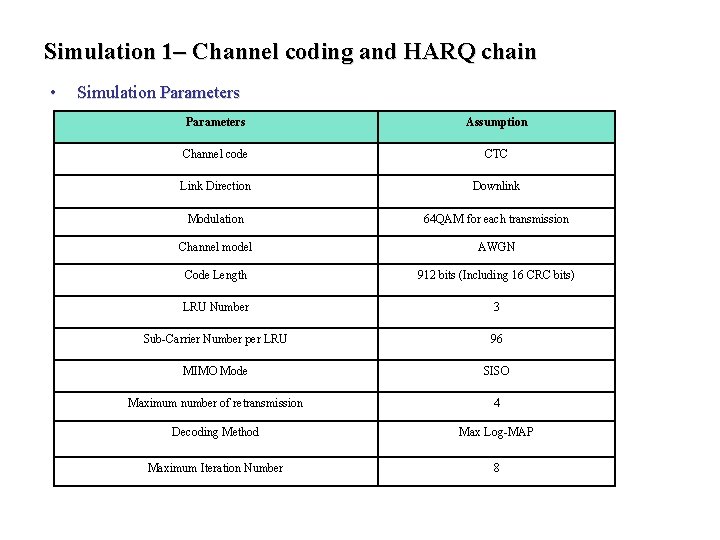
Simulation 1– Channel coding and HARQ chain • Simulation Parameters Assumption Channel code CTC Link Direction Downlink Modulation 64 QAM for each transmission Channel model AWGN Code Length 912 bits (Including 16 CRC bits) LRU Number 3 Sub-Carrier Number per LRU 96 MIMO Mode SISO Maximum number of retransmission 4 Decoding Method Max Log-MAP Maximum Iteration Number 8
Simulation Results (1. 2) – Channel coding and HARQ chain
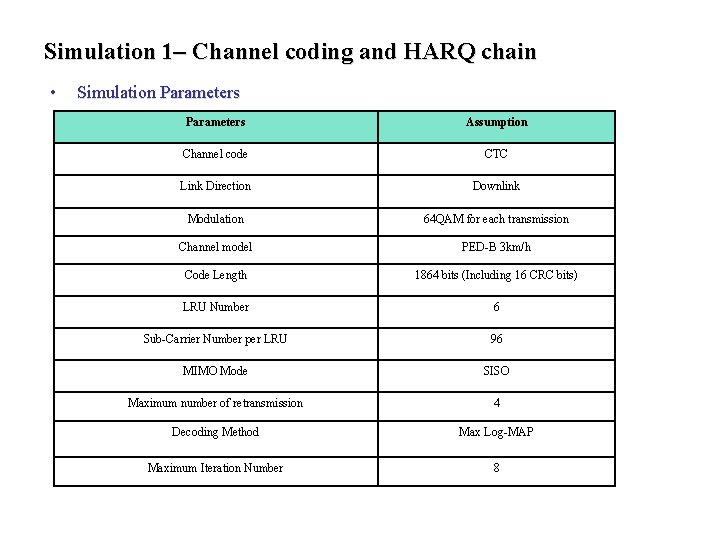
Simulation 1– Channel coding and HARQ chain • Simulation Parameters Assumption Channel code CTC Link Direction Downlink Modulation 64 QAM for each transmission Channel model PED-B 3 km/h Code Length 1864 bits (Including 16 CRC bits) LRU Number 6 Sub-Carrier Number per LRU 96 MIMO Mode SISO Maximum number of retransmission 4 Decoding Method Max Log-MAP Maximum Iteration Number 8
Simulation Results (1. 3) – Channel coding and HARQ chain
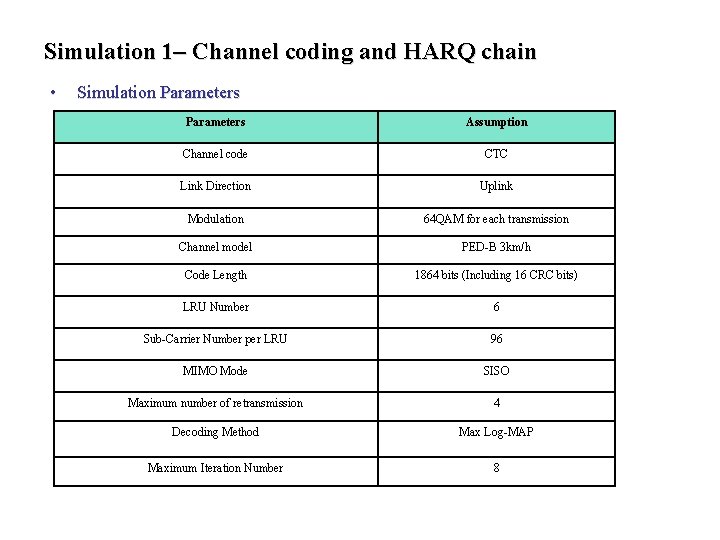
Simulation 1– Channel coding and HARQ chain • Simulation Parameters Assumption Channel code CTC Link Direction Uplink Modulation 64 QAM for each transmission Channel model PED-B 3 km/h Code Length 1864 bits (Including 16 CRC bits) LRU Number 6 Sub-Carrier Number per LRU 96 MIMO Mode SISO Maximum number of retransmission 4 Decoding Method Max Log-MAP Maximum Iteration Number 8
Simulation Results (1. 4) – Channel coding and HARQ chain
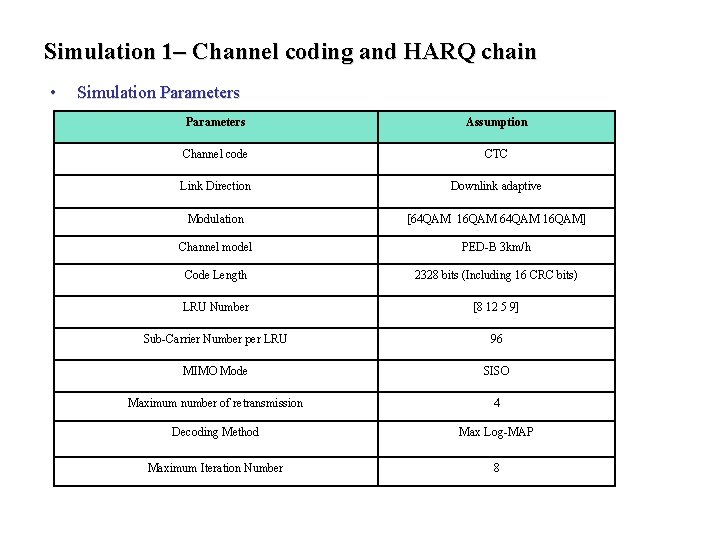
Simulation 1– Channel coding and HARQ chain • Simulation Parameters Assumption Channel code CTC Link Direction Downlink adaptive Modulation [64 QAM 16 QAM] Channel model PED-B 3 km/h Code Length 2328 bits (Including 16 CRC bits) LRU Number [8 12 5 9] Sub-Carrier Number per LRU 96 MIMO Mode SISO Maximum number of retransmission 4 Decoding Method Max Log-MAP Maximum Iteration Number 8
Simulation Results (1. 5) – Channel coding and HARQ chain
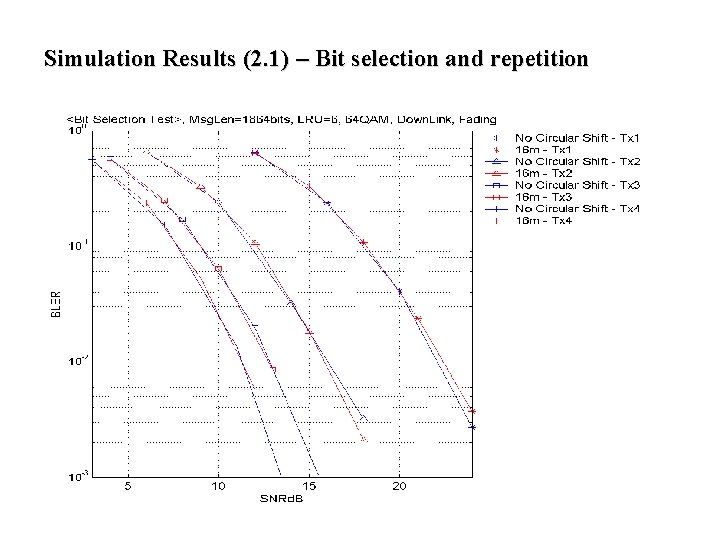
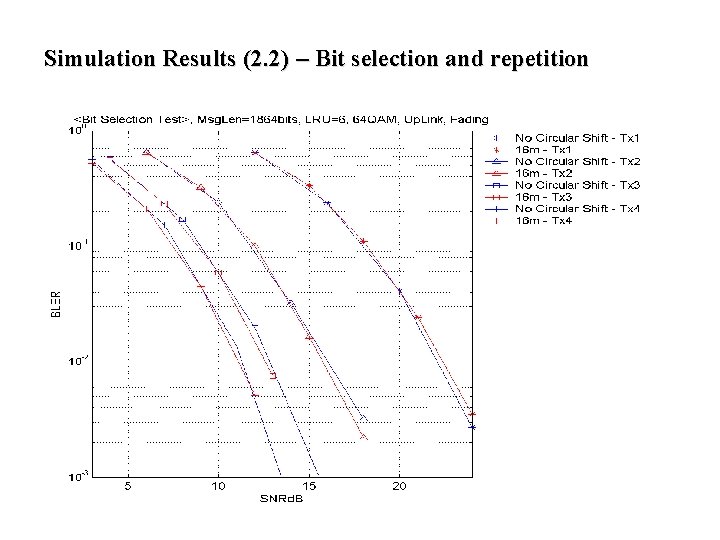
Simulation 2: Bit selection and repetition 16 m’s bit selection and repetition method employs a symbol – level circular shift within the transmission subpacket. In this contribution, we only give the performance with and without this circular shift for case of SISO (rank 1). The performance for rank 2 can be found in ITRI’s contribution C 802. 16 m-09/0879. In our simulation results (2. 1) and (2. 2), the “No circular shift” means No circular shift operation is used in the transmission.
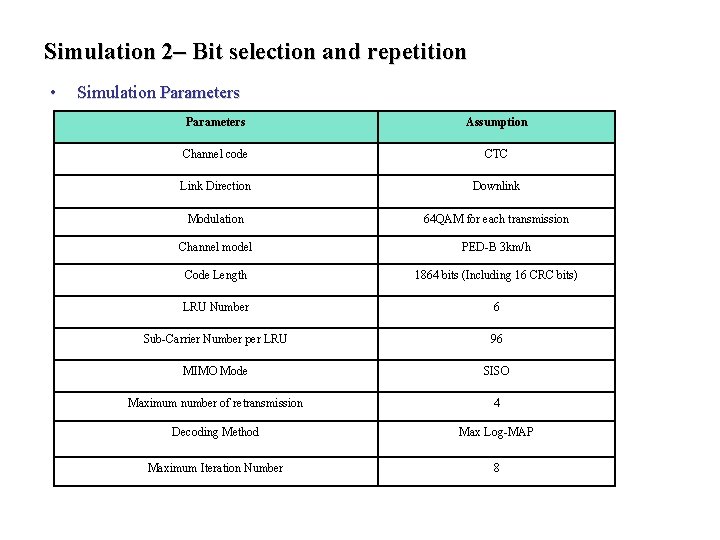
Simulation 2– Bit selection and repetition • Simulation Parameters Assumption Channel code CTC Link Direction Downlink Modulation 64 QAM for each transmission Channel model PED-B 3 km/h Code Length 1864 bits (Including 16 CRC bits) LRU Number 6 Sub-Carrier Number per LRU 96 MIMO Mode SISO Maximum number of retransmission 4 Decoding Method Max Log-MAP Maximum Iteration Number 8
Simulation Results (2. 1) – Bit selection and repetition
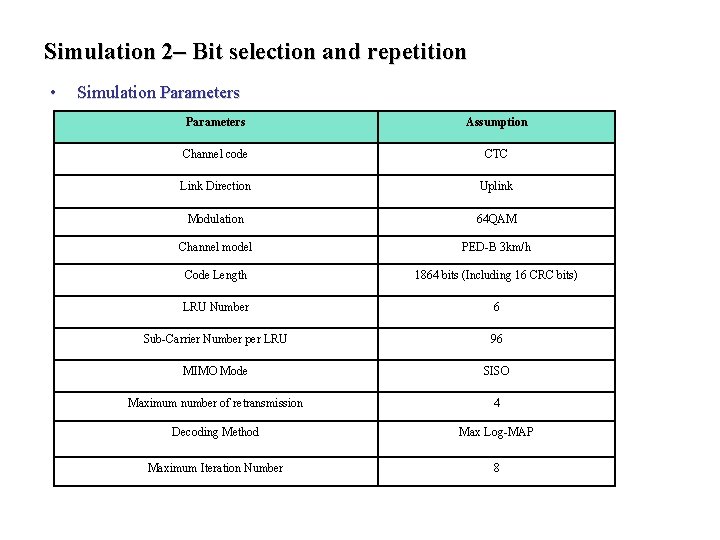
Simulation 2– Bit selection and repetition • Simulation Parameters Assumption Channel code CTC Link Direction Uplink Modulation 64 QAM Channel model PED-B 3 km/h Code Length 1864 bits (Including 16 CRC bits) LRU Number 6 Sub-Carrier Number per LRU 96 MIMO Mode SISO Maximum number of retransmission 4 Decoding Method Max Log-MAP Maximum Iteration Number 8
Simulation Results (2. 2) – Bit selection and repetition
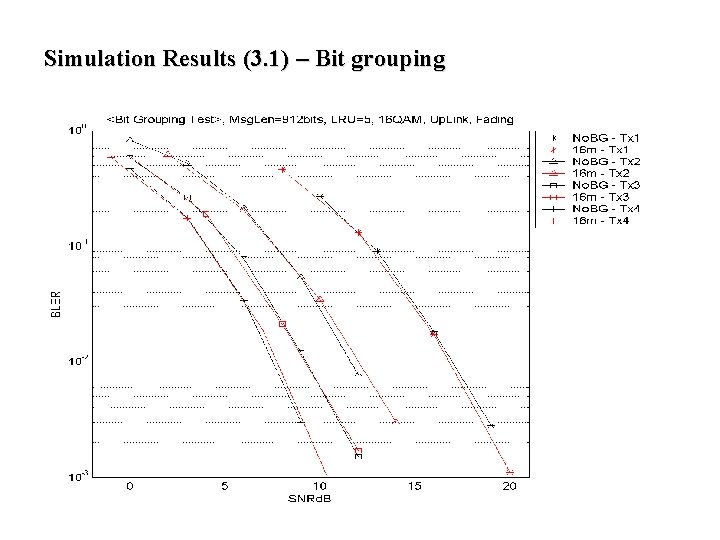
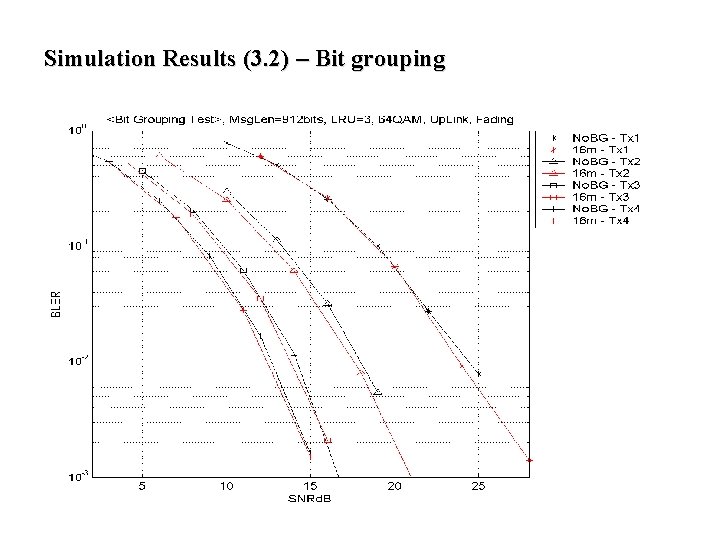
Simulation 3: Bit grouping Simulation results (3. 1) to (3. 2) give the BLER performance with and without 16 m’s bit grouping method. In our simulation results (3. 1) to (3. 2), the “No. BG” means 16 e’s Bit grouping operation is used here. We can see from the figures that bit grouping can slightly improve the link performance.
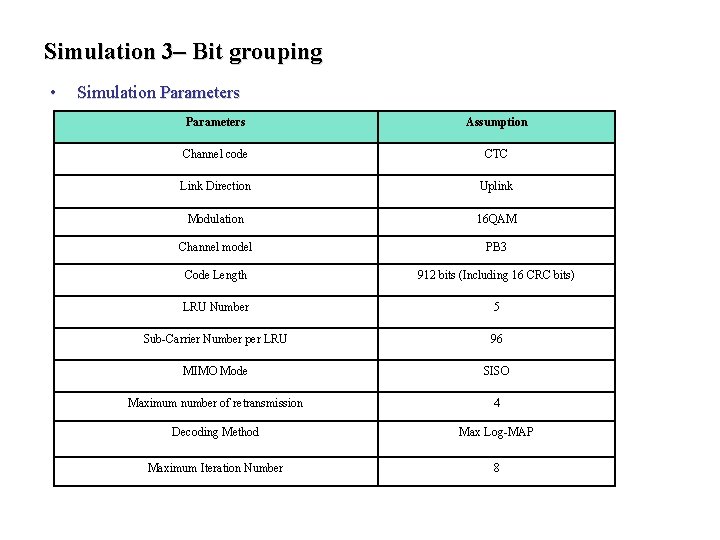
Simulation 3– Bit grouping • Simulation Parameters Assumption Channel code CTC Link Direction Uplink Modulation 16 QAM Channel model PB 3 Code Length 912 bits (Including 16 CRC bits) LRU Number 5 Sub-Carrier Number per LRU 96 MIMO Mode SISO Maximum number of retransmission 4 Decoding Method Max Log-MAP Maximum Iteration Number 8
Simulation Results (3. 1) – Bit grouping
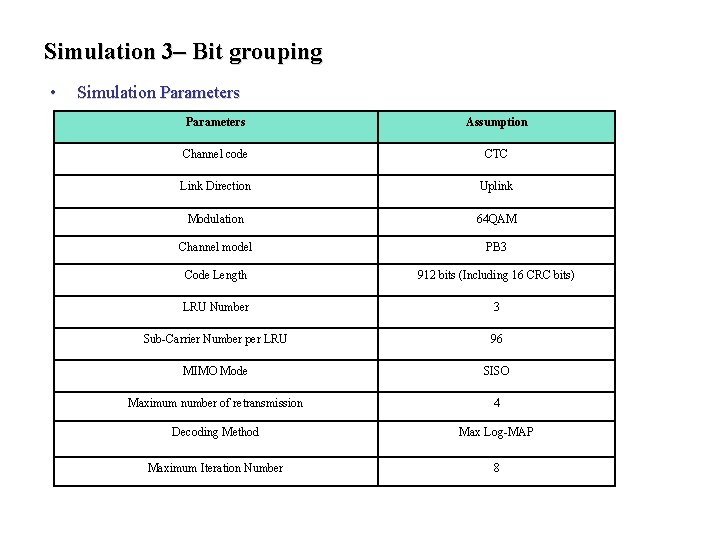
Simulation 3– Bit grouping • Simulation Parameters Assumption Channel code CTC Link Direction Uplink Modulation 64 QAM Channel model PB 3 Code Length 912 bits (Including 16 CRC bits) LRU Number 3 Sub-Carrier Number per LRU 96 MIMO Mode SISO Maximum number of retransmission 4 Decoding Method Max Log-MAP Maximum Iteration Number 8
Simulation Results (3. 2) – Bit grouping
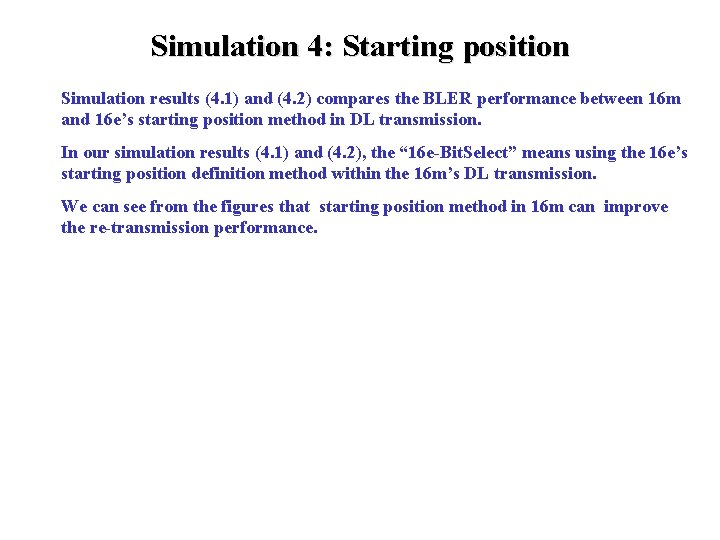
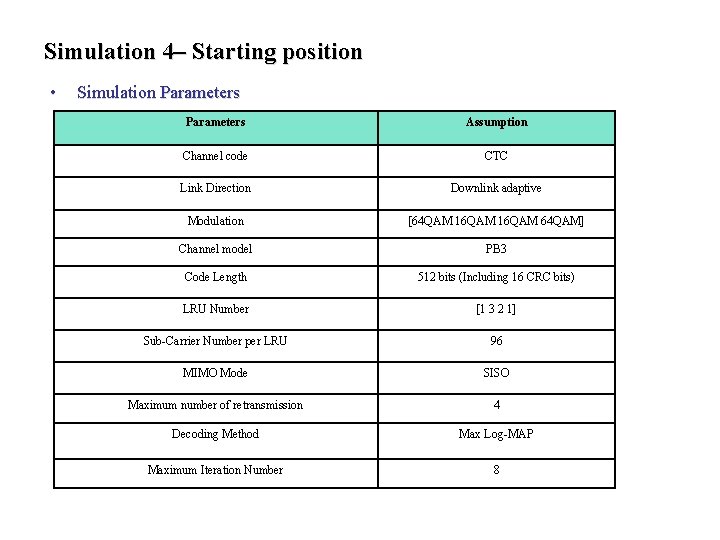
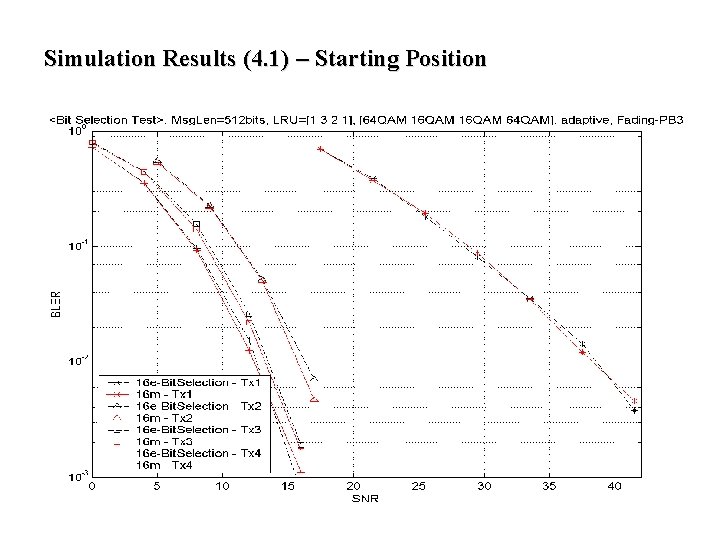
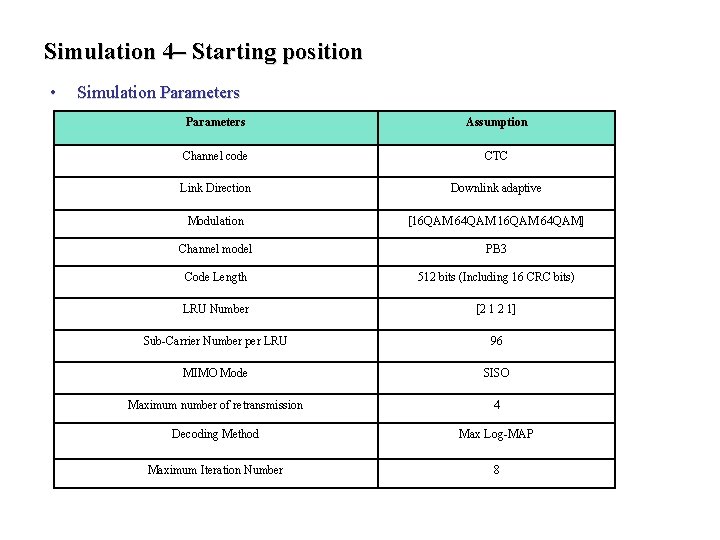
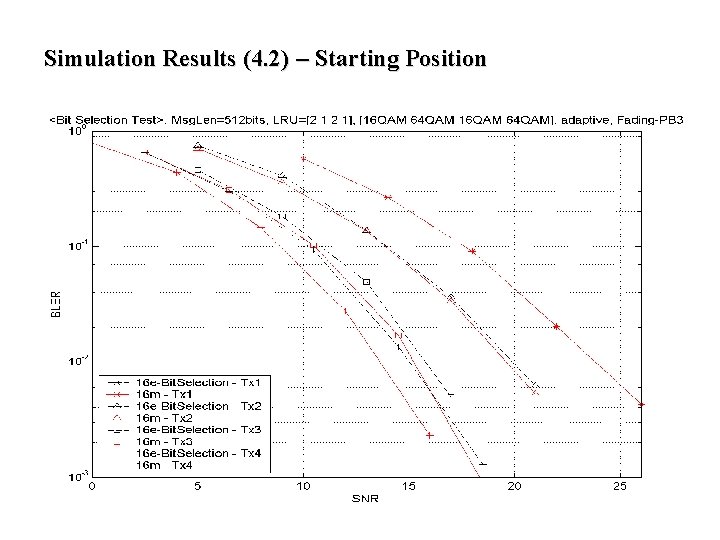
Simulation 4: Starting position Simulation results (4. 1) and (4. 2) compares the BLER performance between 16 m and 16 e’s starting position method in DL transmission. In our simulation results (4. 1) and (4. 2), the “ 16 e-Bit. Select” means using the 16 e’s starting position definition method within the 16 m’s DL transmission. We can see from the figures that starting position method in 16 m can improve the re-transmission performance.
Simulation 4– Starting position • Simulation Parameters Assumption Channel code CTC Link Direction Downlink adaptive Modulation [64 QAM 16 QAM 64 QAM] Channel model PB 3 Code Length 512 bits (Including 16 CRC bits) LRU Number [1 3 2 1] Sub-Carrier Number per LRU 96 MIMO Mode SISO Maximum number of retransmission 4 Decoding Method Max Log-MAP Maximum Iteration Number 8
Simulation Results (4. 1) – Starting Position
Simulation 4– Starting position • Simulation Parameters Assumption Channel code CTC Link Direction Downlink adaptive Modulation [16 QAM 64 QAM] Channel model PB 3 Code Length 512 bits (Including 16 CRC bits) LRU Number [2 1 2 1] Sub-Carrier Number per LRU 96 MIMO Mode SISO Maximum number of retransmission 4 Decoding Method Max Log-MAP Maximum Iteration Number 8
Simulation Results (4. 2) – Starting Position
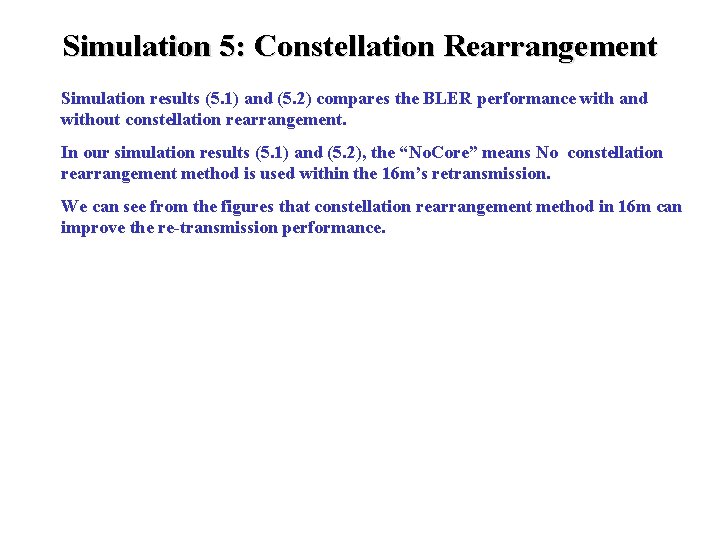
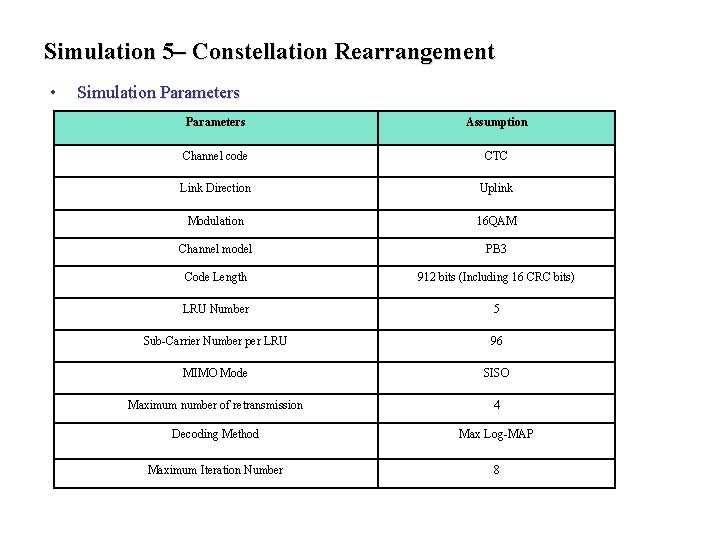
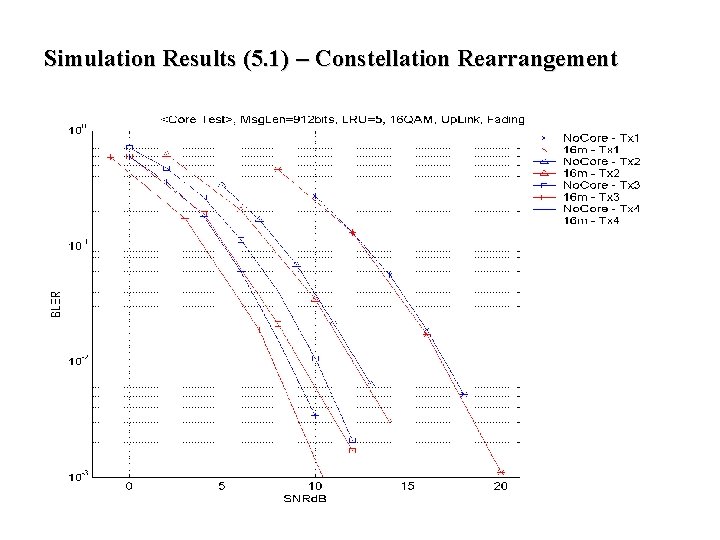
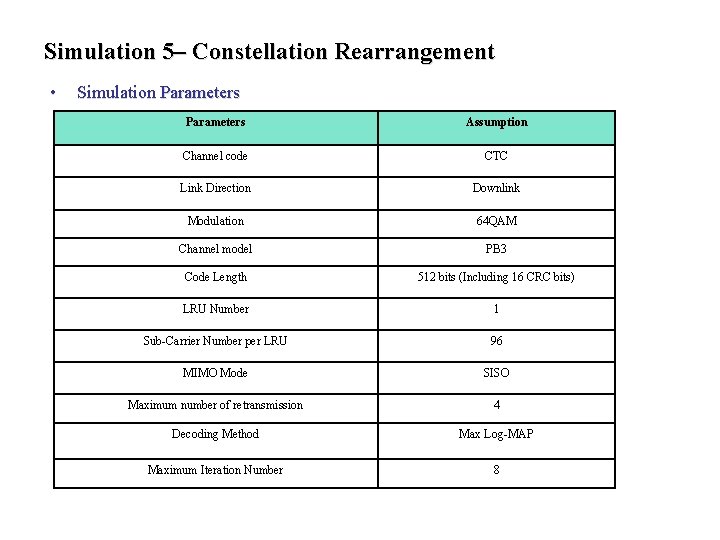
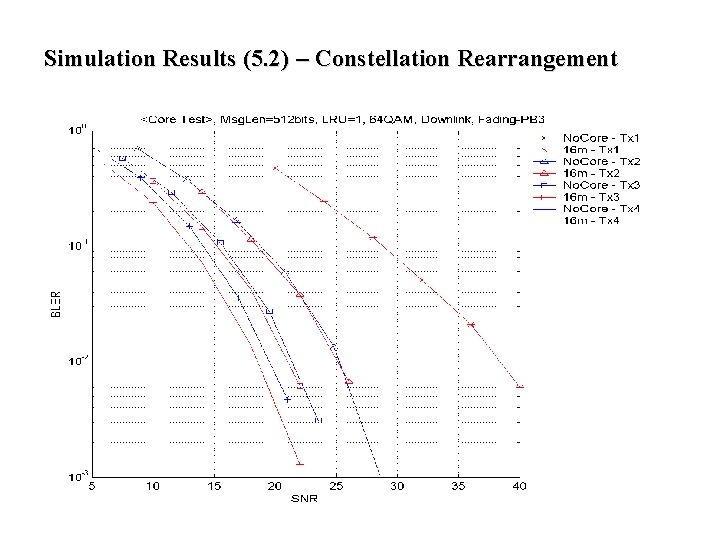
Simulation 5: Constellation Rearrangement Simulation results (5. 1) and (5. 2) compares the BLER performance with and without constellation rearrangement. In our simulation results (5. 1) and (5. 2), the “No. Core” means No constellation rearrangement method is used within the 16 m’s retransmission. We can see from the figures that constellation rearrangement method in 16 m can improve the re-transmission performance.
Simulation 5– Constellation Rearrangement • Simulation Parameters Assumption Channel code CTC Link Direction Uplink Modulation 16 QAM Channel model PB 3 Code Length 912 bits (Including 16 CRC bits) LRU Number 5 Sub-Carrier Number per LRU 96 MIMO Mode SISO Maximum number of retransmission 4 Decoding Method Max Log-MAP Maximum Iteration Number 8
Simulation Results (5. 1) – Constellation Rearrangement
Simulation 5– Constellation Rearrangement • Simulation Parameters Assumption Channel code CTC Link Direction Downlink Modulation 64 QAM Channel model PB 3 Code Length 512 bits (Including 16 CRC bits) LRU Number 1 Sub-Carrier Number per LRU 96 MIMO Mode SISO Maximum number of retransmission 4 Decoding Method Max Log-MAP Maximum Iteration Number 8
Simulation Results (5. 2) – Constellation Rearrangement
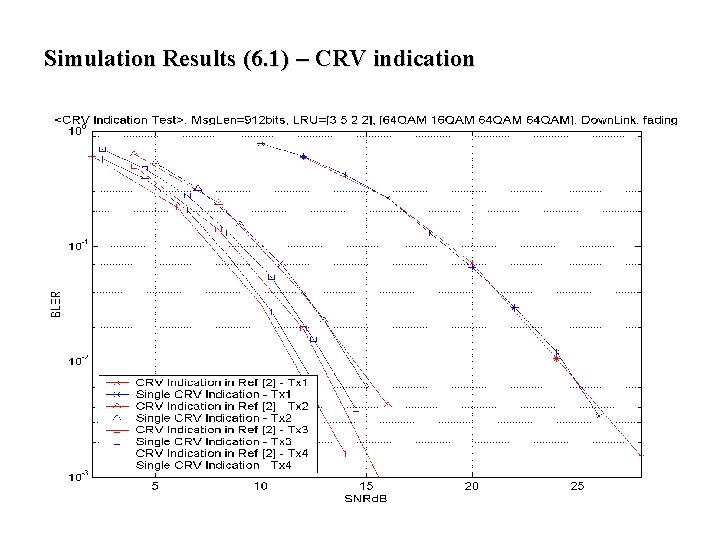
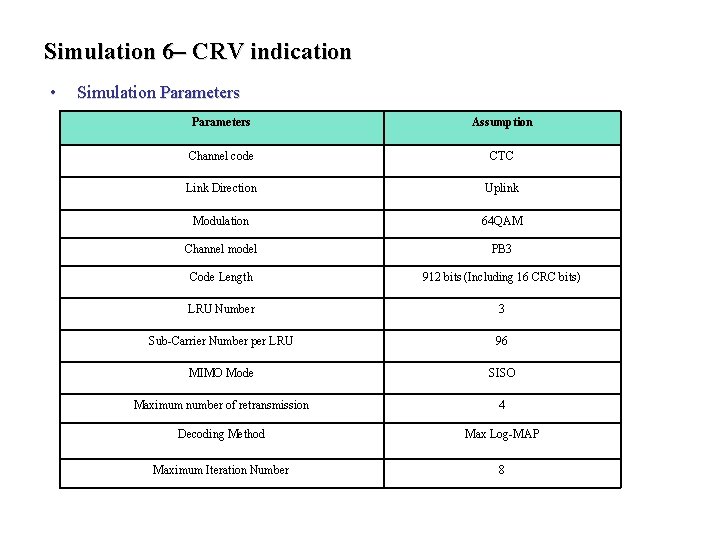
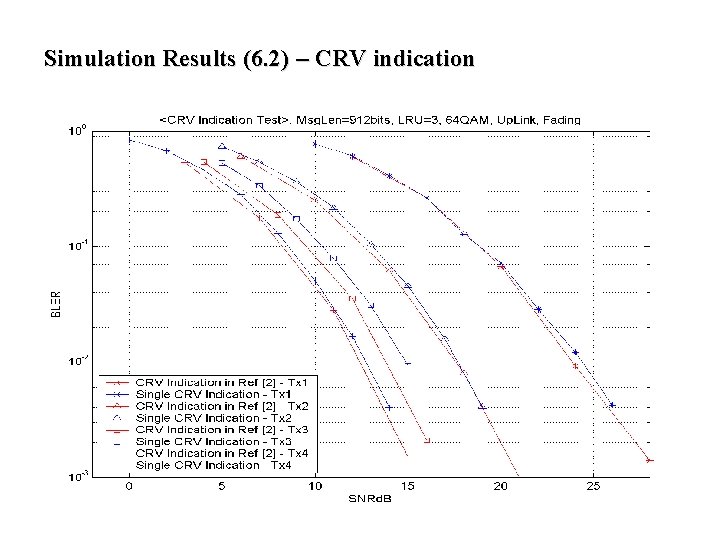
Simulation 6: CRV indication Simulation results (6. 1) and (6. 2) gives the performance gain of LG’s CRV indication which is presented in the contribution C 80216 m-09_0868 r 2, and supposed to be adopted by AWD. In our simulation results (6. 1) and (6. 2), the “single CRV indication ” means each transmission has only one CRV which is the common CRV indication method. We can see from the figures that CRV indication method in the contribution C 80216 m-09_0868 r 2 can improve the re-transmission performance.
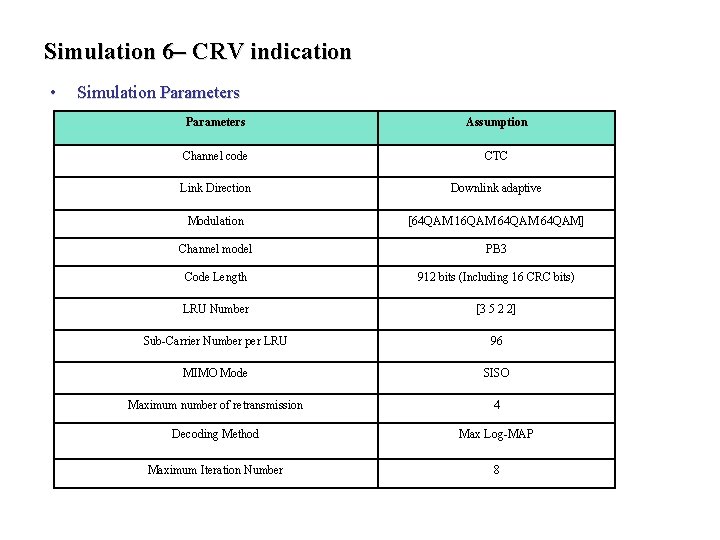
Simulation 6– CRV indication • Simulation Parameters Assumption Channel code CTC Link Direction Downlink adaptive Modulation [64 QAM 16 QAM 64 QAM] Channel model PB 3 Code Length 912 bits (Including 16 CRC bits) LRU Number [3 5 2 2] Sub-Carrier Number per LRU 96 MIMO Mode SISO Maximum number of retransmission 4 Decoding Method Max Log-MAP Maximum Iteration Number 8
Simulation Results (6. 1) – CRV indication
Simulation 6– CRV indication • Simulation Parameters Assumption Channel code CTC Link Direction Uplink Modulation 64 QAM Channel model PB 3 Code Length 912 bits (Including 16 CRC bits) LRU Number 3 Sub-Carrier Number per LRU 96 MIMO Mode SISO Maximum number of retransmission 4 Decoding Method Max Log-MAP Maximum Iteration Number 8
Simulation Results (6. 2) – CRV indication
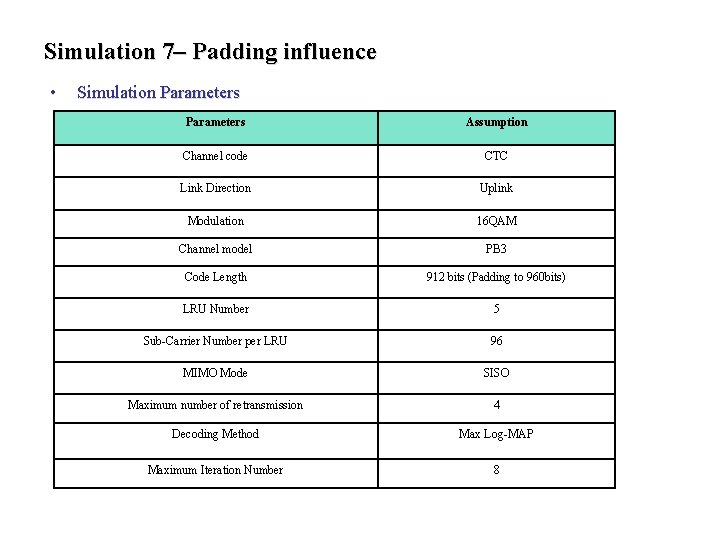
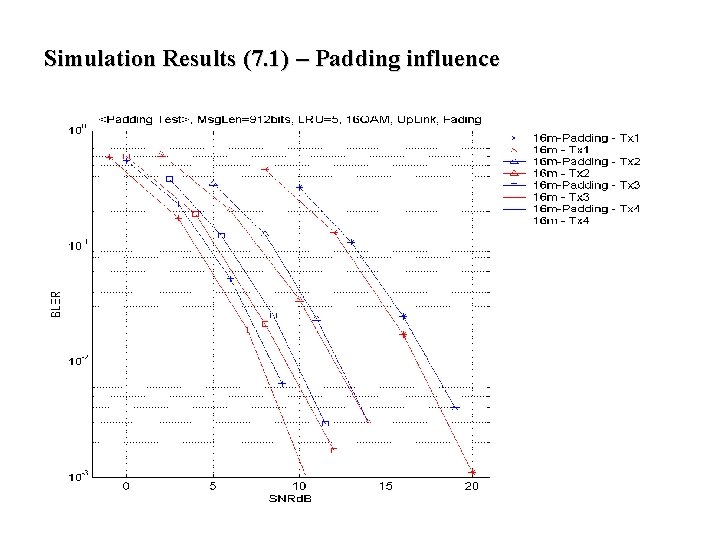
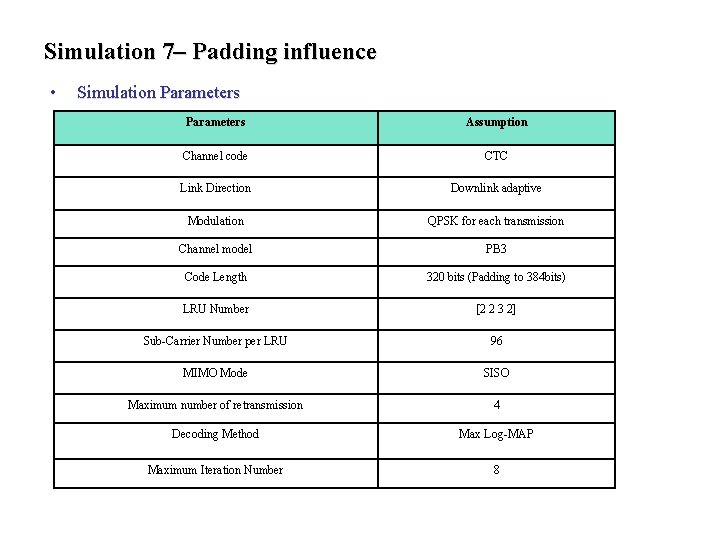
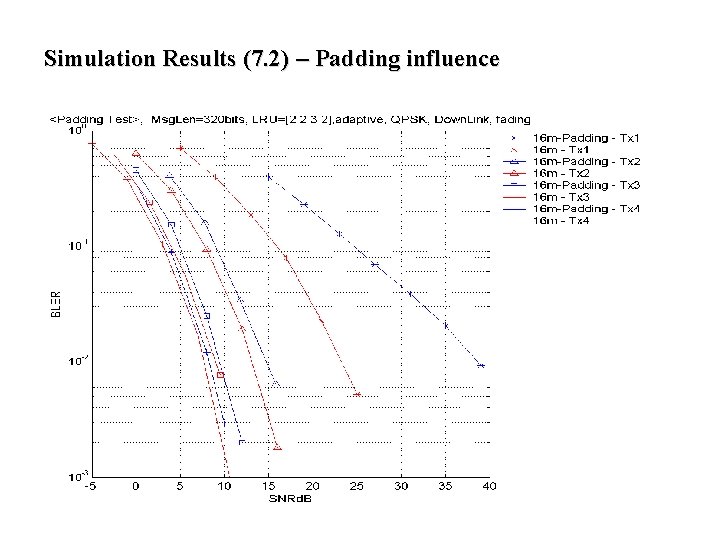
Simulation 7: Padding influence This part is related to the encoding packet size and burst partition. Since 16 m adopts more encoding packet size than that of 16 e, the number of padding bits are significantly reduced. Simulation results (7. 1) and (7. 2) evaluates the influence of this change on padding. We also employed the 16 e’s encoding packet size in the 16 m platform for this comparison, which is marked as “ 16 m-padding”
Simulation 7– Padding influence • Simulation Parameters Assumption Channel code CTC Link Direction Uplink Modulation 16 QAM Channel model PB 3 Code Length 912 bits (Padding to 960 bits) LRU Number 5 Sub-Carrier Number per LRU 96 MIMO Mode SISO Maximum number of retransmission 4 Decoding Method Max Log-MAP Maximum Iteration Number 8
Simulation Results (7. 1) – Padding influence
Simulation 7– Padding influence • Simulation Parameters Assumption Channel code CTC Link Direction Downlink adaptive Modulation QPSK for each transmission Channel model PB 3 Code Length 320 bits (Padding to 384 bits) LRU Number [2 2 3 2] Sub-Carrier Number per LRU 96 MIMO Mode SISO Maximum number of retransmission 4 Decoding Method Max Log-MAP Maximum Iteration Number 8
Simulation Results (7. 2) – Padding influence
Conclusion [1] C 802. 16 m-09/010 r 2 Amendment to IEEE Standard for Local and metropolitan areacoding networksand : Part HARQ 16: Air • Interface Compared with< Draft the legacy system, the new designed Channel for Fixed and Mobile Broadband Wireless Access Systems — Amendment for Advanced Air Interface > scheme can attain an obvious performance gain. [2] C 802. 16 m-09/868 r 2 <Proposed Text of Channel Coding and HARQ for the IEEE 802. 16 m Amendment>. • Gain comes from the new designed Encoding packet size, bit grouping, bit selection , constellation rearrangement and so on. These technologies can work together very well. • The contribution concludes that the channel coding and HARQ scheme described by 16 m’s AWD is reasonable and acceptable. Reference