
Evaluation of Water Quality Monitoring Data at the

- Slides: 23
Evaluation of Water Quality Monitoring Data at the Local Level a Reality Check Jeff Hieronymus
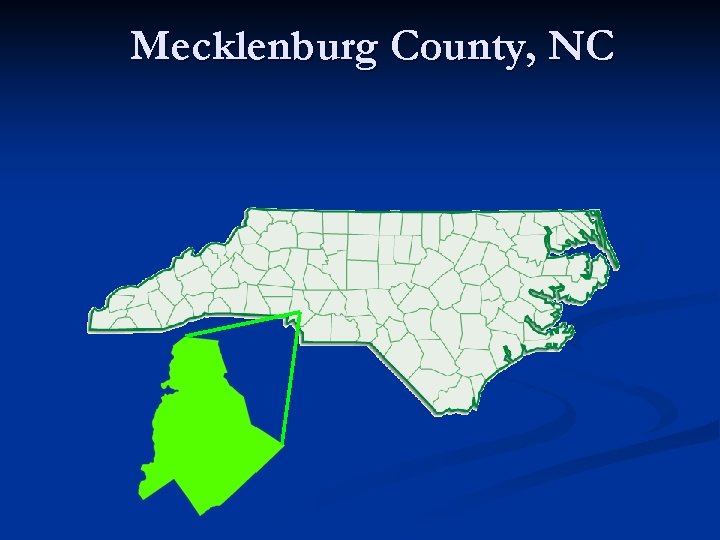
Mecklenburg County, NC
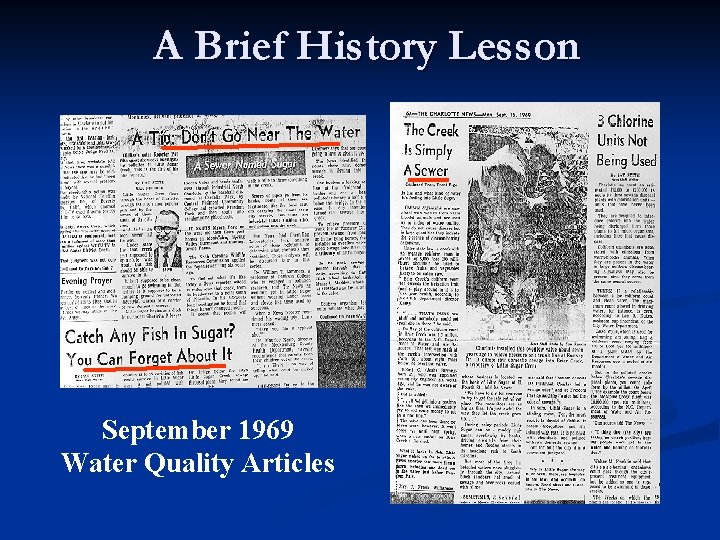
A Brief History Lesson September 1969 Water Quality Articles
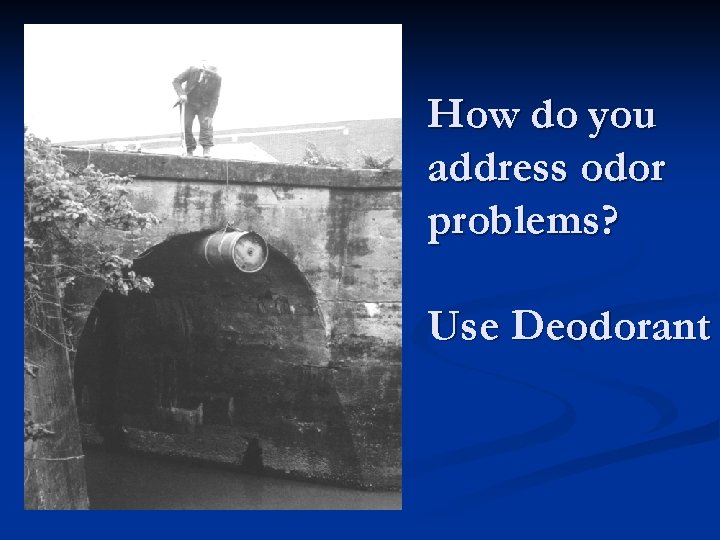
How do you address odor problems? Use Deodorant
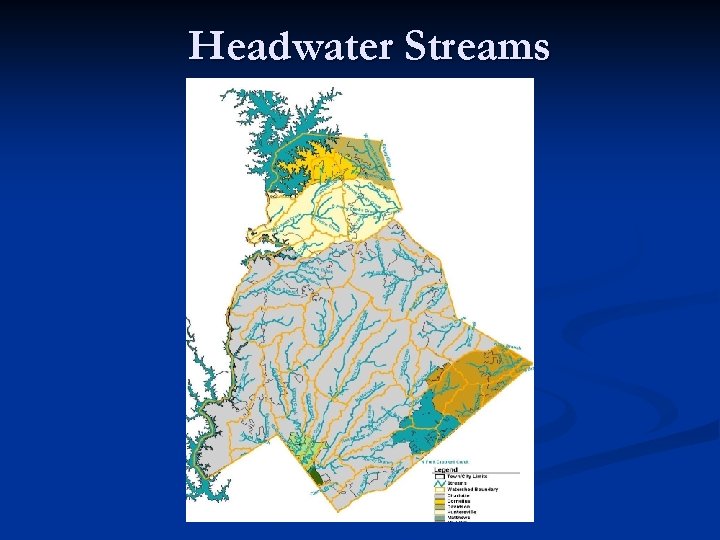
Headwater Streams
Monitoring Program Objectives Identify general water quality conditions n Assess effectiveness of program activities and identify trends n Designated Use assessment / TMDL compliance n Pollutant source identification n Support management initiatives n
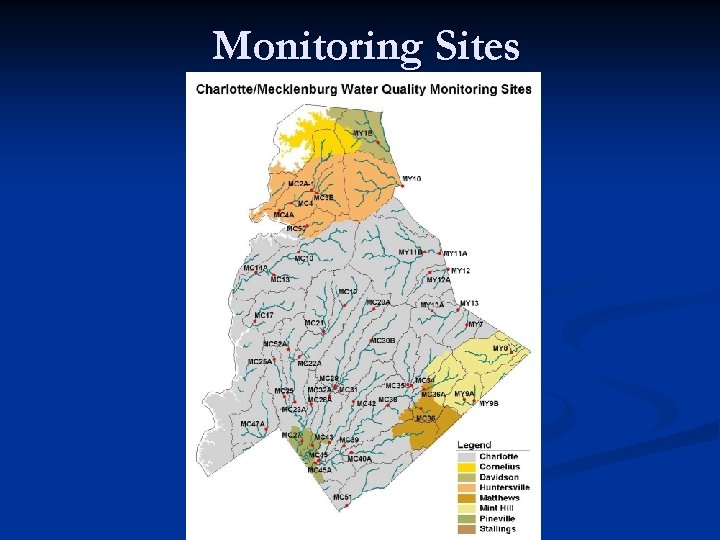
Monitoring Sites
Monitoring Evaluation Goals Is the sampling program adequate in capturing the full range of flow conditions? n How useful is the program in establishing pollutant concentration and loading trends (assess program effectiveness)? n Should the program be modified to reduce cost and/or increase cost effectiveness? n
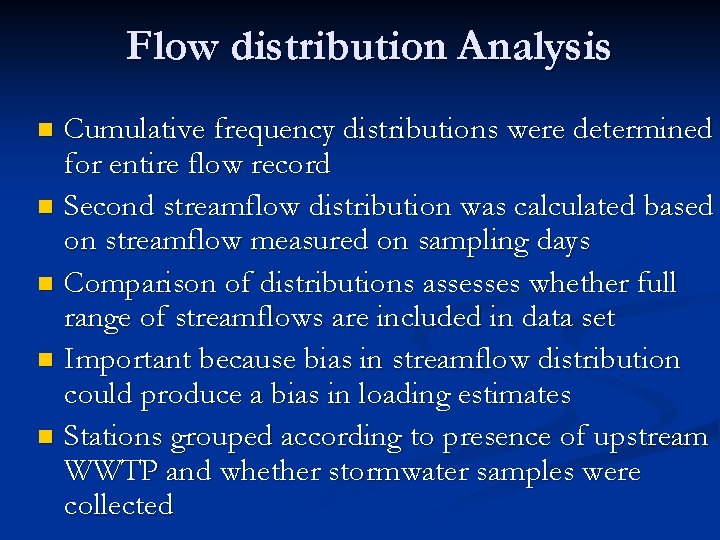
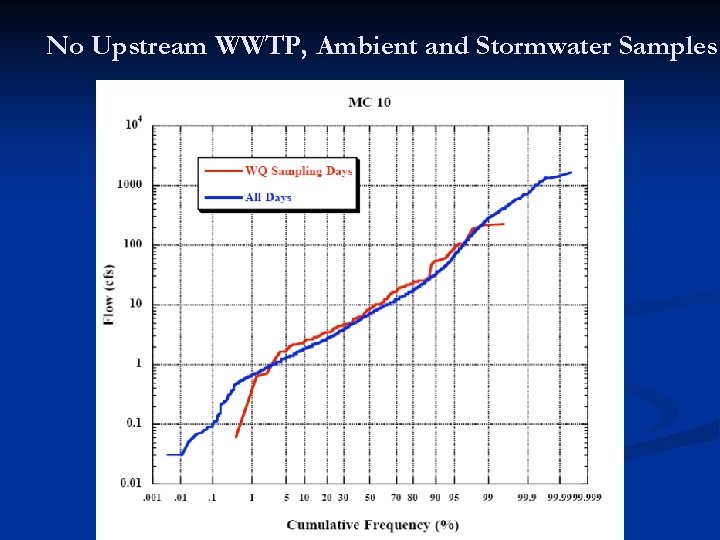
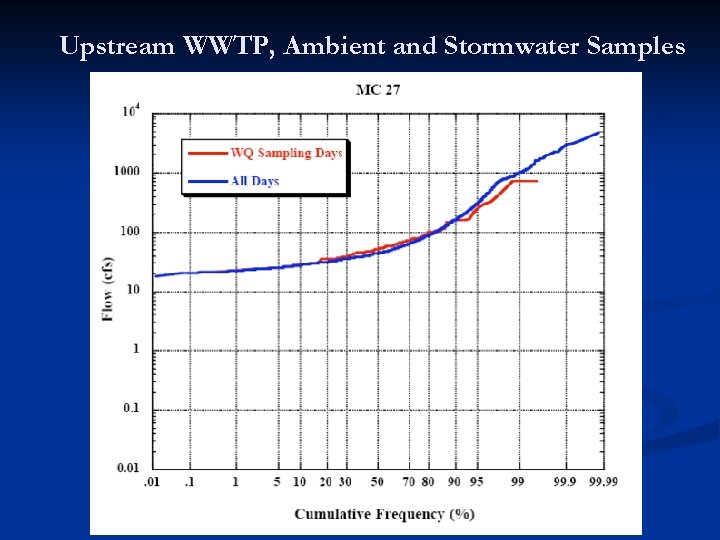
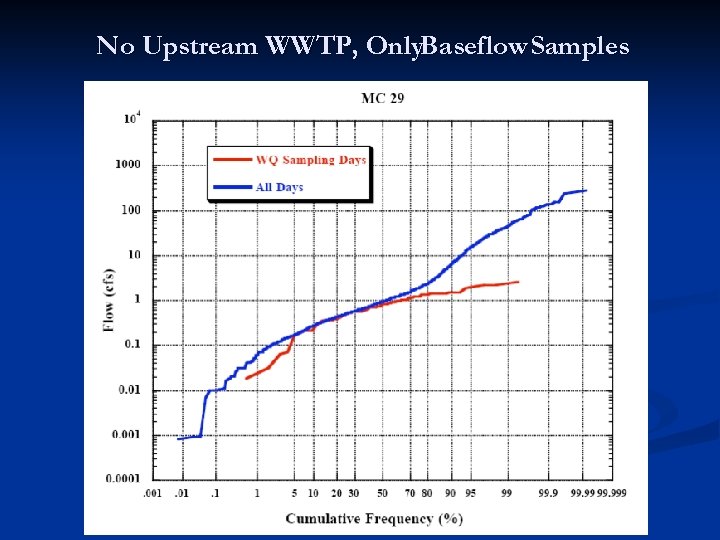
Flow distribution Analysis Cumulative frequency distributions were determined for entire flow record n Second streamflow distribution was calculated based on streamflow measured on sampling days n Comparison of distributions assesses whether full range of streamflows are included in data set n Important because bias in streamflow distribution could produce a bias in loading estimates n Stations grouped according to presence of upstream WWTP and whether stormwater samples were collected n
No Upstream WWTP, Ambient and Stormwater Samples
Upstream WWTP, Ambient and Stormwater Samples
No Upstream WWTP, Only. Baseflow Samples
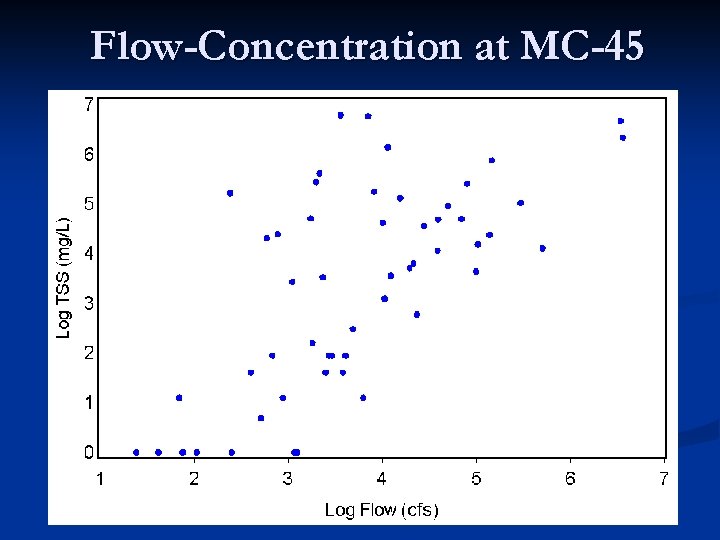
Flow-Concentration at MC-45
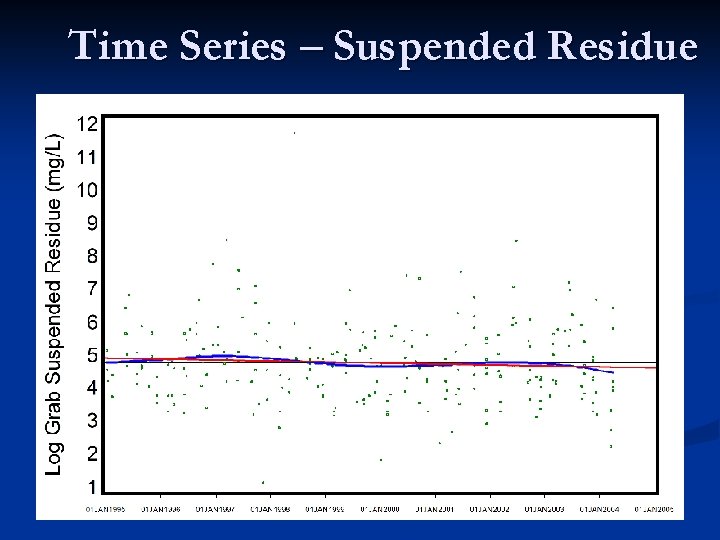
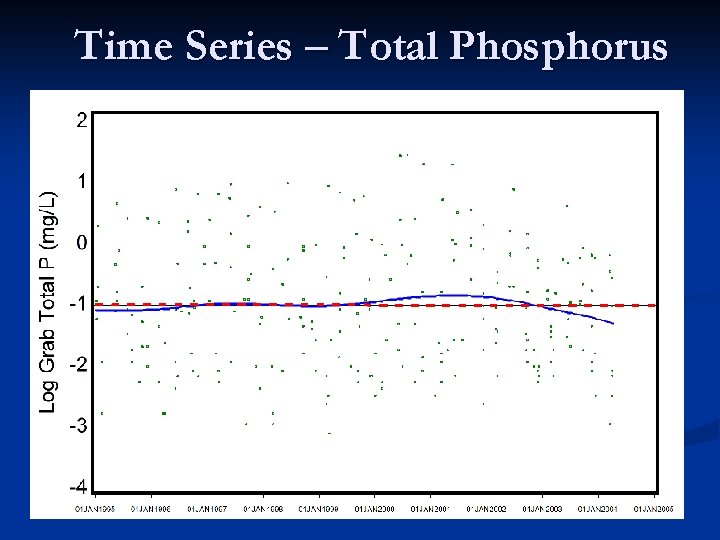
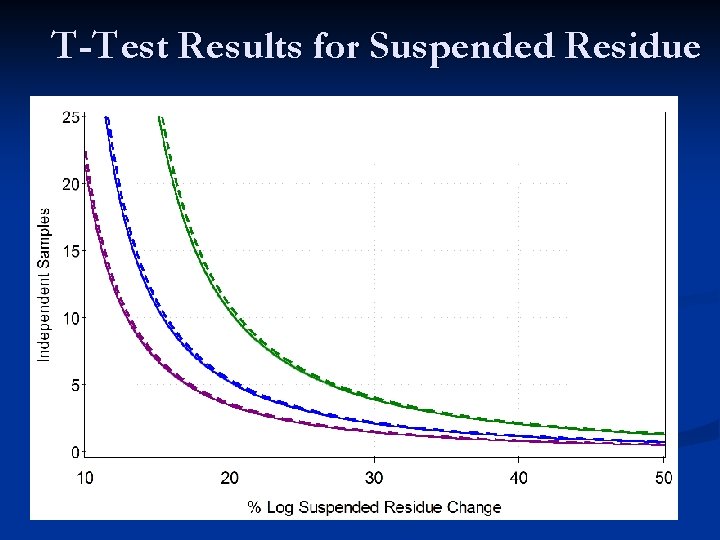
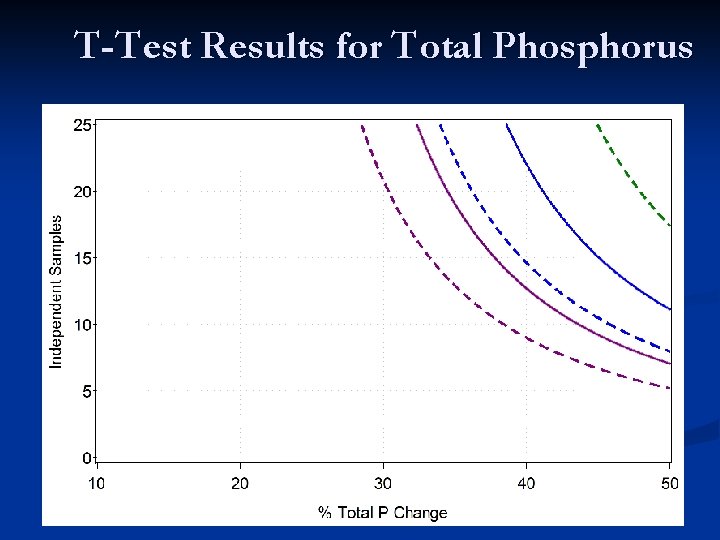
Trend Analysis Important to gage program effectiveness n Time plots of data from all monitoring stations for each constituent was examined for a broad visual assessment n Regression lines were generated indicating the overall change that has occurred with time n Two-sample t-test approach was used to provide an approximation of number of samples required to discern a change in the mean concentration of each water quality characteristic n
Time Series – Suspended Residue
Time Series – Total Phosphorus
T-Test Results for Suspended Residue
T-Test Results for Total Phosphorus
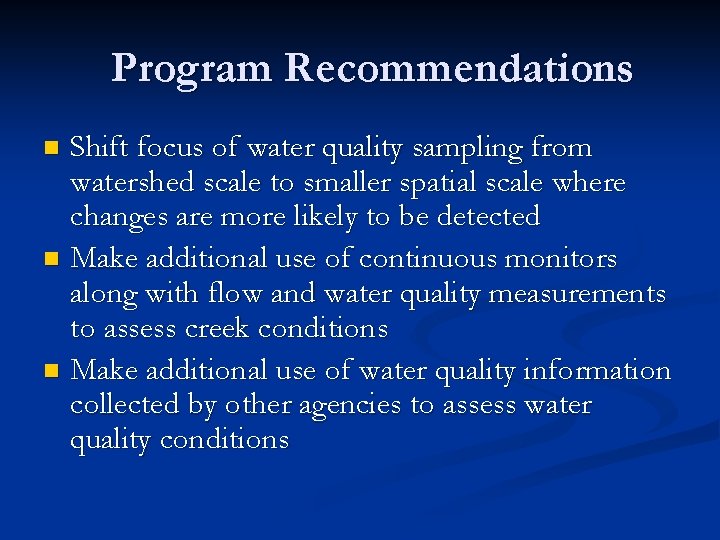
Program Recommendations Shift focus of water quality sampling from watershed scale to smaller spatial scale where changes are more likely to be detected n Make additional use of continuous monitors along with flow and water quality measurements to assess creek conditions n Make additional use of water quality information collected by other agencies to assess water quality conditions n
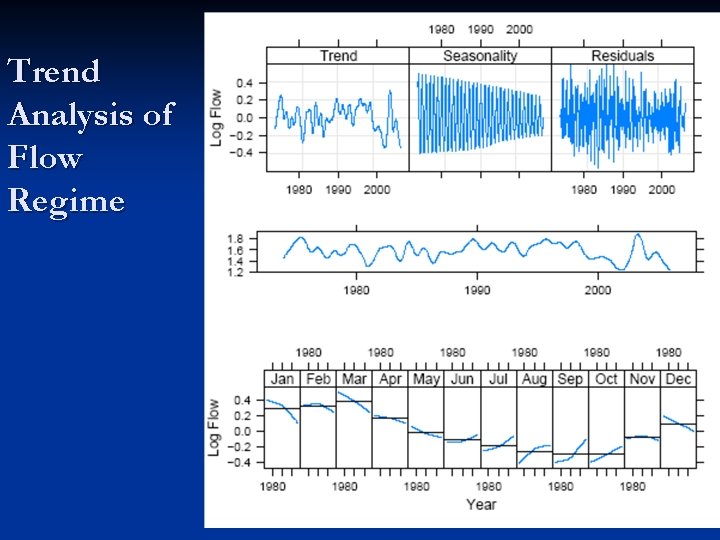
Trend Analysis of Flow Regime
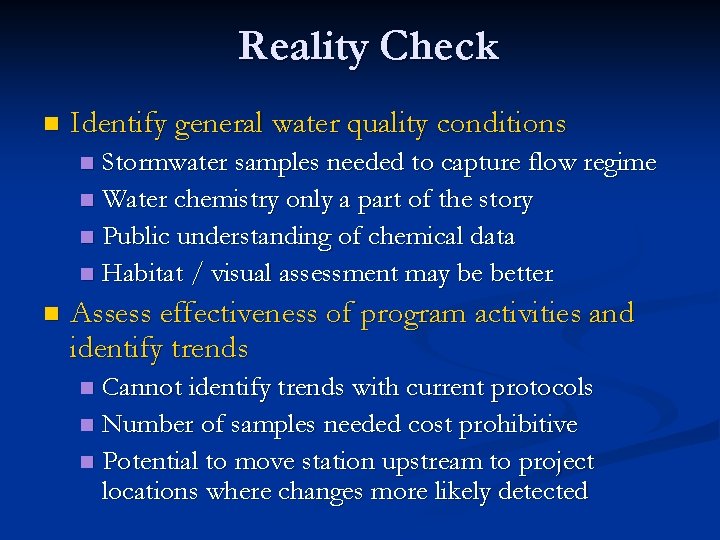
Reality Check n Identify general water quality conditions Stormwater samples needed to capture flow regime n Water chemistry only a part of the story n Public understanding of chemical data n Habitat / visual assessment may be better n n Assess effectiveness of program activities and identify trends Cannot identify trends with current protocols n Number of samples needed cost prohibitive n Potential to move station upstream to project locations where changes more likely detected n
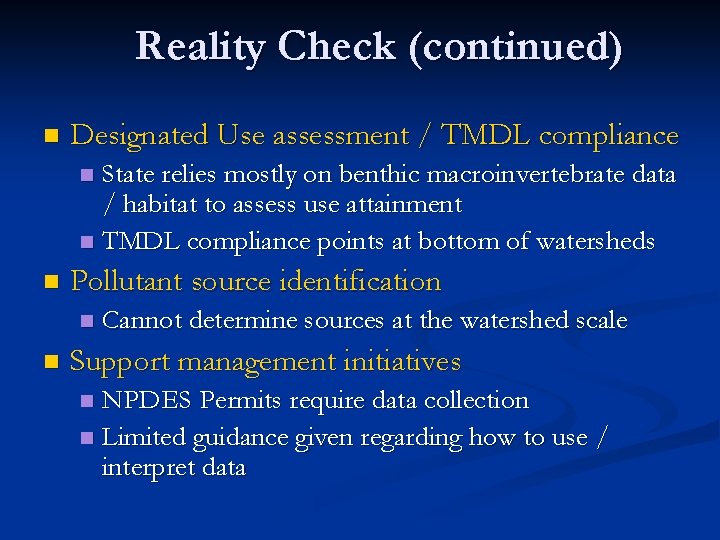
Reality Check (continued) n Designated Use assessment / TMDL compliance State relies mostly on benthic macroinvertebrate data / habitat to assess use attainment n TMDL compliance points at bottom of watersheds n n Pollutant source identification n n Cannot determine sources at the watershed scale Support management initiatives NPDES Permits require data collection n Limited guidance given regarding how to use / interpret data n
Questions? Contact information jhieronymus@ci. charlotte. nc. us n 704 -336 -3927