
EVALUATION OF THERMAL RADIATION MODELS FOR FIRE SPREAD

- Slides: 15
EVALUATION OF THERMAL RADIATION MODELS FOR FIRE SPREAD BETWEEN OBJECTS Fire and Evacuation Modelling Technical Conference Baltimore, Maryland 15 -16 August 2011 Rob Fleury Michael Spearpoint Arup, Sydney, Australia University of Canterbury, New Zealand Charles Fleischmann University of Canterbury, New Zealand
CONTEXT AND MOTIVATION § Zone model BRANZFIRE currently being upgraded to include risk-based modelling § Quantitative Risk Assessment tool § Monte Carlo sampling to address inherent uncertainty in design fires § Will include a radiation and ignition sub-model § Range of outputs – probabilistic outcomes 2
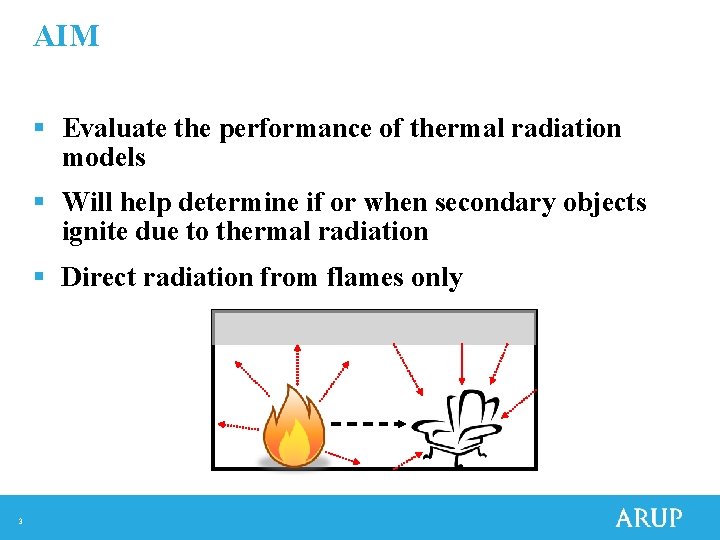
AIM § Evaluate the performance of thermal radiation models § Will help determine if or when secondary objects ignite due to thermal radiation § Direct radiation from flames only 3
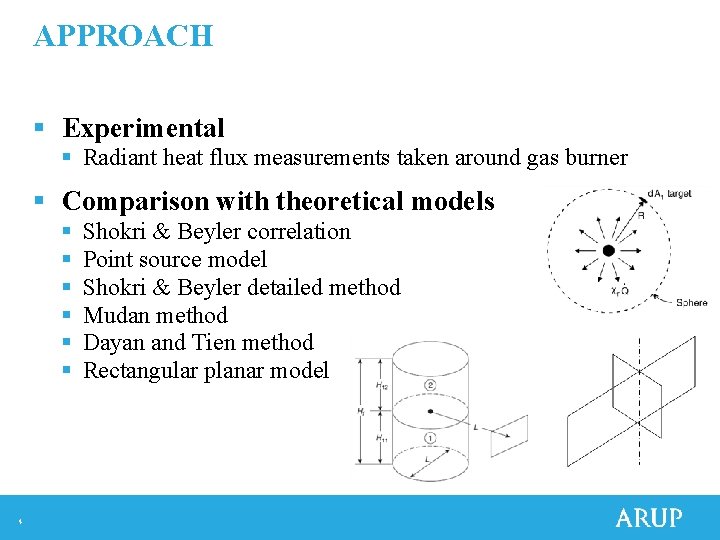
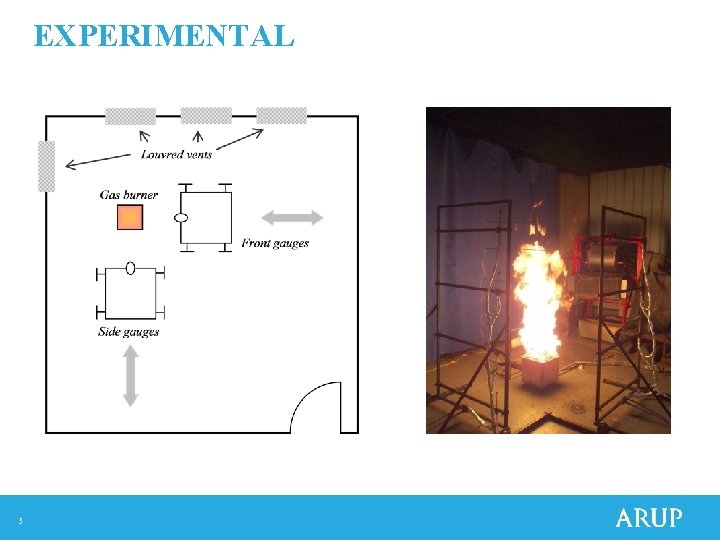
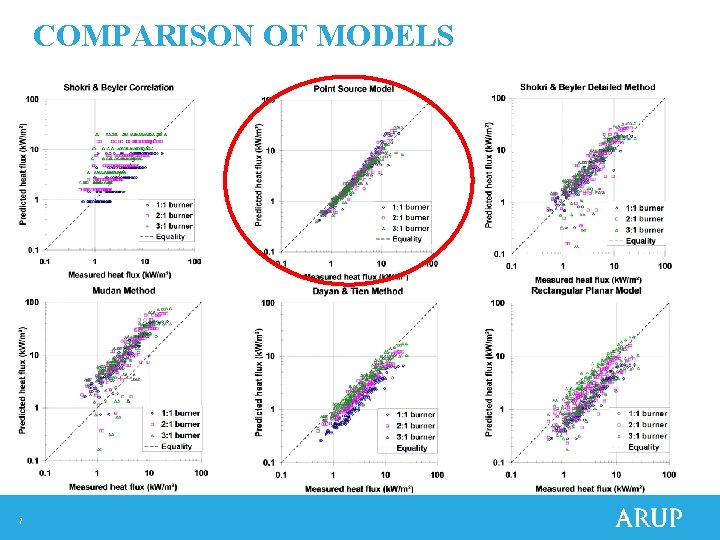
APPROACH § Experimental § Radiant heat flux measurements taken around gas burner § Comparison with theoretical models § § § 4 Shokri & Beyler correlation Point source model Shokri & Beyler detailed method Mudan method Dayan and Tien method Rectangular planar model
EXPERIMENTAL 5
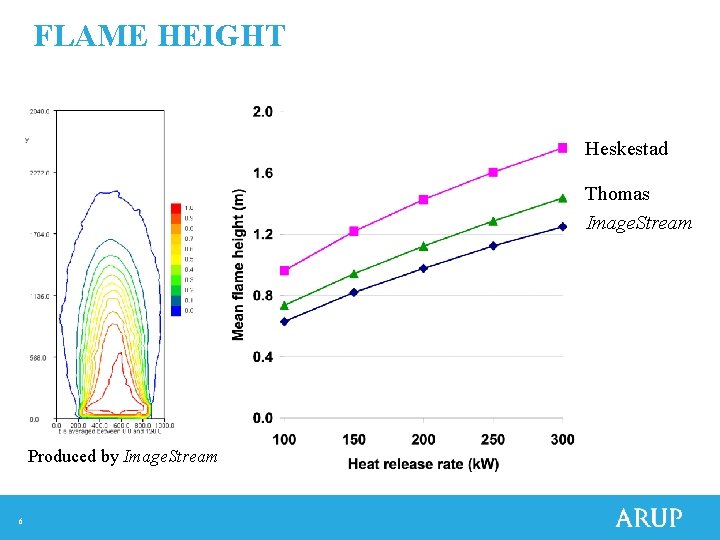
FLAME HEIGHT Heskestad Thomas Image. Stream Produced by Image. Stream 6
COMPARISON OF MODELS 7
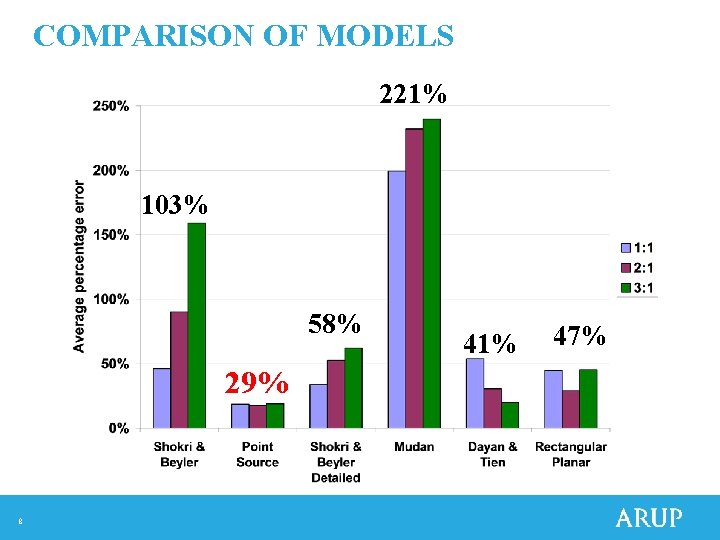
COMPARISON OF MODELS 221% 103% 58% 29% 8 41% 47%
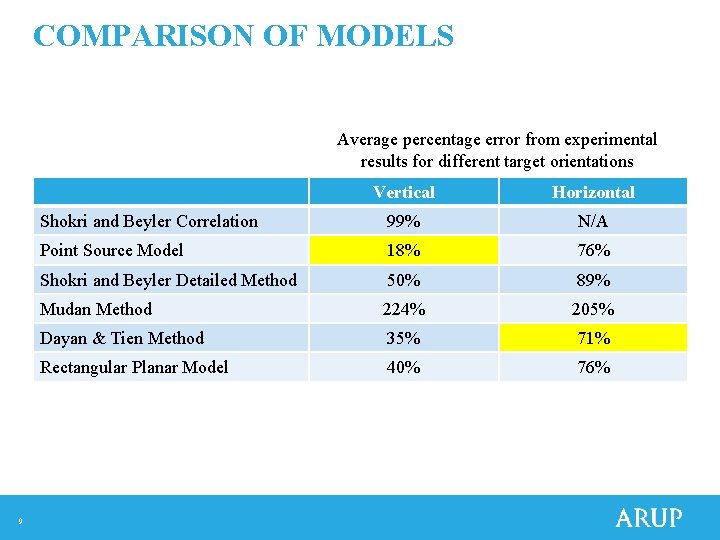
COMPARISON OF MODELS Average percentage error from experimental results for different target orientations 9 Vertical Horizontal Shokri and Beyler Correlation 99% N/A Point Source Model 18% 76% Shokri and Beyler Detailed Method 50% 89% Mudan Method 224% 205% Dayan & Tien Method 35% 71% Rectangular Planar Model 40% 76%
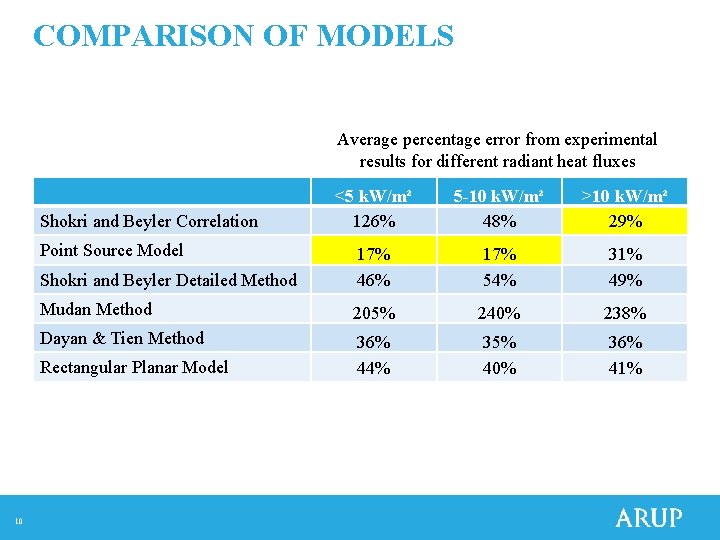
COMPARISON OF MODELS Average percentage error from experimental results for different radiant heat fluxes <5 k. W/m² 126% 5 -10 k. W/m² 48% >10 k. W/m² 29% Shokri and Beyler Detailed Method 17% 46% 17% 54% 31% 49% Mudan Method 205% 240% 238% Dayan & Tien Method 36% 44% 35% 40% 36% 41% Shokri and Beyler Correlation Point Source Model Rectangular Planar Model 10
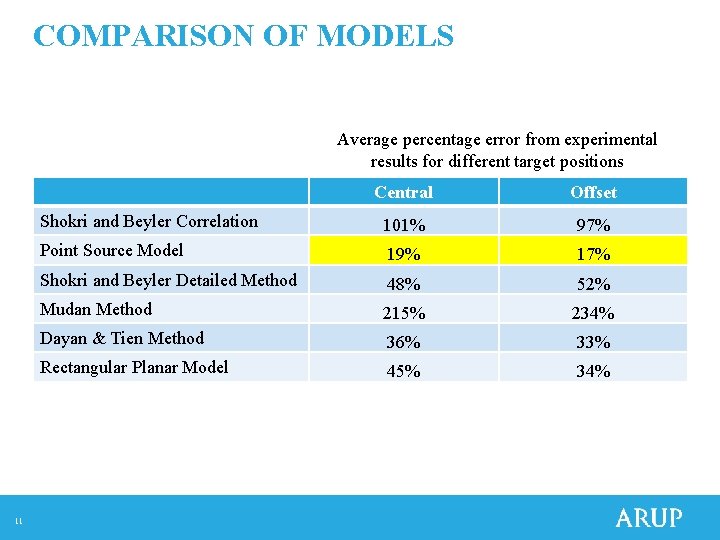
COMPARISON OF MODELS Average percentage error from experimental results for different target positions 11 Central Offset Shokri and Beyler Correlation 101% 97% Point Source Model 19% 17% Shokri and Beyler Detailed Method 48% 52% Mudan Method 215% 234% Dayan & Tien Method 36% 33% Rectangular Planar Model 45% 34%
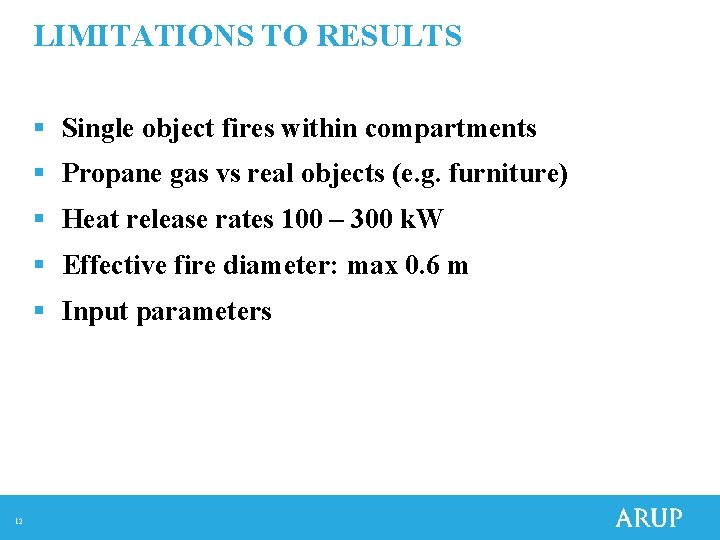
LIMITATIONS TO RESULTS § Single object fires within compartments § Propane gas vs real objects (e. g. furniture) § Heat release rates 100 – 300 k. W § Effective fire diameter: max 0. 6 m § Input parameters 12
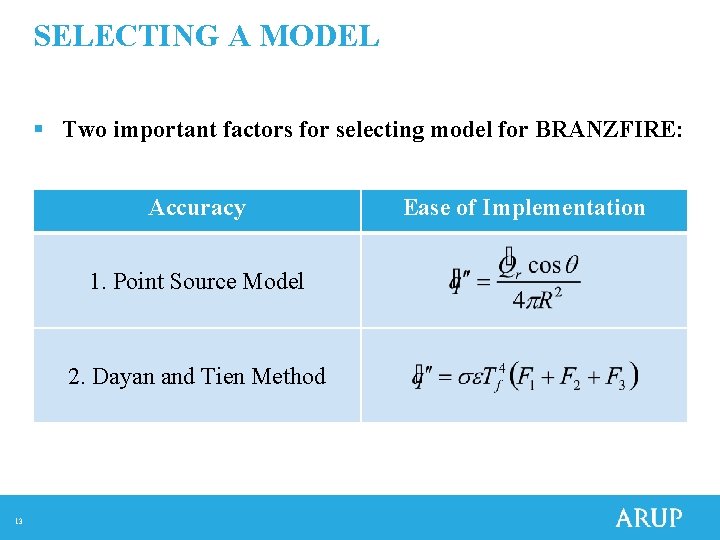
SELECTING A MODEL § Two important factors for selecting model for BRANZFIRE: Accuracy 1. Point Source Model 2. Dayan and Tien Method 13 Ease of Implementation
CONCLUSIONS § Generally, Point Source and Dayan & Tien models provide best match to experimental data § Point Source model (surprisingly) proved to be the most robust, in terms of dealing with different scenarios § Point source model relatively straight-forward to implement into two-zone model Point Source model will form part of the radiation and ignition sub-model within BRANZFIRE 14
Thank you 15