
Evaluation of the Behaviourist Approach Todays Lesson Learn
Evaluation of the Behaviourist Approach
Today’s Lesson • Learn how to evaluate an approach • Highlight some strengths and weaknesses of the behaviourist approach
Assessment Objectives • What is AO 2? – Evaluation, analysis, comparing and contrasting – Identify and explain the strengths and weaknesses of an approach

Before we start. . . • With the people around you, can you think of some strengths and weaknesses of the behaviourist approach?

N-NURDS • What do you think this stands for? – Nature/Nurture – Nomothetic/Idiographic – Usefulness – Reductionism/Holism – Determinism/Free Will – Scientific

Usefulness • Real world applications? – Reward and punishment in schools – Token economy – Animal training
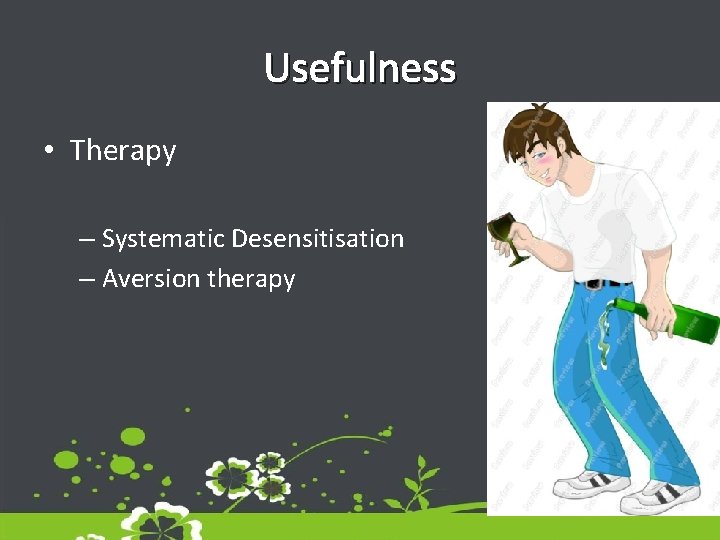
Usefulness • Therapy – Systematic Desensitisation – Aversion therapy

Is it Scientific? • • • Based on evidence? Makes testable predictions? Researched is unbiased and objective? Research is controlled, valid and reliable? Research can be replicated? Qualitative or Quantitative data?
More evaluation • Theories based on animal research • Focus on the here and now

The Debates • Complete the table with the evaluation points relating to the debates. There is also information in the book (pg 24 -25) • Highlight in two different colours the strengths and the weaknesses. Make sure to write down a key somewhere to help you when you revise.
Exam Focus • 3 a: Evaluate two strengths of the behaviourist approach (6) • 3 b: Evaluate two weaknesses of the behaviourist approach (6) • USE THE GUIDANCE!!!
- Slides: 11