
Evaluation of risk stratification schemes for ischaemic stroke
- Slides: 20
Evaluation of risk stratification schemes for ischaemic stroke and bleeding in 182 678 patients with atrial fibrillation: the Swedish Atrial Fibrillation cohort study. Leif Friberg, Ma°rten Rosenqvist, and Gregory Y. H. Lip European Heart Journal (2012) Presenter: Wen-Ching Lan Date: 2018/07/04
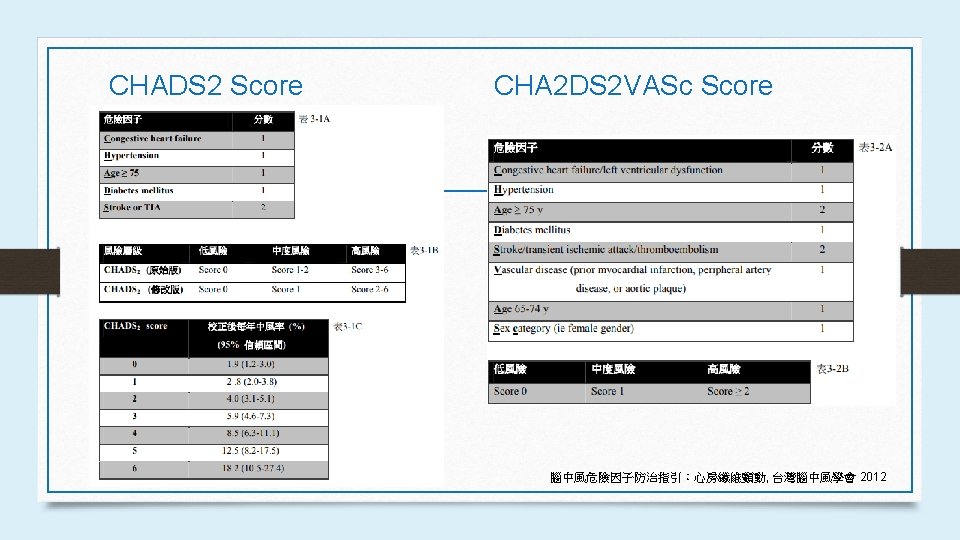
Introduction • Atrial fibrillation (AF) is associated with a substantial risk of stroke and thromboembolism. • The ESC guidelines recommend the use of the new CHA 2 DS 2 -VASc scheme to allow a more comprehensive stroke risk assessment, and to improve our ability to predict the ‘truly low risk’ subjects with AF, who may not even need antithrombotic therapy.
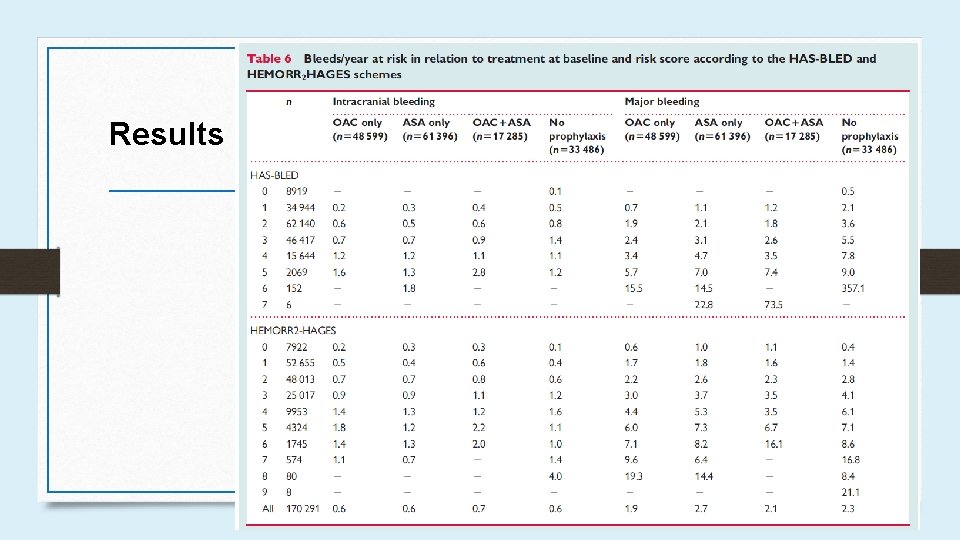
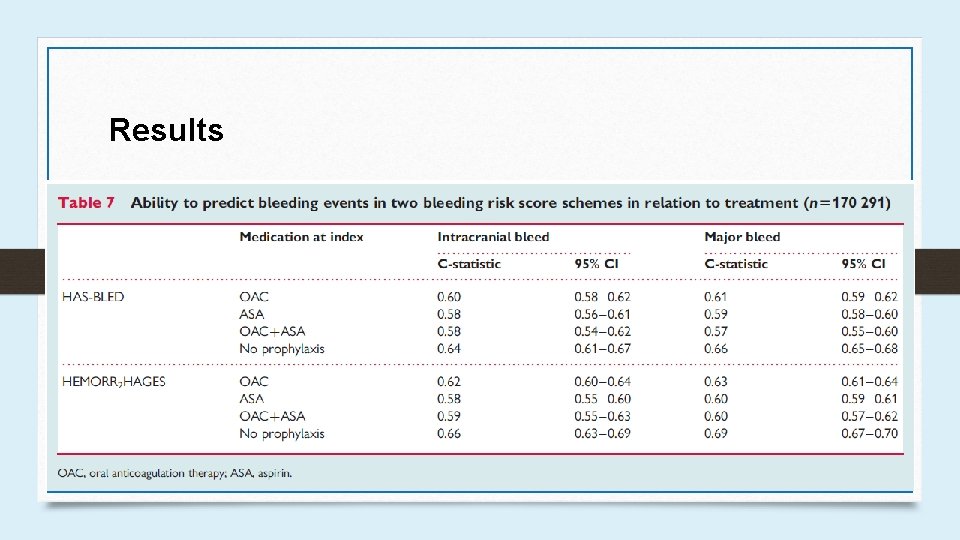
AIM • Our objective was to investigate risk factors for stroke and bleeding in AF, and application of the new CHA 2 DS 2 -VASc and HAS-BLED schemes for stroke and bleeding risk assessments, respectively.
Methods • We used the Swedish Atrial Fibrillation cohort study, a nationwide cohort study of 182 678 subjects with a diagnosis of AF at any Swedish hospital between 1 July 2005 and 31 December 2008. • Medication at baseline was defined as a drug that had been collected at a pharmacy within +-3 months of the index date.
Methods • Warfarin is the only registered oral anticoagulant in Sweden, with a minority of patients using Marcoumar. • The index date was defined as the date of the first occurrence of the patient with a diagnosis of AF (ICD-10 code I 489) after 1 July 2005. • We applied a ‘blanking period’ of 14 days after index.
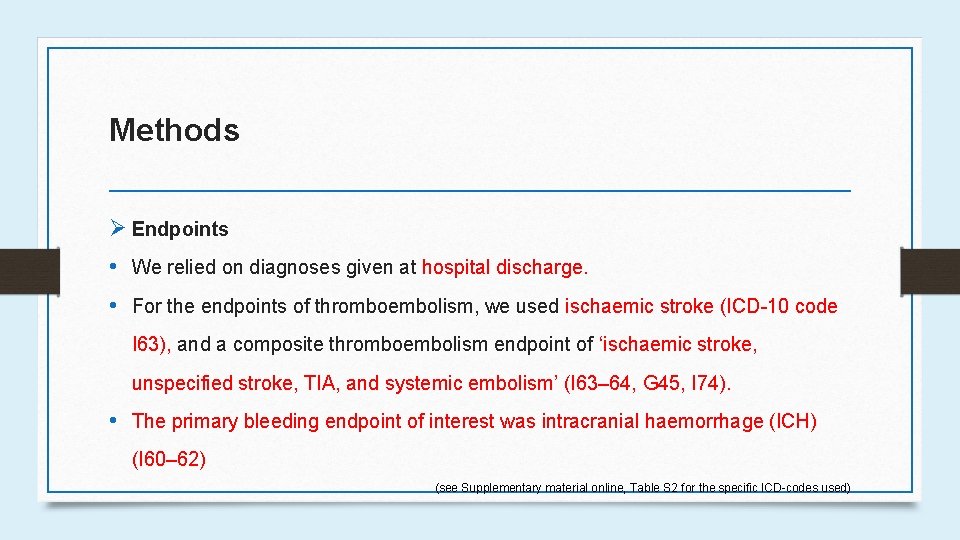
Methods Ø Endpoints • We relied on diagnoses given at hospital discharge. • For the endpoints of thromboembolism, we used ischaemic stroke (ICD-10 code I 63), and a composite thromboembolism endpoint of ‘ischaemic stroke, unspecified stroke, TIA, and systemic embolism’ (I 63– 64, G 45, I 74). • The primary bleeding endpoint of interest was intracranial haemorrhage (ICH) (I 60– 62) (see Supplementary material online, Table S 2 for the specific ICD-codes used)
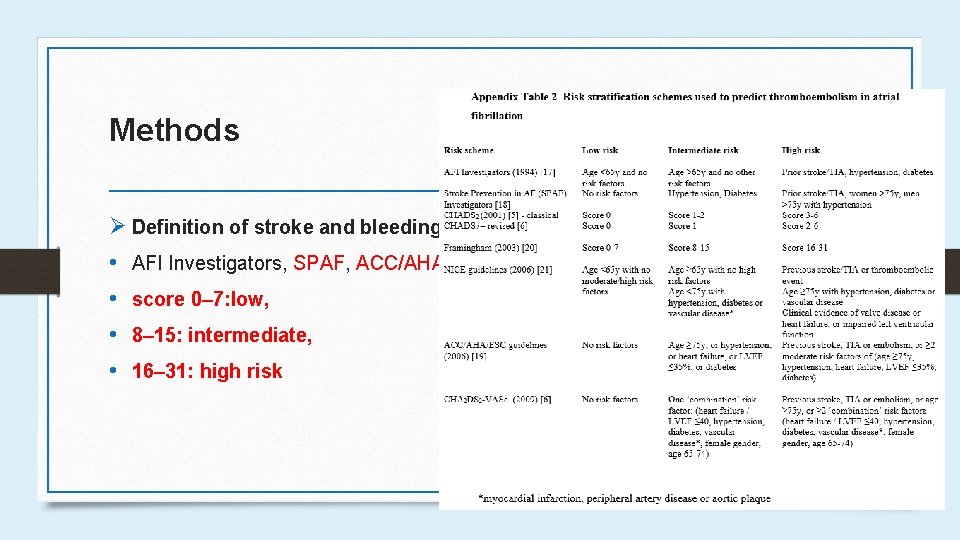
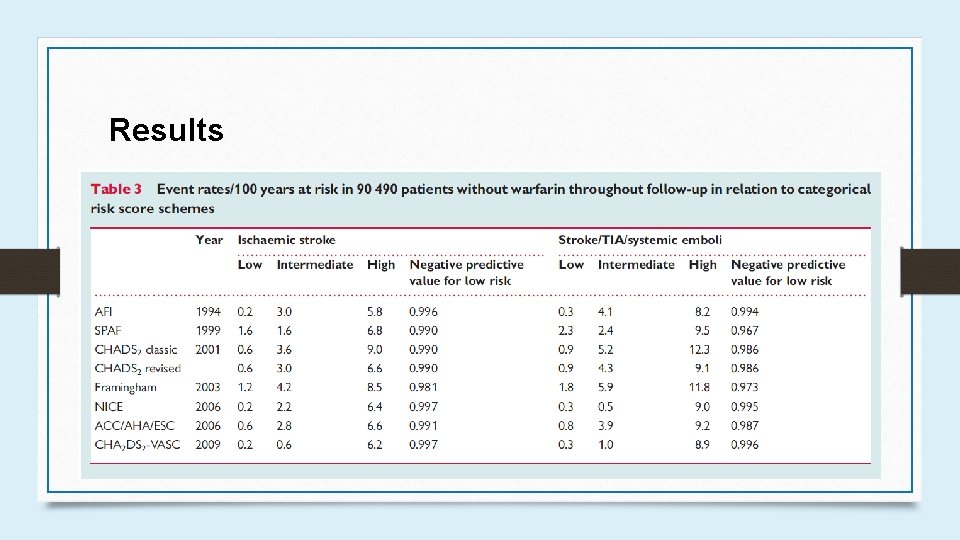
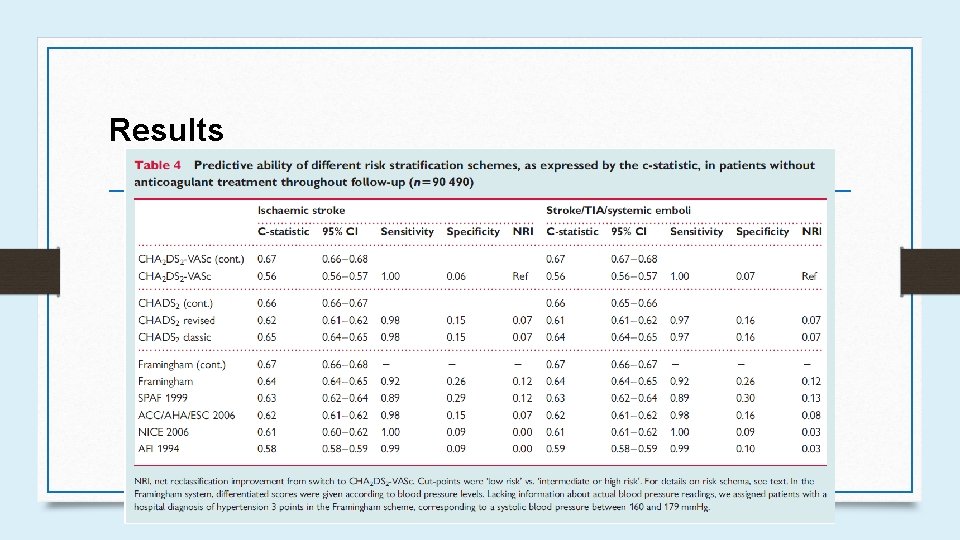
Methods Ø Definition of stroke and bleeding risk schemes • AFI Investigators, SPAF, ACC/AHA/ESC guidelines, Framingham, NICE • score 0– 7: low, • 8– 15: intermediate, • 16– 31: high risk
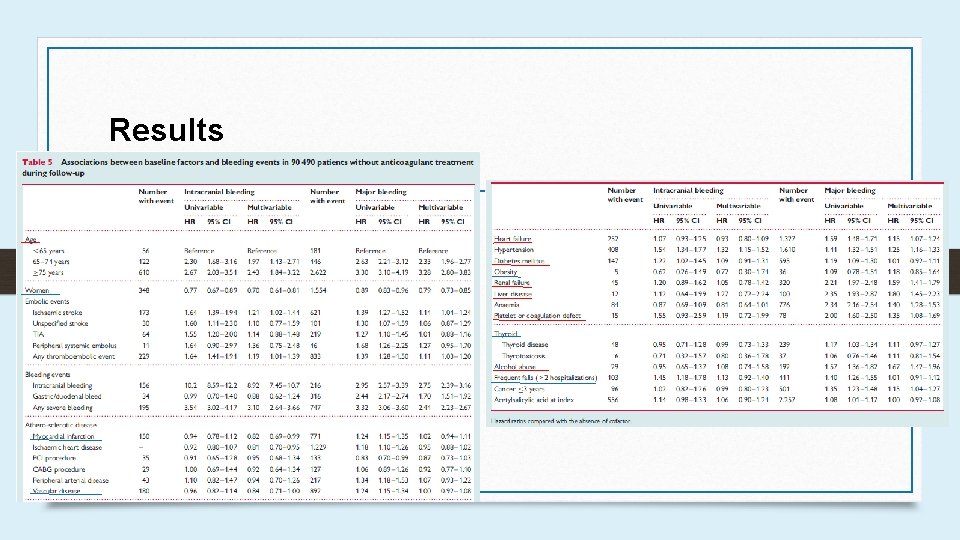
Methods ØStatistical methods • Multivariable Cox regression • Multivariable analyses • The net reclassification improvement (NRI) from switching from older risk stratification schemes to CHA 2 DS 2 -VASc. • All analyses were performed in PASW 18. 0 (SPSS)
Results
Results
Results
Results
Results
Results
Results
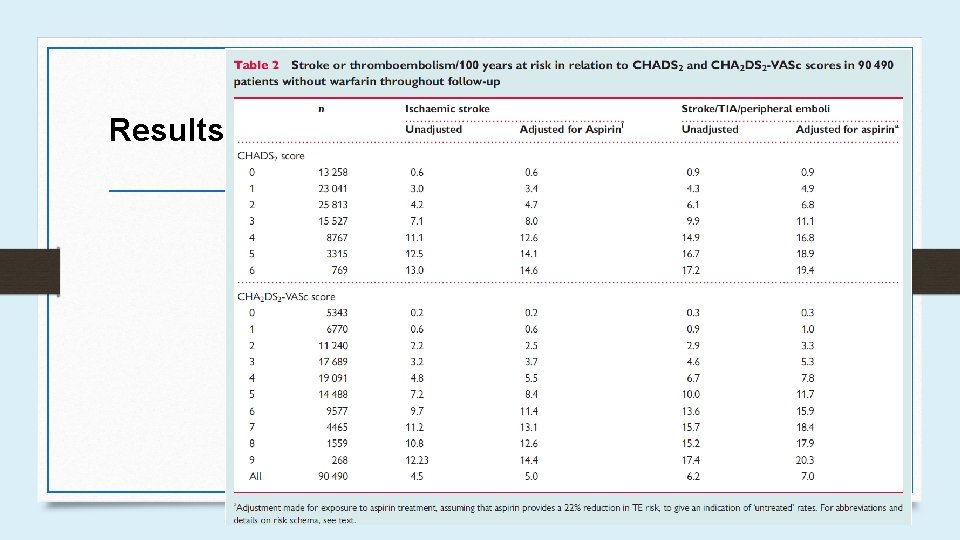
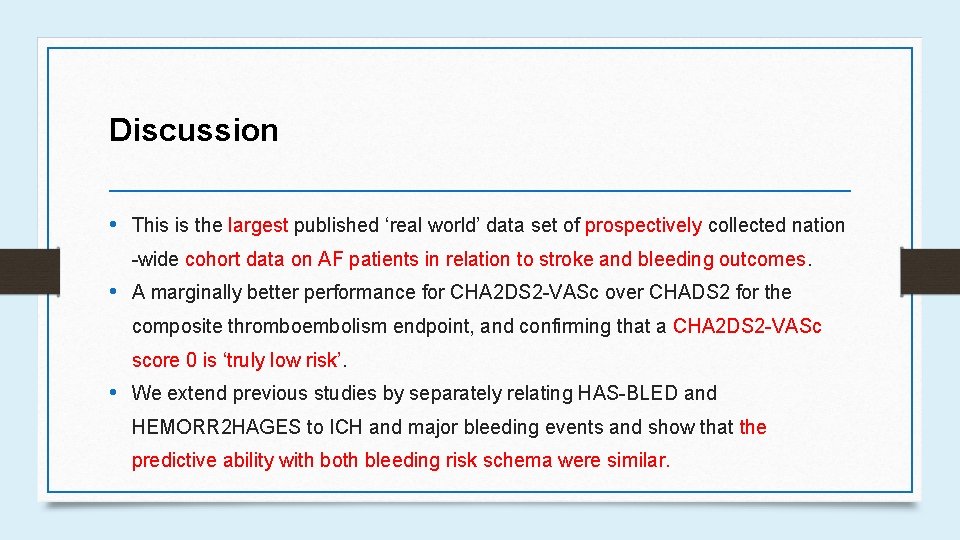
Discussion • This is the largest published ‘real world’ data set of prospectively collected nation -wide cohort data on AF patients in relation to stroke and bleeding outcomes. • A marginally better performance for CHA 2 DS 2 -VASc over CHADS 2 for the composite thromboembolism endpoint, and confirming that a CHA 2 DS 2 -VASc score 0 is ‘truly low risk’. • We extend previous studies by separately relating HAS-BLED and HEMORR 2 HAGES to ICH and major bleeding events and show that the predictive ability with both bleeding risk schema were similar.
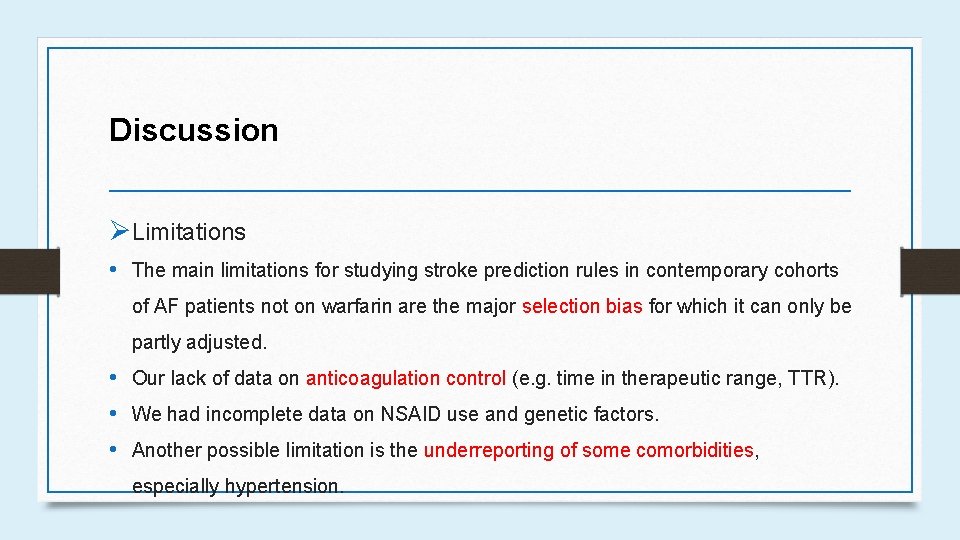
Discussion ØLimitations • The main limitations for studying stroke prediction rules in contemporary cohorts of AF patients not on warfarin are the major selection bias for which it can only be partly adjusted. • Our lack of data on anticoagulation control (e. g. time in therapeutic range, TTR). • We had incomplete data on NSAID use and genetic factors. • Another possible limitation is the underreporting of some comorbidities, especially hypertension.
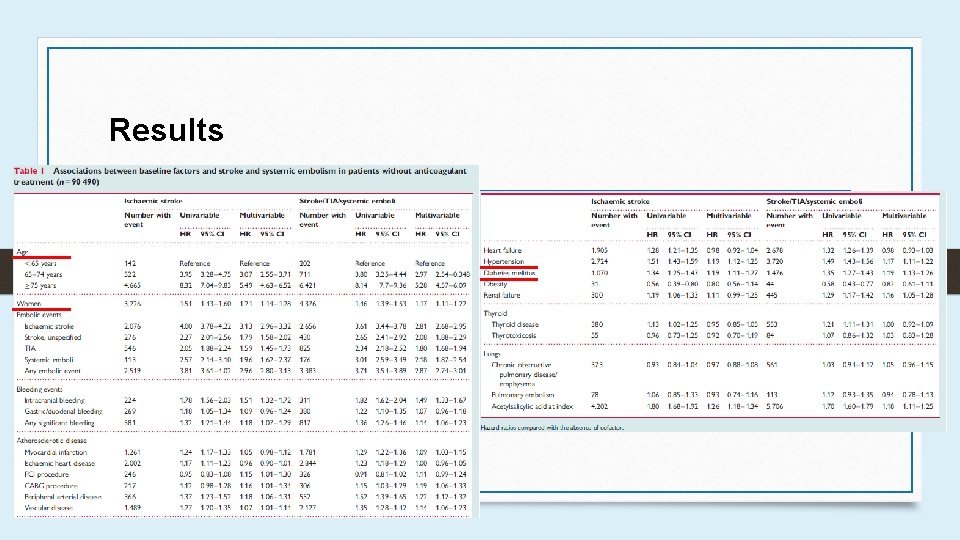
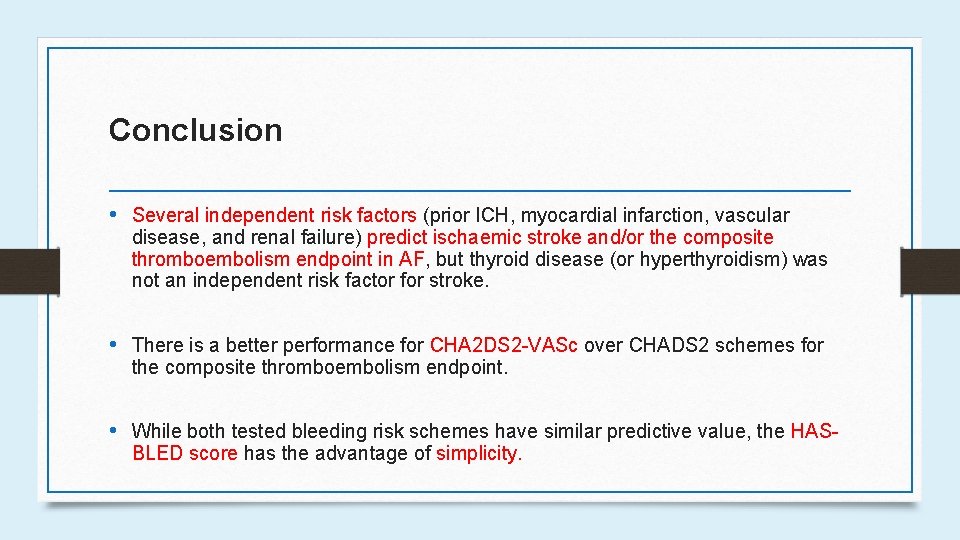
Conclusion • Several independent risk factors (prior ICH, myocardial infarction, vascular disease, and renal failure) predict ischaemic stroke and/or the composite thromboembolism endpoint in AF, but thyroid disease (or hyperthyroidism) was not an independent risk factor for stroke. • There is a better performance for CHA 2 DS 2 -VASc over CHADS 2 schemes for the composite thromboembolism endpoint. • While both tested bleeding risk schemes have similar predictive value, the HASBLED score has the advantage of simplicity.
Thanks for listening.