
Evaluation of Participatory Development Communication in PAGER The

- Slides: 15
Evaluation of Participatory Development Communication in PAGER (The Rural Population Grouped Water Supply Program) Houda Areski Senior Capstone Project Supervisors: Dr. B. Zaid Dr. M. Ibahrine
Contents Ø Ø Ø Research Question and its Relevance Theory of Participatory Development Communication Methods Used in Research Findings Discussion of Findings Problems Encountered
Research Question To what extent was participatory communication effective in the campaigns that took place under the framework of the PAGER?
The Theory of Participatory Development Communication Ø Ø Ø Shift from modernization paradigm to participation Reinforcement of local capacities Active involvement of communities in decision making and development programs
Methodology Organizational Case Study: ONEP and Ministrère de l’Equipement et des Travaux Publiques Ø Field Work: Interviews with associations of water users in Dayat Aoua commune Ø
Findings Ø Ø Ø Participatory development communication criteria in literature Participatory development communication criteria in PAGER documents The implementation of the participatory approach on the field in Dayat Aoua rural commune
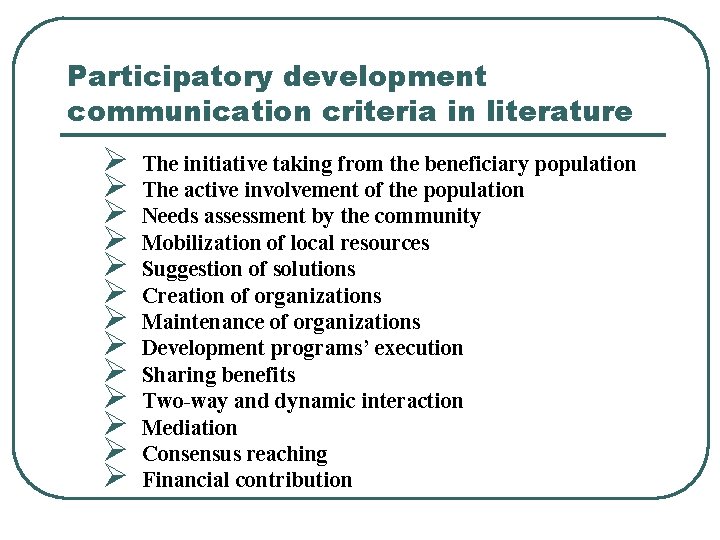
Participatory development communication criteria in literature Ø Ø Ø Ø The initiative taking from the beneficiary population The active involvement of the population Needs assessment by the community Mobilization of local resources Suggestion of solutions Creation of organizations Maintenance of organizations Development programs’ execution Sharing benefits Two-way and dynamic interaction Mediation Consensus reaching Financial contribution
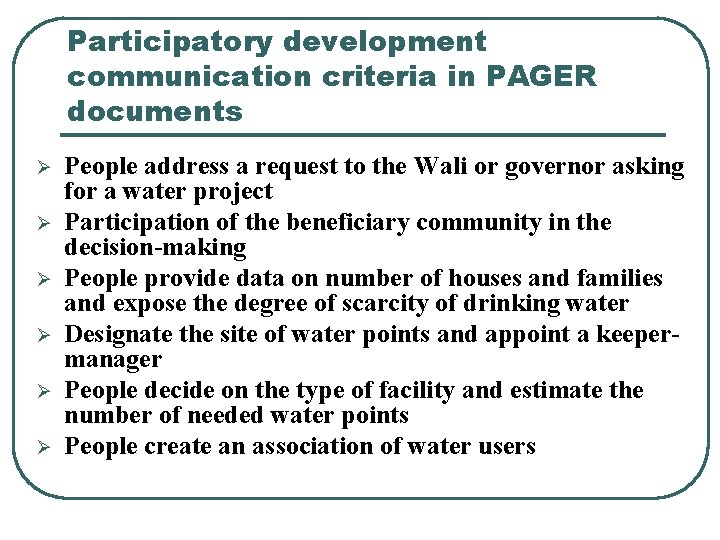
Participatory development communication criteria in PAGER documents Ø Ø Ø People address a request to the Wali or governor asking for a water project Participation of the beneficiary community in the decision-making People provide data on number of houses and families and expose the degree of scarcity of drinking water Designate the site of water points and appoint a keepermanager People decide on the type of facility and estimate the number of needed water points People create an association of water users
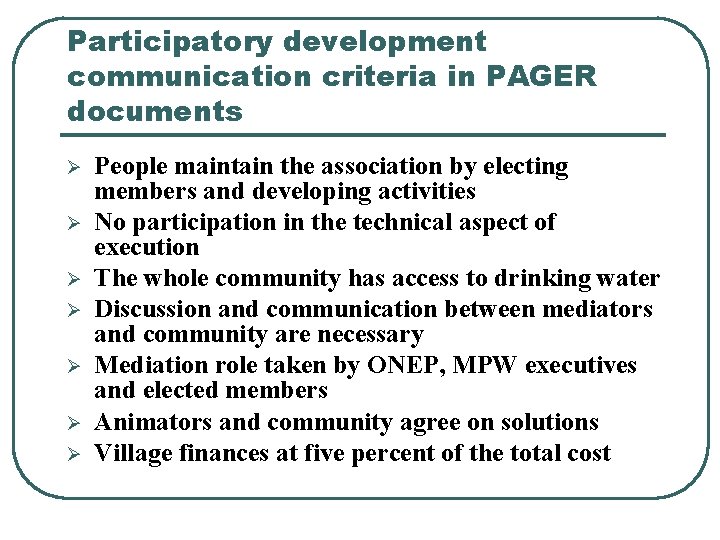
Participatory development communication criteria in PAGER documents Ø Ø Ø Ø People maintain the association by electing members and developing activities No participation in the technical aspect of execution The whole community has access to drinking water Discussion and communication between mediators and community are necessary Mediation role taken by ONEP, MPW executives and elected members Animators and community agree on solutions Village finances at five percent of the total cost
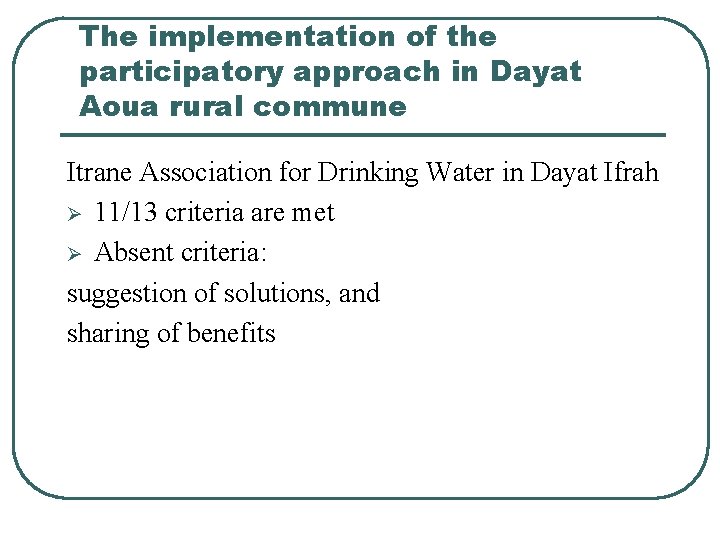
The implementation of the participatory approach in Dayat Aoua rural commune Itrane Association for Drinking Water in Dayat Ifrah Ø 11/13 criteria are met Ø Absent criteria: suggestion of solutions, and sharing of benefits
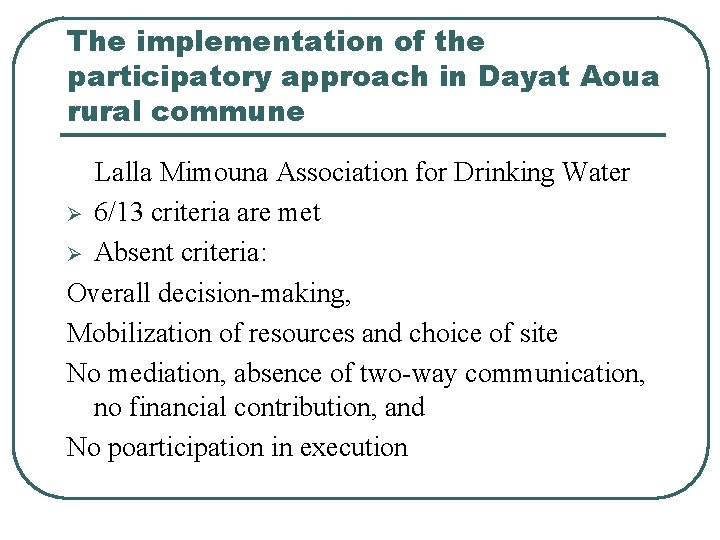
The implementation of the participatory approach in Dayat Aoua rural commune Lalla Mimouna Association for Drinking Water Ø 6/13 criteria are met Ø Absent criteria: Overall decision-making, Mobilization of resources and choice of site No mediation, absence of two-way communication, no financial contribution, and No poarticipation in execution
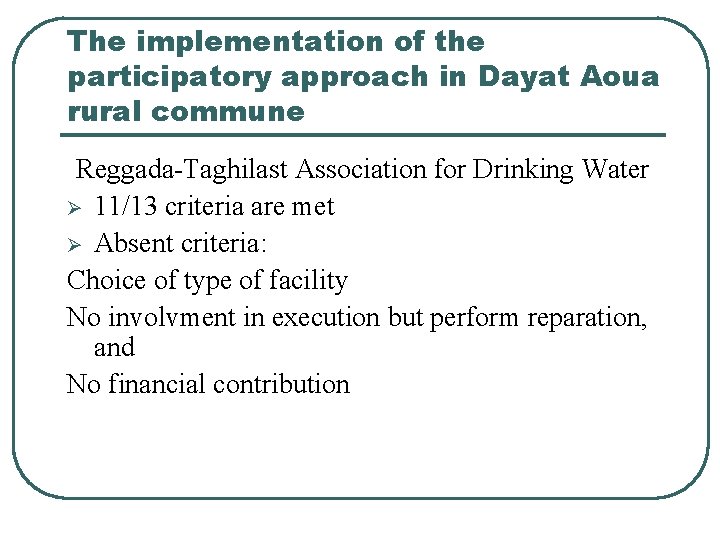
The implementation of the participatory approach in Dayat Aoua rural commune Reggada-Taghilast Association for Drinking Water Ø 11/13 criteria are met Ø Absent criteria: Choice of type of facility No involvment in execution but perform reparation, and No financial contribution
Discussion of Findings Ø Ø Ø Participatory development communication principles were not fully applied in Dayat Aoua. PAGER projects in region exclusively executed by Ministry of Public Works. Success of associations depend on readiness of population and members.
Problems Encountered Ø Ø Ø Research limited by the number of associations of water users Only three association are active Lack of knowledge on socio-cultural characteristics of the region
Questions and Comments are Welcome