
Evaluation of LDAS Land Surface Models with Observed
Evaluation of LDAS Land Surface Models with Observed Forcing and Hydrology Lifeng Luo 1, Alan Robock 1, Kenneth Mitchell 2, Paul R. Houser 3, Eric F. Wood 4, John Schaake 5, Dennis Lettenmaier 6, Brian Cosgrove 3, Qingyun Duan 5, Dag Lohmann 2, Justin Sheffield 4, Wayne Higgins 7, Rachel Pinker 8, Dan Tarpley 9, Kenneth Crawford 10, and Jeffrey Basara 10 1 Department of Environmental Sciences, Rutgers University 2 NOAA/NWS/NCEP/EMC 3 Hydrological Sciences Branch, NASA/GSFC 4 Department of Civil Engineering, Princeton University 5 NOAA/NWS/OHD 6 Department of Civil and Environmental Engineering, University of Washington 7 NOAA/NWS/NCEP/CPC 8 Department of Meteorology, University of Maryland 9 NOAA/NESDIS/ORA 10 Oklahoma Climatological Survey
LDAS Design 1. Use 4 different land surface models: – – MOSAIC (NASA/GSFC) NOAH (NOAA/NWS/NCEP) VIC (Princeton University/University of Washington) Sacramento (NOAA/OHD) 2. Force models with Eta model analysis (EDAS) meteorology, except use actual observed precipitation (Stage IV radar product merged with gages) and downward solar radiation (derived from satellites) 3. Evaluate results with all available observations, including soil moisture, soil temperature, and fluxes (this talk), and snow cover and runoff (next talk)
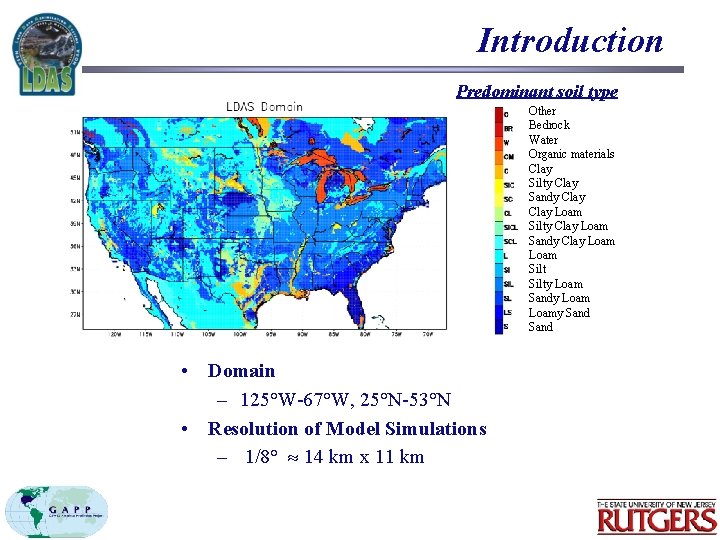
Introduction Predominant soil type Other Bedrock Water Organic materials Clay Silty Clay Sandy Clay Loam Silty Clay Loam Sandy Clay Loam Silty Loam Sandy Loamy Sand • Domain – 125°W-67°W, 25°N-53°N • Resolution of Model Simulations – 1/8° 14 km x 11 km
LDAS Scientific Questions 1. Can land surface models forced with observed meteorology and radiation accurately calculate soil moisture? 2. If not, what are the relative contributions to the differences between models and observations of errors in the soil moisture observations or of the differences between model and observed: a. Forcing? b. Soil properties? c. Vegetation? d. Scales? e. Vertical resolution? f. Tiling or variable infiltration assumptions?
LDAS Retrospective Runs The four LDAS land surface schemes were run for the period from October 1, 1997 through September 30, 1999, with a oneyear antecedent spinup (October 1, 1996 - September 30, 1997). We compare the soil moisture results from these runs to observations from Oklahoma for the last year of this run, as an example of more complete evaluations we will do.
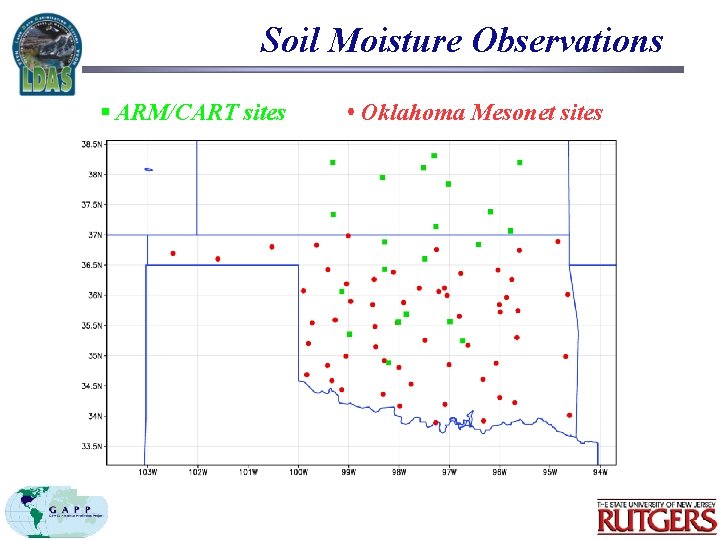
Soil Moisture Observations ARM/CART sites • Oklahoma Mesonet sites
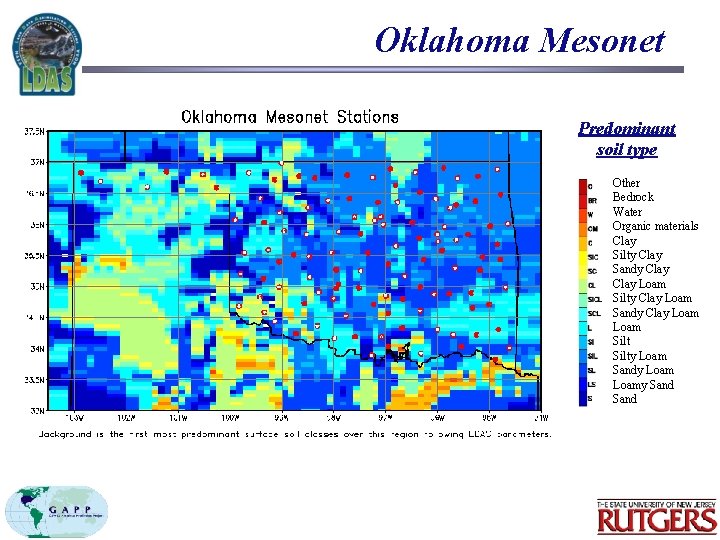
Oklahoma Mesonet Predominant soil type Other Bedrock Water Organic materials Clay Silty Clay Sandy Clay Loam Silty Clay Loam Sandy Clay Loam Silty Loam Sandy Loamy Sand
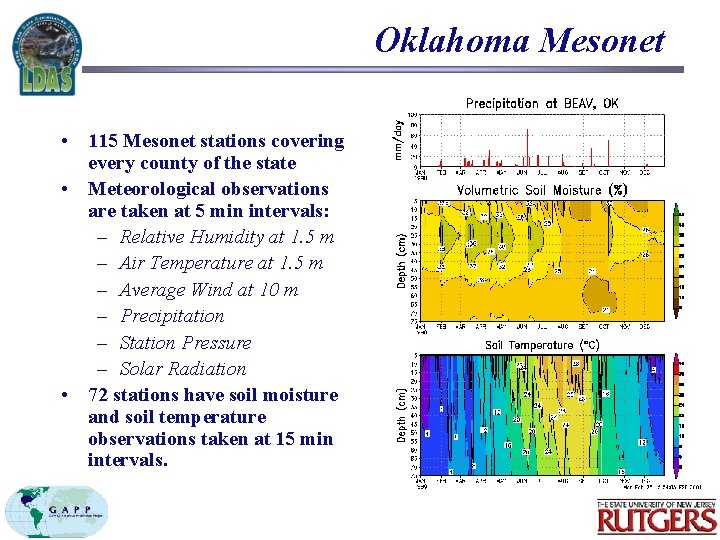
Oklahoma Mesonet • 115 Mesonet stations covering every county of the state • Meteorological observations are taken at 5 min intervals: – Relative Humidity at 1. 5 m – Air Temperature at 1. 5 m – Average Wind at 10 m – Precipitation – Station Pressure – Solar Radiation • 72 stations have soil moisture and soil temperature observations taken at 15 min intervals. Beaver station
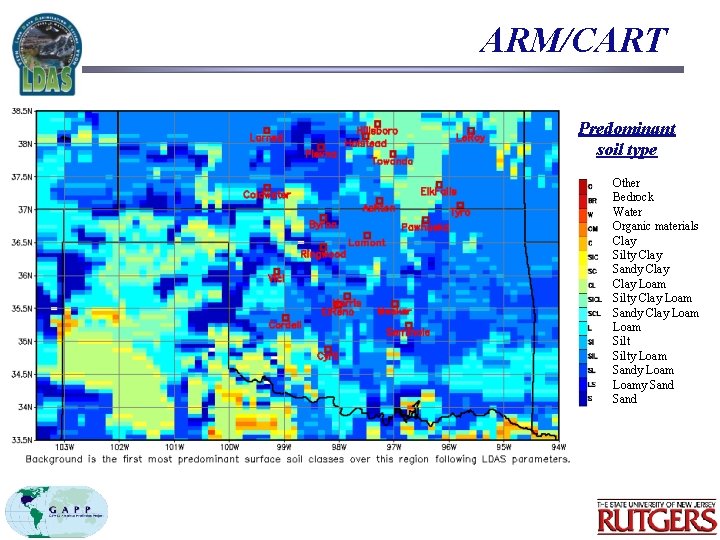
ARM/CART Predominant soil type Other Bedrock Water Organic materials Clay Silty Clay Sandy Clay Loam Silty Clay Loam Sandy Clay Loam Silty Loam Sandy Loamy Sand
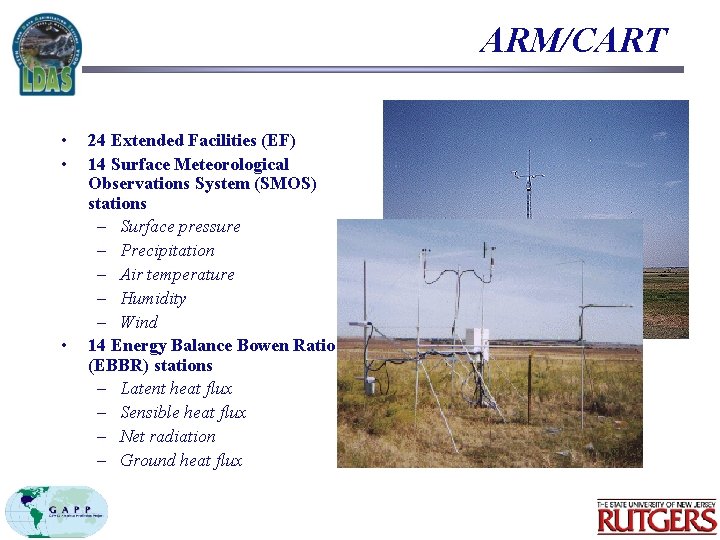
ARM/CART • • • 24 Extended Facilities (EF) 14 Surface Meteorological Observations System (SMOS) stations – Surface pressure – Precipitation – Air temperature – Humidity – Wind 14 Energy Balance Bowen Ratio (EBBR) stations – Latent heat flux – Sensible heat flux – Net radiation – Ground heat flux
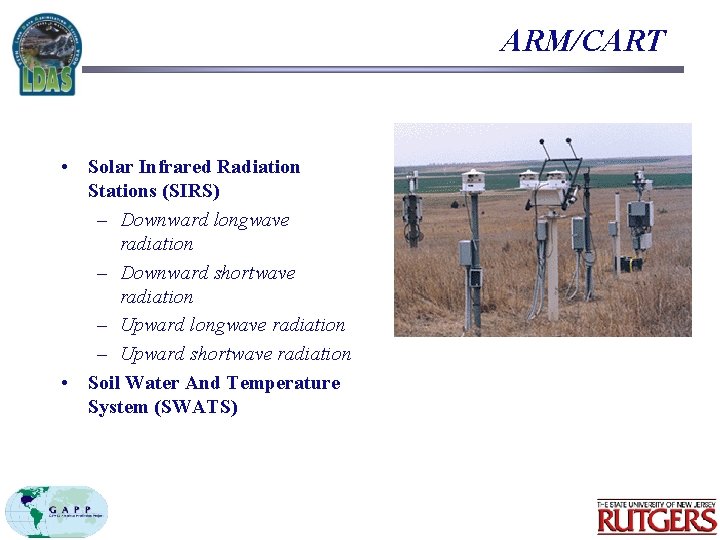
ARM/CART • Solar Infrared Radiation Stations (SIRS) – Downward longwave radiation – Downward shortwave radiation – Upward longwave radiation – Upward shortwave radiation • Soil Water And Temperature System (SWATS)
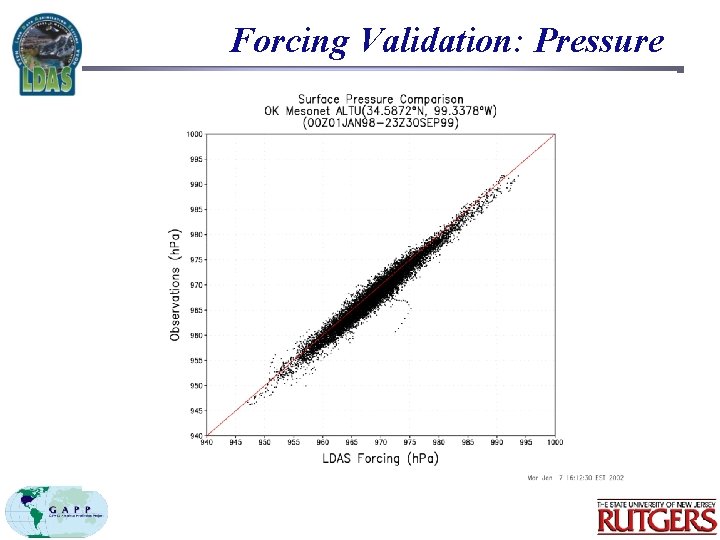
Forcing Validation: Pressure
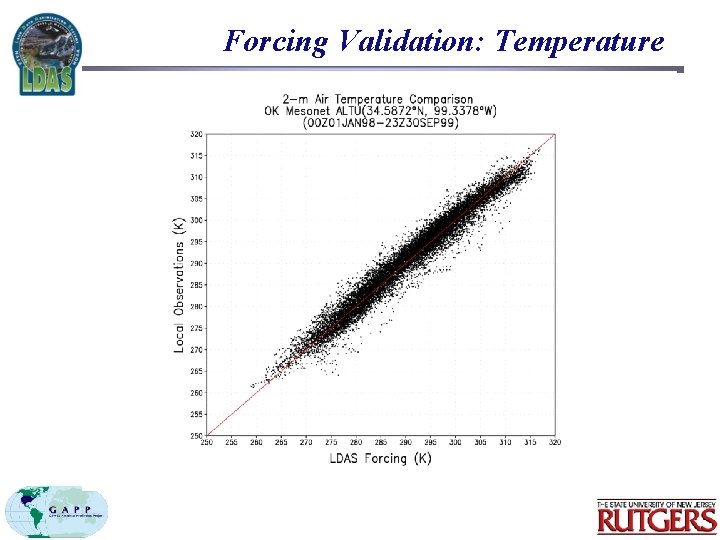
Forcing Validation: Temperature
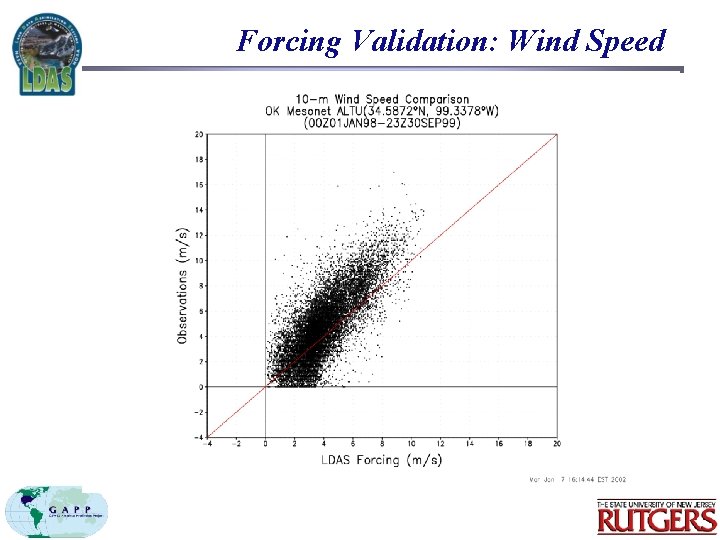
Forcing Validation: Wind Speed
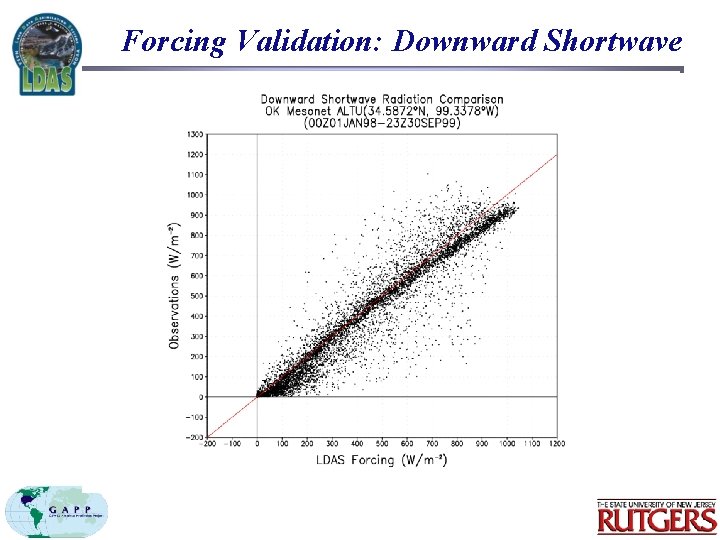
Forcing Validation: Downward Shortwave
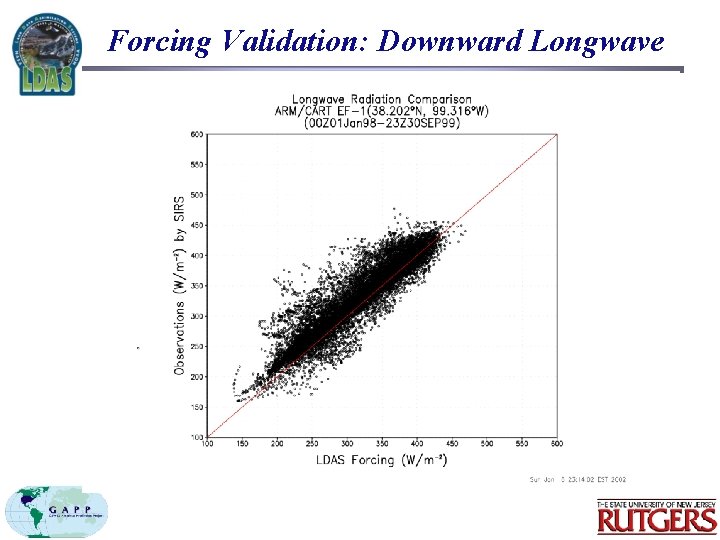
Forcing Validation: Downward Longwave
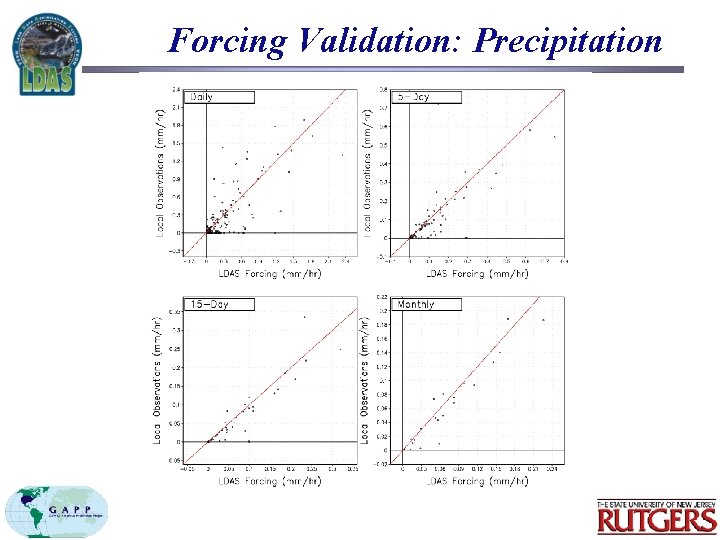
Forcing Validation: Precipitation
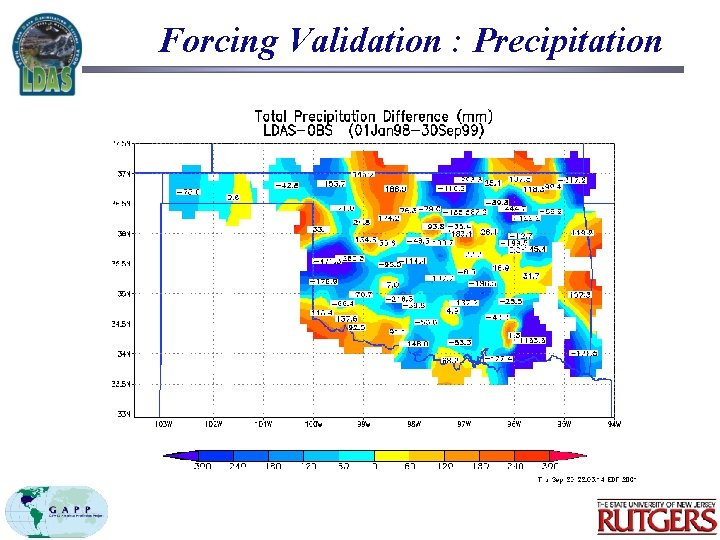
Forcing Validation : Precipitation
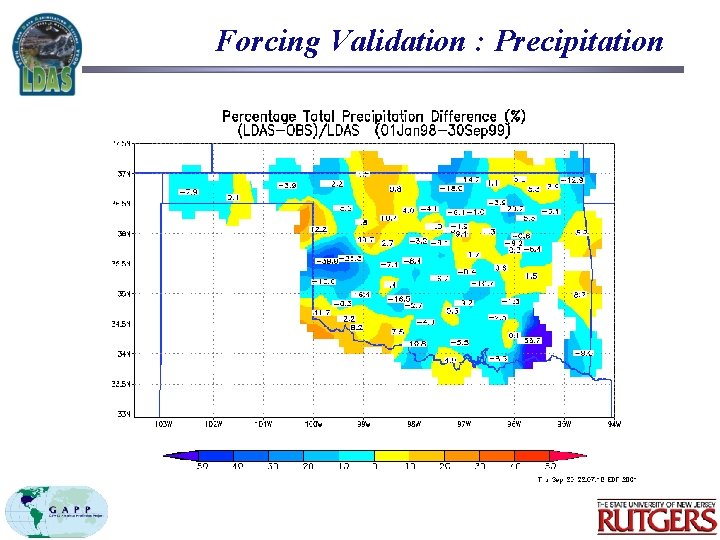
Forcing Validation : Precipitation
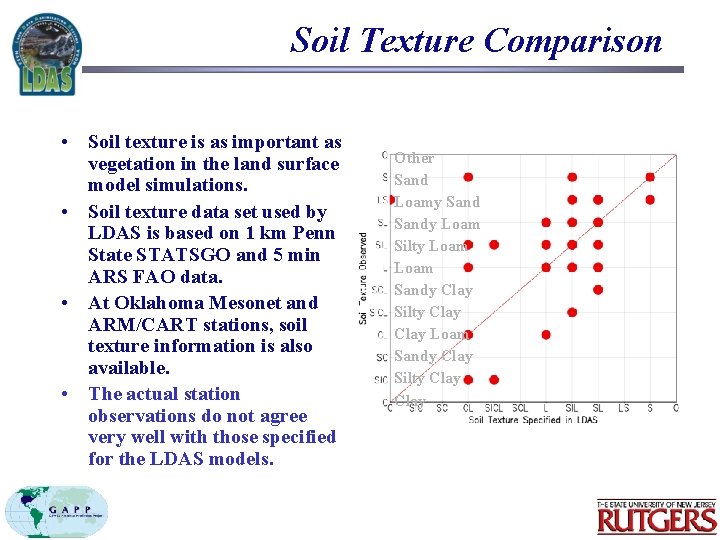
Soil Texture Comparison • Soil texture is as important as vegetation in the land surface model simulations. • Soil texture data set used by LDAS is based on 1 km Penn State STATSGO and 5 min ARS FAO data. • At Oklahoma Mesonet and ARM/CART stations, soil texture information is also available. • The actual station observations do not agree very well with those specified for the LDAS models. Other Sand Loamy Sandy Loam Silty Loam Sandy Clay Silty Clay
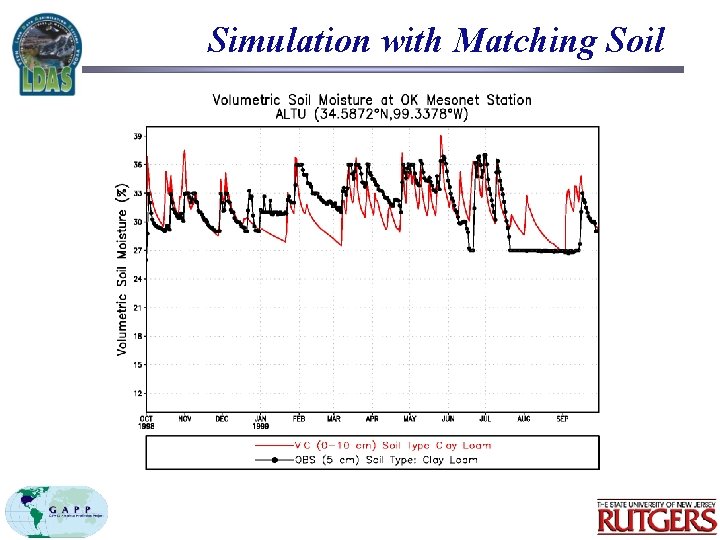
Simulation with Matching Soil
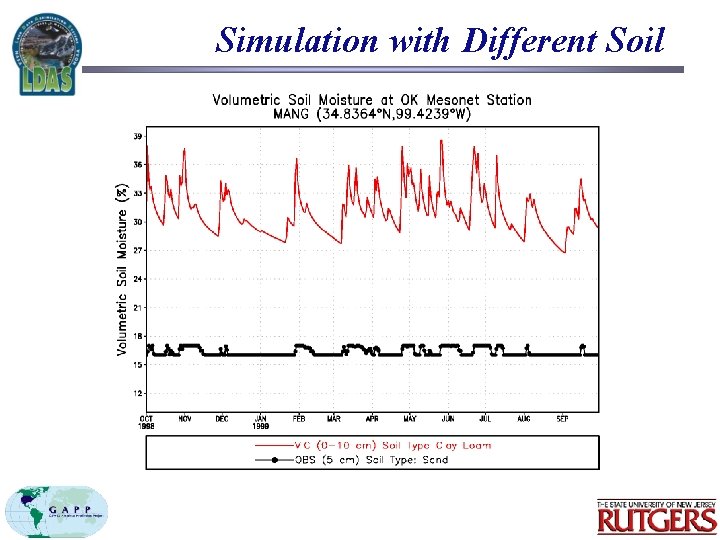
Simulation with Different Soil
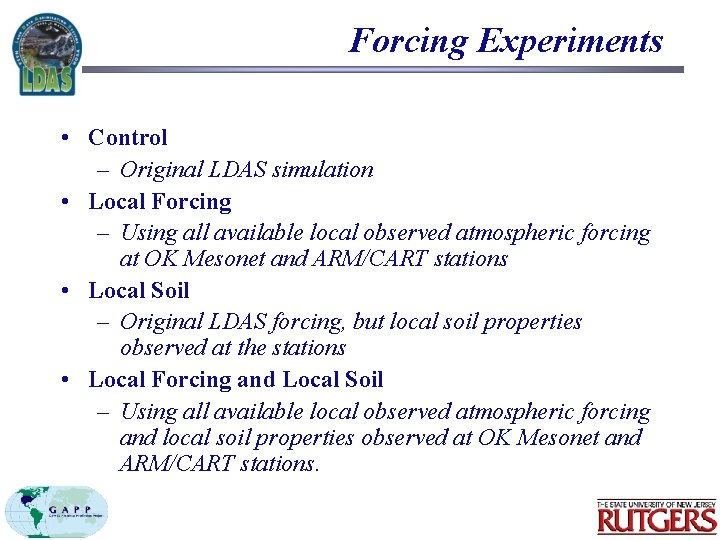
Forcing Experiments • Control – Original LDAS simulation • Local Forcing – Using all available local observed atmospheric forcing at OK Mesonet and ARM/CART stations • Local Soil – Original LDAS forcing, but local soil properties observed at the stations • Local Forcing and Local Soil – Using all available local observed atmospheric forcing and local soil properties observed at OK Mesonet and ARM/CART stations.
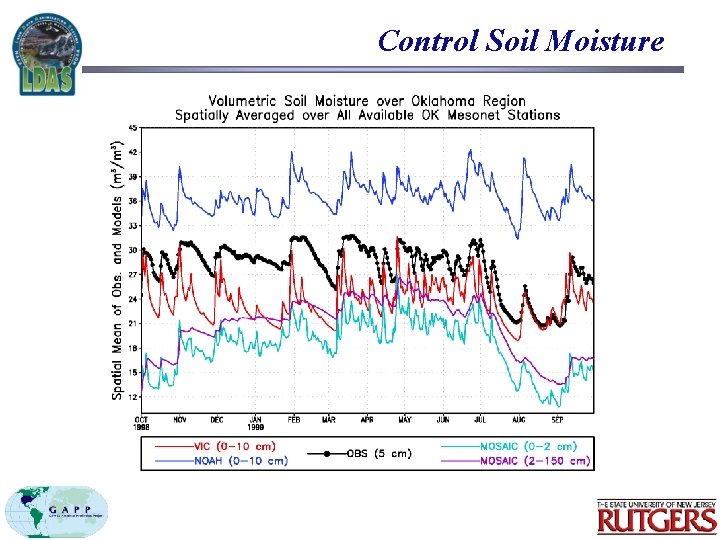
Control Soil Moisture
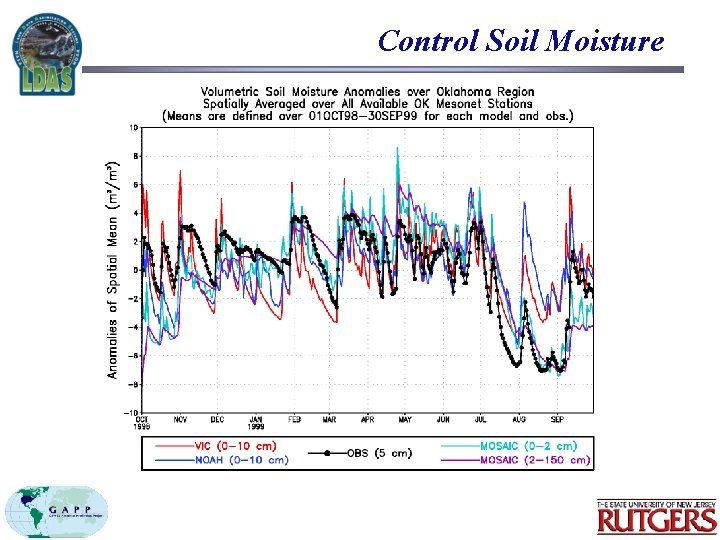
Control Soil Moisture
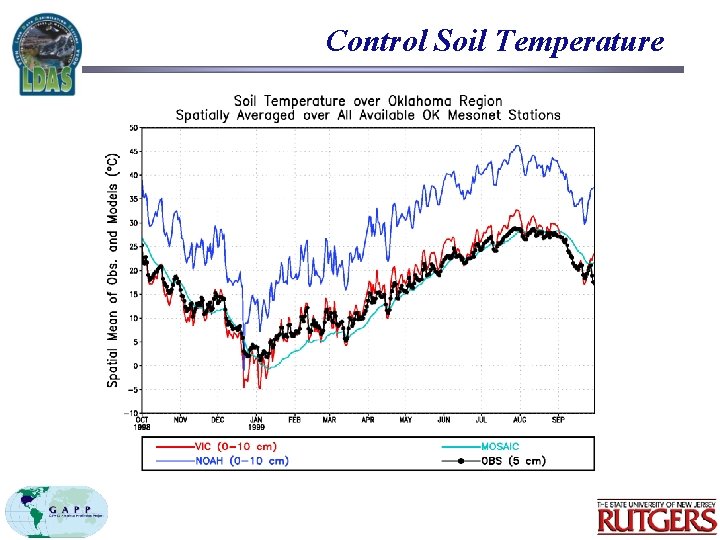
Control Soil Temperature
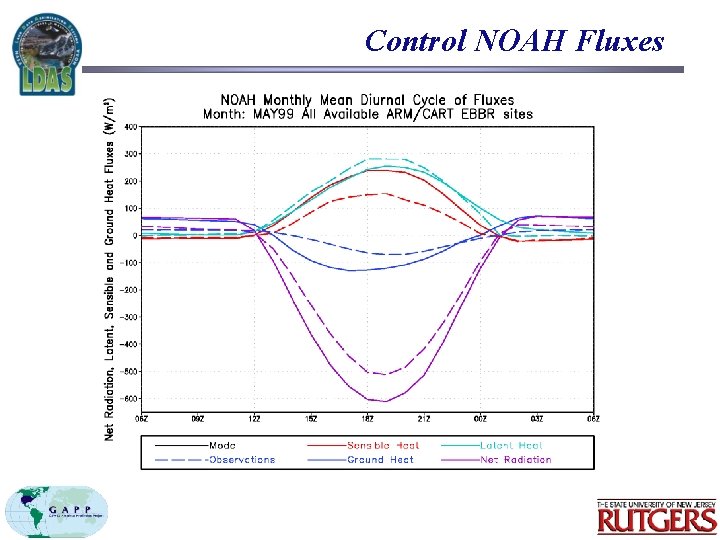
Control NOAH Fluxes
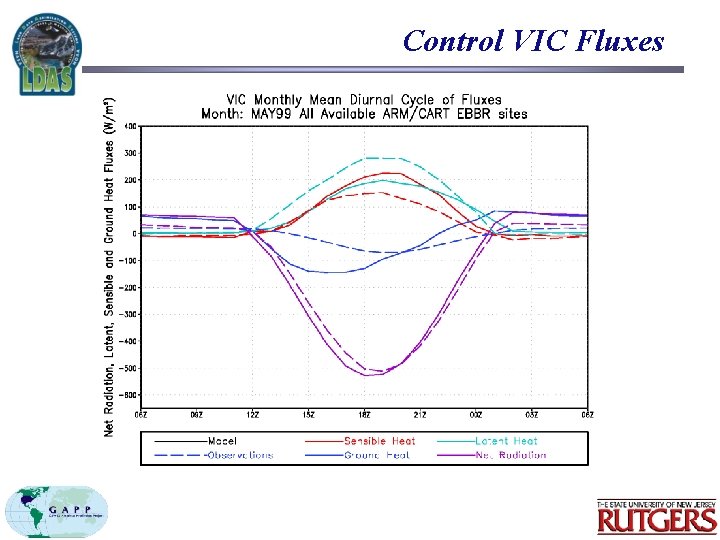
Control VIC Fluxes
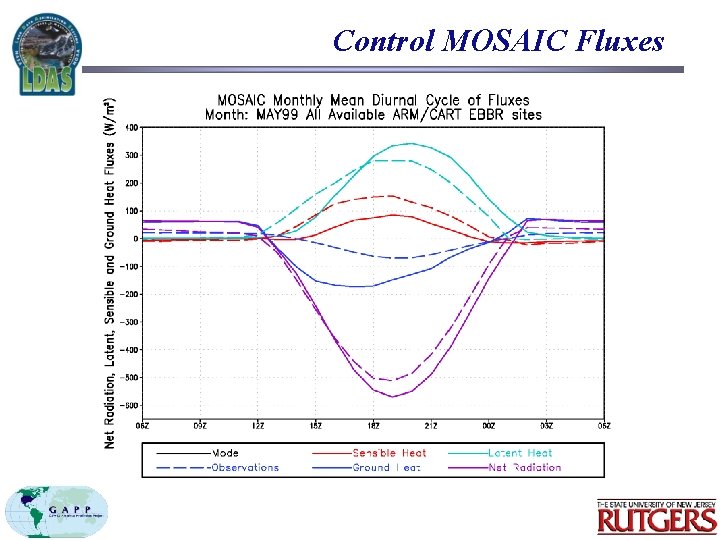
Control MOSAIC Fluxes
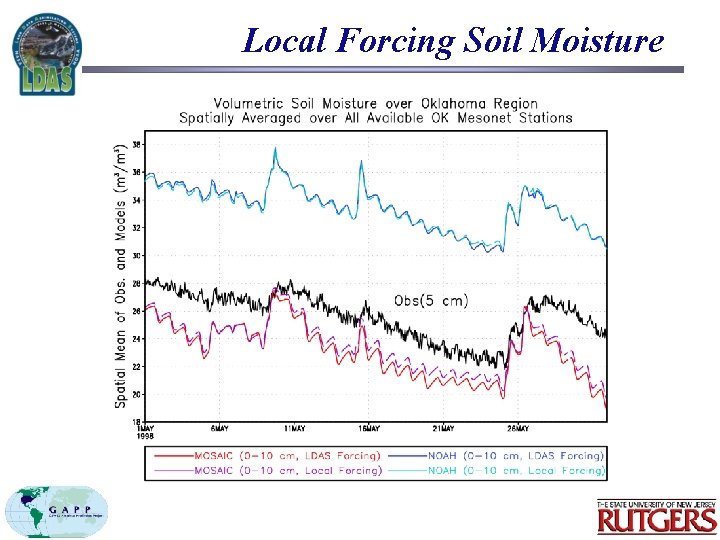
Local Forcing Soil Moisture
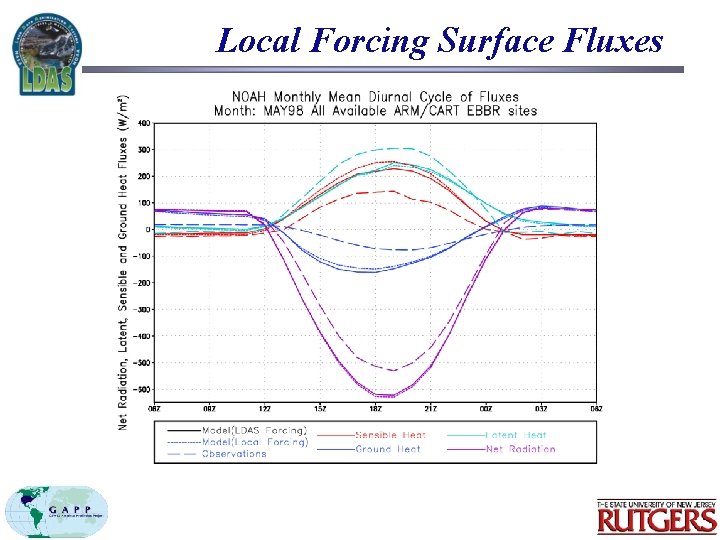
Local Forcing Surface Fluxes
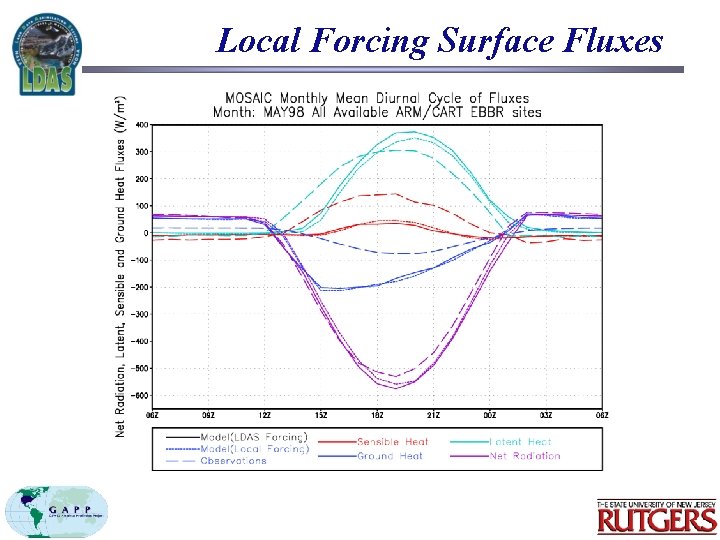
Local Forcing Surface Fluxes
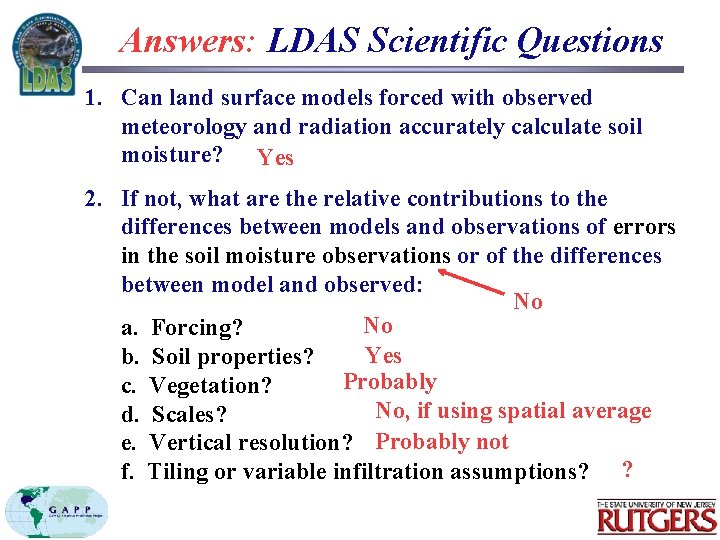
Answers: LDAS Scientific Questions 1. Can land surface models forced with observed meteorology and radiation accurately calculate soil moisture? Yes 2. If not, what are the relative contributions to the differences between models and observations of errors in the soil moisture observations or of the differences between model and observed: No No a. Forcing? Yes b. Soil properties? Probably c. Vegetation? No, if using spatial average d. Scales? e. Vertical resolution? Probably not f. Tiling or variable infiltration assumptions? ?
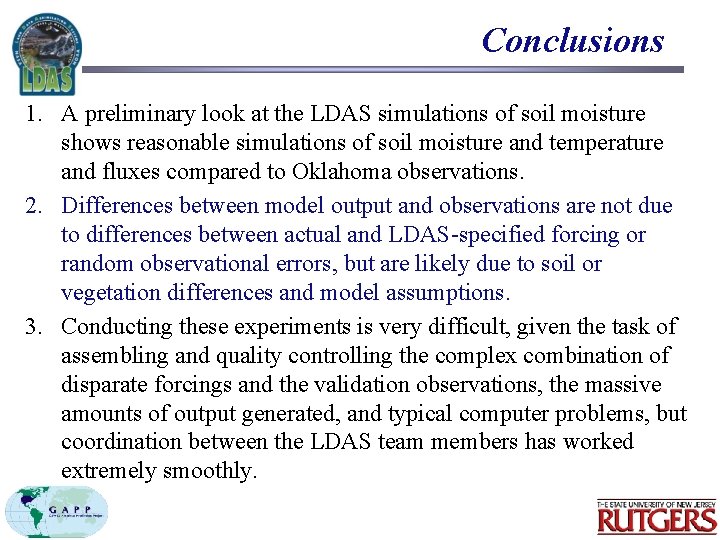
Conclusions 1. A preliminary look at the LDAS simulations of soil moisture shows reasonable simulations of soil moisture and temperature and fluxes compared to Oklahoma observations. 2. Differences between model output and observations are not due to differences between actual and LDAS-specified forcing or random observational errors, but are likely due to soil or vegetation differences and model assumptions. 3. Conducting these experiments is very difficult, given the task of assembling and quality controlling the complex combination of disparate forcings and the validation observations, the massive amounts of output generated, and typical computer problems, but coordination between the LDAS team members has worked extremely smoothly.
- Slides: 34