
EVALUATION OF CRUDE DRUGS Silpa M Assistant professor






- Slides: 79
EVALUATION OF CRUDE DRUGS Silpa M Assistant professor Dept. Of pharmacology yenepoya pharmacy college & research centre
• Introduction: (1) Drug evaluation may be defined as the determination of identity, purity and quality of a drug. (2) Identity – identification of biological source of the drug. (3) Quality – the quantity of the active constituents present. (4) Purity – the extent of foreign organic material present in a crude drug.
The evaluation of a crude drug is necessary because of three main reasons • Role in identification of botanical source • Variation in botanicals • Quality control of crude materials • Identification of common adulterants • Safety assessment – documentation for toxicological activity • Standardization of crude drugs
• Methods of Drug Evaluation: The evaluation of a drug is drug done by studying its various properties. The various properties are (1) Organoleptic property, (2) Microscopic property, (3) Biological property, (4) Chemical property, (5) Physical property.
I. Organoleptic (Morphological) Evaluation: • This refers to drug evaluation by means of our organs of sense and includes other sensory organs like odour, colour, taste and texture. • It includes the study of morphology and other sensory characters.
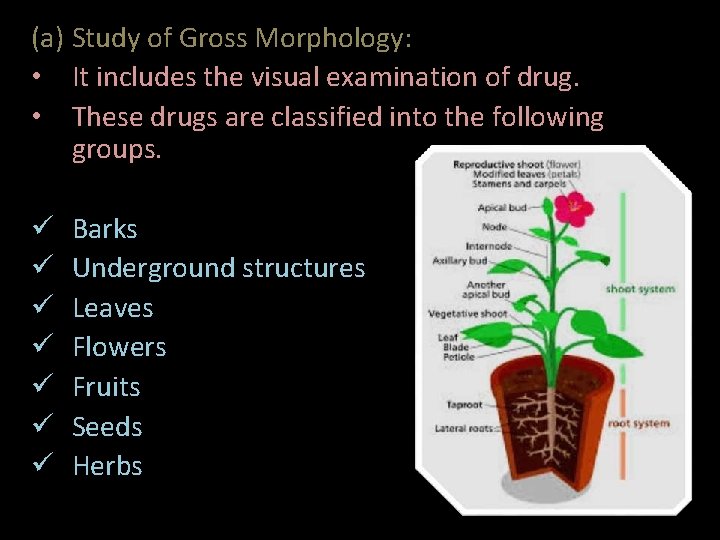
(a) Study of Gross Morphology: • It includes the visual examination of drug. • These drugs are classified into the following groups. Barks Underground structures Leaves Flowers Fruits Seeds Herbs
Barks: • It includes all the tissues in a woody stem outside the interfascicular cambium which constitutes to the drug. • Barks are collected from the trunk or branches of the trees a narrow strips. • Example: Cinnamon, Cinchona, Ashoka, Kurchi.
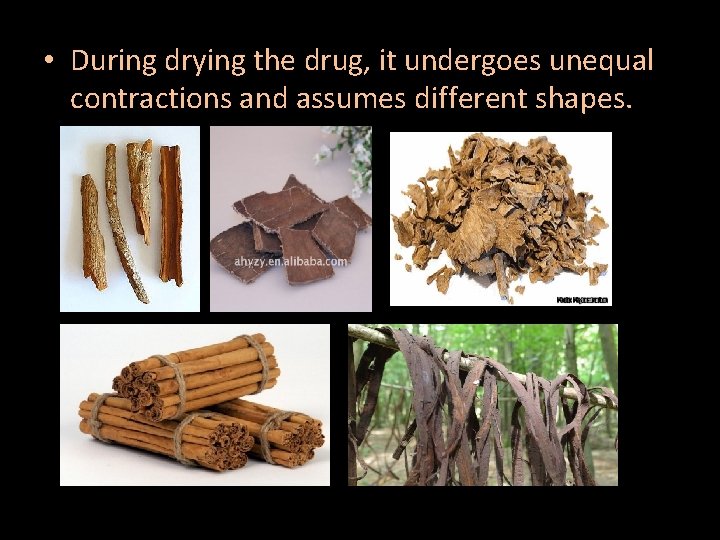
• During drying the drug, it undergoes unequal contractions and assumes different shapes.
Underground Structures: • Rhizomes, Roots, Bulbs, Corm and Tubers are the underground structures of the plant. • They are swollen due to the storage of food material like carbohydrates and other chemicals. • Examples: Ginger, Turmeric, Jatamansi.
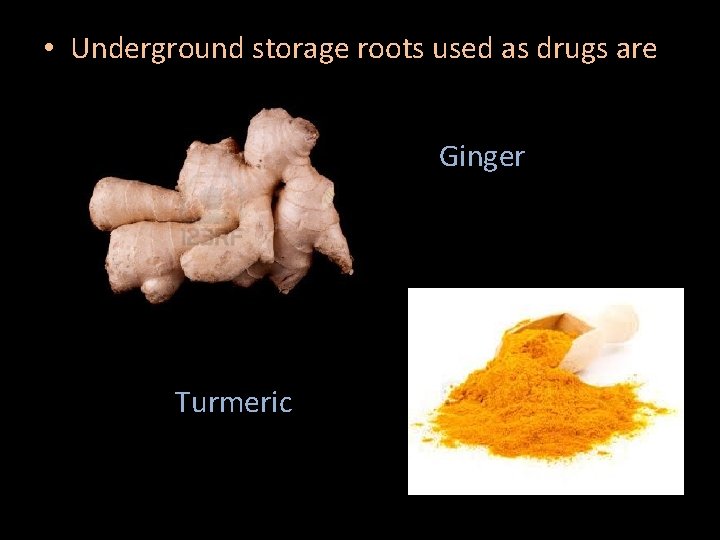
• Underground storage roots used as drugs are Ginger Turmeric
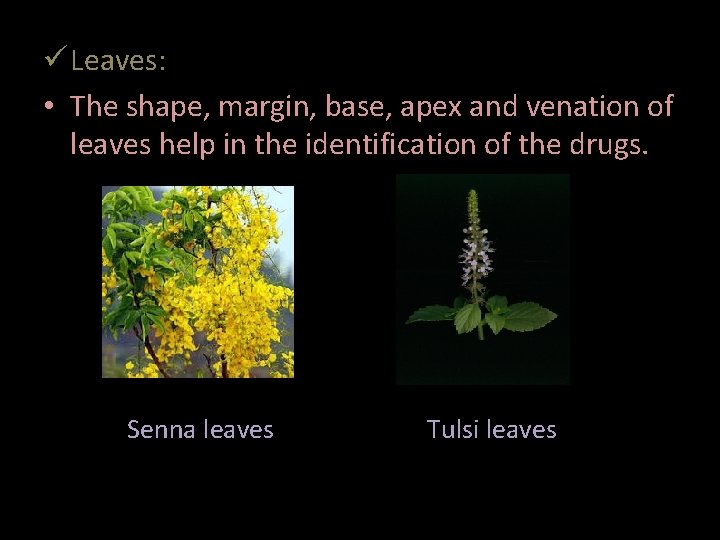
Leaves: • The shape, margin, base, apex and venation of leaves help in the identification of the drugs. Senna leaves Tulsi leaves
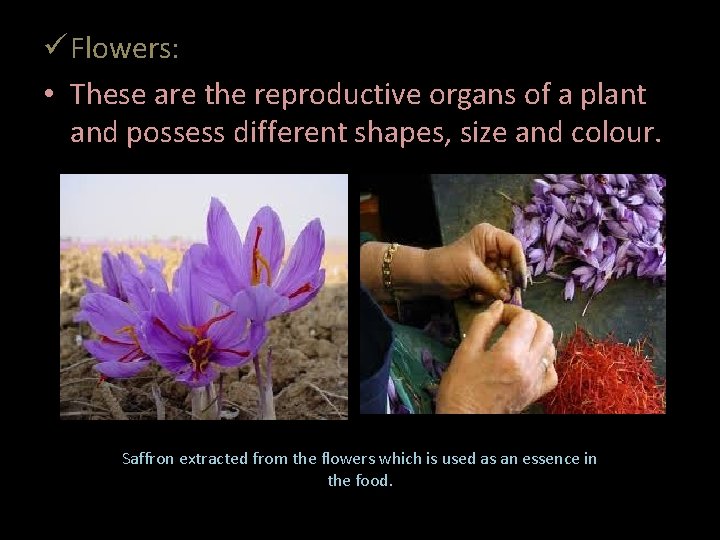
Flowers: • These are the reproductive organs of a plant and possess different shapes, size and colour. Saffron extracted from the flowers which is used as an essence in the food.
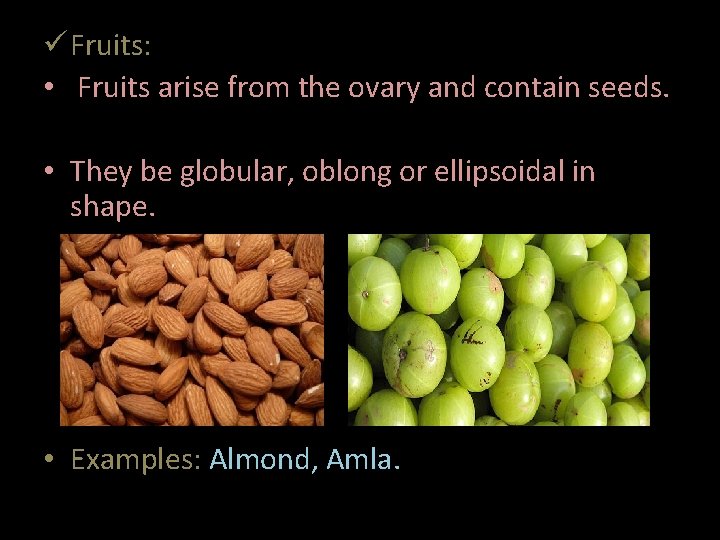
Fruits: • Fruits arise from the ovary and contain seeds. • They be globular, oblong or ellipsoidal in shape. • Examples: Almond, Amla.
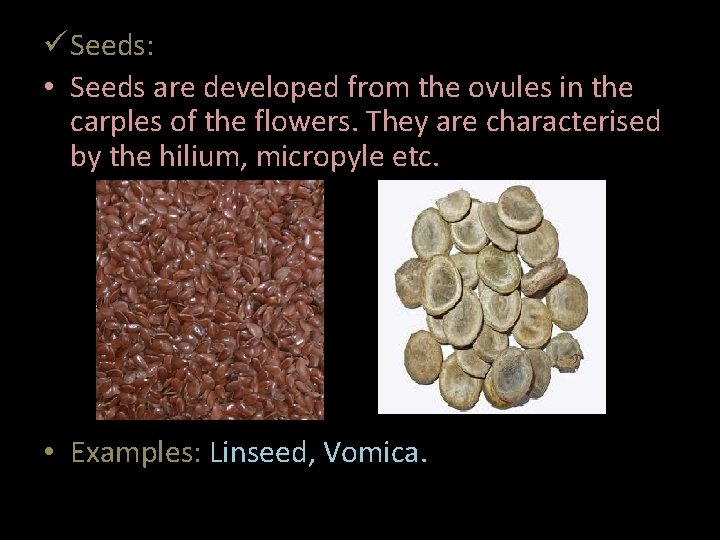
Seeds: • Seeds are developed from the ovules in the carples of the flowers. They are characterised by the hilium, micropyle etc. • Examples: Linseed, Vomica.
(b) Study of Sensory Characters: • Colour, Texture, Odour and Taste are useful in the evaluation of drugs. Colour Odour Taste Texture
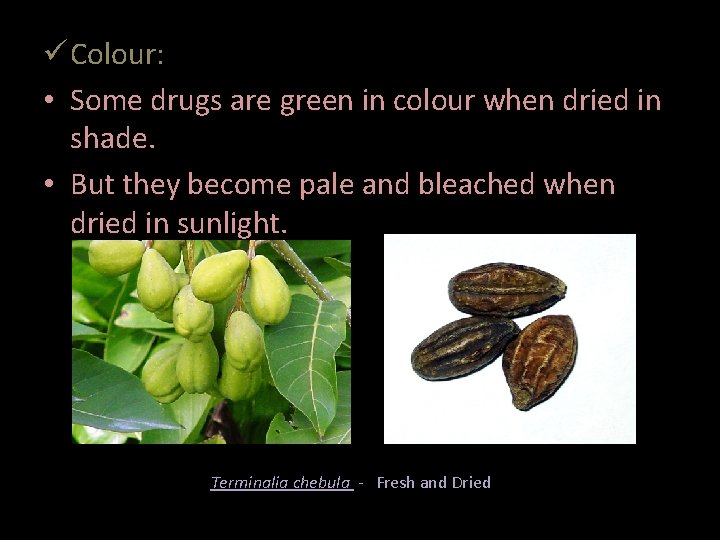
Colour: • Some drugs are green in colour when dried in shade. • But they become pale and bleached when dried in sunlight. Terminalia chebula - Fresh and Dried
Odour: • The odour of the drug may be either distinct or indistinct. • The terms used for the drugs are aromatic, balsamic, spicy etc. • Mentha, clove are some of the examples for the drugs which have a distinct odour.
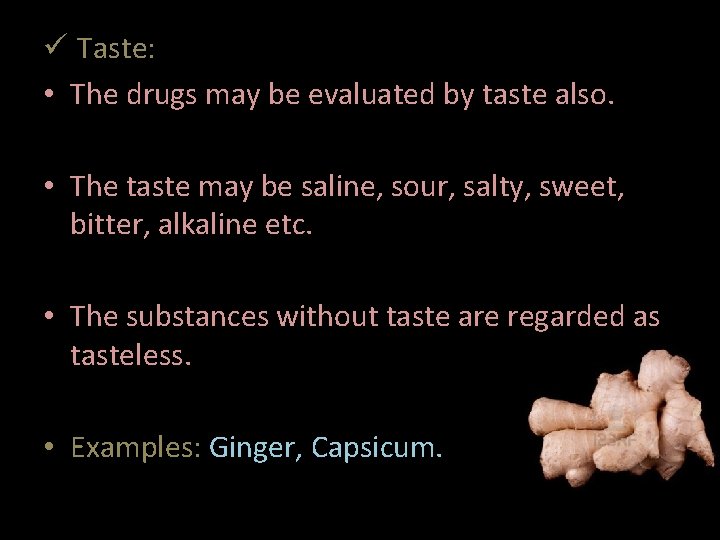
Taste: • The drugs may be evaluated by taste also. • The taste may be saline, sour, salty, sweet, bitter, alkaline etc. • The substances without taste are regarded as tasteless. • Examples: Ginger, Capsicum.
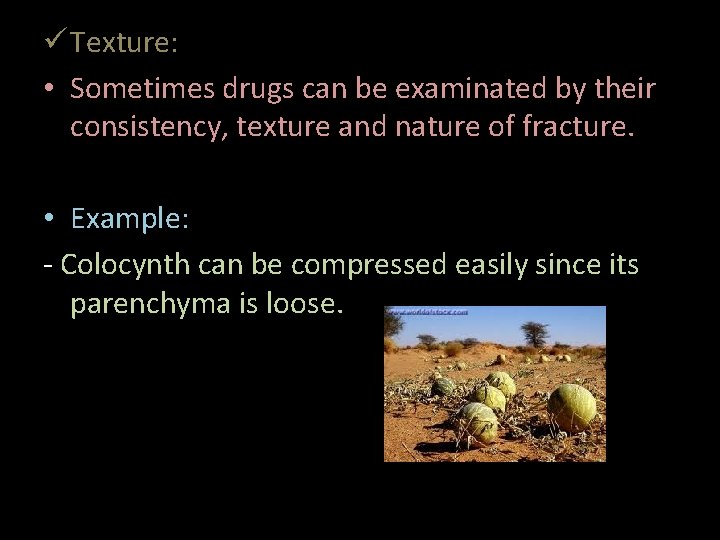
Texture: • Sometimes drugs can be examinated by their consistency, texture and nature of fracture. • Example: - Colocynth can be compressed easily since its parenchyma is loose.
II. Microscopic or Anatomical Evaluation: • This method allows a more detailed examination of a drug and it can be used to identify organized drugs by their known histological characters. • Before examination through a microscope the material must be suitably prepared. • This can be done by powdering, cutting thin sections of the drug or preparing a macerate.
Ø Important aspect of microscopical evaluation: A) Histological studies B) Microscopic linear measurements and quantitative microscopy
Histological studies • Histological studies are made from very thin sections of drugs. The characteristics of cell walls, cell contents, starch grains, calcium oxalate crystals, trichomes, fibres, vessels, etc. can be studied in details: Ø lignified trichomes in nux-vomica, Ø Warty trichomes of senna, Ø Wavy medullary rays of cascara bark, glandular trichomes of mint etc.
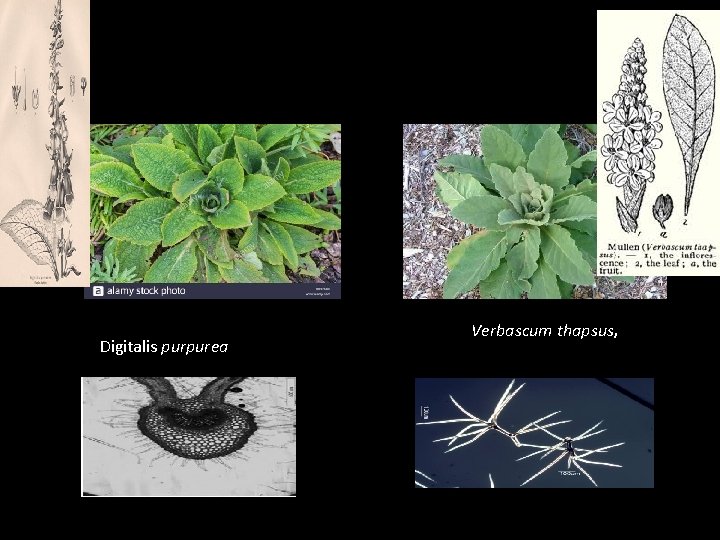
• Digitalis purpurea is adulterated by Verbascum thapsus, Primula vulgaris, Symphytum officinale. • Digitalis can be distinguished from V. thapsus microscopically by presence of wooly branched trichomes, where P. vulgaris have uniseriate covering trichomes (8 -9 celled long) and S. officinale contain multicellular trichomes forming hook at the top. • But Digitalis have uniseriate multicellular covering trichomes of 3 -5 celled long.
Digitalis purpurea Verbascum thapsus,
• 2) Manchurian liquorice is adulterant of Glycyrrhiza glabra which can be distinghuished by the presence of Exfoliated cork where G. glabra contain Polyhedral tubular cork cells. • Cinchona bark is adulterated with Cuprea bark which can be identified by the presence of numerous Stone cells where cinchona barks rarely contain Stone cells.
• Study of cell wall constituents Like: Suberin, Cutin, Mucilage etc. • Study of cell inclusions Like: Volatile oil, Fixed oil, Proteins, Starch, Lignin, Calcium oxalate etc. Diameter of starch grains will assist in distinguishing varieties of Ipecacuanha and also cassia bark from cinchona bark and will detect senna stalk in powdered senna leaf.
Trichome: • These are another important diagnostic characters helpful in the identification of drugs and detection of adulterants. • Trichomes are the tubular elongated or glandular outgrowth of the epidermal cell. Trichomes are also called as plant hairs. • Trichomes consist of two parts viz. , root (in the epidermis) and body (outside the epidermis).
• Trichomes are present in most of the parts of the plant such as leaves (senna and digitalis), seeds (nux-vomica and strophanthus), fruits (Helicteris isora and Ladies finger), etc. • Trichomes are as such functionless, but sometimes, perform secretory function. • The trichomes excrete water and at times, volatile oil as in case of peppermint. • Trichomes are present in most of the aerial parts of the plant, but are absent on roots
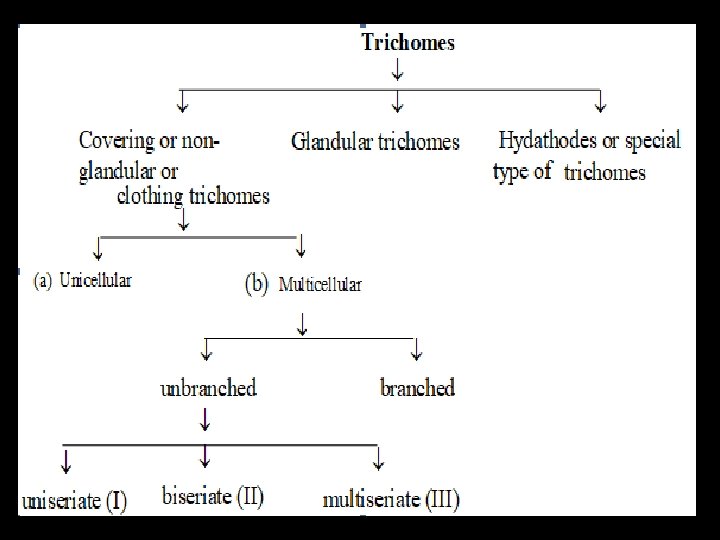
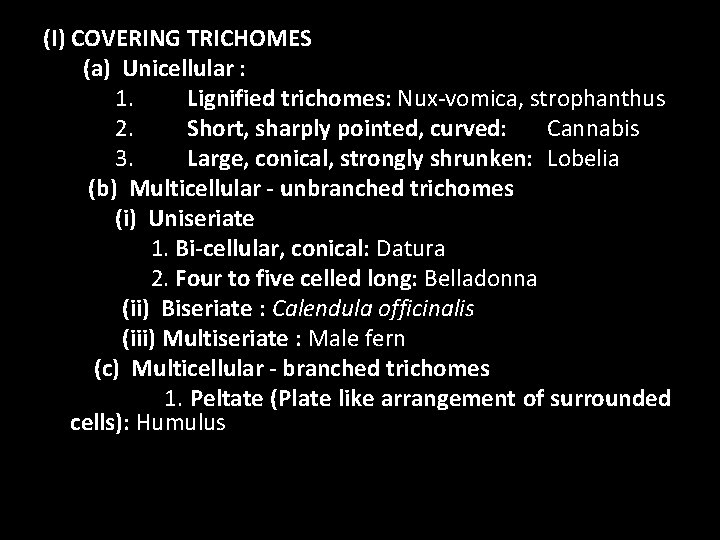
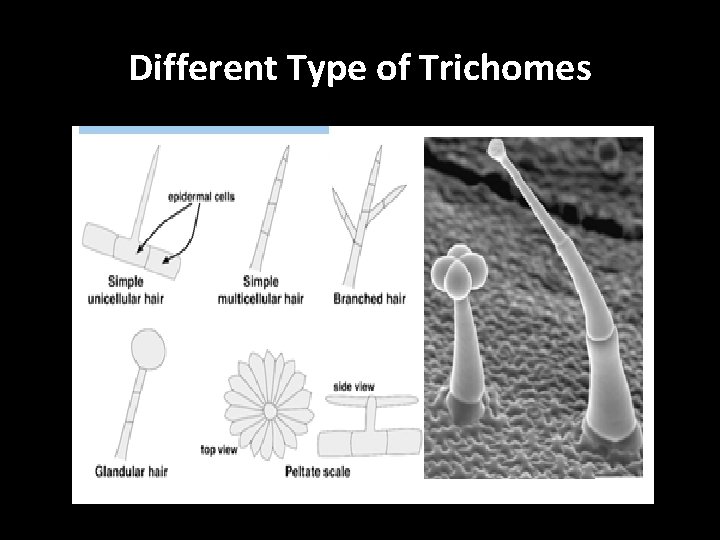
(I) COVERING TRICHOMES (a) Unicellular : 1. Lignified trichomes: Nux-vomica, strophanthus 2. Short, sharply pointed, curved: Cannabis 3. Large, conical, strongly shrunken: Lobelia (b) Multicellular - unbranched trichomes (i) Uniseriate 1. Bi-cellular, conical: Datura 2. Four to five celled long: Belladonna (ii) Biseriate : Calendula officinalis (iii) Multiseriate : Male fern (c) Multicellular - branched trichomes 1. Peltate (Plate like arrangement of surrounded cells): Humulus
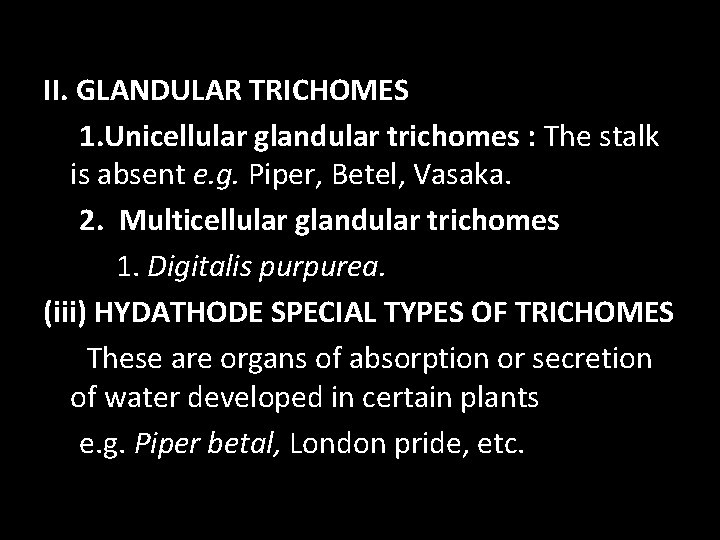
II. GLANDULAR TRICHOMES 1. Unicellular glandular trichomes : The stalk is absent e. g. Piper, Betel, Vasaka. 2. Multicellular glandular trichomes 1. Digitalis purpurea. (iii) HYDATHODE SPECIAL TYPES OF TRICHOMES These are organs of absorption or secretion of water developed in certain plants e. g. Piper betal, London pride, etc.
Different Type of Trichomes
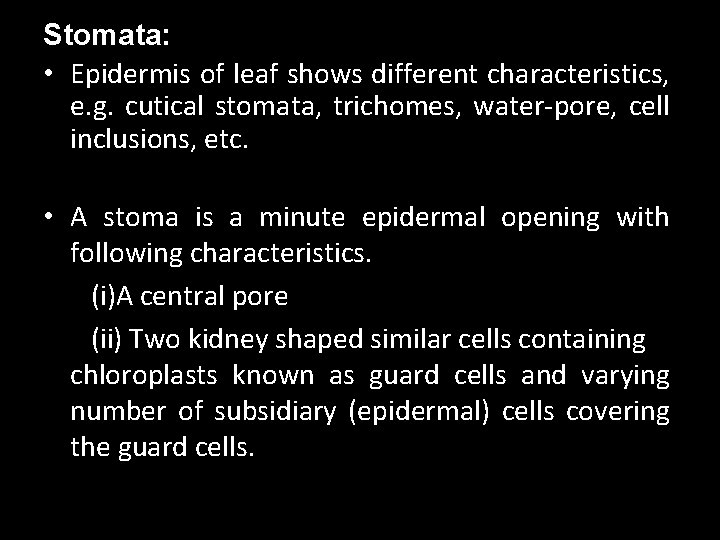
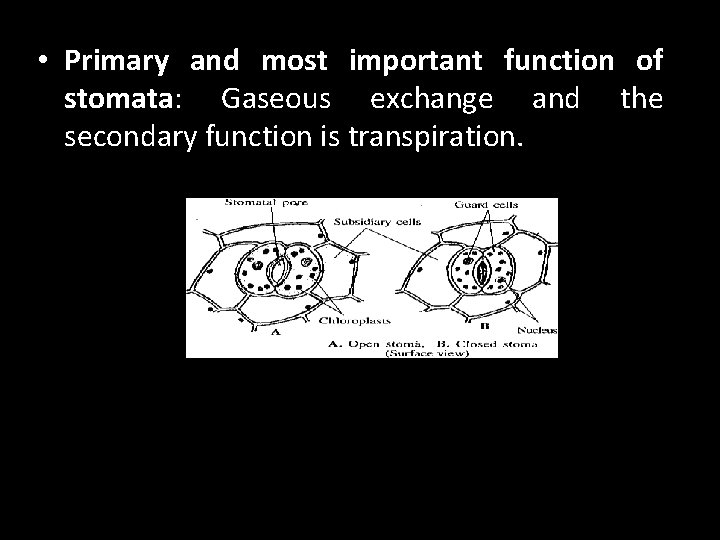
Stomata: • Epidermis of leaf shows different characteristics, e. g. cutical stomata, trichomes, water-pore, cell inclusions, etc. • A stoma is a minute epidermal opening with following characteristics. (i)A central pore (ii) Two kidney shaped similar cells containing chloroplasts known as guard cells and varying number of subsidiary (epidermal) cells covering the guard cells.
• Primary and most important function of stomata: Gaseous exchange and the secondary function is transpiration.
Types of stomata : • Depending upon the type of the guard cells and arrangement of subsidiary cells, stomata are divided into four types. 1. Moss type 2. Gymnospermous type 3. Gramineous type 4. Dicotyledonous type • Out of these, fourth type of the stomata is of diagnostic significance.
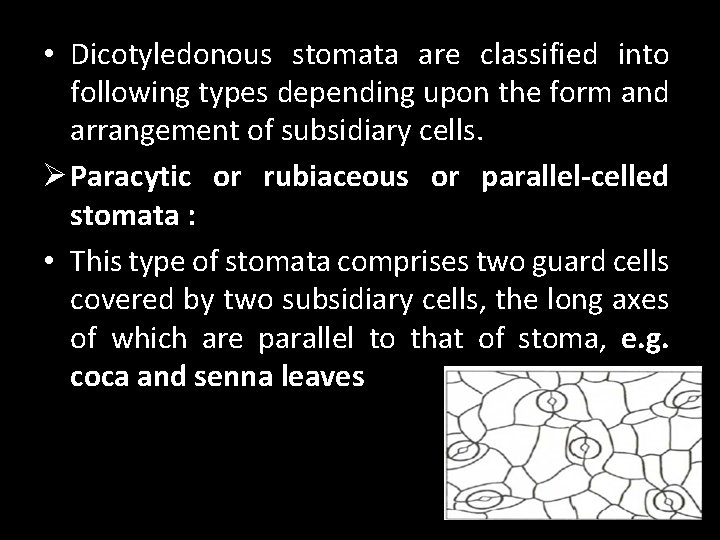
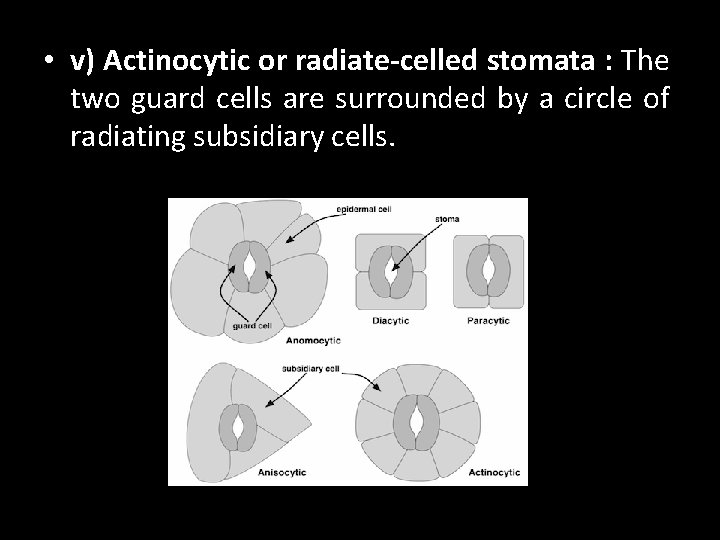
• Dicotyledonous stomata are classified into following types depending upon the form and arrangement of subsidiary cells. Ø Paracytic or rubiaceous or parallel-celled stomata : • This type of stomata comprises two guard cells covered by two subsidiary cells, the long axes of which are parallel to that of stoma, e. g. coca and senna leaves
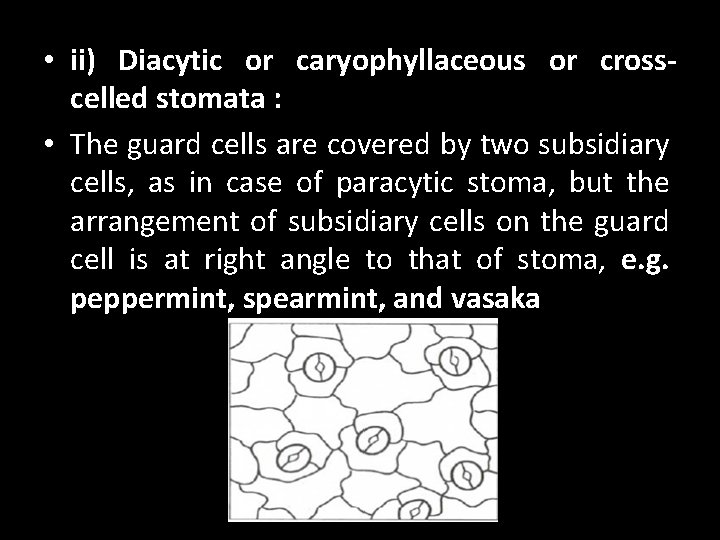
• ii) Diacytic or caryophyllaceous or crosscelled stomata : • The guard cells are covered by two subsidiary cells, as in case of paracytic stoma, but the arrangement of subsidiary cells on the guard cell is at right angle to that of stoma, e. g. peppermint, spearmint, and vasaka
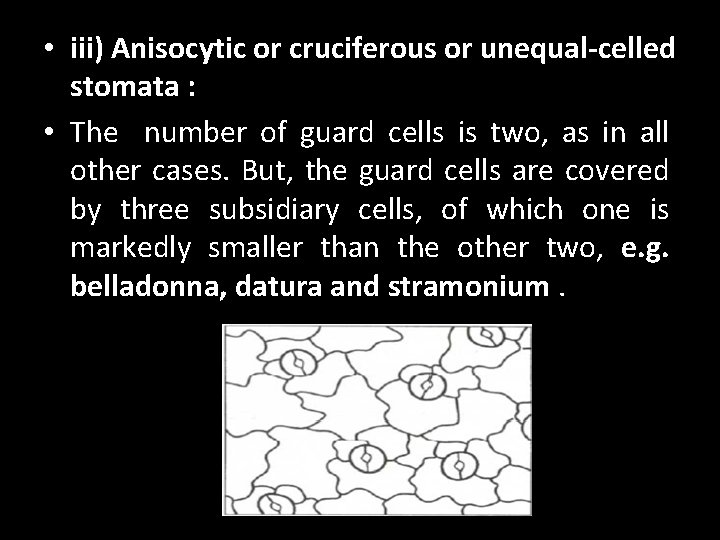
• iii) Anisocytic or cruciferous or unequal-celled stomata : • The number of guard cells is two, as in all other cases. But, the guard cells are covered by three subsidiary cells, of which one is markedly smaller than the other two, e. g. belladonna, datura and stramonium.
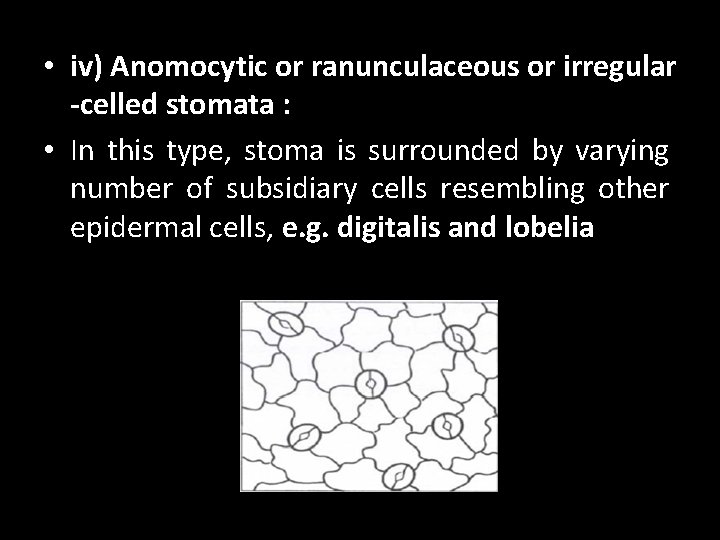
• iv) Anomocytic or ranunculaceous or irregular -celled stomata : • In this type, stoma is surrounded by varying number of subsidiary cells resembling other epidermal cells, e. g. digitalis and lobelia
• v) Actinocytic or radiate-celled stomata : The two guard cells are surrounded by a circle of radiating subsidiary cells.
• Microscope can also be used for a quantitative evaluation of drugs and adulterated powders. • This is done by counting a specific histological feature such as, Stomatal Number Stomatal Index Vein-islet Number Palisade Ratio Quantitative Microscopy Refractive Index
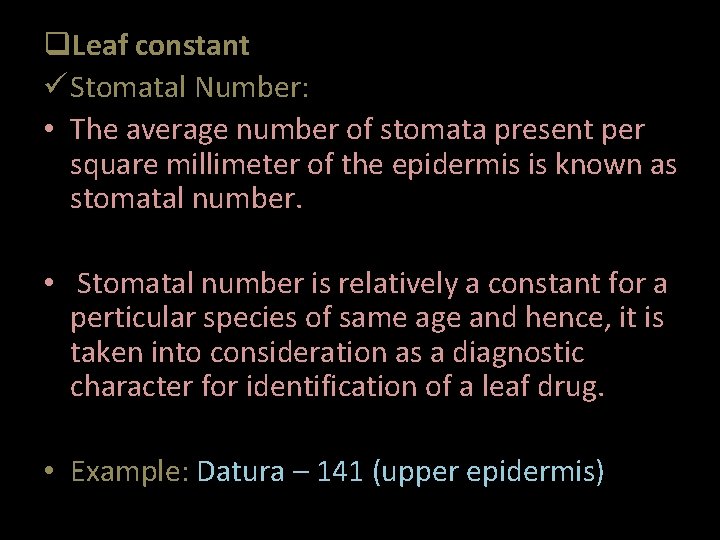
q. Leaf constant Stomatal Number: • The average number of stomata present per square millimeter of the epidermis is known as stomatal number. • Stomatal number is relatively a constant for a perticular species of same age and hence, it is taken into consideration as a diagnostic character for identification of a leaf drug. • Example: Datura – 141 (upper epidermis)
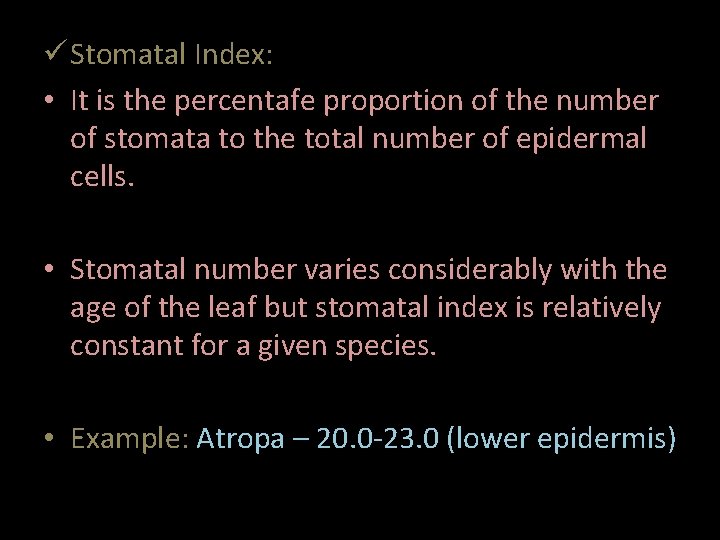
Stomatal Index: • It is the percentafe proportion of the number of stomata to the total number of epidermal cells. • Stomatal number varies considerably with the age of the leaf but stomatal index is relatively constant for a given species. • Example: Atropa – 20. 0 -23. 0 (lower epidermis)
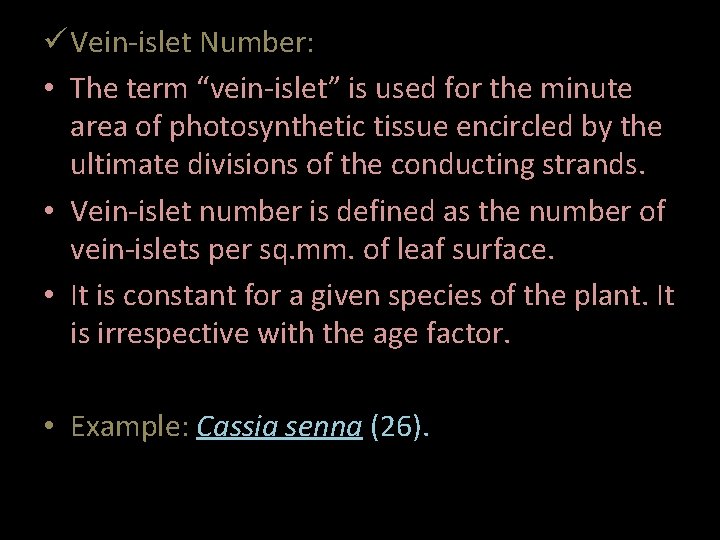
Vein-islet Number: • The term “vein-islet” is used for the minute area of photosynthetic tissue encircled by the ultimate divisions of the conducting strands. • Vein-islet number is defined as the number of vein-islets per sq. mm. of leaf surface. • It is constant for a given species of the plant. It is irrespective with the age factor. • Example: Cassia senna (26).
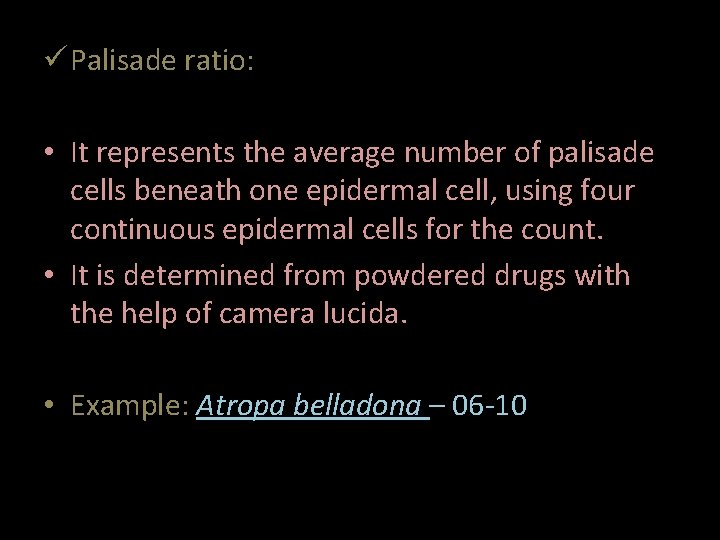
Palisade ratio: • It represents the average number of palisade cells beneath one epidermal cell, using four continuous epidermal cells for the count. • It is determined from powdered drugs with the help of camera lucida. • Example: Atropa belladona – 06 -10
Quantitative Microscopy: • It is an important analytical technique for powdered drug, especially when chemical and other methods of evaluation of crude drug fail as accurate measure of quality. • Example: Lycopodium- spores are very characteristic in shape and appearance.
Lycopodium- spores • It is used when especially chemical and other methods of evaluation of drugs fails to determine quality. • Lycopodium spores are very characterized in shape and appearance and uniform in size(25μm) on avg, 94000 spores present/mg of lycopodium powder. it consists of 1. well defined particles which may be counted. 2. Single layered cells or tissues the area of which may be traced under suitable magnification and actual area calculated 3. The objects of uniform thickness, the length of which can be measured, and actual area calculated.
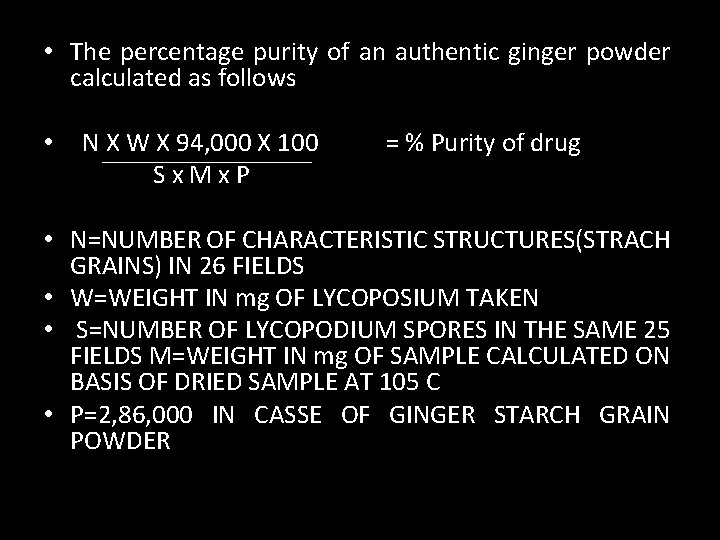
• The percentage purity of an authentic ginger powder calculated as follows • N X W X 94, 000 X 100 = % Purity of drug S x M x P • N=NUMBER OF CHARACTERISTIC STRUCTURES(STRACH GRAINS) IN 26 FIELDS • W=WEIGHT IN mg OF LYCOPOSIUM TAKEN • S=NUMBER OF LYCOPODIUM SPORES IN THE SAME 25 FIELDS M=WEIGHT IN mg OF SAMPLE CALCULATED ON BASIS OF DRIED SAMPLE AT 105 C • P=2, 86, 000 IN CASSE OF GINGER STARCH GRAIN POWDER
III. Physical Evaluation: • Physical contents such as elasticity in fibres, viscosity of drugs containing gums, selling factor for mucilage containing materials, froth number of saponin drugs, congealing point of volatile and fixed oils, melting and boiling points and water contents are some important parameters used in the evaluation of drugs. • Ultraviolet light is also used for determing the fluorescence of extracts of some drugs.
• Physical constants are extensively applied to the active principles of drugs, such as alkaloids, volatile oils, fixed oils etc. • A few of them are: Moisture Content Viscosity Melting point Optical Ratation Refractive Index Ash Content Extractive values Volatile oil Content Rf Values
Moisture Content: • Presence of moisture in a crude drug can lead to its deterioration due to either activation of certain enzymes or growth of microbes. • Moisture content can be determined by heating the drug at 150⁰C in an oven to a constant weight and calculating the loss of weight.
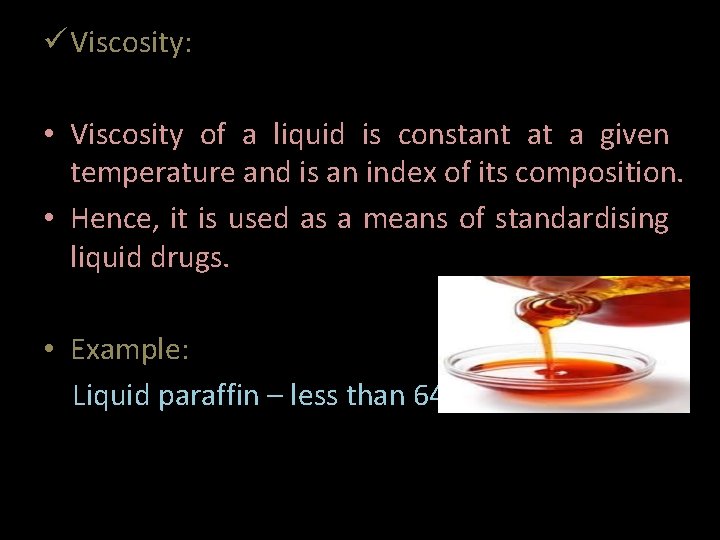
Viscosity: • Viscosity of a liquid is constant at a given temperature and is an index of its composition. • Hence, it is used as a means of standardising liquid drugs. • Example: Liquid paraffin – less than 64 centistokes.
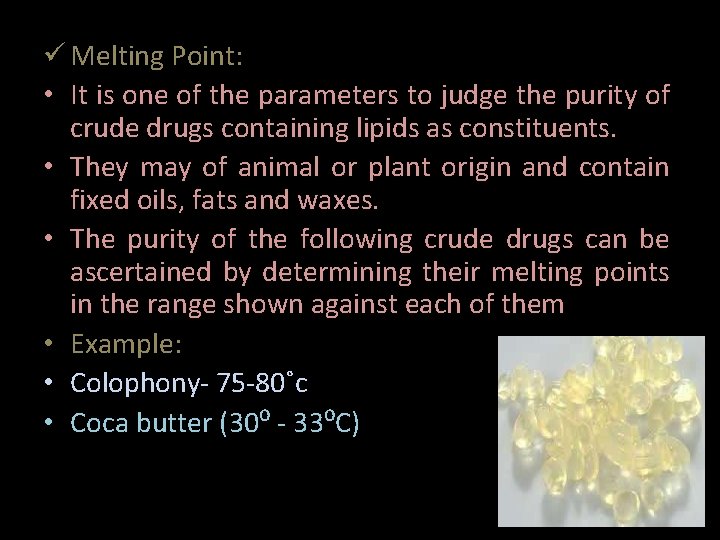
Melting Point: • It is one of the parameters to judge the purity of crude drugs containing lipids as constituents. • They may of animal or plant origin and contain fixed oils, fats and waxes. • The purity of the following crude drugs can be ascertained by determining their melting points in the range shown against each of them • Example: • Colophony- 75 -80˚c • Coca butter (30⁰ - 33⁰C)
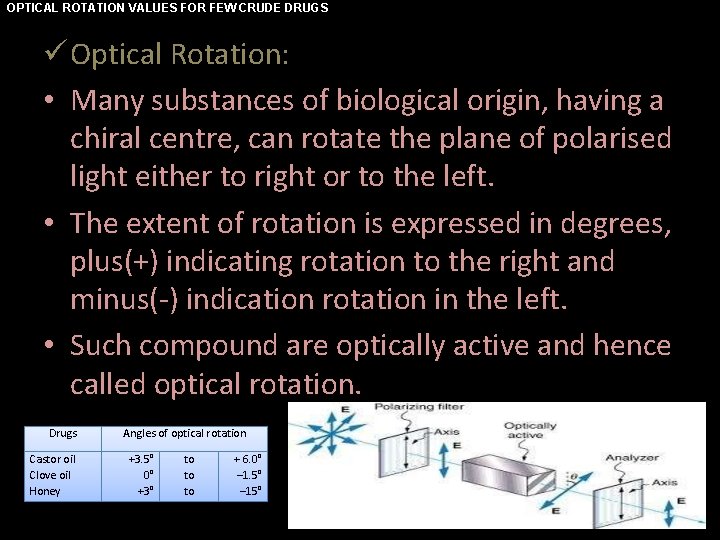
OPTICAL ROTATION VALUES FOR FEW CRUDE DRUGS Optical Rotation: • Many substances of biological origin, having a chiral centre, can rotate the plane of polarised light either to right or to the left. • The extent of rotation is expressed in degrees, plus(+) indicating rotation to the right and minus(-) indication rotation in the left. • Such compound are optically active and hence called optical rotation. Drugs Castor oil Clove oil Honey Angles of optical rotation +3. 5° 0° +3° to to to + 6. 0° – 1. 5° – 15°
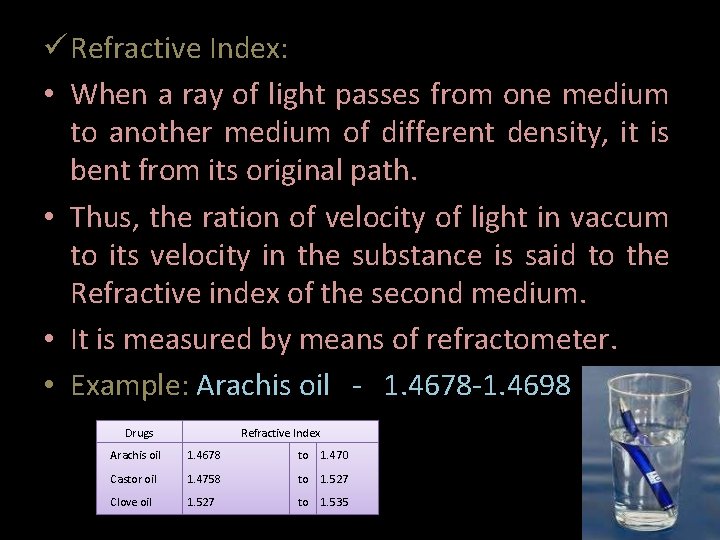
Refractive Index: • When a ray of light passes from one medium to another medium of different density, it is bent from its original path. • Thus, the ration of velocity of light in vaccum to its velocity in the substance is said to the Refractive index of the second medium. • It is measured by means of refractometer. • Example: Arachis oil - 1. 4678 -1. 4698 Drugs Refractive Index Arachis oil 1. 4678 to 1. 470 Castor oil 1. 4758 to 1. 527 Clove oil 1. 527 to 1. 535
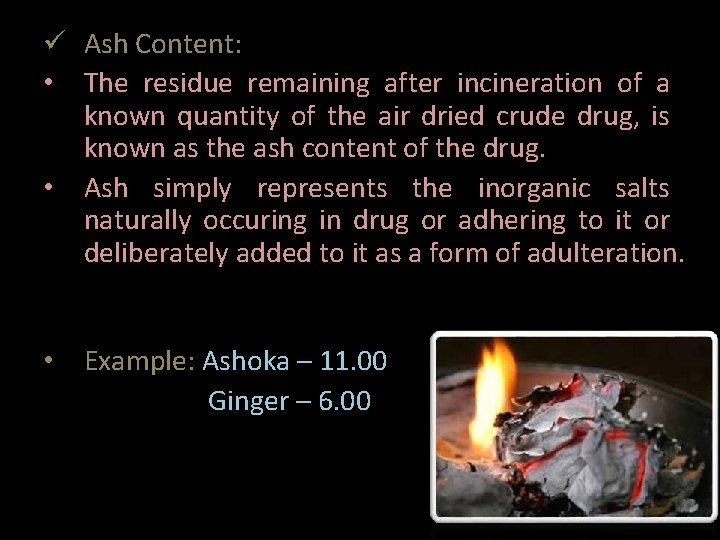
Ash Content: • The residue remaining after incineration of a known quantity of the air dried crude drug, is known as the ash content of the drug. • Ash simply represents the inorganic salts naturally occuring in drug or adhering to it or deliberately added to it as a form of adulteration. • Example: Ashoka – 11. 00 Ginger – 6. 00
• Total ash method is used to measure the total amount of material remaining after incineration • Is useful for detecting of: Low grade products Exhausted products Excess of sand Earthy matter Total ash usually consists of carbonates, phosphates, silicates and silica.
• Acid insoluble ash is the residue obtained after boiling the total ash with dil. HCl and igniting the remaining insoluble matter. • Water soluble ash is the difference in weight between total ash and residue after treatment of total ash with water. • Ether-soluble extractives: The types of ether soluble extractive values determined for evaluation of crude drugs are volatile and nonvolatile ether soluble extractives.
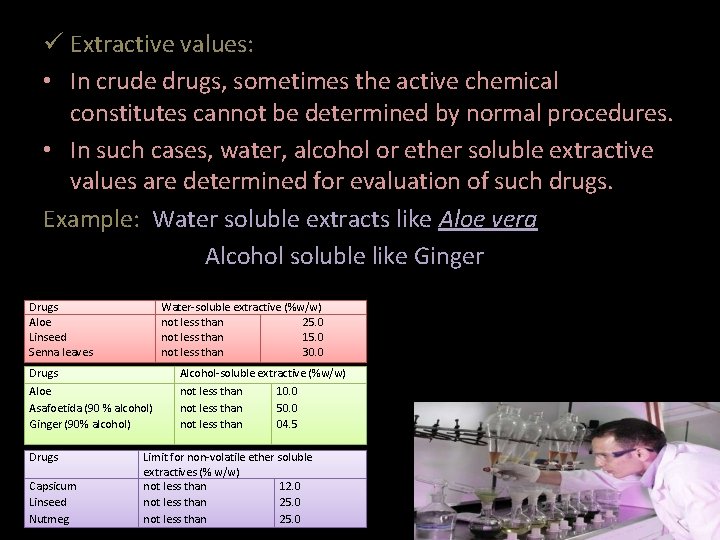
Extractive values: • In crude drugs, sometimes the active chemical constitutes cannot be determined by normal procedures. • In such cases, water, alcohol or ether soluble extractive values are determined for evaluation of such drugs. Example: Water soluble extracts like Aloe vera Alcohol soluble like Ginger Drugs Aloe Linseed Senna leaves Water-soluble extractive (%w/w) not less than 25. 0 not less than 15. 0 not less than 30. 0 Drugs Aloe Asafoetida (90 % alcohol) Ginger (90% alcohol) Drugs Capsicum Linseed Nutmeg Alcohol-soluble extractive (%w/w) not less than 10. 0 not less than 50. 0 not less than 04. 5 Limit for non-volatile ether soluble extractives (% w/w) not less than 12. 0 not less than 25. 0
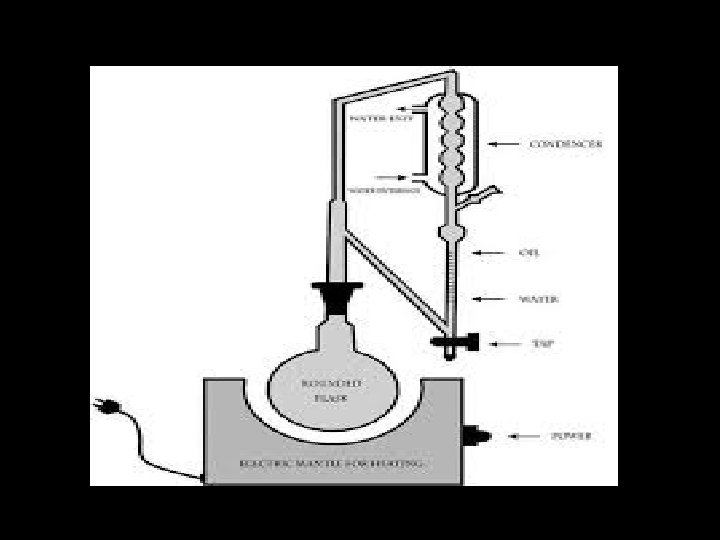
Volatile oil content: • Efficiency of several drugs is due to their odorous principle (volatile oils). • Such crude drugs are standardised on the basis of their volatile oil contents. • Weighed quantity of the drug is boiled with water in a round bottomed flask fitted with clevenger apparatus. The distillate collected is graquated into volatile oil. • The amount thus obtained is recorded from the tube.
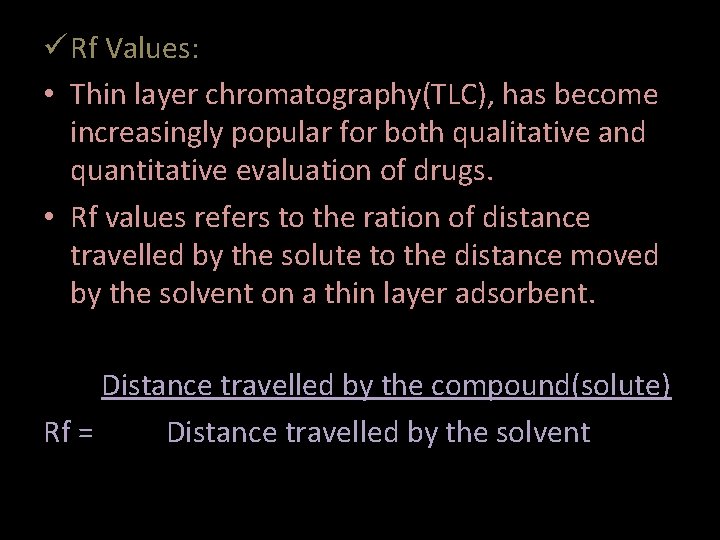
Rf Values: • Thin layer chromatography(TLC), has become increasingly popular for both qualitative and quantitative evaluation of drugs. • Rf values refers to the ration of distance travelled by the solute to the distance moved by the solvent on a thin layer adsorbent. Distance travelled by the compound(solute) Rf = Distance travelled by the solvent
• Chromatography Methods: • Separation of mixtures • Passing a mixture dissolved in a "mobile phase" through a stationary phase, which separates the analyte to be measured from other molecules in the mixture based on differential partitioning between the mobile and stationary phases • Chromatography is a technique used to separate and identify the components of a mixture • Works by allowing the molecules present in the mixture to distribute themselves between a stationary and a mobile medium. • Molecule separates from based on the differential affinities of the solute between two immiscible phases.
• Molecules that spend most of their time in the mobile phase are carried along faster. • One of the phases is a fixed bed of large surface area which is called a Stationary phase. • Another phase is a fluid or gas which moves through or over the surface, which is called the Mobile phase.
Ø Different chromatographic methods: • (A) THIN LAYER CHROMATOGRAPHY (TLC) • (B) HIGH PERFORMANCE THIN LAYER CHROMATOGRAPHY (HPTLC) • (C) GAS LIQUID CHROMATOGRAPHY (GLC) • (D) HIGH PERFORMANCE LIQUID CHROMATOGRAPHY (HPLC) • (E) COLUMN CHROMATOGRAPHY • (F) GEL PERMEATION CHROMATOGRAPHY • (G) AFFINITY CHROMATOGRAPHY
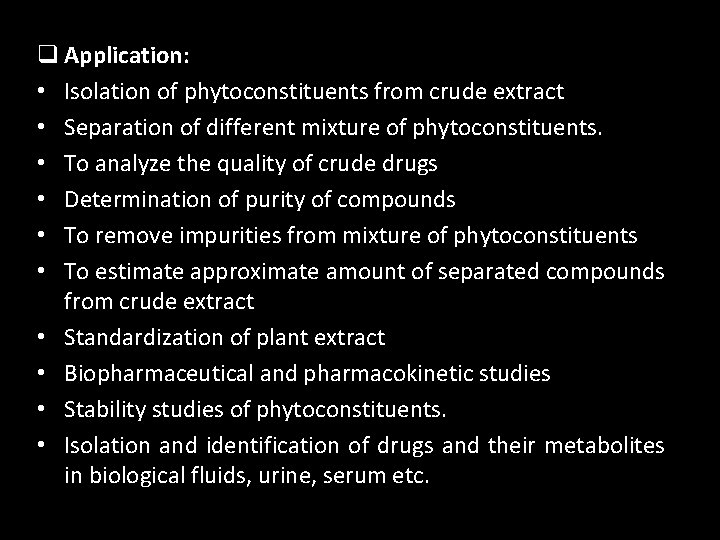
q Application: • Isolation of phytoconstituents from crude extract • Separation of different mixture of phytoconstituents. • To analyze the quality of crude drugs • Determination of purity of compounds • To remove impurities from mixture of phytoconstituents • To estimate approximate amount of separated compounds from crude extract • Standardization of plant extract • Biopharmaceutical and pharmacokinetic studies • Stability studies of phytoconstituents. • Isolation and identification of drugs and their metabolites in biological fluids, urine, serum etc.
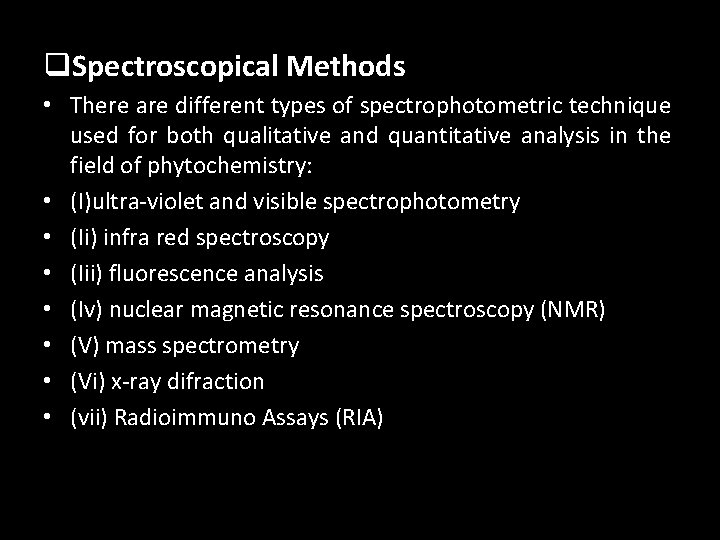
q. Spectroscopical Methods • There are different types of spectrophotometric technique used for both qualitative and quantitative analysis in the field of phytochemistry: • (I)ultra-violet and visible spectrophotometry • (Ii) infra red spectroscopy • (Iii) fluorescence analysis • (Iv) nuclear magnetic resonance spectroscopy (NMR) • (V) mass spectrometry • (Vi) x-ray difraction • (vii) Radioimmuno Assays (RIA)
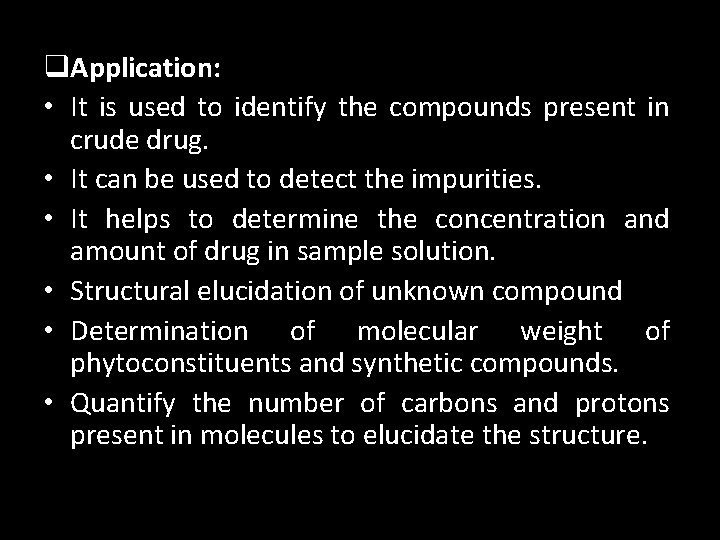
q. Application: • It is used to identify the compounds present in crude drug. • It can be used to detect the impurities. • It helps to determine the concentration and amount of drug in sample solution. • Structural elucidation of unknown compound • Determination of molecular weight of phytoconstituents and synthetic compounds. • Quantify the number of carbons and protons present in molecules to elucidate the structure.
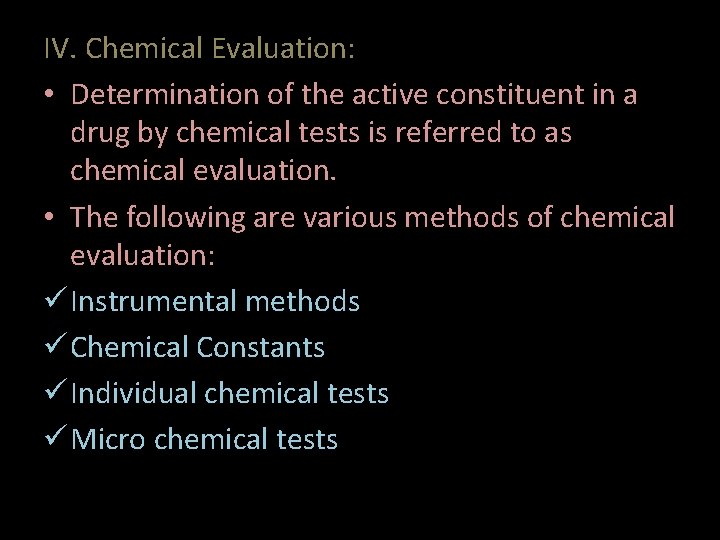
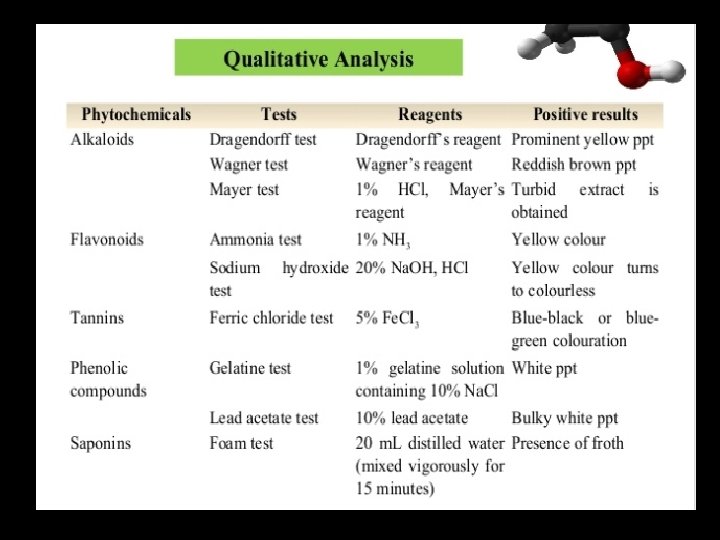
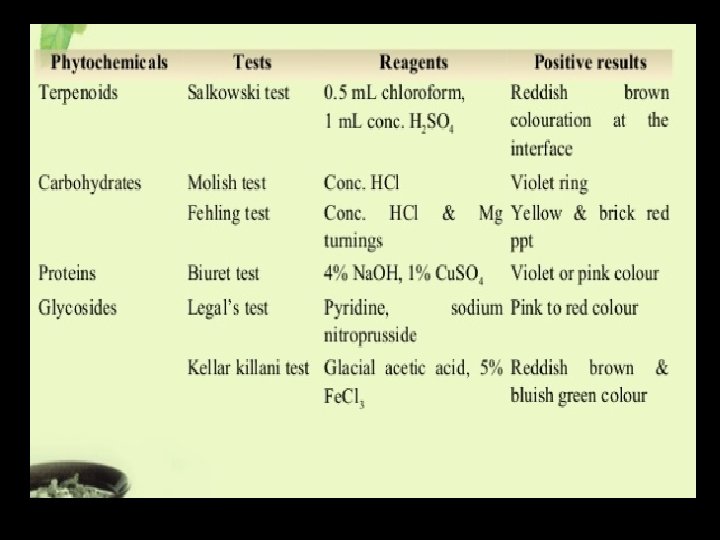
IV. Chemical Evaluation: • Determination of the active constituent in a drug by chemical tests is referred to as chemical evaluation. • The following are various methods of chemical evaluation: Instrumental methods Chemical Constants Individual chemical tests Micro chemical tests
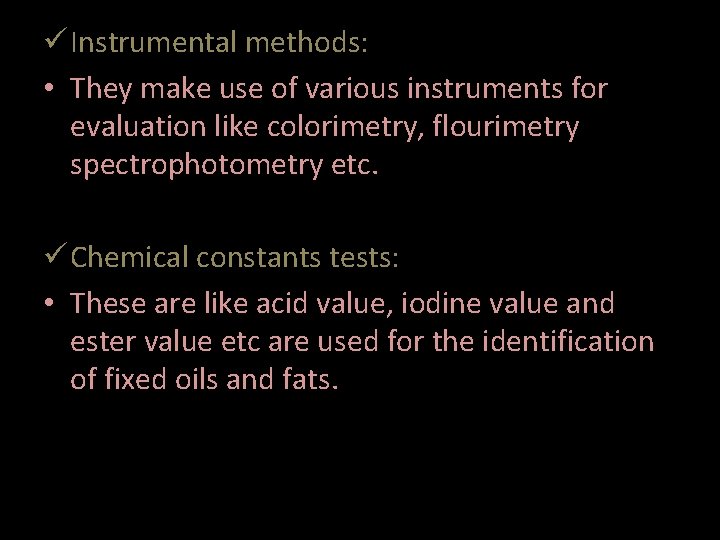
Instrumental methods: • They make use of various instruments for evaluation like colorimetry, flourimetry spectrophotometry etc. Chemical constants tests: • These are like acid value, iodine value and ester value etc are used for the identification of fixed oils and fats.
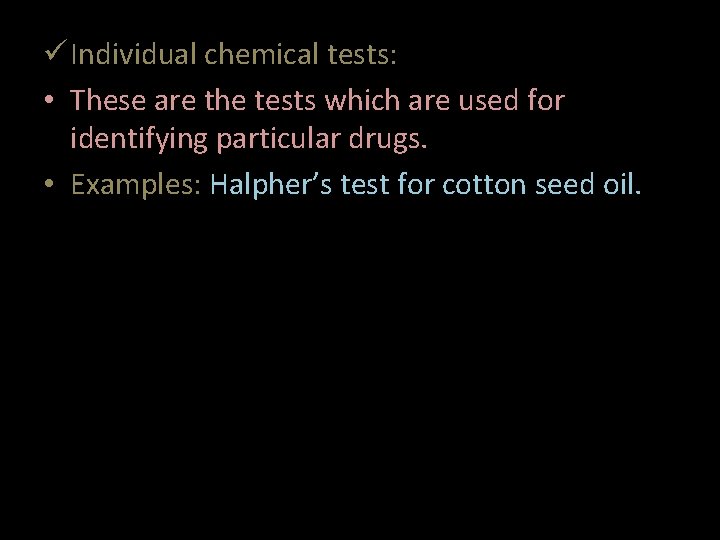
Individual chemical tests: • These are the tests which are used for identifying particular drugs. • Examples: Halpher’s test for cotton seed oil.
Microchemical tests: • These are the tests which are carried on slides. • Example: Euginol in clove oil is precipitated as potassium euginate crystals.
V. Biological Evaluation: • It is employed when the drug cannot be evaluated satisfactorily by chemical and physical methods. • In this method, the response produced by the test drug on a living system is compared with that of the stranded preparation. • Such an activity is represented in units as International Units (I. U).
Indication of Biological Evaluation: • When the chemical nature of the drug is not known but is has an biological action. • When chemical methods are not available. • When the quantity of the drug is small and so it cannot be evaluated chemically. • Drugs which have different chemical composition but same biological activity. • Example: Cardiac glycosides arte evaluated by this method on cats, frogs or pigeons.
q. Hypoglycaemic Activity: • In traditional systems, a number of plant extracts have been used for their hypoglycaemic activity like Momordica charanti), Jambul (Syzigium cumini), fenugreek (Trigonella foenum-gracecum). They are used in treatment of diabetes mellitus. For the testing purpose, experimental diabetes is induced in animals generally by alloxan or streptozocin. Due to alloxan, an urea derivative, selective necrosis of pancreatic islet - β cells occurs. By using a suitable dose of alloxan, moderate diabetes (Fasting Blood sugar levels 180 – 250 mg/ml) is induced and in such cases herbal drug extracts are tested.
Micro bioassay • Micro bioassay is a type of biological assay specially performed with microorganisms like bacteria and fungi. In a typical microbiological assay, evaluation is performed on the various cultures of microorganisms and the activity is represented on the basis of average response of a large population of microorganism. • The micro bioassay procedures are used for vitamins like Niacinamide, Calcium Pantothenate, Vitamin B 12 etc. For the evaluation of potency of antibiotics. The procedures employed in microbial assay of antibiotics may be divided into two broad groups: • Cup plate method: • Turbidimetric method :