
Evaluation Geological Engineering Basics GEOL 4233 Class Dan

Evaluation Geological Engineering Basics GEOL 4233 Class Dan Boyd Oklahoma Geological Survey Fall 2011 Semester
Geological Engineering Overview • Reservoir Issues • Porosity • Permeability • Fluid Saturation • Fluid / Pressure Terminology & Concepts • Fluid (Water, Oil Gas) • Pressure (Saturation, Mobility, Compressibility) • Drive Mechanisms • Oil • Gas • Multiphase Flow Issues (Coning) • Reservoir Management • General Principles • Production Curves • Improved Recovery
General Reservoir Issues • Porosity • Permeability • Fluid Saturations
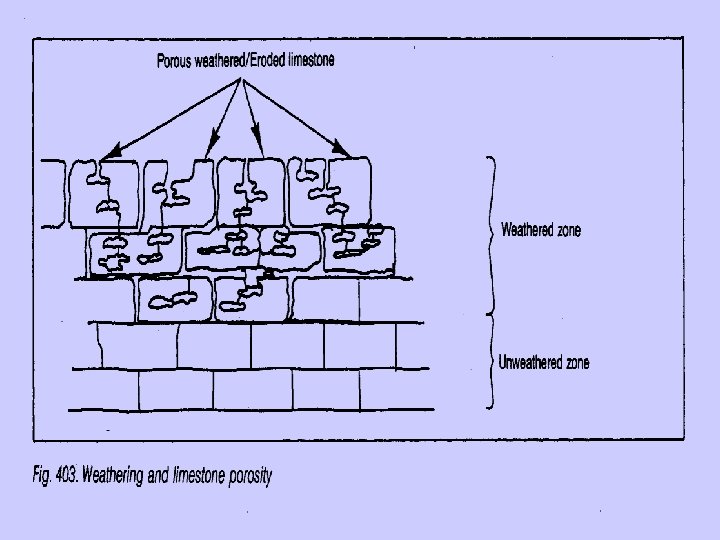
Porosity • Storage Capacity • Nominal Pay Cutoffs • Oil: 10% • Gas: 8% • Porosity Types • Intergranular (clastics) • Intercrystaline (carbonates) • Fracture • Dissolution (moldic, vuggy, cavernous) • Logs • Density • Neutron • Sonic

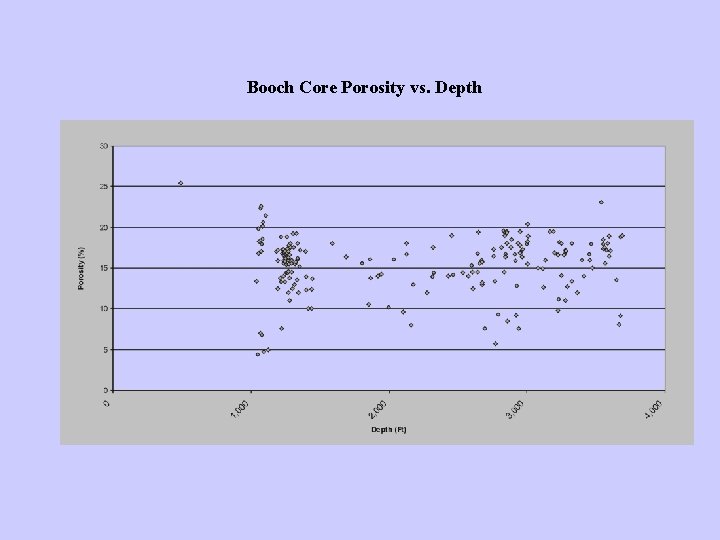
Booch Core Porosity vs. Depth
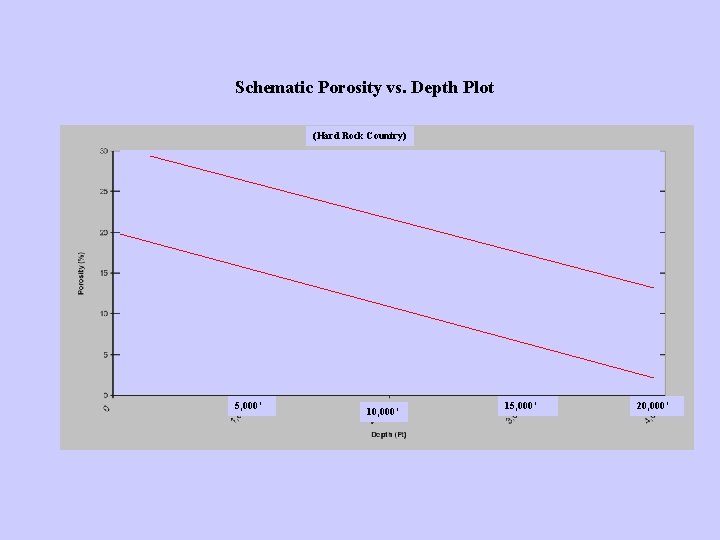
Schematic Porosity vs. Depth Plot (Hard Rock Country) 5, 000’ 10, 000’ 15, 000’ 20, 000’
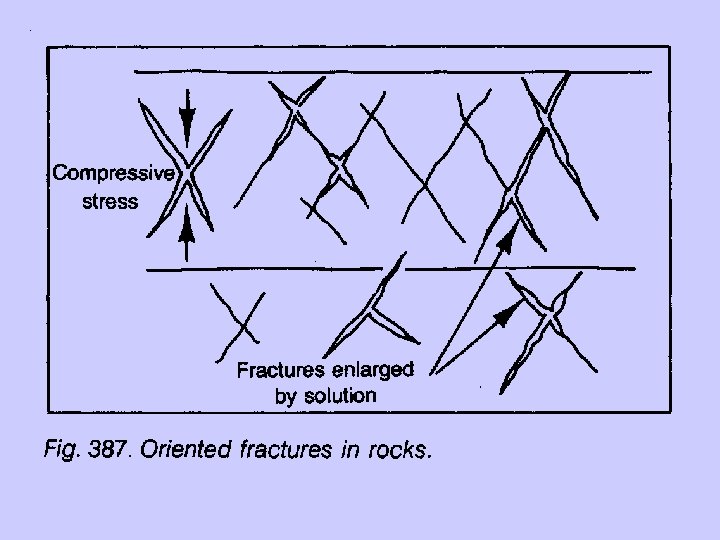
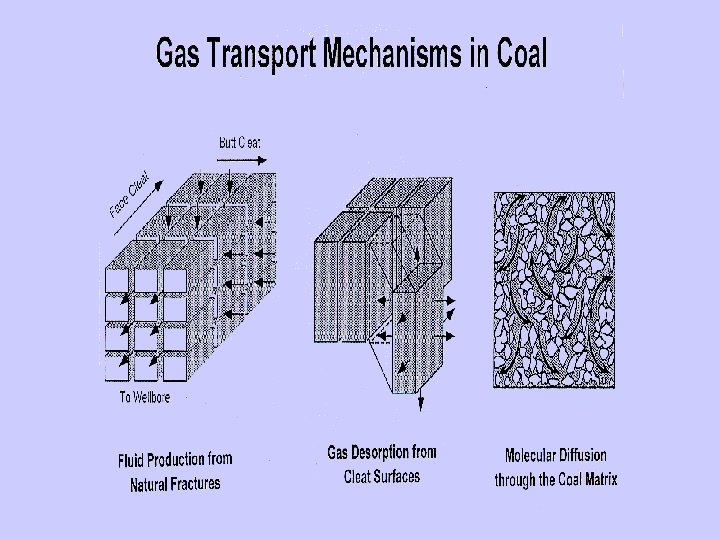
Permeability • Producibility • Kv – Kh (vertical vs. horizontal) • Conventional Reservoirs • Fractured Reservoirs • Unconventional Reservoirs • Relative Permeability • Enhanced Permeability • Acid Treatment • Fracture Stimulation • Logs • Spontaneous Potential (SP) • Resistivity Suite
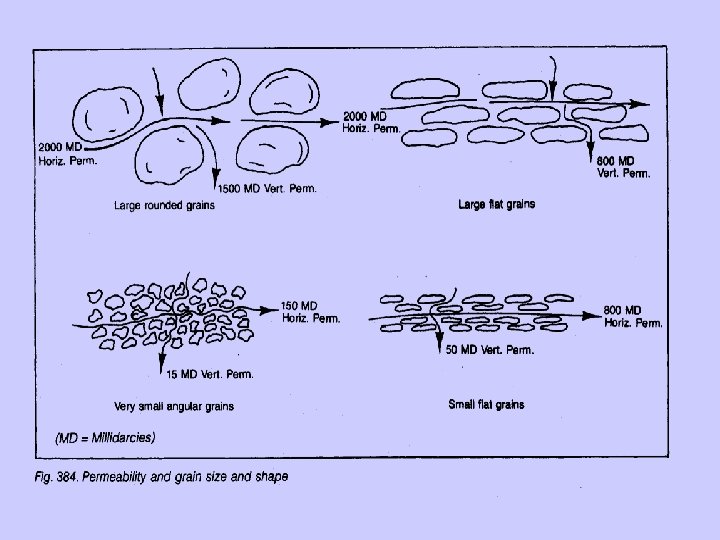
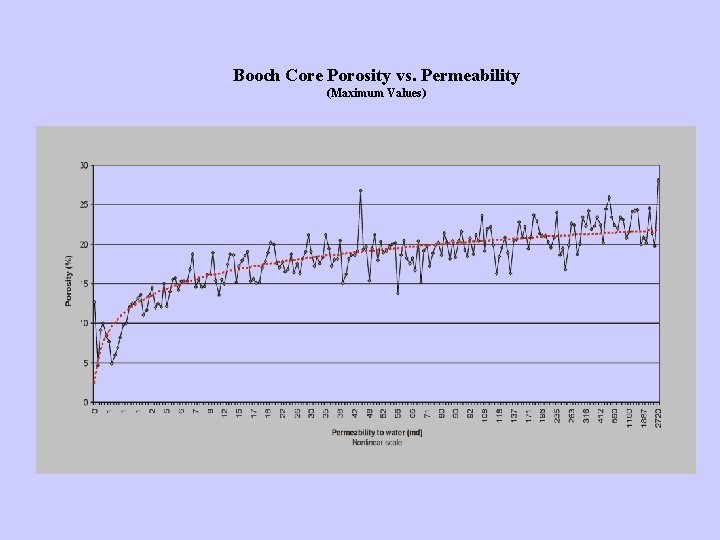
Booch Core Porosity vs. Permeability (Maximum Values)
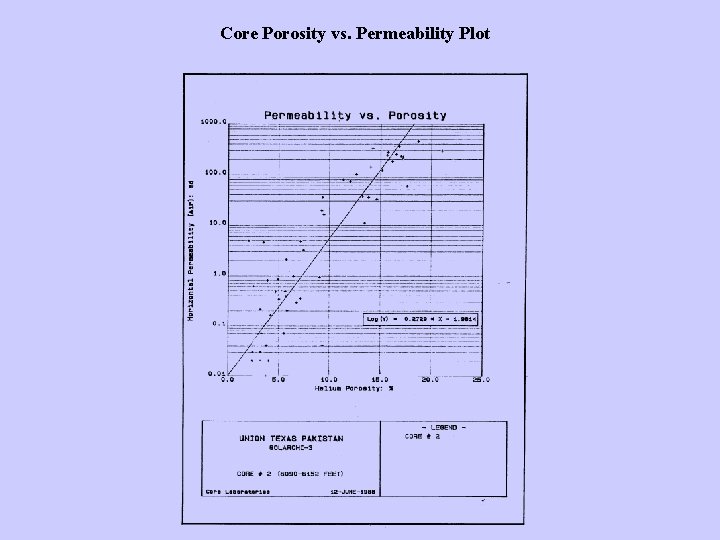
Core Porosity vs. Permeability Plot
Fluid Saturation • Water • Wetting (dewatering) • Connate • Irreducible (Swirr) • Oil • Water displacement (Soi) • Fractured Reservoirs • Unconventional Reservoirs • Gas • Molecular Size (mobility) • Water/Oil displacement (Sgi)
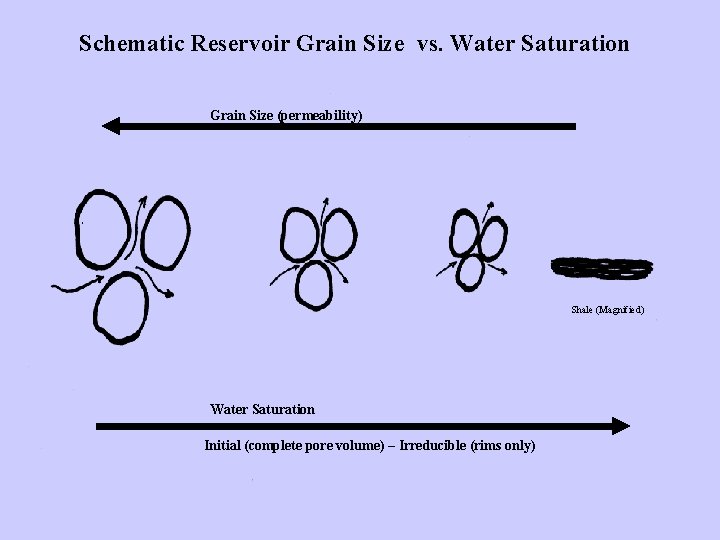
Schematic Reservoir Grain Size vs. Water Saturation Grain Size (permeability) Shale (Magnified) Water Saturation Initial (complete pore volume) – Irreducible (rims only)
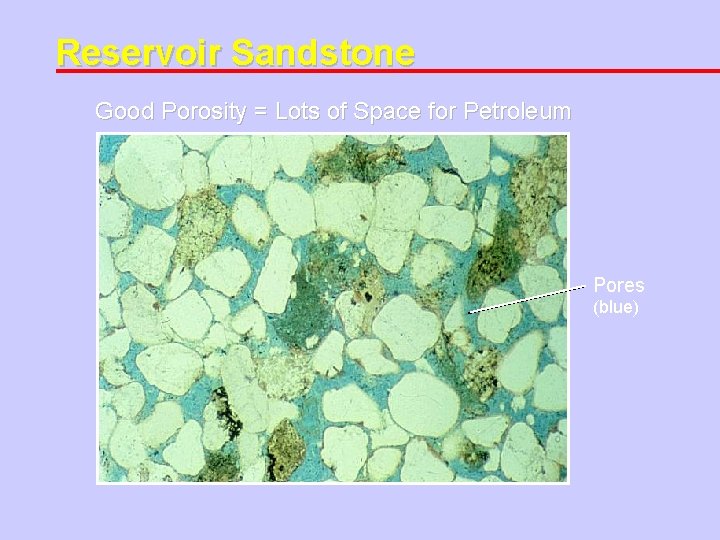
Reservoir Sandstone Good Porosity = Lots of Space for Petroleum Pores (blue)
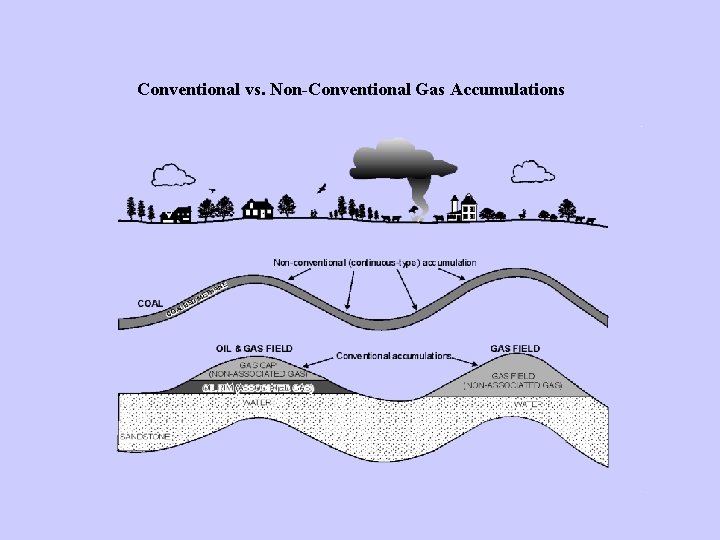
Conventional vs. Non-Conventional Gas Accumulations
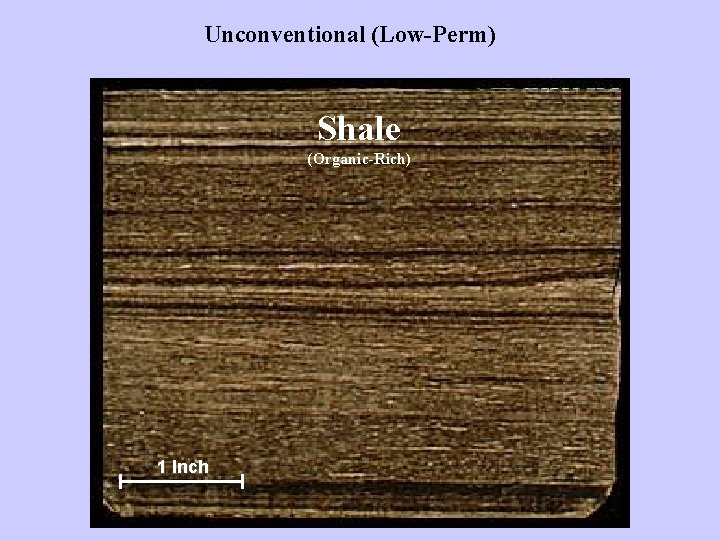
Unconventional (Low-Perm) Shale (Organic-Rich) 1 Inch
Pressures / Fluids
Fluid Terminology Water: Connate Movable vs. Irreducible
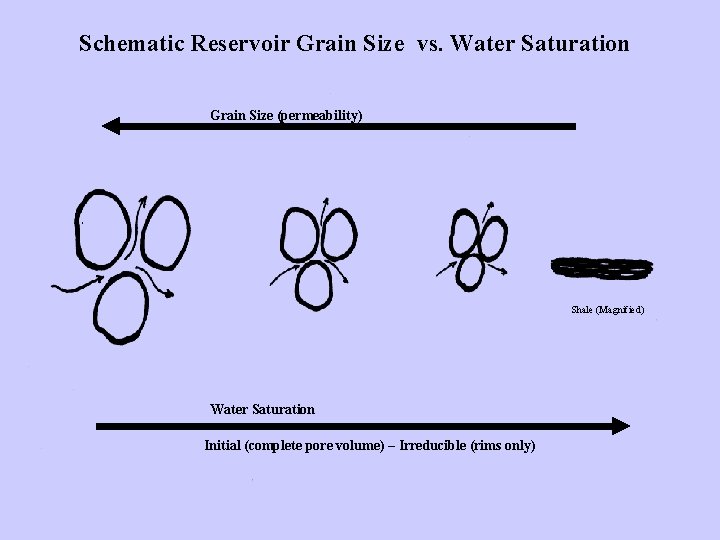
Schematic Reservoir Grain Size vs. Water Saturation Grain Size (permeability) Shale (Magnified) Water Saturation Initial (complete pore volume) – Irreducible (rims only)
Fluid Terminology Water: Connate Movable vs. Irreducible Salinity (ppm): Chlorides vs. T. D. S. Fresh – Brackish – Normal Marine - Hypersaline Secondary Recovery (Waterflood) Compressibility (10 x rule)
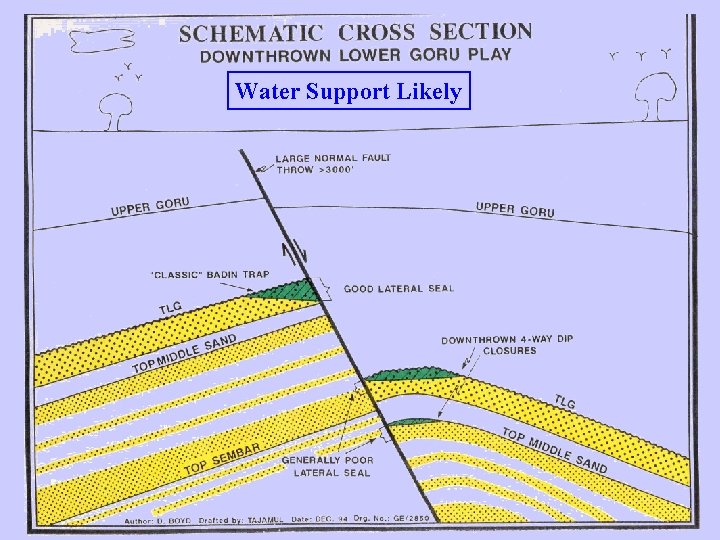
Water Support Likely
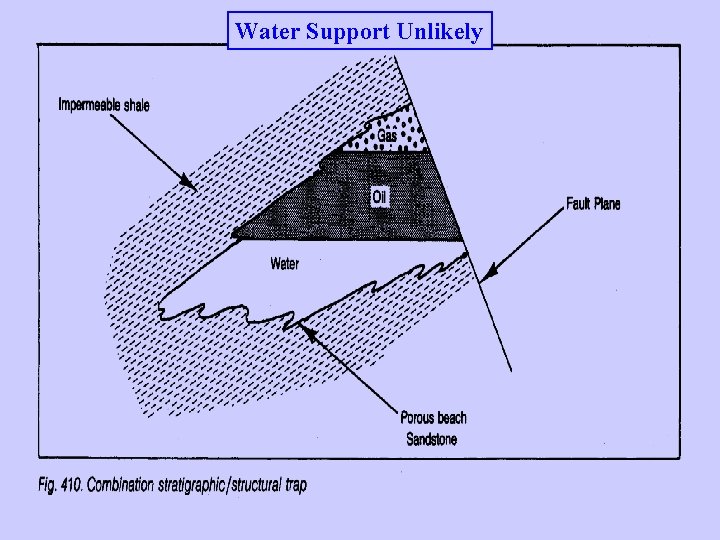
Water Support Unlikely
Fluid Terminology Oil: Gravity (API) Viscosity (cp) GOR (gas to oil ratio) Saturated vs. Undersaturated (gas cap – secondary gas cap)
Fluid Terminology Oil: Gravity (API) Viscosity (cp) GOR (gas to oil ratio) Saturated vs. Undersaturated (gas cap – secondary gas cap) Contrast with Condensate Live vs. Dead Sweet vs. Sour
Fluid Terminology Gas: Heating Value Condensate Yield Condensate vs. Oil Wet vs. Dry Sweet vs. Sour Other Components (CO 2, N 2)
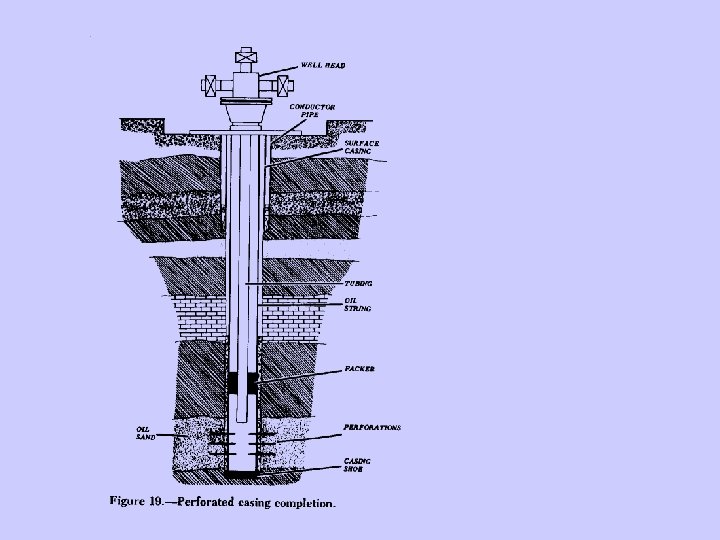
Pressure Terminology ‘Normal’ Pressure (hydrostatic) Under-pressure (fluid leak-off or storage volume increase) Over-pressure (incomplete de-watering) Measurements: Reservoir Pressure (BHP, calculated vs. measured) Flowing Tubing Pressure (FTP, at surface) Casing Pressure (between casing and tubing)
c
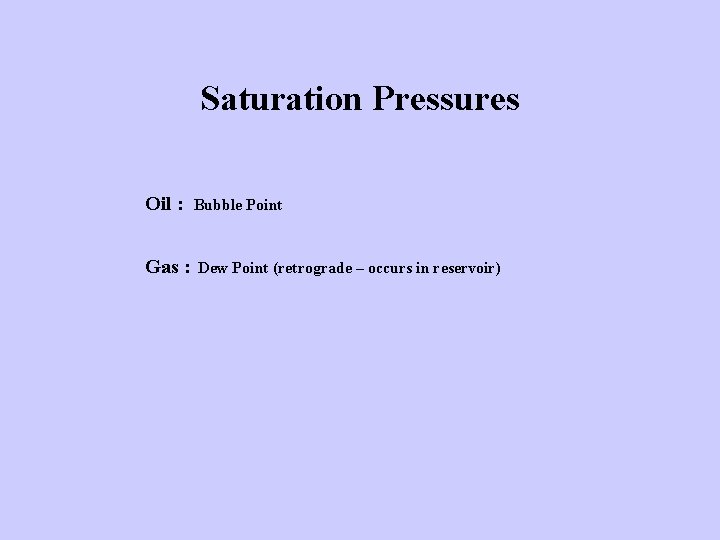
Saturation Pressures Oil : Bubble Point Gas : Dew Point (retrograde – occurs in reservoir)
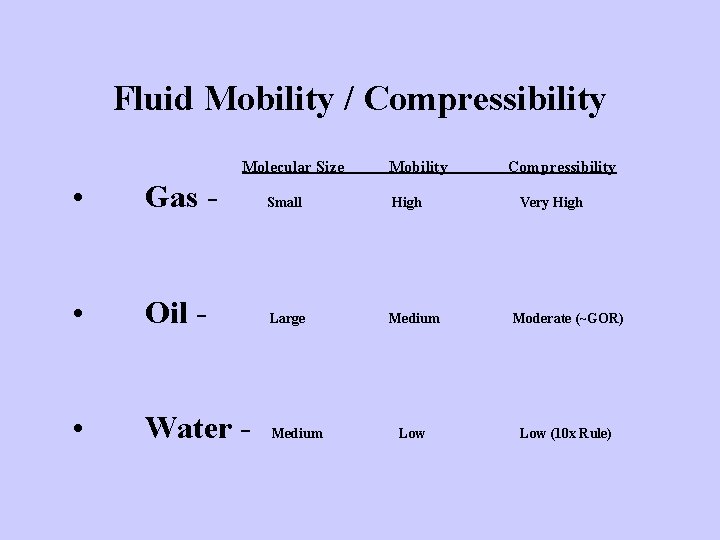
Fluid Mobility / Compressibility Molecular Size Mobility Compressibility • Gas - Small High • Oil - Large Medium Moderate (~GOR) • Water - Medium Low (10 x Rule) Very High
Drive Mechanisms
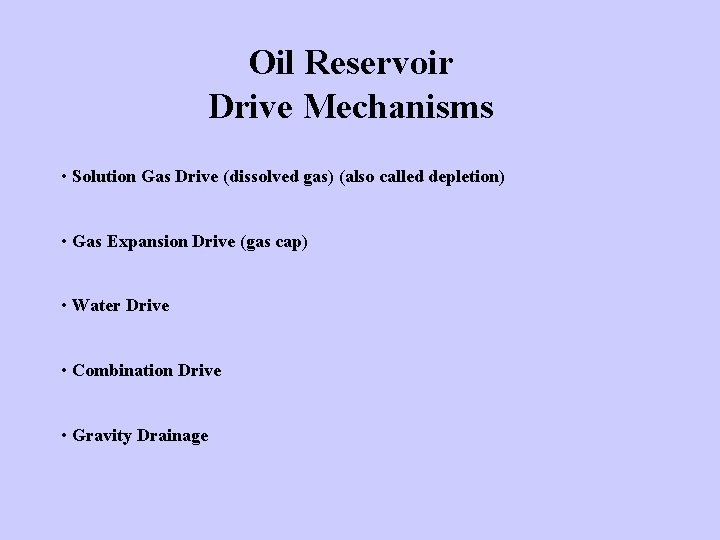
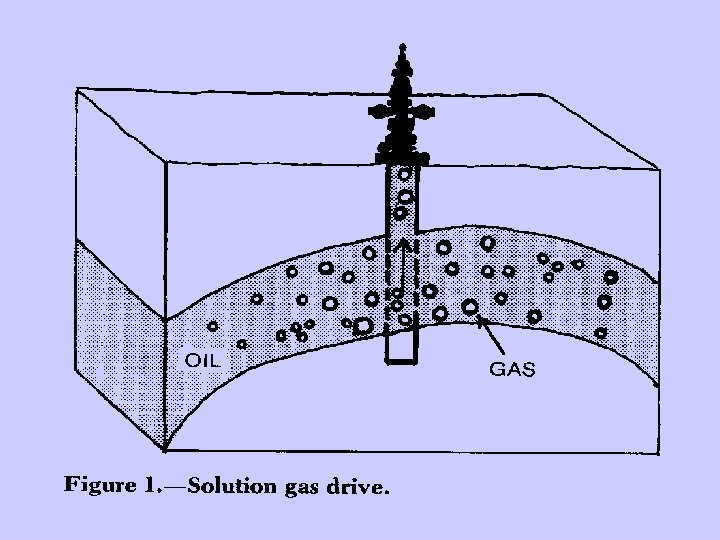
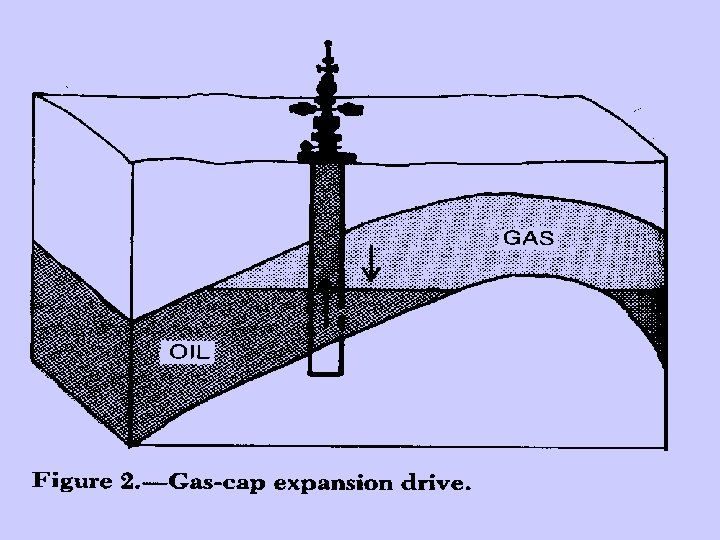
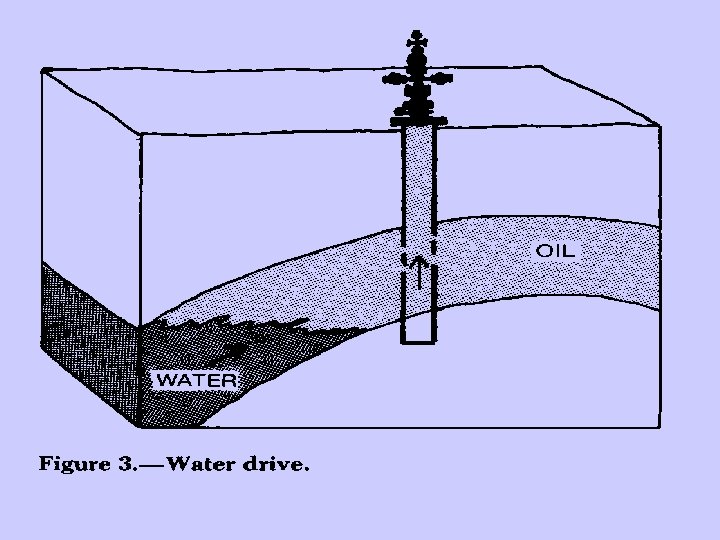
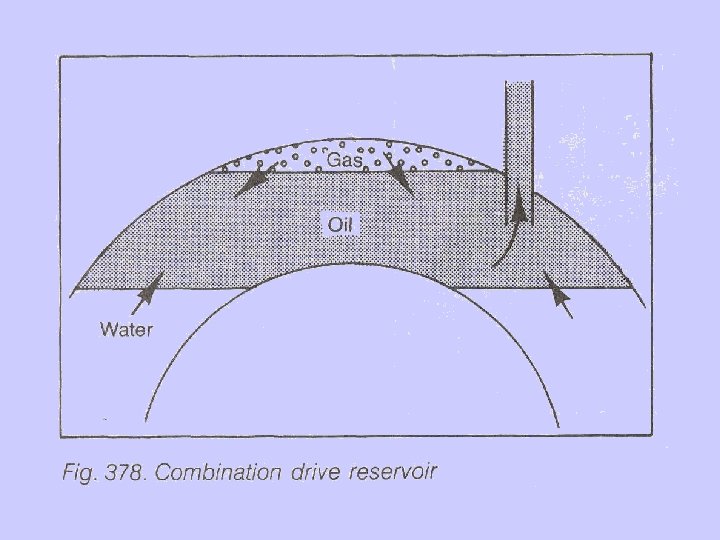
Oil Reservoir Drive Mechanisms • Solution Gas Drive (dissolved gas) (also called depletion) • Gas Expansion Drive (gas cap) • Water Drive • Combination Drive • Gravity Drainage
Unconformity Trap
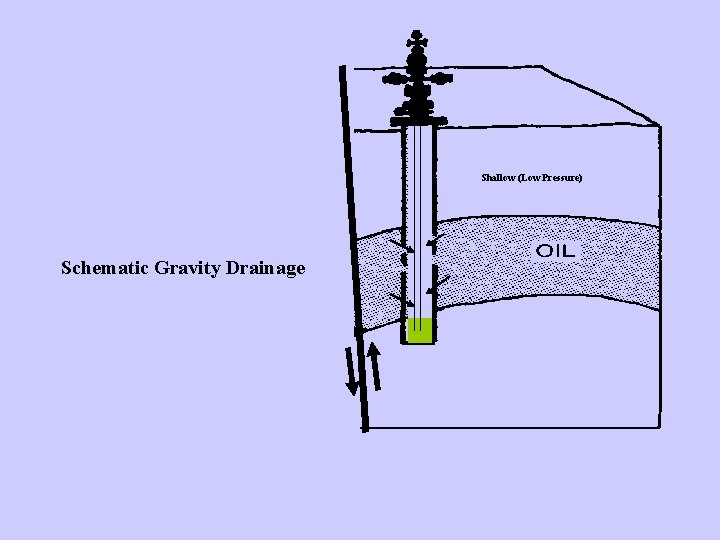
Shallow (Low Pressure) Schematic Gravity Drainage
Gas Reservoirs
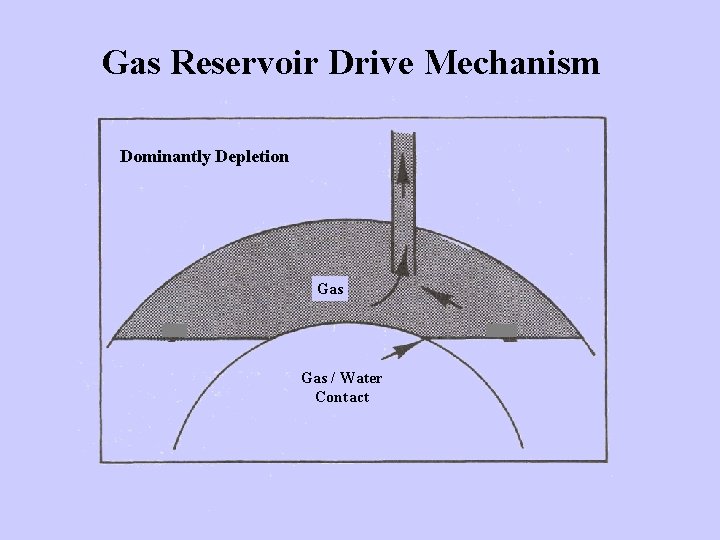
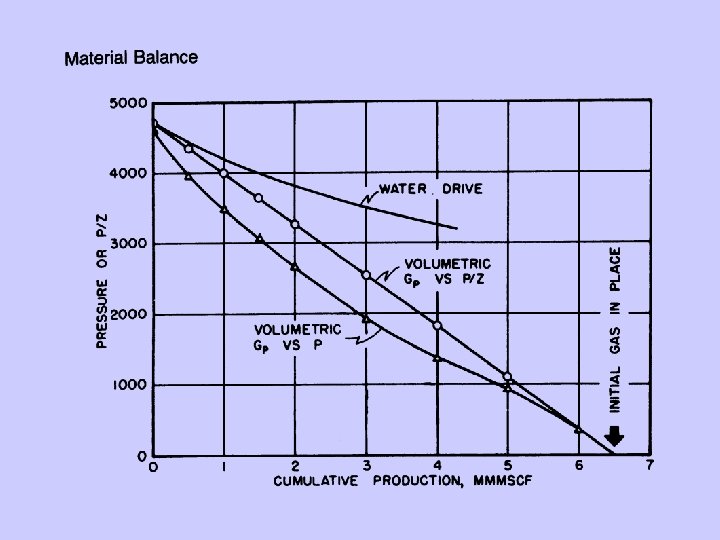
Gas Reservoir Drive Mechanism Dominantly Depletion Gas / Water Contact
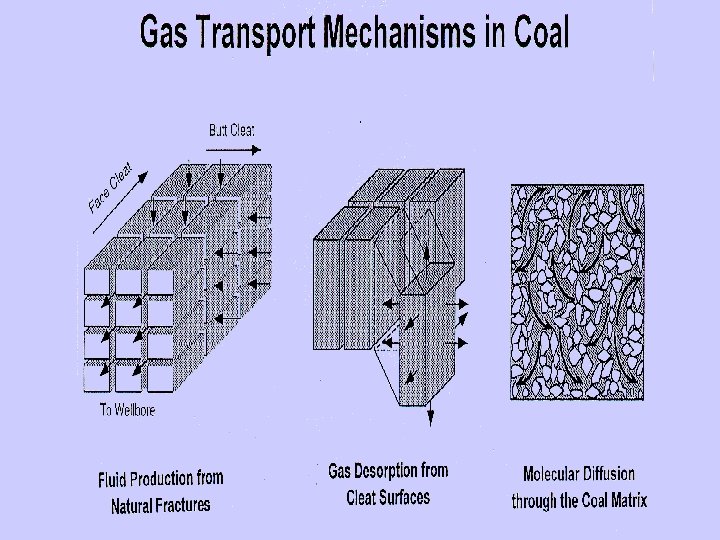
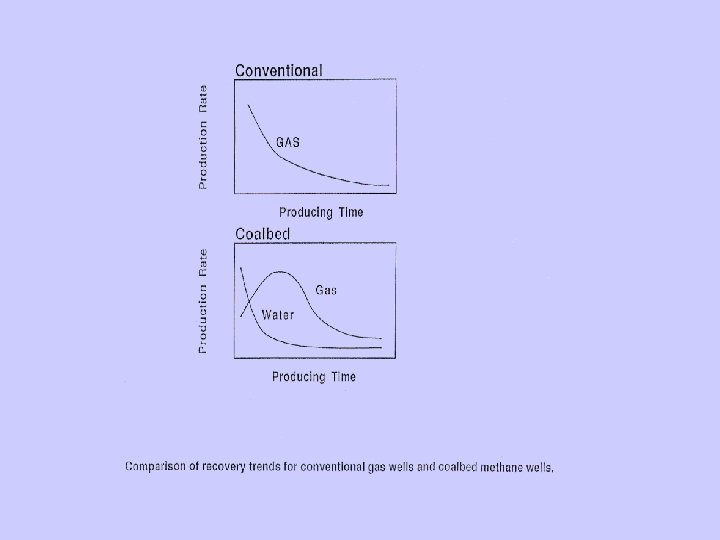
Coalbed Methane Production
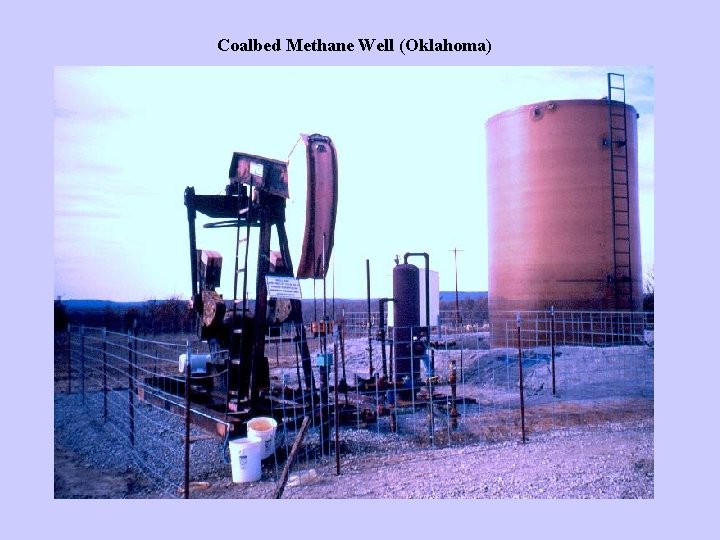
Coalbed Methane Well (Oklahoma)
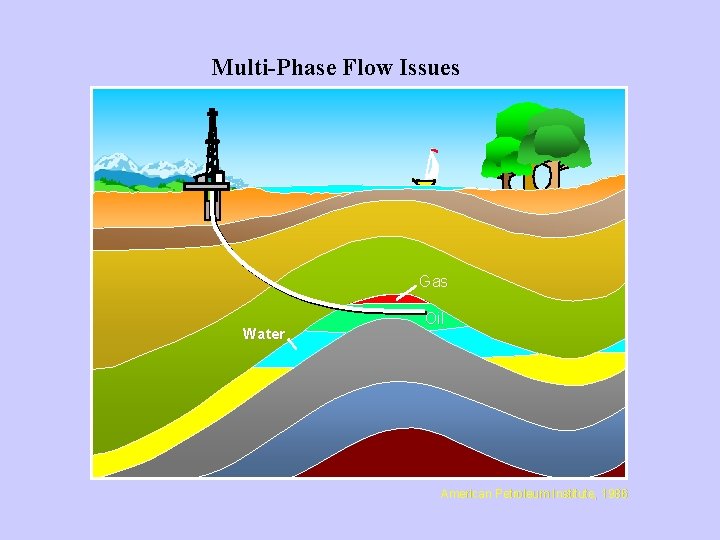
Multi-Phase Flow Issues Gas Water Oil American Petroleum Institute, 1986
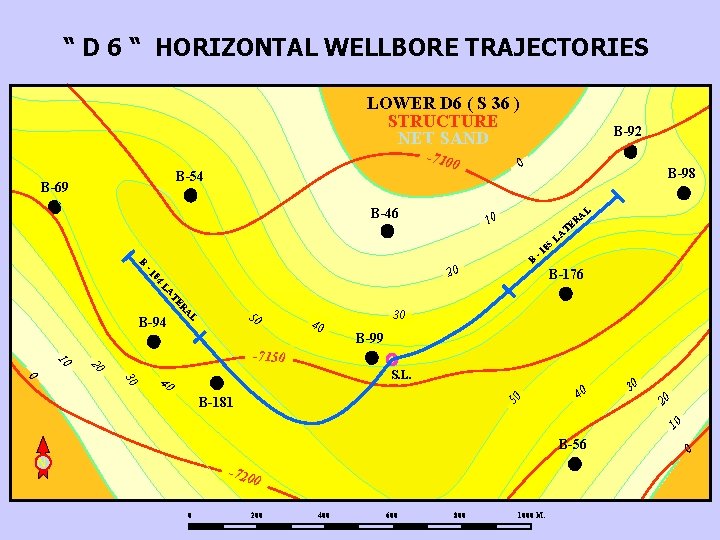
“ D 6 “ HORIZONTAL WELLBORE TRAJECTORIES LOWER D 6 ( S 36 ) STRUCTURE NET SAND -710 0 B-54 B-69 B-46 B-92 0 B-98 L 10 A ER T 85 B B 84 -1 20 LA -1 B-176 TE LA L RA B-94 50 40 30 B-99 20 10 -715 1500 -7 30 0 S. L. 40 50 B-181 40 30 20 10 B-56 N -720 0 0 200 400 600 800 1000 M. 0
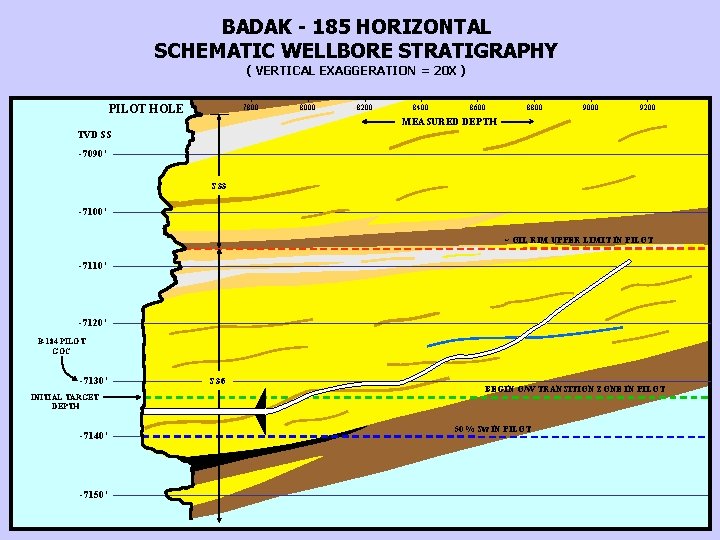
BADAK - 185 HORIZONTAL SCHEMATIC WELLBORE STRATIGRAPHY ( VERTICAL EXAGGERATION = 20 X ) PILOT HOLE 7800 8000 8200 8400 8600 8800 9000 9200 MEASURED DEPTH TVD SS -7090’ S 33 -7100’ ~ OIL RIM UPPER LIMIT IN PILOT -7110’ -7120’ B-184 PILOT GOC -7130’ INITIAL TARGET DEPTH -7140’ -7150’ S 36 BEGIN O/W TRANSITION ZONE IN PILOT 50 % Sw IN PILOT
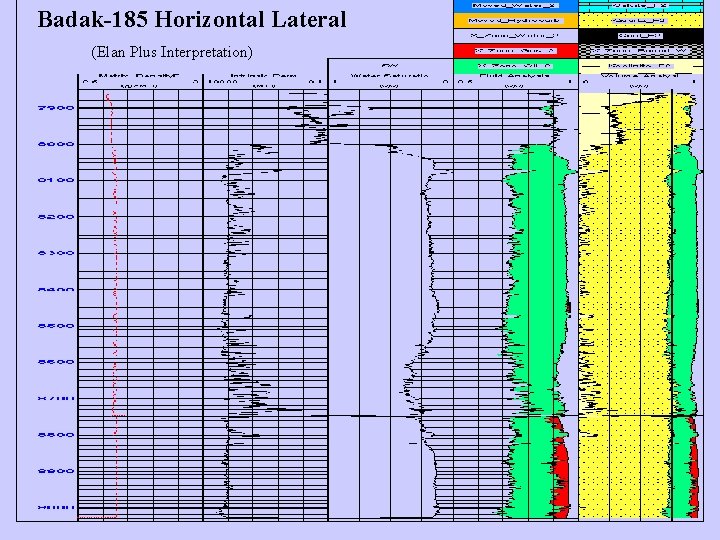
Badak-185 Horizontal Lateral (Elan Plus Interpretation)

Pressure Gradients
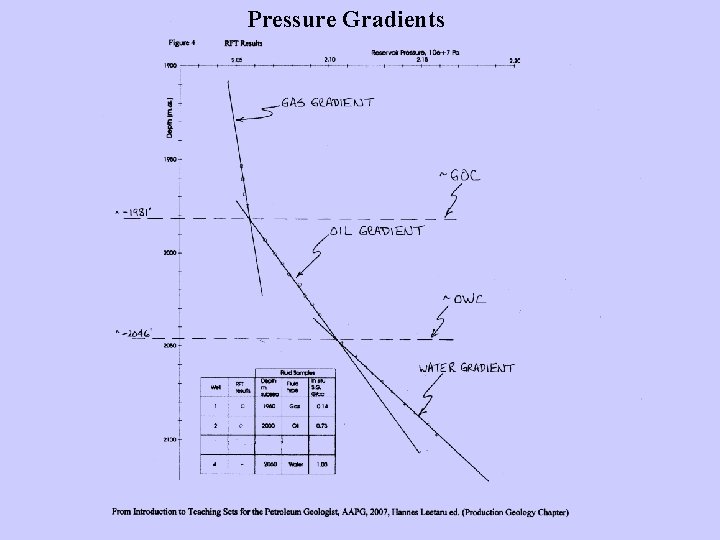
Pressure Gradients
Reservoir Management Preservation of Reservoir Energy (pressure) Water into the bottom Gas into the top Long term gain for short term pain (production restraint)
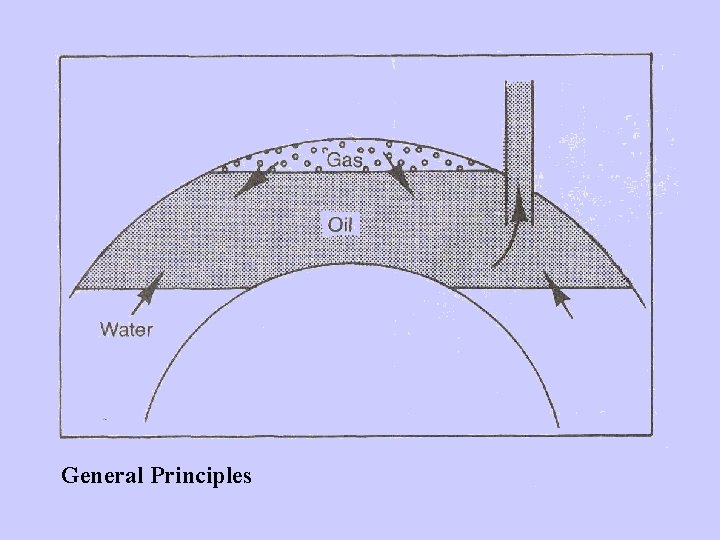
General Principles
Production • Primary • Secondary (Waterflood) • Tertiary (Enhanced)
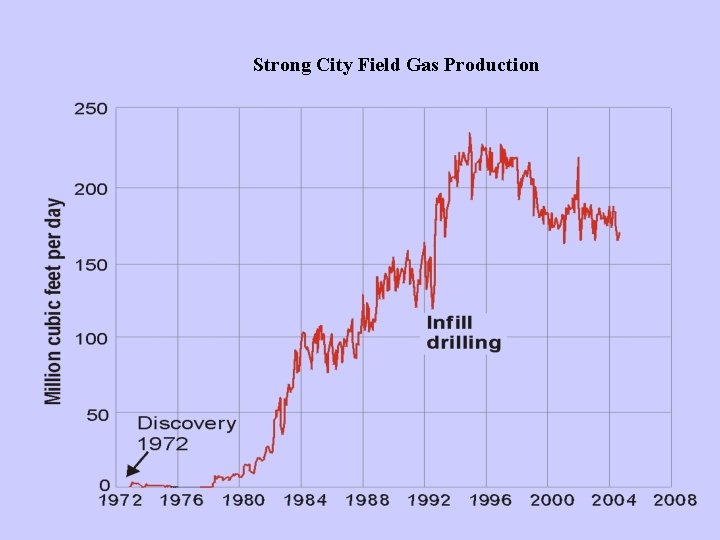
Strong City Field Gas Production
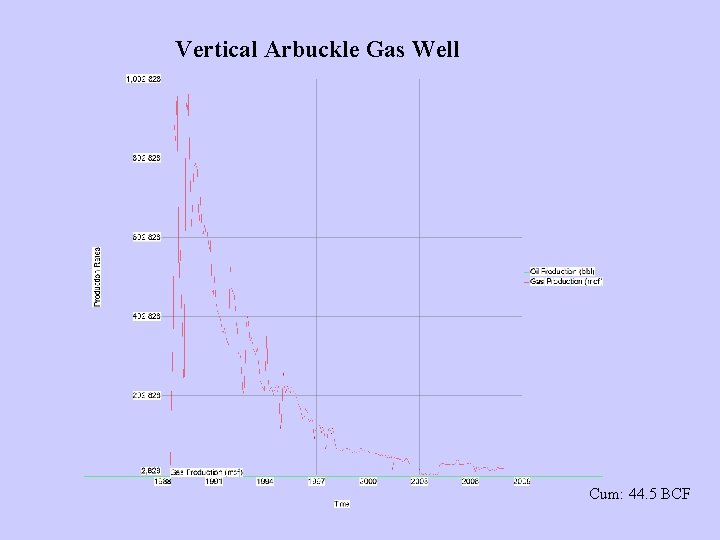
Vertical Arbuckle Gas Well Cum: 44. 5 BCF
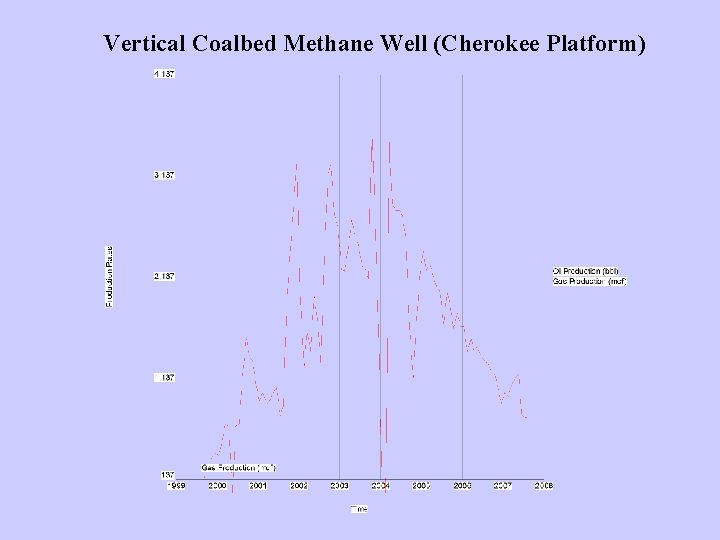
Vertical Coalbed Methane Well (Cherokee Platform)
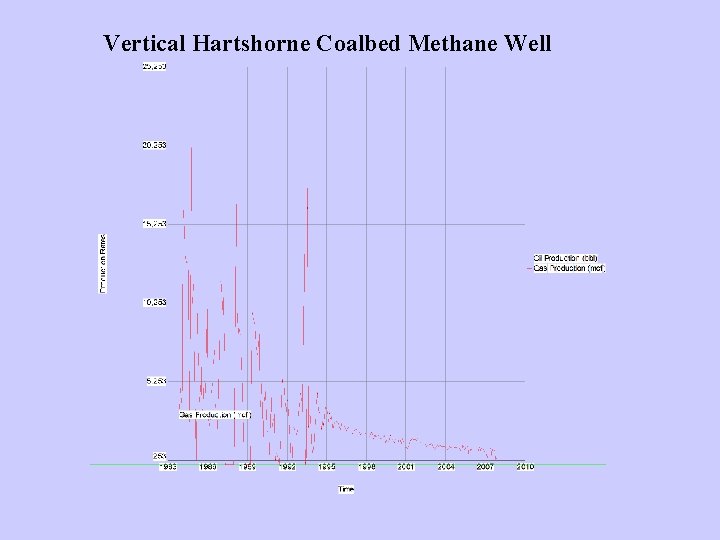
Vertical Hartshorne Coalbed Methane Well
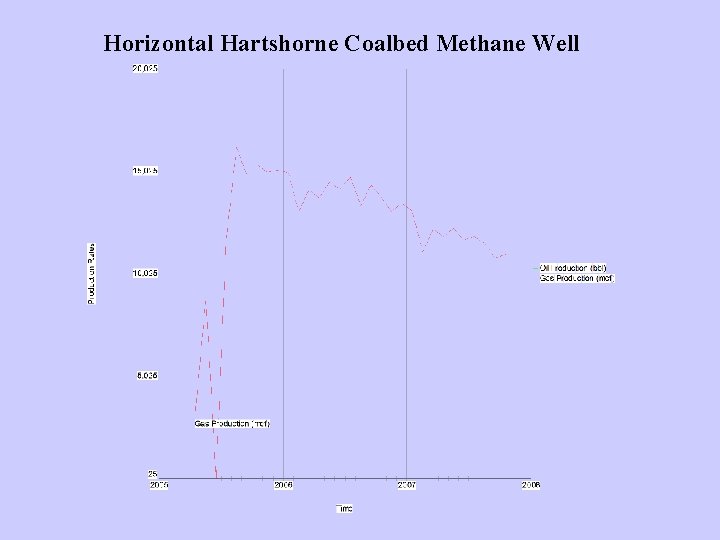
Horizontal Hartshorne Coalbed Methane Well
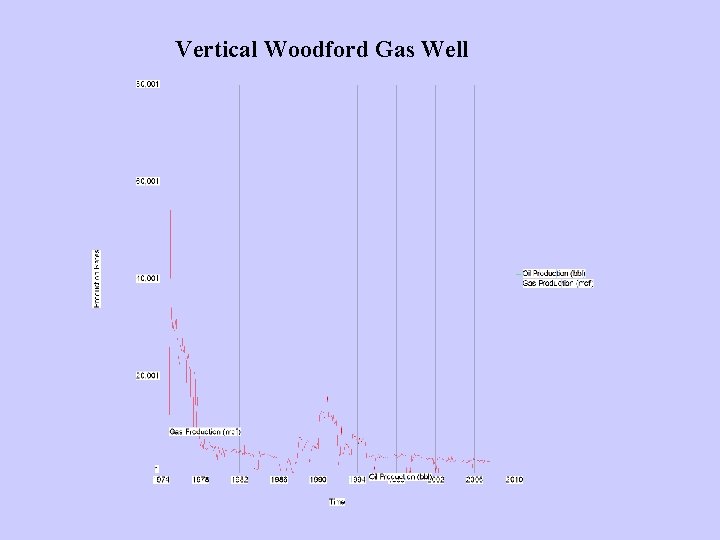
Vertical Woodford Gas Well
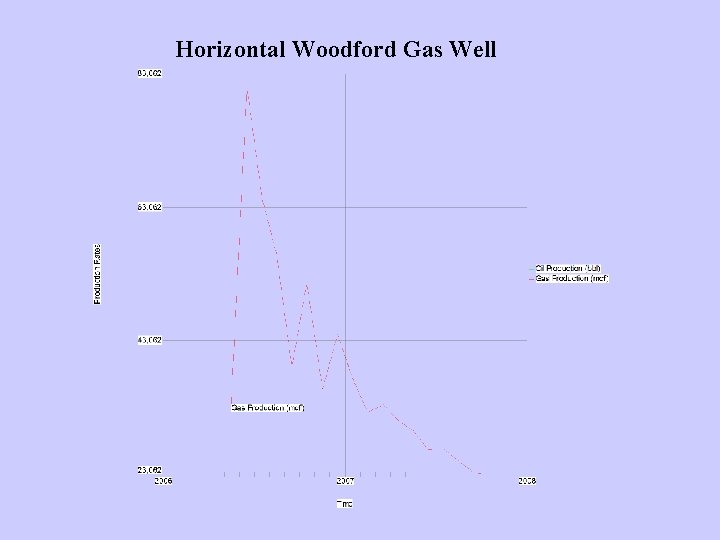
Horizontal Woodford Gas Well
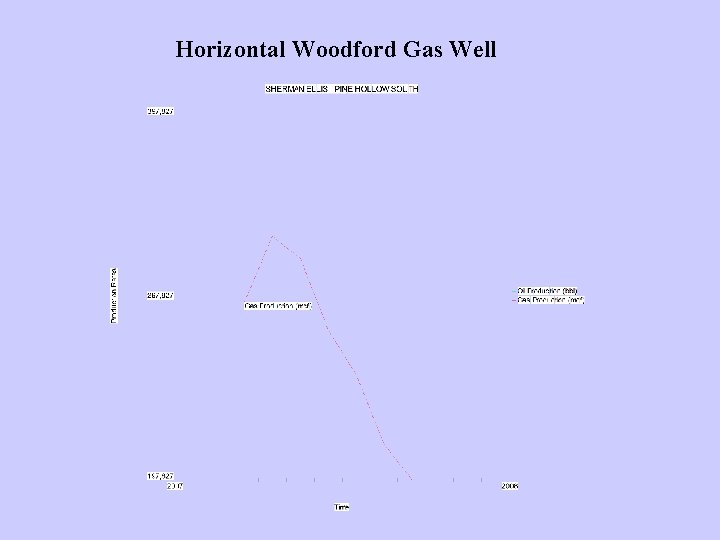
Horizontal Woodford Gas Well
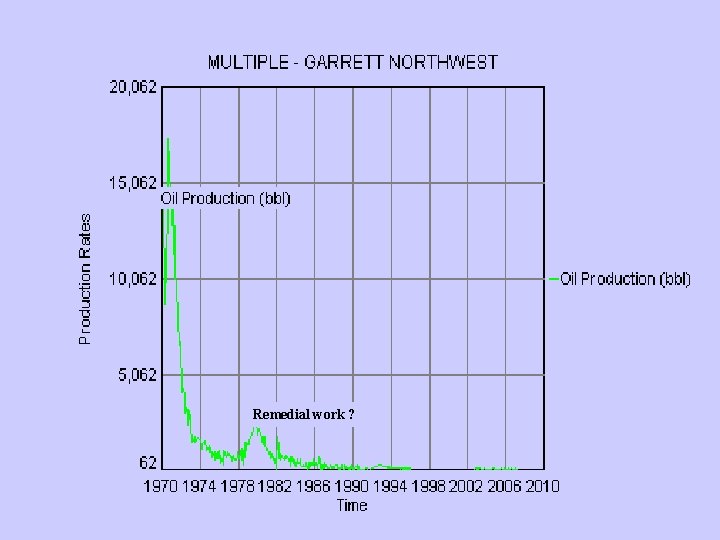
Remedial work ?
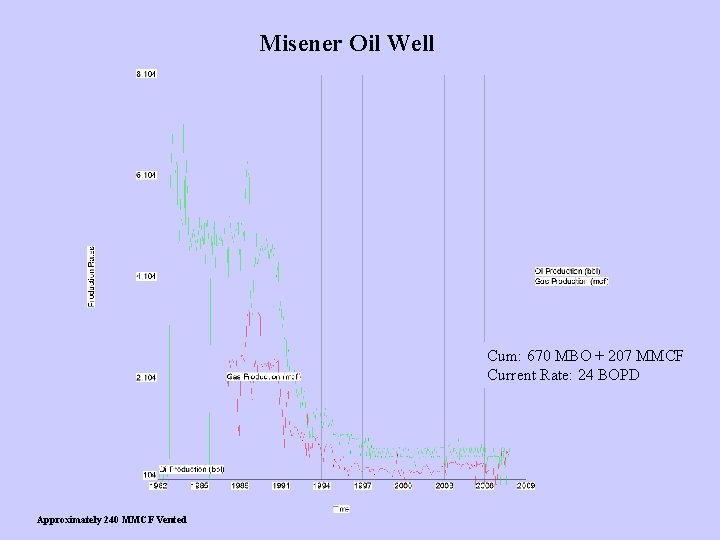
Misener Oil Well Cum: 670 MBO + 207 MMCF Current Rate: 24 BOPD Approximately 240 MMCF Vented
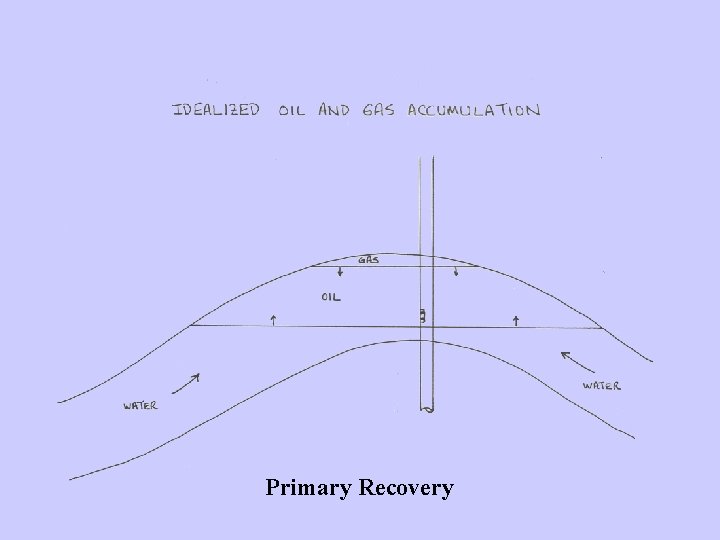
Primary Recovery
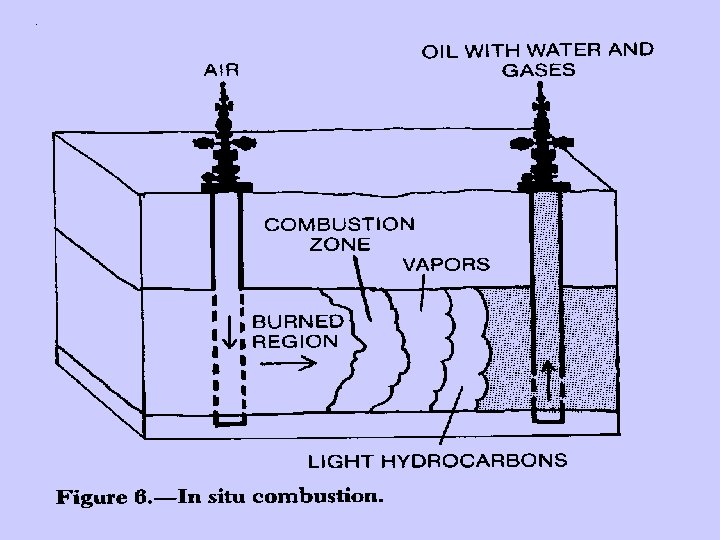
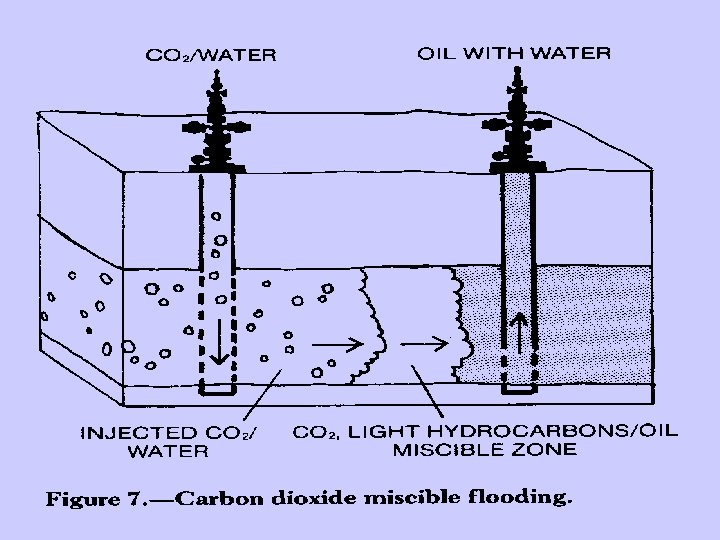
Improving Recovery Secondary (Waterflood) Enhanced (Tertiary)
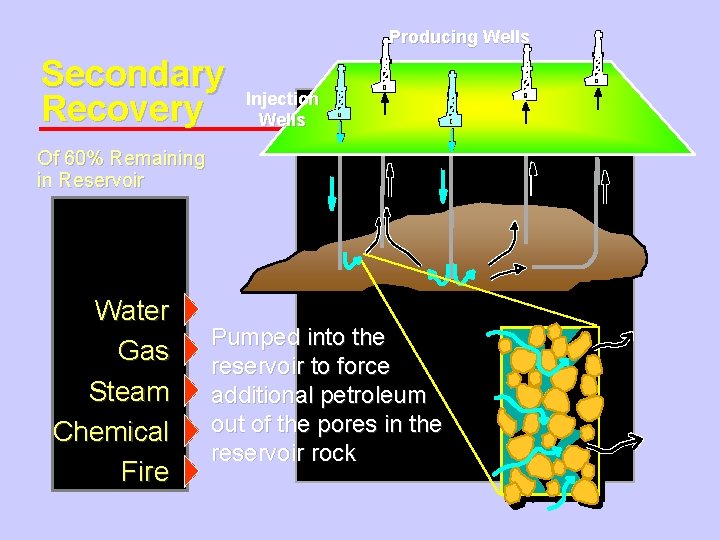
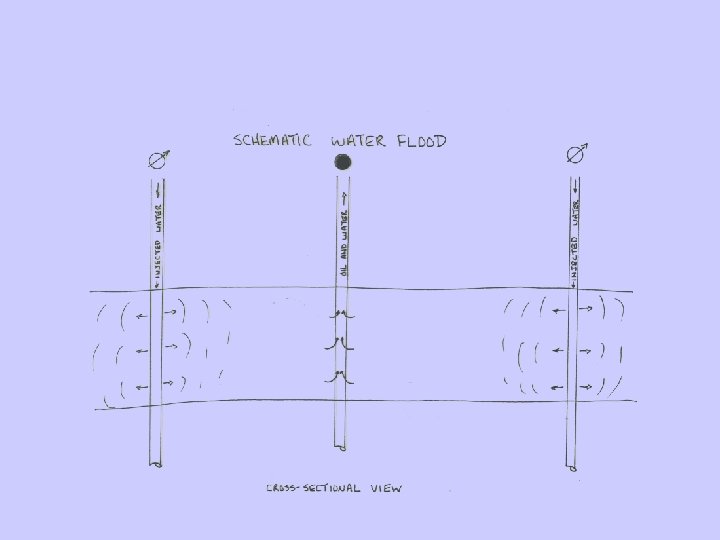
Producing Wells Secondary Recovery Injection Wells Of 60% Remaining in Reservoir Water Gas Steam Chemical Fire Pumped into the reservoir to force additional petroleum out of the pores in the reservoir rock
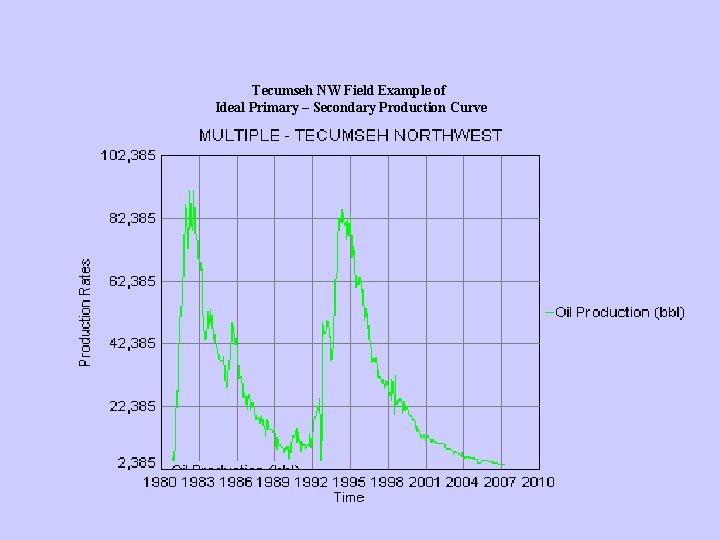
Tecumseh NW Field Example of Ideal Primary – Secondary Production Curve
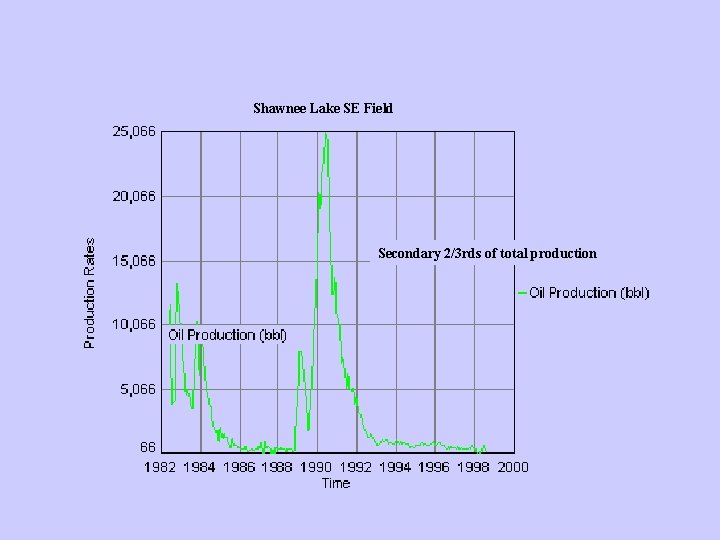
Shawnee Lake SE Field Secondary 2/3 rds of total production
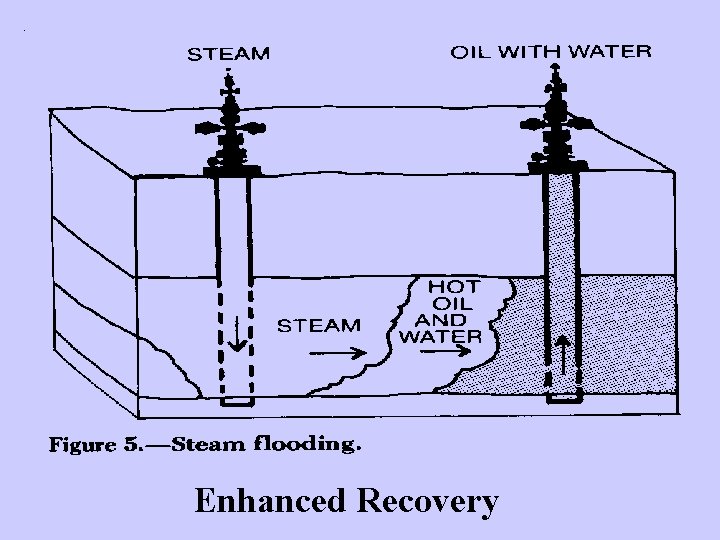
Enhanced Recovery
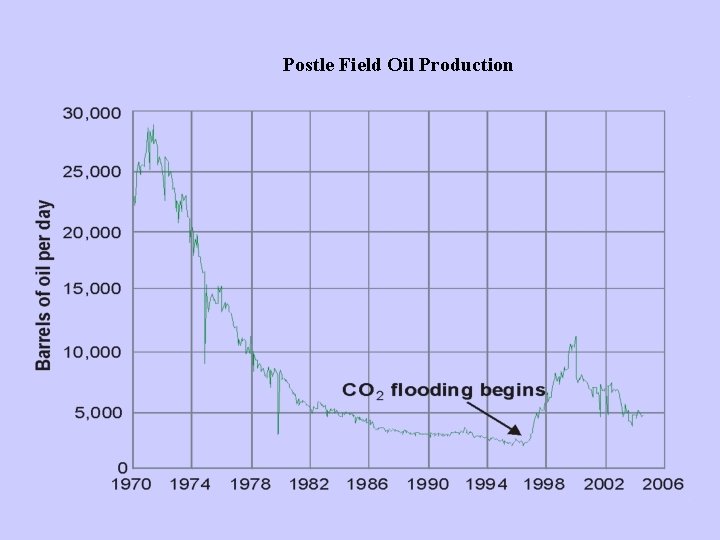
Postle Field Oil Production
Next: Volumetrics (Bring a calculator and straight edge to class)
- Slides: 81