
EVALUATION ASSESSMENT Types of Fractures Bell Work Has
EVALUATION & ASSESSMENT Types of Fractures
Bell Work • Has anyone or know someone who has fractured a bone? • What are the 5 types of bones? – Which bone? – How was it protected? – How long was it splinted or casted? – What happened as a result of the fracture? • • • Long bones Short bones Irregular bones Sesmoid bones Flat bones • Atrophy? • Decreased ROM? – What type of bone did they fracture?
Objectives • By the end of this lesson – Define Terms relating to fractures – Identify types of fractures – List signs and symptoms of a fracture – Explain the impact of fractures on the body
Terminology • Fracture • Avulsion Fracture • Blowout Fracture • Comminuted Fracture Can we identify terms we already know? • Contrecoup Fracture • Depression Fracture • Epiphyseal Fracture • Greenstick Fracture • Impacted Fracture • Longitudinal Fracture • Oblique Fracture • Serrated Fracture • Spiral Fracture • Stress Fracture • Transverse Fracture
• An injury to a bone where the tissue of the bone is broken – A partial or complete break may occur. • There are many TYPES of fractures. Fracture

Avulsion Fracture • A muscle, tendon or ligament pulls off a piece of bone • This x-ray shows a calcaneus avulsion fracture.
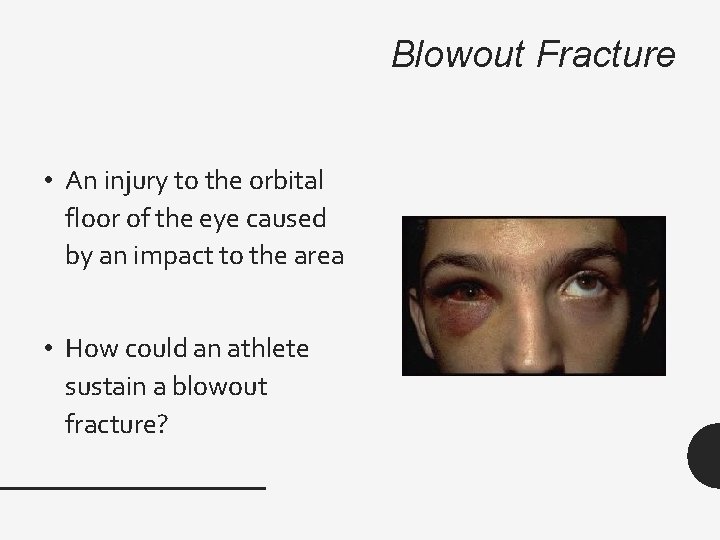
Blowout Fracture • An injury to the orbital floor of the eye caused by an impact to the area • How could an athlete sustain a blowout fracture?
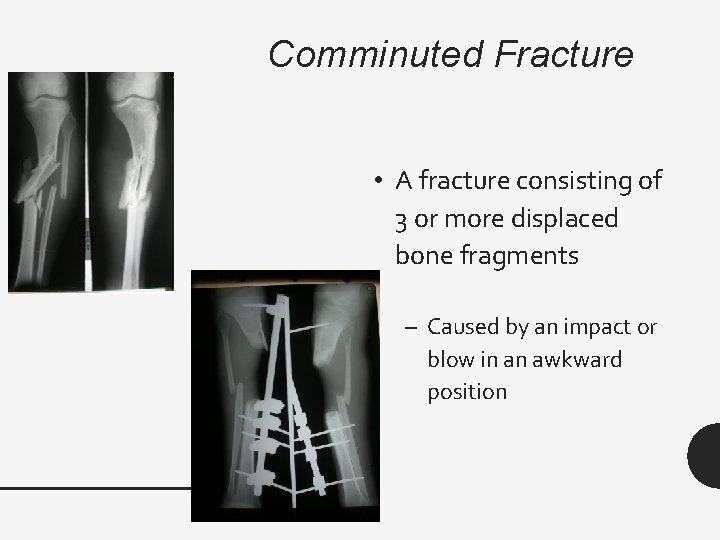
Comminuted Fracture • A fracture consisting of 3 or more displaced bone fragments – Caused by an impact or blow in an awkward position
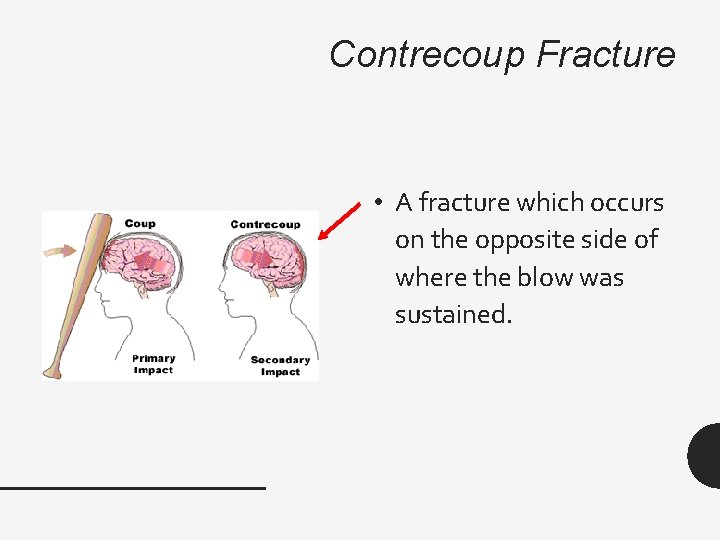
Contrecoup Fracture • A fracture which occurs on the opposite side of where the blow was sustained.
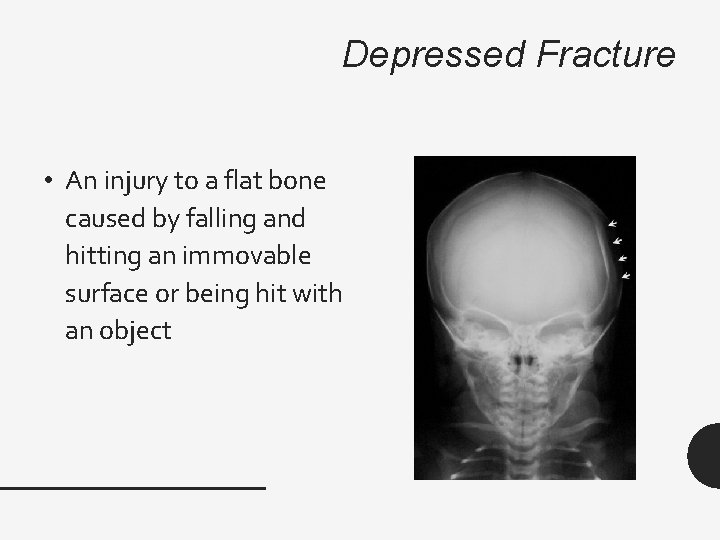
Depressed Fracture • An injury to a flat bone caused by falling and hitting an immovable surface or being hit with an object
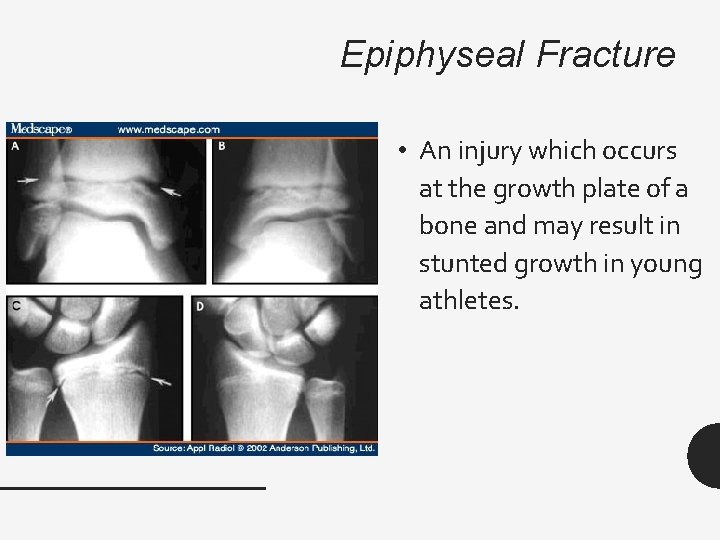
Epiphyseal Fracture • An injury which occurs at the growth plate of a bone and may result in stunted growth in young athletes.
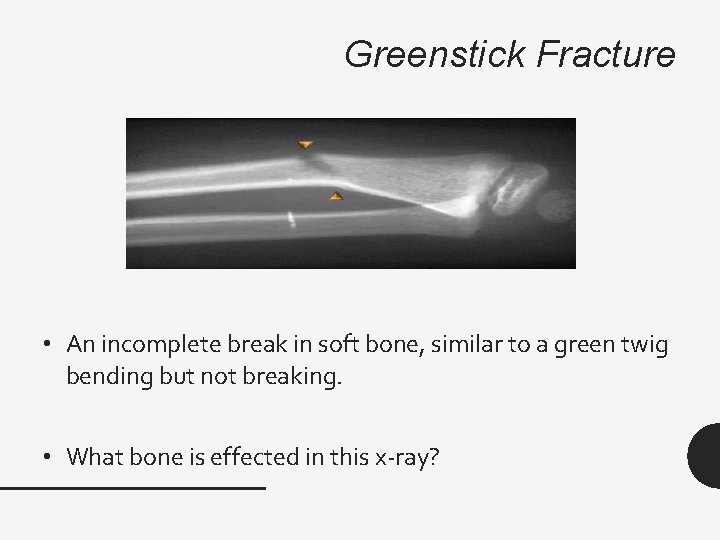
Greenstick Fracture • An incomplete break in soft bone, similar to a green twig bending but not breaking. • What bone is effected in this x-ray?
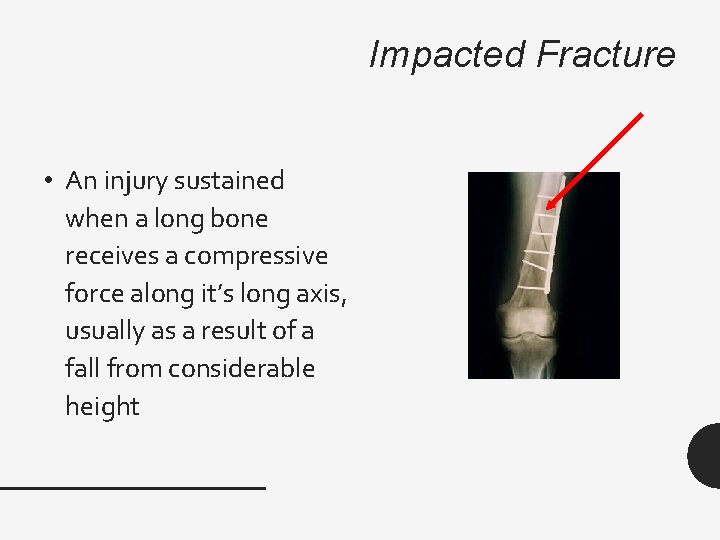
Impacted Fracture • An injury sustained when a long bone receives a compressive force along it’s long axis, usually as a result of a fall from considerable height
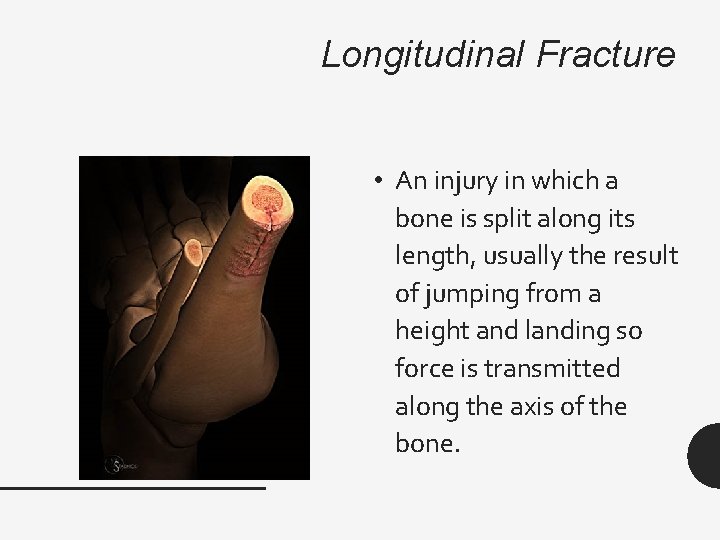
Longitudinal Fracture • An injury in which a bone is split along its length, usually the result of jumping from a height and landing so force is transmitted along the axis of the bone.
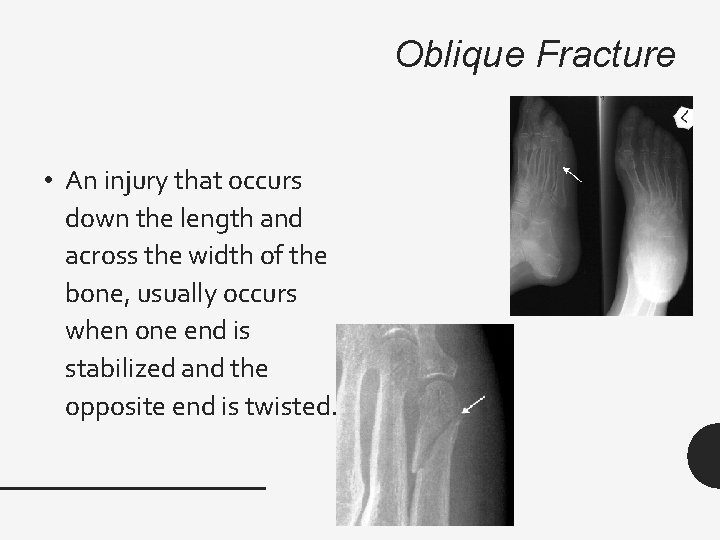
Oblique Fracture • An injury that occurs down the length and across the width of the bone, usually occurs when one end is stabilized and the opposite end is twisted.
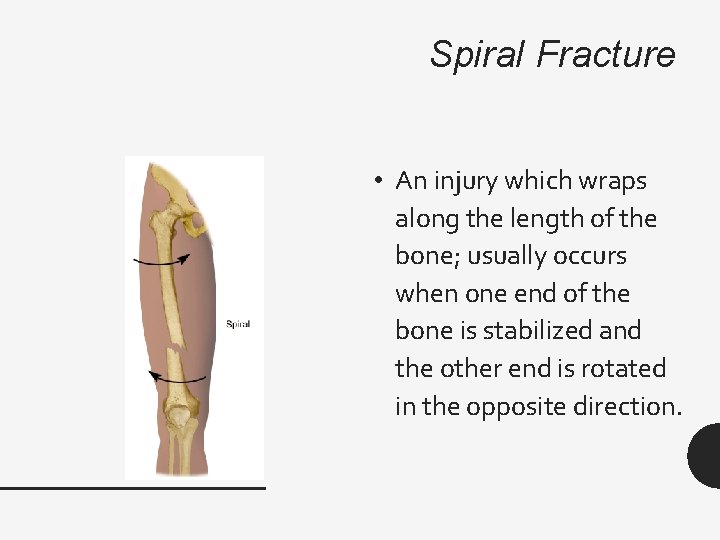
Spiral Fracture • An injury which wraps along the length of the bone; usually occurs when one end of the bone is stabilized and the other end is rotated in the opposite direction.
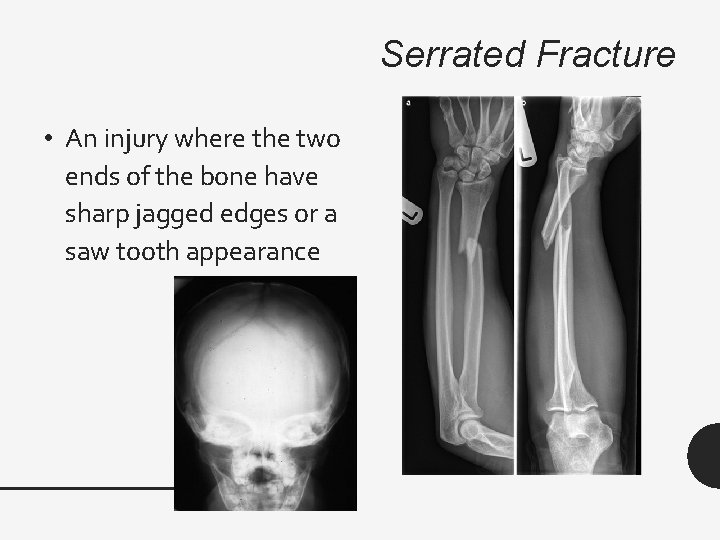
Serrated Fracture • An injury where the two ends of the bone have sharp jagged edges or a saw tooth appearance
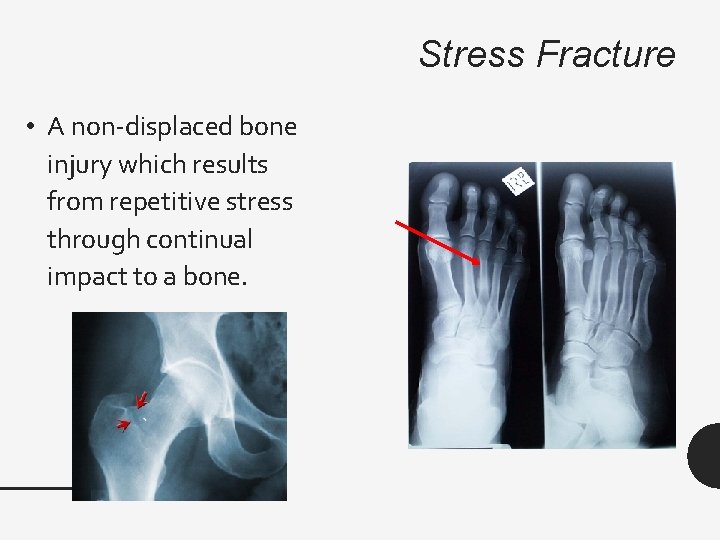
Stress Fracture • A non-displaced bone injury which results from repetitive stress through continual impact to a bone.
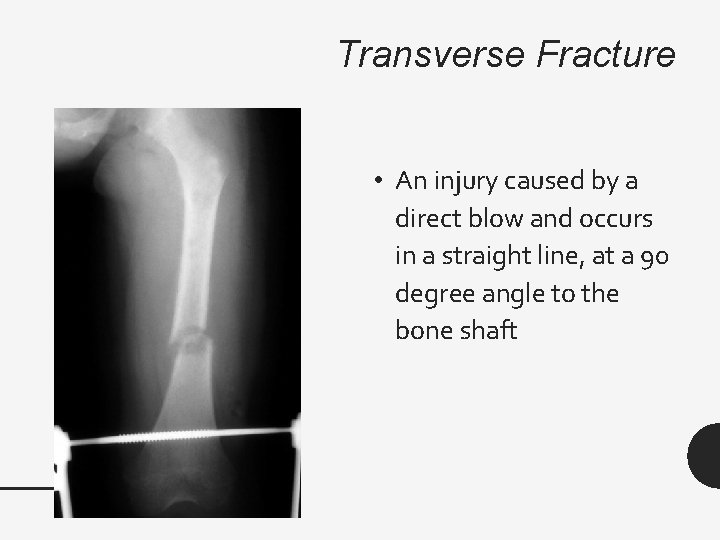
Transverse Fracture • An injury caused by a direct blow and occurs in a straight line, at a 90 degree angle to the bone shaft
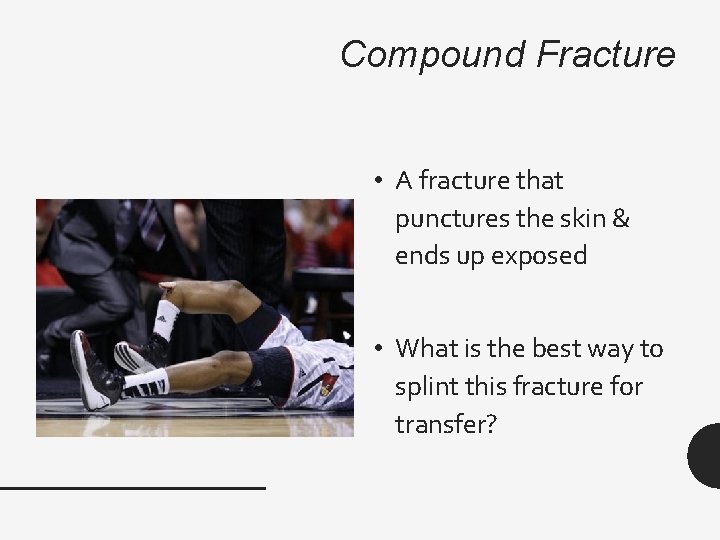
Compound Fracture • A fracture that punctures the skin & ends up exposed • What is the best way to splint this fracture for transfer?
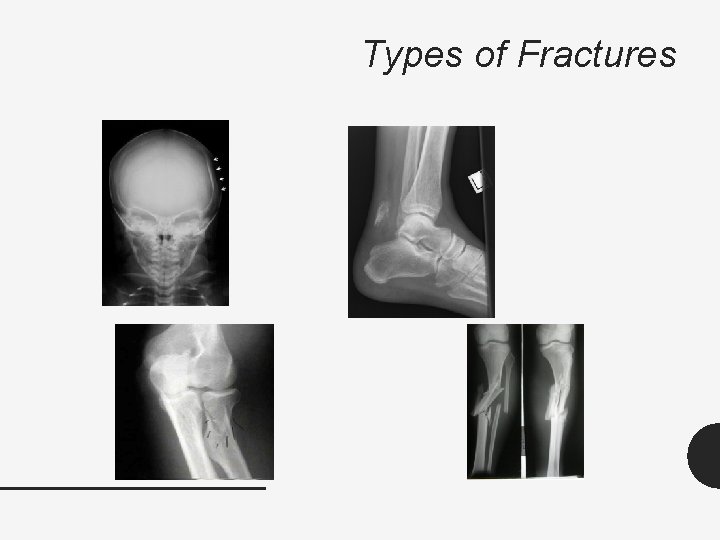
Types of Fractures

FUN, CREATIVE ASSIGNMENT! ON A SEPARATE SHEET OF PAPER, OR NOTECARDS IF YOU PREFER, DRAW A PICTURE/SOME SORT OF SEMI-REALISTIC LOOKING DRAWING OF EACH OF THE DIFFERENT TYPES OF FRACTURES THAT WE DISCUSSED TODAY.
- Slides: 22