
Evaluation Assessment Ligament Joint Nerve Injuries Introduction Watch
- Slides: 21
Evaluation & Assessment Ligament, Joint & Nerve Injuries
Introduction § Watch the following video: § http: //www. youtube. com/watch? v=7 my. Rn. JAm 47 k § If you were the athletic trainer, what questions are you going to ask your QB? § If you were a news reporter, what questions are you going to ask? § http: //www. youtube. com/watch? feature=endscree n&v=j. Hg. EESzc. GRA&NR=1
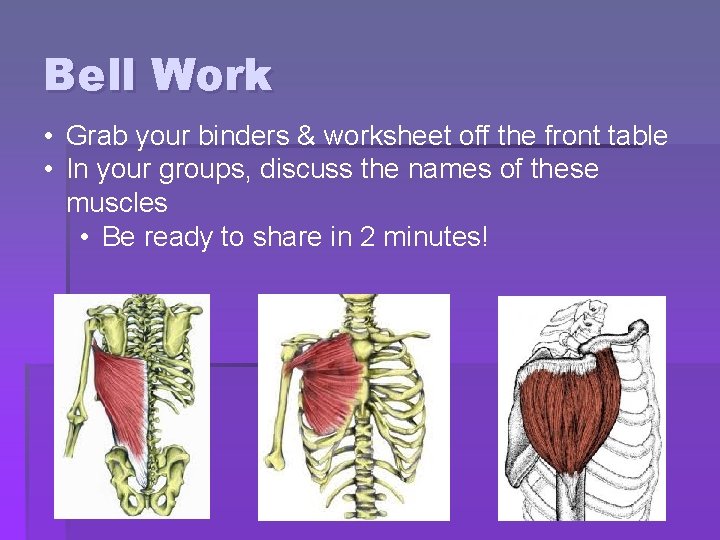
Bell Work • Grab your binders & worksheet off the front table • In your groups, discuss the names of these muscles • Be ready to share in 2 minutes!
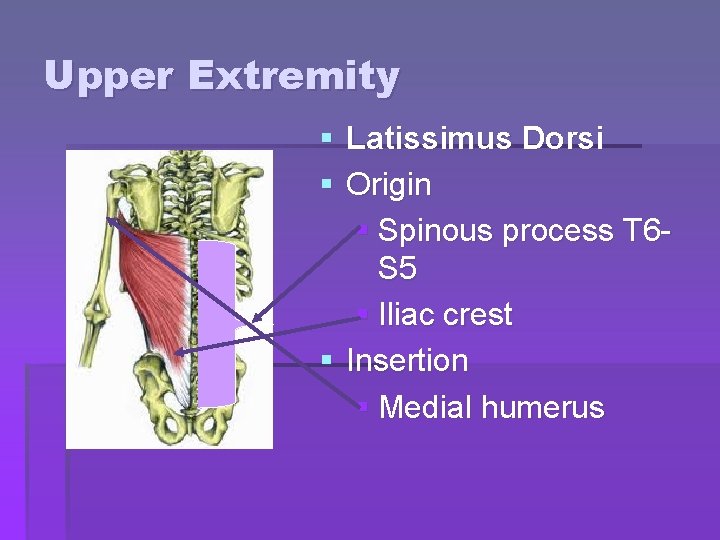
Upper Extremity § Latissimus Dorsi § Origin § Spinous process T 6 S 5 § Iliac crest § Insertion § Medial humerus
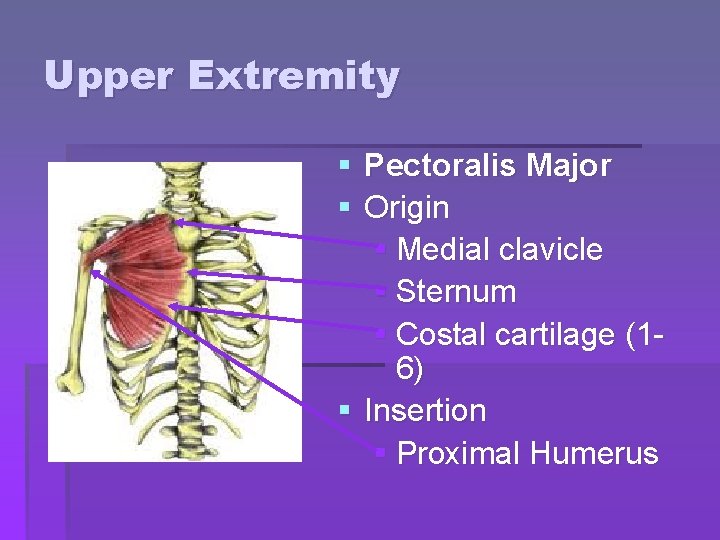
Upper Extremity § Pectoralis Major § Origin § Medial clavicle § Sternum § Costal cartilage (16) § Insertion § Proximal Humerus
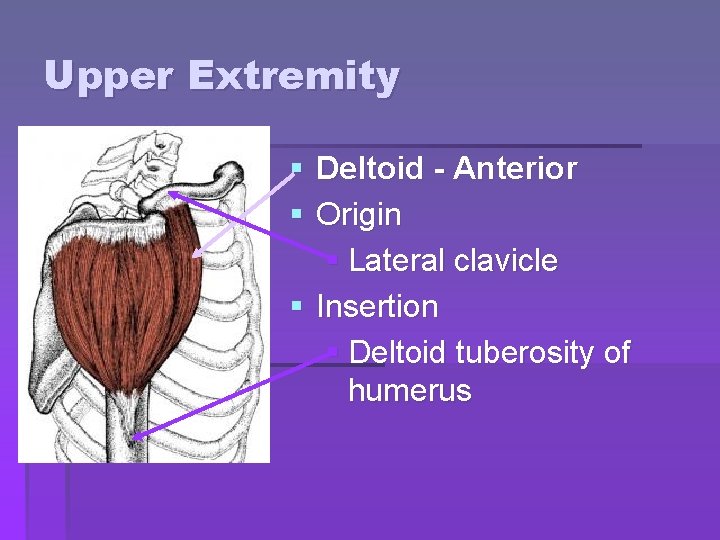
Upper Extremity § Deltoid - Anterior § Origin § Lateral clavicle § Insertion § Deltoid tuberosity of humerus
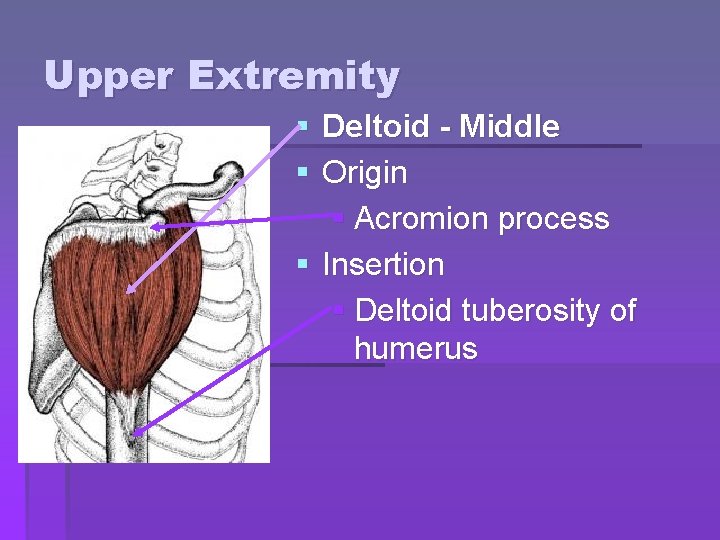
Upper Extremity § Deltoid - Middle § Origin § Acromion process § Insertion § Deltoid tuberosity of humerus
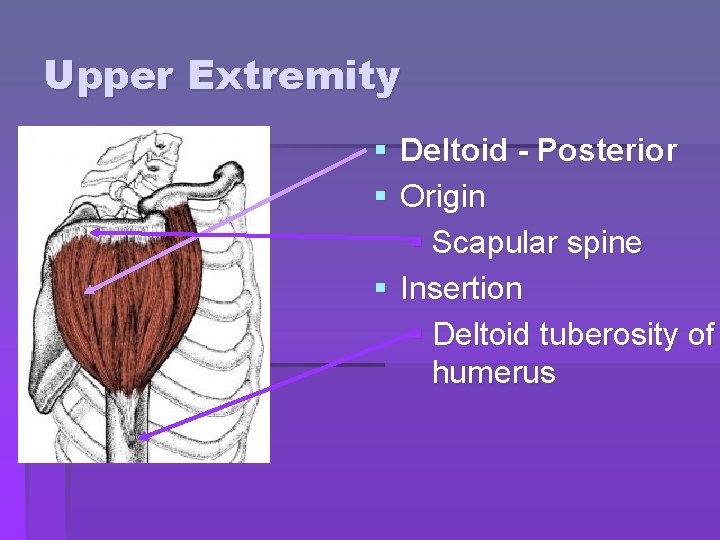
Upper Extremity § Deltoid - Posterior § Origin § Scapular spine § Insertion § Deltoid tuberosity of humerus
Evaluation & Assessment Ligament, Joint & Nerve Injuries Objective: Students will be able to: § Define and differentiate between Ligament, Joint and Nerve Injuries
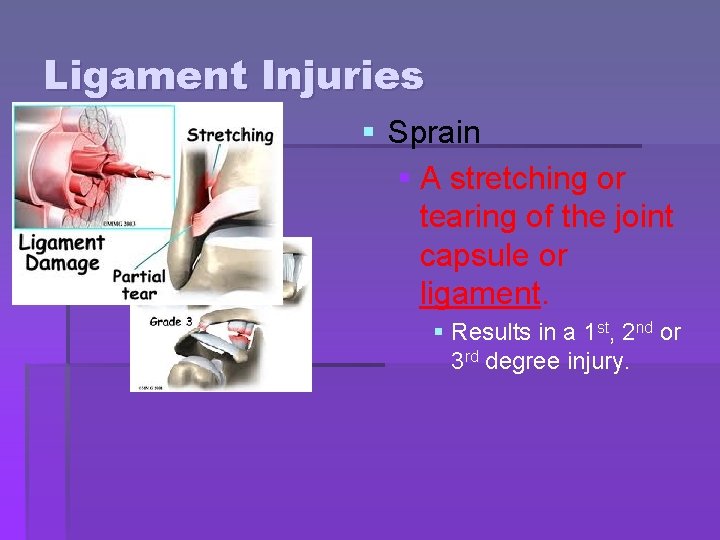
Ligament Injuries § Sprain § A stretching or tearing of the joint capsule or ligament. § Results in a 1 st, 2 nd or 3 rd degree injury.
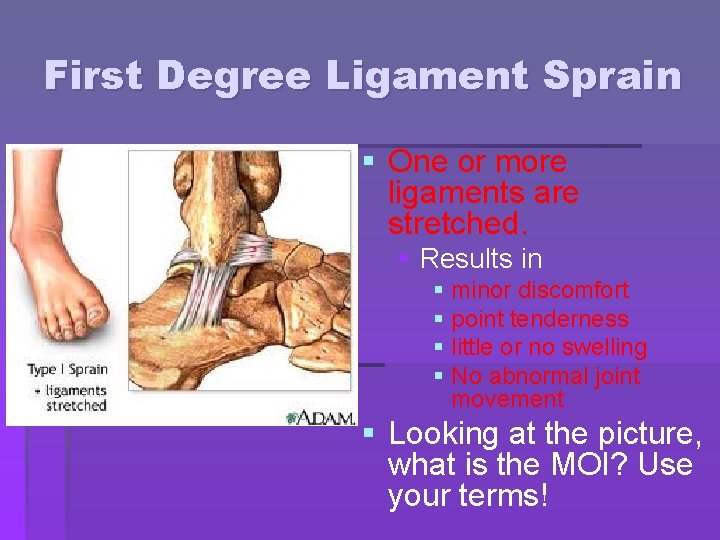
First Degree Ligament Sprain § One or more ligaments are stretched. § Results in § minor discomfort § point tenderness § little or no swelling § No abnormal joint movement § Looking at the picture, what is the MOI? Use your terms!
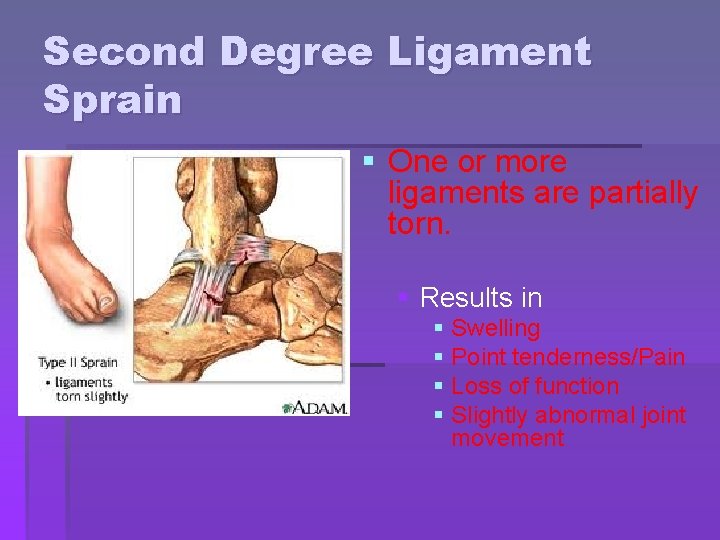
Second Degree Ligament Sprain § One or more ligaments are partially torn. § Results in § Swelling § Point tenderness/Pain § Loss of function § Slightly abnormal joint movement
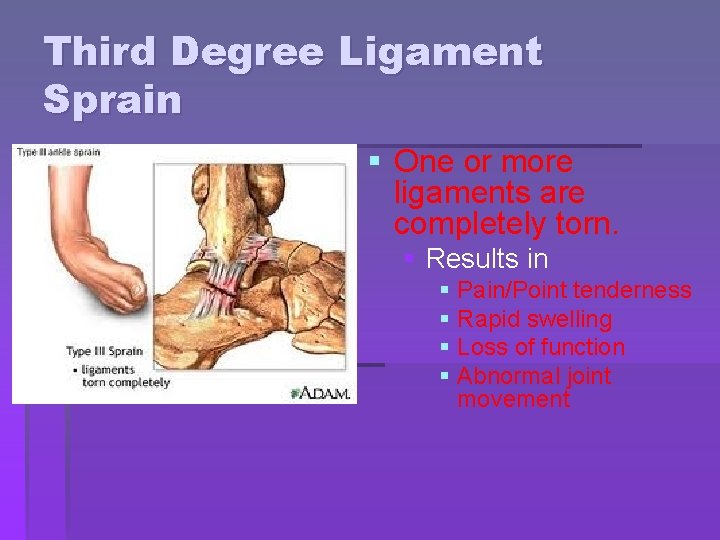
Third Degree Ligament Sprain § One or more ligaments are completely torn. § Results in § Pain/Point tenderness § Rapid swelling § Loss of function § Abnormal joint movement
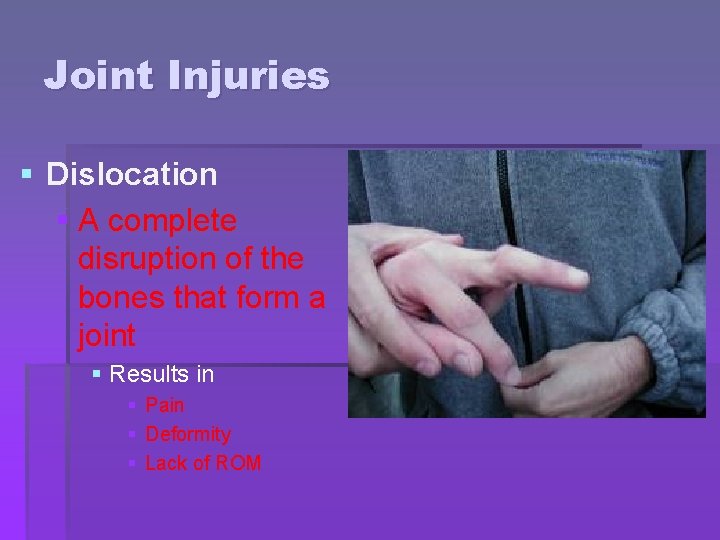
Joint Injuries § Dislocation § A complete disruption of the bones that form a joint § Results in § Pain § Deformity § Lack of ROM
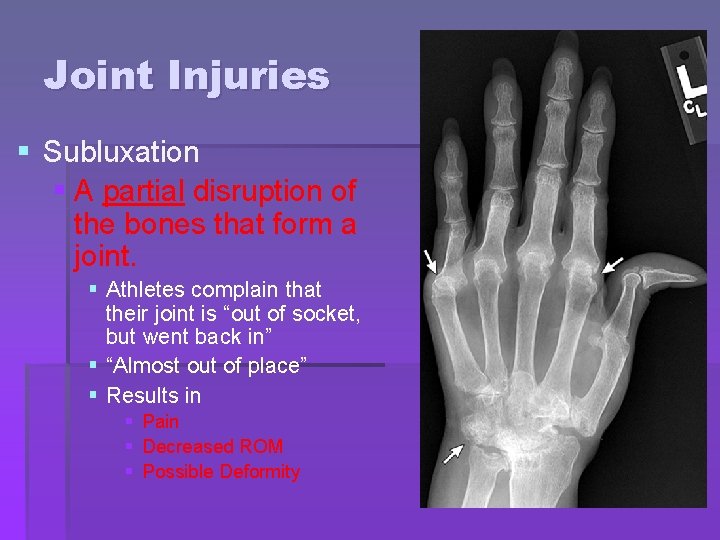
Joint Injuries § Subluxation § A partial disruption of the bones that form a joint. § Athletes complain that their joint is “out of socket, but went back in” § “Almost out of place” § Results in § Pain § Decreased ROM § Possible Deformity
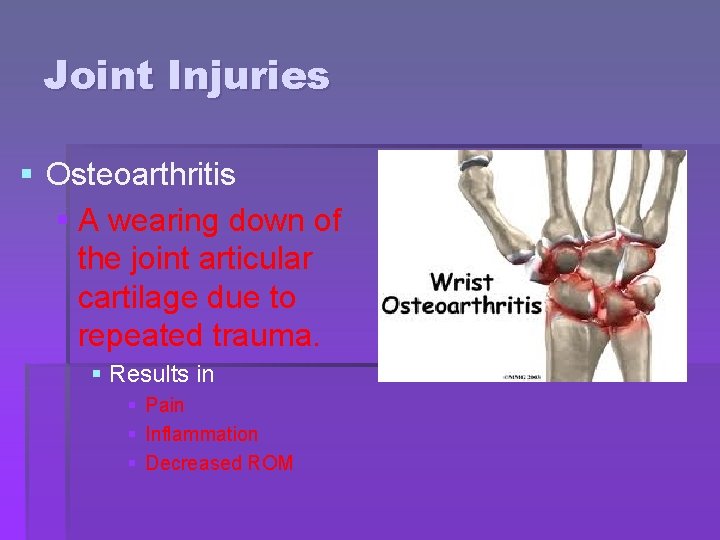
Joint Injuries § Osteoarthritis § A wearing down of the joint articular cartilage due to repeated trauma. § Results in § Pain § Inflammation § Decreased ROM
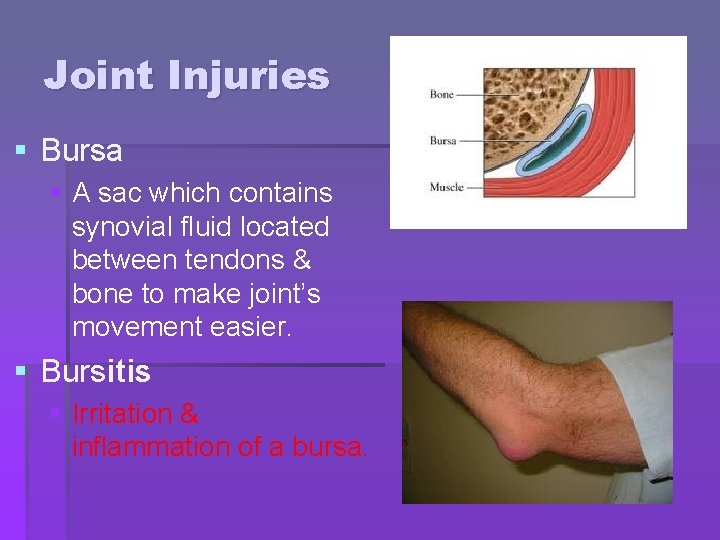
Joint Injuries § Bursa § A sac which contains synovial fluid located between tendons & bone to make joint’s movement easier. § Bursitis § Irritation & inflammation of a bursa.
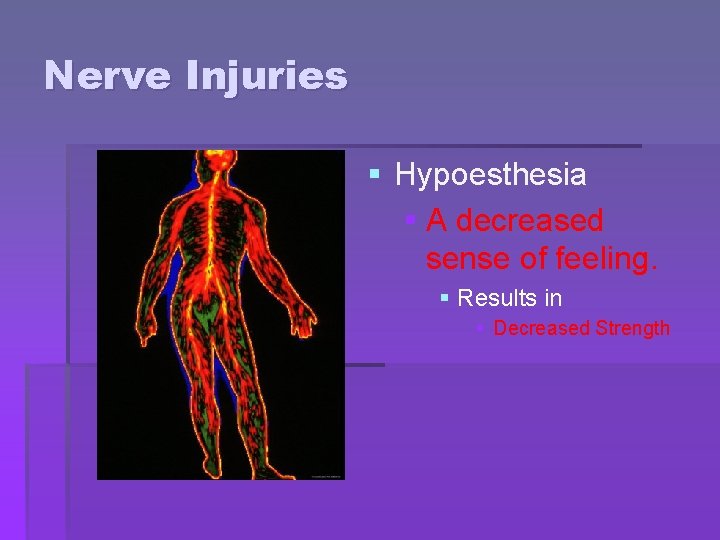
Nerve Injuries § Hypoesthesia § A decreased sense of feeling. § Results in § Decreased Strength
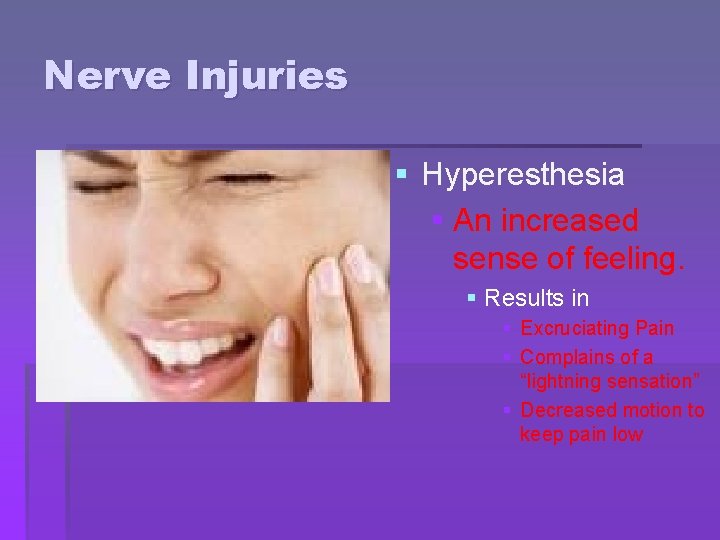
Nerve Injuries § Hyperesthesia § An increased sense of feeling. § Results in § Excruciating Pain § Complains of a “lightning sensation” § Decreased motion to keep pain low
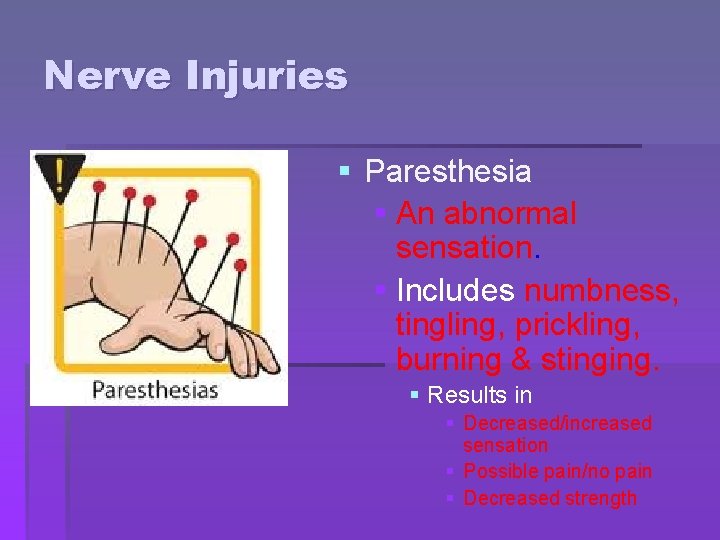
Nerve Injuries § Paresthesia § An abnormal sensation. § Includes numbness, tingling, prickling, burning & stinging. § Results in § Decreased/increased sensation § Possible pain/no pain § Decreased strength
Closure 1. What is the difference between a sprain & a strain? 2. Describe the difference between a dislocation & a subluxation. 3. What is the fluid filled sac between bones & tendons? 4. Decrease in feeling is called? 5. Increase in feeling is called?