
Evaluation and Treatment of Nausea and Vomiting Deon
- Slides: 29
Evaluation and Treatment of Nausea and Vomiting Deon Cox-Hayley, DO University of Chicago
Nausea • Unpleasant subjective feeling of need to vomit
Case • 46 y/o with treated neurocystocercosis • Hospitalized with intractable vomitting – Compazine – Ondansetron – Reglan
How to treat?
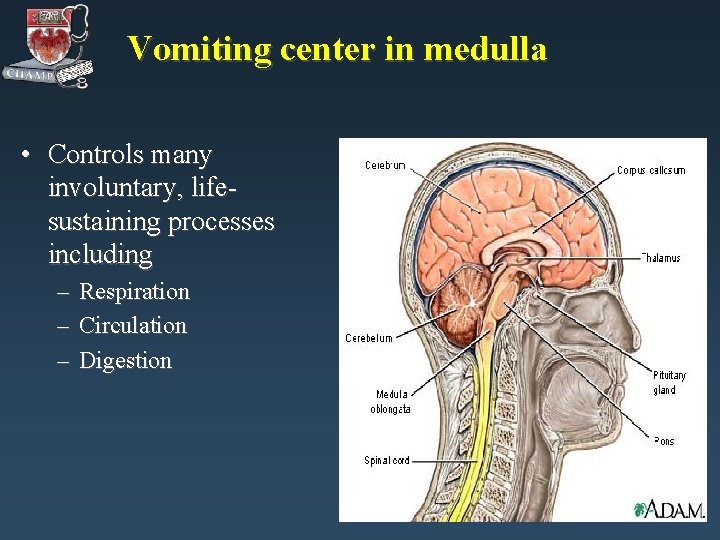
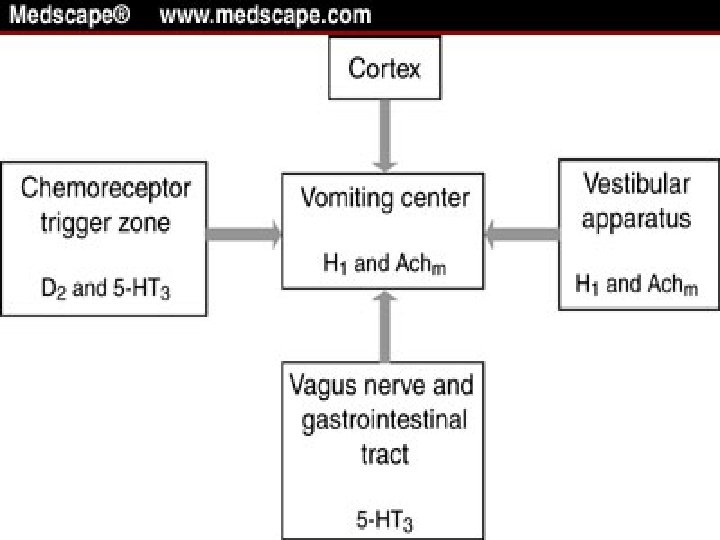
Vomiting center in medulla • Controls many involuntary, lifesustaining processes including – Respiration – Circulation – Digestion
Vomiting center – Gastrointestinal tract – Respiratory center • breath holding • forceful contraction – Other brain stem centers • pallor • sweating • tachycardia
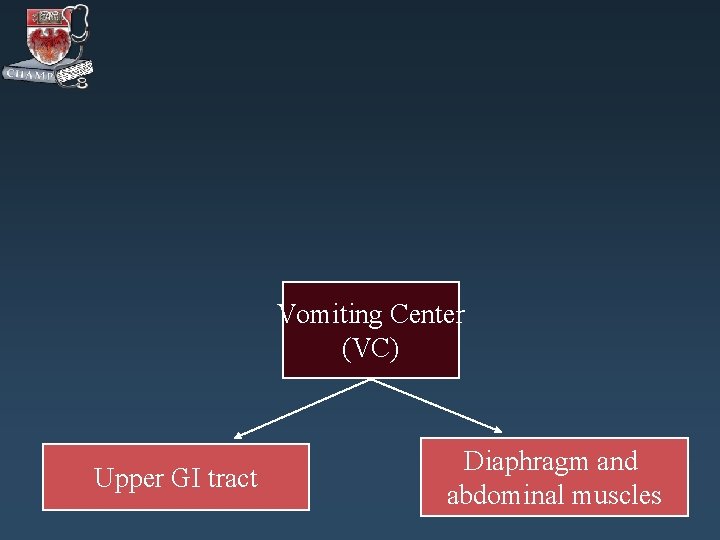
Vomiting Center (VC) Upper GI tract Diaphragm and abdominal muscles
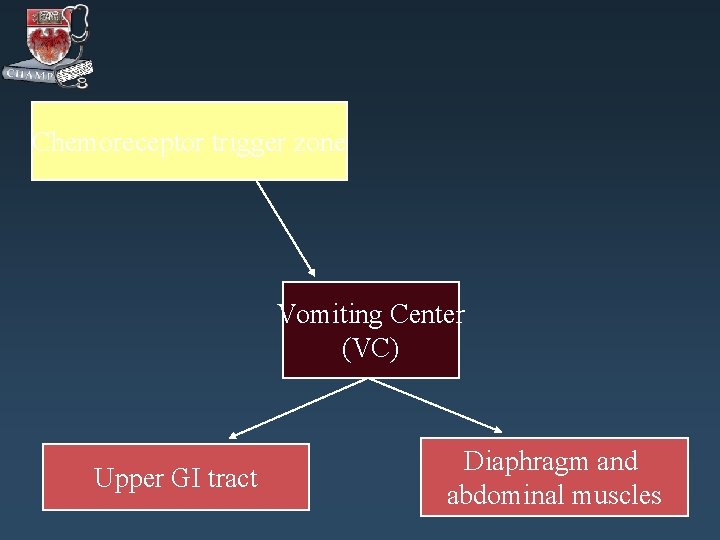
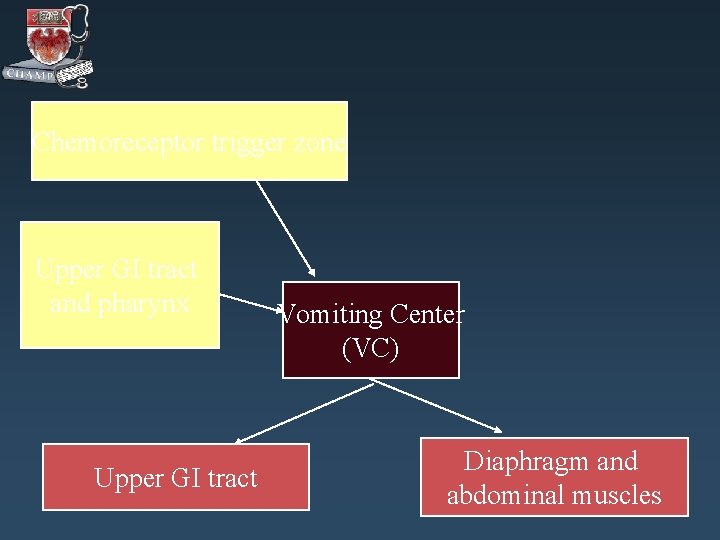
Chemoreceptor trigger zone Vomiting Center (VC) Upper GI tract Diaphragm and abdominal muscles
Chemoreceptor trigger zone Upper GI tract and pharynx Upper GI tract Vomiting Center (VC) Diaphragm and abdominal muscles
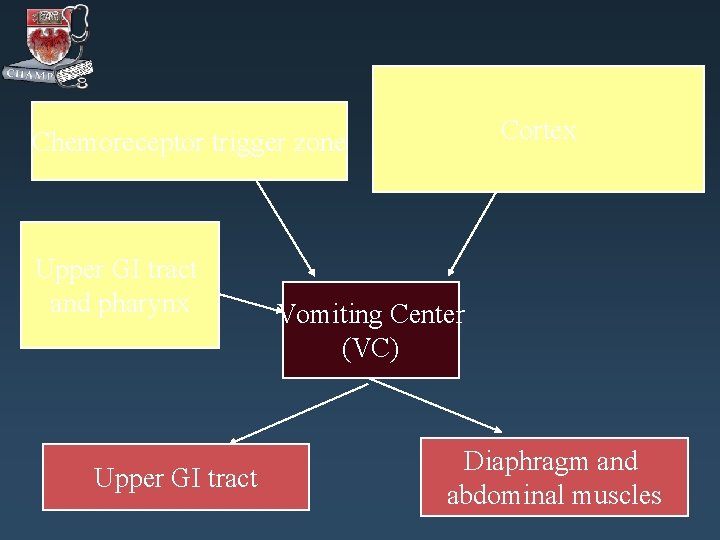
Cortex Chemoreceptor trigger zone Upper GI tract and pharynx Upper GI tract Vomiting Center (VC) Diaphragm and abdominal muscles
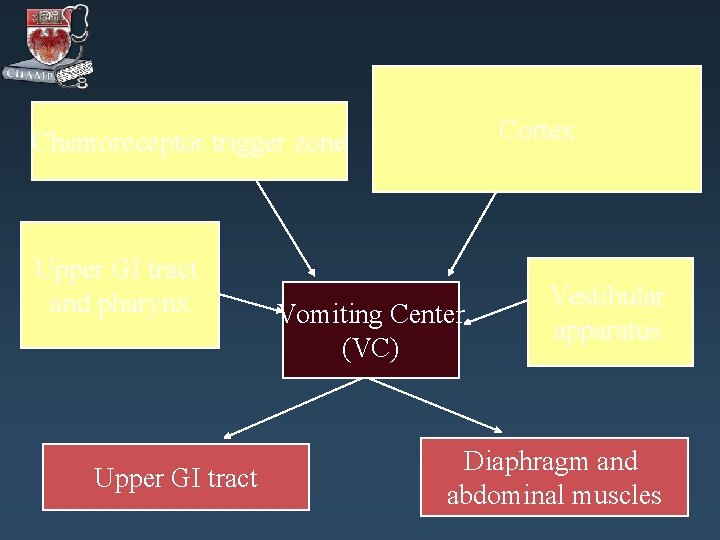
Cortex Chemoreceptor trigger zone Upper GI tract and pharynx Upper GI tract Vomiting Center (VC) Vestibular apparatus Diaphragm and abdominal muscles
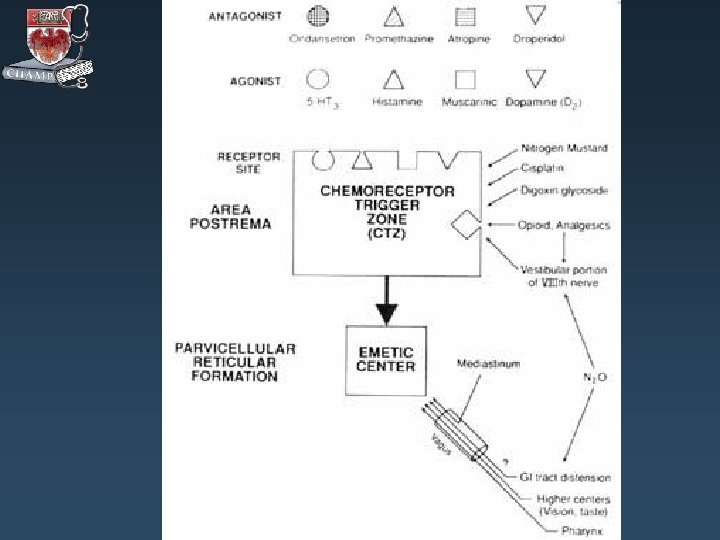
via Chemoreceptor Trigger Zone • Biochemical abnormalities – – • Sepsis • Drugs • – –
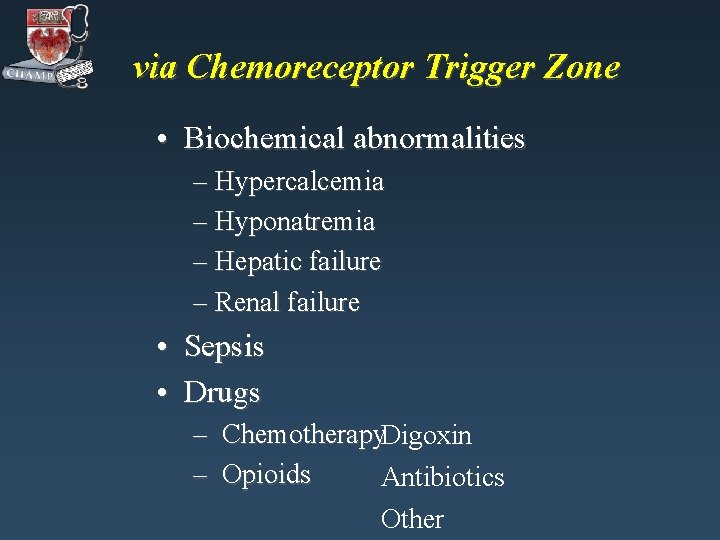
via Chemoreceptor Trigger Zone • Biochemical abnormalities – Hypercalcemia – Hyponatremia – Hepatic failure – Renal failure • Sepsis • Drugs – – Chemotherapy. Digoxin Opioids Antibiotics Other
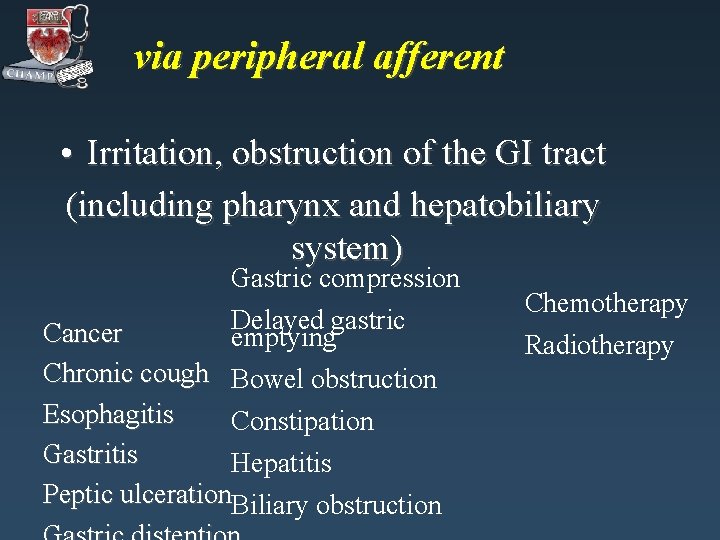
via peripheral afferent • • Irritation, obstruction of the GI tract (including pharynx and hepatobiliary system) 1. 2. 3. 4. 5. 6.
via peripheral afferent • Irritation, obstruction of the GI tract (including pharynx and hepatobiliary system) Gastric compression Delayed gastric Cancer emptying Chronic cough Bowel obstruction Esophagitis Constipation Gastritis Hepatitis Peptic ulceration. Biliary obstruction Chemotherapy Radiotherapy
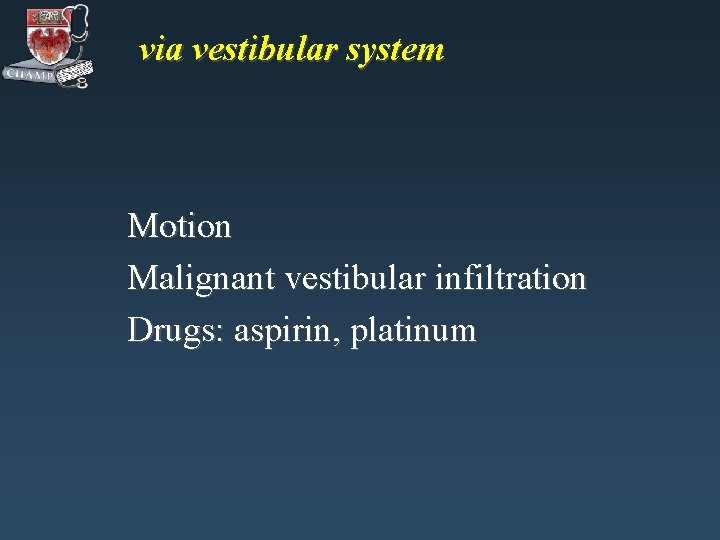
via vestibular system Motion Malignant vestibular infiltration Drugs: aspirin, platinum
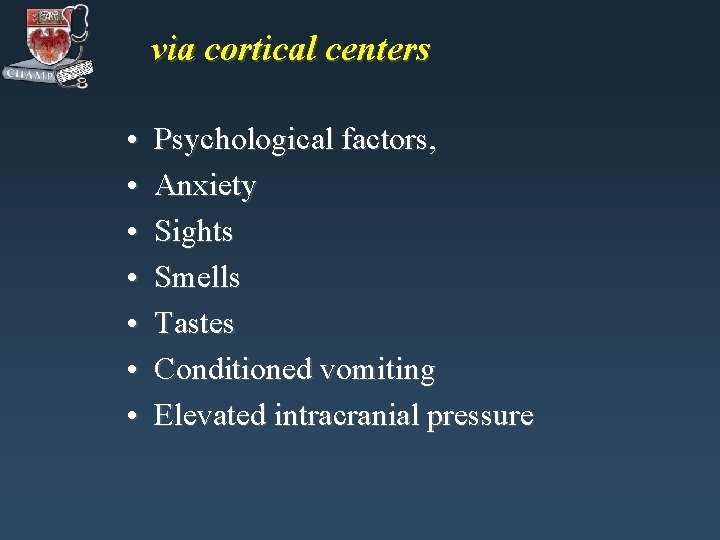
via cortical centers • • Psychological factors, Anxiety Sights Smells Tastes Conditioned vomiting Elevated intracranial pressure
Treatment • • • Assess and treat underlying cause Use of anti-emetics Reassess
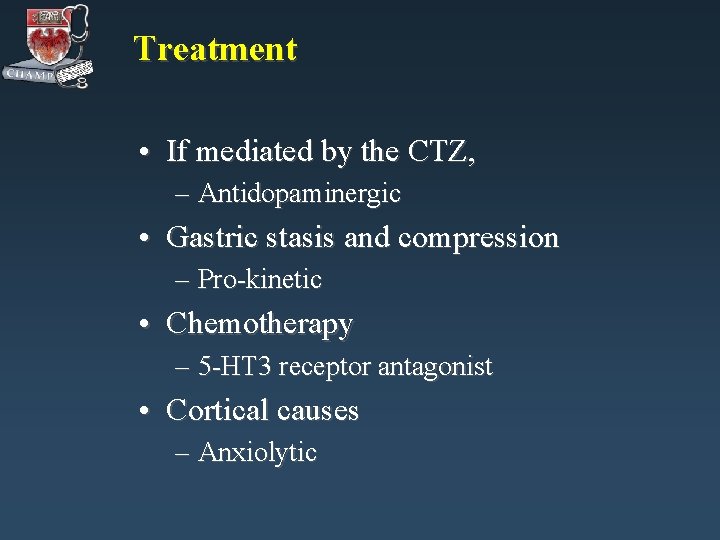
Treatment • If mediated by the CTZ, – Antidopaminergic • Gastric stasis and compression – Pro-kinetic • Chemotherapy – 5 -HT 3 receptor antagonist • Cortical causes – Anxiolytic
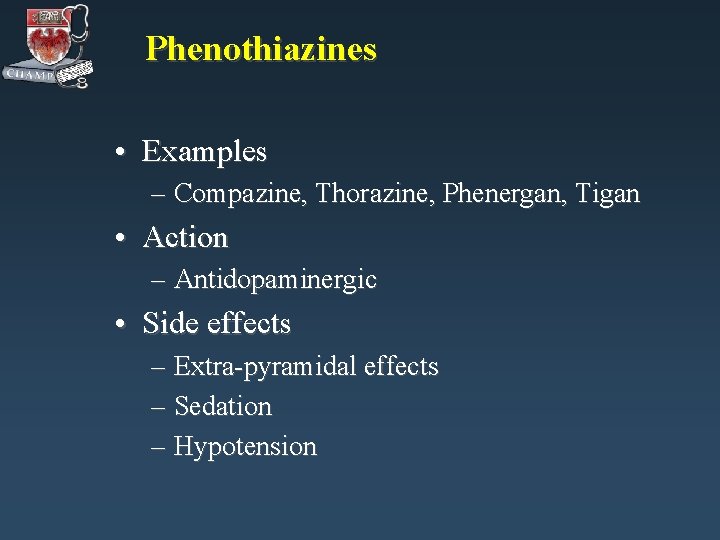
Phenothiazines • Examples – Compazine, Thorazine, Phenergan, Tigan • Action – Antidopaminergic • Side effects – Extra-pyramidal effects – Sedation – Hypotension
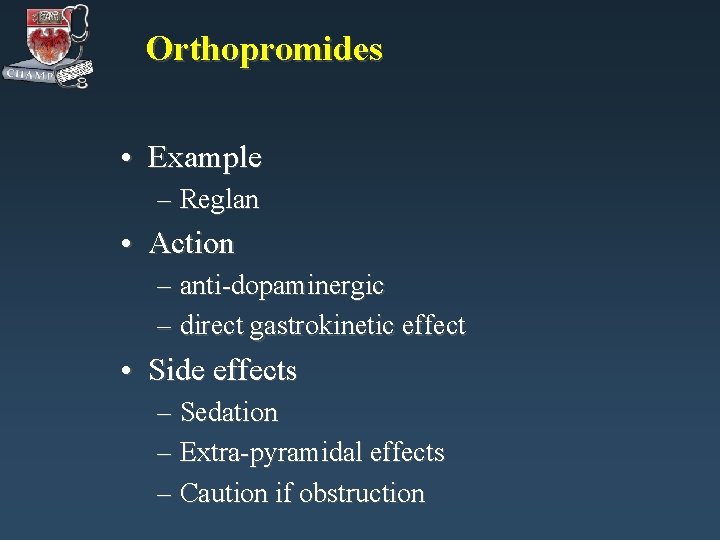
Orthopromides • Example – Reglan • Action – anti-dopaminergic – direct gastrokinetic effect • Side effects – Sedation – Extra-pyramidal effects – Caution if obstruction
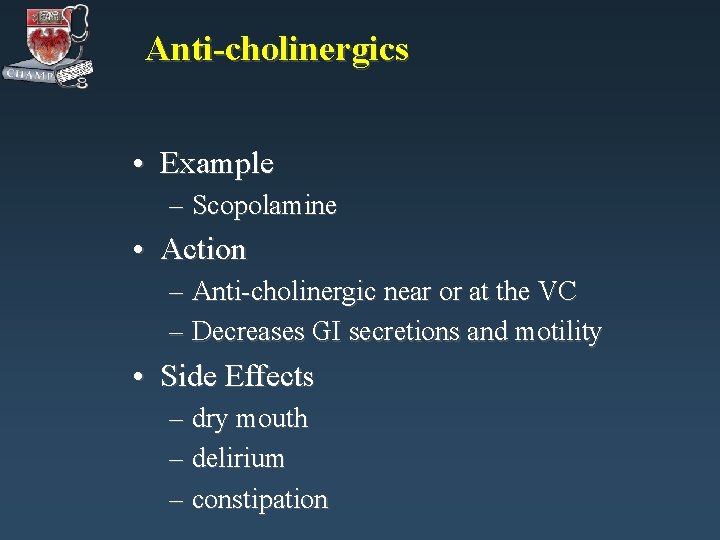
Anti-cholinergics • Example – Scopolamine • Action – Anti-cholinergic near or at the VC – Decreases GI secretions and motility • Side Effects – dry mouth – delirium – constipation
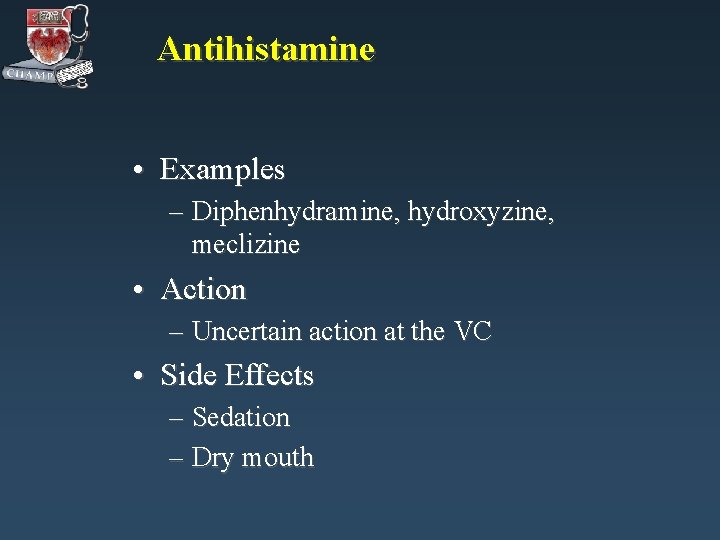
Antihistamine • Examples – Diphenhydramine, hydroxyzine, meclizine • Action – Uncertain action at the VC • Side Effects – Sedation – Dry mouth
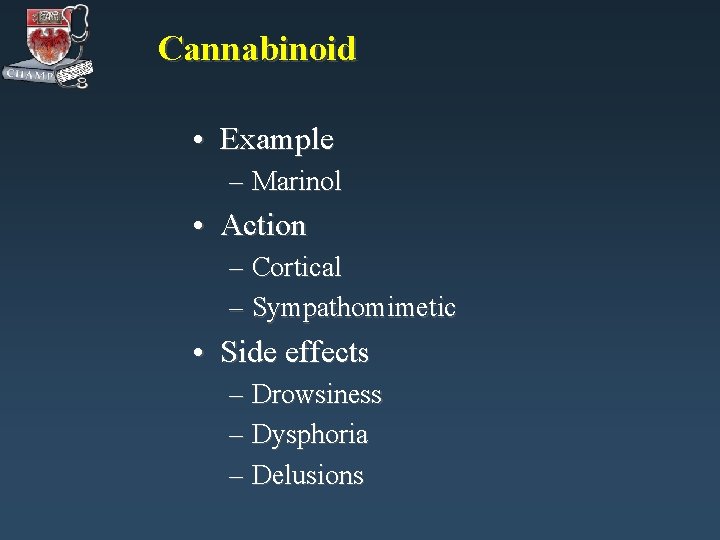
Cannabinoid • Example – Marinol • Action – Cortical – Sympathomimetic • Side effects – Drowsiness – Dysphoria – Delusions
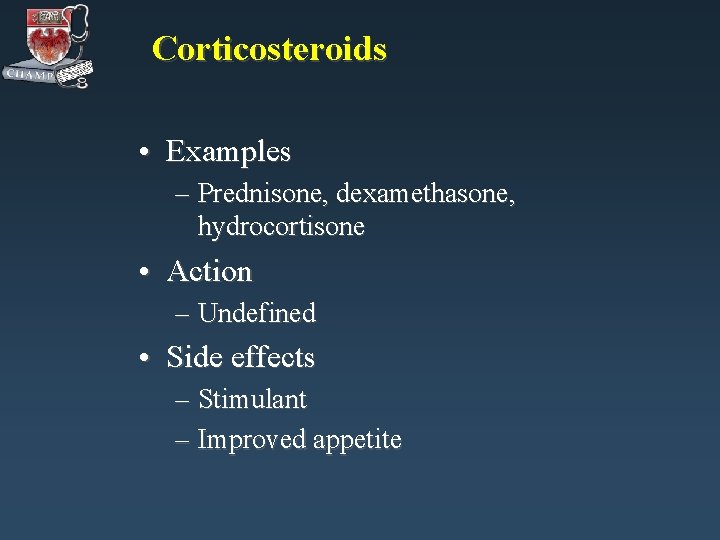
Corticosteroids • Examples – Prednisone, dexamethasone, hydrocortisone • Action – Undefined • Side effects – Stimulant – Improved appetite
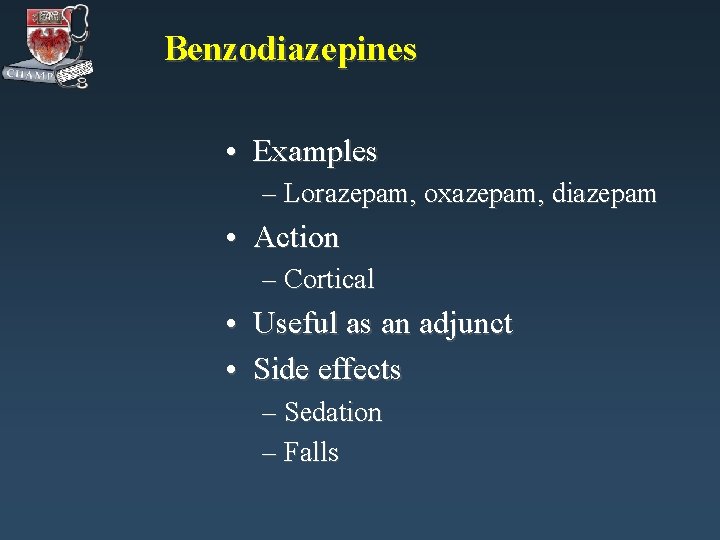
Benzodiazepines • Examples – Lorazepam, oxazepam, diazepam • Action – Cortical • Useful as an adjunct • Side effects – Sedation – Falls
Serotonin receptor antagonists • Examples – Ondansitron, granisetron, dolasetron, and tropisetron, – Palonosetron (second generation) • Action – Prevent vagal stimulation in the GI tract – May have central action • Use--chemotherapy, radiation therapy • Side effects – constipation – headache