
Evaluating the ASR Potential of Aggregates and Effectiveness
- Slides: 74
Evaluating the ASR Potential of Aggregates and Effectiveness of ASR Mitigation Measures in Miniature Concrete Prism Test Enamur R Latifee, Graduate Student Glenn Department of Civil Engineering Clemson University Concrete Materials Seminar February 17, 2012
Acknowledgement • Dr. Prasad Rangaraju, Associate Professor, Glenn Department of Civil Engineering Clemson University • Dr. Paul Virmani, FHWA
Presentation Outline 1. ASR review 2. Introduction to Miniature Concrete Prism Test (MCPT) 3. Evaluation of Effectiveness of SCMs for ASR Mitigation in the MCPT 4. Effect of Prolonged Curing of Test Specimens on the Performance of Fly Ashes in MCPT Test Method
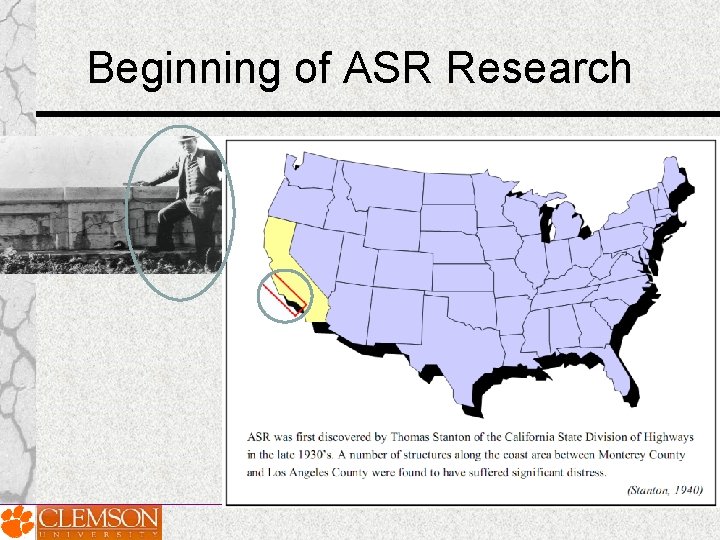
Beginning of ASR Research
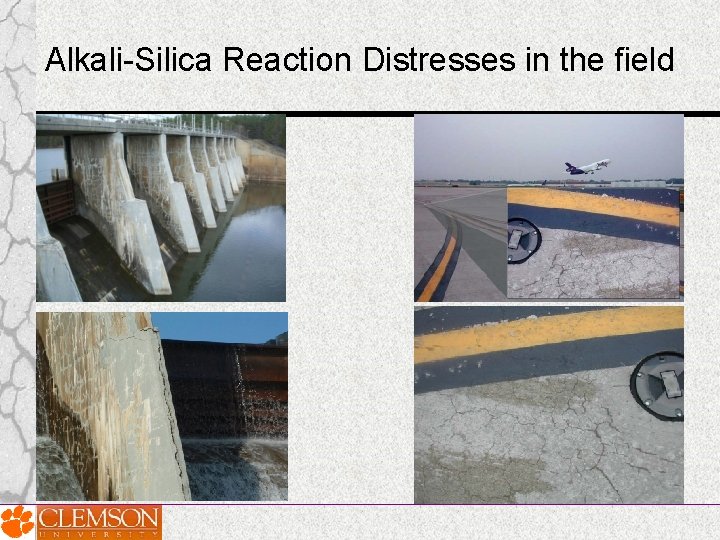
Alkali-Silica Reaction Distresses in the field
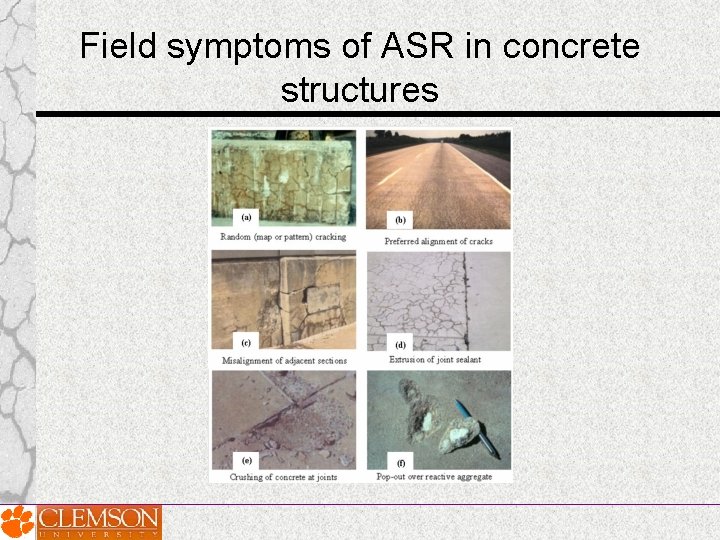
Field symptoms of ASR in concrete structures
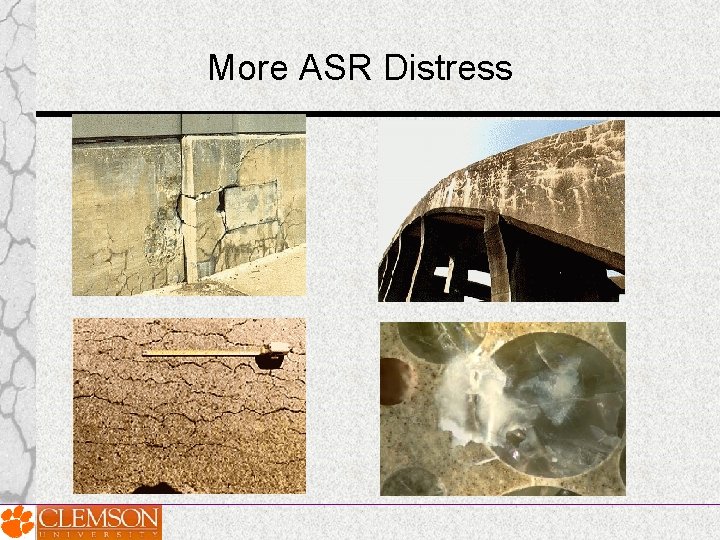
More ASR Distress
Some Case Histories • Buck Hydroelectric plant on New River (Virginia, US) • Arch dam in California – crown deflection of 127 mm in 9 years • • Railroad Canyon Dam Morrow Point Dam, Colorado, USA Stewart Mountain Dam, Arizona Parker Dam (Arizona) – expansion in excess of 0. 1 percent
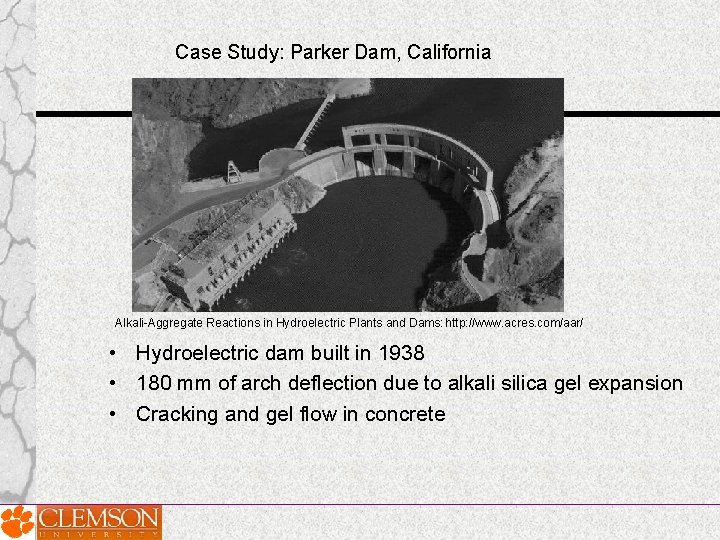
Case Study: Parker Dam, California Alkali-Aggregate Reactions in Hydroelectric Plants and Dams: http: //www. acres. com/aar/ • Hydroelectric dam built in 1938 • 180 mm of arch deflection due to alkali silica gel expansion • Cracking and gel flow in concrete
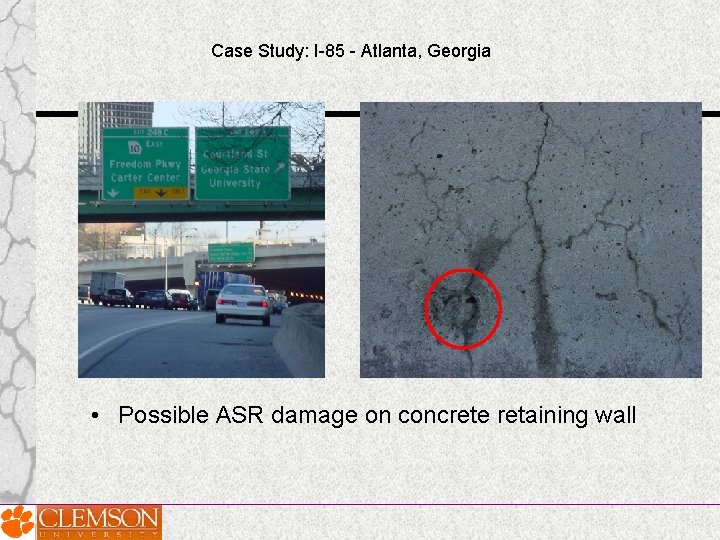
Case Study: I-85 - Atlanta, Georgia • Possible ASR damage on concrete retaining wall
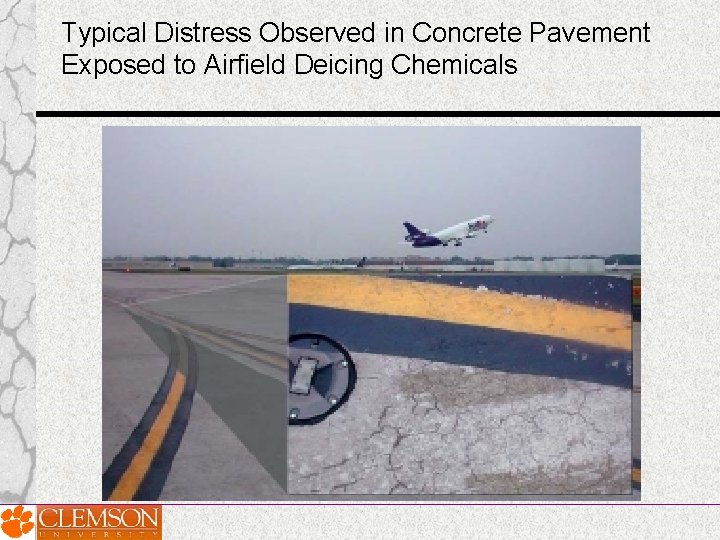
Typical Distress Observed in Concrete Pavement Exposed to Airfield Deicing Chemicals
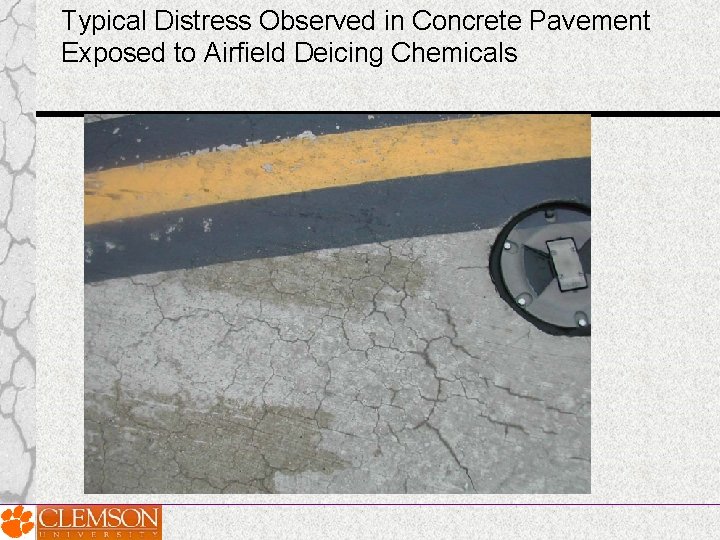
Typical Distress Observed in Concrete Pavement Exposed to Airfield Deicing Chemicals
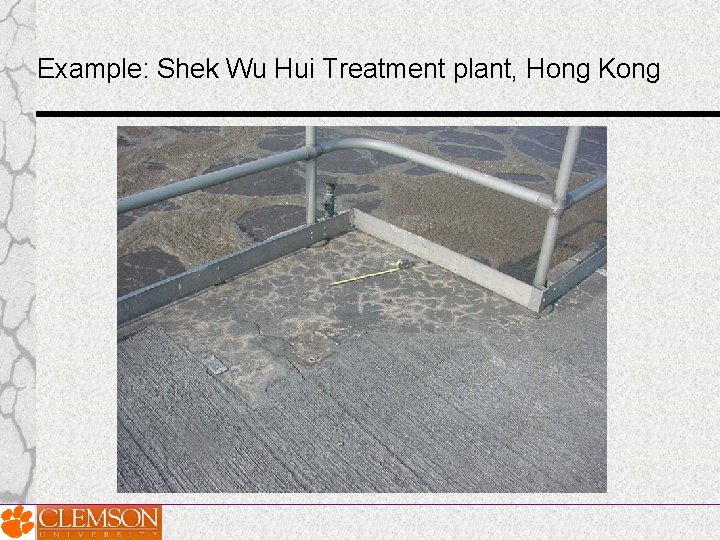
Example: Shek Wu Hui Treatment plant, Hong Kong
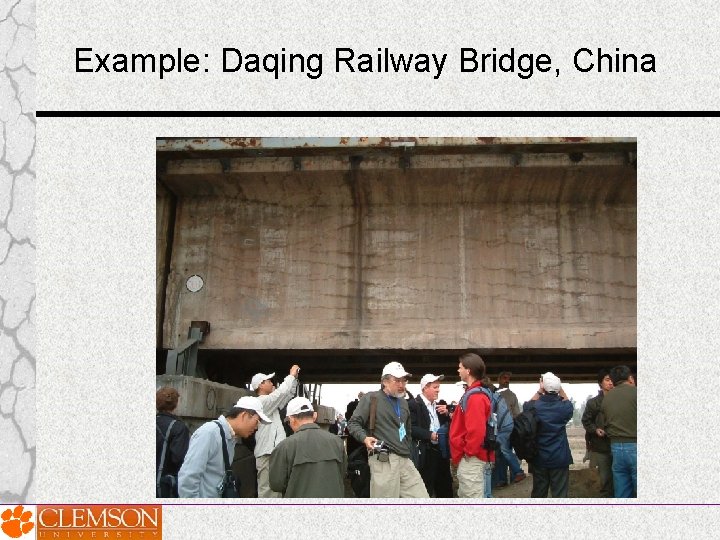
Example: Daqing Railway Bridge, China
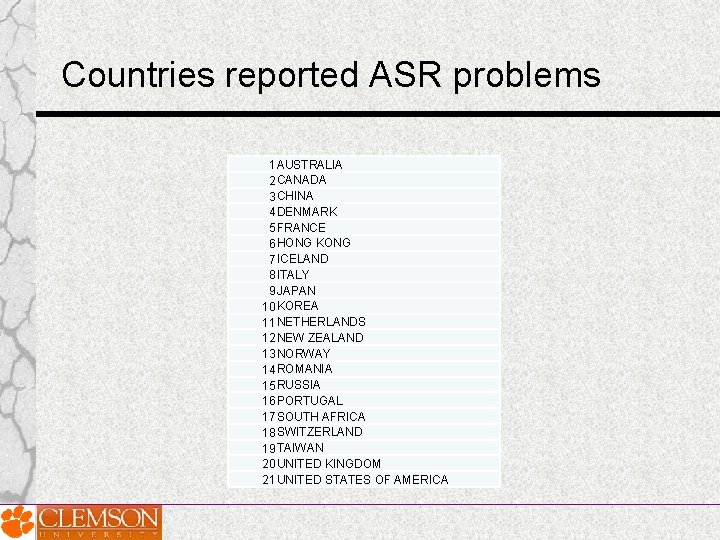
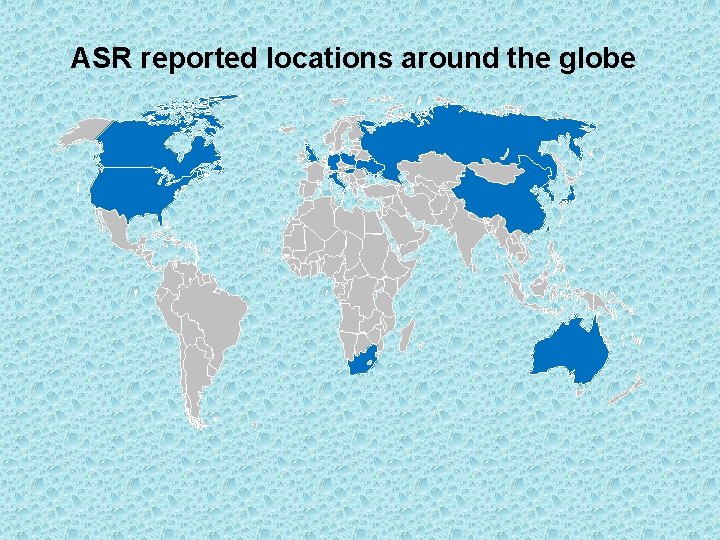
Countries reported ASR problems 1 AUSTRALIA 2 CANADA 3 CHINA 4 DENMARK 5 FRANCE 6 HONG KONG 7 ICELAND 8 ITALY 9 JAPAN 10 KOREA 11 NETHERLANDS 12 NEW ZEALAND 13 NORWAY 14 ROMANIA 15 RUSSIA 16 PORTUGAL 17 SOUTH AFRICA 18 SWITZERLAND 19 TAIWAN 20 UNITED KINGDOM 21 UNITED STATES OF AMERICA
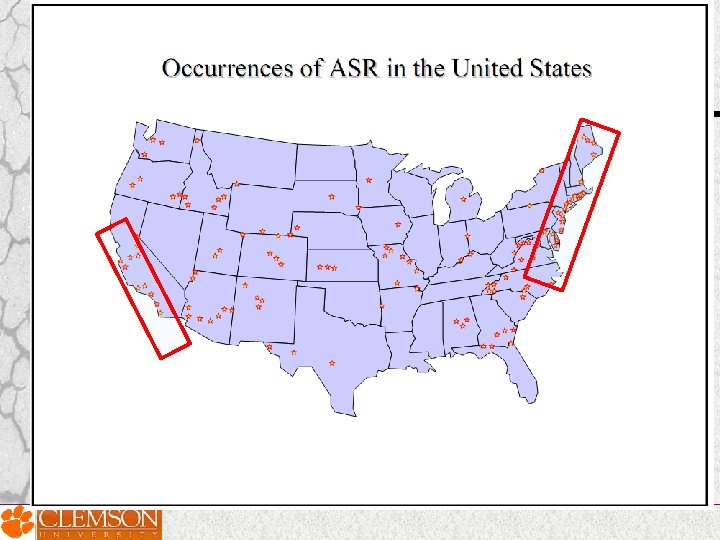
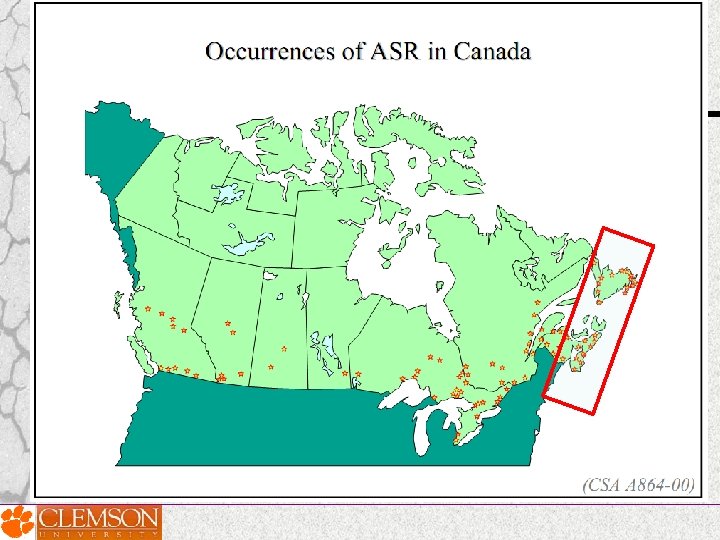
ASR reported locations around the globe
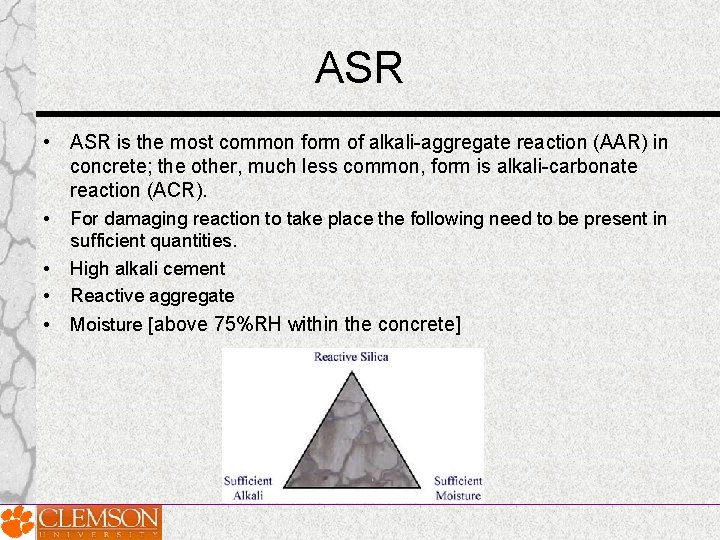
ASR • ASR is the most common form of alkali-aggregate reaction (AAR) in concrete; the other, much less common, form is alkali-carbonate reaction (ACR). • For damaging reaction to take place the following need to be present in • • • sufficient quantities. High alkali cement Reactive aggregate Moisture [above 75%RH within the concrete]
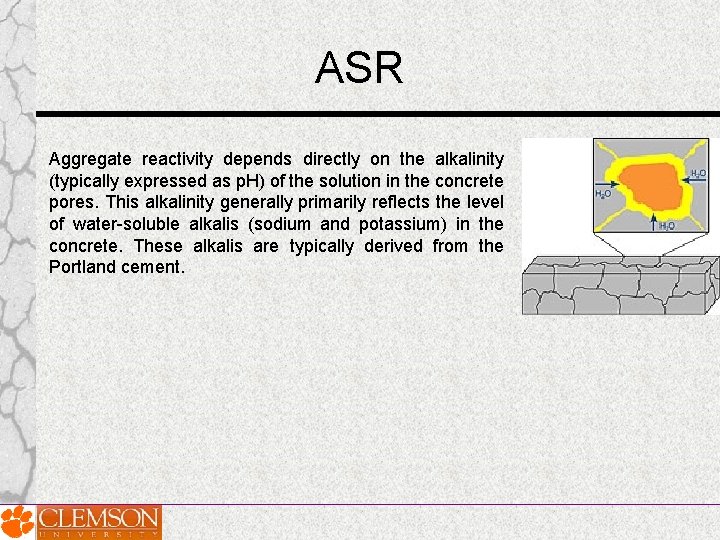
ASR Aggregate reactivity depends directly on the alkalinity (typically expressed as p. H) of the solution in the concrete pores. This alkalinity generally primarily reflects the level of water-soluble alkalis (sodium and potassium) in the concrete. These alkalis are typically derived from the Portland cement.
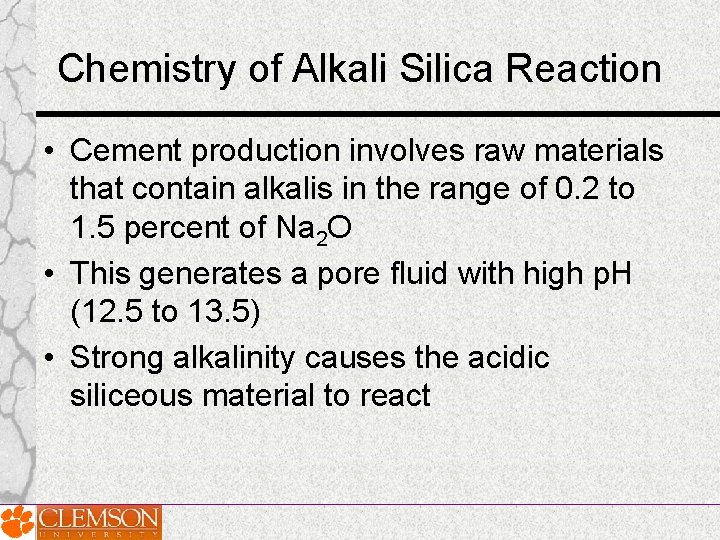
Chemistry of Alkali Silica Reaction • Cement production involves raw materials that contain alkalis in the range of 0. 2 to 1. 5 percent of Na 2 O • This generates a pore fluid with high p. H (12. 5 to 13. 5) • Strong alkalinity causes the acidic siliceous material to react
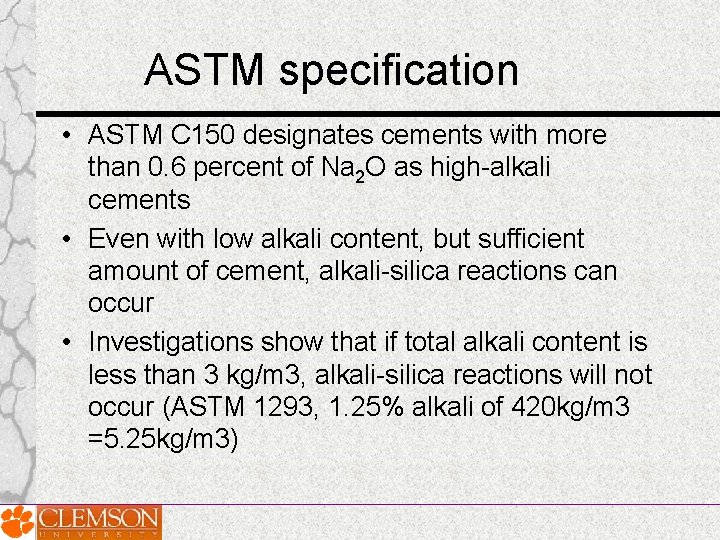
ASTM specification • ASTM C 150 designates cements with more than 0. 6 percent of Na 2 O as high-alkali cements • Even with low alkali content, but sufficient amount of cement, alkali-silica reactions can occur • Investigations show that if total alkali content is less than 3 kg/m 3, alkali-silica reactions will not occur (ASTM 1293, 1. 25% alkali of 420 kg/m 3 =5. 25 kg/m 3)
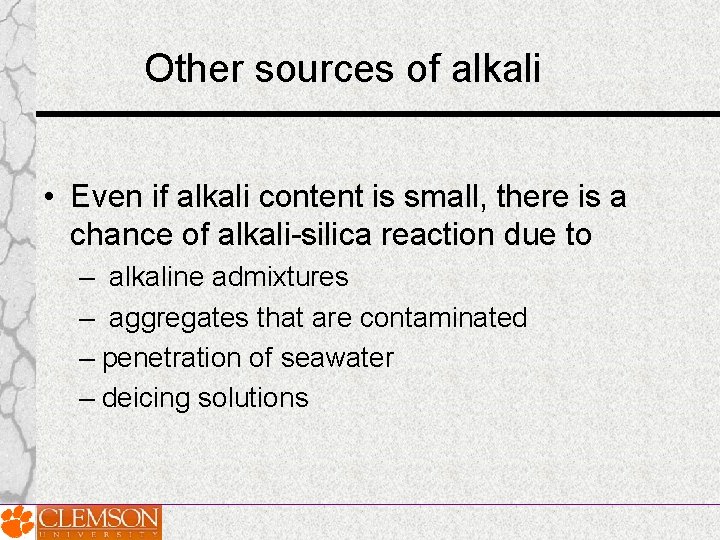
Other sources of alkali • Even if alkali content is small, there is a chance of alkali-silica reaction due to – alkaline admixtures – aggregates that are contaminated – penetration of seawater – deicing solutions
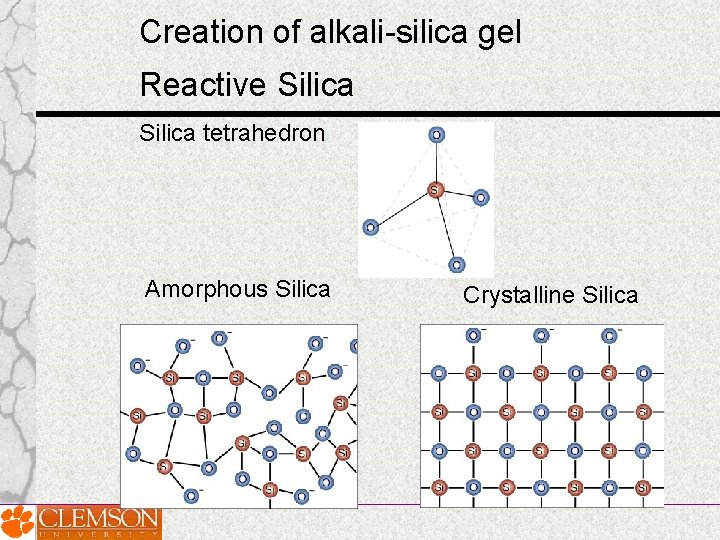
Creation of alkali-silica gel Reactive Silica tetrahedron: Amorphous Silica Crystalline Silica
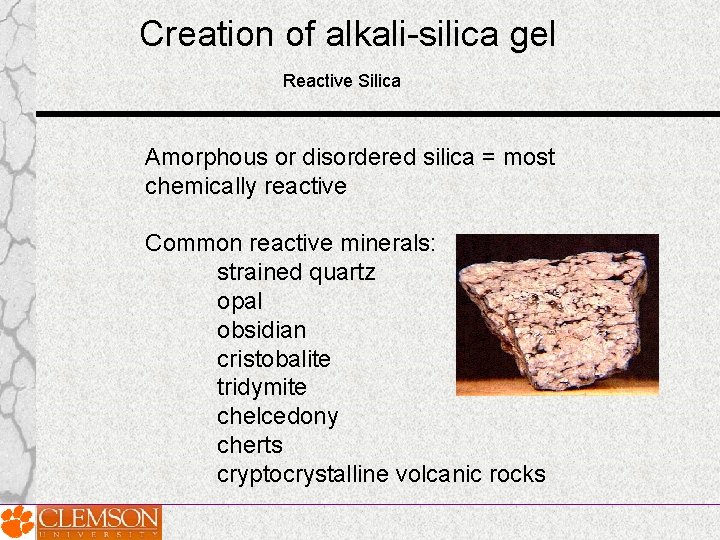
Creation of alkali-silica gel Reactive Silica Amorphous or disordered silica = most chemically reactive Common reactive minerals: strained quartz opal obsidian cristobalite tridymite chelcedony cherts cryptocrystalline volcanic rocks
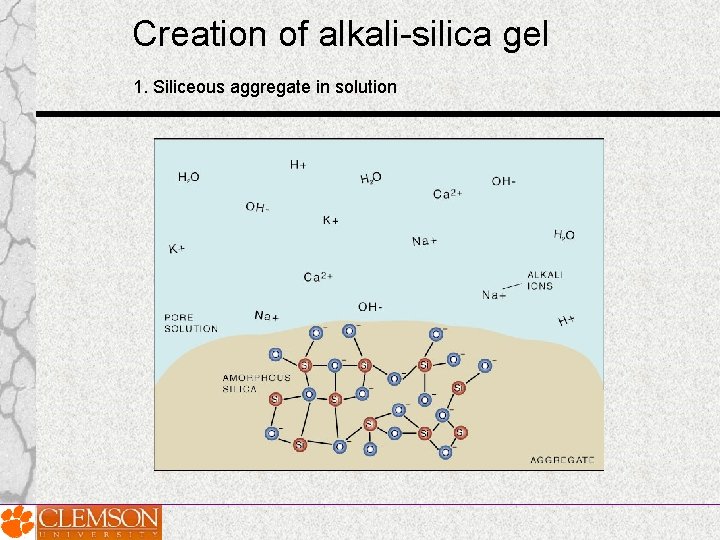
Creation of alkali-silica gel 1. Siliceous aggregate in solution
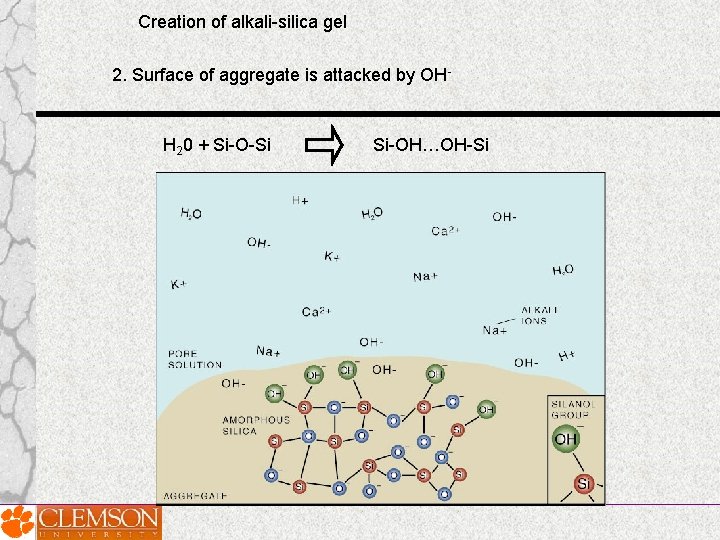
Creation of alkali-silica gel 2. Surface of aggregate is attacked by OH- H 20 + Si-O-Si Si-OH…OH-Si
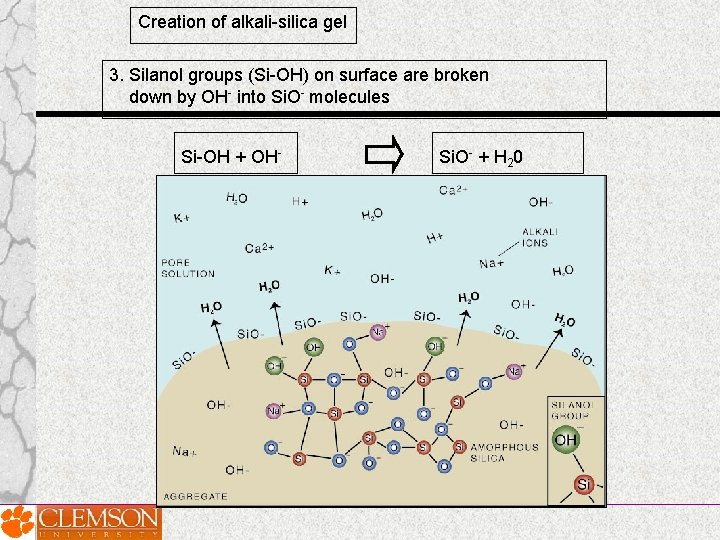
Creation of alkali-silica gel 3. Silanol groups (Si-OH) on surface are broken down by OH- into Si. O- molecules Si-OH + OH- Si. O- + H 20
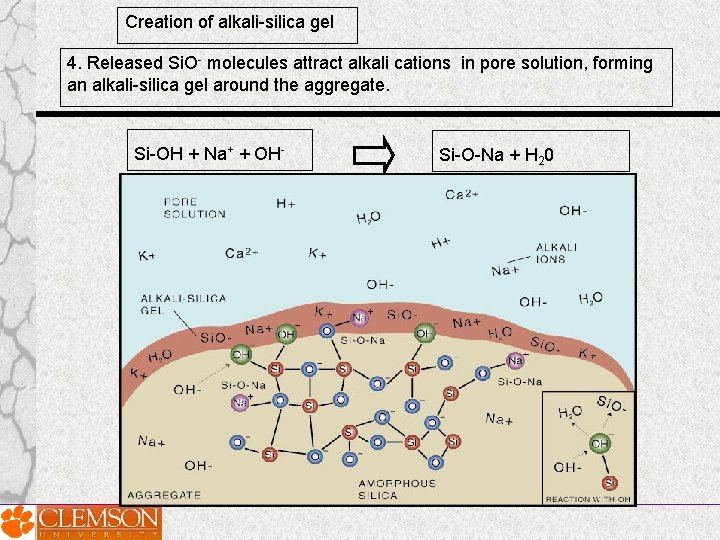
Creation of alkali-silica gel 4. Released Si. O- molecules attract alkali cations in pore solution, forming an alkali-silica gel around the aggregate. Si-OH + Na+ + OH- Si-O-Na + H 20
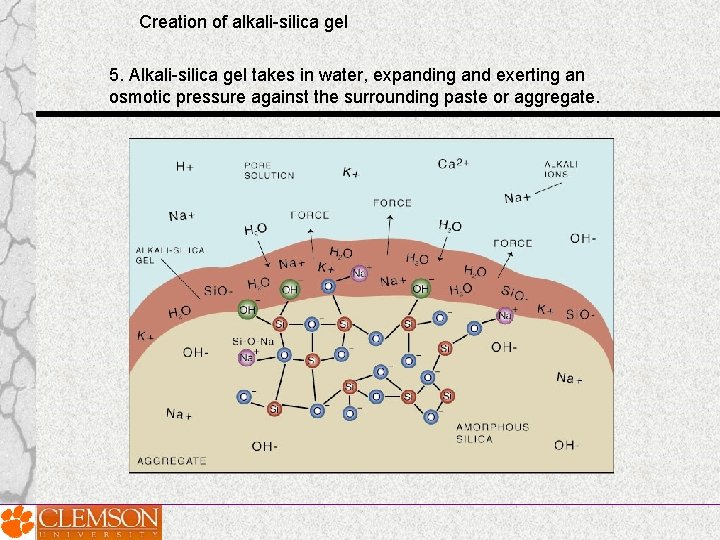
Creation of alkali-silica gel 5. Alkali-silica gel takes in water, expanding and exerting an osmotic pressure against the surrounding paste or aggregate.
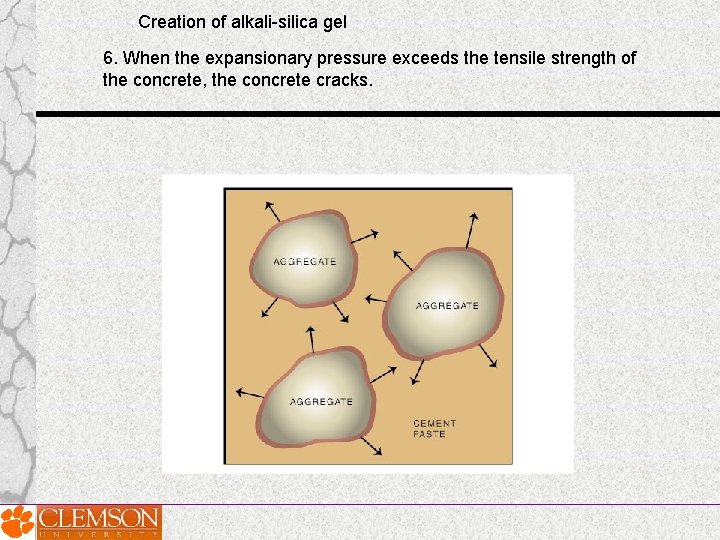
Creation of alkali-silica gel 6. When the expansionary pressure exceeds the tensile strength of the concrete, the concrete cracks.
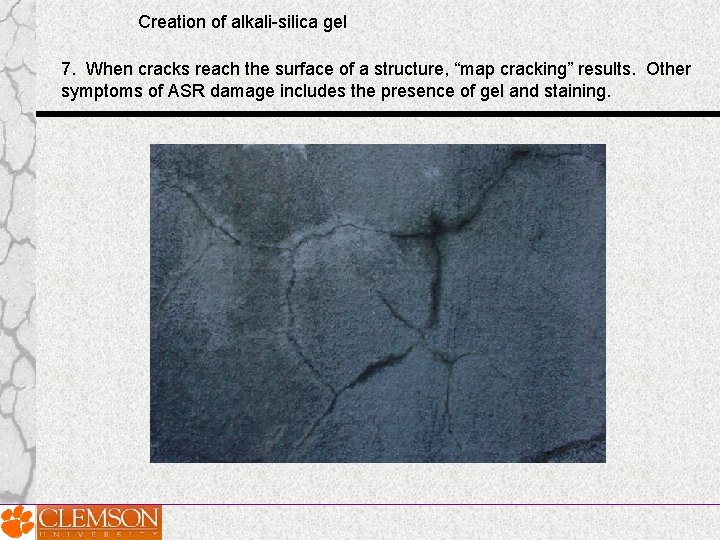
Creation of alkali-silica gel 7. When cracks reach the surface of a structure, “map cracking” results. Other symptoms of ASR damage includes the presence of gel and staining.
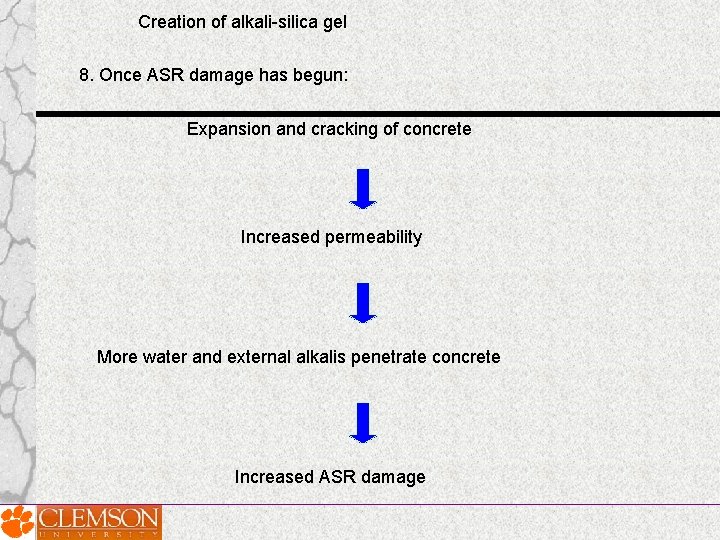
Creation of alkali-silica gel 8. Once ASR damage has begun: Expansion and cracking of concrete Increased permeability More water and external alkalis penetrate concrete Increased ASR damage
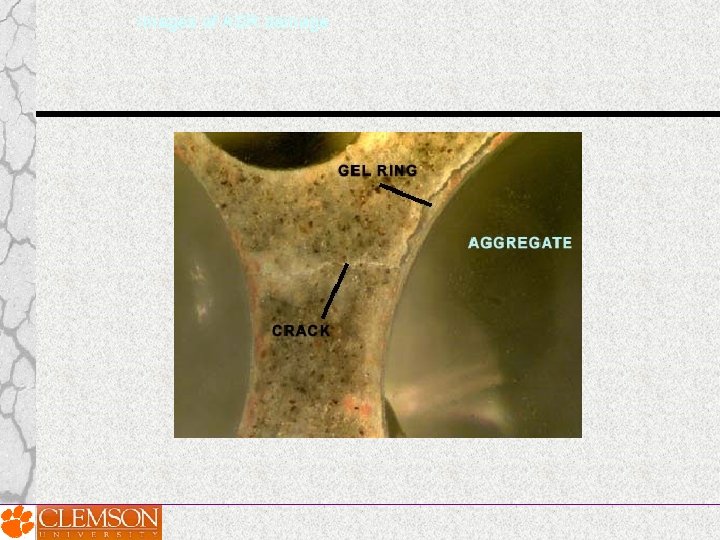
Images of ASR damage
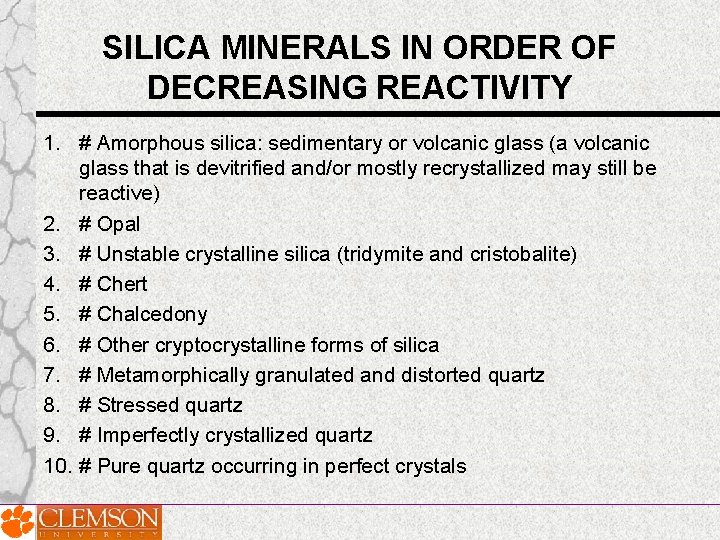
SILICA MINERALS IN ORDER OF DECREASING REACTIVITY 1. # Amorphous silica: sedimentary or volcanic glass (a volcanic glass that is devitrified and/or mostly recrystallized may still be reactive) 2. # Opal 3. # Unstable crystalline silica (tridymite and cristobalite) 4. # Chert 5. # Chalcedony 6. # Other cryptocrystalline forms of silica 7. # Metamorphically granulated and distorted quartz 8. # Stressed quartz 9. # Imperfectly crystallized quartz 10. # Pure quartz occurring in perfect crystals
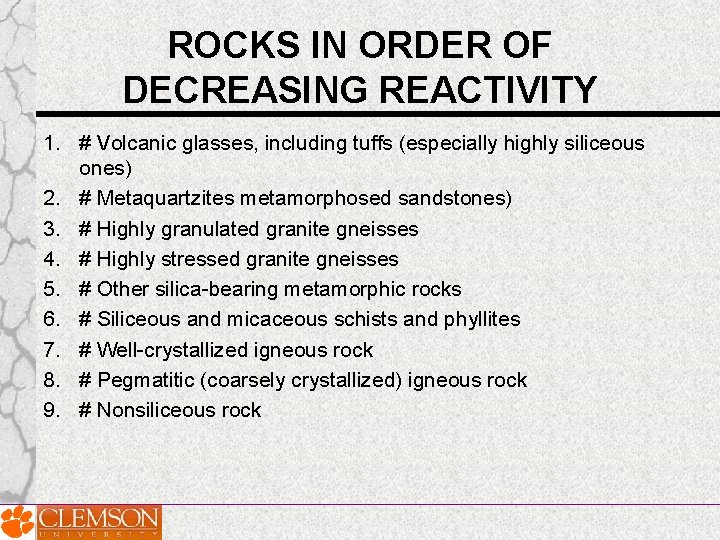
ROCKS IN ORDER OF DECREASING REACTIVITY 1. # Volcanic glasses, including tuffs (especially highly siliceous ones) 2. # Metaquartzites metamorphosed sandstones) 3. # Highly granulated granite gneisses 4. # Highly stressed granite gneisses 5. # Other silica-bearing metamorphic rocks 6. # Siliceous and micaceous schists and phyllites 7. # Well-crystallized igneous rock 8. # Pegmatitic (coarsely crystallized) igneous rock 9. # Nonsiliceous rock
ASR Research Time Line
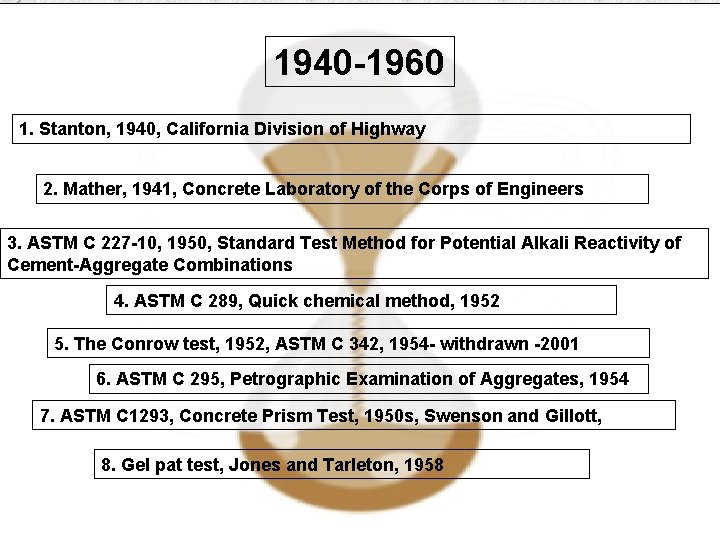
1940 -1960 1. Stanton, 1940, California Division of Highway 2. Mather, 1941, Concrete Laboratory of the Corps of Engineers 3. ASTM C 227 -10, 1950, Standard Test Method for Potential Alkali Reactivity of Cement-Aggregate Combinations 4. ASTM C 289, Quick chemical method, 1952 5. The Conrow test, 1952, ASTM C 342, 1954 - withdrawn -2001 6. ASTM C 295, Petrographic Examination of Aggregates, 1954 7. ASTM C 1293, Concrete Prism Test, 1950 s, Swenson and Gillott, 8. Gel pat test, Jones and Tarleton, 1958
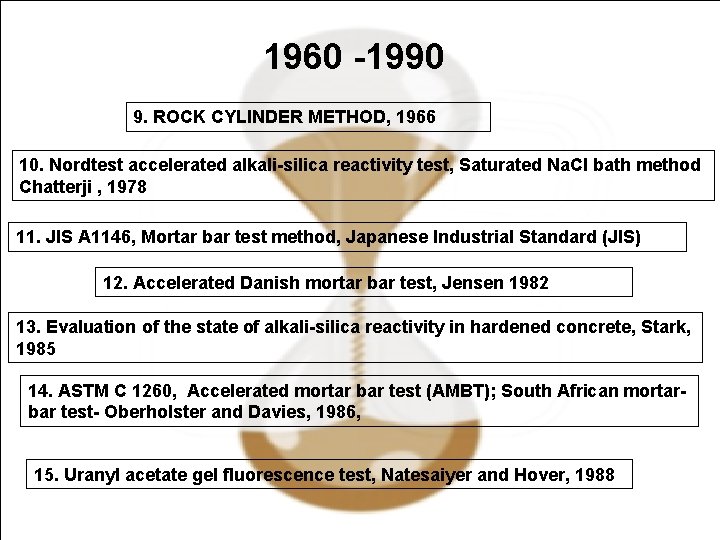
1960 -1990 9. ROCK CYLINDER METHOD, 1966 10. Nordtest accelerated alkali-silica reactivity test, Saturated Na. Cl bath method Chatterji , 1978 11. JIS A 1146, Mortar bar test method, Japanese Industrial Standard (JIS) 12. Accelerated Danish mortar bar test, Jensen 1982 13. Evaluation of the state of alkali-silica reactivity in hardened concrete, Stark, 1985 14. ASTM C 1260, Accelerated mortar bar test (AMBT); South African mortarbar test- Oberholster and Davies, 1986, 15. Uranyl acetate gel fluorescence test, Natesaiyer and Hover, 1988 April 14, 2009 39/38
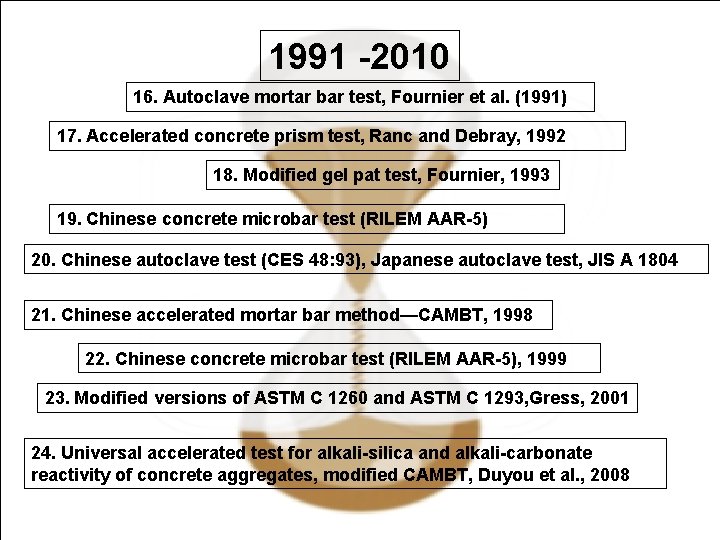
1991 -2010 16. Autoclave mortar bar test, Fournier et al. (1991) 17. Accelerated concrete prism test, Ranc and Debray, 1992 18. Modified gel pat test, Fournier, 1993 19. Chinese concrete microbar test (RILEM AAR-5) 20. Chinese autoclave test (CES 48: 93), Japanese autoclave test, JIS A 1804 21. Chinese accelerated mortar bar method—CAMBT, 1998 22. Chinese concrete microbar test (RILEM AAR-5), 1999 23. Modified versions of ASTM C 1260 and ASTM C 1293, Gress, 2001 24. Universal accelerated test for alkali-silica and alkali-carbonate reactivity of concrete aggregates, modified CAMBT, Duyou et al. , 2008 April 14, 2009 40/38
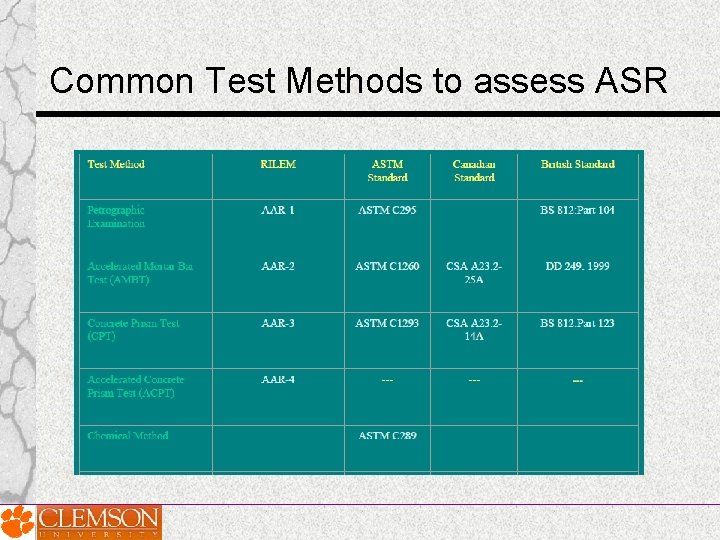
Common Test Methods to assess ASR
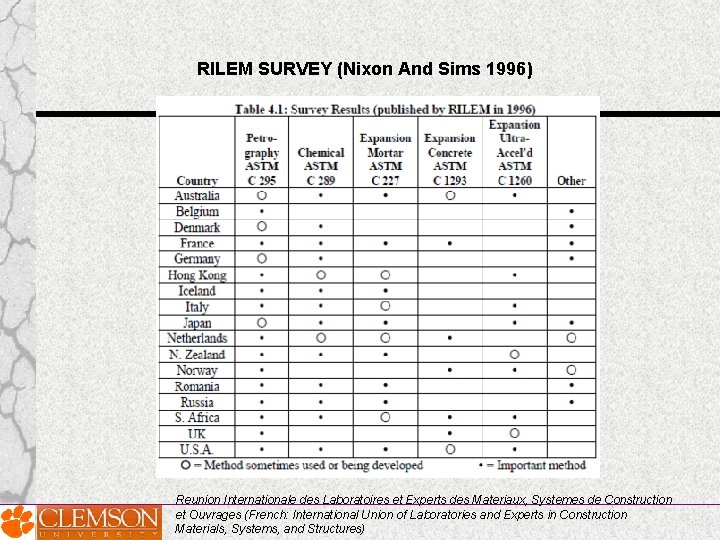
RILEM SURVEY (Nixon And Sims 1996) Reunion Internationale des Laboratoires et Experts des Materiaux, Systemes de Construction et Ouvrages (French: International Union of Laboratories and Experts in Construction Materials, Systems, and Structures)
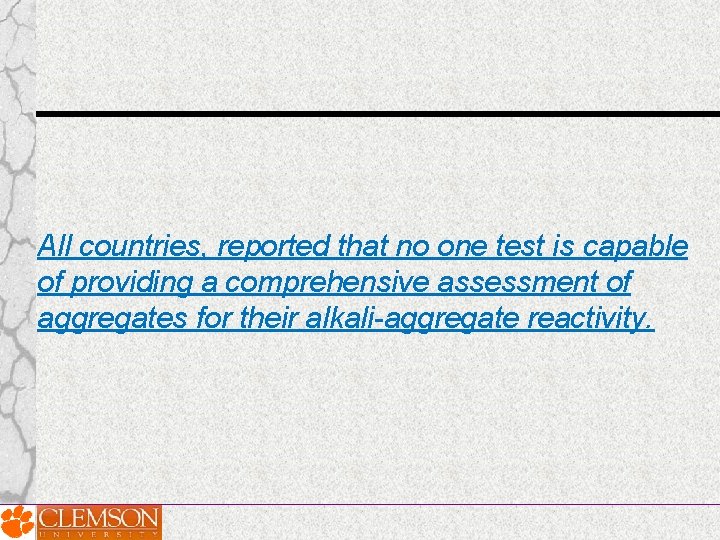
All countries, reported that no one test is capable of providing a comprehensive assessment of aggregates for their alkali-aggregate reactivity.
Part 2: Introduction to MCPT
Introduction to MCPT • MCPT has been developed to determine aggregate reactivity, with: - Similar reliability as ASTM C 1293 test but shorter test duration (56 days vs. 1 year) - Less aggressive exposure conditions than ASTM C 1260 test but better reliability
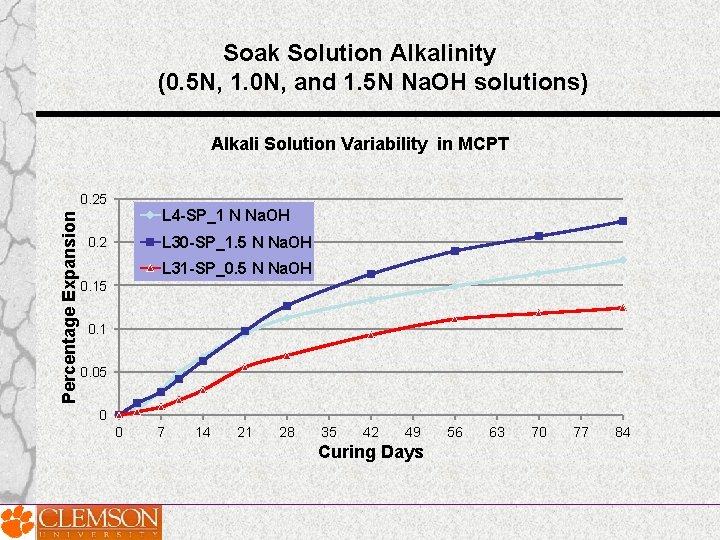
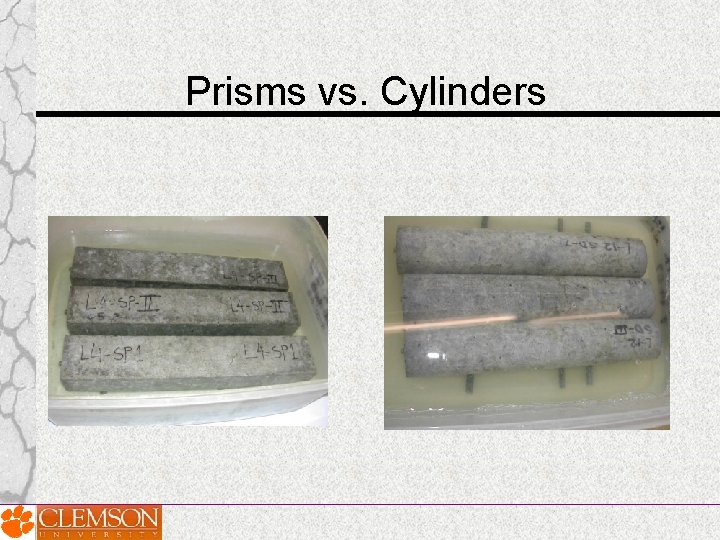
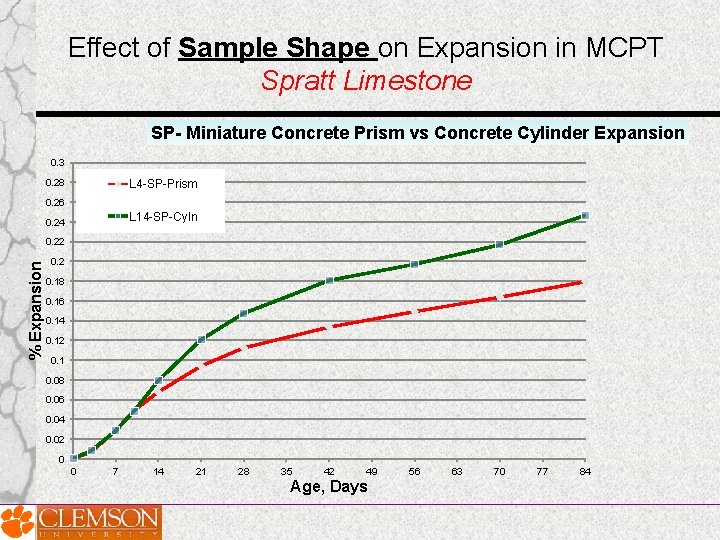
Variables • Variable test conditions – Storage environment • Exposure condition – 1 N Na. OH – 100% RH (Towel Wrapped) • Temperature – 38 C – 60 C – 80 C – Sample Shape • Prism (2” x 11. 25”) • Cylinder (2” dia x 11. 25” long) – Soak Solution Alkalinity (0. 5 N, 1. 0 N, and 1. 5 N Na. OH solutions)
Aggregates used in the Variables • Four known different reactive aggregates were used for these variables. These are as follows: – Spratt Limestone of Ontario, Canada, – New Mexico, Las Placitas-Rhyolite, – North Carolina, Gold Hill -Argillite, – South Dakota, Dell Rapids – Quartzite
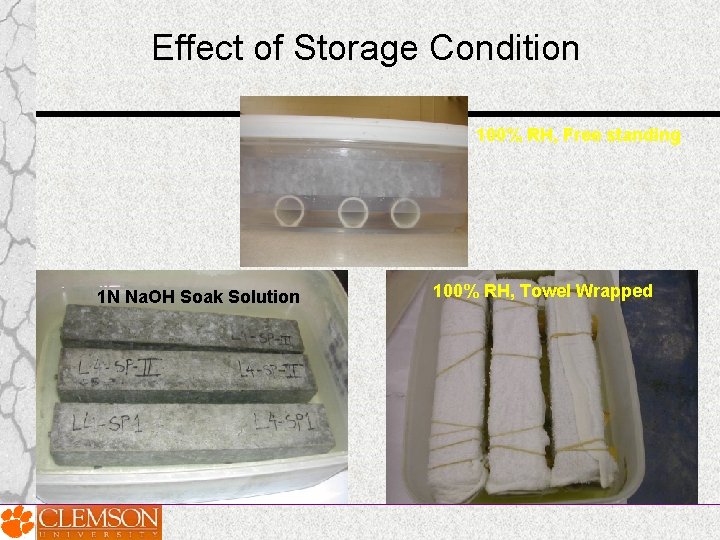
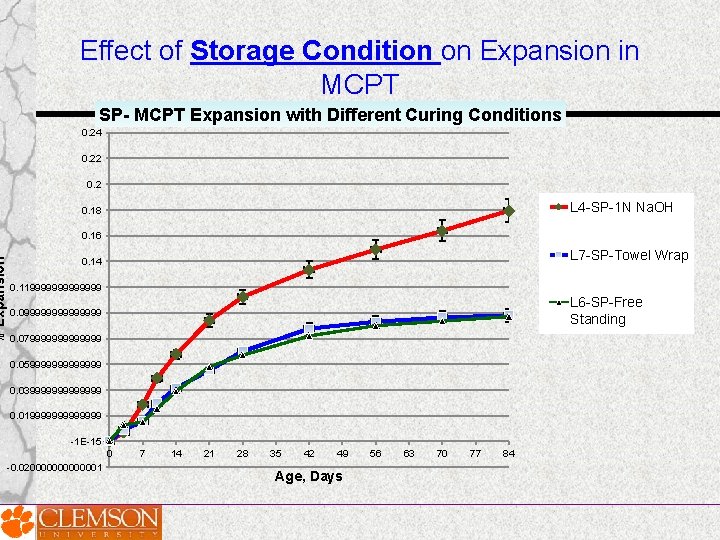
Effect of Storage Condition 100% RH, Free standing 1 N Na. OH Soak Solution 100% RH, Towel Wrapped
% Expansion Effect of Storage Condition on Expansion in MCPT SP- MCPT Expansion with Different Curing Conditions 0. 24 0. 22 0. 2 L 4 -SP-1 N Na. OH 0. 18 0. 16 L 7 -SP-Towel Wrap 0. 14 0. 119999999 L 6 -SP-Free Standing 0. 09999999 0. 079999999 0. 059999999 0. 039999999 0. 019999999 -1 E-15 0 -0. 020000001 7 14 21 28 35 42 49 Age, Days 56 63 70 77 84
Soak Solution Alkalinity (0. 5 N, 1. 0 N, and 1. 5 N Na. OH solutions) Alkali Solution Variability in MCPT Percentage Expansion 0. 25 L 4 -SP_1 N Na. OH L 30 -SP_1. 5 N Na. OH 0. 2 L 31 -SP_0. 5 N Na. OH 0. 15 0. 1 0. 05 0 0 7 14 21 28 35 42 49 Curing Days 56 63 70 77 84
Prisms vs. Cylinders
Effect of Sample Shape on Expansion in MCPT Spratt Limestone SP- Miniature Concrete Prism vs Concrete Cylinder Expansion 0. 3 0. 28 L 4 -SP-Prism 0. 26 L 14 -SP-Cyln 0. 24 % Expansion 0. 22 0. 18 0. 16 0. 14 0. 12 0. 1 0. 08 0. 06 0. 04 0. 02 0 0 7 14 21 28 35 42 49 Age, Days 56 63 70 77 84
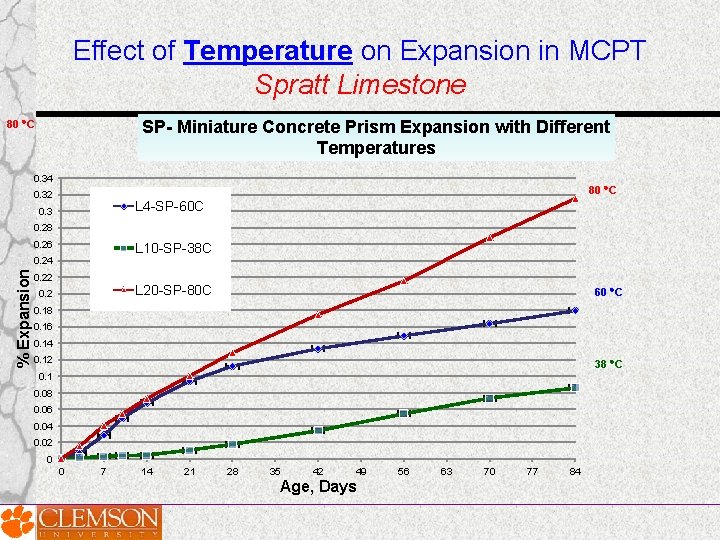
Effect of Temperature on Expansion in MCPT Spratt Limestone SP- Miniature Concrete Prism Expansion with Different Temperatures 80 C 0. 34 80 C 0. 32 L 4 -SP-60 C 0. 3 0. 28 0. 26 L 10 -SP-38 C % Expansion 0. 24 0. 22 L 20 -SP-80 C 0. 2 60 C 0. 18 0. 16 0. 14 0. 12 38 C 0. 1 0. 08 0. 06 0. 04 0. 02 0 0 7 14 21 28 35 42 49 Age, Days 56 63 70 77 84
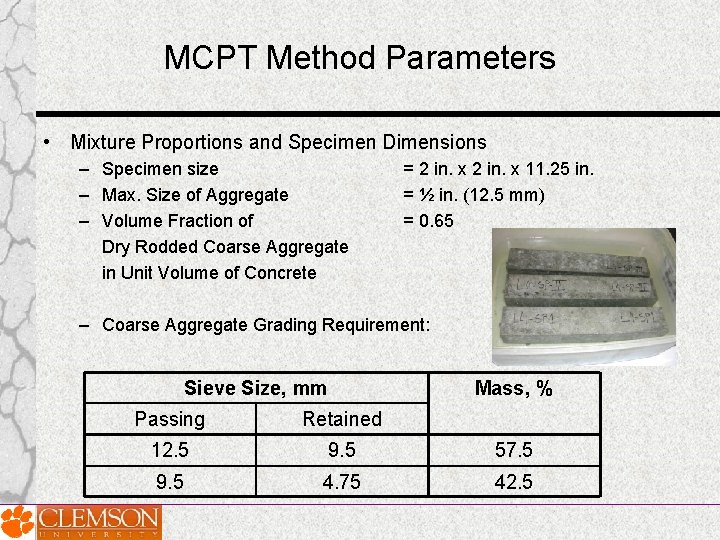
MCPT Method Parameters • Mixture Proportions and Specimen Dimensions – Specimen size – Max. Size of Aggregate – Volume Fraction of Dry Rodded Coarse Aggregate in Unit Volume of Concrete = 2 in. x 11. 25 in. = ½ in. (12. 5 mm) = 0. 65 – Coarse Aggregate Grading Requirement: Sieve Size, mm Mass, % Passing Retained 12. 5 9. 5 57. 5 9. 5 4. 75 42. 5
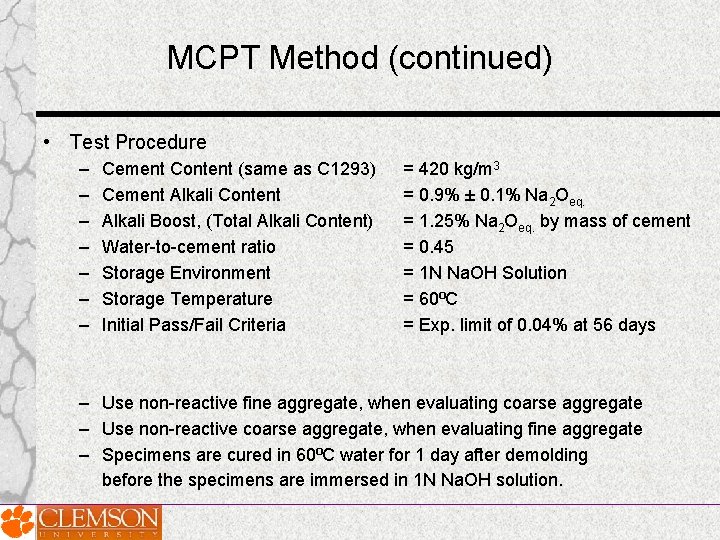
MCPT Method (continued) • Test Procedure – – – – Cement Content (same as C 1293) Cement Alkali Content Alkali Boost, (Total Alkali Content) Water-to-cement ratio Storage Environment Storage Temperature Initial Pass/Fail Criteria = 420 kg/m 3 = 0. 9% ± 0. 1% Na 2 Oeq. = 1. 25% Na 2 Oeq. by mass of cement = 0. 45 = 1 N Na. OH Solution = 60⁰C = Exp. limit of 0. 04% at 56 days – Use non-reactive fine aggregate, when evaluating coarse aggregate – Use non-reactive coarse aggregate, when evaluating fine aggregate – Specimens are cured in 60⁰C water for 1 day after demolding before the specimens are immersed in 1 N Na. OH solution.
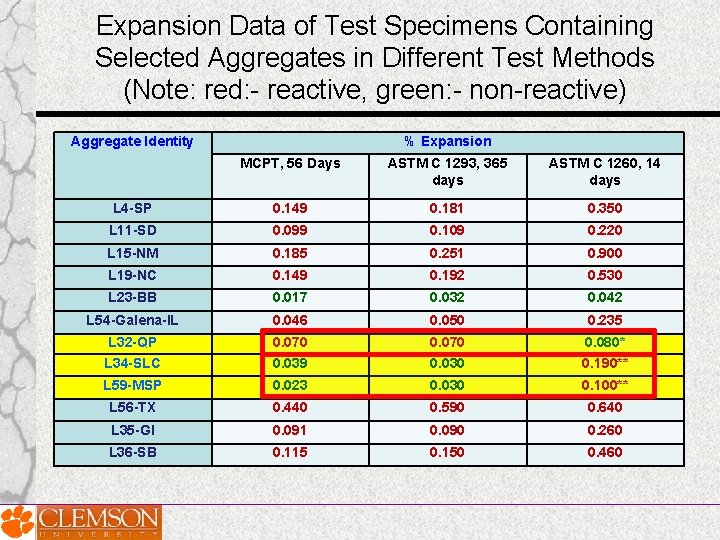
Expansion Data of Test Specimens Containing Selected Aggregates in Different Test Methods (Note: red: - reactive, green: - non-reactive) Aggregate Identity % Expansion MCPT, 56 Days ASTM C 1293, 365 days ASTM C 1260, 14 days L 4 -SP 0. 149 0. 181 0. 350 L 11 -SD 0. 099 0. 109 0. 220 L 15 -NM 0. 185 0. 251 0. 900 L 19 -NC 0. 149 0. 192 0. 530 L 23 -BB 0. 017 0. 032 0. 042 L 54 -Galena-IL 0. 046 0. 050 0. 235 L 32 -QP L 34 -SLC 0. 070 0. 039 0. 070 0. 030 0. 080* 0. 190** L 59 -MSP 0. 023 0. 030 0. 100** L 56 -TX 0. 440 0. 590 0. 640 L 35 -GI 0. 091 0. 090 0. 260 L 36 -SB 0. 115 0. 150 0. 460
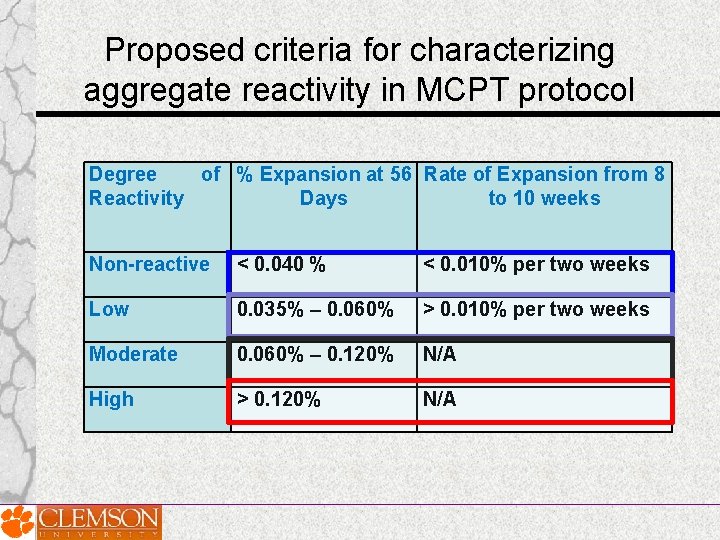
Proposed criteria for characterizing aggregate reactivity in MCPT protocol Degree of % Expansion at 56 Rate of Expansion from 8 Reactivity Days to 10 weeks Non-reactive < 0. 040 % < 0. 010% per two weeks Low 0. 035% – 0. 060% > 0. 010% per two weeks Moderate 0. 060% – 0. 120% N/A High > 0. 120% N/A
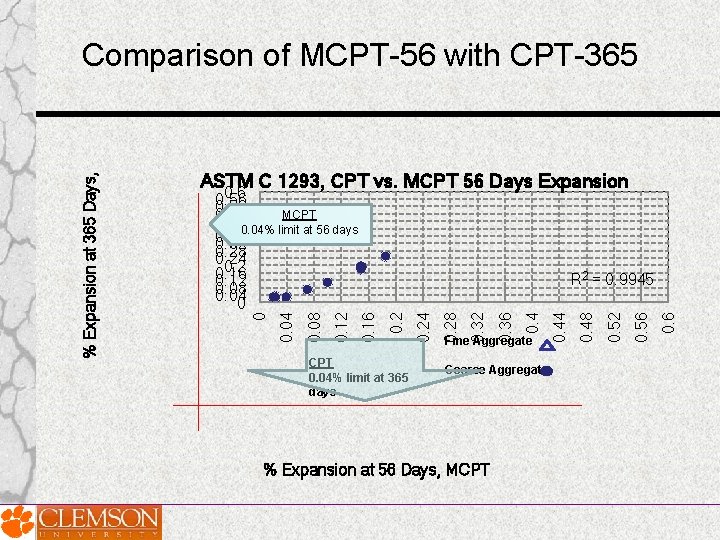
ASTM C 1293, CPT vs. MCPT 56 Days Expansion CPT 0. 04% limit at 365 days Coarse Aggregate % Expansion at 56 Days, MCPT 0. 6 0. 52 0. 48 Fine Aggregate 0. 44 0. 36 0. 32 0. 28 0. 24 0. 2 R 2 = 0. 9945 0. 16 0. 12 0. 08 0. 04 0. 6 0. 52 MCPT 0. 48 0. 44 0. 40. 04% limit at 56 days 0. 36 0. 32 0. 28 0. 24 0. 2 0. 16 0. 12 0. 08 0. 04 0 0 % Expansion at 365 Days, CPT Comparison of MCPT-56 with CPT-365
Part 3: Evaluation of Effectiveness of SCMs for ASR Mitigation in the MCPT
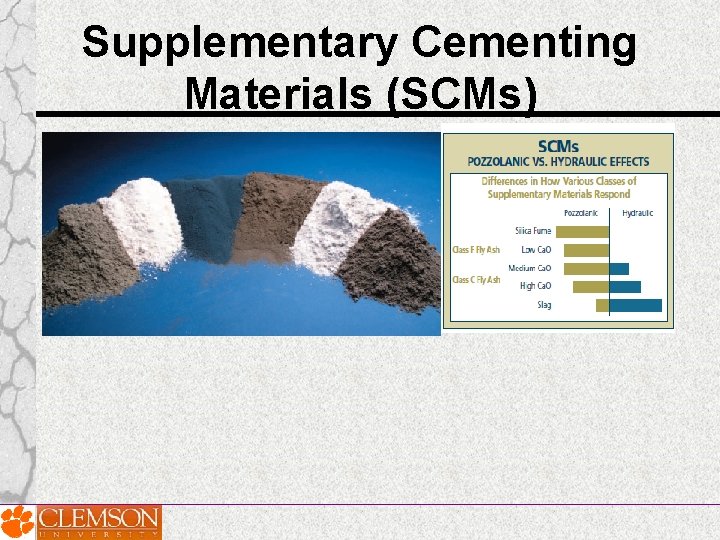
Supplementary Cementing Materials (SCMs)
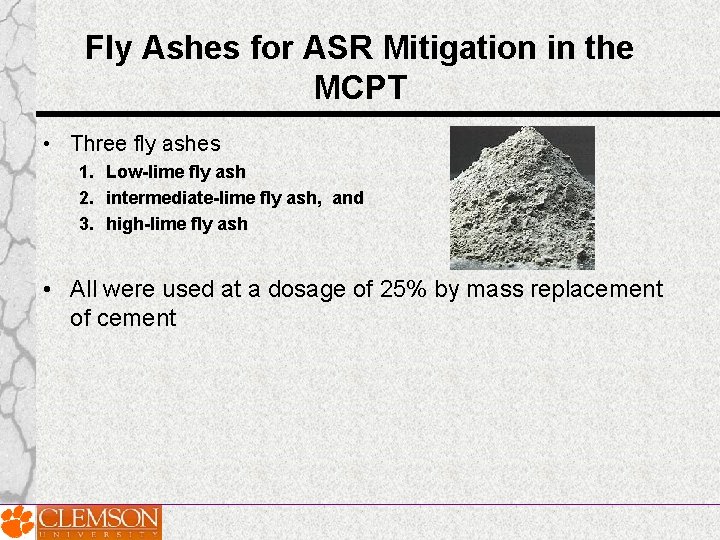
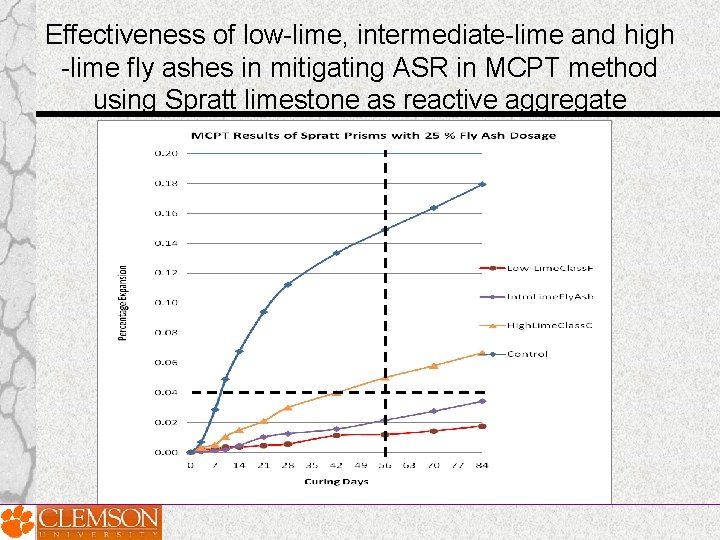
Fly Ashes for ASR Mitigation in the MCPT • Three fly ashes 1. Low-lime fly ash 2. intermediate-lime fly ash, and 3. high-lime fly ash • All were used at a dosage of 25% by mass replacement of cement
Effectiveness of low-lime, intermediate-lime and high -lime fly ashes in mitigating ASR in MCPT method using Spratt limestone as reactive aggregate
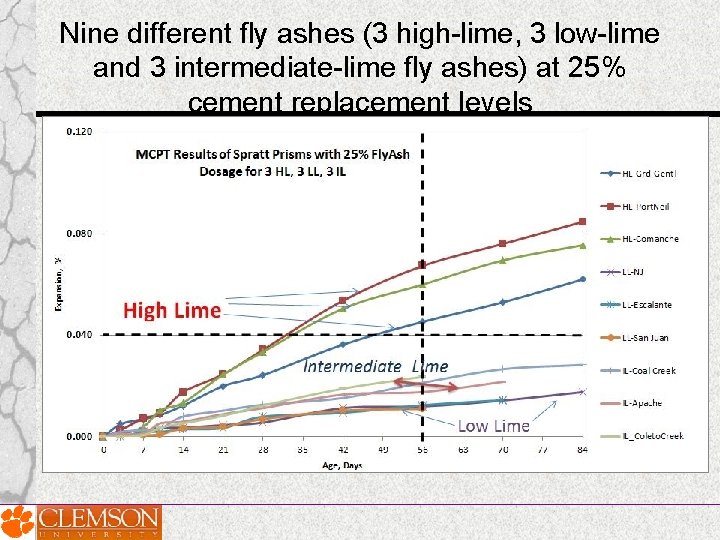
• Later nine different fly ashes (3 high-lime -HL, 3 low-lime-LL and 3 intermediate-lime- IL fly ashes) at 25% cement replacement levels were investigated
Nine different fly ashes (3 high-lime, 3 low-lime and 3 intermediate-lime fly ashes) at 25% cement replacement levels
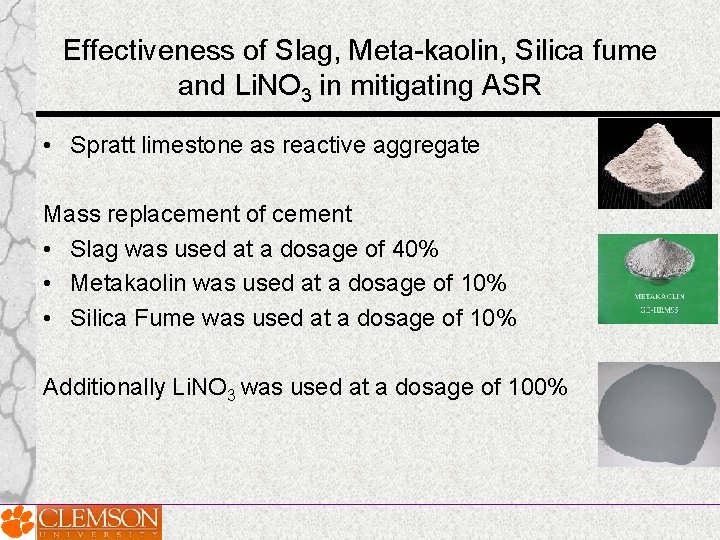
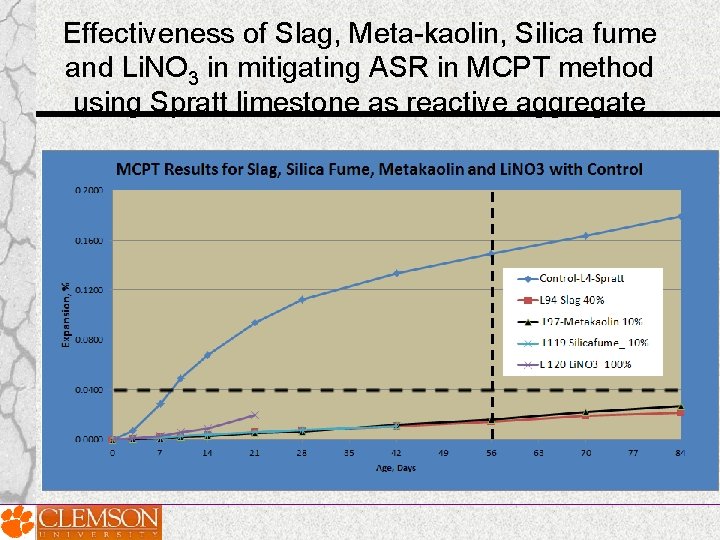
Effectiveness of Slag, Meta-kaolin, Silica fume and Li. NO 3 in mitigating ASR • Spratt limestone as reactive aggregate Mass replacement of cement • Slag was used at a dosage of 40% • Metakaolin was used at a dosage of 10% • Silica Fume was used at a dosage of 10% Additionally Li. NO 3 was used at a dosage of 100%
Effectiveness of Slag, Meta-kaolin, Silica fume and Li. NO 3 in mitigating ASR in MCPT method using Spratt limestone as reactive aggregate
Part 3: Effect of Prolonged Curing of Test Specimens on the Performance of Fly Ashes in MCPT Test Method
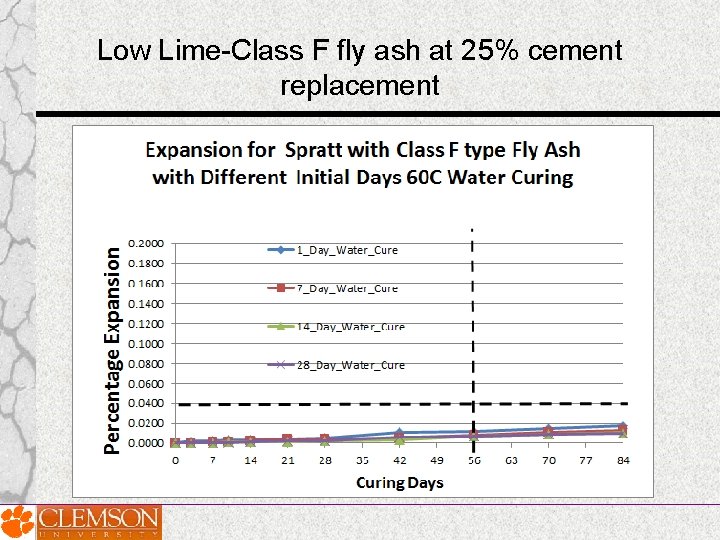
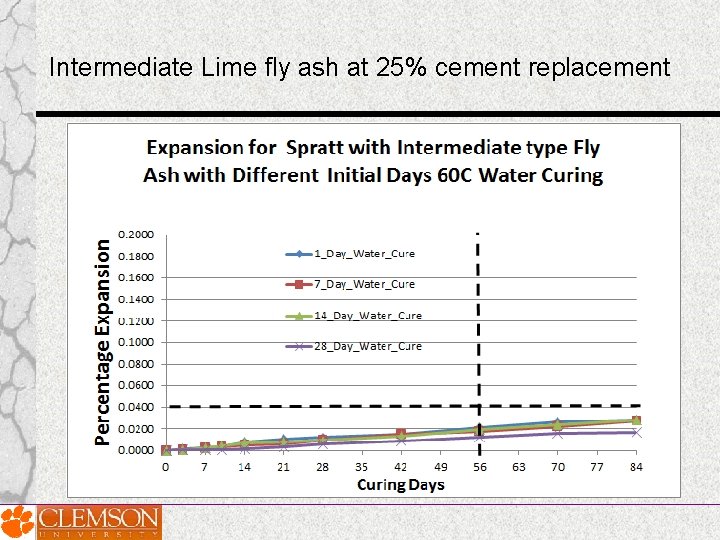
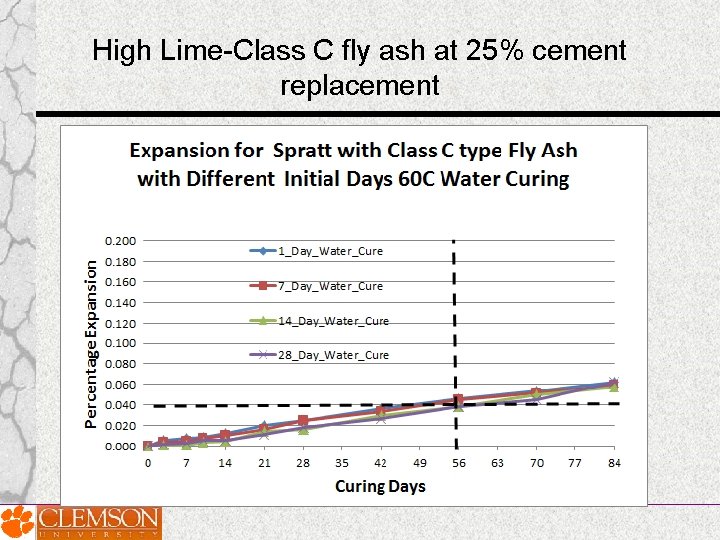
Effect of Prolonged Curing of Test Specimens on the Performance of Fly Ashes in MCPT Test Method • MCPT test specimens cured for varying lengths of time Days: 1 day, 7 days, 14 days and 28 days ; before they were exposed to 1 N Na. OH solution • Three fly ashes of significantly different chemical composition (Low-lime fly ash, intermediate-lime fly ash and high-lime fly ash) were selected.
Low Lime-Class F fly ash at 25% cement replacement
Intermediate Lime fly ash at 25% cement replacement
High Lime-Class C fly ash at 25% cement replacement
Conclusions • The findings from the extended initial curing of test specimens in MCPT showed that there is no added benefit in increasing the duration of initial curing in assessing the effectiveness of ASR mitigation measures such as supplementary cementitious materials. • Based on the results, MCPT appears to be a viable test method that can potentially replace both AMBT (ASTM C 1260) and CPT (ASTM C 1293) for routine ASR-related testing.
Future Steps • Develop a protocol for evaluation of Job Mixtures for Potential ASR
Questions? elatife@clemson. edu