
Evaluating Symbolism Allegory and Imagery Elements of Fiction
Evaluating Symbolism, Allegory, and Imagery Elements of Fiction Mrs. Kercher 8 th Grade Gifted
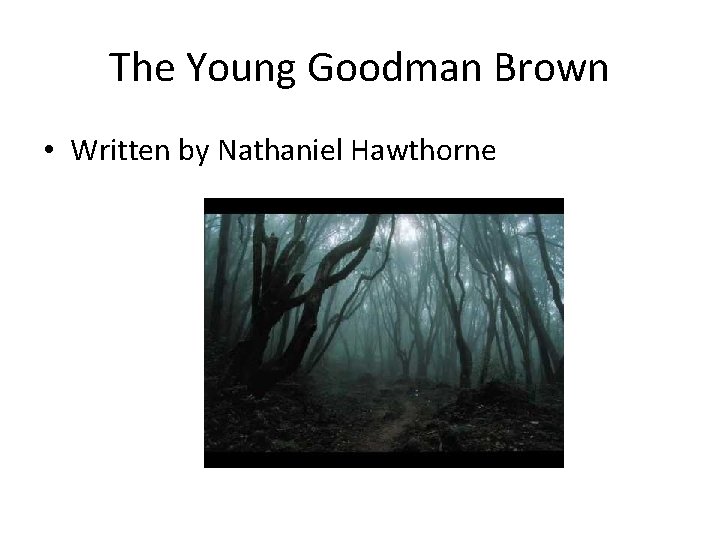
The Young Goodman Brown • Written by Nathaniel Hawthorne

What is an allegory? • A form of an extended metaphor, in which objects, persons, and actions in a narrative, are equated with the meanings that lie outside the narrative itself. • The underlying meaning has moral, social, religious, or political significance, and characters are often personifications of abstract ideas as charity, greed, or envy. • Thus it is a story with two meanings: literal and symbolic that relate to some aspect of its culture.
Evaluating an Allegory • In the story, Hawthorne focuses on the loss of innocence. • The story takes place in Salem during the witch crisis and religious disagreements. The allegory includes Christianity, Satan, and the devil. From the names of the characters to the pink ribbons in Faith’s hair, this is a religious allegory. The story centers on Brown’s journey into the woods to meet Satan. He is an innocent, yet he has made this appointment with the devil for some reason. 1. What might his reasons be? 2. How do the following symbols and elements add to it? - the snakelike staff - Faith’s voice - Faith’s pink ribbons - the basin of water - the black cloud

Character Descriptions • Provide a brief description for each character in the story: 1. Goodman Brown 2. Faith 3. The Old Man / Devil 4. Goody Cloyse 5. The Minister 6. Deacon Gookin
Evaluating Symbolism • Examine the symbolism behind the following objects in the story: 1. The Staff 2. Faith’s Pink Ribbons
Written Response 1. What does the first image of Faith present to the reader? 2. Identify other uses of imagery and symbolism that add to the development of the allegory. 3. Discuss how themes, the weakness of public morality and the inevitable loss of innocence, are depicted in the story.
Written Response 4. Hawthorne ensures that there is some ambiguity at the end of the story by suggesting that Goodman Brown’s experience in the forest could be a dream. How would the story have been different if it were made clear that Brown's experience actually did happen? What if it were made clear that it really was a dream?
Further Analysis 1. What is the significance of the ‘witch’ meeting? 2. Explain how Hawthorne develops the characters of Faith and the Minister. How does that impact the story? 3. What is theme of the allegory? Explain.
- Slides: 9