
Evaluating Subsurface Seawater Intakes for the Proposed Huntington
Evaluating Subsurface Seawater Intakes for the Proposed Huntington Beach Desalination Facility Ann Sturdivant Supervising Engineering Geologist Santa Ana Regional Water Quality Control Board Scott Seyfried Senior Engineering Geologist State Water Resources Control Board Santa Ana Regional Board Meeting March 22, 2019
Today’s Presentation § 2015 adoption of amendment to the Water Quality Control Plan for Ocean Waters of California (Ocean Plan) § Why subsurface intakes are preferable at desalination facilities § How typical groundwater wells function § Challenges in managing coastal groundwater aquifers § Different types of subsurface seawater intakes § Poseidon’s evaluation of the use of slant wells for the proposed Huntington Beach desalination facility § Staff’s conclusions about Poseidon’s evaluation of slant wells § Questions from the Board 2
Ocean Plan Desalination Amendment § The Ocean Plan requires the use of subsurface intakes for desalination facilities, unless the Regional Board determines that subsurface intakes are not feasible § Subsurface intakes are required in the Ocean Plan due to the lack of marine life mortality § Poseidon is proposing to use a surface intake system at its proposed Huntington Beach facility 3
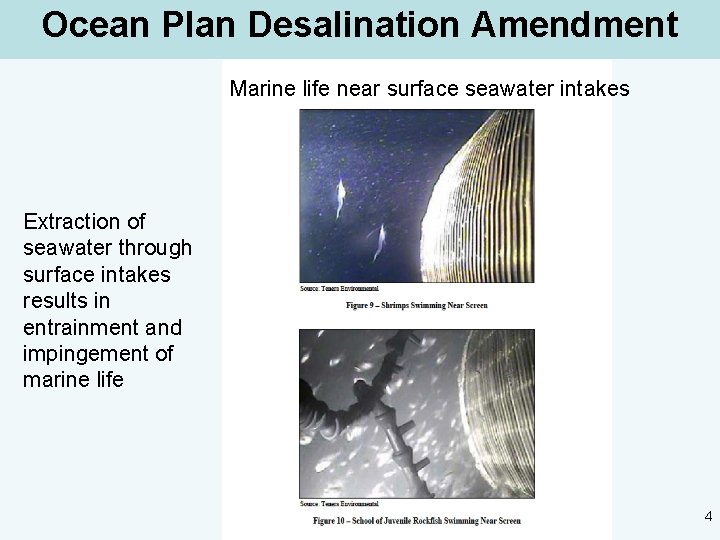
Ocean Plan Desalination Amendment Marine life near surface seawater intakes Extraction of seawater through surface intakes results in entrainment and impingement of marine life 4
Subsurface Intakes § Subsurface intakes extract marine water from beneath the sea floor § The water is naturally filtered as it moves through sediments • Provide a natural barrier to protect organisms • Eliminate impingement and entrainment, which are the sources of mortality encountered with surface intakes • Can filter out contaminants (silt, oil, grease) and organic matter, resulting in reduced above ground treatment 5
Subsurface Intakes § § Vertical wells Slant wells Seawater infiltration galleries Water tunnel intake system 6
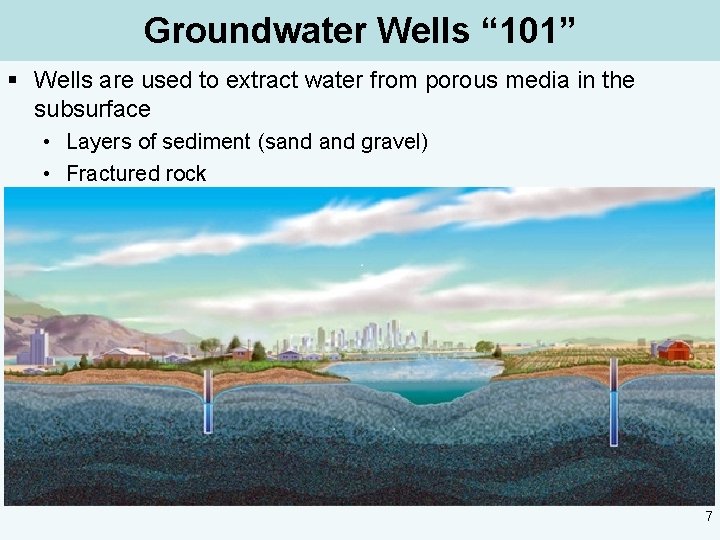
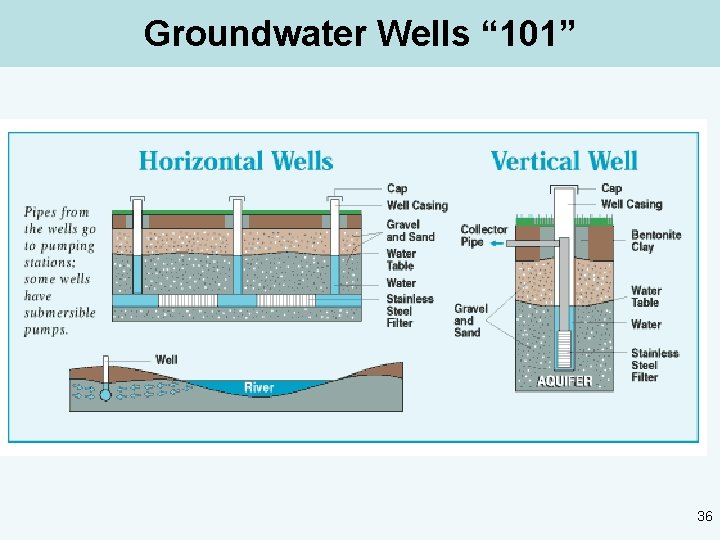
Groundwater Wells “ 101” § Wells are used to extract water from porous media in the subsurface • Layers of sediment (sand gravel) • Fractured rock 7
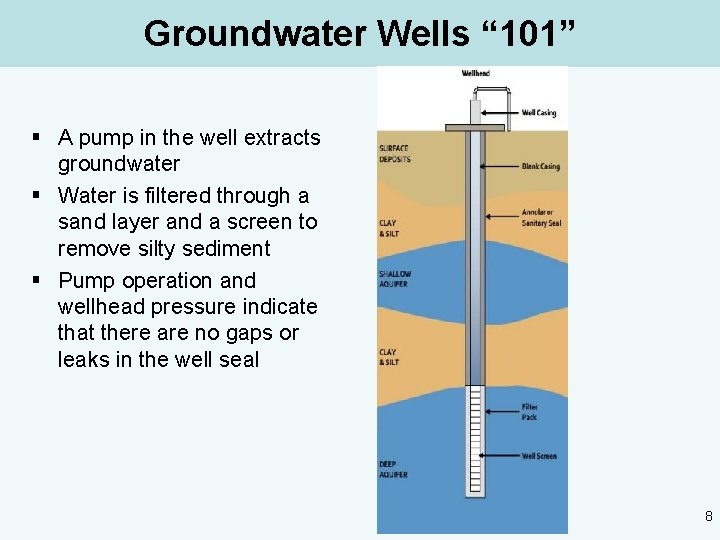
Groundwater Wells “ 101” § A pump in the well extracts groundwater § Water is filtered through a sand layer and a screen to remove silty sediment § Pump operation and wellhead pressure indicate that there are no gaps or leaks in the well seal 8
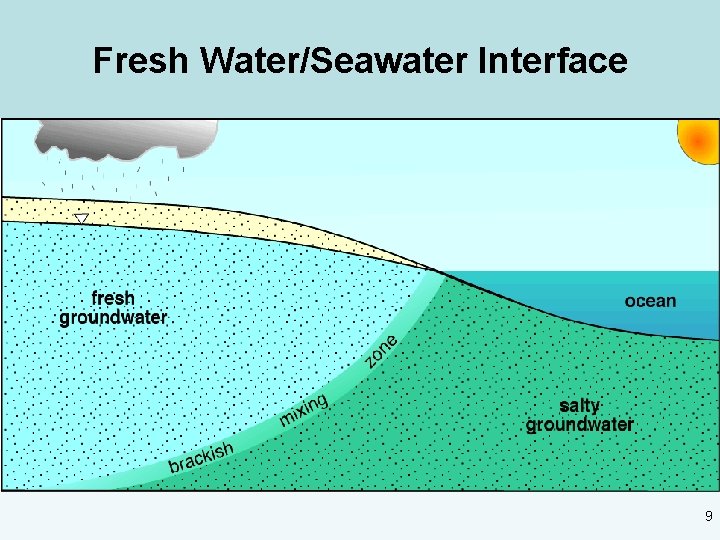
Fresh Water/Seawater Interface 9
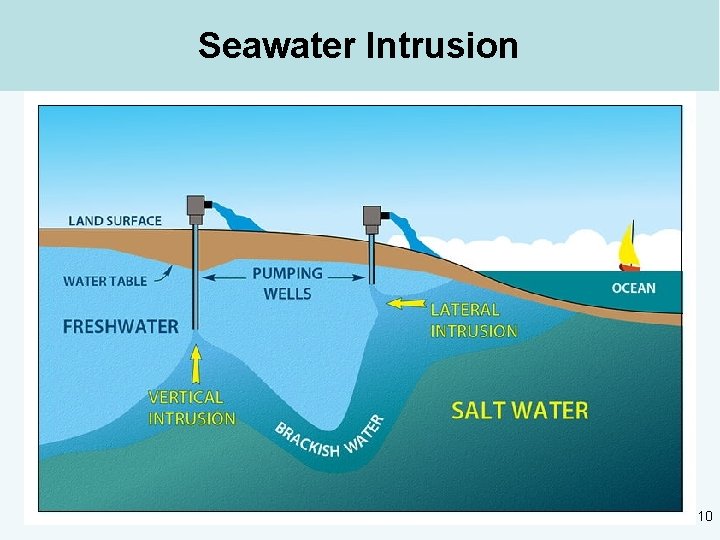
Seawater Intrusion 10
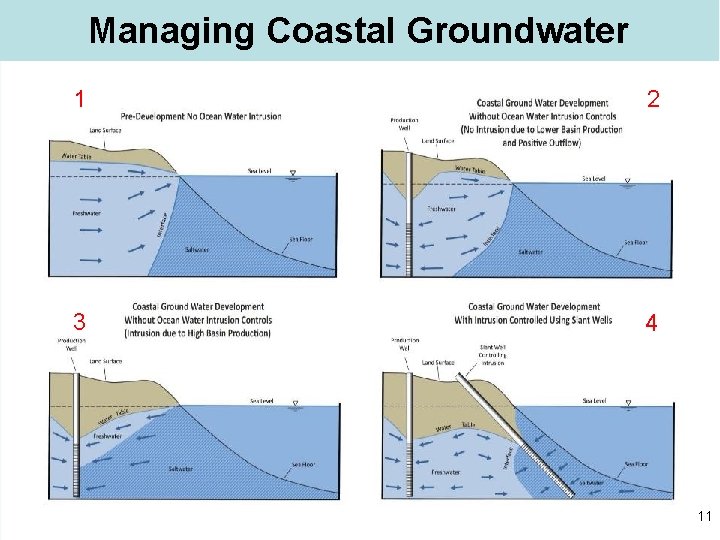
Managing Coastal Groundwater 1 2 3 4 11
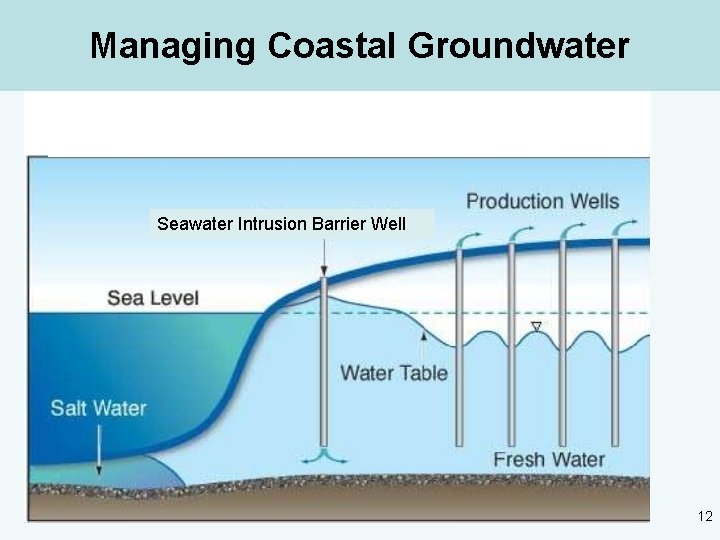
Managing Coastal Groundwater Seawater Intrusion Barrier Well 12
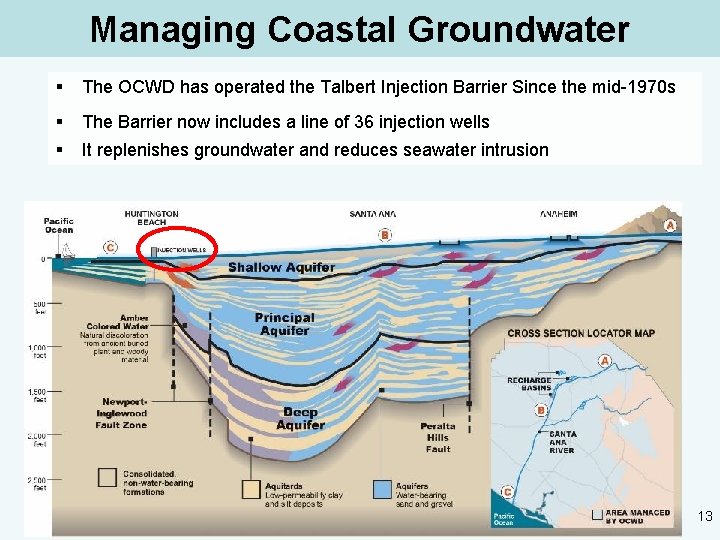
Managing Coastal Groundwater § The OCWD has operated the Talbert Injection Barrier Since the mid-1970 s § § The Barrier now includes a line of 36 injection wells It replenishes groundwater and reduces seawater intrusion 13
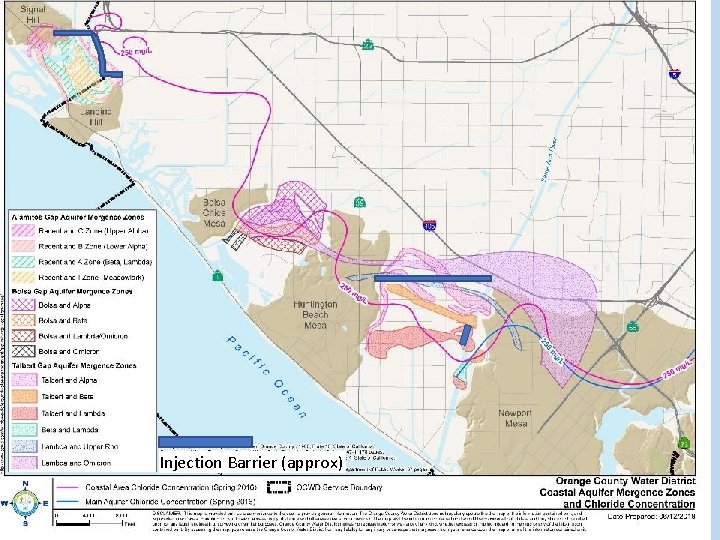
Injection Barrier (approx)
Subsurface Intakes § Poseidon is proposing a surface intake system. The Ocean Plan requires the use of subsurface intakes for desalination facilities, unless the Regional Board determines that subsurface intakes are not feasible. § Poseidon evaluated various types of subsurface intakes for the proposed Huntington Beach site • • Vertical wells Slant wells Seawater infiltration galleries Water tunnel intake system 15
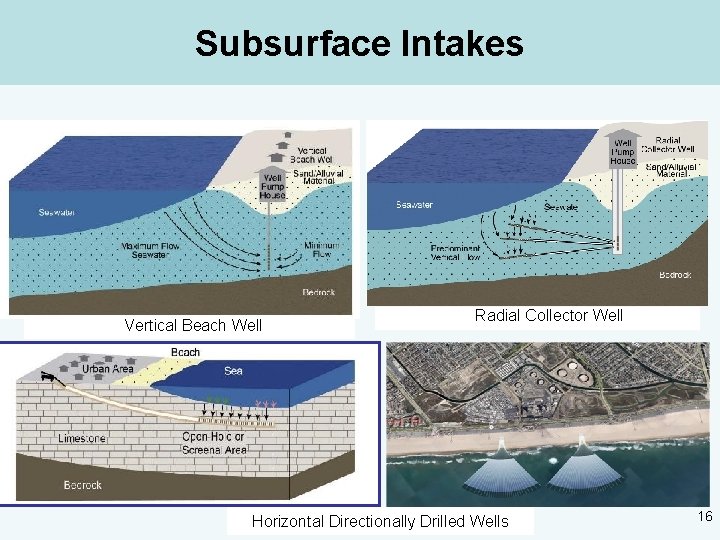
Subsurface Intakes Vertical Beach Well Radial Collector Well Horizontal Directionally Drilled Wells 16
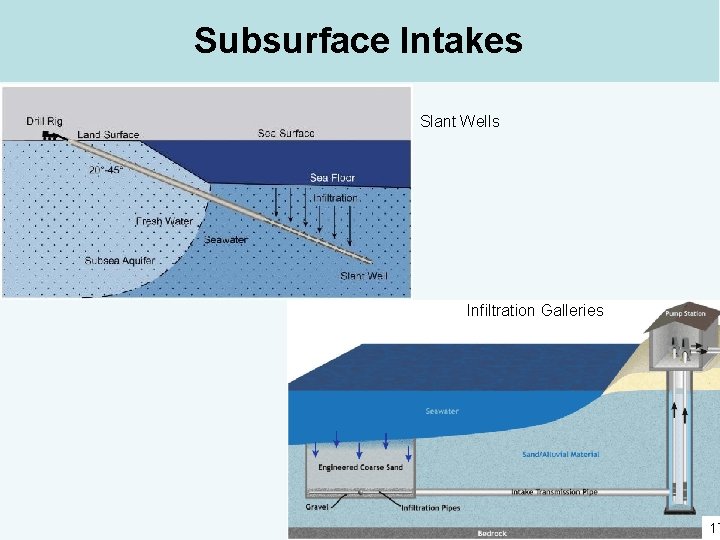
Subsurface Intakes Slant Wells Infiltration Galleries 17
Subsurface Intakes § Potential Challenges • • • Interference with interior aquifers Negative impacts to overlying sensitive wetland habitats Subsidence of land from drawdown Capture/interference with nearby contaminated groundwater Limited capacity of the aquifer compared with plant demand Access to shoreline Large footprint if many wells are needed Anticipated beach erosion Lack of precedent for use at large intake scales 18
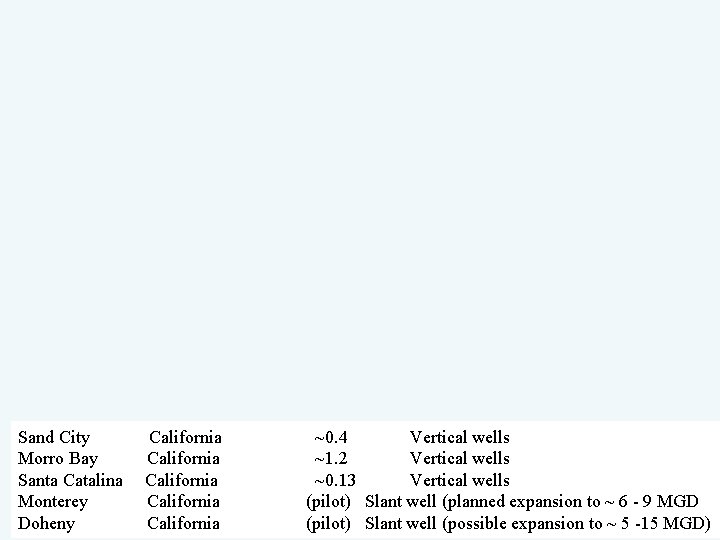
Sand City Morro Bay Santa Catalina Monterey 19 Doheny California California ~0. 4 Vertical wells ~1. 2 Vertical wells ~0. 13 Vertical wells (pilot) Slant well (planned expansion to ~Desalination 6 - 9 MGD Source: Water Report. September 2014. Vol. 50, No. 33. (pilot) Slant well (possible expansion to ~ 5 -15 MGD)
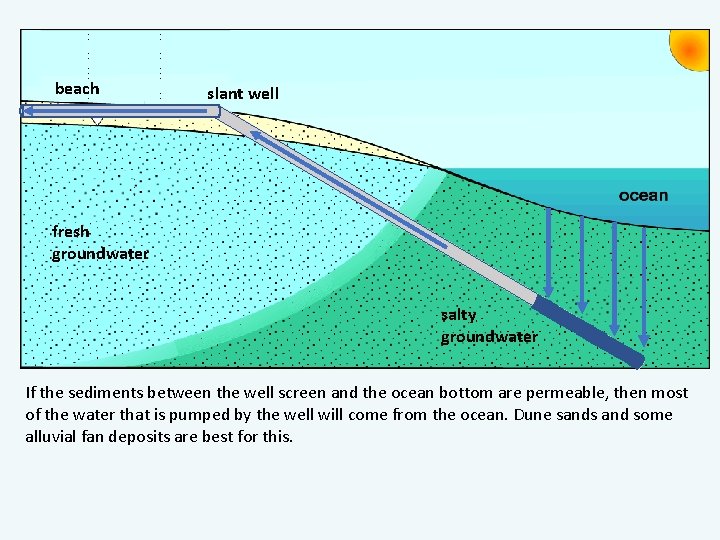
beach slant well fresh groundwater salty groundwater If the sediments between the well screen and the ocean bottom are permeable, then most of the water that is pumped by the well will come from the ocean. Dune sands and some alluvial fan deposits are best for this.
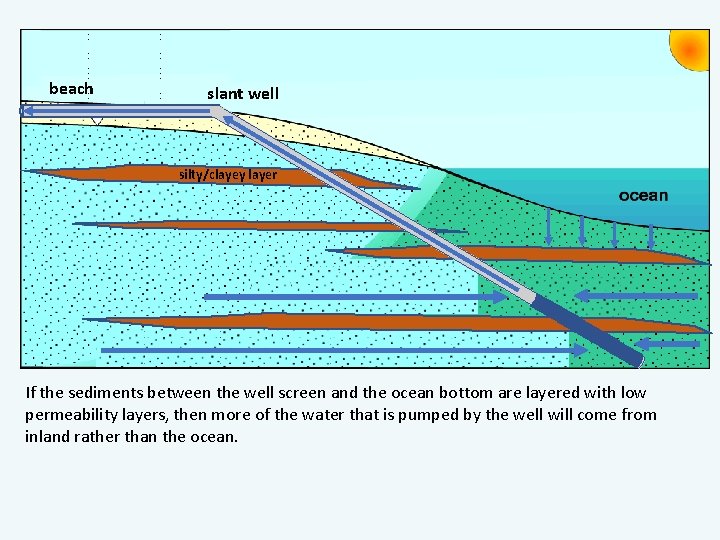
beach slant well silty/clayey layer If the sediments between the well screen and the ocean bottom are layered with low permeability layers, then more of the water that is pumped by the well will come from inland rather than the ocean.
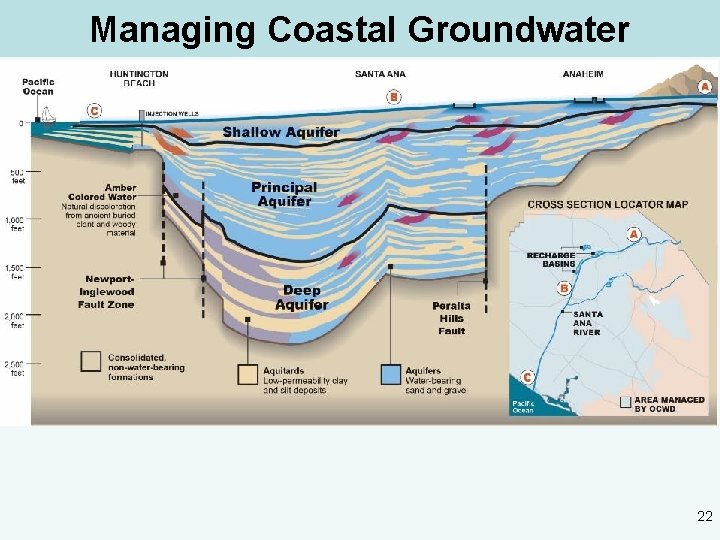
Managing Coastal Groundwater 22
Slant Well Evaluation § Based on analysis of the different options, slant wells offered the best potential for subsurface intake in Huntington Beach coastal area § Poseidon evaluated a configuration of 40 slant wells with an extraction rate of 107 million gallons per day § A groundwater flow model was used to simulate potential impacts associated with use of slant well intakes. § The modeling was done in lieu of installing a test well at the preferred site 24
Slant Well Evaluation 40 -well configuration 107 MGD 25
Slant Well Evaluation § Model predicted that slant well operation would adversely impact the wetlands, draw treated injected fresh water from the inland aquifer, and interfere with the OCWD injection barrier. § Staff requested that Poseidon evaluate different slant well angles, length of well casing, screen positions and pumping rates § Staff also requested that other potential intake sites near the proposed project site be evaluated in accordance with the Ocean Plan. 26
Slant Well Evaluation § Model still predicted that slant well operation would adversely impact the wetlands and draw fresh water from the inland aquifer. Modeling of other sites resulted in similar findings § Based on those results, staff concluded that subsurface intakes are not technically feasible for this project as a sole intake source for 107 MGD § The Regional Board must also determine whether subsurface intakes are feasible for a reasonable range of alternative intake design capacities 27
Slant Well Evaluation § Staff requested an evaluation to assess the feasibility of a combined surface/subsurface intake system for the proposed Huntington Beach site § OCWD indicated that the most water that they could lose to the subsurface system without disrupting the intrusion barrier is 1, 000 Acre Feet Per Year (about 1 million gallons per day) (May 2018). § Poseidon used OCWD’s data to evaluate use of fewer slant wells for extracting seawater without impacting the Groundwater Replenishment System 28
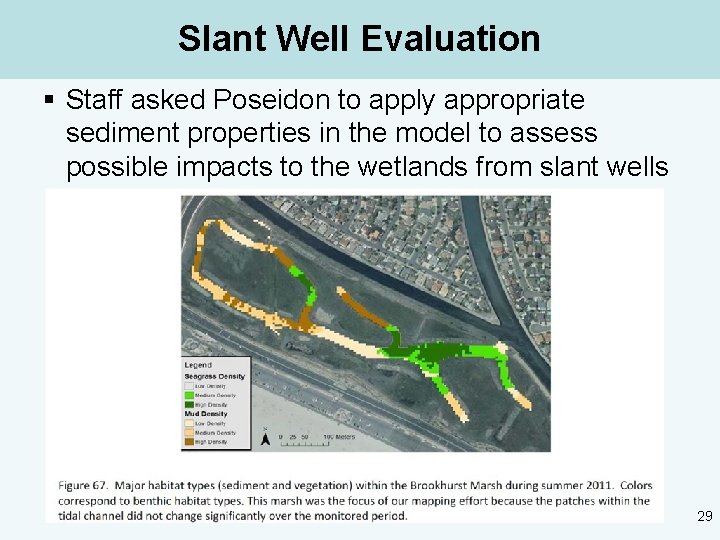
Slant Well Evaluation § Staff asked Poseidon to apply appropriate sediment properties in the model to assess possible impacts to the wetlands from slant wells 29
Slant Well Evaluation § Poseidon evaluated a three-well configuration of slant wells § Pumping rates were adjusted to stay within OCWD’s limit for loss of injected water § Model included revised soil characteristics specific for wetlands and estuarine areas 30
Slant Well Evaluation Three-well configuration 31
Combined Intake Evaluation § Three slant wells extracting 1 MGD in a combined intake scenario would provide ~3. 5% of the total intake of 107 MGD desired for the Huntington Beach plant operation § Approximately 1% to 3% of extracted water (i. e. 10, 000 to 30, 000 gallons per day) would come from the wetland areas § Feb. 14, 2019 - Staff requested additional information that clearly described the predicted performance of a combined subsurface and surface intake system § March 12, 2019 – Poseidon submitted the additional information; staff is reviewing the submittal 32
Staff’s Conclusions § Several phases of investigations, reviews by a multidisciplinary panel, an independent peer review, and multiple groundwater flow modeling studies have been completed § Based on the offshore hydrogeologic conditions and the modeling results, subsurface intakes are not technically feasible for this project as a sole intake source § Technical feasibility of a combined intake system is still being evaluated § Staff will continue to provide project updates to the Board 33
Questions? 34

Backup slides
Groundwater Wells “ 101” 36
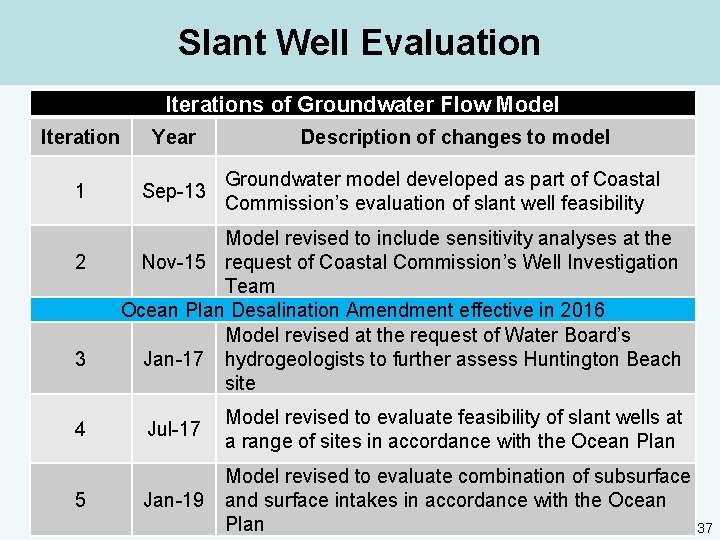
Slant Well Evaluation Iterations of Groundwater Flow Model Iteration Year 1 Sep-13 2 3 4 5 Description of changes to model Groundwater model developed as part of Coastal Commission’s evaluation of slant well feasibility Model revised to include sensitivity analyses at the Nov-15 request of Coastal Commission’s Well Investigation Team Ocean Plan Desalination Amendment effective in 2016 Model revised at the request of Water Board’s Jan-17 hydrogeologists to further assess Huntington Beach site Jul-17 Model revised to evaluate feasibility of slant wells at a range of sites in accordance with the Ocean Plan Jan-19 Model revised to evaluate combination of subsurface and surface intakes in accordance with the Ocean Plan 37
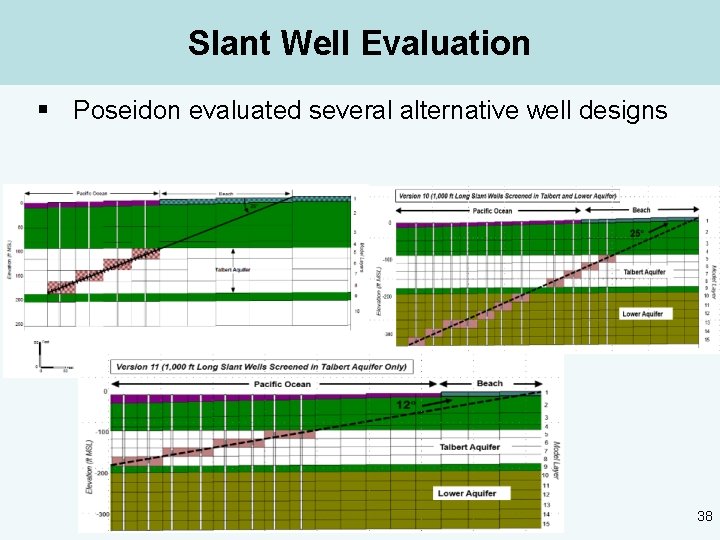
Slant Well Evaluation § Poseidon evaluated several alternative well designs 38
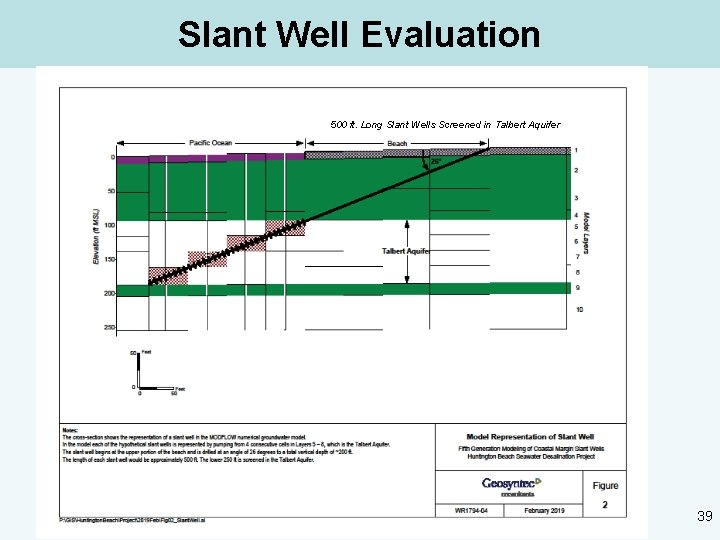
Slant Well Evaluation 500 ft. Long Slant Wells Screened in Talbert Aquifer 39
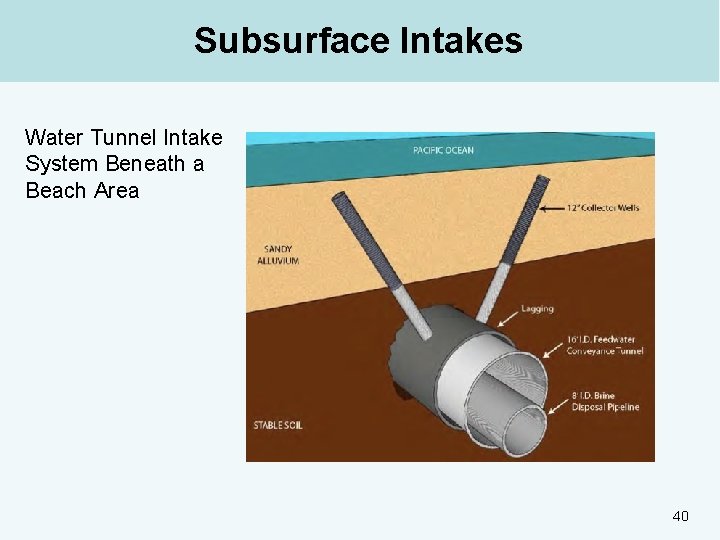
Subsurface Intakes Water Tunnel Intake System Beneath a Beach Area 40
Ocean Plan : Subsurface Intake Considerations Subsurface intakes required unless not feasible “Subject to chapter M. 2. a. (2), the regional water board in consultation with State Water Board staff shall require subsurface intakes* unless it determines that subsurface intakes* are not feasible* based upon a comparative analysis of the factors listed below for surface and subsurface intakes. *”
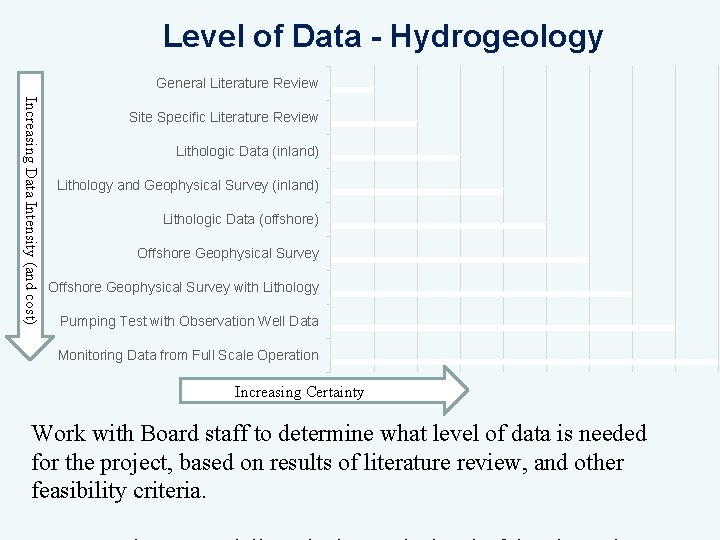
Level of Data - Hydrogeology General Literature Review Increasing Data Intensity (and cost) Site Specific Literature Review Lithologic Data (inland) Lithology and Geophysical Survey (inland) Lithologic Data (offshore) Offshore Geophysical Survey with Lithology Pumping Test with Observation Well Data Monitoring Data from Full Scale Operation Increasing Certainty Work with Board staff to determine what level of data is needed for the project, based on results of literature review, and other feasibility criteria.
- Slides: 42