
Evaluating Strategy Step 4 Performance Assessment ME W
- Slides: 58
Evaluating Strategy# Step 4: Performance Assessment ME W O H E S “ H T EY” N O M
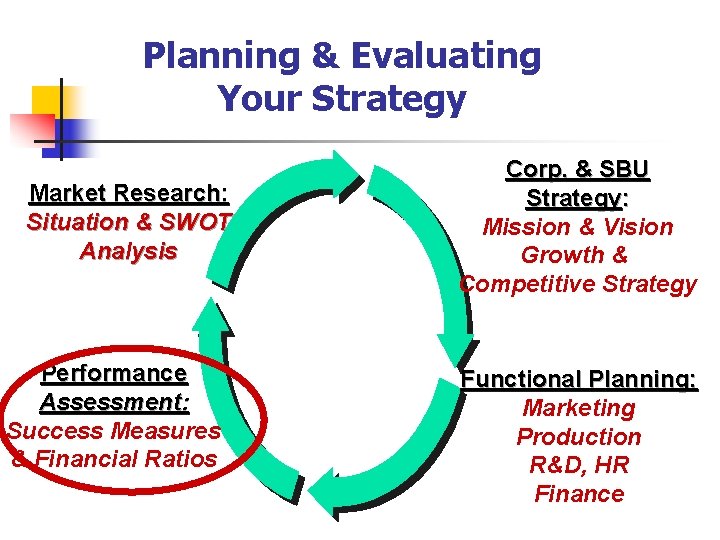
Planning & Evaluating Your Strategy Market Research: Situation & SWOT Analysis Performance Assessment: Success Measures & Financial Ratios Corp. & SBU Strategy: Mission & Vision Growth & Competitive Strategy Functional Planning: Marketing Production R&D, HR Finance
Let’s Examine: 1. Ways to plan & evaluate your financial performance 2. Some Financial Planning guidelines
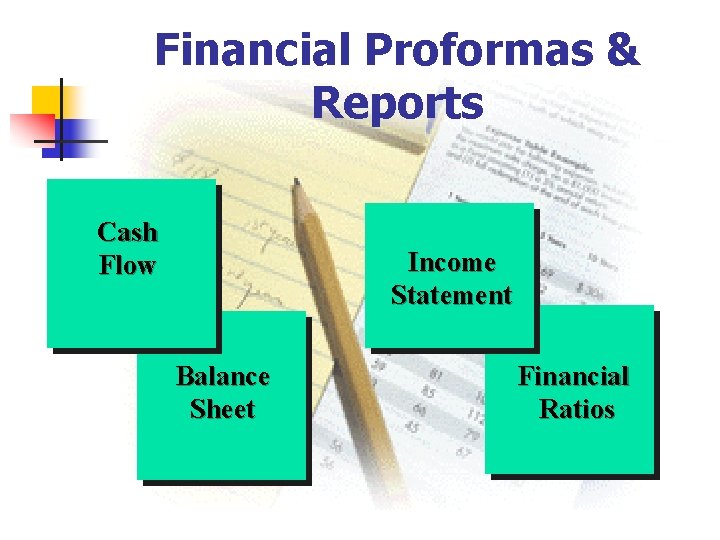
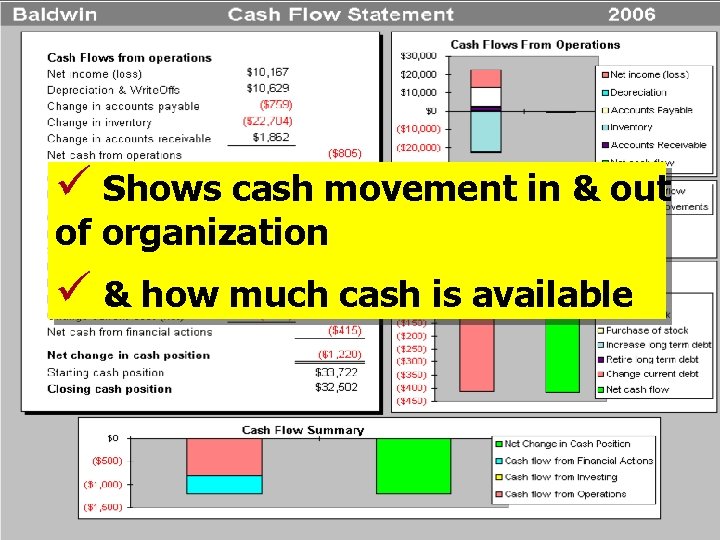
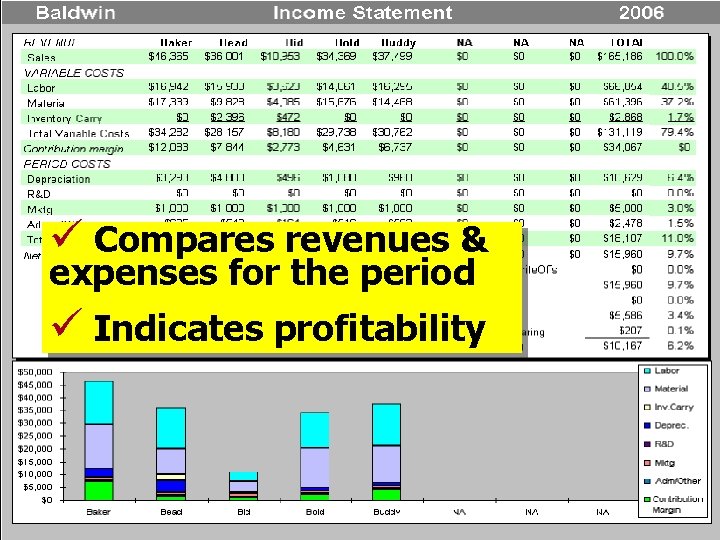
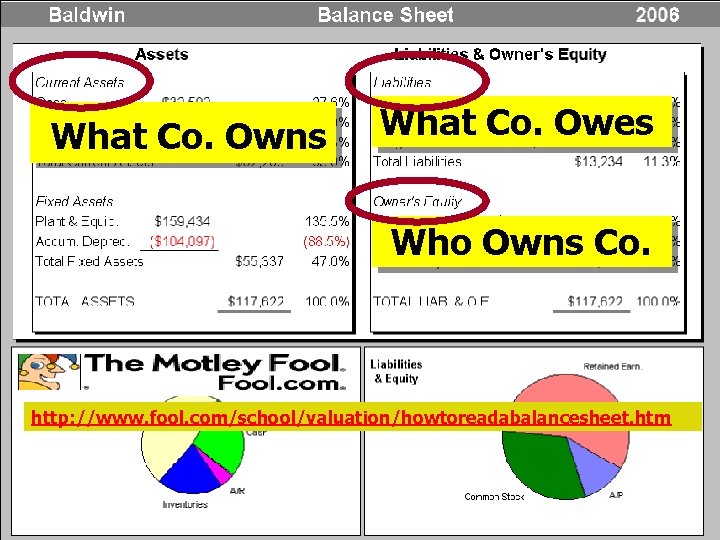
Financial Proformas & Reports Cash Flow Income Statement Balance Sheet Financial Ratios
ü Shows cash movement in & out of organization ü & how much cash is available
ü Compares revenues & expenses for the period ü Indicates profitability
What Co. Owns What Co. Owes Who Owns Co. http: //www. fool. com/school/valuation/howtoreadabalancesheet. htm
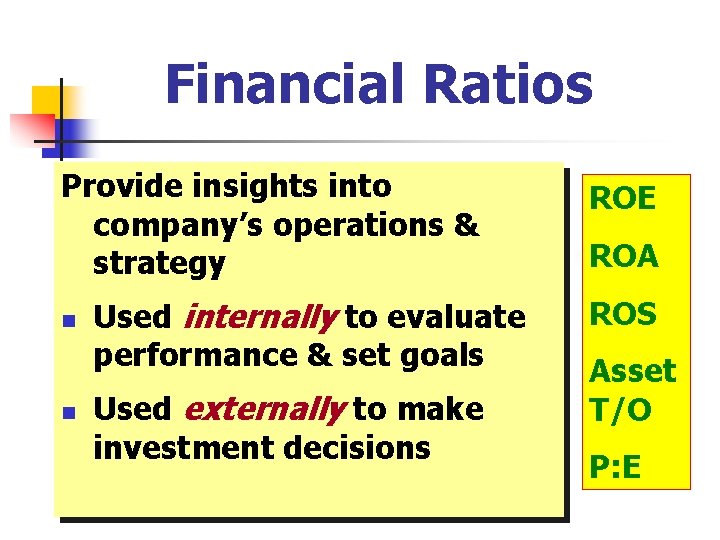
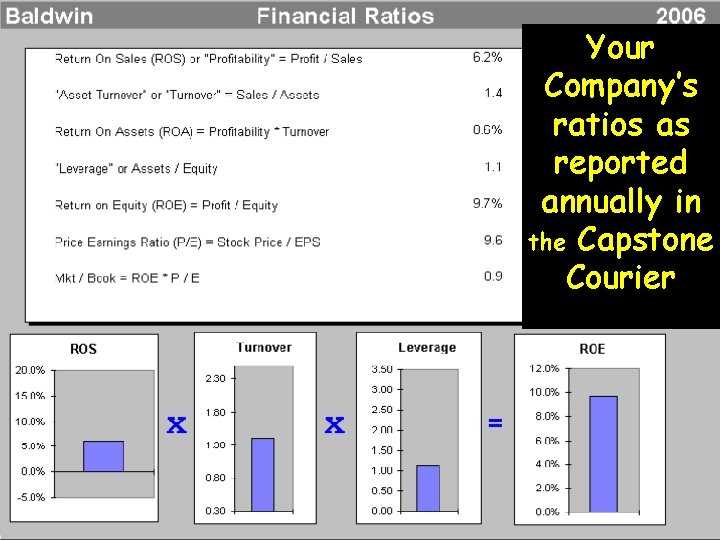
Financial Ratios Provide insights into company’s operations & strategy n n Used internally to evaluate performance & set goals Used externally to make investment decisions ROE ROA ROS Asset T/O P: E
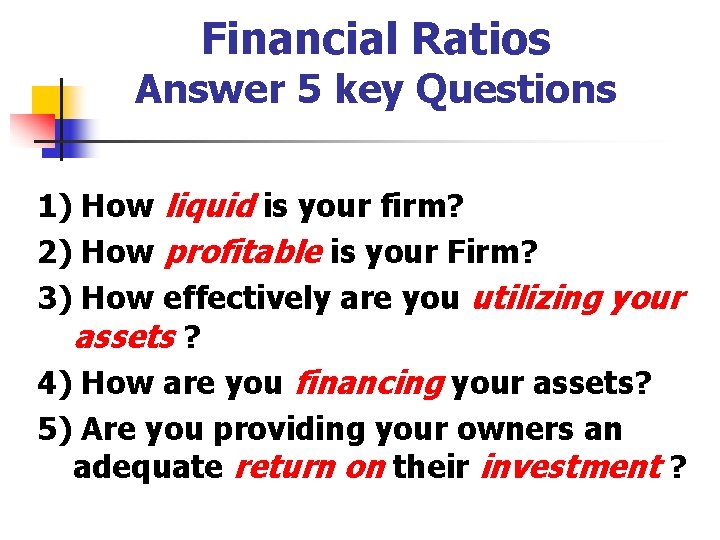
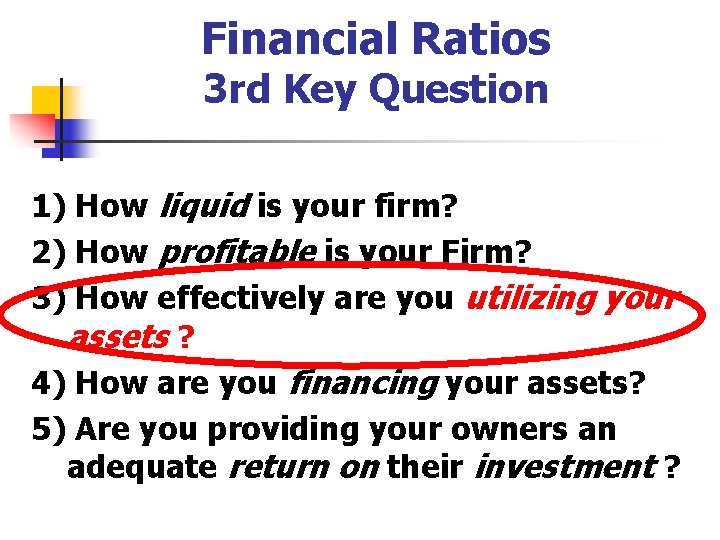
Financial Ratios Answer 5 key Questions 1) How liquid is your firm? 2) How profitable is your Firm? 3) How effectively are you utilizing your assets ? 4) How are you financing your assets? 5) Are you providing your owners an adequate return on their investment ?
Your Company’s ratios as reported annually in the Capstone Courier
Financial Guidelines Re: Liquidity
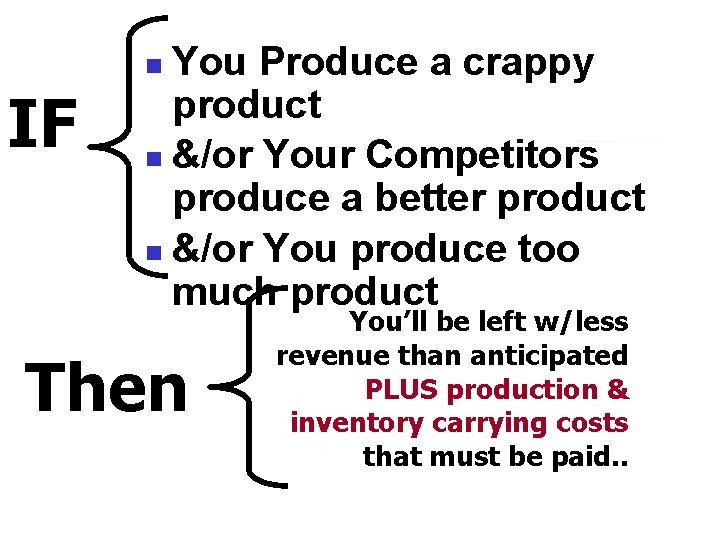
You Produce a crappy product n &/or Your Competitors produce a better product n &/or You produce too much product n IF Then You’ll be left w/less revenue than anticipated PLUS production & inventory carrying costs that must be paid. .
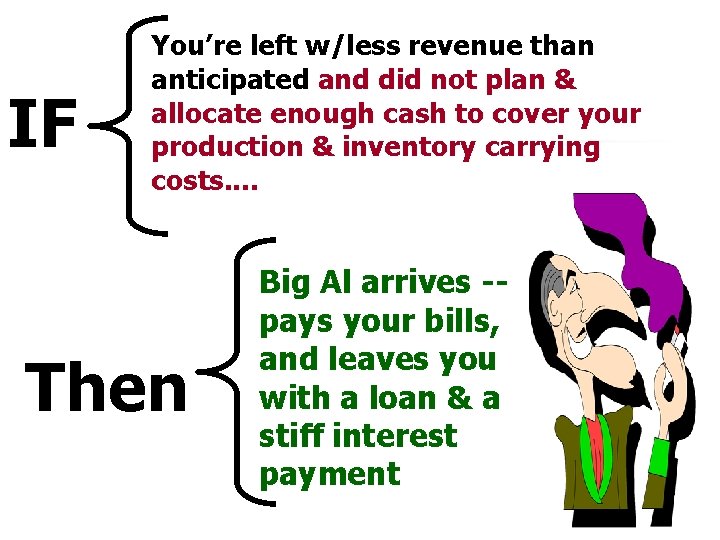
IF You’re left w/less revenue than anticipated and did not plan & allocate enough cash to cover your production & inventory carrying costs. . Then Big Al arrives -pays your bills, and leaves you with a loan & a stiff interest payment
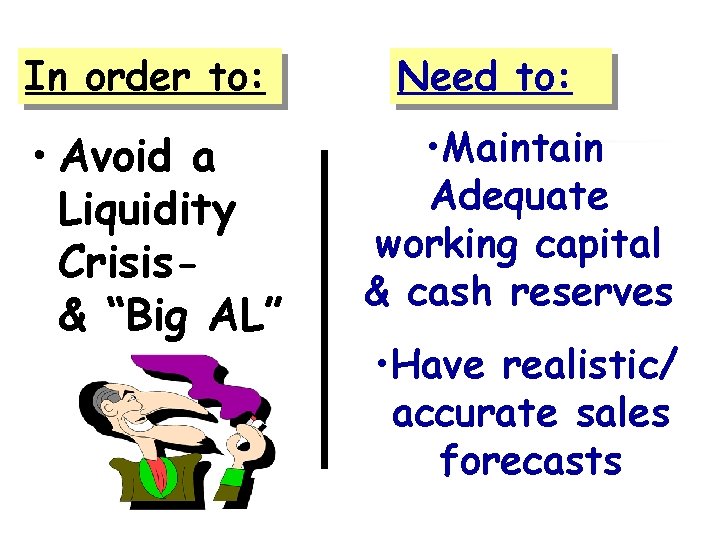
In order to: • Avoid a Liquidity Crisis& “Big AL” Need to: • Maintain Adequate working capital & cash reserves • Have realistic/ accurate sales forecasts
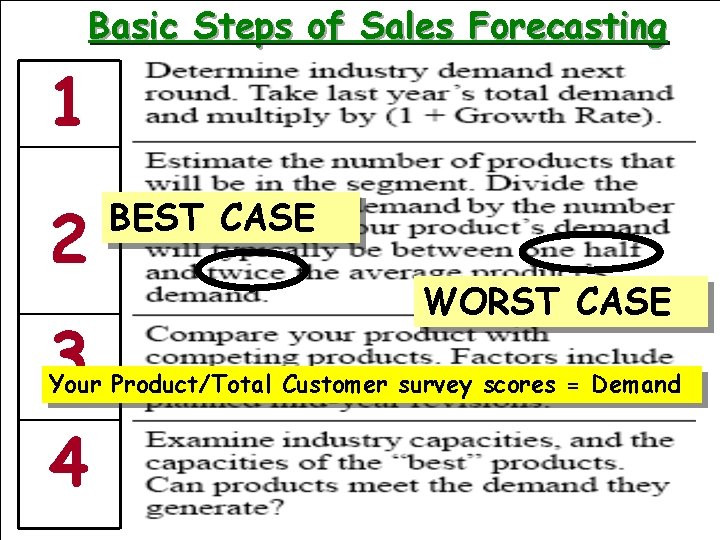
Basic Steps of Sales Forecasting 1 2 3 BEST CASE WORST CASE Your Product/Total Customer survey scores = Demand 4
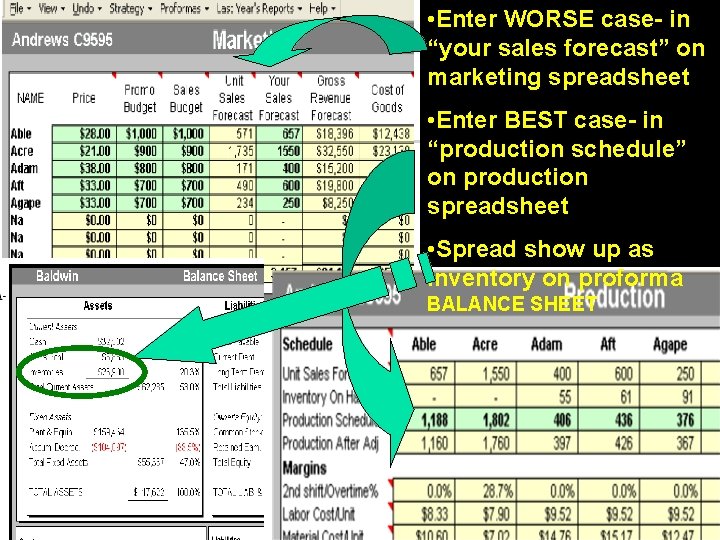
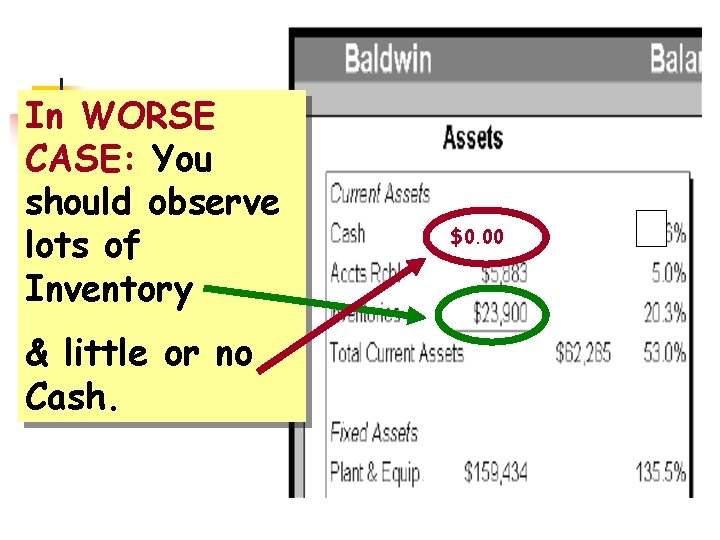
• Enter WORSE case- in “your sales forecast” on marketing spreadsheet • Enter BEST case- in “production schedule” on production spreadsheet • Spread show up as inventory on proforma BALANCE SHEET
In WORSE CASE: You should observe lots of Inventory & little or no Cash. $0. 00
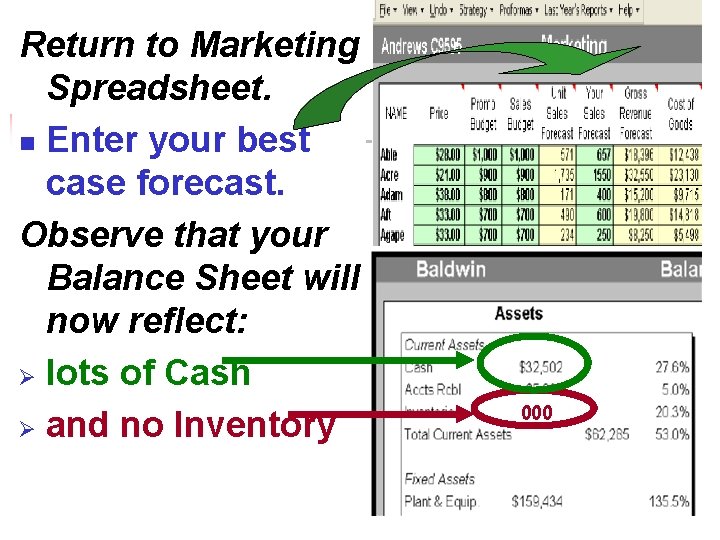
Return to Marketing Spreadsheet. n Enter your best case forecast. Observe that your Balance Sheet will now reflect: Ø lots of Cash Ø and no Inventory 000
Important Considerations re: BEST-WORST Scenario Analyses By adjusting your CASH POSITION according to your WORST CASE estimate– will avoid …
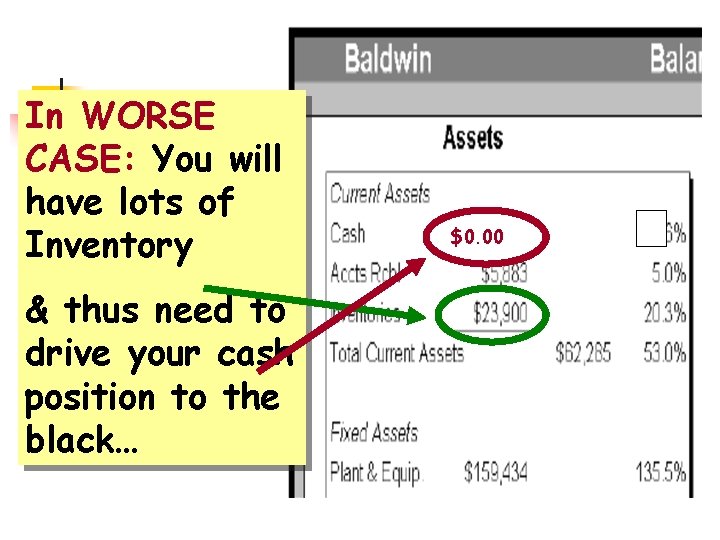
In WORSE CASE: You will have lots of Inventory & thus need to drive your cash position to the black… $0. 00
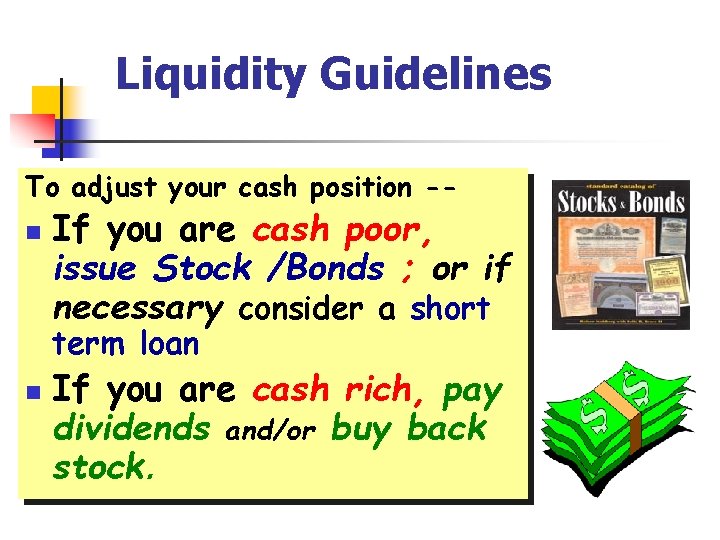
Liquidity Guidelines To adjust your cash position -n If you are cash poor, issue Stock /Bonds ; or if necessary consider a short term loan n If you are cash rich, pay dividends and/or buy back stock.
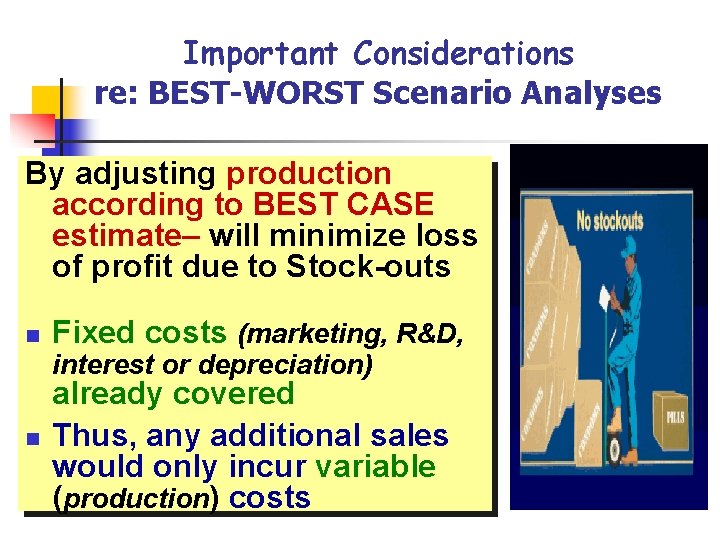
Important Considerations re: BEST-WORST Scenario Analyses By adjusting production according to BEST CASE estimate– will minimize loss of profit due to Stock-outs n Fixed costs (marketing, R&D, interest or depreciation) n already covered Thus, any additional sales would only incur variable (production) costs
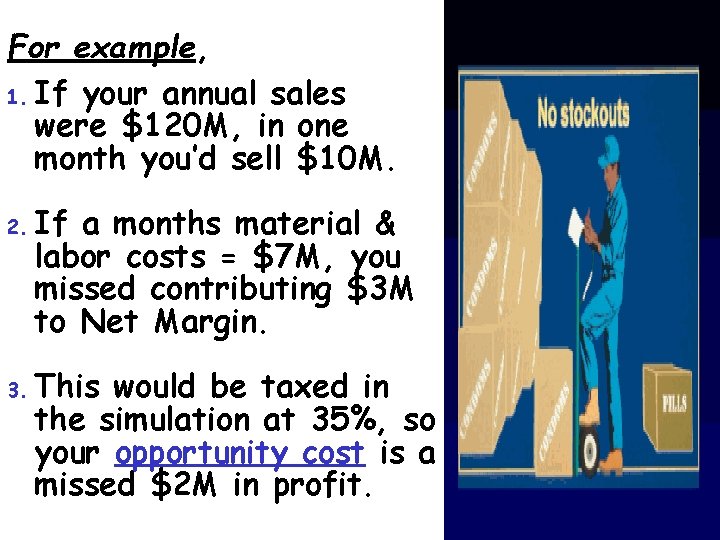
For example, 1. If your annual sales were $120 M, in one month you’d sell $10 M. 2. 3. If a months material & labor costs = $7 M, you missed contributing $3 M to Net Margin. This would be taxed in the simulation at 35%, so your opportunity cost is a missed $2 M in profit.
Financial Ratios 2 nd Key Question 1) How liquid is your firm? 2) How profitable is your Firm? 3) How effectively are you utilizing your assets ? 4) How are you financing your assets? 5) Are you providing your owners an adequate return on their investment ?
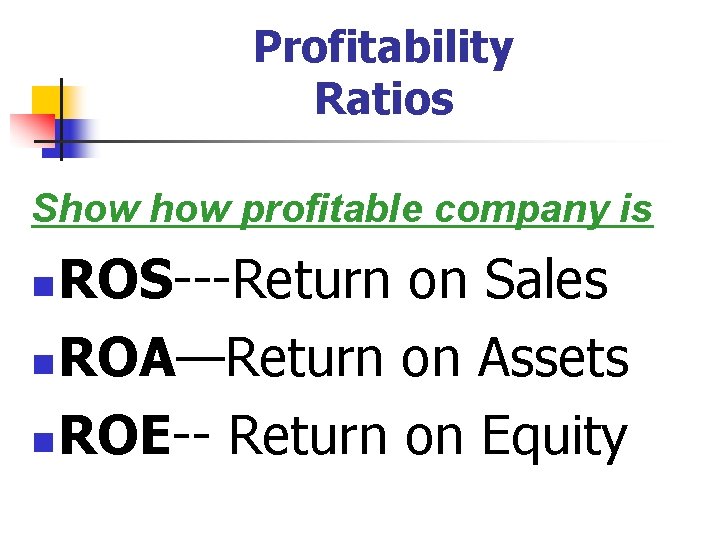
Profitability Ratios Show profitable company is ROS---Return on Sales n ROA—Return on Assets n ROE-- Return on Equity n
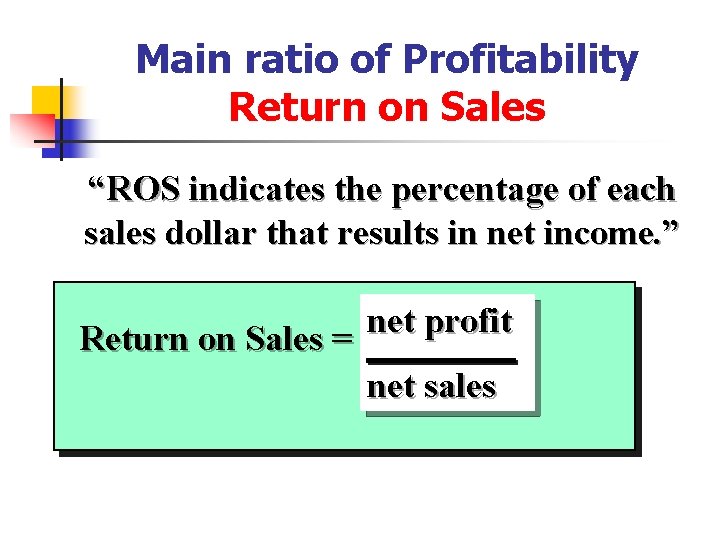
Main ratio of Profitability Return on Sales “ROS indicates the percentage of each sales dollar that results in net income. ” net profit Return on Sales = net sales
Financial Guidelines: Profitability
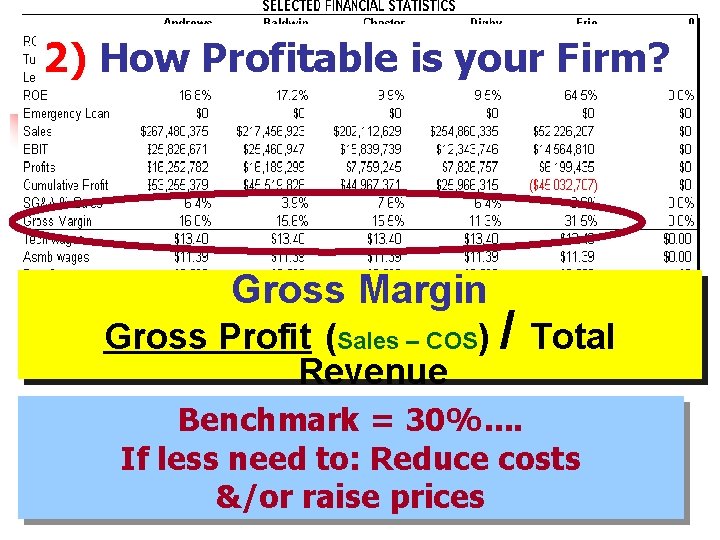
2) How Profitable is your Firm? Gross Margin Gross Profit (Sales – COS) / Total Revenue Benchmark = 30%. . If less need to: Reduce costs &/or raise prices
Financial Ratios 3 rd Key Question 1) How liquid is your firm? 2) How profitable is your Firm? 3) How effectively are you utilizing your assets ? 4) How are you financing your assets? 5) Are you providing your owners an adequate return on their investment ?
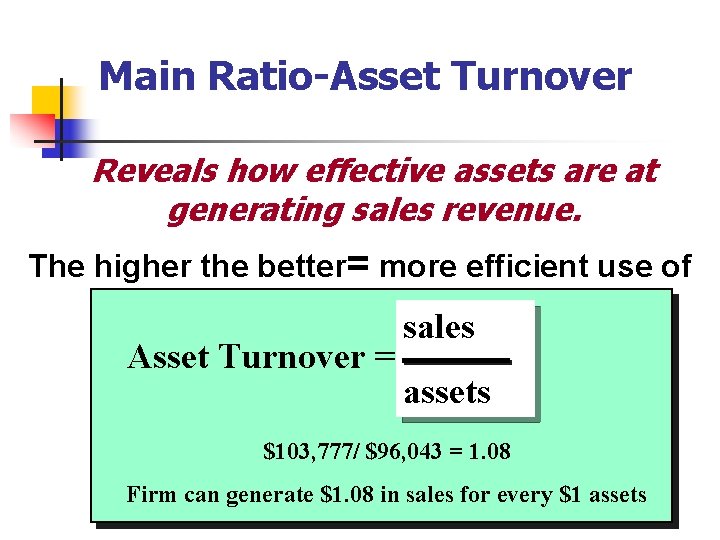
Main Ratio-Asset Turnover Reveals how effective assets are at generating sales revenue. The higher the better= more efficient use of assets Asset Turnover = sales assets $103, 777/ $96, 043 = 1. 08 Firm can generate $1. 08 in sales for every $1 assets
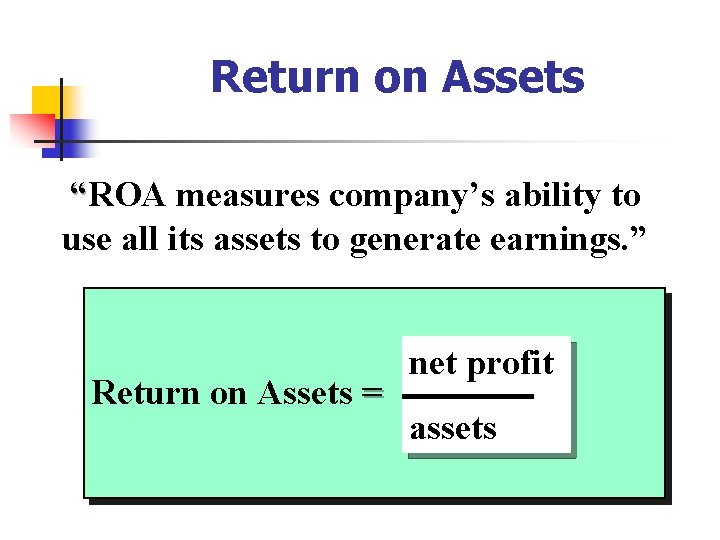
Return on Assets “ROA measures company’s ability to use all its assets to generate earnings. ” Return on Assets = net profit assets
Financial Guideline: Assets
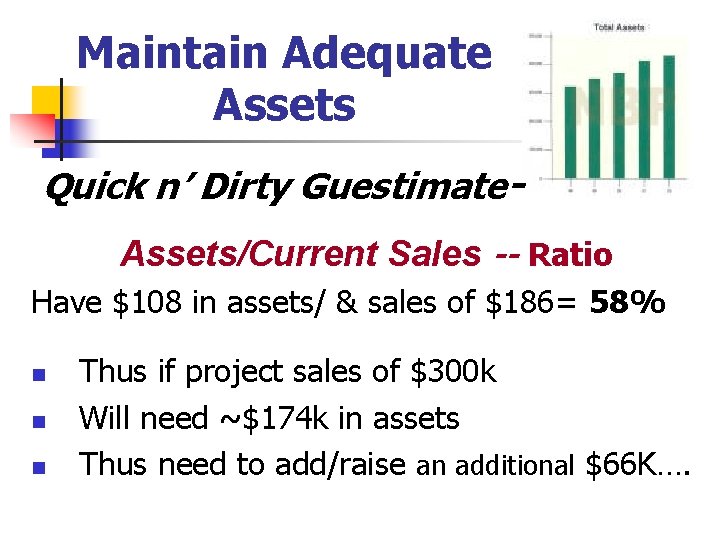
Maintain Adequate Assets Quick n’ Dirty Guestimate. Assets/Current Sales -- Ratio Have $108 in assets/ & sales of $186= 58% n n n Thus if project sales of $300 k Will need ~$174 k in assets Thus need to add/raise an additional $66 K….
Financial Ratios 4 th Key Question 1) How liquid is your firm? 2) How profitable is your Firm? 3) How effectively are you utilizing your assets ? 4) How are you financing your assets? 5) Are you providing your owners an adequate return on their investment ?
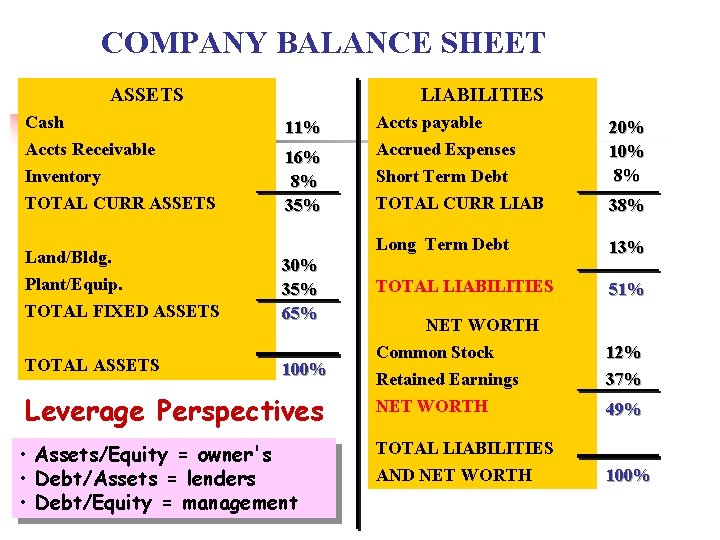
COMPANY BALANCE SHEET ASSETS Cash Accts Receivable Inventory TOTAL CURR ASSETS Land/Bldg. Plant/Equip. TOTAL FIXED ASSETS TOTAL ASSETS LIABILITIES 11% 16% 8% 35% 30% 35% 65% 100% Leverage Perspectives • Assets/Equity = owner's • Debt/Assets = lenders • Debt/Equity = management Accts payable Accrued Expenses Short Term Debt TOTAL CURR LIAB 20% 10% 8% Long Term Debt 13% TOTAL LIABILITIES 51% NET WORTH Common Stock Retained Earnings NET WORTH 12% 37% TOTAL LIABILITIES AND NET WORTH 38% 49% 100%
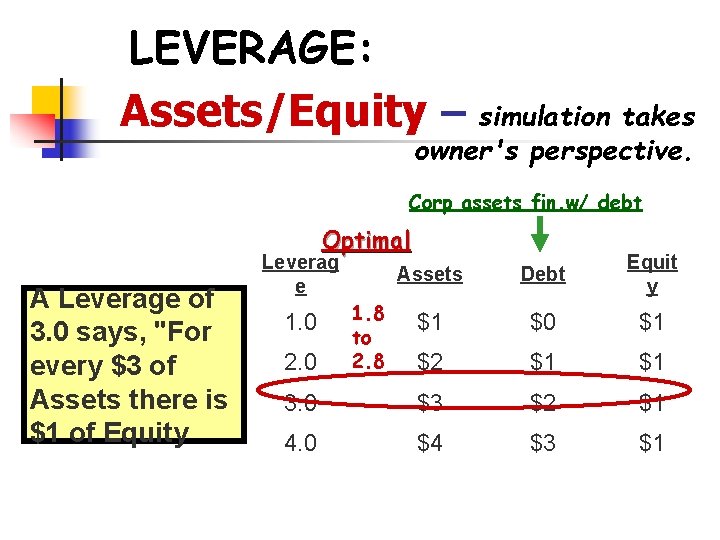
LEVERAGE: Assets/Equity – simulation takes owner's perspective. Corp assets fin. w/ debt Optimal A Leverage of 3. 0 says, "For every $3 of Assets there is $1 of Equity Leverag e Assets Debt Equit y $1 $0 $1 $2 $1 $1 3. 0 $3 $2 $1 4. 0 $4 $3 $1 1. 0 2. 0 1. 8 to 2. 8
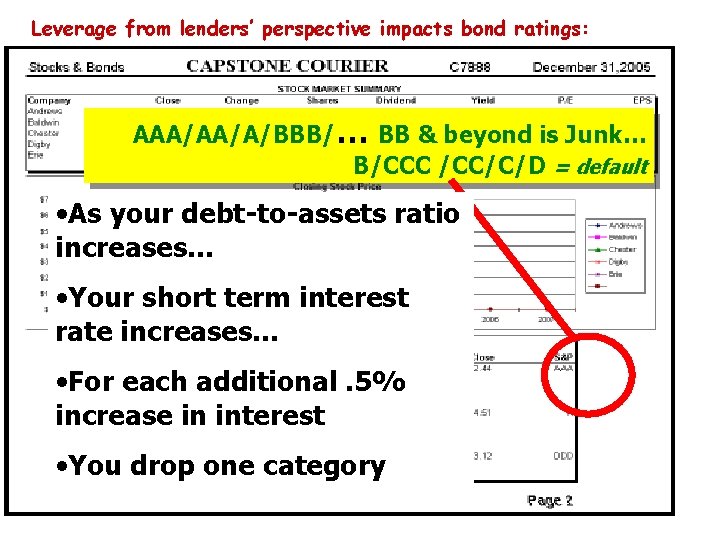
Leverage from lenders’ perspective impacts bond ratings: AAA/AA/A/BBB/… BB & beyond is Junk… B/CCC /CC/C/D = default • As your debt-to-assets ratio increases… • Your short term interest rate increases… • For each additional. 5% increase in interest • You drop one category
Last Key Question Are you providing your owners an adequate return on their investment
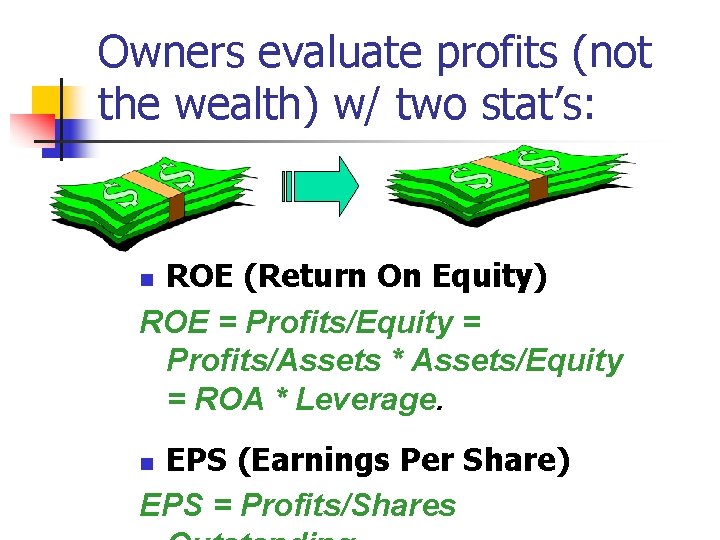
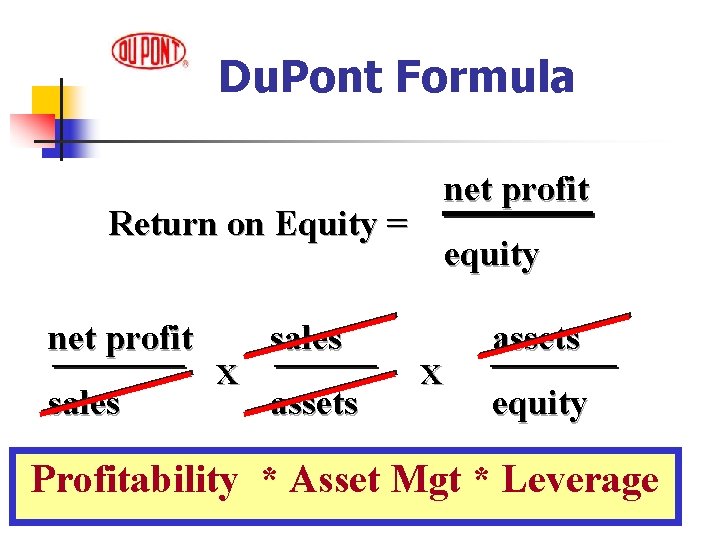
Owners evaluate profits (not the wealth) w/ two stat’s: ROE (Return On Equity) ROE = Profits/Equity = Profits/Assets * Assets/Equity = ROA * Leverage. n EPS (Earnings Per Share) EPS = Profits/Shares n
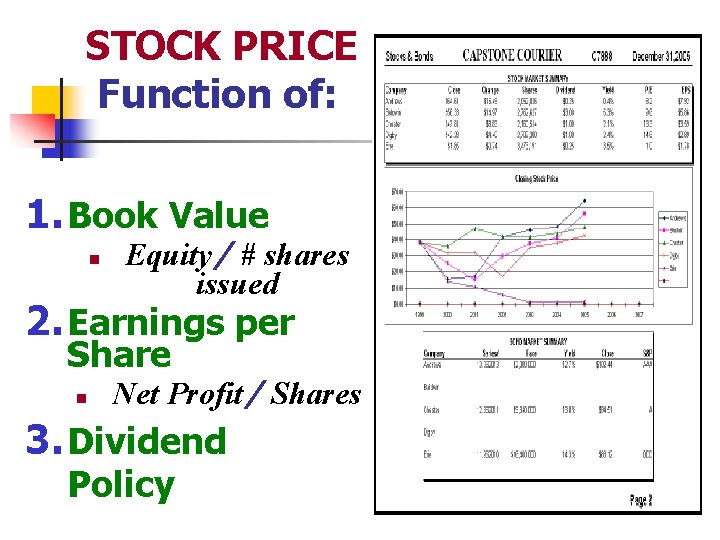
STOCK PRICE Function of: 1. Book Value n Equity/ # shares issued 2. Earnings per Share n Net Profit/ Shares 3. Dividend Policy
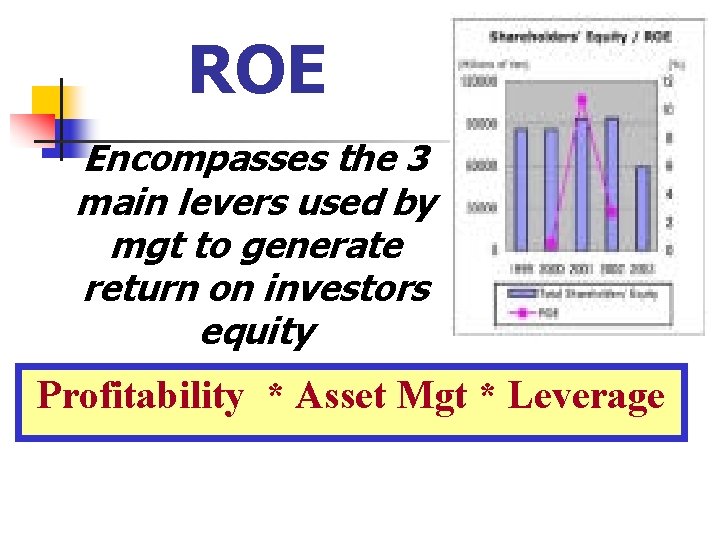
ROE Encompasses the 3 main levers used by mgt to generate return on investors equity Profitability * Asset Mgt * Leverage
Du. Pont Formula net profit Return on Equity = net profit sales x sales assets equity x assets equity Profitability * Asset Mgt * Leverage
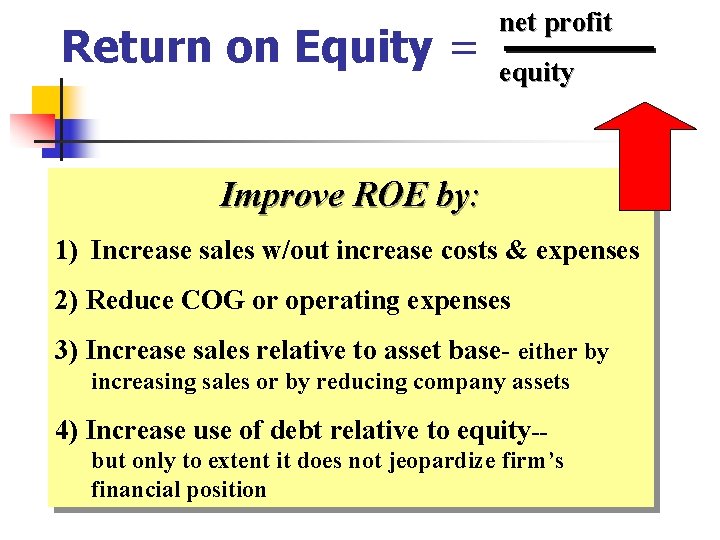
Return on Equity = net profit equity Improve ROE by: 1) Increase sales w/out increase costs & expenses 2) Reduce COG or operating expenses 3) Increase sales relative to asset base- either by increasing sales or by reducing company assets 4) Increase use of debt relative to equity-but only to extent it does not jeopardize firm’s financial position
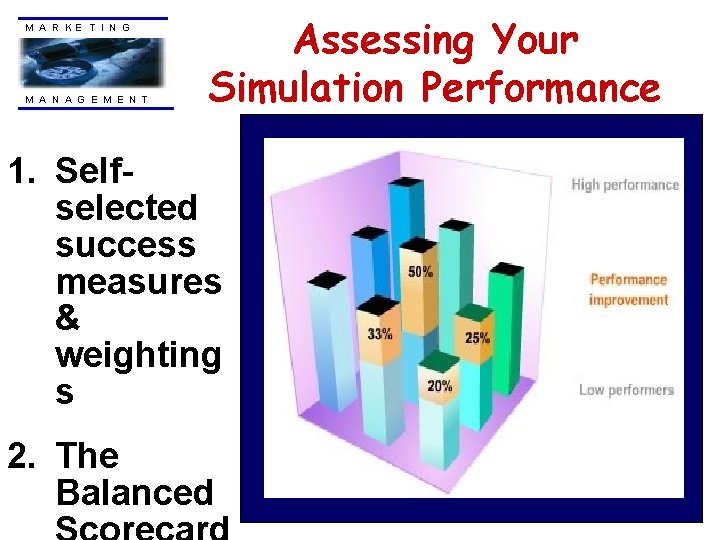
M A R KE T I N G M A N A G E M E N T Assessing Your Simulation Performance 1. Selfselected success measures & weighting s 2. The Balanced
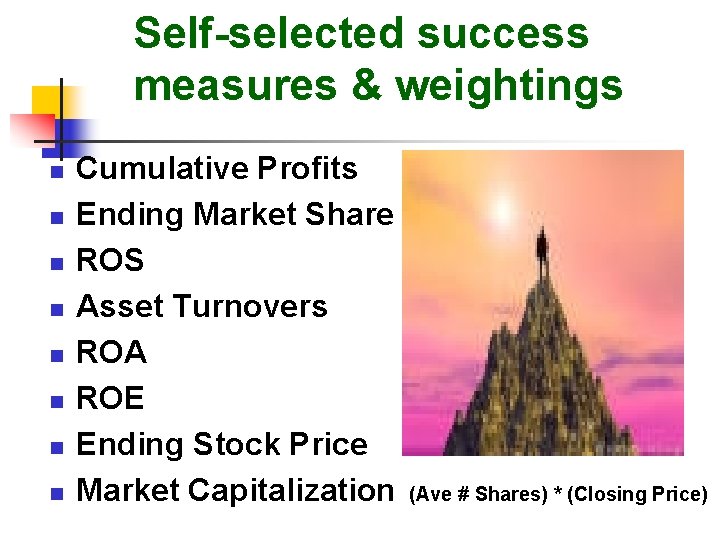
Self-selected success measures & weightings n n n n Cumulative Profits Ending Market Share ROS Asset Turnovers ROA ROE Ending Stock Price Market Capitalization (Ave # Shares) * (Closing Price)
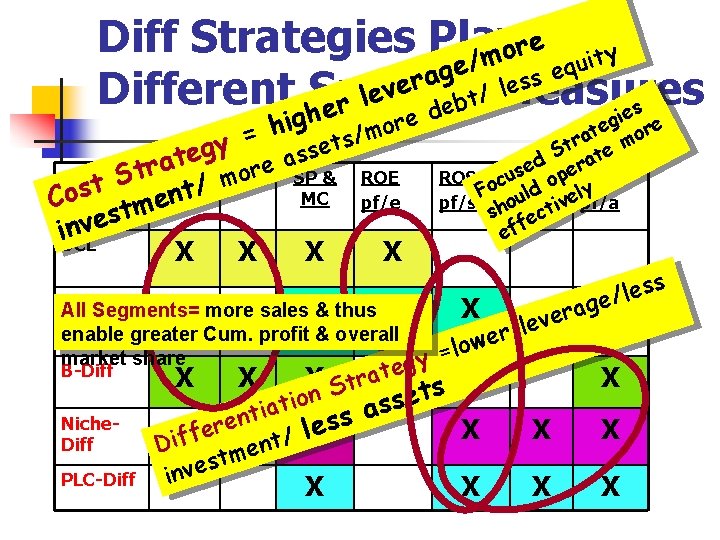
Diff Strategies Play einto r o y t m i / u q e e g a s r s le ve / e Different Success Measures l t deb ies her e r ig o h /m = s t y e g s s e a t a r. Profit m. MS t ore SP & ROE S t MC Cos tment/ pf/e s nve i. BCL X X Cost. All Segments= more sales. X& thus Niche & enable PLC X greater Cum. profit & overall market share gy B-Diff Niche. Diff PLC-Diff g re e t o ra m t S ate d se oper. ROA ROS ocu. AT F uld ely pf/s hos/a tiv pf/a s c fe f e X le r e =low X Strate ts n e o i s t s a i a t n s e s r e e l X X f f / i t D n X X e i m t s e nv X s s e l / e g a ver X X X
• Select your Success Measures & Determine Relative Weightings • Enter weightings – in preparation for simulation: Practice Round #1
M A R KE T I N G The Balanced Scorecard M A N A G E M E N T
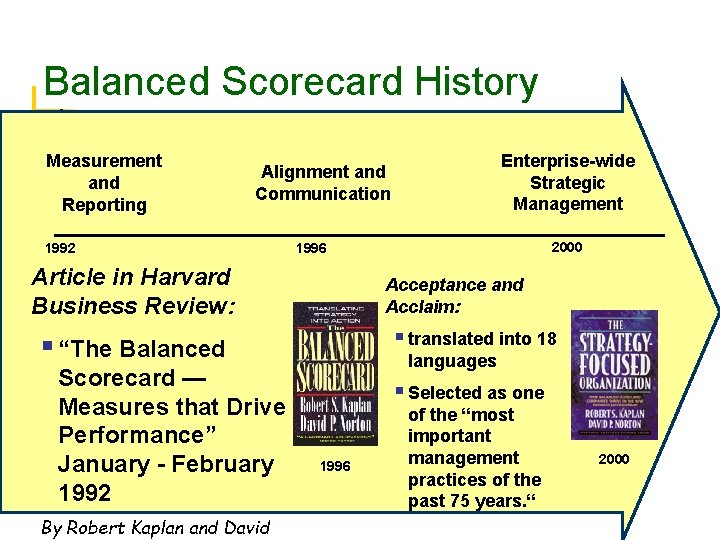
Balanced Scorecard History Measurement and Reporting Enterprise-wide Strategic Management Alignment and Communication 1992 Article in Harvard Business Review: Acceptance and Acclaim: § translated into 18 § “The Balanced Scorecard — Measures that Drive Performance” January - February 1992 By Robert Kaplan and David 2000 1996 languages § Selected as one 1996 of the “most important management practices of the past 75 years. “ 2000
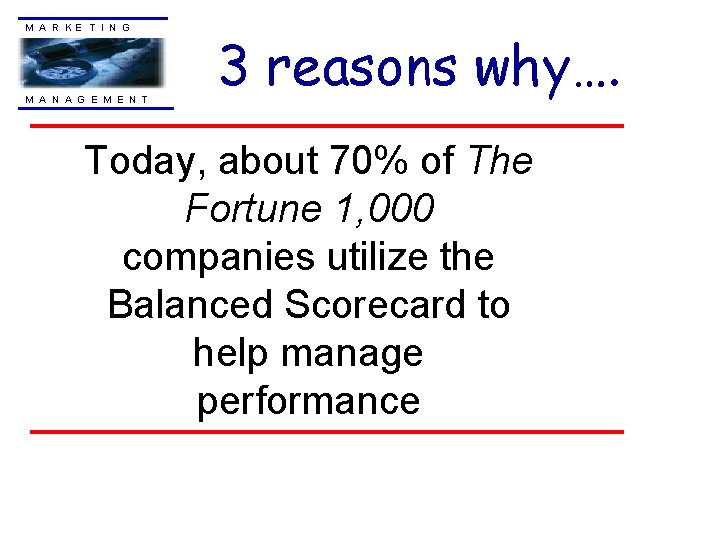
M A R KE T I N G M A N A G E M E N T 3 reasons why…. Today, about 70% of The Fortune 1, 000 companies utilize the Balanced Scorecard to help manage performance
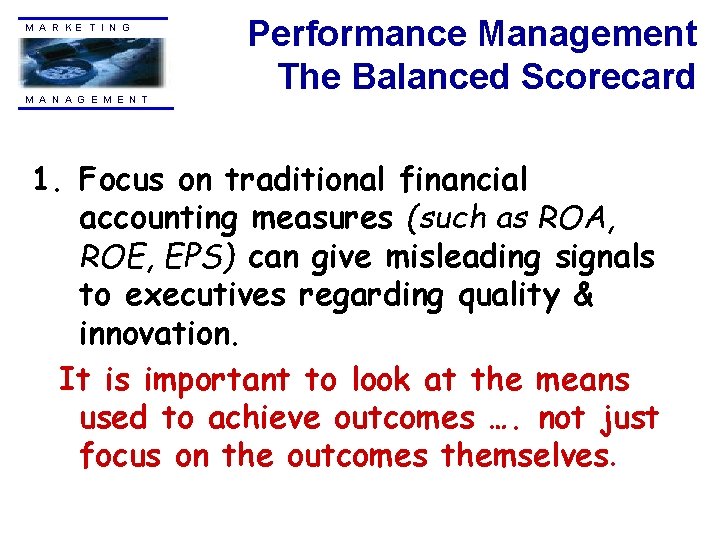
M A R KE T I N G M A N A G E M E N T Performance Management The Balanced Scorecard 1. Focus on traditional financial accounting measures (such as ROA, ROE, EPS) can give misleading signals to executives regarding quality & innovation. It is important to look at the means used to achieve outcomes …. not just focus on the outcomes themselves.
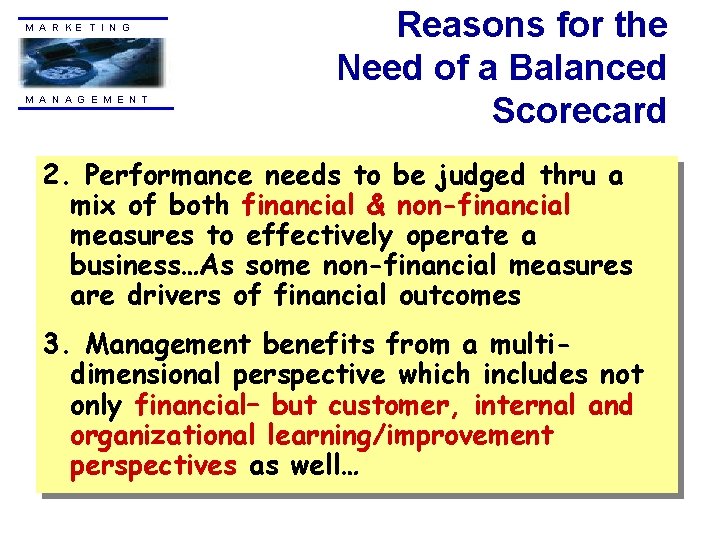
M A R KE T I N G M A N A G E M E N T Reasons for the Need of a Balanced Scorecard 2. Performance needs to be judged thru a mix of both financial & non-financial measures to effectively operate a business…As some non-financial measures are drivers of financial outcomes 3. Management benefits from a multidimensional perspective which includes not only financial– but customer, internal and organizational learning/improvement perspectives as well…
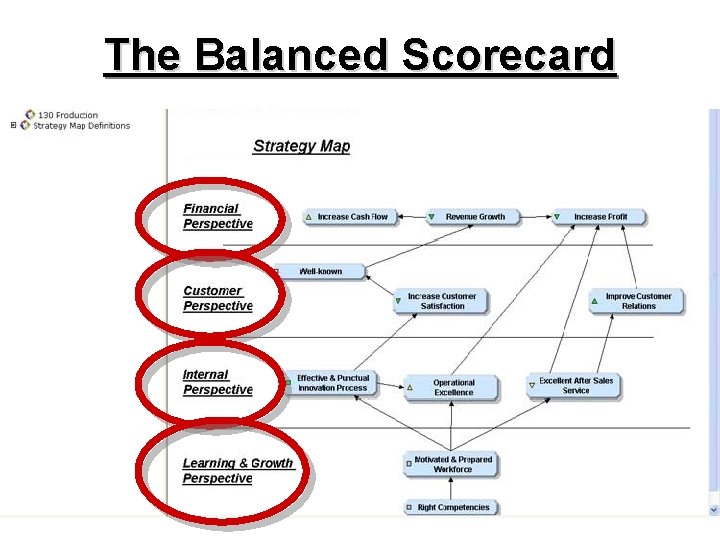
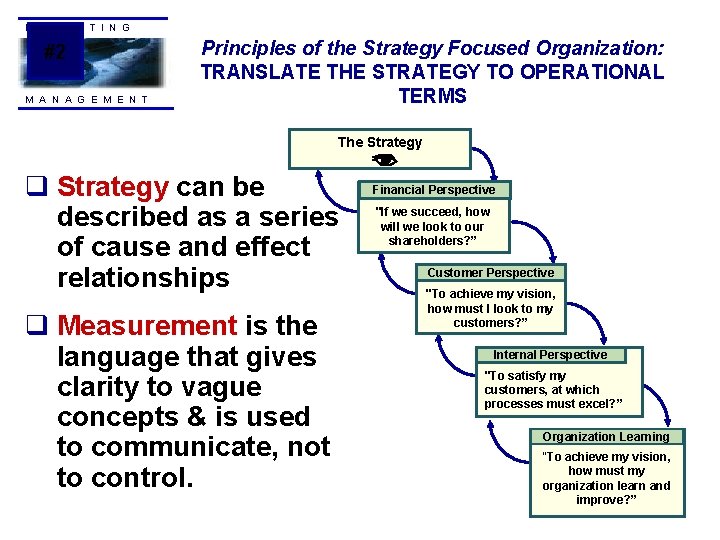
M A R KE T I N G #2 M A N A G E M E N T Principles of the Strategy Focused Organization: TRANSLATE THE STRATEGY TO OPERATIONAL TERMS The Strategy q Strategy can be described as a series of cause and effect relationships q Measurement is the language that gives clarity to vague concepts & is used to communicate, not to control. Financial Perspective "If we succeed, how will we look to our shareholders? ” Customer Perspective "To achieve my vision, how must I look to my customers? ” Internal Perspective "To satisfy my customers, at which processes must excel? ” Organization Learning "To achieve my vision, how must my organization learn and improve? ”
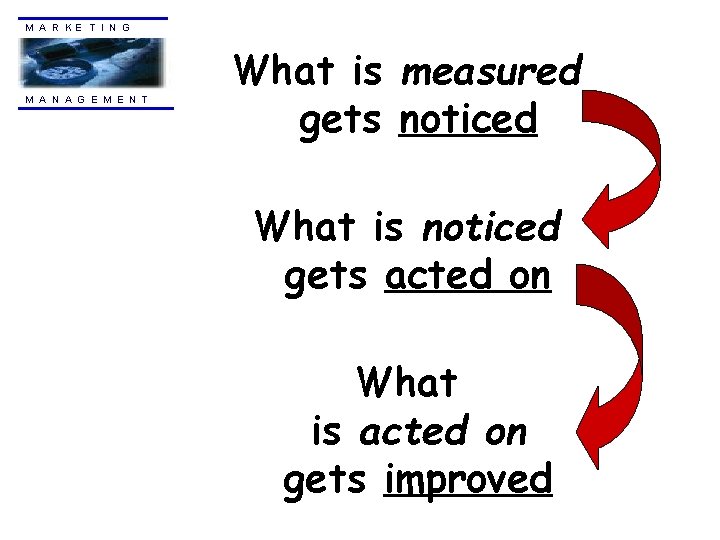
M A R KE T I N G M A N A G E M E N T What is measured gets noticed What is noticed gets acted on What is acted on gets improved
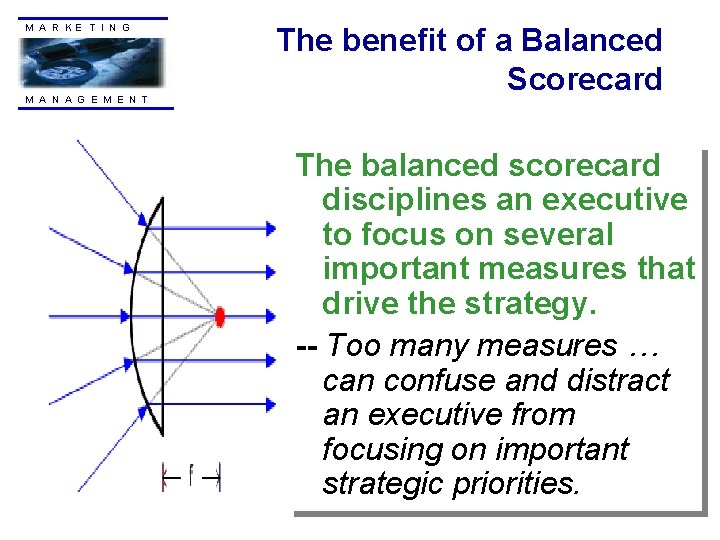
M A R KE T I N G M A N A G E M E N T The benefit of a Balanced Scorecard The balanced scorecard disciplines an executive to focus on several important measures that drive the strategy. -- Too many measures … can confuse and distract an executive from focusing on important strategic priorities.
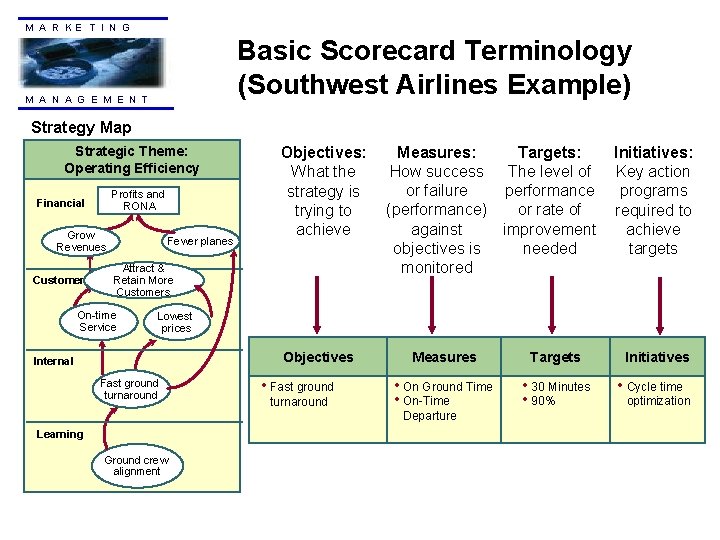
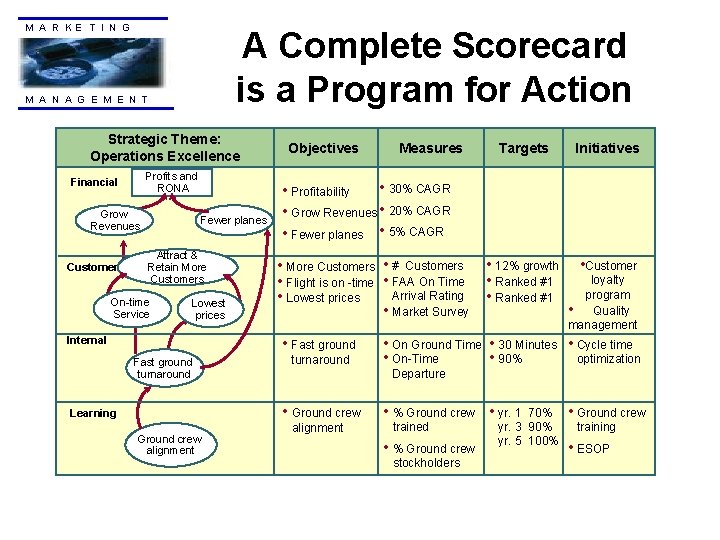
M A R KE T I N G Basic Scorecard Terminology (Southwest Airlines Example) M A N A G E M E N T Strategy Map Strategic Theme: Operating Efficiency Profits and RONA Financial Grow Revenues Customer Fewer planes Objectives: What the strategy is trying to achieve Attract & Retain More Customers On-time Service Measures: Targets: How success The level of or failure performance (performance) or rate of against improvement objectives is needed monitored Initiatives: Key action programs required to achieve targets Lowest prices Objectives Internal Fast ground turnaround • Fast ground turnaround Measures Targets • On Ground Time • On-Time • 30 Minutes • 90% Departure Learning Ground crew alignment Initiatives • Cycle time optimization
M A R KE T I N G A Complete Scorecard is a Program for Action M A N A G E M E N T Strategic Theme: Operations Excellence Operating Efficiency Profits and RONA Financial Grow Revenues Customer Fewer planes Attract & Retain More Customers On-time Service Lowest prices Internal Objectives • More Customers • # Customers • Flight is on -time • FAA On Time Arrival Rating • Lowest prices • Market Survey turnaround Ground crew alignment Initiatives • 12% growth • Ranked #1 • Customer loyalty program • Quality management • On Ground Time • 30 Minutes • Cycle time • On-Time • 90% optimization Departure • Ground crew Learning Targets • 30% CAGR • Profitability • Grow Revenues • 20% CAGR • Fewer planes • 5% CAGR • Fast ground turnaround Measures alignment • % Ground crew • yr. 1 trained • % Ground crew stockholders 70% yr. 3 90% yr. 5 100% • Ground crew training • ESOP
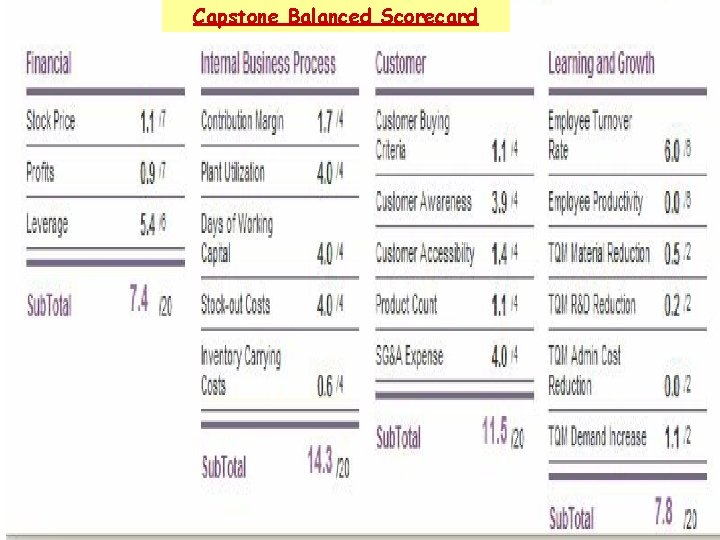
M A R KE T I N G M A N A G E M E N T Capstone Balanced Scorecard