
Evaluating Stages of Change Precontemplation Denial What problem
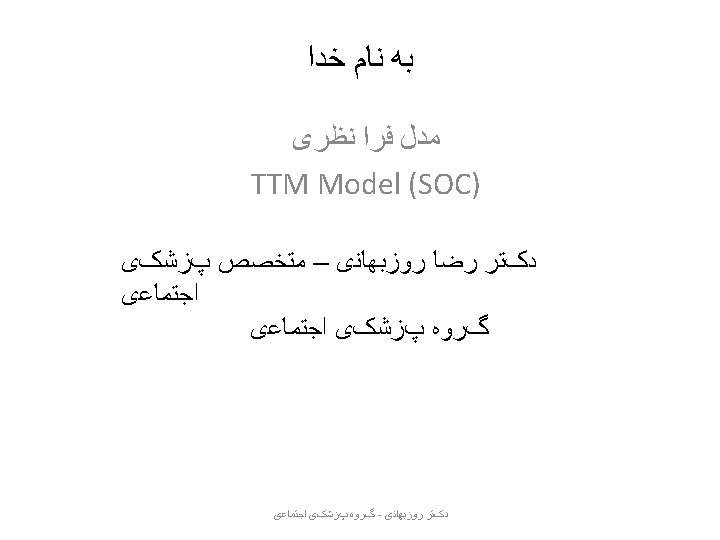
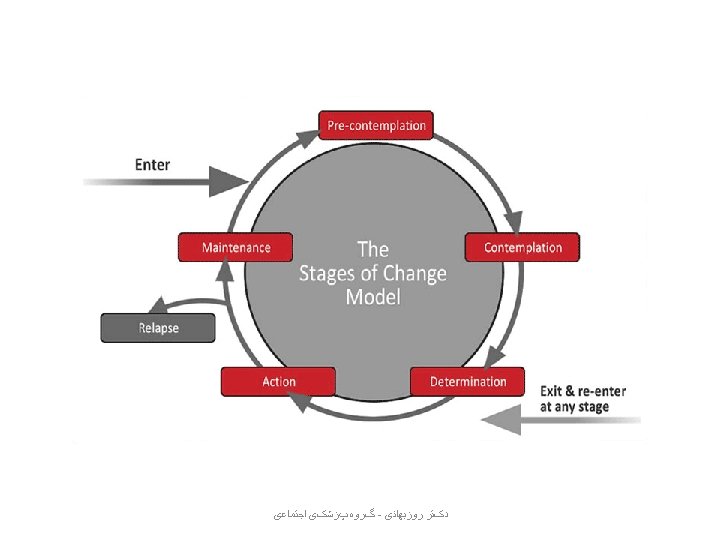
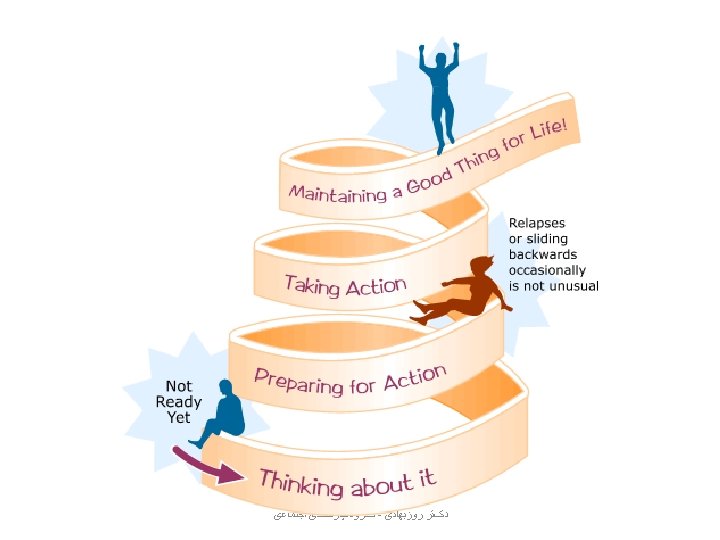
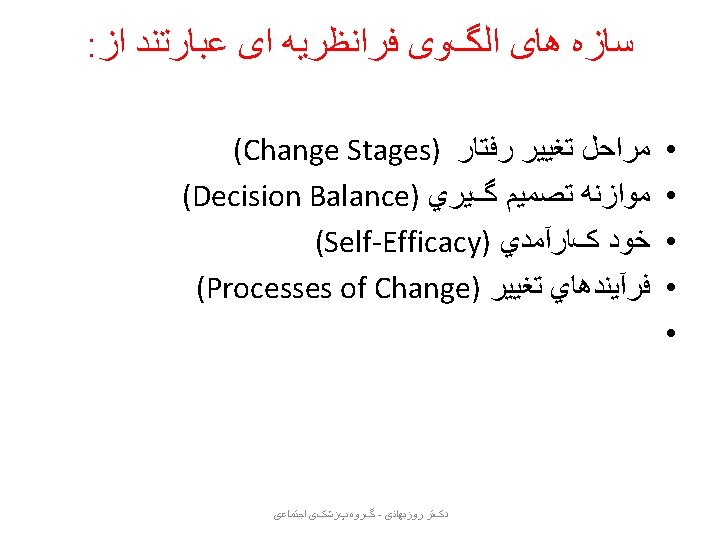
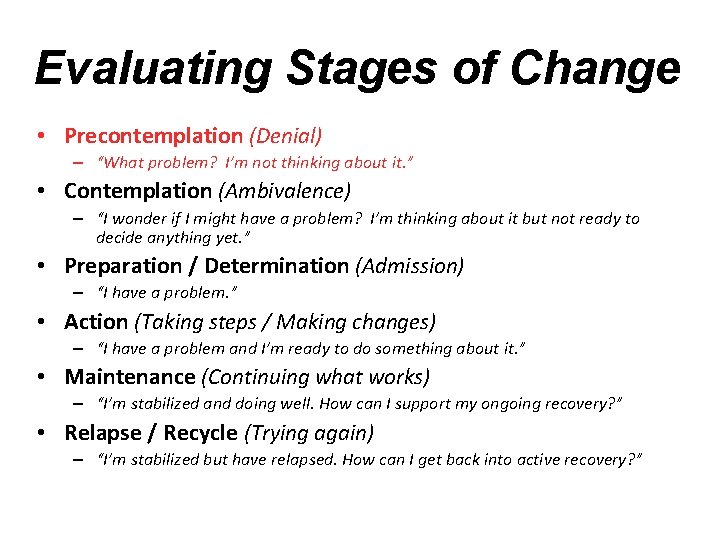
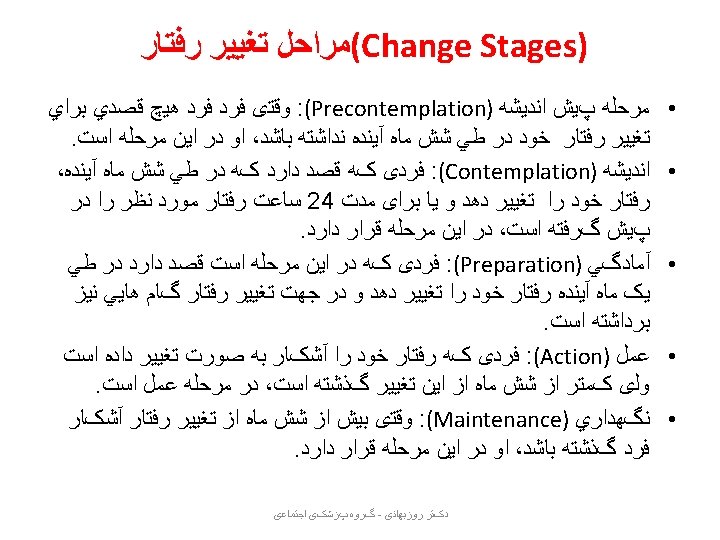
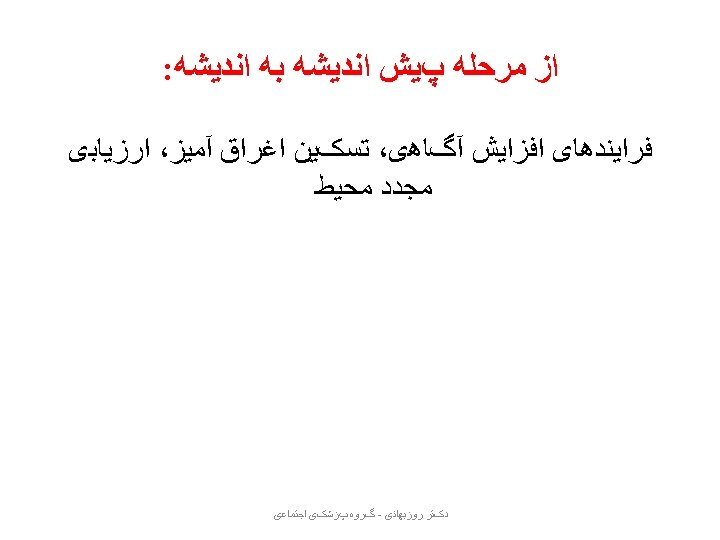
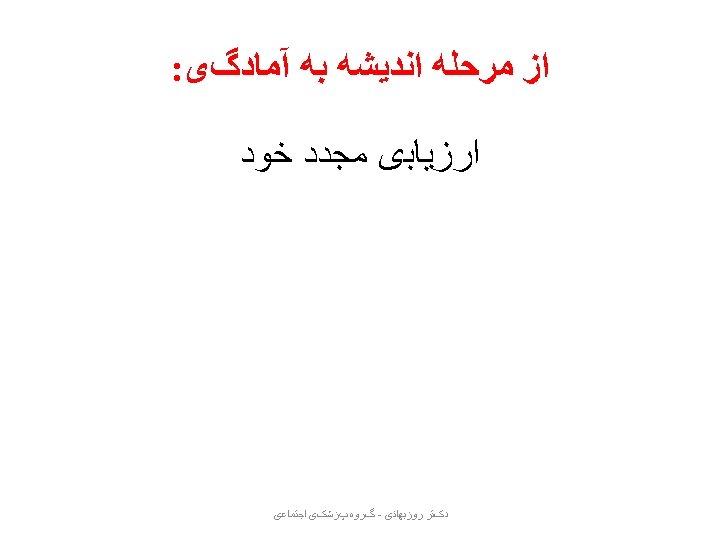
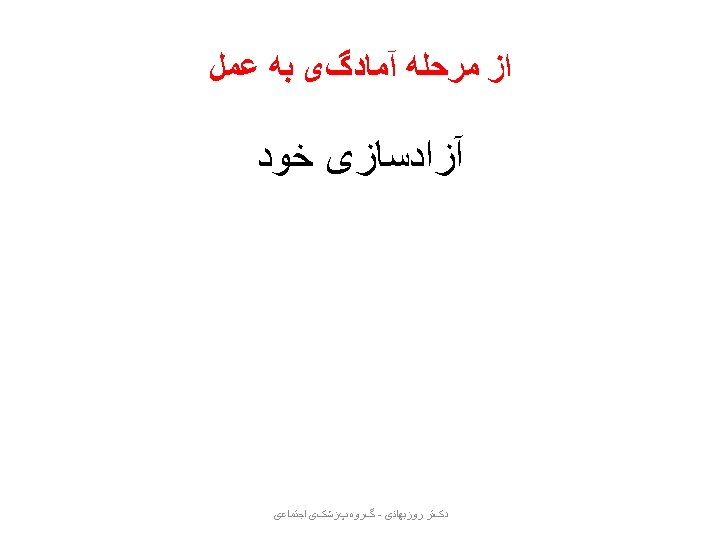
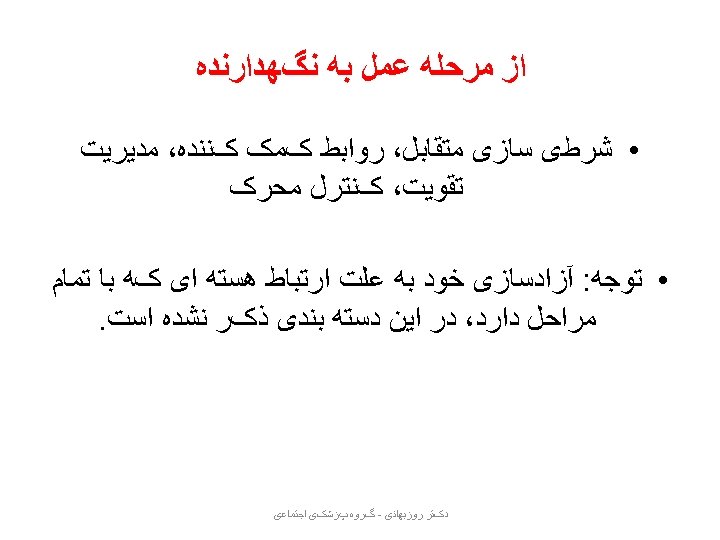
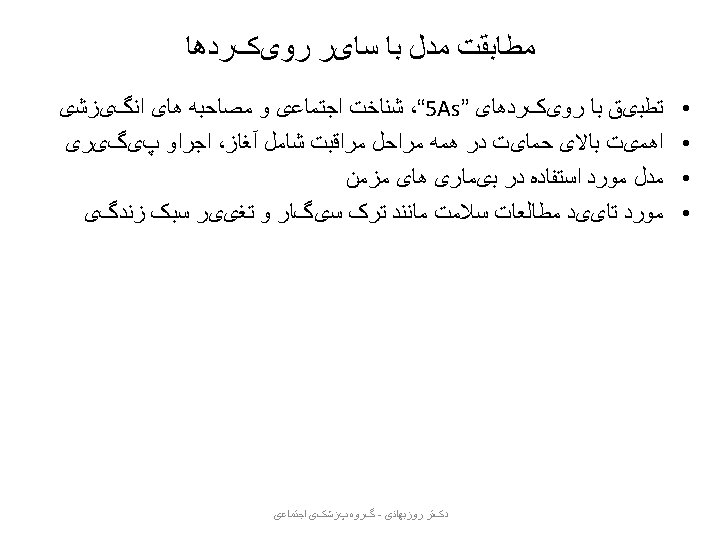
Evaluating Stages of Change • Precontemplation (Denial) – “What problem? I’m not thinking about it. ” • Contemplation (Ambivalence) – “I wonder if I might have a problem? I’m thinking about it but not ready to decide anything yet. ” • Preparation / Determination (Admission) – “I have a problem. ” • Action (Taking steps / Making changes) – “I have a problem and I’m ready to do something about it. ” • Maintenance (Continuing what works) – “I’m stabilized and doing well. How can I support my ongoing recovery? ” • Relapse / Recycle (Trying again) – “I’m stabilized but have relapsed. How can I get back into active recovery? ”
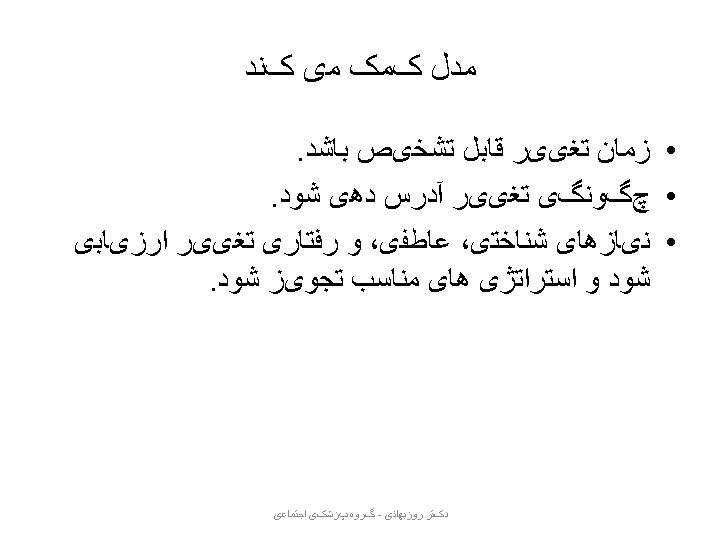
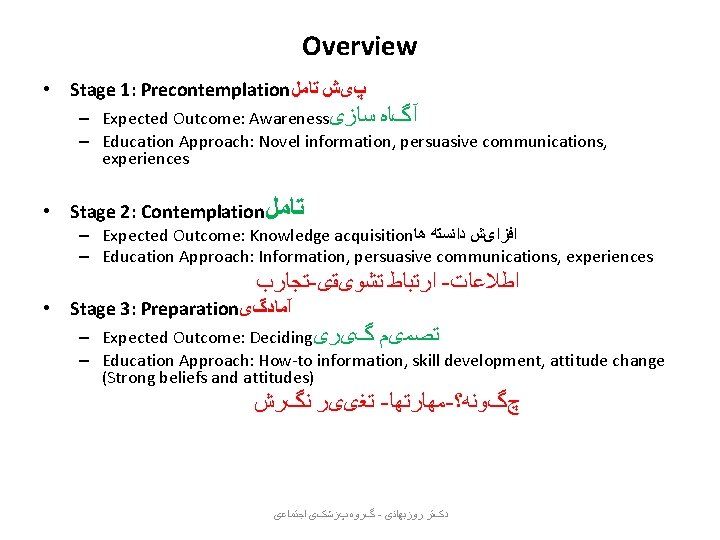
Overview • Stage 1: Precontemplation پیﺶ ﺗﺎﻣﻞ – Expected Outcome: Awareness ﺳﺎﺯی آگﺎﻩ – Education Approach: Novel information, persuasive communications, experiences • Stage 2: Contemplation ﺗﺎﻣﻞ – Expected Outcome: Knowledge acquisition ﻫﺎ ﺩﺍﻧﺴﺘﻪ ﺍﻓﺰﺍیﺶ – Education Approach: Information, persuasive communications, experiences ﺗﺠﺎﺭﺏ - ﺗﺸﻮیﻘی ﺍﺭﺗﺒﺎﻁ - ﺍﻃﻼﻋﺎﺕ • Stage 3: Preparation آﻤﺎﺩگی – Expected Outcome: Deciding گیﺮی ﺗﺼﻤیﻢ – Education Approach: How-to information, skill development, attitude change (Strong beliefs and attitudes) ﻧگﺮﺵ ﺗﻐییﺮ - ﻣﻬﺎﺭﺗﻬﺎ - چگﻮﻧﻪ؟ ﺍﺟﺘﻤﺎﻋی پﺰﺷکی گﺮﻭﻩ - ﺭﻭﺯﺑﻬﺎﻧی ﺩکﺘﺮ
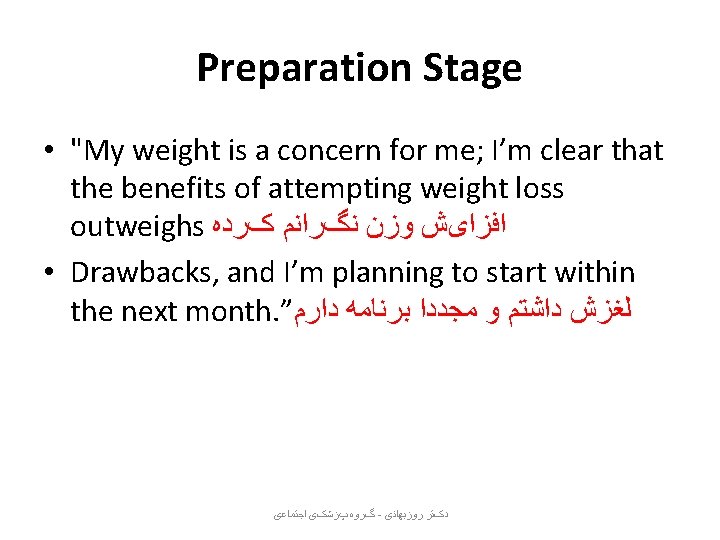
Preparation Stage • "My weight is a concern for me; I’m clear that the benefits of attempting weight loss outweighs ﺍﻓﺰﺍیﺶ ﻭﺯﻥ ﻧگﺮﺍﻧﻢ کﺮﺩﻩ • Drawbacks, and I’m planning to start within the next month. ” ﻟﻐﺰﺵ ﺩﺍﺷﺘﻢ ﻭ ﻣﺠﺪﺩﺍ ﺑﺮﻧﺎﻣﻪ ﺩﺍﺭﻡ ﺍﺟﺘﻤﺎﻋی پﺰﺷکی گﺮﻭﻩ - ﺭﻭﺯﺑﻬﺎﻧی ﺩکﺘﺮ

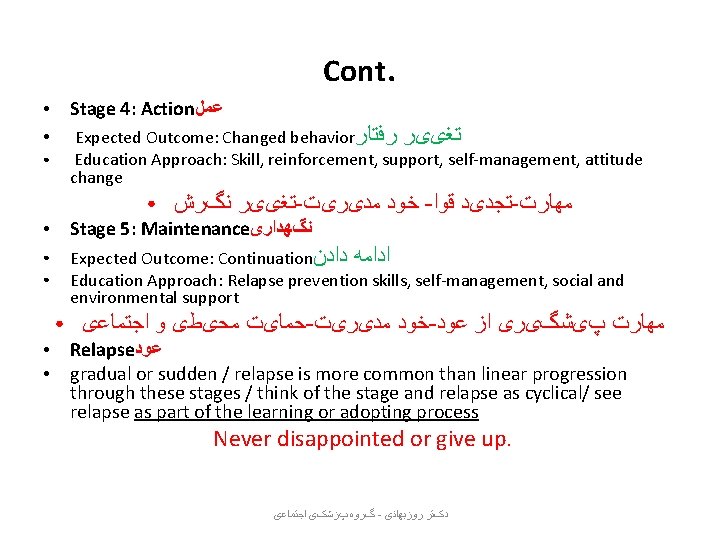
Cont. Stage 4: Action ﻋﻤﻞ Expected Outcome: Changed behavior ﺭﻓﺘﺎﺭ ● ● Education Approach: Skill, reinforcement, support, self-management, attitude change ● ● Expected Outcome: Continuation ﺍﺩﺍﻣﻪ ﺩﺍﺩﻥ Education Approach: Relapse prevention skills, self-management, social and environmental support ● ● ﺗﻐییﺮ ﻧگﺮﺵ - ﺧﻮﺩ ﻣﺪیﺮیﺖ - ﺗﺠﺪیﺪ ﻗﻮﺍ - ﻣﻬﺎﺭﺕ Stage 5: Maintenance ﻧگﻬﺪﺍﺭی ● ● ﺗﻐییﺮ ﺣﻤﺎیﺖ ﻣﺤیﻄی ﻭ ﺍﺟﺘﻤﺎﻋی - ﺧﻮﺩ ﻣﺪیﺮیﺖ - ﻣﻬﺎﺭﺕ پیﺸگیﺮی ﺍﺯ ﻋﻮﺩ Relapse ﻋﻮﺩ gradual or sudden / relapse is more common than linear progression through these stages / think of the stage and relapse as cyclical/ see relapse as part of the learning or adopting process Never disappointed or give up. ﺍﺟﺘﻤﺎﻋی پﺰﺷکی گﺮﻭﻩ - ﺭﻭﺯﺑﻬﺎﻧی ﺩکﺘﺮ
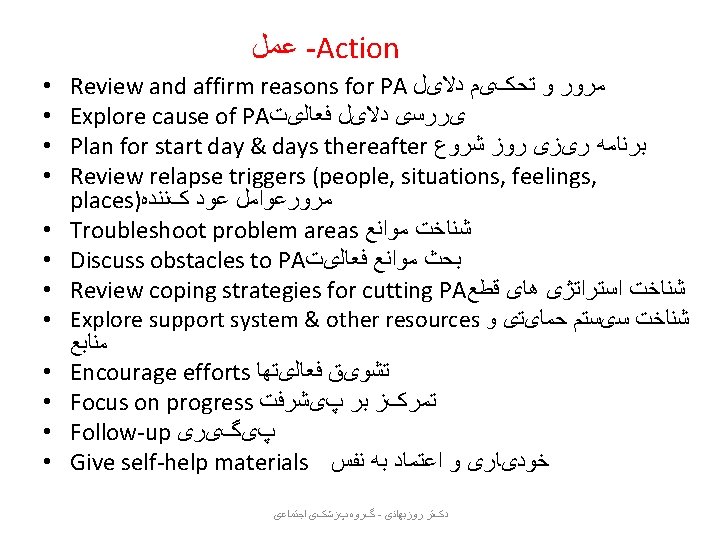
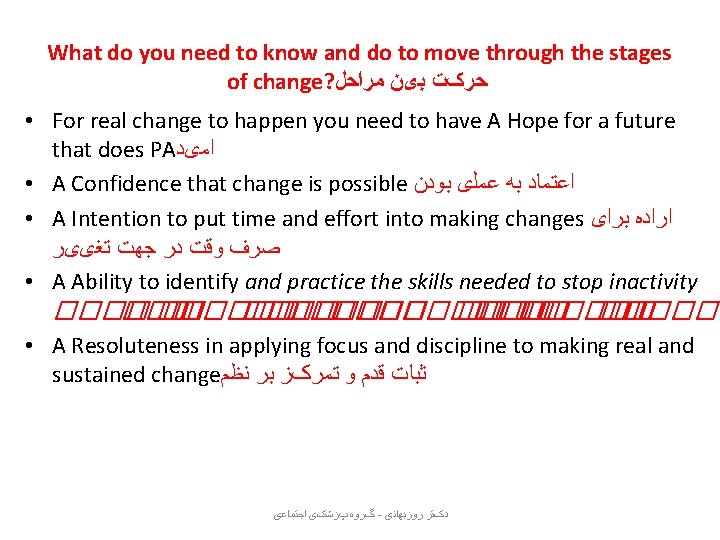
What do you need to know and do to move through the stages of change? ﺣﺮکﺖ ﺑیﻦ ﻣﺮﺍﺣﻞ • For real change to happen you need to have A Hope for a future that does PA ﺍﻣیﺪ • A Confidence that change is possible ﺍﻋﺘﻤﺎﺩ ﺑﻪ ﻋﻤﻠی ﺑﻮﺩﻥ • A Intention to put time and effort into making changes ﺍﺭﺍﺩﻩ ﺑﺮﺍی ﺻﺮﻑ ﻭﻗﺖ ﺩﺭ ﺟﻬﺖ ﺗﻐییﺮ • A Ability to identify and practice the skills needed to stop inactivity ���� ���� ������ �� ����� • A Resoluteness in applying focus and discipline to making real and sustained change ﺛﺒﺎﺕ ﻗﺪﻡ ﻭ ﺗﻤﺮکﺰ ﺑﺮ ﻧﻈﻢ ﺍﺟﺘﻤﺎﻋی پﺰﺷکی گﺮﻭﻩ - ﺭﻭﺯﺑﻬﺎﻧی ﺩکﺘﺮ
![I. Processes of Change: Experiential • • • Consciousness Raising [Increasing awareness] I recall](http://slidetodoc.com/presentation_image_h/7d44571261a8cee11c8ab6b5b1fabd62/image-23.jpg "I. Processes of Change: Experiential • • • Consciousness Raising [Increasing awareness] I recall")
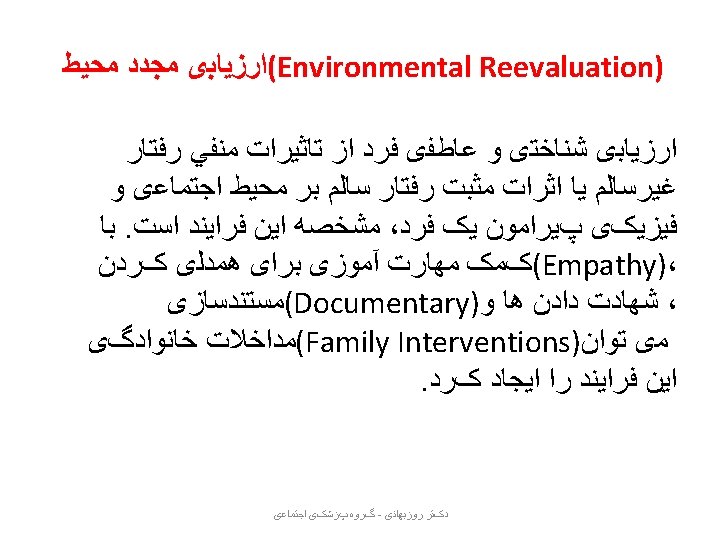
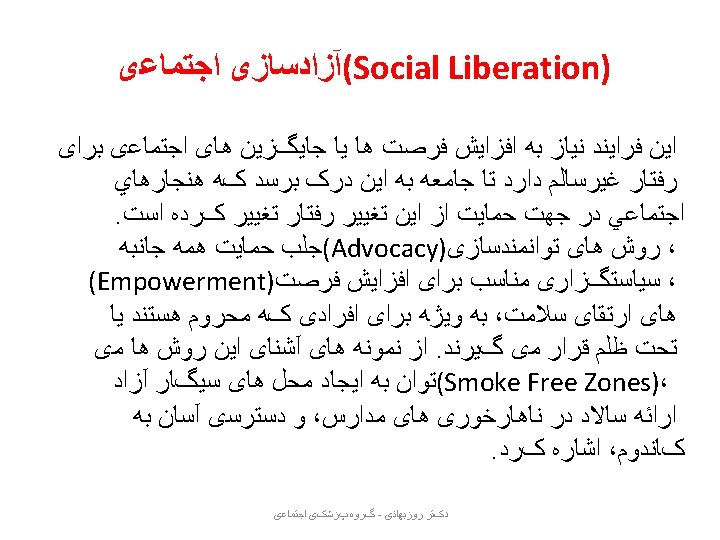
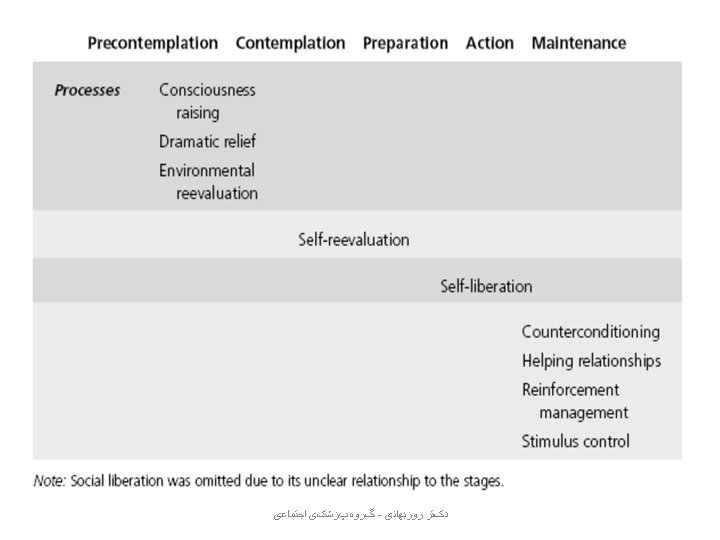
I. Processes of Change: Experiential • • • Consciousness Raising [Increasing awareness] I recall information people had given me on how to stop smoking Dramatic Relief [Emotional arousal] I react emotionally to warnings about smoking cigarettes Environmental Reevaluation [Social reappraisal] I consider the view that smoking can be harmful to the environment 4. Social Liberation [Environmental opportunities] I find society changing in ways that make it easier for the nonsmoker 5. Self Reevaluation [Self reappraisal] My dependency on cigarettes makes me feel disappointed in myself ﺍﺟﺘﻤﺎﻋی پﺰﺷکی گﺮﻭﻩ - ﺭﻭﺯﺑﻬﺎﻧی ﺩکﺘﺮ
![II. Processes of Change: Behavioral • • • Stimulus Control [Re-engineering] I remove things](http://slidetodoc.com/presentation_image_h/7d44571261a8cee11c8ab6b5b1fabd62/image-24.jpg "II. Processes of Change: Behavioral • • • Stimulus Control [Re-engineering] I remove things")
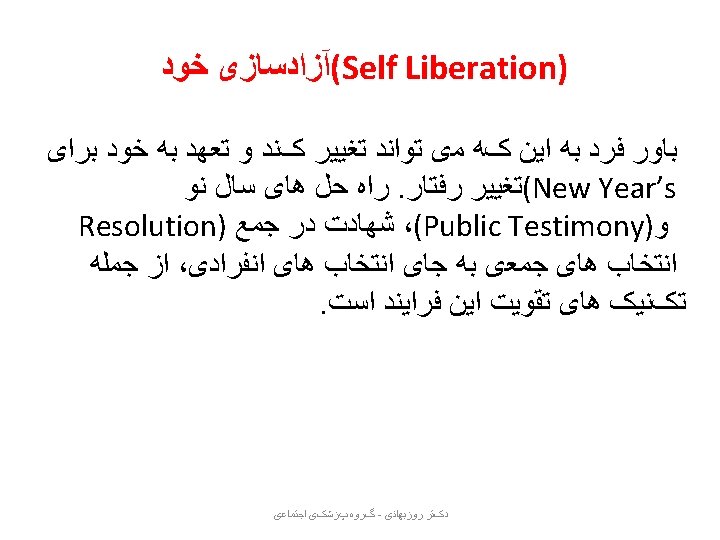
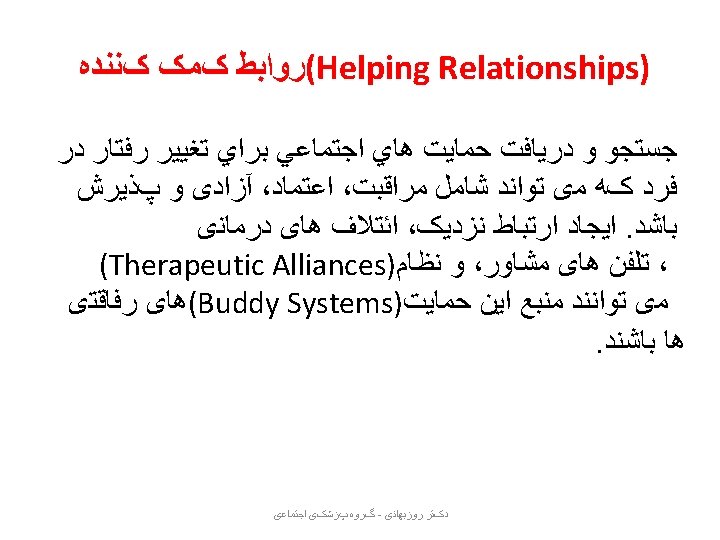
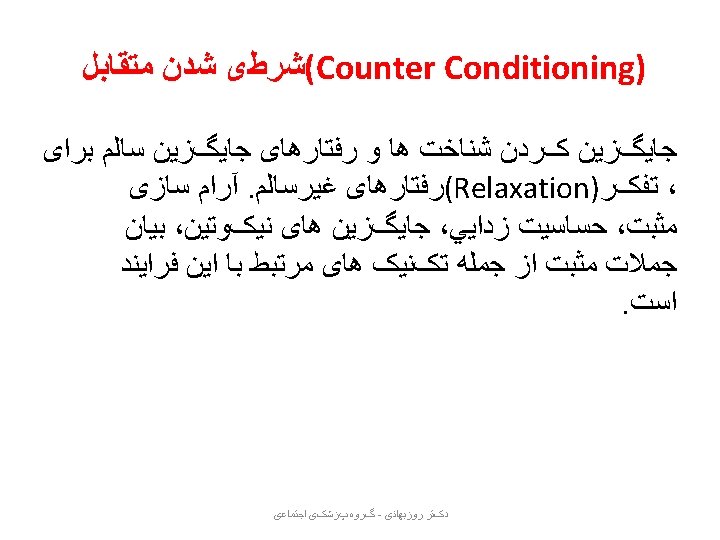
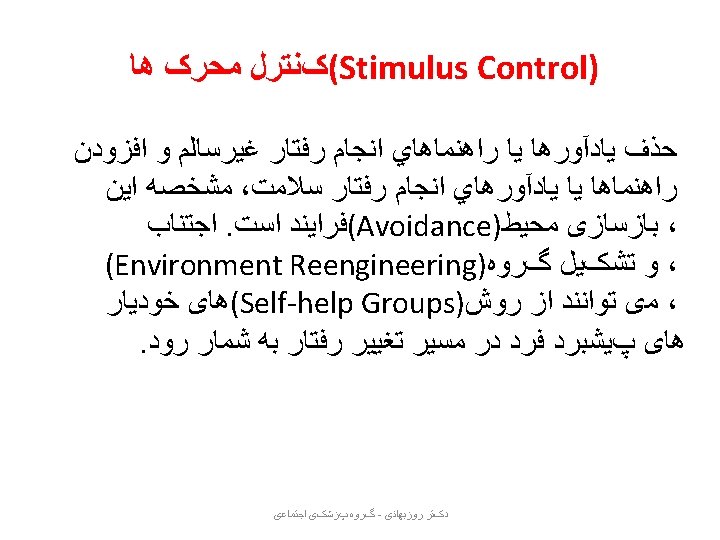
II. Processes of Change: Behavioral • • • Stimulus Control [Re-engineering] I remove things from my home that remind me of smoking Helping Relationship [Supporting] I have someone who listens when I need to talk about my smoking Counter Conditioning [Substituting] I find that doing other things with my hands is a good substitute for smoking Reinforcement Management [Rewarding] I reward myself when I don’t smoke Self Liberation [Committing] I make commitments not to smoke ﺍﺟﺘﻤﺎﻋی پﺰﺷکی گﺮﻭﻩ - ﺭﻭﺯﺑﻬﺎﻧی ﺩکﺘﺮ

Notes Determination Description • Motivated to make a change. • I’ve got to do something about this problem. • This is serious! Something has to change. • What can I do? How can I change? • Window of opportunity – open for a short time – either advance to slip back ﺍﺟﺘﻤﺎﻋی پﺰﺷکی گﺮﻭﻩ - ﺭﻭﺯﺑﻬﺎﻧی ﺩکﺘﺮ
Action Description: • Often thought of as therapeutic process • Doing things to make a change ﺍﺟﺘﻤﺎﻋی پﺰﺷکی گﺮﻭﻩ - ﺭﻭﺯﺑﻬﺎﻧی ﺩکﺘﺮ
Strategy • Cheering on • Supporting client in taking steps toward change • Reflecting back goals, providing real support ﺍﺟﺘﻤﺎﻋی پﺰﺷکی گﺮﻭﻩ - ﺭﻭﺯﺑﻬﺎﻧی ﺩکﺘﺮ
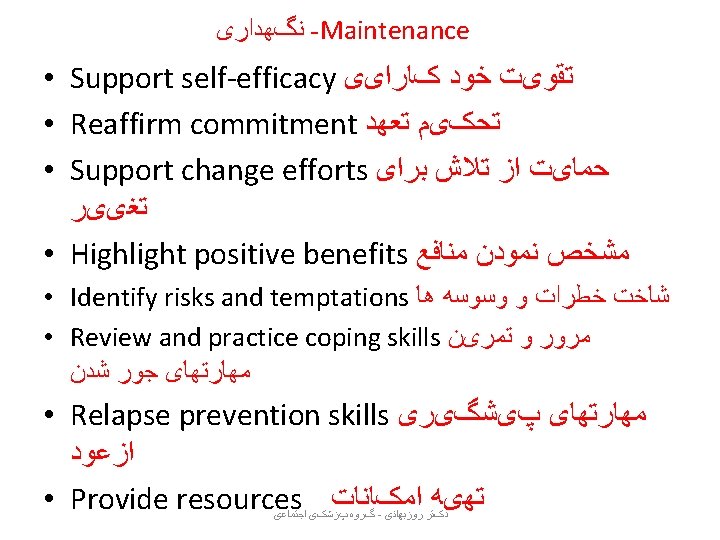
Maintenance Description • Sustain change • Prevent relapse • Learn different skills that needed to change ﺍﺟﺘﻤﺎﻋی پﺰﺷکی گﺮﻭﻩ - ﺭﻭﺯﺑﻬﺎﻧی ﺩکﺘﺮ
Strategy: • Help the client to identify and use strategies to prevent relapse ﺍﺟﺘﻤﺎﻋی پﺰﺷکی گﺮﻭﻩ - ﺭﻭﺯﺑﻬﺎﻧی ﺩکﺘﺮ
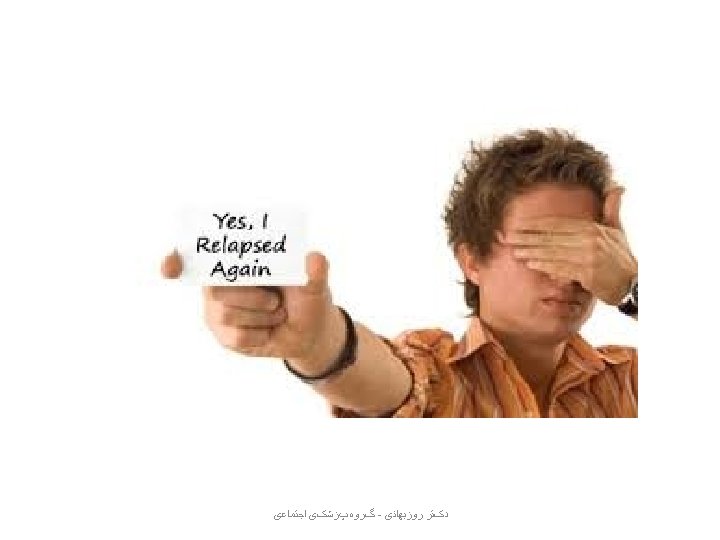
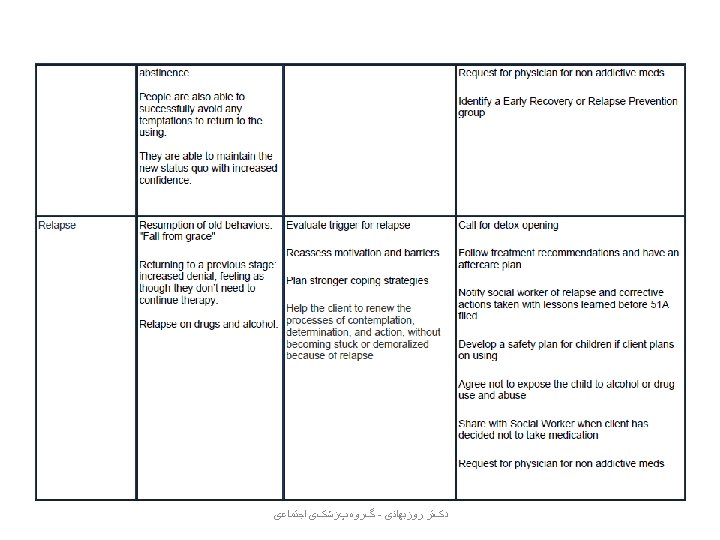
Relapse Description • Oops • Step backward • Relapse that is a “slip” is minor • Relapse that leads to falling off the wagon is major • Challenge is to start again and not get demoralized • Use relapse as opportunity to grow ﺍﺟﺘﻤﺎﻋی پﺰﺷکی گﺮﻭﻩ - ﺭﻭﺯﺑﻬﺎﻧی ﺩکﺘﺮ
Strategy • Help prepare for and expect relapse • Avoid demoralization • Urge them to continue on wheel of change • Don’t give up • Clarify consequences ﺍﺟﺘﻤﺎﻋی پﺰﺷکی گﺮﻭﻩ - ﺭﻭﺯﺑﻬﺎﻧی ﺩکﺘﺮ
Liken this change process to the stages of reactions people go through when they experience loss/separation: • Shock • Denial • Anger • Bargaining • Acceptance • Moving on ﺍﺟﺘﻤﺎﻋی پﺰﺷکی گﺮﻭﻩ - ﺭﻭﺯﺑﻬﺎﻧی ﺩکﺘﺮ
Connect these to the kind of things people said they wanted to know and how they wanted to be treated during the morning exercise. • • Advice - share Barriers – remove Choices – provide Desirability – decrease Notes Empathy - show Feedback - provide Goals - develop Helping - actively ﺍﺟﺘﻤﺎﻋی پﺰﺷکی گﺮﻭﻩ - ﺭﻭﺯﺑﻬﺎﻧی ﺩکﺘﺮ
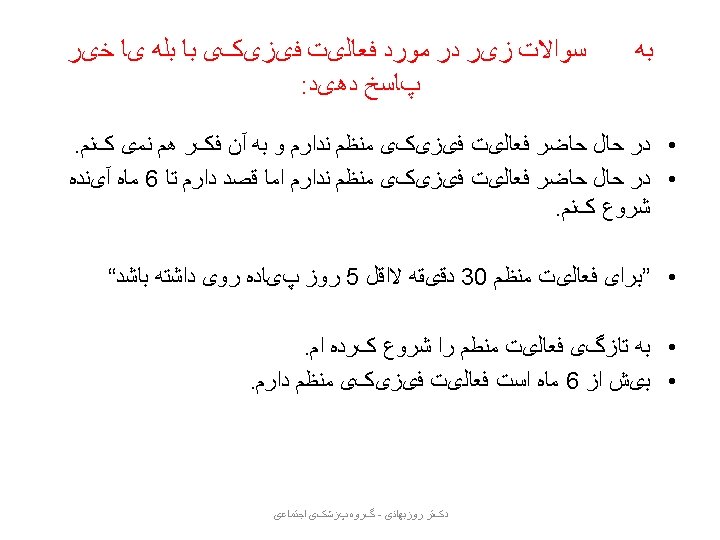
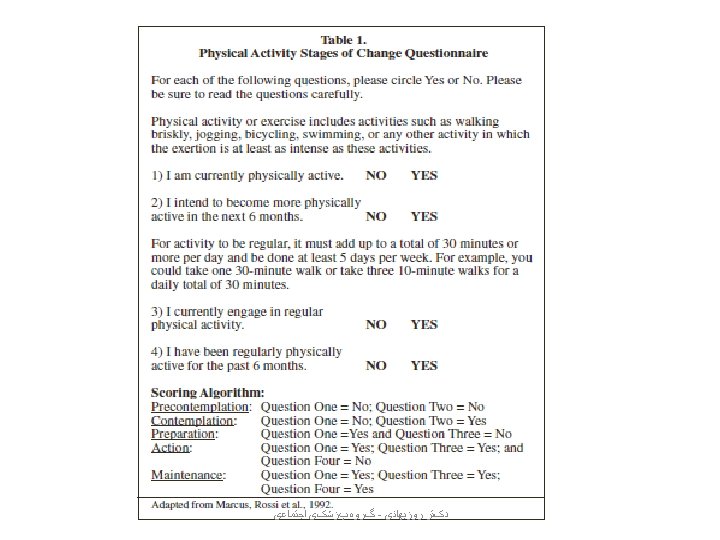
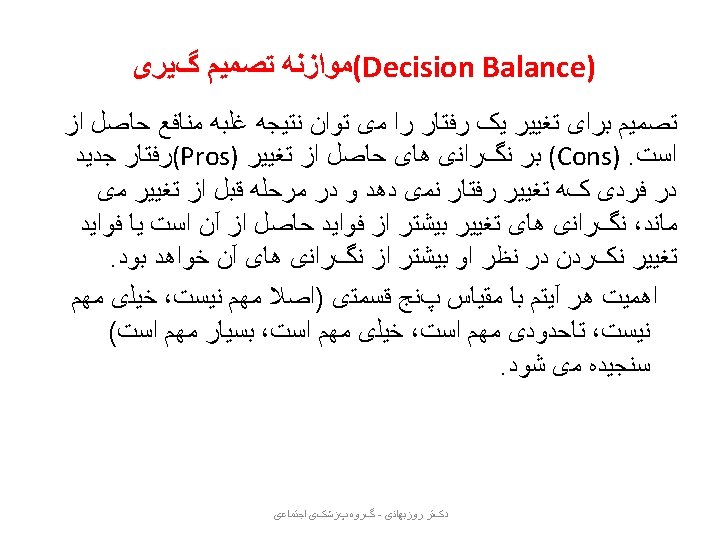
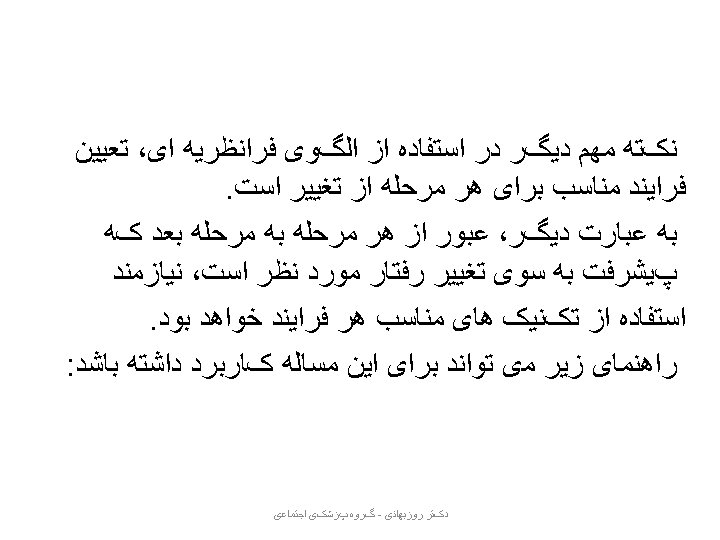
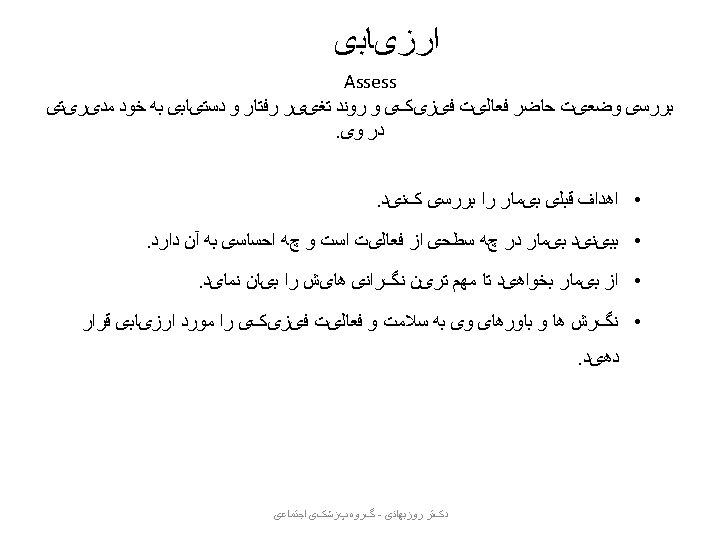
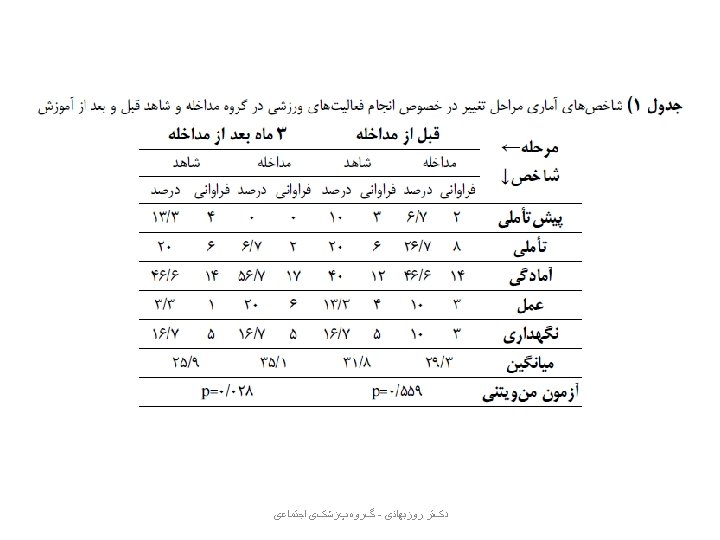
Stages of change( SOC) • • Assess and Determine Define moderate – intensity PA Yes or no to 4 statements about PA behavior and intentions Early stages demand more cognitive techniques Late stages demand more behavioral techniques ﺍﺟﺘﻤﺎﻋی پﺰﺷکی گﺮﻭﻩ - ﺭﻭﺯﺑﻬﺎﻧی ﺩکﺘﺮ
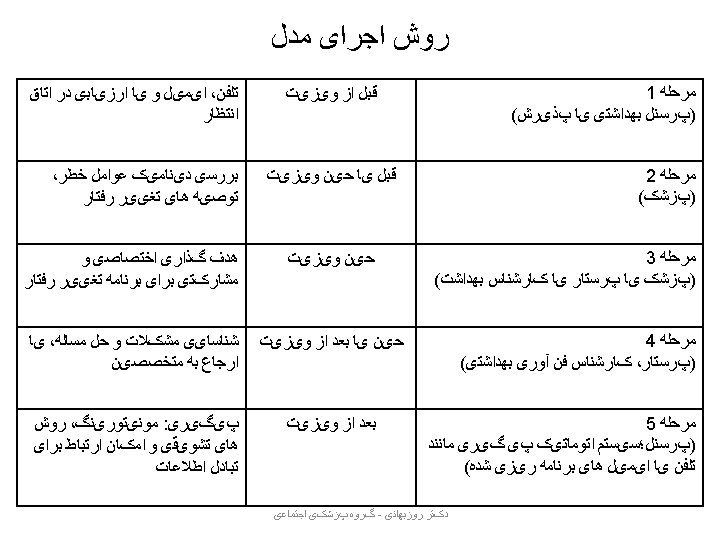
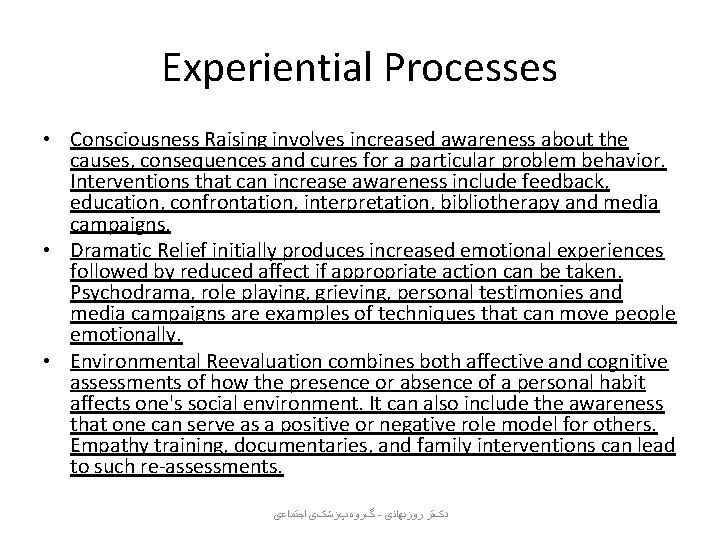
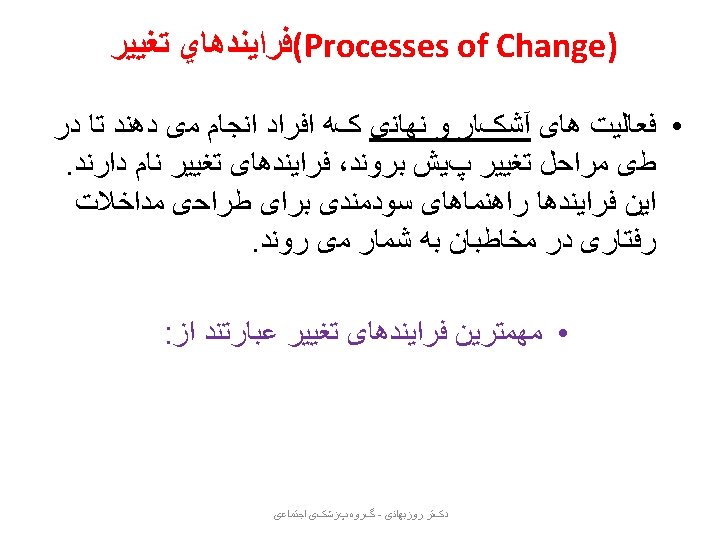
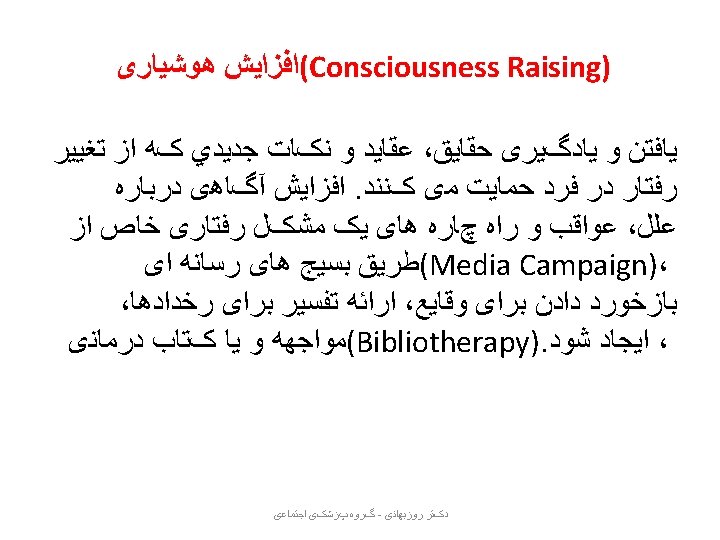
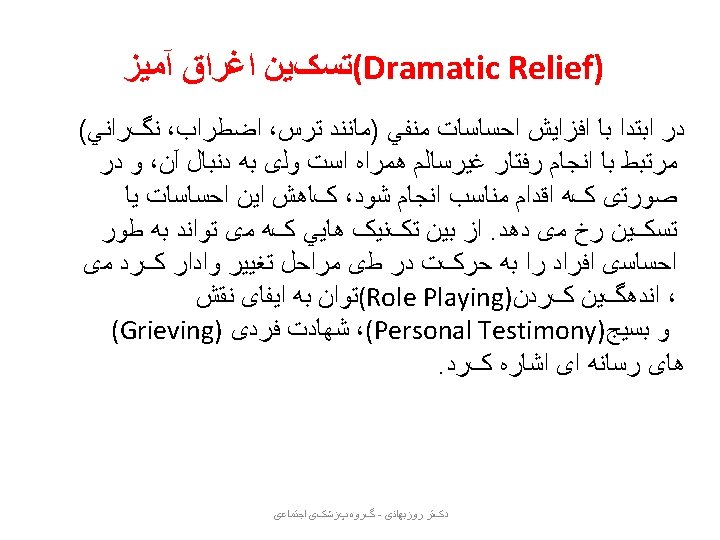
Experiential Processes • Consciousness Raising involves increased awareness about the causes, consequences and cures for a particular problem behavior. Interventions that can increase awareness include feedback, education, confrontation, interpretation, bibliotherapy and media campaigns. • Dramatic Relief initially produces increased emotional experiences followed by reduced affect if appropriate action can be taken. Psychodrama, role playing, grieving, personal testimonies and media campaigns are examples of techniques that can move people emotionally. • Environmental Reevaluation combines both affective and cognitive assessments of how the presence or absence of a personal habit affects one's social environment. It can also include the awareness that one can serve as a positive or negative role model for others. Empathy training, documentaries, and family interventions can lead to such re-assessments. ﺍﺟﺘﻤﺎﻋی پﺰﺷکی گﺮﻭﻩ - ﺭﻭﺯﺑﻬﺎﻧی ﺩکﺘﺮ
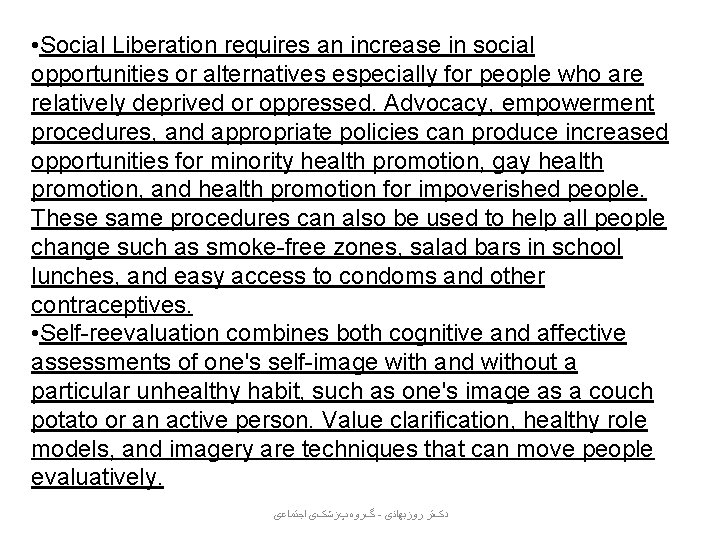
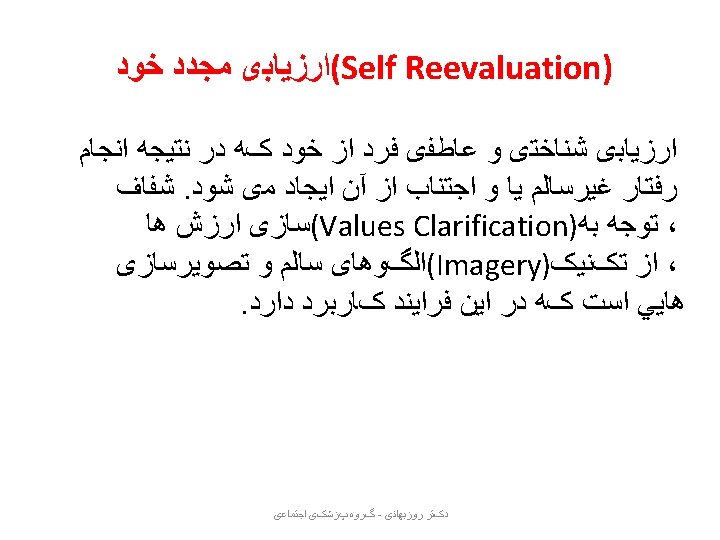
• Social Liberation requires an increase in social opportunities or alternatives especially for people who are relatively deprived or oppressed. Advocacy, empowerment procedures, and appropriate policies can produce increased opportunities for minority health promotion, gay health promotion, and health promotion for impoverished people. These same procedures can also be used to help all people change such as smoke-free zones, salad bars in school lunches, and easy access to condoms and other contraceptives. • Self-reevaluation combines both cognitive and affective assessments of one's self-image with and without a particular unhealthy habit, such as one's image as a couch potato or an active person. Value clarification, healthy role models, and imagery are techniques that can move people evaluatively. ﺍﺟﺘﻤﺎﻋی پﺰﺷکی گﺮﻭﻩ - ﺭﻭﺯﺑﻬﺎﻧی ﺩکﺘﺮ
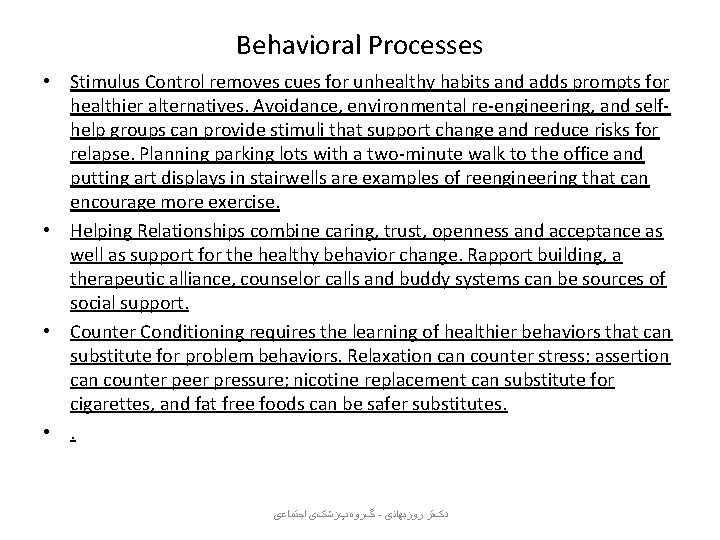
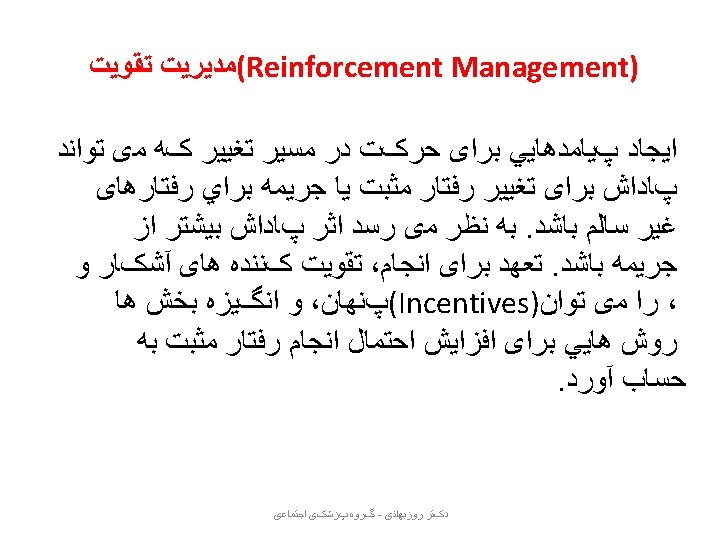
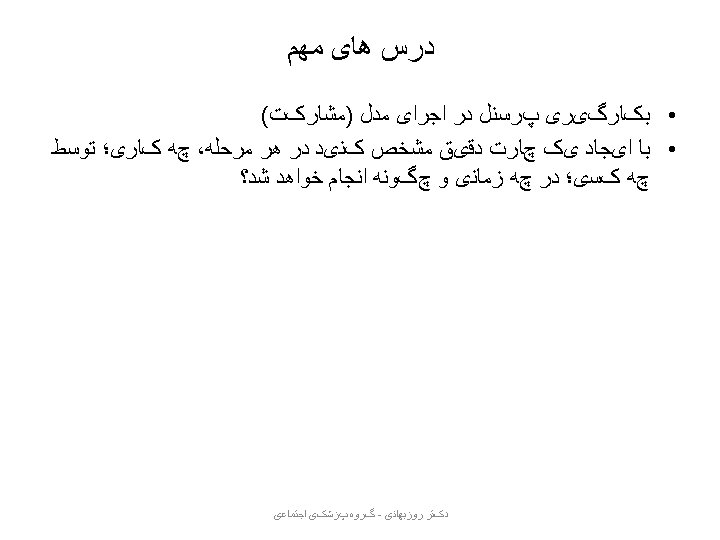
Behavioral Processes • Stimulus Control removes cues for unhealthy habits and adds prompts for healthier alternatives. Avoidance, environmental re-engineering, and selfhelp groups can provide stimuli that support change and reduce risks for relapse. Planning parking lots with a two-minute walk to the office and putting art displays in stairwells are examples of reengineering that can encourage more exercise. • Helping Relationships combine caring, trust, openness and acceptance as well as support for the healthy behavior change. Rapport building, a therapeutic alliance, counselor calls and buddy systems can be sources of social support. • Counter Conditioning requires the learning of healthier behaviors that can substitute for problem behaviors. Relaxation can counter stress; assertion can counter peer pressure; nicotine replacement can substitute for cigarettes, and fat free foods can be safer substitutes. • . ﺍﺟﺘﻤﺎﻋی پﺰﺷکی گﺮﻭﻩ - ﺭﻭﺯﺑﻬﺎﻧی ﺩکﺘﺮ
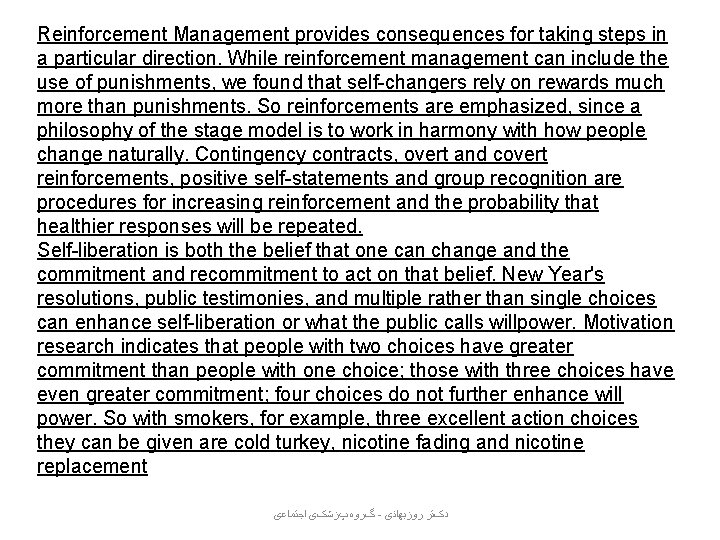
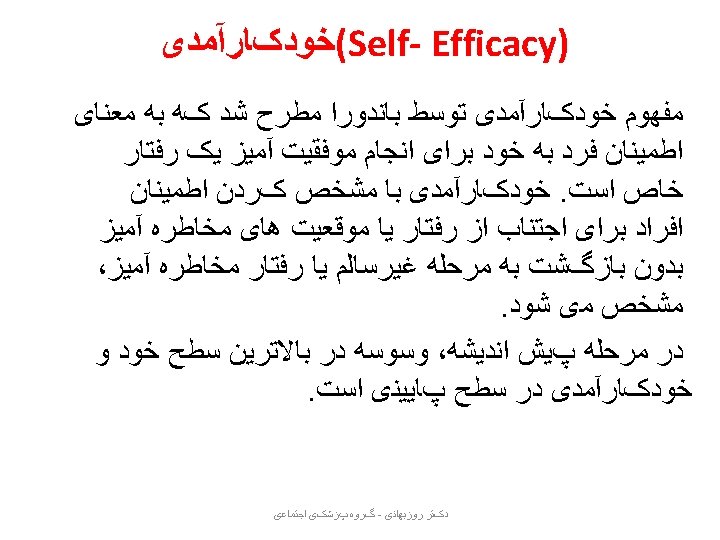
Reinforcement Management provides consequences for taking steps in a particular direction. While reinforcement management can include the use of punishments, we found that self-changers rely on rewards much more than punishments. So reinforcements are emphasized, since a philosophy of the stage model is to work in harmony with how people change naturally. Contingency contracts, overt and covert reinforcements, positive self-statements and group recognition are procedures for increasing reinforcement and the probability that healthier responses will be repeated. Self-liberation is both the belief that one can change and the commitment and recommitment to act on that belief. New Year's resolutions, public testimonies, and multiple rather than single choices can enhance self-liberation or what the public calls willpower. Motivation research indicates that people with two choices have greater commitment than people with one choice; those with three choices have even greater commitment; four choices do not further enhance will power. So with smokers, for example, three excellent action choices they can be given are cold turkey, nicotine fading and nicotine replacement ﺍﺟﺘﻤﺎﻋی پﺰﺷکی گﺮﻭﻩ - ﺭﻭﺯﺑﻬﺎﻧی ﺩکﺘﺮ
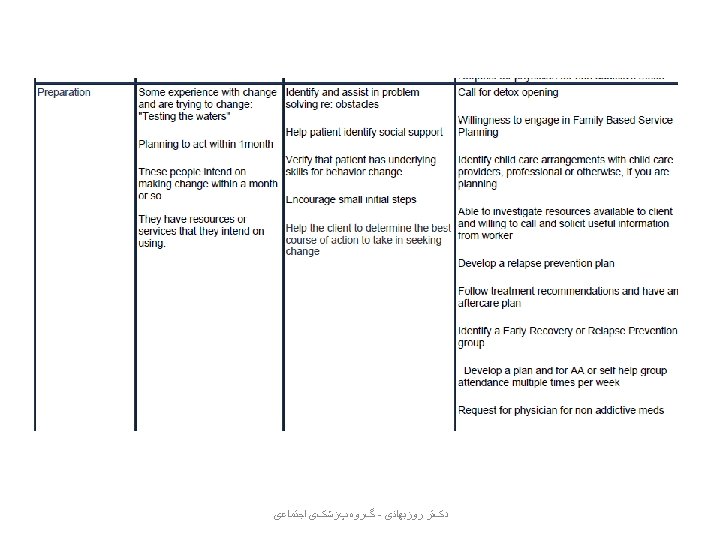
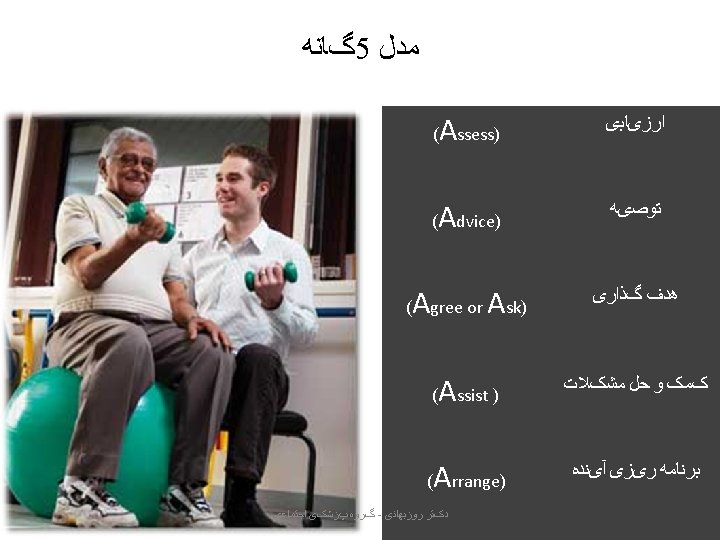
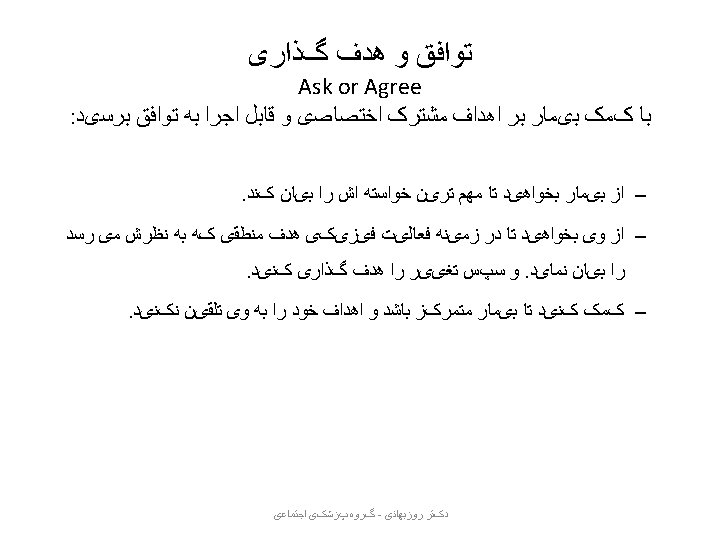
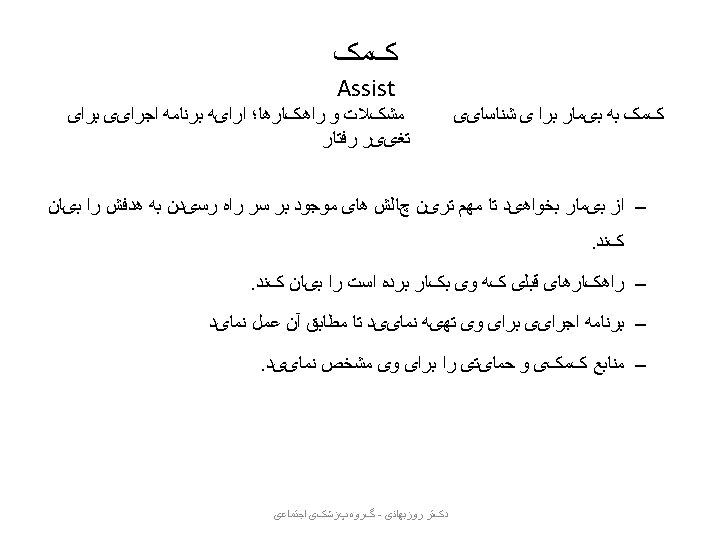
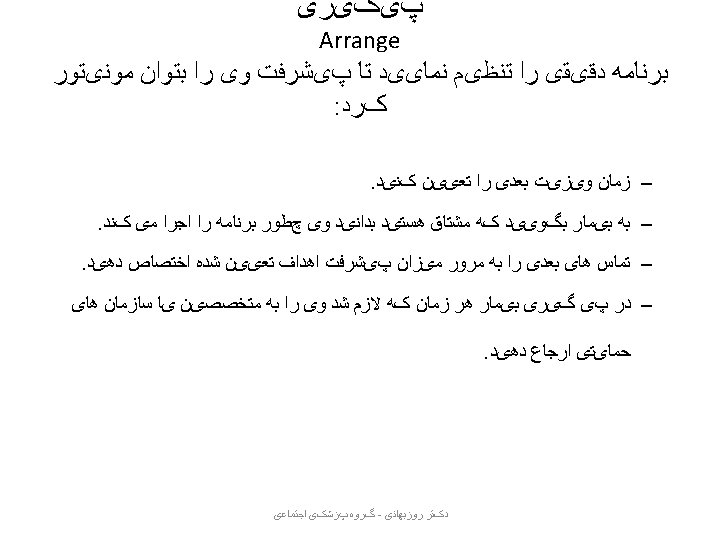
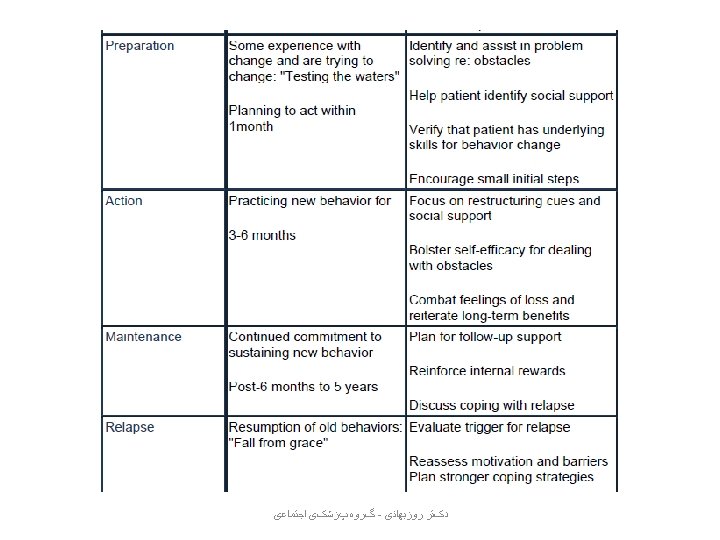
Goals: • 1. Praise the decision to change behavior: • "It’s great that you feel good about your weight loss decision; you are doing something important • to decrease your risk for heart disease. " • 2. Prioritize behavior change opportunities: • "Looking at your eating habits, I think the biggest benefits would come from switching from whole • milk dairy products to fat-free dairy products. What do you think? " ﺍﺟﺘﻤﺎﻋی پﺰﺷکی گﺮﻭﻩ - ﺭﻭﺯﺑﻬﺎﻧی ﺩکﺘﺮ
Cont. • 3. Identify and assist in problem solving re: obstacles: • "Have you ever attempted weight loss before? What was helpful? What kinds of problems would • you expect in making those changes now? How do you think you could deal with them? " • 4. Encourage small, initial steps: • "So, the initial goal is to try nonfat milk instead of whole milk every time you have cereal this • week. " • 5. Assist patient in identifying social support: • "Which family members or friends could support you as you make this change? How could they • support you? Is there anything else I can do to help? " ﺍﺟﺘﻤﺎﻋی پﺰﺷکی گﺮﻭﻩ - ﺭﻭﺯﺑﻬﺎﻧی ﺩکﺘﺮ
Strategy: • • Articulate the choices in client’s words. • • Suggest choices. • • Probe client’s thinking about options ﺍﺟﺘﻤﺎﻋی پﺰﺷکی گﺮﻭﻩ - ﺭﻭﺯﺑﻬﺎﻧی ﺩکﺘﺮ
Definition People in precontemplation stage have no intention of changing their behavior for the foreseeable future. They are not thinking about changing their behavior, and may not see the behavior as a problem when asked. They certainly do not believe it is as problematic as external observers see it. These individuals are often labeled as "resistant" or in "denial. " ﺍﺟﺘﻤﺎﻋی پﺰﺷکی گﺮﻭﻩ - ﺭﻭﺯﺑﻬﺎﻧی ﺩکﺘﺮ
Things to Consider Reasons for precontemplation can fit into the "four R's": reluctance, rebellion, resignation, and rationalization. Di. Clemente (1991) described why these groups do not consider change and methods for intervening. ﺍﺟﺘﻤﺎﻋی پﺰﺷکی گﺮﻭﻩ - ﺭﻭﺯﺑﻬﺎﻧی ﺩکﺘﺮ
Therapist Tasks • Identify "the problem" - this often means something different for therapist and the client. • Be aware of difference between reason and rationalization. A person, well aware of the risks and problems, may choose to continue the behavior. We may not change them in the face of this informed choice. Our work may have an impact later. • Recognize that more is not always better. More intensity will produce fewer results with this group. Use MI strategies to raise awareness and doubt. Increase the client's perceptions of risks and problems with current behavior. • Remember the goal is not to make precontemplators change immediately, but to help move them to ﺍﺟﺘﻤﺎﻋی پﺰﺷکی گﺮﻭﻩ - ﺭﻭﺯﺑﻬﺎﻧی ﺩکﺘﺮ contemplation.
Strategies Primary tools are providing information and raising doubt. However, basic skills such as reflective listening, open-ended questions, and functioning as a collaborator (rather than an educator) may be enough. Matching interventions to the type of precontemplators is also helpful. Outcome The client begins to consider that a problem or matter of concern exists. ﺍﺟﺘﻤﺎﻋی پﺰﺷکی گﺮﻭﻩ - ﺭﻭﺯﺑﻬﺎﻧی ﺩکﺘﺮ
Contemplation Definition The person is aware a problem exists and seriously considers, action, but has not yet made a commitment to an action. Things to Consider This is a paradoxical stage of change. The client is willing to consider the problem and possibility of change, yet ambivalence can make contemplation a chronic condition. Clients are quite open to information and yet wait for the one final piece of information that will compel them to change. It’s almost as they either wait for a magic moment or an irresistible piece of information that will make the decision for them. This is a particularly opportune time for motivational interviewing strategies. Contemplation and interest in change are not commitment. Information and incentives to change are important elements for assisting contemplators. Personally relevant information can have a strong impact at this stage. ﺍﺟﺘﻤﺎﻋی پﺰﺷکی گﺮﻭﻩ - ﺭﻭﺯﺑﻬﺎﻧی ﺩکﺘﺮ
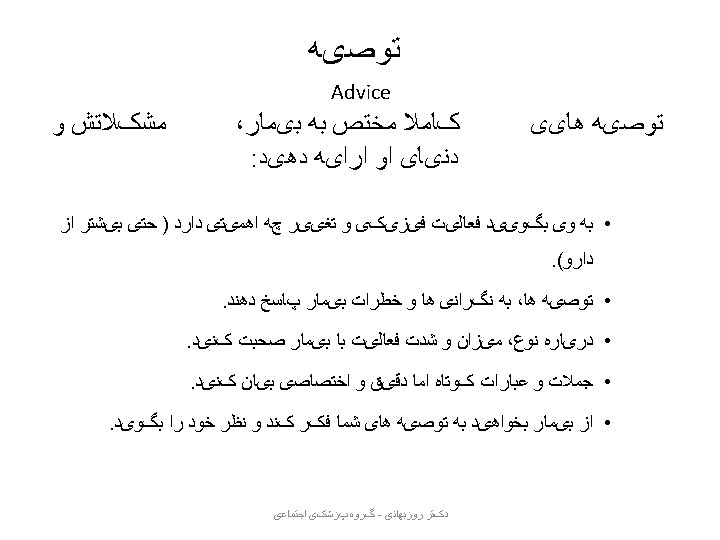
Therapist Tasks • Consider the pros and cons (from the clients perspective) of the problem behavior, as well as the pros and cons of change. • Gather information about past change attempts. Frame these in terms of "some success" rather than change failures. " • Explore options the client has considered for the change process and offer additional options where indicated and if the client is interested. Remember that our clients are rarely novices to the change process. • Elicit change statements. Strategies Inquire about the “good and less good” things of the problem behavior; explore concerns. Outcome The client is making change statements and makes a tentative commitment to changing the behavior ﺍﺟﺘﻤﺎﻋی پﺰﺷکی گﺮﻭﻩ - ﺭﻭﺯﺑﻬﺎﻧی ﺩکﺘﺮ
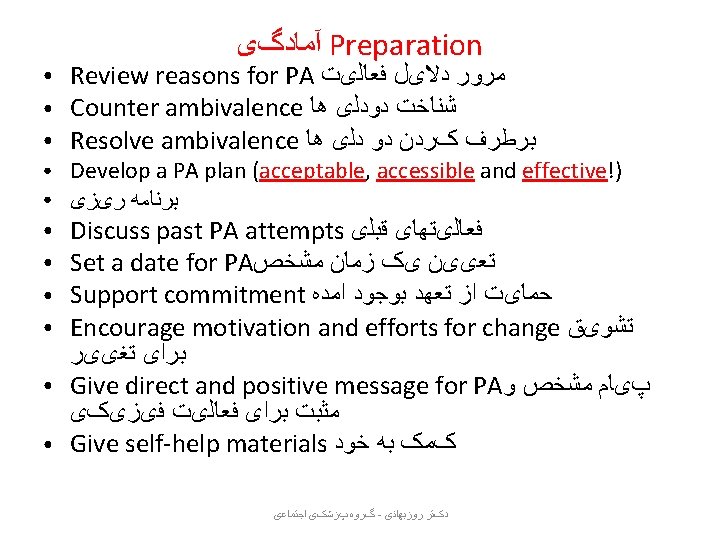
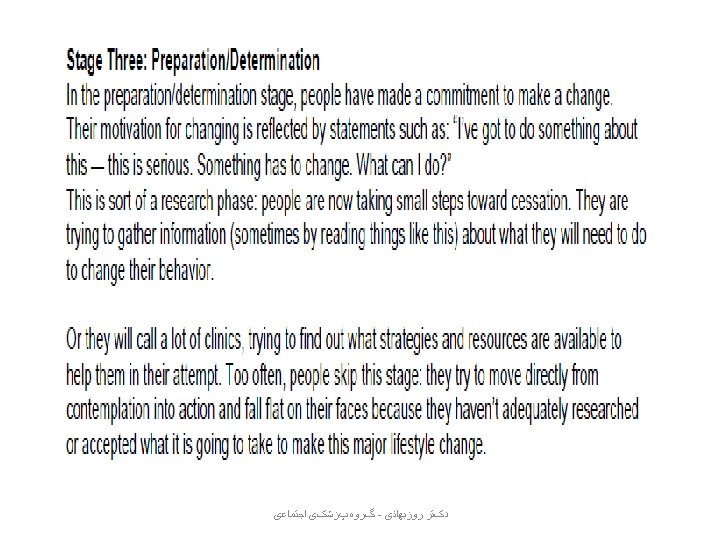
Preparation • Definition • The person is intent upon taking action soon and often report some steps in that direction. Thus, this • stage is a combination of behavioral actions and intentions. This is a relatively transitory stage that is • characterized by the individual's making a firm commitment to the change process. There may • already be some initial steps taken towards change, but even if not, most clients will make a serious • attempt at change soon (i. e. one month). ﺍﺟﺘﻤﺎﻋی پﺰﺷکی گﺮﻭﻩ - ﺭﻭﺯﺑﻬﺎﻧی ﺩکﺘﺮ
Things to Consider • Despite making a decision to alter behavior, change is not automatic. Ambivalence, though • diminishing, is still present. The decisionmaking process is still occurring and pros and cons are still • being weighed. ﺍﺟﺘﻤﺎﻋی پﺰﺷکی گﺮﻭﻩ - ﺭﻭﺯﺑﻬﺎﻧی ﺩکﺘﺮ
Therapist Tasks • Assess strength of commitment. Strong verbal statements may be a sign of weak commitment. A • realistic evaluation of problem area and a calm dedication to making this a top priority are good • indicators • • Examine barriers and elicit solutions (what will t he first week be like? ) • • Build coping behaviors • • Reinforce commitment but provide words of caution where enthusiasm may outdistance actual skills ﺍﺟﺘﻤﺎﻋی پﺰﺷکی گﺮﻭﻩ - ﺭﻭﺯﺑﻬﺎﻧی ﺩکﺘﺮ
Strategies Ask a key question. Assist client in building an action plan and removing barriers. Some examples of key questions are: • What do you think you will do? • What's the next step? • It sounds like things can't stay how they are now. What are you going to do? One structure for a change includes six elements: • Specific statement of changes to be made • Why these changes are important • Steps in making these changes • Inclusion of others in the plan • A method for evaluating the plan • Identification of possible barriers to the plan Outcome The client is making clear change statements and has an action plan in place. ﺍﺟﺘﻤﺎﻋی پﺰﺷکی گﺮﻭﻩ - ﺭﻭﺯﺑﻬﺎﻧی ﺩکﺘﺮ
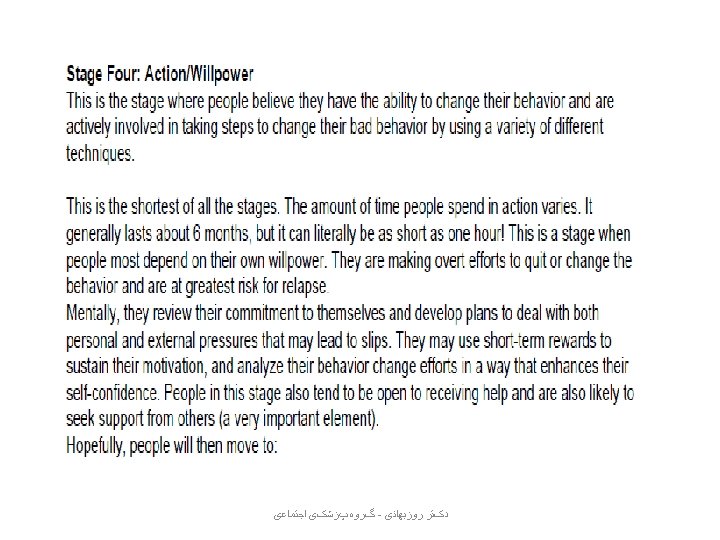
Action • Definition • The person is aware a problem exists and actively modifies their behavior, experiences and • environment in order to overcome the problem. Commitment is clear and a great deal of effort is • expended towards making changes. ﺍﺟﺘﻤﺎﻋی پﺰﺷکی گﺮﻭﻩ - ﺭﻭﺯﺑﻬﺎﻧی ﺩکﺘﺮ
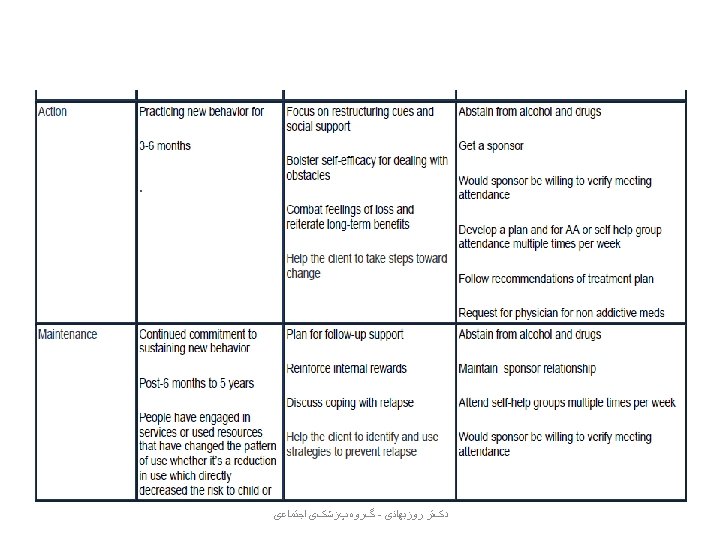
Things to Consider Action involves a sustained effort at making changes. This period usually lasts from one to six months. Clients have made a plan and have begun implementing it. Ambivalence and commitment are still issues. Too often people do not go back and reevaluate their change plan. Where is it working? Where did it not? Is there a procedure for reevaluating the plan? Has there been any planning for handling little slips? Recognize differing levels of readiness to change among issues and the recycling process in the Stages of Change ﺍﺟﺘﻤﺎﻋی پﺰﺷکی گﺮﻭﻩ - ﺭﻭﺯﺑﻬﺎﻧی ﺩکﺘﺮ
Therapist Tasks Help increase client's self-efficacy by: • Focusing on successful activity • Reaffirming commitment • Making intrinsic attributions for success Offer successful models with a variety of action options. The therapist may be used more as a monitor than a change agent. ﺍﺟﺘﻤﺎﻋی پﺰﺷکی گﺮﻭﻩ - ﺭﻭﺯﺑﻬﺎﻧی ﺩکﺘﺮ
Strategies This stage is familiar to most therapists and involves interventions they have experience in providing (e. g. skill building, group work, relapse prevention, active problem solving, counter-conditioning, stimulus control, contingency management). Outcome Clear changes in behavior are manifested and the risk of relapse diminishes as new behavior patterns replace the old problematic behavior. ﺍﺟﺘﻤﺎﻋی پﺰﺷکی گﺮﻭﻩ - ﺭﻭﺯﺑﻬﺎﻧی ﺩکﺘﺮ
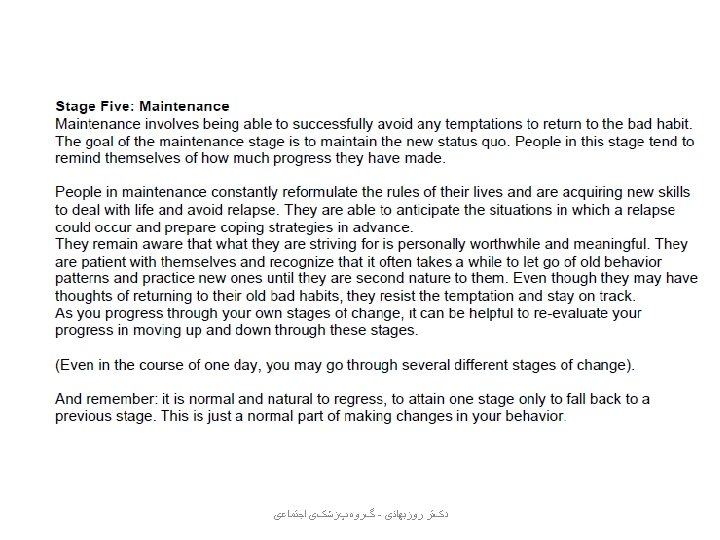
Maintenance Definition The person has made a sustained change wherein a new pattern of behavior has replaced the old. Behavior is firmly established and threat of relapse becomes less intense. ﺍﺟﺘﻤﺎﻋی پﺰﺷکی گﺮﻭﻩ - ﺭﻭﺯﺑﻬﺎﻧی ﺩکﺘﺮ
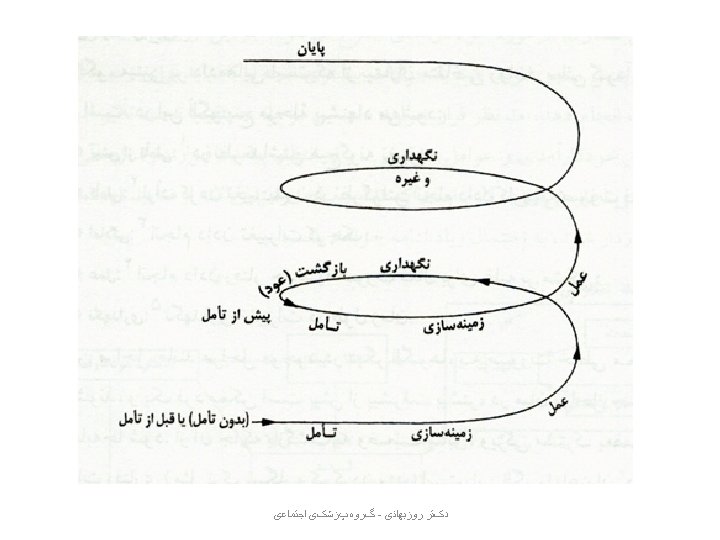
Things to consider Maintenance is often viewed as an afterthought where very little activity occurs. However, maintenance is not a static stage. Relapse is possible and occurs for a variety of reasons. Most relapses are not automatic but occur after an initial slip has occurred. Client’s will often turn to a therapist during what Saul Shiffman calls a relapse crisis (i. e. , they’ve slipped or are about to). During these times the client’s self-efficacy is weakened and fear is high. Clients seek reassurance from therapists while trying to make sense of the crisis. Review of the spiral model of the Stages of Change can bevery helpful for clients at these times. ﺍﺟﺘﻤﺎﻋی پﺰﺷکی گﺮﻭﻩ - ﺭﻭﺯﺑﻬﺎﻧی ﺩکﺘﺮ
Therapist Tasks Therapists do not usually see clients that are wellestablished in maintenance. If they do, a review of the action plan and a strategy for periodic review of the plan are useful. More often therapists will see clients when a relapse crisis is present. Tasks for these times are: • Exploration of the factors precipitating and maintaining the crisis • Provision of information • Feedback about plans • Empathy ﺍﺟﺘﻤﺎﻋی پﺰﺷکی گﺮﻭﻩ - ﺭﻭﺯﺑﻬﺎﻧی ﺩکﺘﺮ
Strategies When crises are occurring, slow the process down. Explore what succeeded, as well as what is precipitating their current concerns or crisis. Offer models of success while normalizing relapse in situations where change is not easily accomplished. If the client is returning to discuss their success, reinforce their active efforts in making change possible and their commitment to change. Outcome Client exits the Stage of Change spiral. For a relapsing client, they re-enter the contemplation or preparation stage. ﺍﺟﺘﻤﺎﻋی پﺰﺷکی گﺮﻭﻩ - ﺭﻭﺯﺑﻬﺎﻧی ﺩکﺘﺮ
- Slides: 101