
Evaluating Sources In order to do quality research


- Slides: 34
Evaluating Sources
In order to do quality research, you must first find quality sources.
Sources might be: • Books Not all sources are equal! Some are better than • Magazines others. Learning how to tell the difference is a skill • Documentary films you need both for your academic success and for your life. • Online information
Criteria for Evaluating Sources • Authority • Accuracy • Credibility • Timeliness • Purpose/Audienc e Looking at chart on page 106 in your Spring. Board textbook, work with your group to brainstorm questions that might address the term. You may use dictionary. com if you want to refer to the definition(s). For Example: AUTHORITY • Who is the author? • What organization is presenting the information • What are the qualifications of the author to write about this topic?
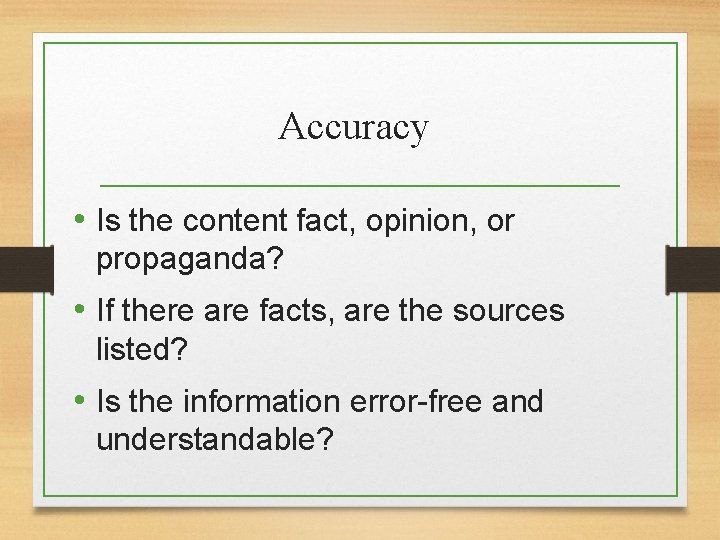
Accuracy • Is the content fact, opinion, or propaganda? • If there are facts, are the sources listed? • Is the information error-free and understandable?
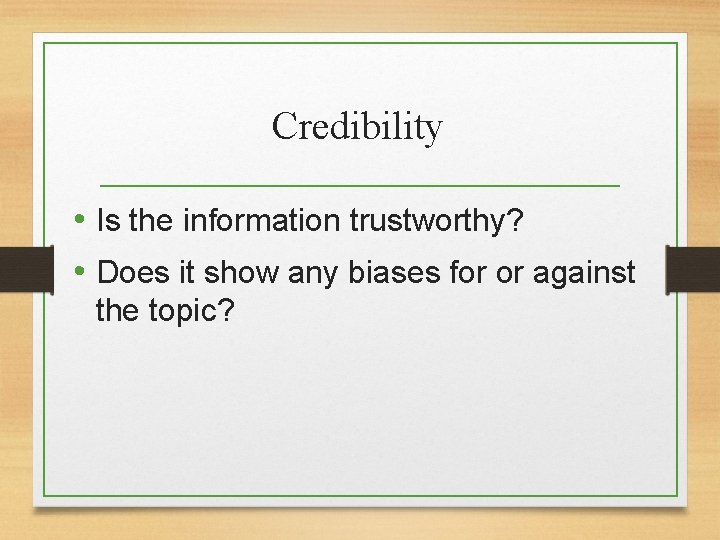
Credibility • Is the information trustworthy? • Does it show any biases for or against the topic?
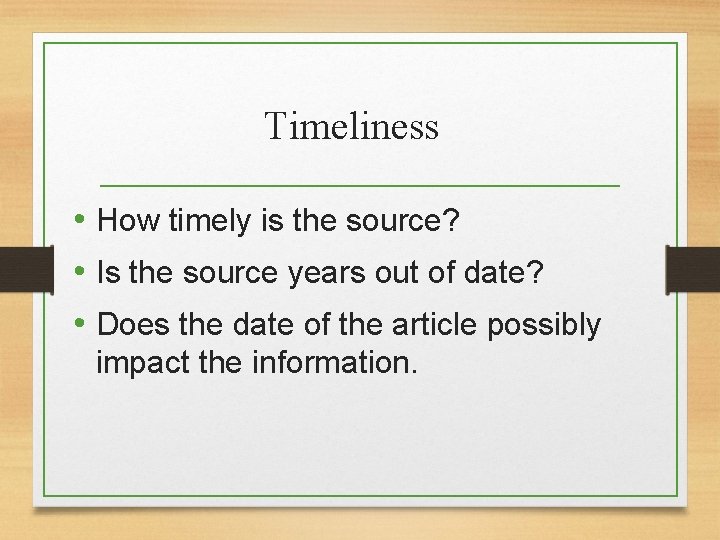
Timeliness • How timely is the source? • Is the source years out of date? • Does the date of the article possibly impact the information.
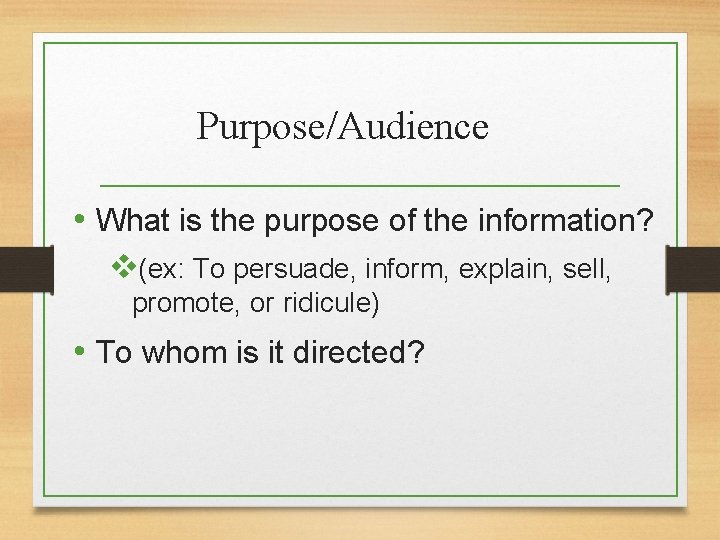
Purpose/Audience • What is the purpose of the information? v(ex: To persuade, inform, explain, sell, promote, or ridicule) • To whom is it directed?
Task Now, with your group look back at the two informational texts in this unit: Evaluate how well the texts meet each of the criteria. Use the chart and answer question #3 on page 107. • $211 Billion and So Much to Buy (page 88) • Facts About Marketing to Children (page 92)
Primary vs. Secondary Sources
Primary Sources • A primary source is an original account or record created at the time of an event by someone who witnessed or was involved in it.
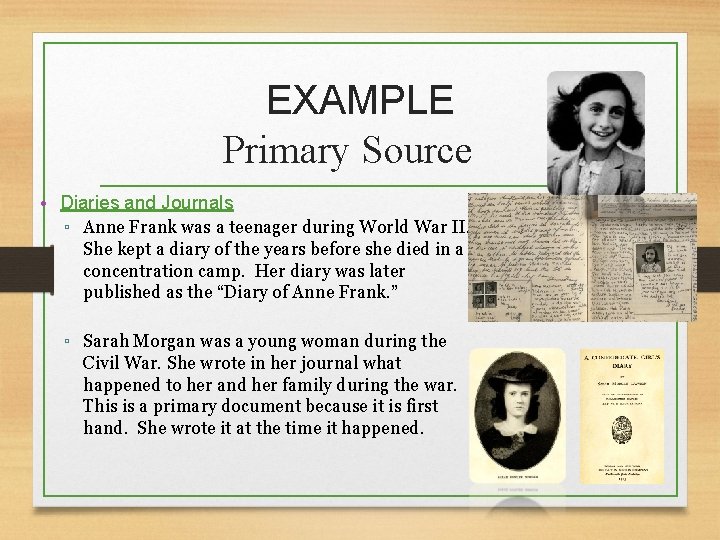
EXAMPLE Primary Source • Diaries and Journals ▫ Anne Frank was a teenager during World War II. She kept a diary of the years before she died in a concentration camp. Her diary was later published as the “Diary of Anne Frank. ” ▫ Sarah Morgan was a young woman during the Civil War. She wrote in her journal what happened to her and her family during the war. This is a primary document because it is first hand. She wrote it at the time it happened.
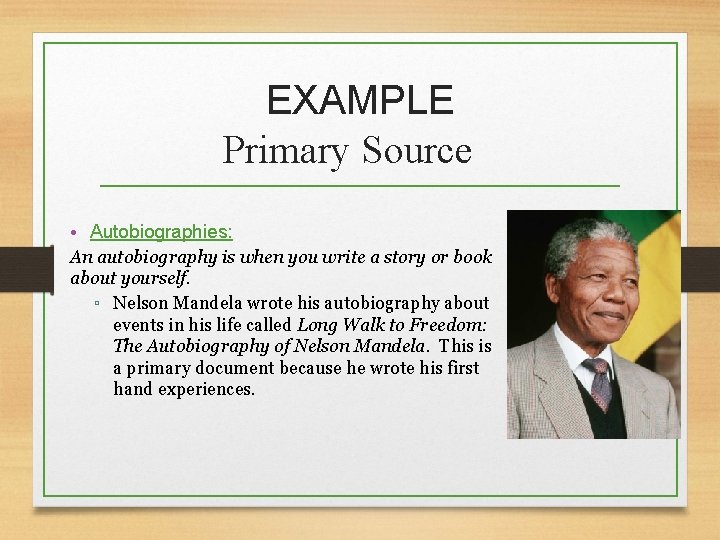
EXAMPLE Primary Source • Autobiographies: An autobiography is when you write a story or book about yourself. ▫ Nelson Mandela wrote his autobiography about events in his life called Long Walk to Freedom: The Autobiography of Nelson Mandela. This is a primary document because he wrote his first hand experiences.
EXAMPLE Primary Source • Speeches: ▫ Martin Luther King’s: “I Have a Dream” speech
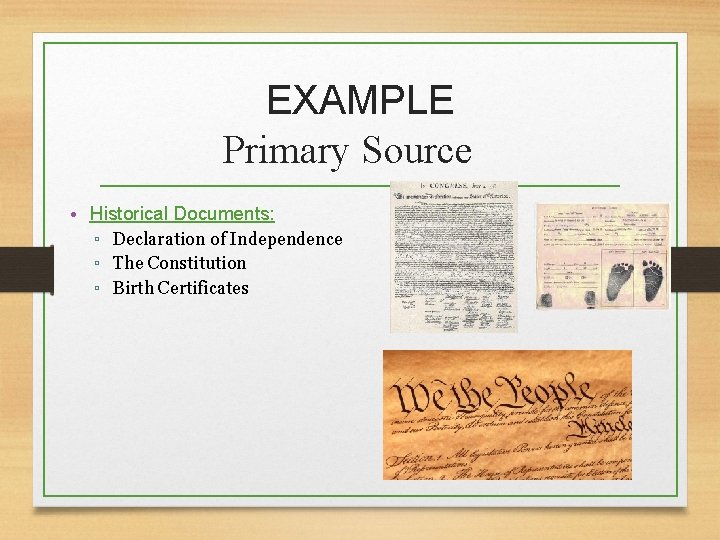
EXAMPLE Primary Source • Historical Documents: ▫ Declaration of Independence ▫ The Constitution ▫ Birth Certificates
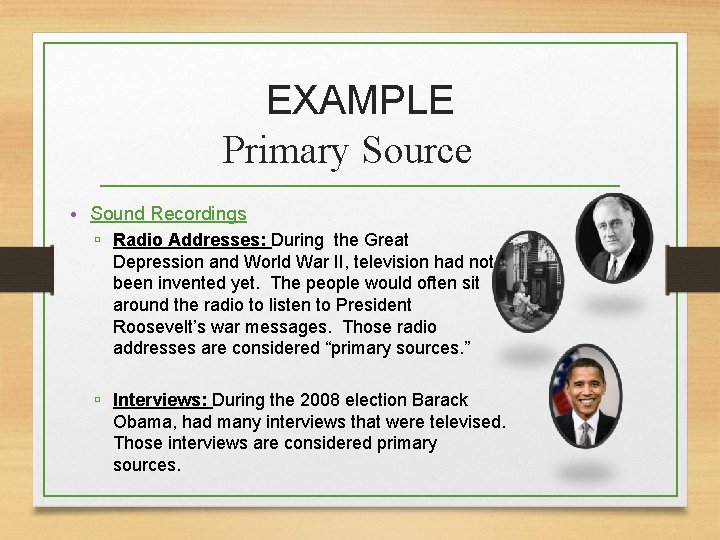
EXAMPLE Primary Source • Sound Recordings ▫ Radio Addresses: During the Great Depression and World War II, television had not been invented yet. The people would often sit around the radio to listen to President Roosevelt’s war messages. Those radio addresses are considered “primary sources. ” ▫ Interviews: During the 2008 election Barack Obama, had many interviews that were televised. Those interviews are considered primary sources.
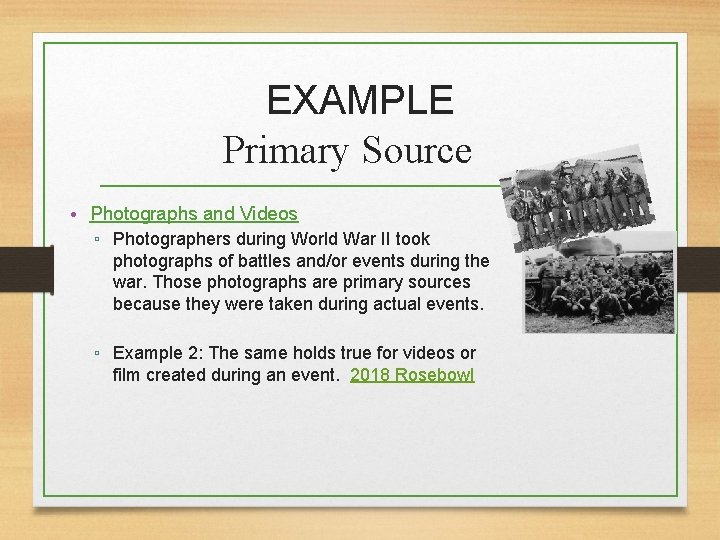
EXAMPLE Primary Source • Photographs and Videos ▫ Photographers during World War II took photographs of battles and/or events during the war. Those photographs are primary sources because they were taken during actual events. ▫ Example 2: The same holds true for videos or film created during an event. 2018 Rosebowl
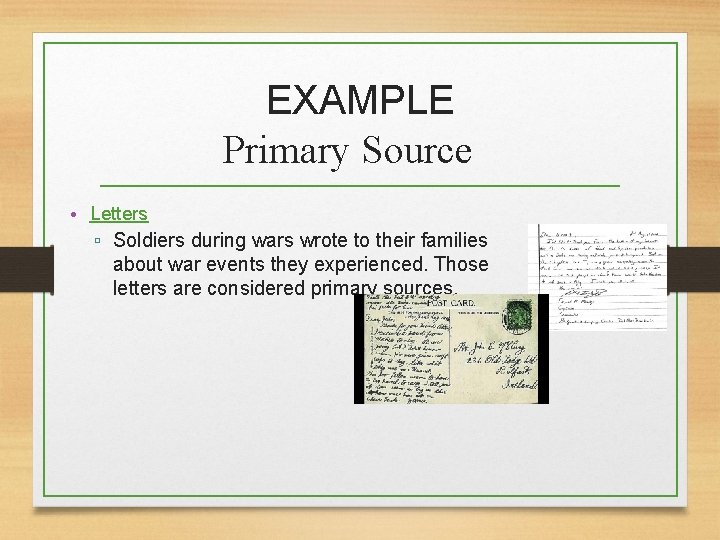
EXAMPLE Primary Source • Letters ▫ Soldiers during wars wrote to their families about war events they experienced. Those letters are considered primary sources.
Secondary Sources • A secondary sources analyze, interpret, or critique primary sources.
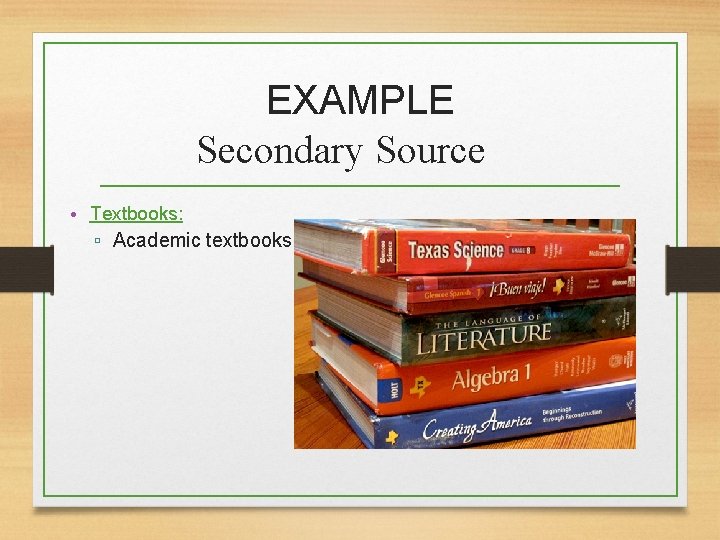
EXAMPLE Secondary Source • Textbooks: ▫ Academic textbooks:
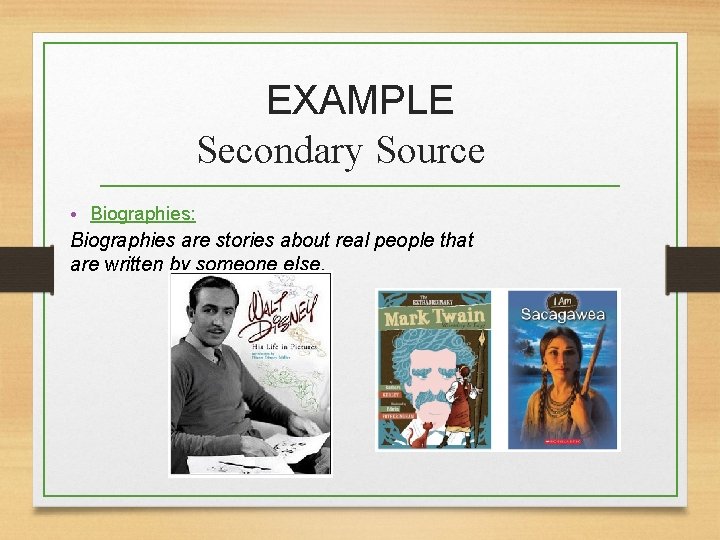
EXAMPLE Secondary Source • Biographies: Biographies are stories about real people that are written by someone else.
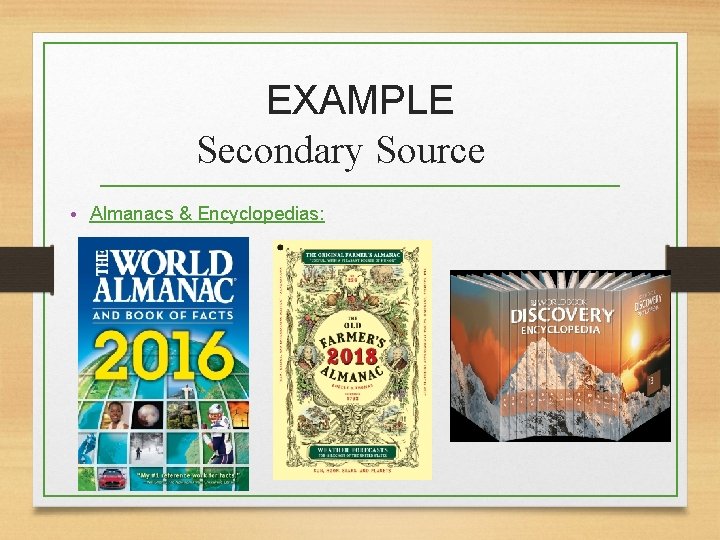
EXAMPLE Secondary Source • Almanacs & Encyclopedias:
PRACTICE Primary and Secondary Sources For each of the following, determine if it is a primary or secondary source? • A live news report about the current flu epidemic in Georgia. • A play showing how the Battle of Bunker Hill was won.
TASK Primary and Secondary Sources • With your group, sort the primary and secondary source cards. Make sure to have a good reason for putting each card into a category. • Then, record your answers on notebook paper to keep as reference in the literature section of your binder (put at least FIVE in each category).
Evaluating Websites
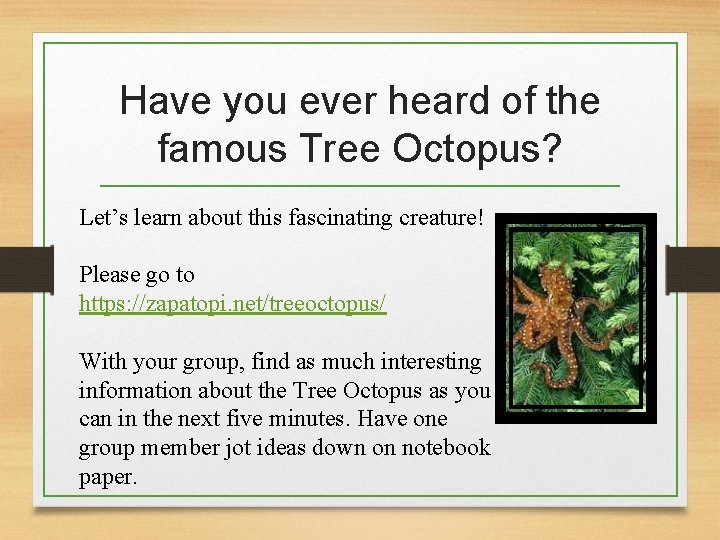
Have you ever heard of the famous Tree Octopus? Let’s learn about this fascinating creature! Please go to https: //zapatopi. net/treeoctopus/ With your group, find as much interesting information about the Tree Octopus as you can in the next five minutes. Have one group member jot ideas down on notebook paper.
Anyone can put anything on the Internet • Internet sources must be evaluated to assure their authenticity and relevance because websites and pages do not go through the intensive editing processes that traditional print and visual resources do. • Therefore, YOU, the user, must learn to assess the validity of the sources you use in your research. • Don’t be fooled into believing that just because it’s on the Internet, it’s true. In essence, don’t believe everything that you read!
Examine the Domain One good way to assess the credibility of an authority or web site is to examine the URL • • . com = commercial organization. org = non-profit organization. net = network provider. edu = college or university. gov = government agency or organization. mil = military organization. info = general information site
Be wary. . . • A tilde ~ after the domain type usually indicates a personal web page and not an official part of that organization’s site • Look for personal data about the author or organization • Look for contact information, an email address, webmaster, editor, etc.
Timeliness of Online Resources • Very often, Internet sources offer a real advantage in that they are often even more current than traditional print sources. • The information can be updated constantly. • However, you must be aware that the dates on an Internet site have various meanings.
Examine the date. . . • Date of information - usually indicates when the material was originally written • Date of publication - usually indicates when the material first appeared on the Web • Date of last revision or update - usually indicates the latest revision • And check the links to make sure that they are up-do-date!!!
Where Should You Go on the Internet to Research? • Of course, at school, the only acceptable search engine is through the protected, Cobb Digital Library. • However, if you ever find yourself on the open Internet, it is important to know a few things…
How Does a Google Search Work?