
Evaluating research methods Summary Weaknesses to look out
- Slides: 28
Evaluating research methods
Summary Weaknesses to look out for Sample Participant reactivity Procedural biases How conclusions are drawn Ecological and external validity Ethical concerns Positive things to look for Sternberg’s criteria Size of study True designed experiment
Sample Where did they come from? Why there? Some kinds of people more likely to be sampled than others? Generalisability Attrition
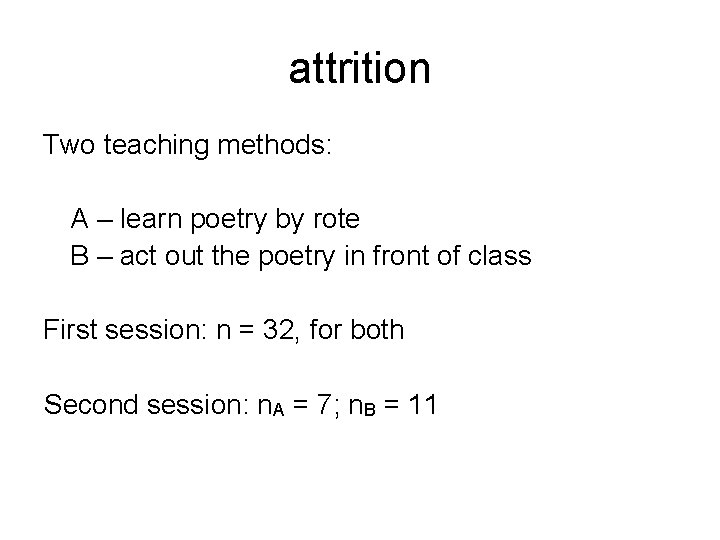
attrition Two teaching methods: A – learn poetry by rote B – act out the poetry in front of class First session: n = 32, for both Second session: n. A = 7; n. B = 11
Procedural bias Procedure boring or tiring eg. affects younger v. older comparison Order effects Self-report methods Retrospective reports
Reactivity Participant reactivity ‘Hawthorne effect’ Volunteer participants Participant strategies eg. lexical priming tasks
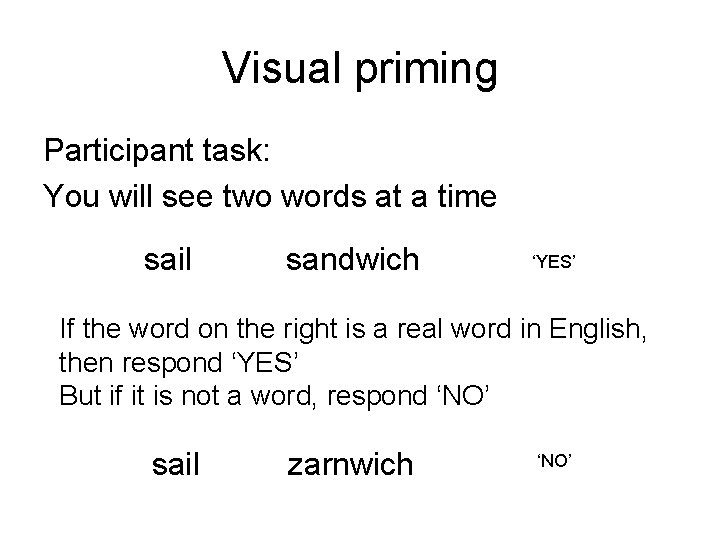
Visual priming Participant task: You will see two words at a time sail sandwich ‘YES’ If the word on the right is a real word in English, then respond ‘YES’ But if it is not a word, respond ‘NO’ sail zarnwich ‘NO’
Notice anything? Once a participant notices, they can approach the task differently “Ignore everything except the second half of the target. If that is the same as the prime, respond ‘YES’” That makes it a new task
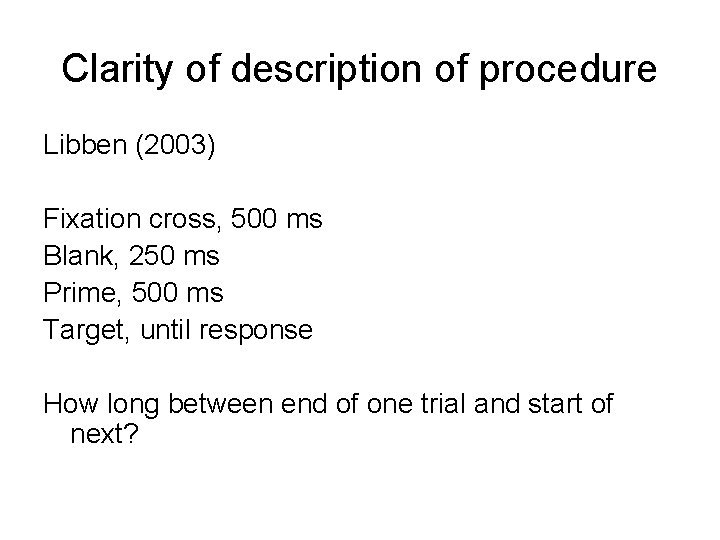
Clarity of description of procedure Libben (2003) Fixation cross, 500 ms Blank, 250 ms Prime, 500 ms Target, until response How long between end of one trial and start of next?
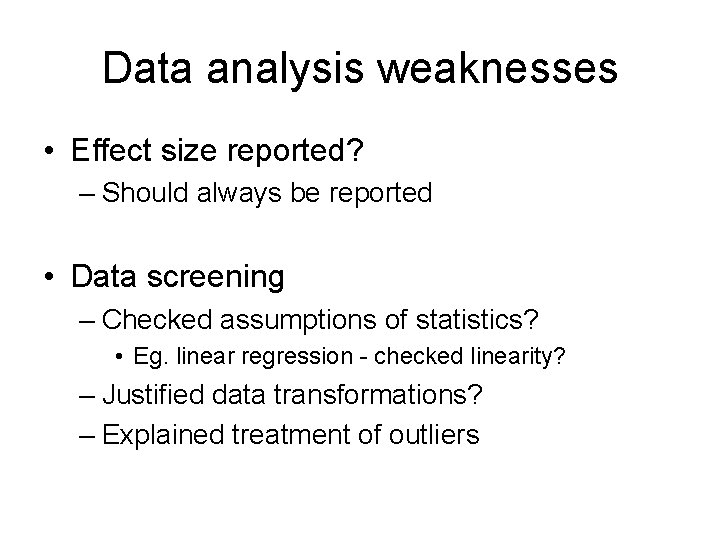
Data analysis weaknesses • Effect size reported? – Should always be reported • Data screening – Checked assumptions of statistics? • Eg. linear regression - checked linearity? – Justified data transformations? – Explained treatment of outliers
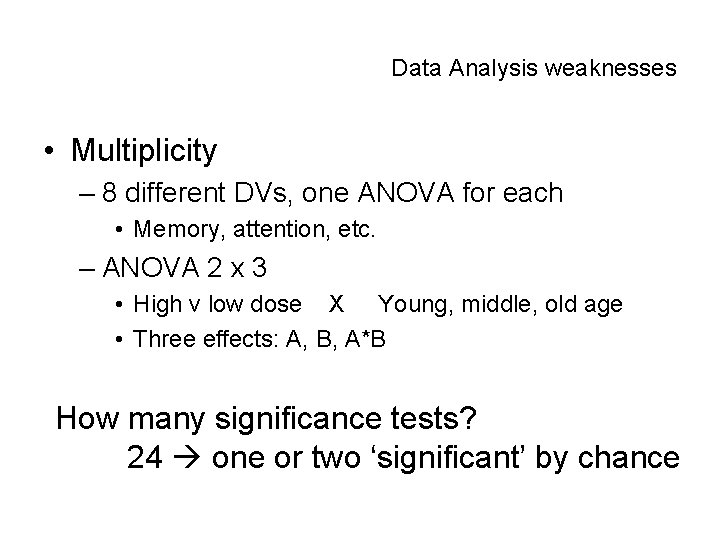
Data Analysis weaknesses • Multiplicity – 8 different DVs, one ANOVA for each • Memory, attention, etc. – ANOVA 2 x 3 • High v low dose X Young, middle, old age • Three effects: A, B, A*B How many significance tests? 24 one or two ‘significant’ by chance
How conclusions are drawn Drawing too strong a conclusion given the evidence found
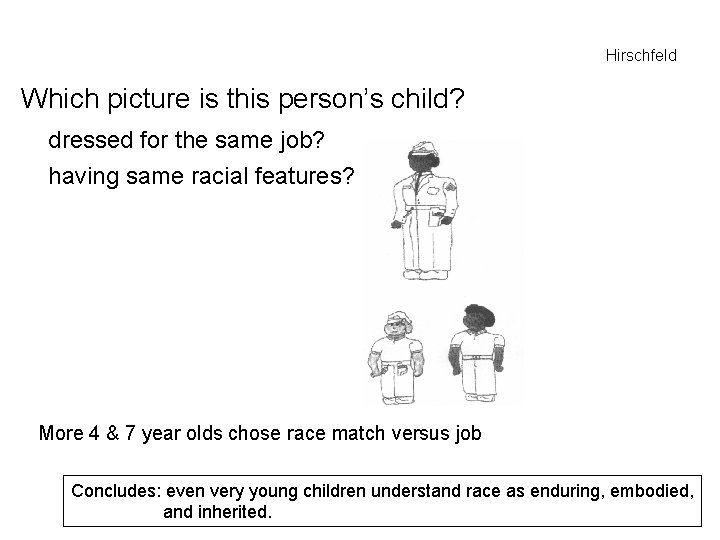
Hirschfeld Which picture is this person’s child? dressed for the same job? having same racial features? More 4 & 7 year olds chose race match versus job Concludes: even very young children understand race as enduring, embodied, and inherited.
Drawing a causal conclusion prematurely Video games and violence • • lots of correlational studies a few experimental studies looking at short-term outcomes
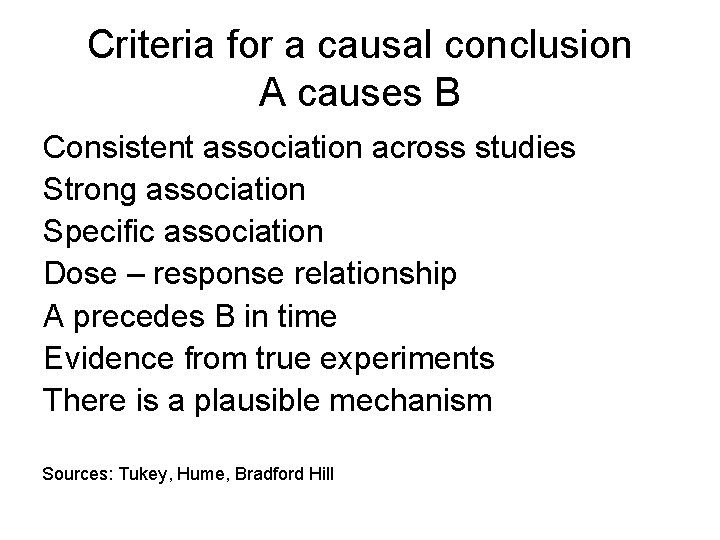
Criteria for a causal conclusion A causes B Consistent association across studies Strong association Specific association Dose – response relationship A precedes B in time Evidence from true experiments There is a plausible mechanism Sources: Tukey, Hume, Bradford Hill
Highly speculative discussion Going steps beyond the evidence allowed, but should be clearly marked, and is not usually valued highly - at least until evidence is found to support it Eg video games – if we banned them we could reduce violence on Saturday nights?
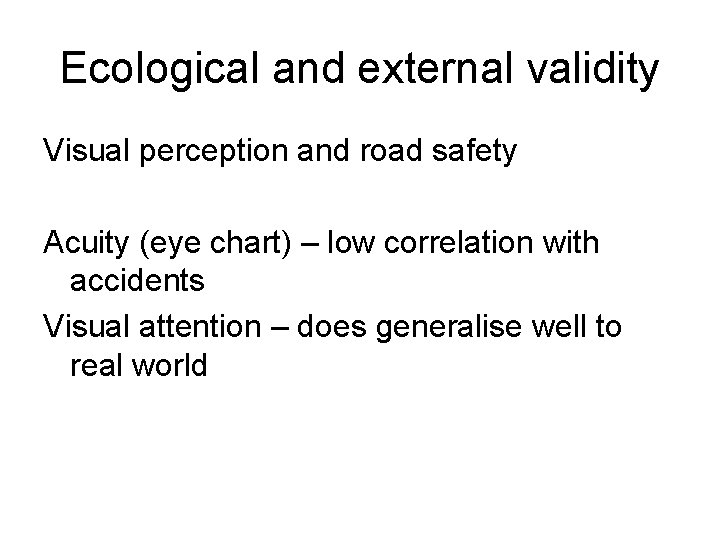
Ecological and external validity Visual perception and road safety Acuity (eye chart) – low correlation with accidents Visual attention – does generalise well to real world
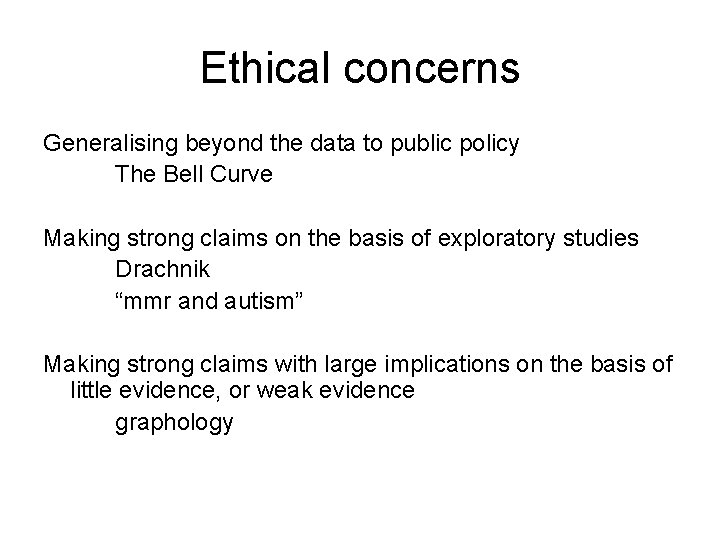
Ethical concerns Generalising beyond the data to public policy The Bell Curve Making strong claims on the basis of exploratory studies Drachnik “mmr and autism” Making strong claims with large implications on the basis of little evidence, or weak evidence graphology
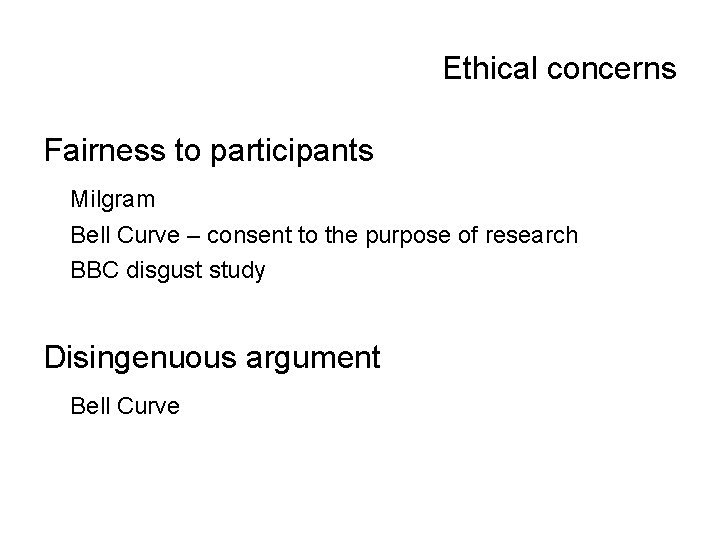
Ethical concerns Fairness to participants Milgram Bell Curve – consent to the purpose of research BBC disgust study Disingenuous argument Bell Curve
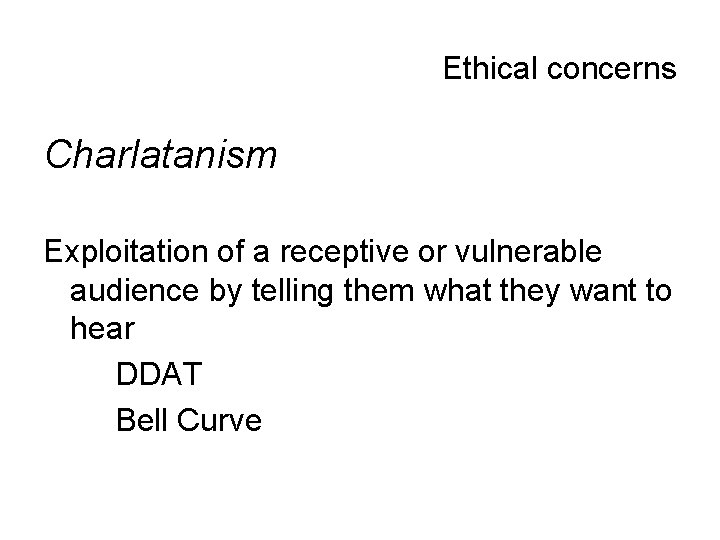
Ethical concerns Charlatanism Exploitation of a receptive or vulnerable audience by telling them what they want to hear DDAT Bell Curve
Percolation of ideology into Setting or framing of research question Selection of participants Phrasing of questionnaire items Interpretation of results Sex reorientation study advertising for participants exclusion criteria (‘I have benefited’) structured interview, conducted by experimenter
Sternberg – Psychologist’s companion 1) A surprising result that still is explained theoretically 2) Major theoretical or practical importance 3) New ideas 4) There seems no doubt about the interpretation of the results 5) The paper offers a simpler account of findings that previously seemed hard to bring together coherently
Sternberg – Psychologist’s companion 6) Major debunking of previously held ideas 7) Especially clever new experimental technique 8) The implications or theoretical results have great generality
Size of sample Should be large enough to detect an effect If the result is ‘no difference; no effect” was there sufficient power? Take into account quality of measures – less reliable measures reduce power for any sample In medical research, sample sizes have increased hugely in recent years Tip: simple design, large sample
Study reports more than one experiment Green & Bavelier Correlational study – regular players have good attention skills Quasi-experiment which causes which? So, did another experiment, randomly allocating participants to playing groups Strengthens causal conclusion Internal replication – increases our faith in the result
Design: True experiment Ideally, the best quality studies use a true experimental design - no subject variables (quasi-experiment) - random allocation of participants to conditions / groups
Other designs can be more appropriate When subject (or situational) variables are important In the early stages of research eg. Green & Bavelier correlational followed by true experiment Qualitative research
Planning v. evaluating research To a large extent, the same thing Plan a study so that it is capable of yielding data that could possibly allow you to draw a relevant conclusion from the data Evaluate other studies to check that the conclusions they claim can be drawn from their data really do follow