
Evaluating Online Sources Subtitle Why is it important
Evaluating Online Sources Subtitle
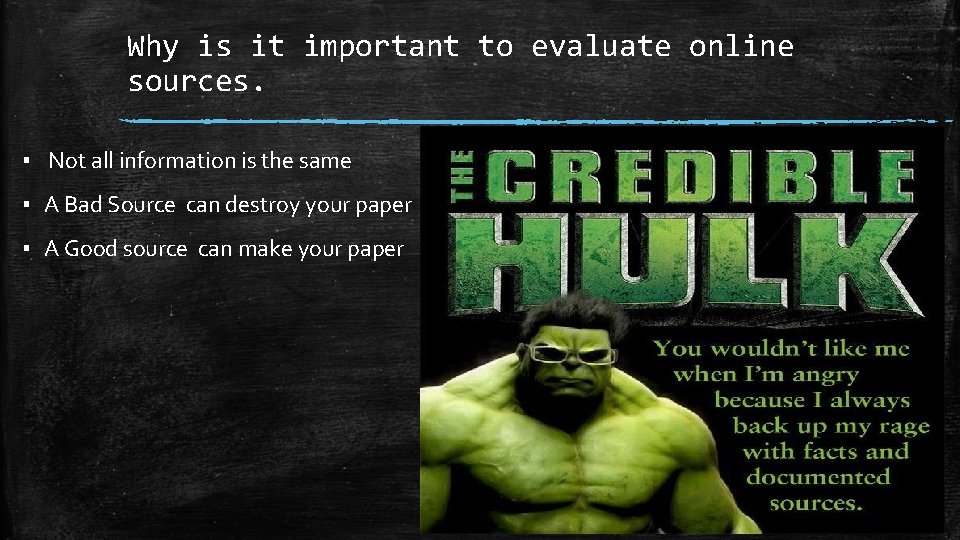
Why is it important to evaluate online sources. ▪ Not all information is the same ▪ A Bad Source can destroy your paper ▪ A Good source can make your paper

Types of Sources Academic vs Popular ▪ Academic ▪ Popular ▪ original research published in journals ▪ general interest stories which may refer to research but do not contain original research ▪ written by experts in the field ▪ are usually peer-reviewed (evaluated by other experts in the same field) ▪ include citations ▪ usually are longer, about 10+ pages ▪ written by the general public ▪ are not peer-reviewed ▪ rarely include citations ▪ tend to be shorter, about 200 words to a few pages
Well, which type of source is better? ▪ The answer is a scholarly source most of the time, but on some occasions, it is ok to use a popular source in your research. ▪ However, it is important to be able to evaluate popular sources and only use the best ones for your paper. ▪ Remember scholarly articles have already been evaluated but you will have to evaluate popular sources. ▪ Not everything on the internet is true !
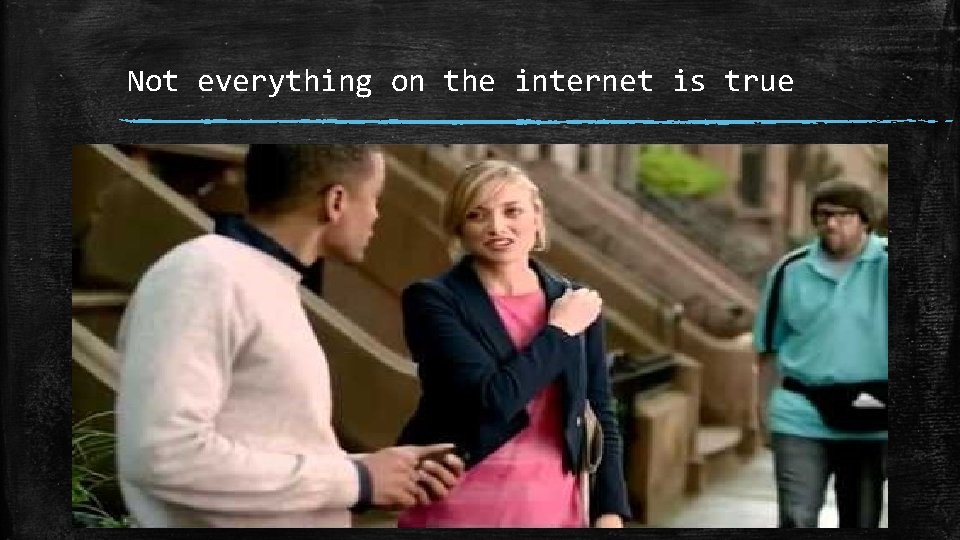
Not everything on the internet is true
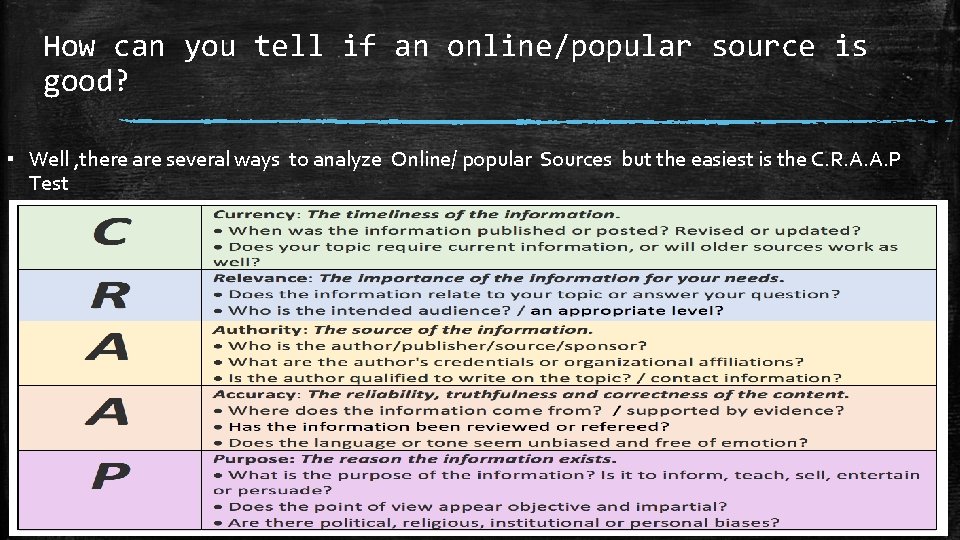
How can you tell if an online/popular source is good? ▪ Well , there are several ways to analyze Online/ popular Sources but the easiest is the C. R. A. A. P Test
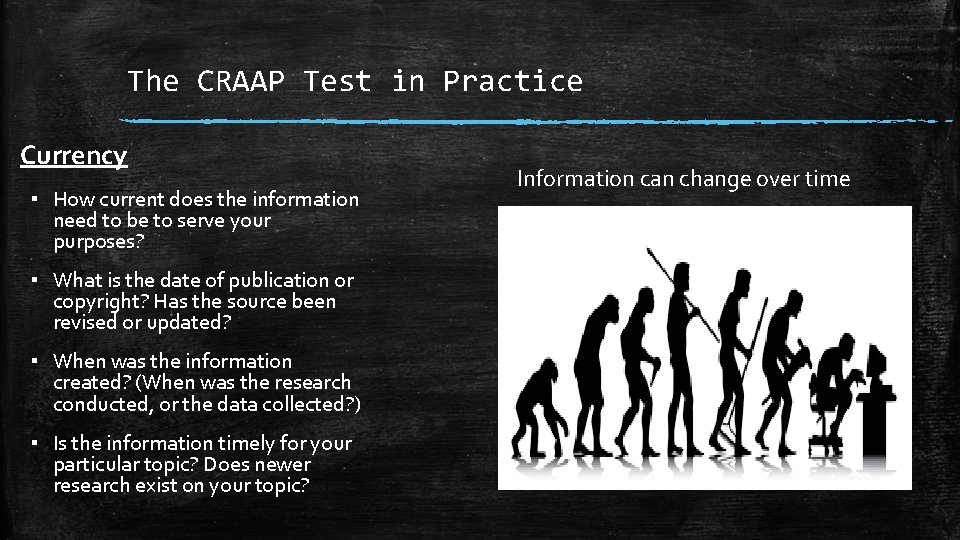
The CRAAP Test in Practice Currency ▪ How current does the information need to be to serve your purposes? ▪ What is the date of publication or copyright? Has the source been revised or updated? ▪ When was the information created? (When was the research conducted, or the data collected? ) ▪ Is the information timely for your particular topic? Does newer research exist on your topic? Information can change over time
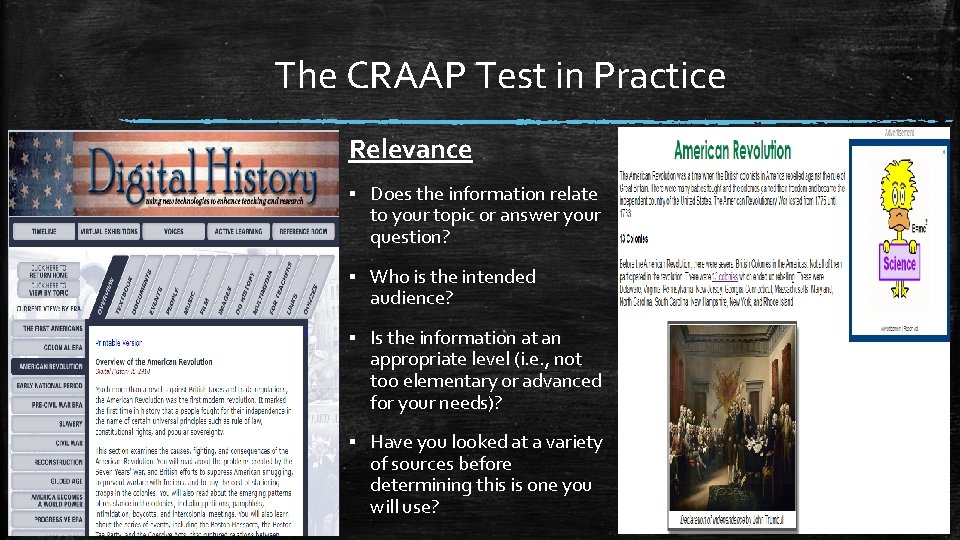
The CRAAP Test in Practice Relevance ▪ Does the information relate to your topic or answer your question? ▪ Who is the intended audience? ▪ Is the information at an appropriate level (i. e. , not too elementary or advanced for your needs)? ▪ Have you looked at a variety of sources before determining this is one you will use?
The CRAAP Test in Practice AUTHORITY ▪ Who is the author/publisher/source/sponsor? ▪ What are the author's credentials or organizational affiliations? ▪ Is the author qualified to write on the topic? ▪ Is there contact information, such as a publisher or email address? ▪ Does the URL reveal anything about the author or source?
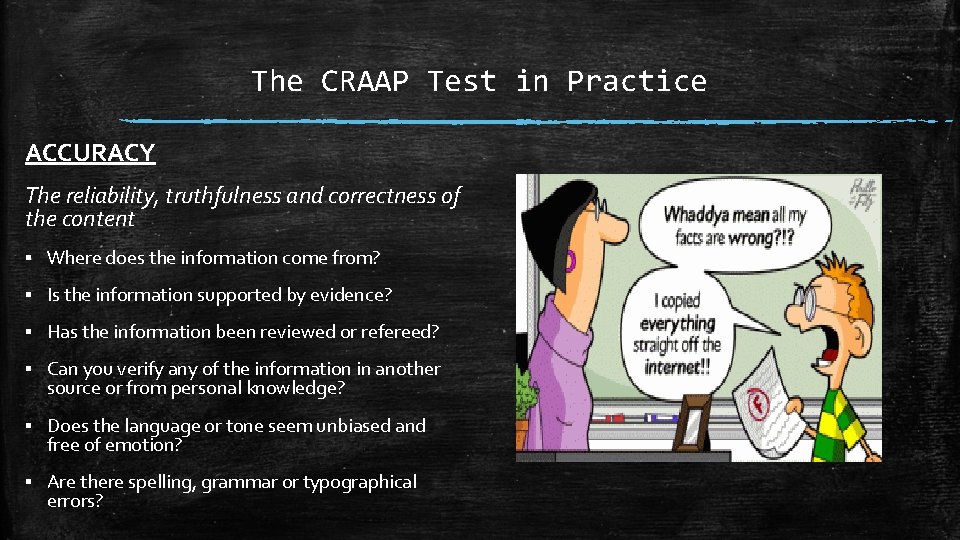
The CRAAP Test in Practice ACCURACY The reliability, truthfulness and correctness of the content ▪ Where does the information come from? ▪ Is the information supported by evidence? ▪ Has the information been reviewed or refereed? ▪ Can you verify any of the information in another source or from personal knowledge? ▪ Does the language or tone seem unbiased and free of emotion? ▪ Are there spelling, grammar or typographical errors?
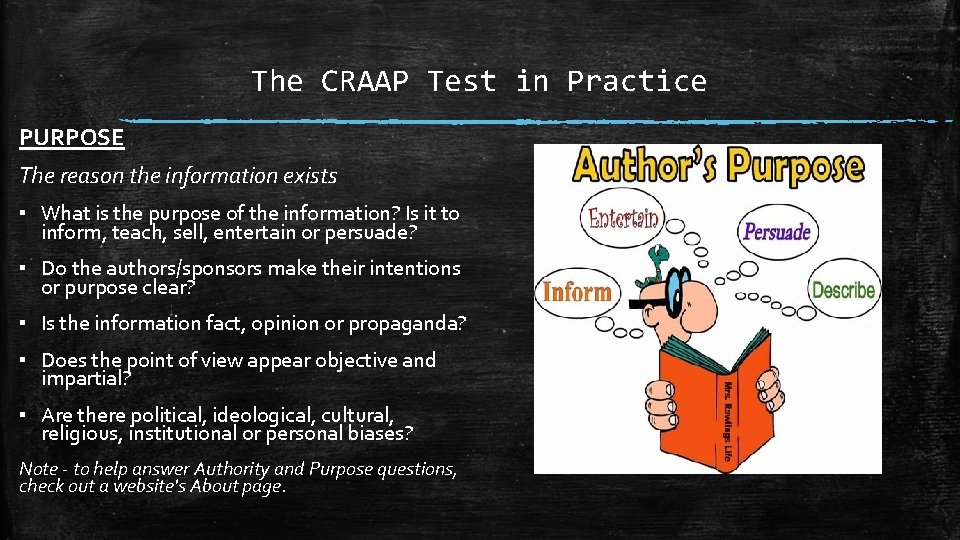
The CRAAP Test in Practice PURPOSE The reason the information exists ▪ What is the purpose of the information? Is it to inform, teach, sell, entertain or persuade? ▪ Do the authors/sponsors make their intentions or purpose clear? ▪ Is the information fact, opinion or propaganda? ▪ Does the point of view appear objective and impartial? ▪ Are there political, ideological, cultural, religious, institutional or personal biases? Note - to help answer Authority and Purpose questions, check out a website's About page.
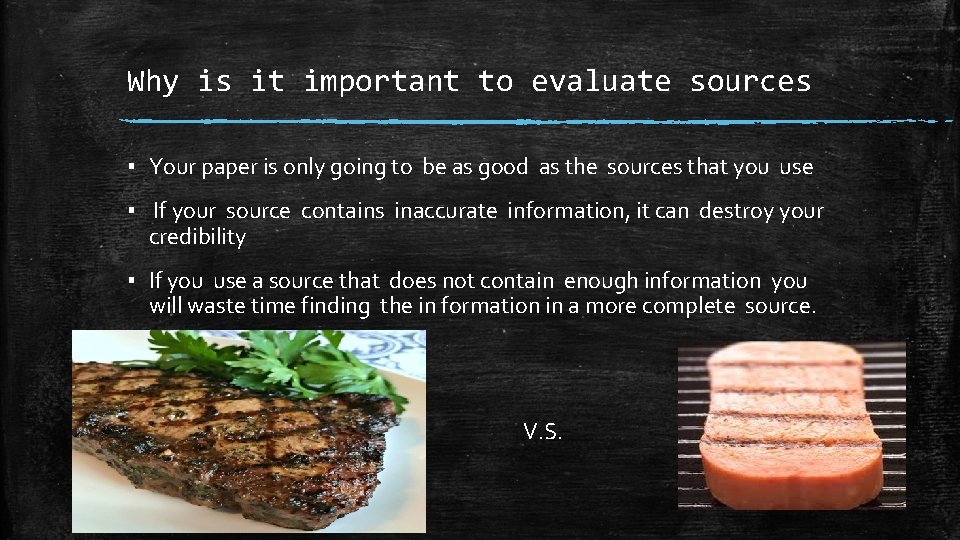
Why is it important to evaluate sources ▪ Your paper is only going to be as good as the sources that you use ▪ If your source contains inaccurate information, it can destroy your credibility ▪ If you use a source that does not contain enough information you will waste time finding the in formation in a more complete source. V. S.
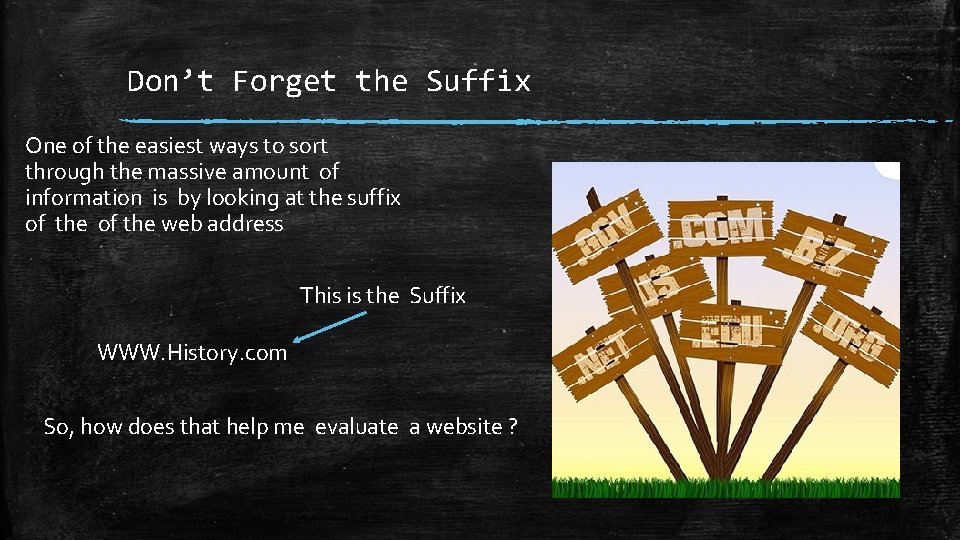
Don’t Forget the Suffix One of the easiest ways to sort through the massive amount of information is by looking at the suffix of the web address This is the Suffix WWW. History. com So, how does that help me evaluate a website ?
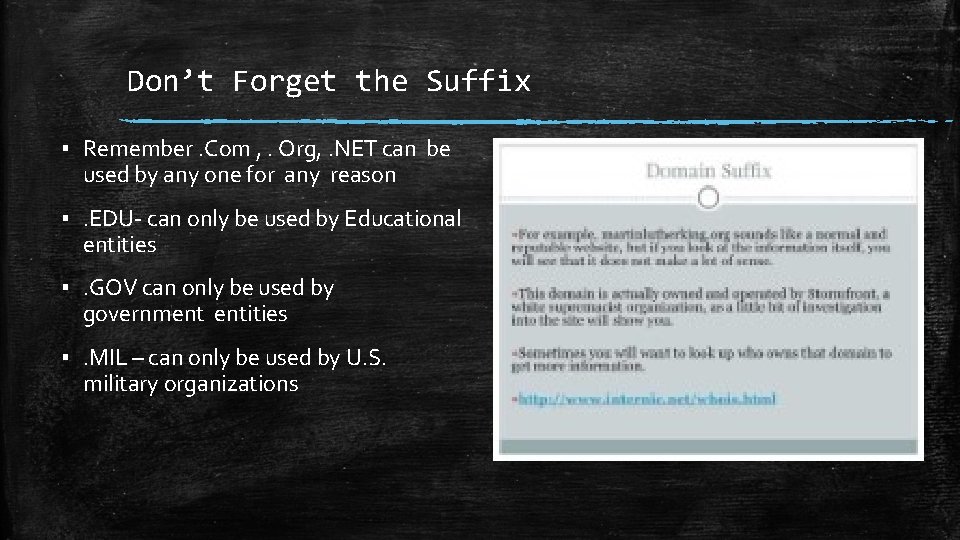
Don’t Forget the Suffix ▪ Remember. Com , . Org, . NET can be used by any one for any reason ▪. EDU- can only be used by Educational entities ▪. GOV can only be used by government entities ▪. MIL – can only be used by U. S. military organizations
How To avoid Fake News What makes an article fake news The term fake news means “news articles that are intentionally and verifiably false” • designed to manipulate people’s perceptions of real facts, events, and statements. • It’s about information presented as news that is known by its promoter to be false • based on facts that are demonstrably incorrect, or statements or events that verifiably did not happen.
- Slides: 15