
Evaluating hydrological model structure using tracer data within
- Slides: 1
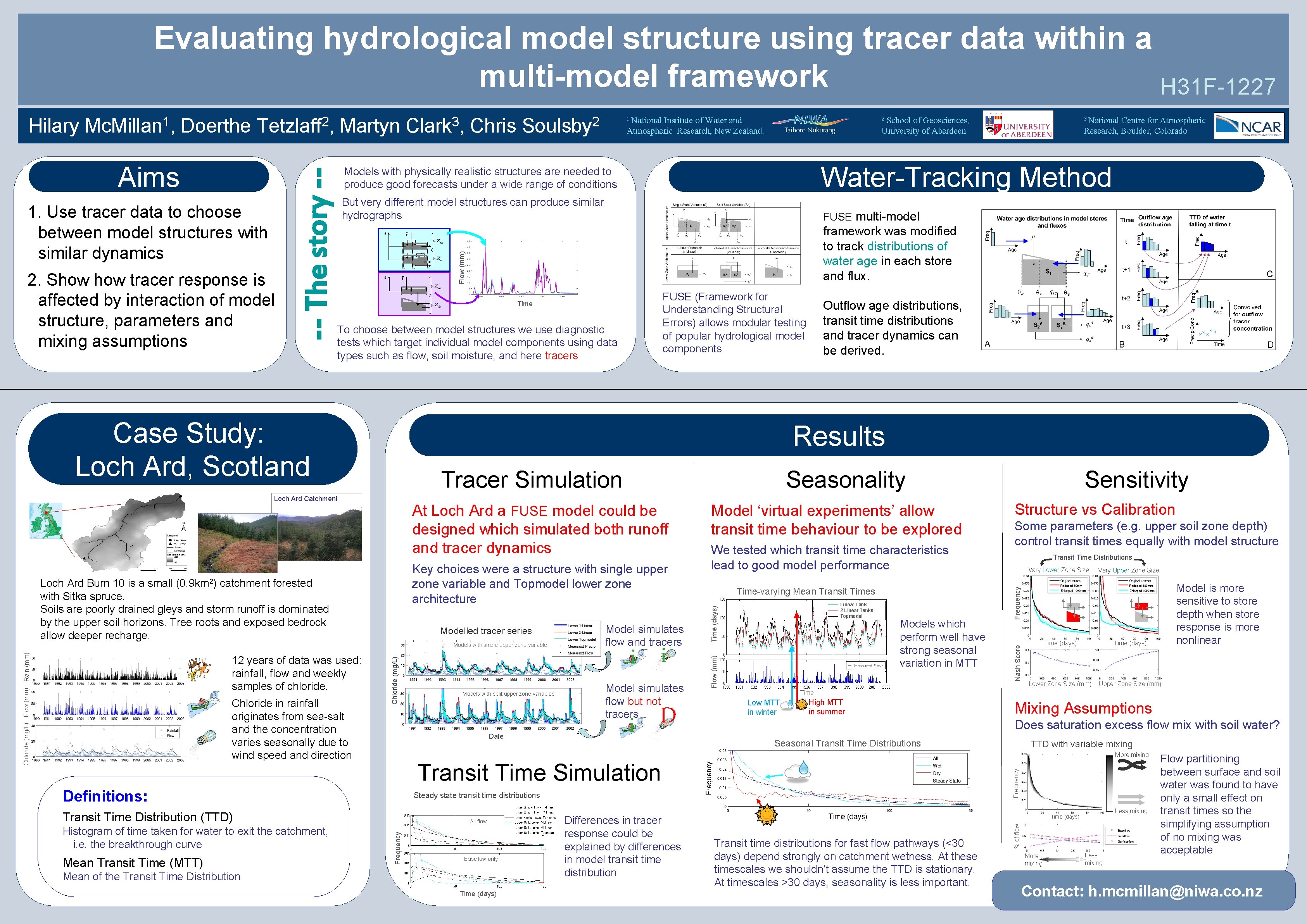
Evaluating hydrological model structure using tracer data within a multi-model framework H 31 F-1227 Water-Tracking Method But very different model structures can produce similar hydrographs FUSE multi-model e framework was modified to track distributions of water age in each store and flux. p e p To choose between model structures we use diagnostic tests which target individual model components using data types such as flow, soil moisture, and here tracers Key choices were a structure with single upper zone variable and Topmodel lower zone architecture Modelled tracer series Models with split upper zone variables Date Model simulates flow and tracers i i Model simulates flow but not tracers D i Model ‘virtual experiments’ allow transit time behaviour to be explored We tested which transit time characteristics lead to good model performance Time-varying Mean Transit Times Linear Tank 2 Linear Tanks Topmodel Measured Flow Models which perform well have strong seasonal variation in MTT Low MTT in winter High MTT in summer Frequency All flow Baseflow only Mean of the Transit Time Distribution Time (days) Differences in tracer response could be explained by differences in model transit time distribution Some parameters (e. g. upper soil zone depth) control transit times equally with model structure Transit Time Distributions Vary Lower Zone Size Vary Upper Zone Size Model is more sensitive to store depth when store response is more nonlinear Time (days) Lower Zone Size (mm) Upper Zone Size (mm) Mixing Assumptions Does saturation excess flow mix with soil water? Seasonal Transit Time Distributions TTD with variable mixing More mixing Frequency Steady state transit time distributions Transit Time Distribution (TTD) Structure vs Calibration Time Transit Time Simulation Definitions: Sensitivity Frequency At Loch Ard a FUSE model could be designed which simulated both runoff and tracer dynamics Chloride (mg/L) Rain (mm) Chloride in rainfall originates from sea-salt and the concentration varies seasonally due to wind speed and direction Seasonality Nash Score Tracer Simulation Models with single upper zone variable 12 years of data was used: rainfall, flow and weekly samples of chloride. Outflow age distributions, transit time distributions and tracer dynamics can be derived. Results Loch Ard Burn 10 is a small (0. 9 km 2) catchment forested with Sitka spruce. Soils are poorly drained gleys and storm runoff is dominated by the upper soil horizons. Tree roots and exposed bedrock allow deeper recharge. Chloride (mg/L) Flow (mm) FUSE (Framework for Understanding Structural Errors) allows modular testing of popular hydrological model components Time Loch Ard Catchment Mean Transit Time (MTT) Centre for Atmospheric Research, Boulder, Colorado Models with physically realistic structures are needed to produce good forecasts under a wide range of conditions Case Study: Loch Ard, Scotland Histogram of time taken for water to exit the catchment, i. e. the breakthrough curve 3 National Less mixing Time (days) Transit time distributions for fast flow pathways (<30 days) depend strongly on catchment wetness. At these timescales we shouldn’t assume the TTD is stationary. At timescales >30 days, seasonality is less important. % of flow 2. Show tracer response is affected by interaction of model structure, parameters and mixing assumptions Chris of Geosciences, University of Aberdeen Time (days) 1. Use tracer data to choose between model structures with similar dynamics Martyn 2 Soulsby 2 School Flow (mm) Aims 3 Clark , Institute of Water and Atmospheric Research, New Zealand. Flow (mm) Doerthe 2 Tetzlaff , -- The story -- Hilary 1 Mc. Millan , 1 National More mixing Less mixing Flow partitioning between surface and soil water was found to have only a small effect on transit times so the simplifying assumption of no mixing was acceptable Contact: h. mcmillan@niwa. co. nz