
Evaluating forensic DNA evidence Dan E Krane Wright
- Slides: 49
Evaluating forensic DNA evidence Dan E. Krane, Wright State University, Dayton, OH Forensic Bioinformatics (www. bioforensics. com)
The science of DNA profiling is sound. But, not all of DNA profiling is science.
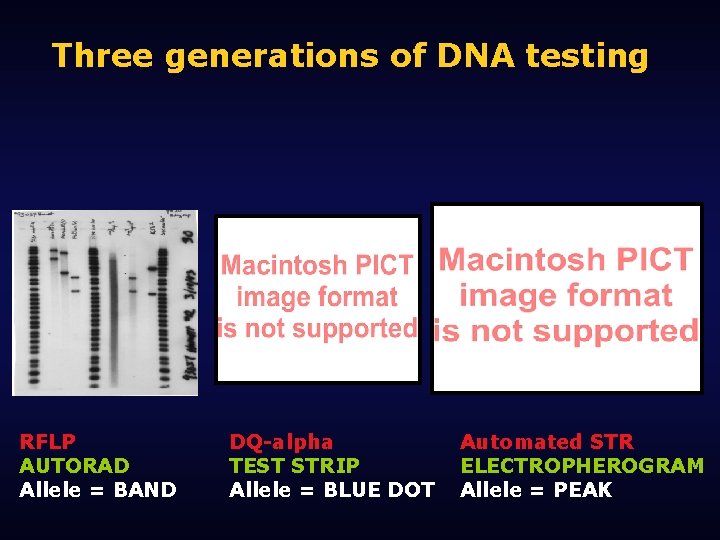
Three generations of DNA testing RFLP AUTORAD Allele = BAND DQ-alpha TEST STRIP Allele = BLUE DOT Automated STR ELECTROPHEROGRAM Allele = PEAK
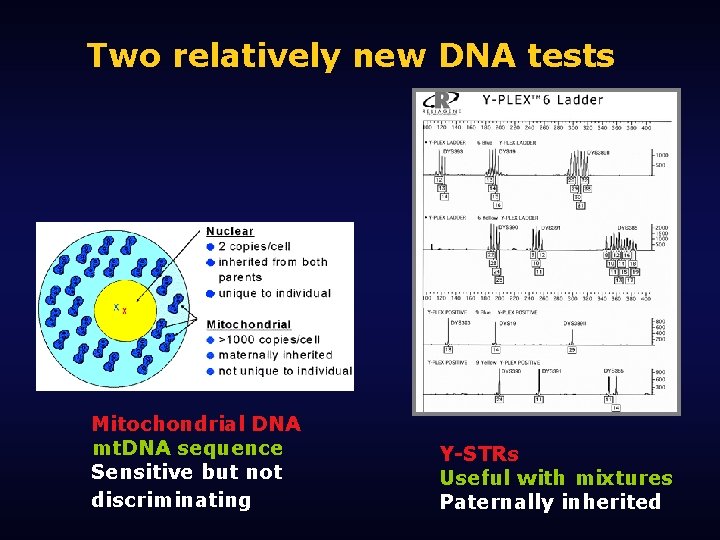
Two relatively new DNA tests Mitochondrial DNA mt. DNA sequence Sensitive but not discriminating Y-STRs Useful with mixtures Paternally inherited
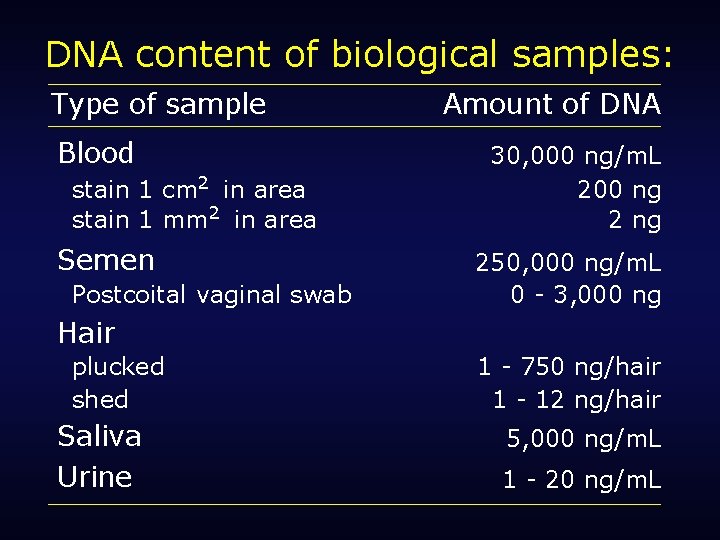
DNA content of biological samples: Type of sample Blood stain 1 cm 2 in area stain 1 mm 2 in area Semen Postcoital vaginal swab Amount of DNA 30, 000 ng/m. L 200 ng 250, 000 ng/m. L 0 - 3, 000 ng Hair plucked shed Saliva Urine 1 - 750 ng/hair 1 - 12 ng/hair 5, 000 ng/m. L 1 - 20 ng/m. L
Automated STR Test
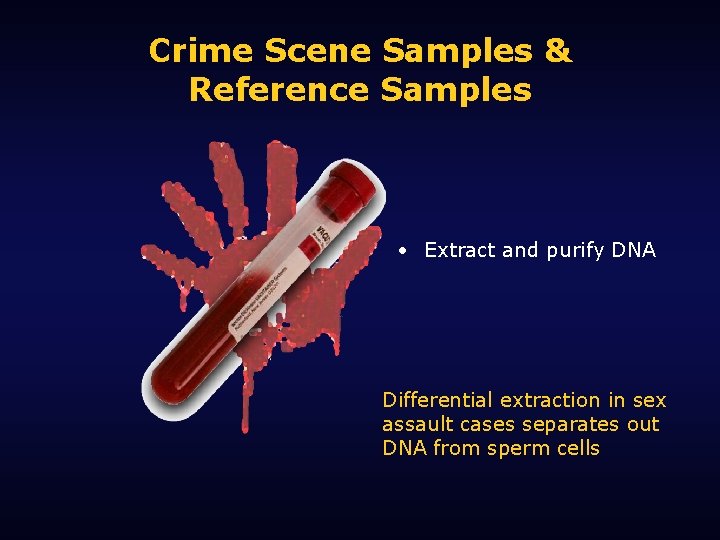
Crime Scene Samples & Reference Samples • Extract and purify DNA Differential extraction in sex assault cases separates out DNA from sperm cells
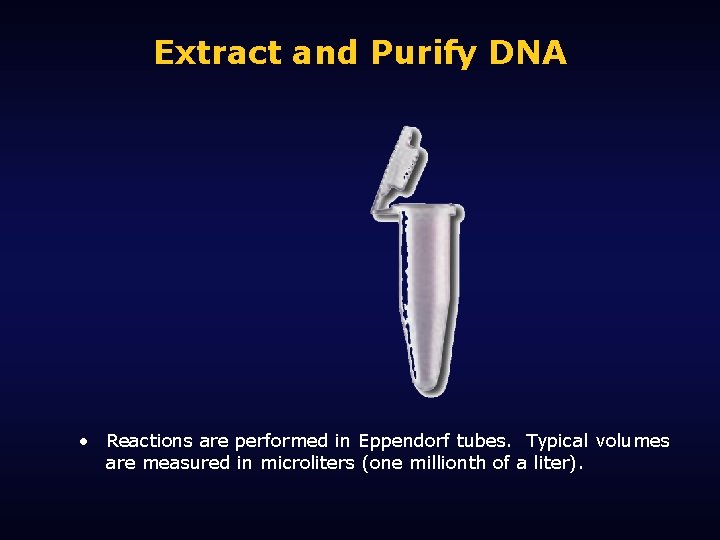
Extract and Purify DNA • Reactions are performed in Eppendorf tubes. Typical volumes are measured in microliters (one millionth of a liter).
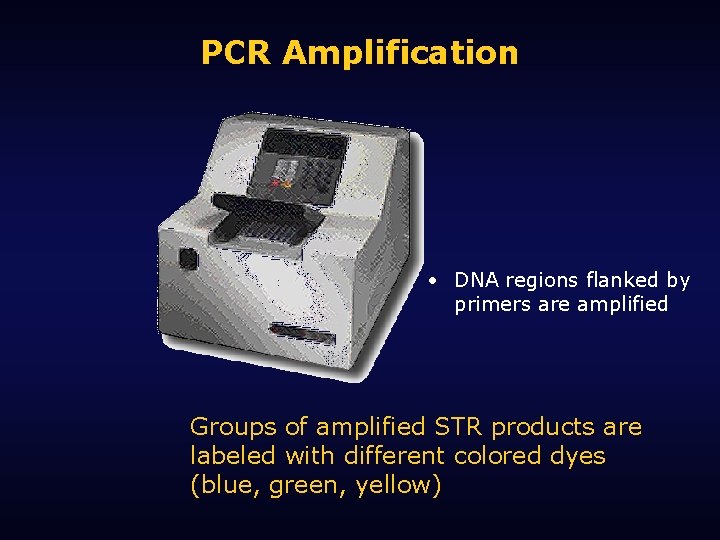
PCR Amplification • DNA regions flanked by primers are amplified Groups of amplified STR products are labeled with different colored dyes (blue, green, yellow)
The ABI 310 Genetic Analyzer: SIZE, COLOR & AMOUNT
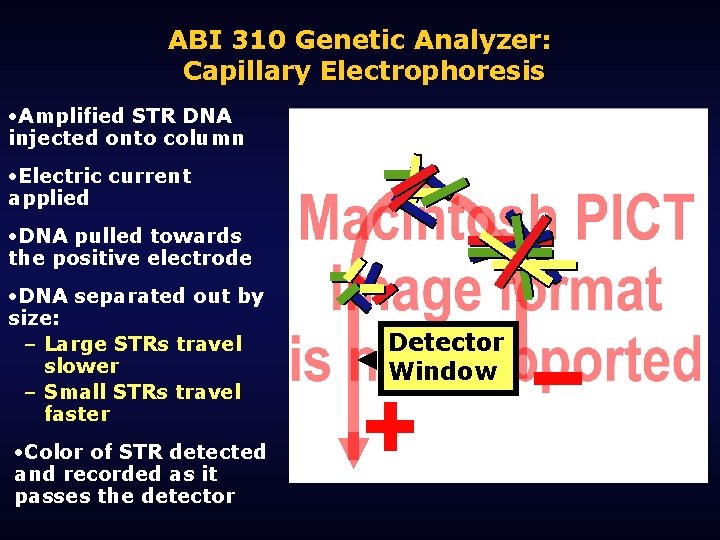
ABI 310 Genetic Analyzer: Capillary Electrophoresis • Amplified STR DNA injected onto column • Electric current applied • DNA pulled towards the positive electrode • DNA separated out by size: – Large STRs travel slower – Small STRs travel faster • Color of STR detected and recorded as it passes the detector Detector Window
Profiler Plus: Raw data
Statistical estimates: the product rule 0. 222 x 2 = 0. 1
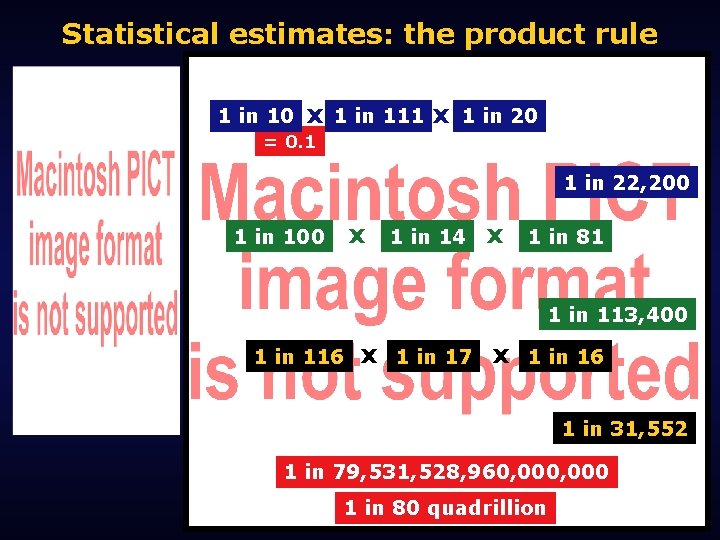
Statistical estimates: the product rule 1 in 10 x 1 in 111 x 1 in 20 = 0. 1 1 in 22, 200 x 1 in 14 x 1 in 81 1 in 100 1 in 113, 400 1 in 116 x 1 in 17 x 1 in 16 1 in 31, 552 1 in 79, 531, 528, 960, 000 1 in 80 quadrillion
What more is there to say after you have said: “The chance of a coincidental match is one in 80 quadrillion? ”
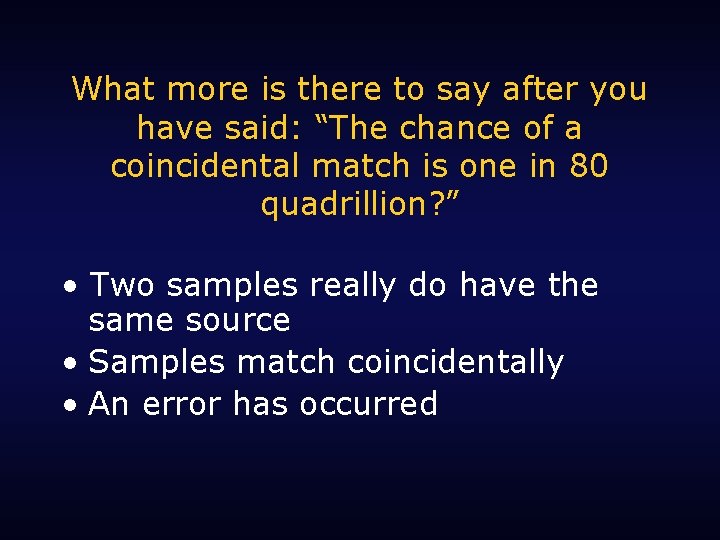
What more is there to say after you have said: “The chance of a coincidental match is one in 80 quadrillion? ” • Two samples really do have the same source • Samples match coincidentally • An error has occurred
The science of DNA profiling is sound. But, not all of DNA profiling is science.
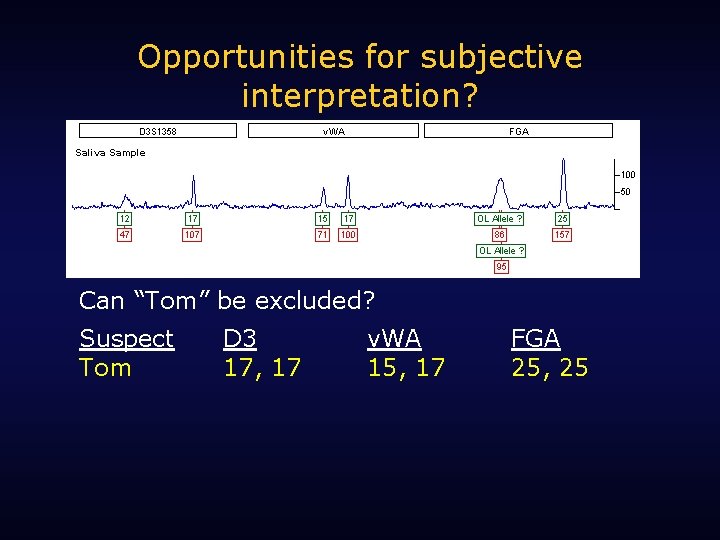
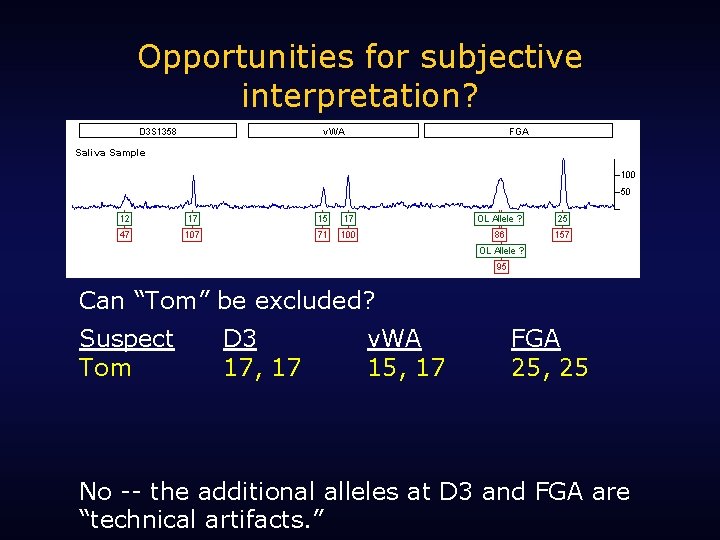
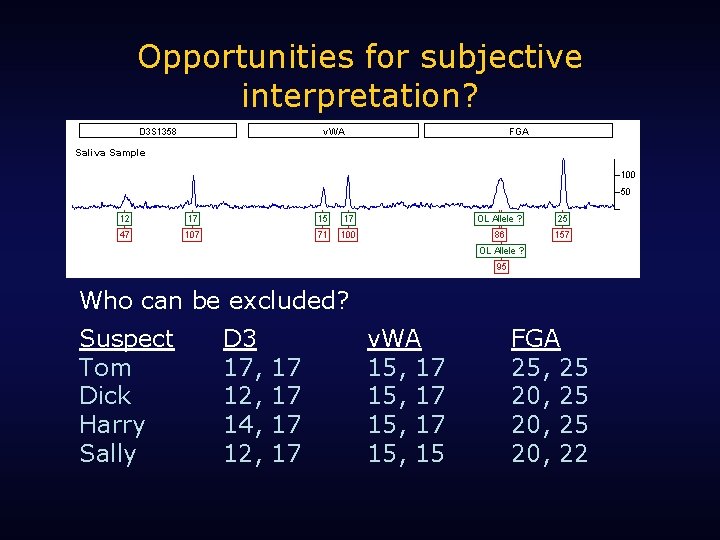
Opportunities for subjective interpretation? Can “Tom” be excluded? Suspect Tom D 3 17, 17 v. WA 15, 17 FGA 25, 25
Opportunities for subjective interpretation? Can “Tom” be excluded? Suspect Tom D 3 17, 17 v. WA 15, 17 FGA 25, 25 No -- the additional alleles at D 3 and FGA are “technical artifacts. ”
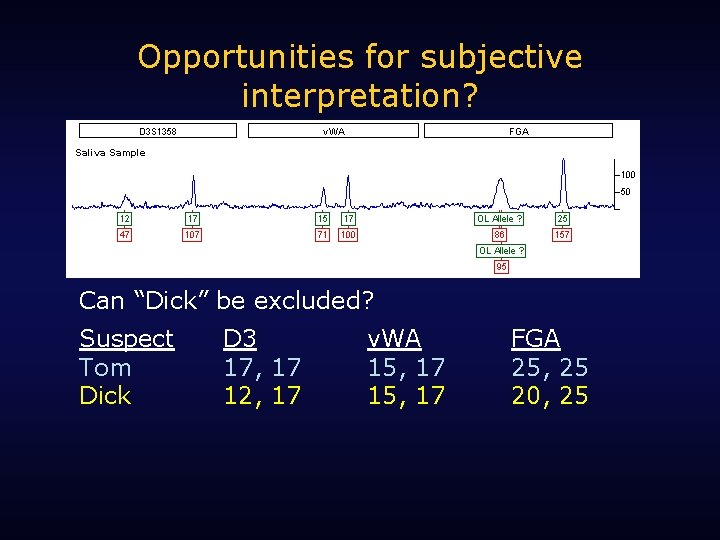
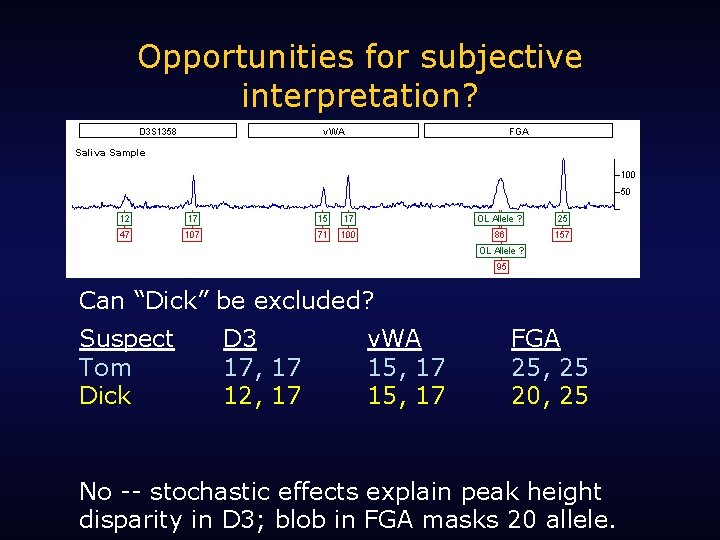
Opportunities for subjective interpretation? Can “Dick” be excluded? Suspect Tom Dick D 3 17, 17 12, 17 v. WA 15, 17 FGA 25, 25 20, 25
Opportunities for subjective interpretation? Can “Dick” be excluded? Suspect Tom Dick D 3 17, 17 12, 17 v. WA 15, 17 FGA 25, 25 20, 25 No -- stochastic effects explain peak height disparity in D 3; blob in FGA masks 20 allele.
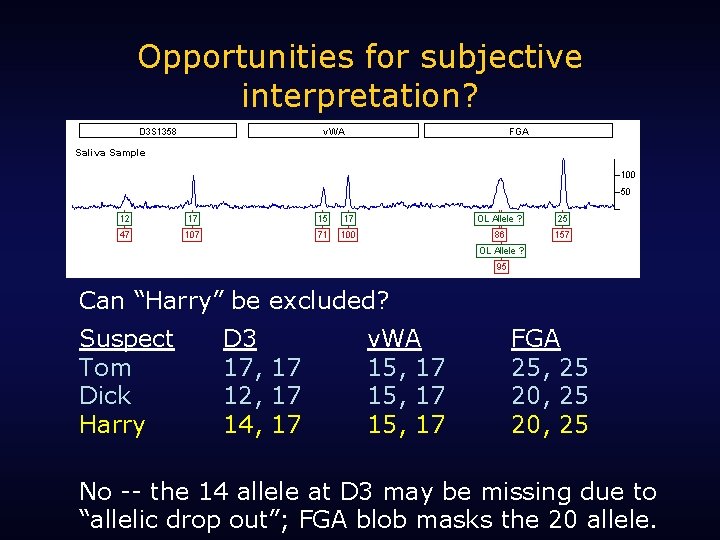
Opportunities for subjective interpretation? Can “Harry” be excluded? Suspect Tom Dick Harry D 3 17, 17 12, 17 14, 17 v. WA 15, 17 FGA 25, 25 20, 25 No -- the 14 allele at D 3 may be missing due to “allelic drop out”; FGA blob masks the 20 allele.
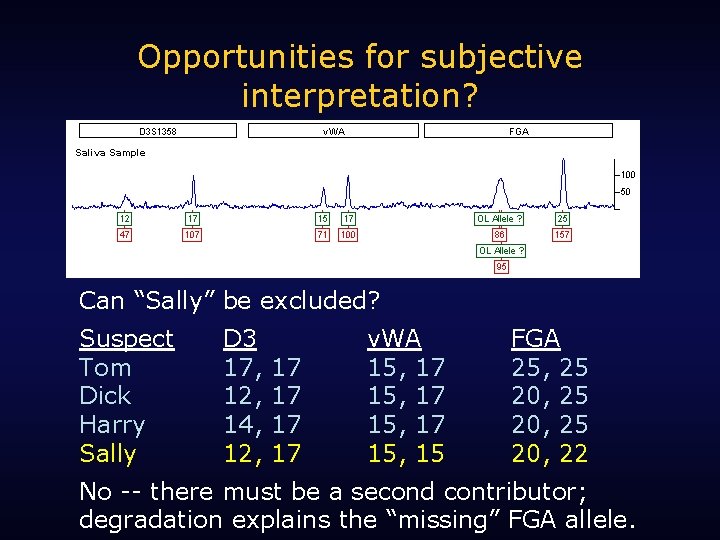
Opportunities for subjective interpretation? Can “Sally” be excluded? Suspect Tom Dick Harry Sally D 3 17, 12, 14, 12, 17 17 v. WA 15, 17 15, 15 FGA 25, 25 20, 22 No -- there must be a second contributor; degradation explains the “missing” FGA allele.
The science of DNA profiling is sound. But, not all of DNA profiling is science.
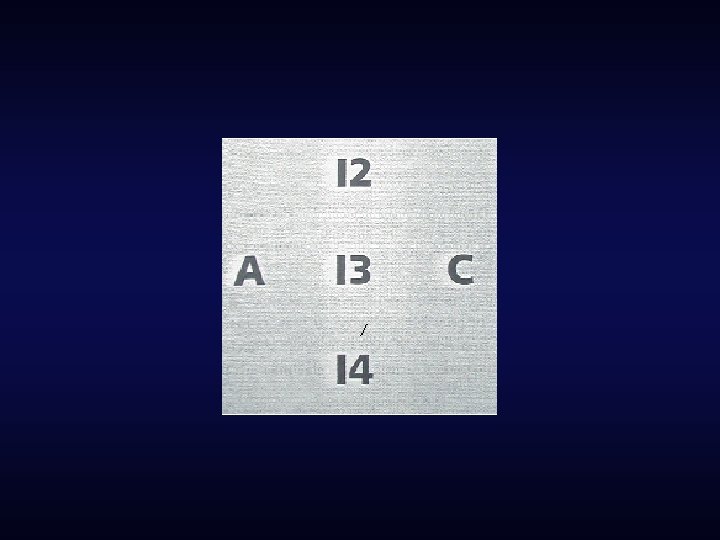
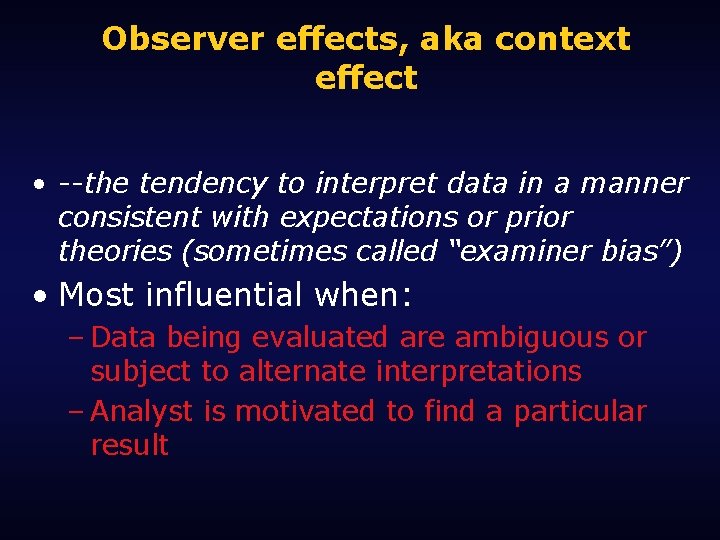
Observer effects, aka context effect • --the tendency to interpret data in a manner consistent with expectations or prior theories (sometimes called “examiner bias”)
Observer effects, aka context effect • --the tendency to interpret data in a manner consistent with expectations or prior theories (sometimes called “examiner bias”) • Most influential when: – Data being evaluated are ambiguous or subject to alternate interpretations – Analyst is motivated to find a particular result
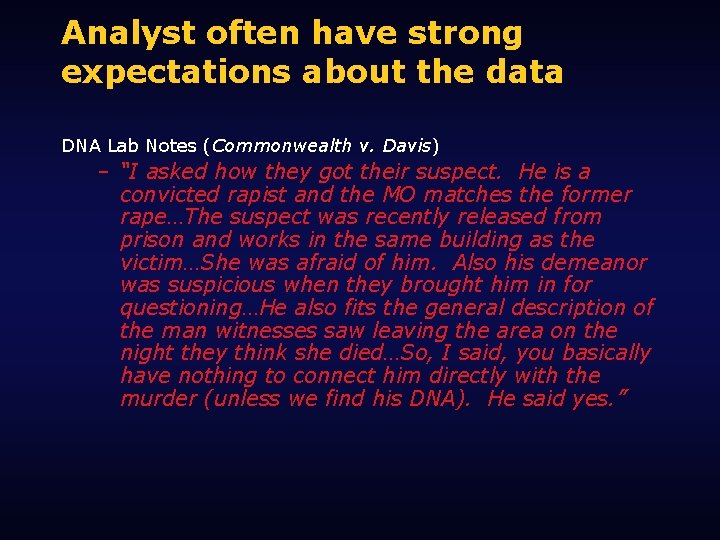
Analyst often have strong expectations about the data DNA Lab Notes (Commonwealth v. Davis) – “I asked how they got their suspect. He is a convicted rapist and the MO matches the former rape…The suspect was recently released from prison and works in the same building as the victim…She was afraid of him. Also his demeanor was suspicious when they brought him in for questioning…He also fits the general description of the man witnesses saw leaving the area on the night they think she died…So, I said, you basically have nothing to connect him directly with the murder (unless we find his DNA). He said yes. ”
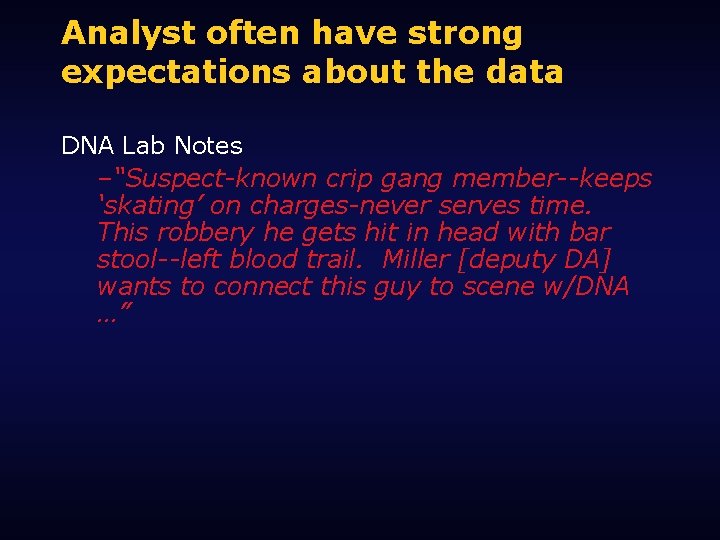
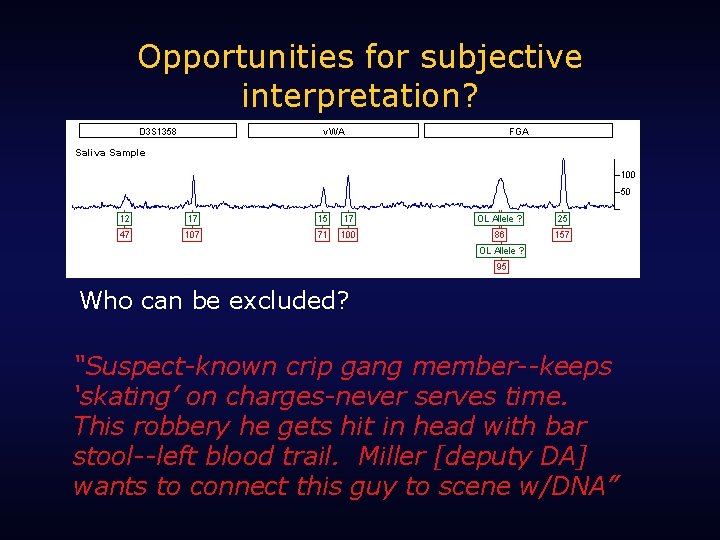
Analyst often have strong expectations about the data DNA Lab Notes –“Suspect-known crip gang member--keeps ‘skating’ on charges-never serves time. This robbery he gets hit in head with bar stool--left blood trail. Miller [deputy DA] wants to connect this guy to scene w/DNA …”
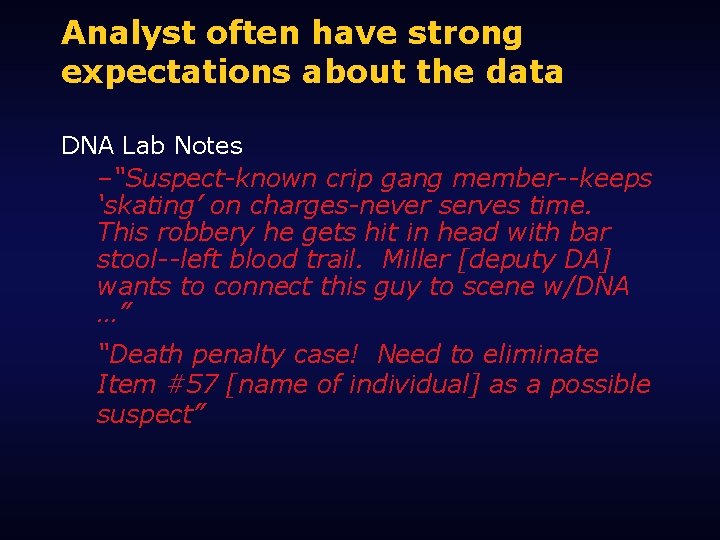
Analyst often have strong expectations about the data DNA Lab Notes –“Suspect-known crip gang member--keeps ‘skating’ on charges-never serves time. This robbery he gets hit in head with bar stool--left blood trail. Miller [deputy DA] wants to connect this guy to scene w/DNA …” “Death penalty case! Need to eliminate Item #57 [name of individual] as a possible suspect”
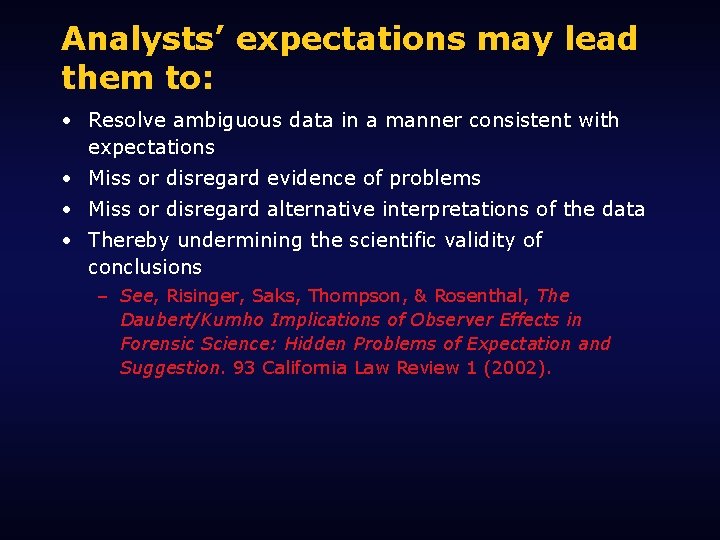
Analysts’ expectations may lead them to: • Resolve ambiguous data in a manner consistent with expectations • Miss or disregard evidence of problems • Miss or disregard alternative interpretations of the data • Thereby undermining the scientific validity of conclusions – See, Risinger, Saks, Thompson, & Rosenthal, The Daubert/Kumho Implications of Observer Effects in Forensic Science: Hidden Problems of Expectation and Suggestion. 93 California Law Review 1 (2002).
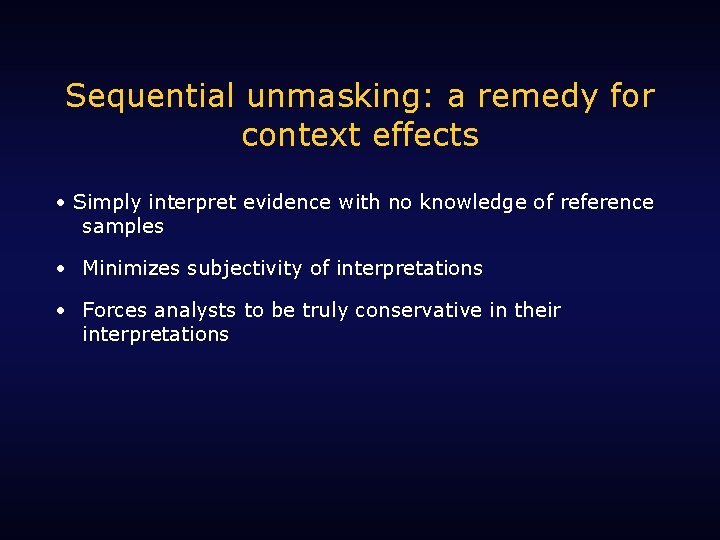
Sequential unmasking: a remedy for context effects • Simply interpret evidence with no knowledge of reference samples • Minimizes subjectivity of interpretations • Forces analysts to be truly conservative in their interpretations
Opportunities for subjective interpretation? Who can be excluded? Suspect Tom Dick Harry Sally D 3 17, 12, 14, 12, 17 17 v. WA 15, 17 15, 15 FGA 25, 25 20, 22
Opportunities for subjective interpretation? Who can be excluded? “Suspect-known crip gang member--keeps ‘skating’ on charges-never serves time. This robbery he gets hit in head with bar stool--left blood trail. Miller [deputy DA] wants to connect this guy to scene w/DNA”
Sequential unmasking: a remedy for context effects • Simply interpret evidence with no knowledge of reference samples • Minimizes subjectivity of interpretations • Forces analysts to be truly conservative in their interpretations
Sequential unmasking: a remedy for context effects • Simply interpret evidence with no knowledge of reference samples • Minimizes subjectivity of interpretations • Forces analysts to be truly conservative in their interpretations • Is it possible to do this for all forensic science?
The science of DNA profiling is sound. But, not all of DNA profiling is science.
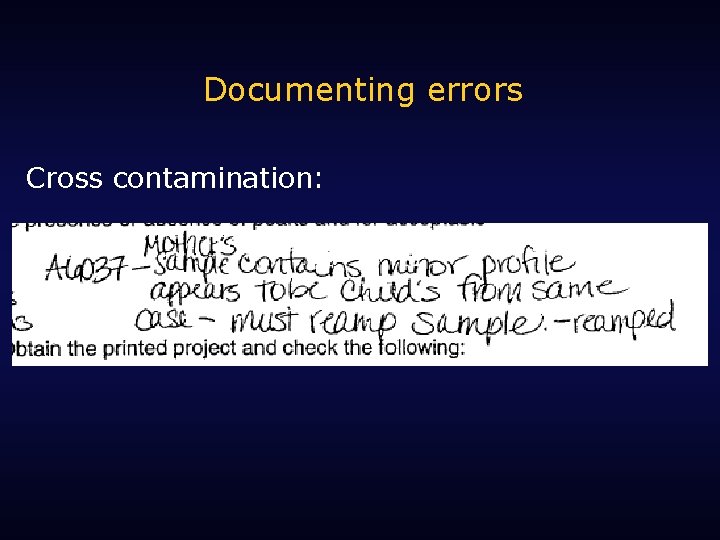
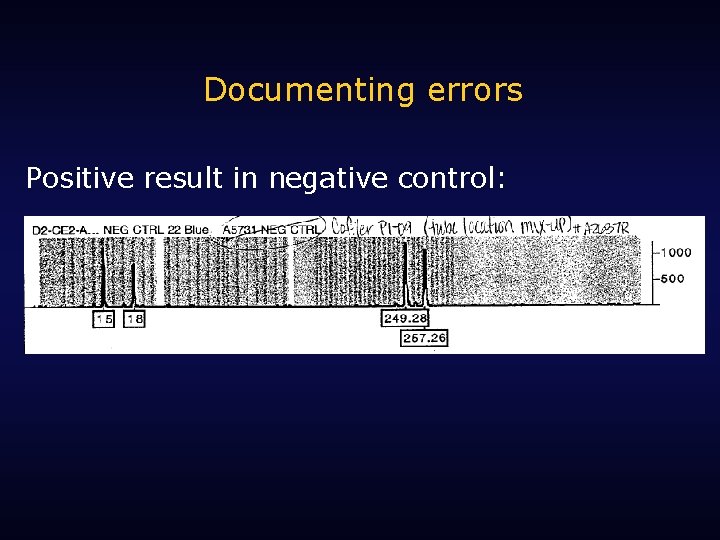
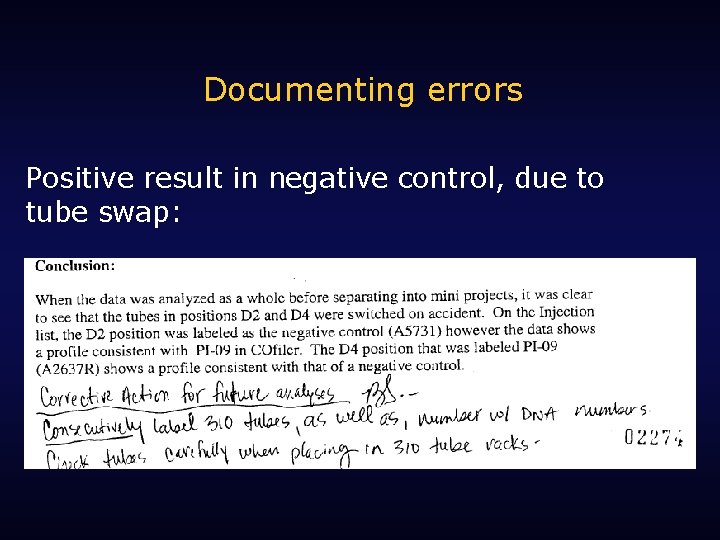
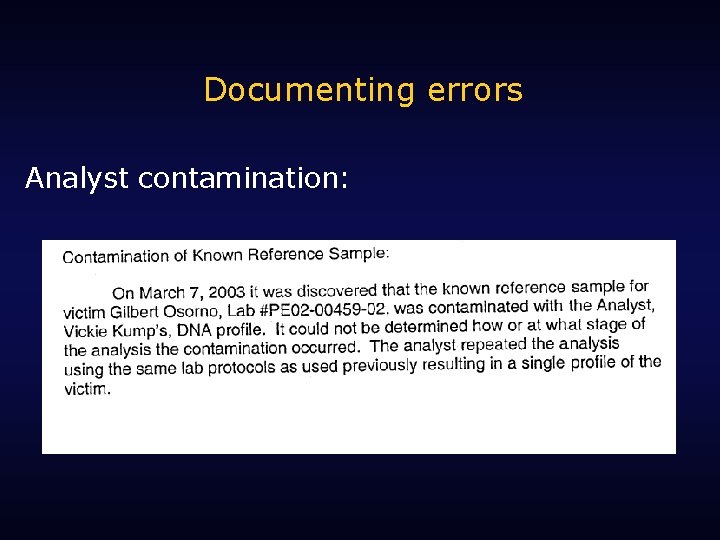
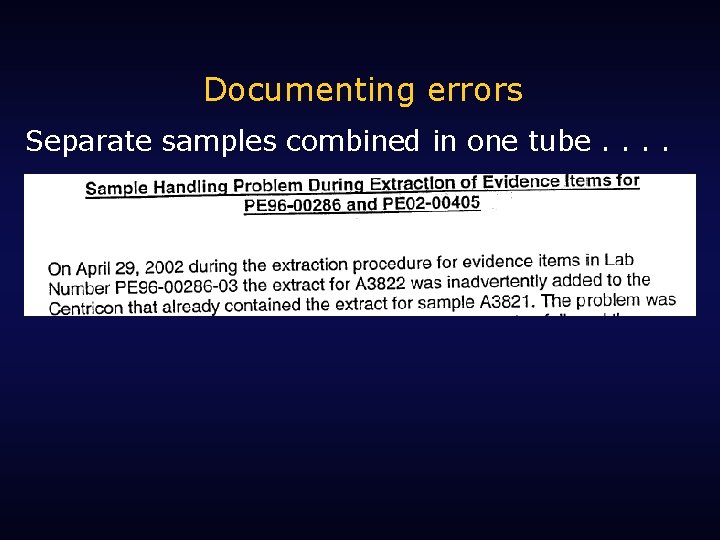
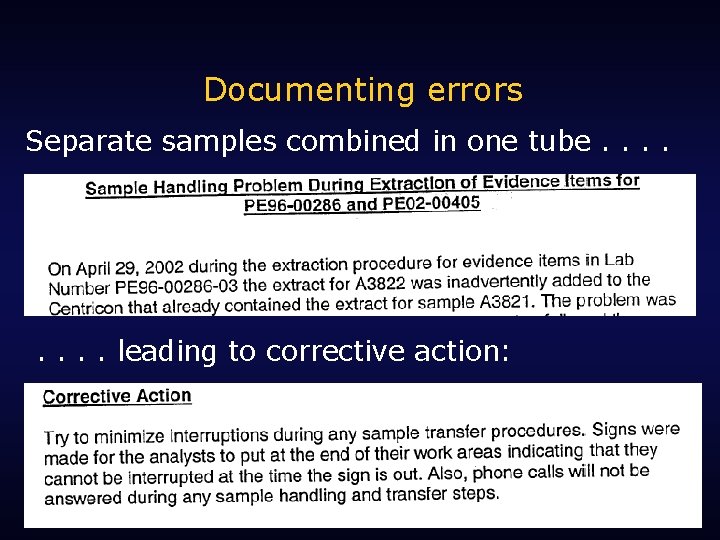
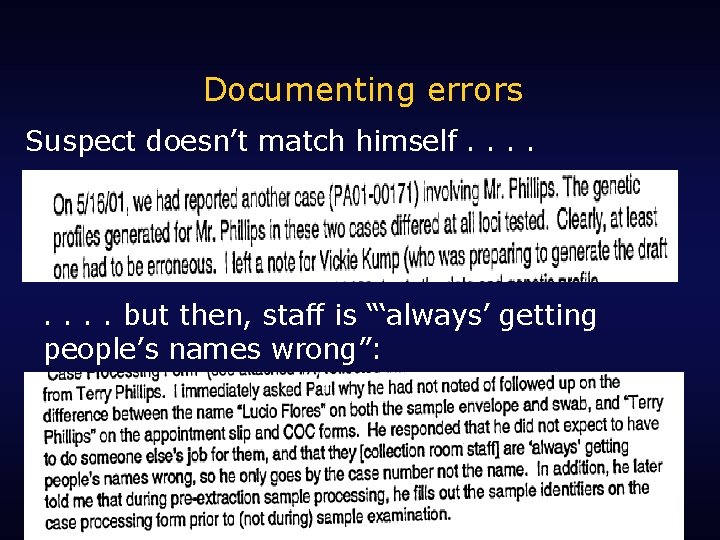
Documenting errors: DNA Advisory Board Quality Assurance Standards for Forensic DNA Testing Laboratories, Standard 14 [Forensic DNA laboratories must] “follow procedures for corrective action whenever proficiency testing discrepancies and/or casework errors are detected” [and] “shall maintain documentation for the corrective action. ”
Documenting errors Cross contamination:
Documenting errors Positive result in negative control:
Documenting errors Positive result in negative control, due to tube swap:
Documenting errors Analyst contamination:
Documenting errors Separate samples combined in one tube. .
Documenting errors Separate samples combined in one tube. . . . leading to corrective action:
Documenting errors Suspect doesn’t match himself. . . . but then, staff is “‘always’ getting people’s names wrong”:
The science of DNA profiling is sound. But, not all of DNA profiling is science. This is especially true in situations involving: mixtures, relatives, degradation, and small sample size.
Resources • • • Internet – Forensic Bioinformatics Website: http: //www. bioforensics. com/ – Applied Biosystems Website: http: //www. appliedbiosystems. com/ (see human identity and forensics) – STR base: http: //www. cstl. nist. gov/biotech/strbase/ (very useful) Books – ‘Forensic DNA Typing’ by John M. Butler (Academic Press) Scientists – Larry Mueller (UC Irvine) – Simon Ford (Lexigen, Inc. San Francisco, CA) – William Shields (SUNY, Syracuse, NY) – Mike Raymer and Travis Doom (Wright State, Dayton, OH) Marc Taylor (Technical Associates, Ventura, CA) – Keith Inman (Forensic Analytical, Haywood, CA) Testing laboratories – Technical Associates (Ventura, CA) – Indiana State Police (Indianapolis, IN) Other resources – Forensic Bioinformatics (Dayton, OH)