
Evaluating CommunityBased Nutrition Education Programs The Food Literacy
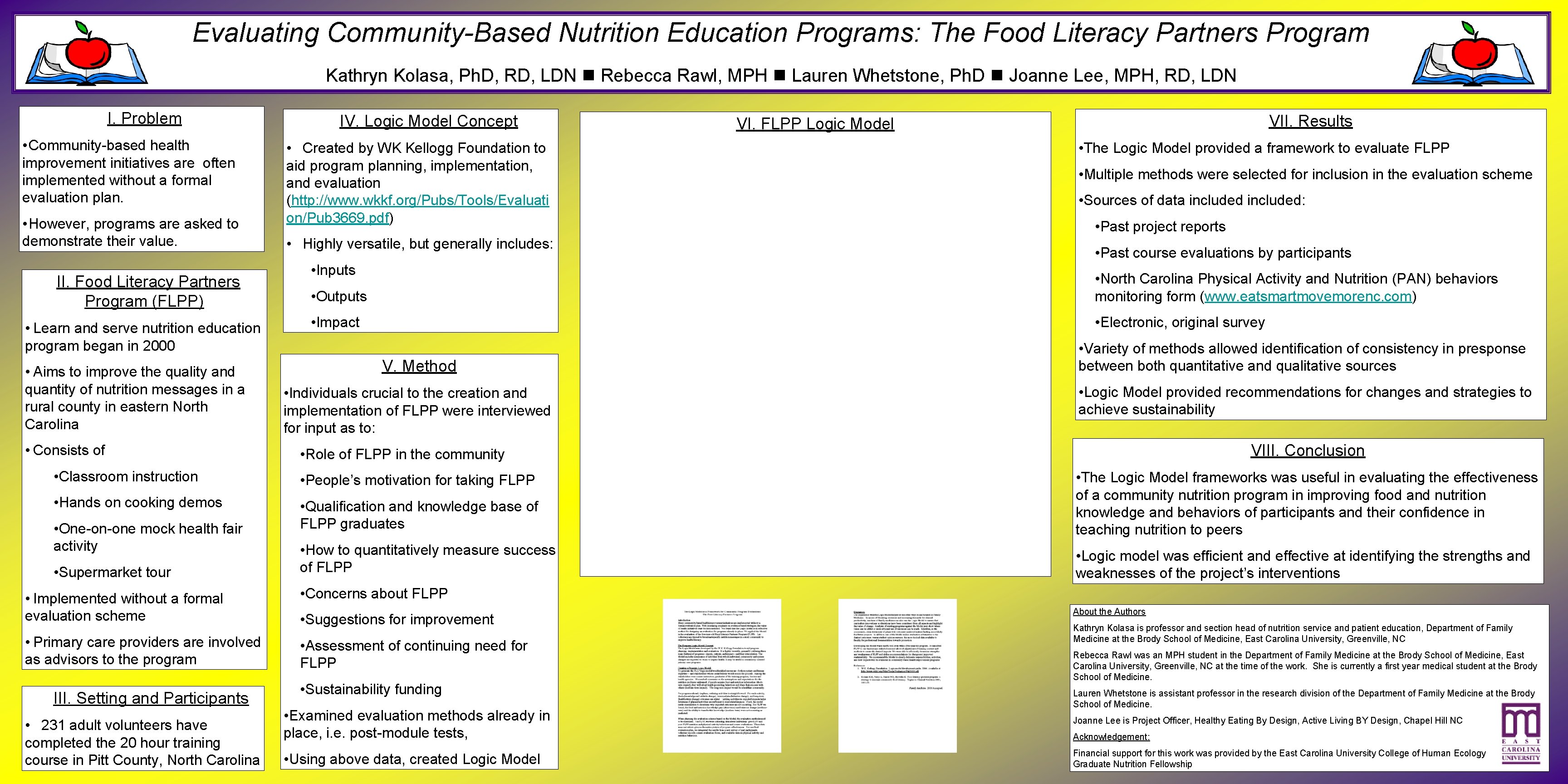
Evaluating Community-Based Nutrition Education Programs: The Food Literacy Partners Program Kathryn Kolasa, Ph. D, RD, LDN Rebecca Rawl, MPH Lauren Whetstone, Ph. D Joanne Lee, MPH, RD, LDN I. Problem • Community-based health improvement initiatives are often implemented without a formal evaluation plan. • However, programs are asked to demonstrate their value. II. Food Literacy Partners Program (FLPP) • Learn and serve nutrition education program began in 2000 • Aims to improve the quality and quantity of nutrition messages in a rural county in eastern North Carolina • Consists of IV. Logic Model Concept • Created by WK Kellogg Foundation to aid program planning, implementation, and evaluation (http: //www. wkkf. org/Pubs/Tools/Evaluati on/Pub 3669. pdf) • Highly versatile, but generally includes: • Inputs VII. Results VI. FLPP Logic Model • The Logic Model provided a framework to evaluate FLPP • Multiple methods were selected for inclusion in the evaluation scheme • Sources of data included: • Past project reports • Past course evaluations by participants • Outputs • North Carolina Physical Activity and Nutrition (PAN) behaviors monitoring form (www. eatsmartmovemorenc. com) • Impact • Electronic, original survey V. Method • Individuals crucial to the creation and implementation of FLPP were interviewed for input as to: • Variety of methods allowed identification of consistency in presponse between both quantitative and qualitative sources • Logic Model provided recommendations for changes and strategies to achieve sustainability VIII. Conclusion • Role of FLPP in the community • Classroom instruction • People’s motivation for taking FLPP • Hands on cooking demos • Qualification and knowledge base of FLPP graduates • The Logic Model frameworks was useful in evaluating the effectiveness of a community nutrition program in improving food and nutrition knowledge and behaviors of participants and their confidence in teaching nutrition to peers • How to quantitatively measure success of FLPP • Logic model was efficient and effective at identifying the strengths and weaknesses of the project’s interventions • One-on-one mock health fair activity • Supermarket tour • Implemented without a formal evaluation scheme • Concerns about FLPP • Primary care providers are involved as advisors to the program • Assessment of continuing need for FLPP III. Setting and Participants • 231 adult volunteers have completed the 20 hour training course in Pitt County, North Carolina • Suggestions for improvement • Sustainability funding • Examined evaluation methods already in place, i. e. post-module tests, • Using above data, created Logic Model About the Authors Kathryn Kolasa is professor and section head of nutrition service and patient education, Department of Family Medicine at the Brody School of Medicine, East Carolina University, Greenville, NC Rebecca Rawl was an MPH student in the Department of Family Medicine at the Brody School of Medicine, East Carolina University, Greenville, NC at the time of the work. She is currently a first year medical student at the Brody School of Medicine. Lauren Whetstone is assistant professor in the research division of the Department of Family Medicine at the Brody School of Medicine. Joanne Lee is Project Officer, Healthy Eating By Design, Active Living BY Design, Chapel Hill NC Acknowledgement: Financial support for this work was provided by the East Carolina University College of Human Ecology Graduate Nutrition Fellowship
- Slides: 1