
EVALUATING A COMPANYS RESOURCES CAPABILITIES AND COMPETITIVENESS GROUP
EVALUATING A COMPANY’S RESOURCES, CAPABILITIES, AND COMPETITIVENESS GROUP 5: SPIRIT AIRLINES SAMUEL JOHNSON, ALEXIZ GREEN, KATY NOLEN, JOSH CAFFEY, KELSEY BLAKE, LUCIE MORREN
INTRODUCTION While chapter 3 focused on external analysis, chapter 4 looks at what managers can do to evaluate their company’s internal situation. Conducting a thorough internal analysis gives management an idea of if their strategy is providing any strategic competitive advantages over competitors. The analysis is focused on answering the following 6 questions:
INTRODUCTION CONTINUED Questions 1: How well is the company’s present strategy working? Question 2: What are the company’s competitively important resources and capabilities? Question 3: What are the Company’s Strengths and Weaknesses in Relation to the Market Opportunities and External Threats? Question 4: Are the company’s cost structure and customer value proposition competitive? Question 5: Is the company competitively stronger or weaker than key rivals? Question 6: What strategic issues and problems merit front-burner managerial attention?
LEARNING OBJECTIVES How to assess how well a company’s strategy is working. Grasp how a company’s resources and capabilities are central to its strategic approach and how to evaluate their potential for competitive advantages. Assess a company’s strengths and weaknesses in light of the market. How a company’s value chain affects their cost structure and customer value proposition. Why internal analysis is important for managerial decision making.
QUESTIONS 1: HOW WELL IS THE COMPANY’S PRESENT STRATEGY WORKING?
3 BEST INDICATORS OF HOW WELL A STRATEGY IS WORKING 1. The company is reaching financial goals and strategic objectives. ØProfit Margin, Debt-to-Asset Ratio, Days of Inventory 2. Their financial performance is above industry average. ØCosts vs Competitors, Return on Asset, Stock Price 3. If they are gaining customers and market share. ØCustomer Acquisition and Retention, Company Image and Reputation

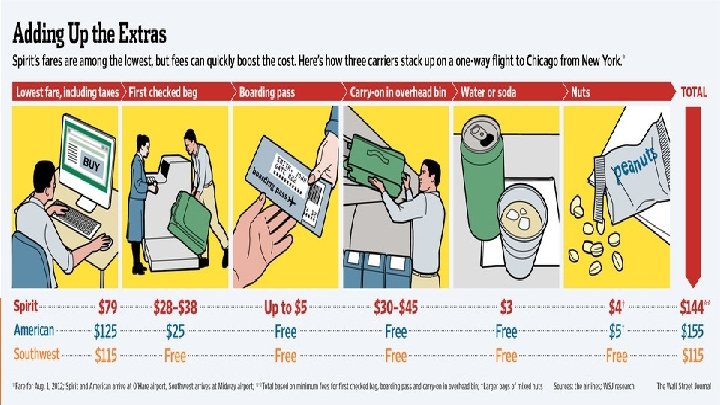
SPIRIT AIRLINES COMPANY STRATEGY “Our ultra low-cost carrier, or ULCC, business model allows us to compete principally by offering customers our Bare Fares. We then give customers Frill Control, which provides customers the freedom to save by paying only for the options they choose such as bags, advance seat assignments, and refreshments. ”
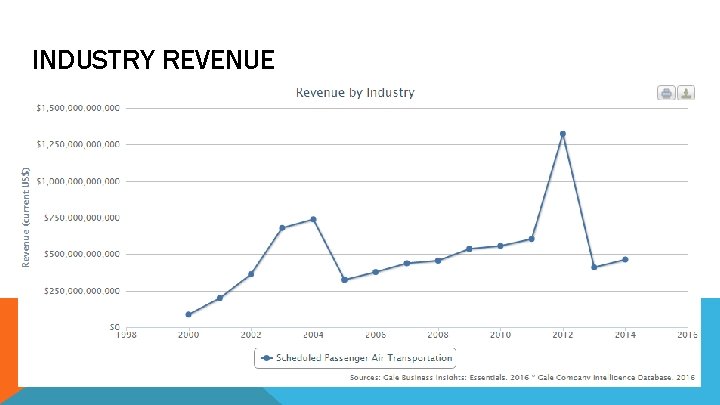
INDUSTRY REVENUE

REVENUE VS COMPETITION
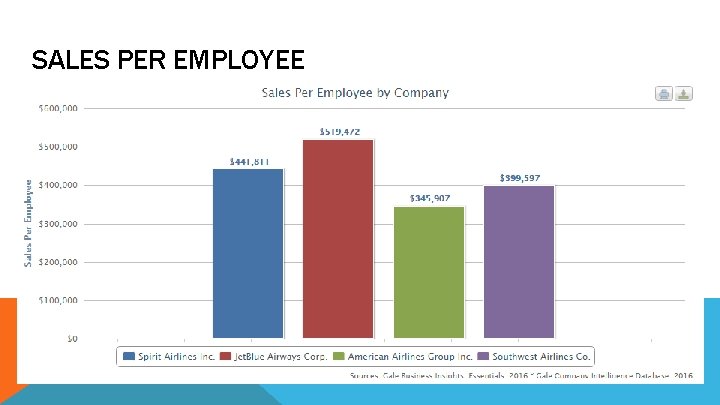
SALES PER EMPLOYEE
SPIRIT’S STRATEGY RESULTS • 2015 was their 9 th year of continuous growth. • 23. 8% profit margin; highest in company history. • Total traffic grew by 27. 1%
QUESTION 2: WHAT ARE THE COMPANY’S COMPETITIVELY IMPORTANT RESOURCES AND CAPABILITIES?

Competitive Assets ● A company’s resources and capabilities ● Determine a company’s competitive power Resource and Capability Analysis ● Powerful tool used in determining competitive success ● Two- Step process

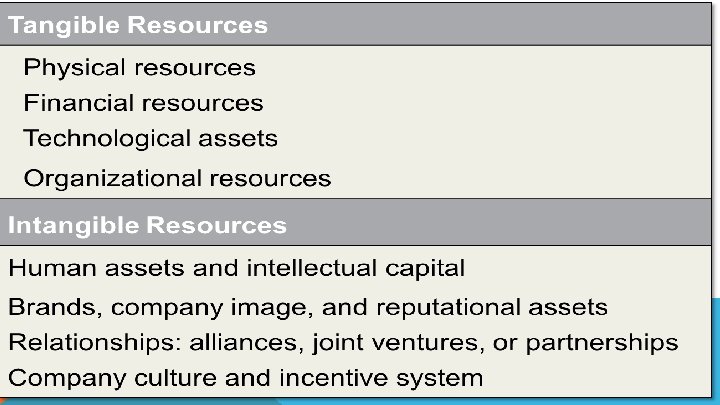
• CAPABILITY CAPACITY OF A FIRM TO PERFORM A CERTAIN INTERNAL ACTIVITY COMPETENTLY. • RESOURCE A PRODUCTIVE INPUT THAT IS OWNED OR CONTROLLED BY THE FIRM. Ø TANGIBLE Ø INTANGIBLE

VRIN TESTS FOR COMPETITIVE ADVANTAGE ● ● VALUABLE- IS THE RESOURCE OR CAPABILITY COMPETITIVELY VALUABLE? RARE- IS IT SOMETHING RIVALS LACK? INIMITABLE- IS IT HARD TO COPY? NON-SUBSTITUTABLE- IS IT INVULNERABLE TO THE THREAT OF SUBSTITUTES?
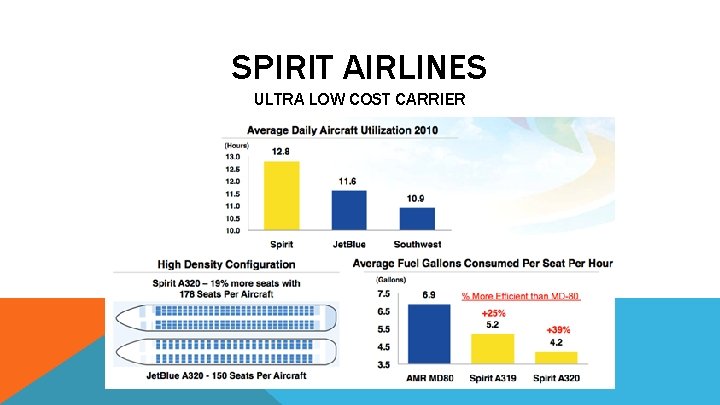
SPIRIT AIRLINES ULTRA LOW COST CARRIER
QUESTION 3: WHAT ARE THE COMPANY’S STRENGTHS AND WEAKNESSES IN RELATION TO THE MARKET OPPORTUNITIES AND EXTERNAL THREATS?
SWOT Analysis STRENGTHS ● Competence ● Core Competence ● Distinctive Competence Weaknesses ● Competitive deficiency/liability
SWOT ANALYSIS CONT. Market Opportunities External Threats ● Moderate, imposing, “sudden-death”
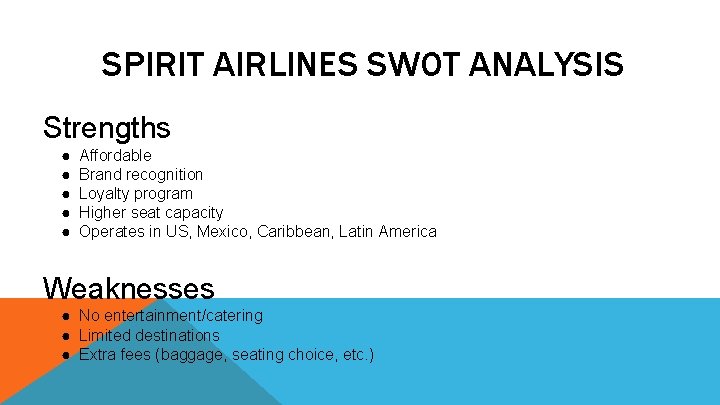
SPIRIT AIRLINES SWOT ANALYSIS Strengths ● ● ● Affordable Brand recognition Loyalty program Higher seat capacity Operates in US, Mexico, Caribbean, Latin America Weaknesses ● No entertainment/catering ● Limited destinations ● Extra fees (baggage, seating choice, etc. )
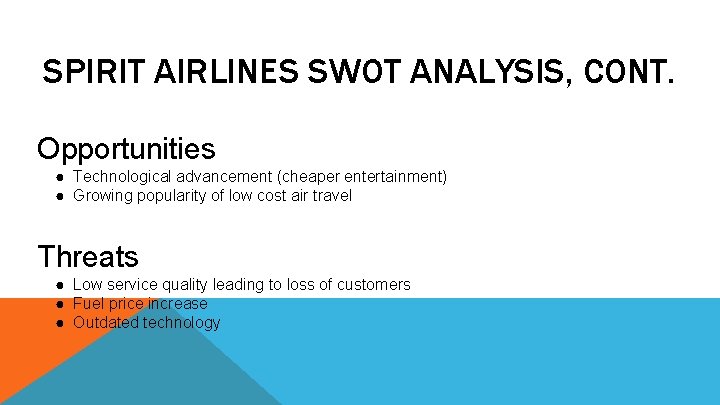
SPIRIT AIRLINES SWOT ANALYSIS, CONT. Opportunities ● Technological advancement (cheaper entertainment) ● Growing popularity of low cost air travel Threats ● Low service quality leading to loss of customers ● Fuel price increase ● Outdated technology
INTERPRETING SWOT ANALYSIS ● Draw conclusions about current situation ● Translate conclusions into strategic actions ● Take action to improve strategy and business prospects
QUESTION 4: ARE THE COMPANY’S COST STRUCTURE AND CUSTOMER VALUE PROPOSITION COMPETITIVE?
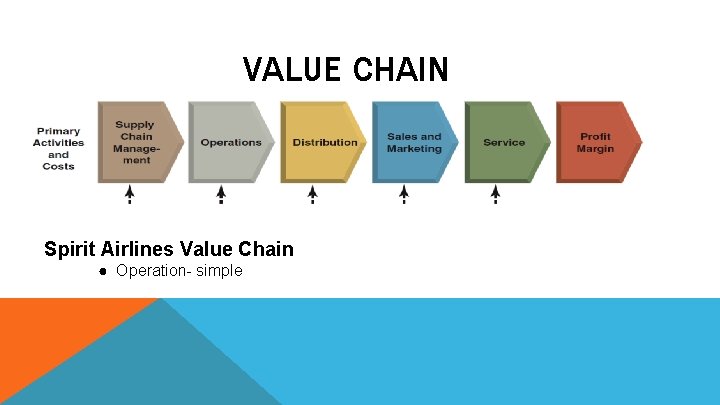
VALUE CHAIN Spirit Airlines Value Chain ● Operation- simple
VALUE CHAIN ANALYSIS ● Compares value chain of rival companies ● Process of Value Chain Analysis

VALUE CHAIN SYSTEM

BENCHMARKING ● Identify the “best practices” in performing an activity ● Evaluates those best practices
REMEDY FOR COST OR VALUE DISADVANTAGE ● Company’s own internal activities ○ Implementing best practices ● Suppliers part in overall value chain system ○ Switching to lower-price substitute inputs ● Distribution of the value chain system ○ Switching to cheaper distribution channels
QUESTION 5: IS THE COMPANY COMPETITIVELY STRONGER OR WEAKER THAN KEY RIVALS?
COMPANY’S OVERALL COMPETITIVE STRENGTH How does the company rank relative to competitors on each of the important factors that determine market success? All things considered, does the company have a net competitive advantage or disadvantage versus major competitors?
QUANTITATIVE STRENGTH RATINGS 1. Make a list of industry’s key success factors 2. Assign weights to each of the measures of competitive strength 3. Calculate weighted strength ratings 4. Sum the weighted strength ratings 5. Draw conclusions

COMPETITIVE STRENGTH ASSESSMENT
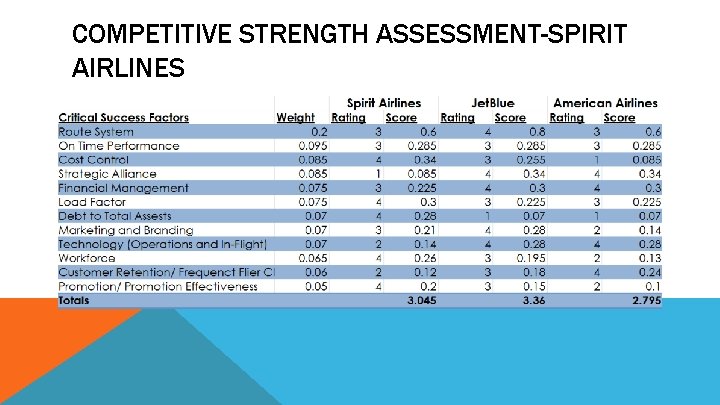
COMPETITIVE STRENGTH ASSESSMENT-SPIRIT AIRLINES
QUESTION 6: WHAT STRATEGIC ISSUES AND PROBLEMS MERIT FRONT-BURNER MANAGERIAL ATTENTION?
THE “WORRY LIST” “How to…” “What to do about…” “Whether to…” Purpose: Identify issues/problems that need management attention
CONCLUSION How to assess how well a company’s strategy is working. Grasp how a company’s resources and capabilities are central to its strategic approach and how to evaluate their potential for competitive advantages. Assess a company’s strengths and weaknesses in light of the market. How a company’s value chain affects their cost structure and customer value proposition. Why internal analysis is important for managerial decision making.
WORKS CITED http: //bi. galegroup. com. libe 2. lib. ttu. edu/essentials/comparison. Tool/industry? u=txshracd 2579&entities=48111 1&metric=revenue#tab=chart http: //bi. galegroup. com. libe 2. lib. ttu. edu/essentials/comparison. Tool/company? u=txshracd 2579&entities=3272 23|962767|300316|308031&metric=revenue#tab=chart http: //files. shareholder. com/downloads/ABEA 5 PAQQ 9/2881052366 x 0 x 875726/6 C 03279 F-ADF 1 -4 C 6 E-93 EB-A 61657 F 574 CF/SAVE 2015. 12. 31 -10 K_-_FINAL. PDF http: //marketrealist. com/2015/11/spirit-airlines-manage-low-cost-structure/
WORK CITED CONTINUED https: //frobertjacobs. wordpress. com/2012/05/12/spirit-airlinescost-reduction-leads-toprofitabilitiy/ http: //blog. tripchi. com/seth-bailey/new-fleet-vs-old-fleet/ http: //www. slideshare. net/Marissa. Pi/spirit-airlines-a-strategic-management-case-study http: //www. mbaskool. com/brandguide/airlines/9002 -spirit-airlines. html
- Slides: 41