
Eutrophication in Farmington Bay and its Potential Impacts
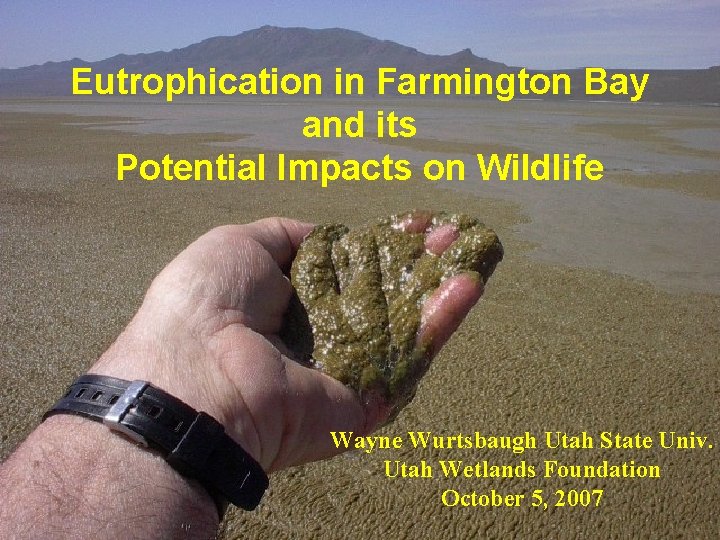
Eutrophication in Farmington Bay and its Potential Impacts on Wildlife Wayne Wurtsbaugh Utah State Univ. Utah Wetlands Foundation October 5, 2007
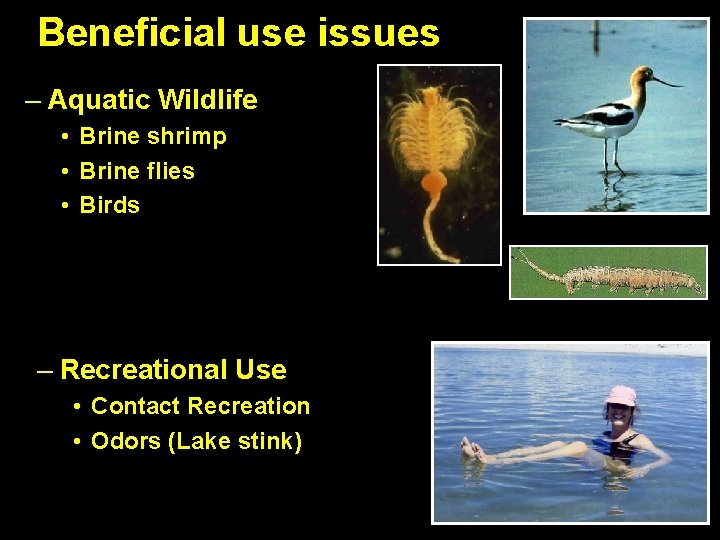
Beneficial use issues – Aquatic Wildlife • Brine shrimp • Brine flies • Birds – Recreational Use • Contact Recreation • Odors (Lake stink)
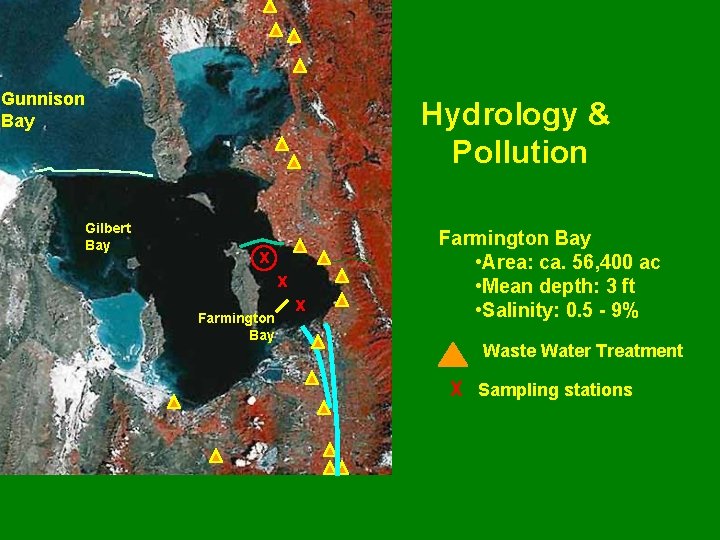
Gunnison Bay Hydrology & Pollution Gilbert Map Bay & bidirectional flow x x Farmington Bay • Area: ca. 56, 400 ac • Mean depth: 3 ft • Salinity: 0. 5 - 9% Waste Water Treatment X Sampling stations
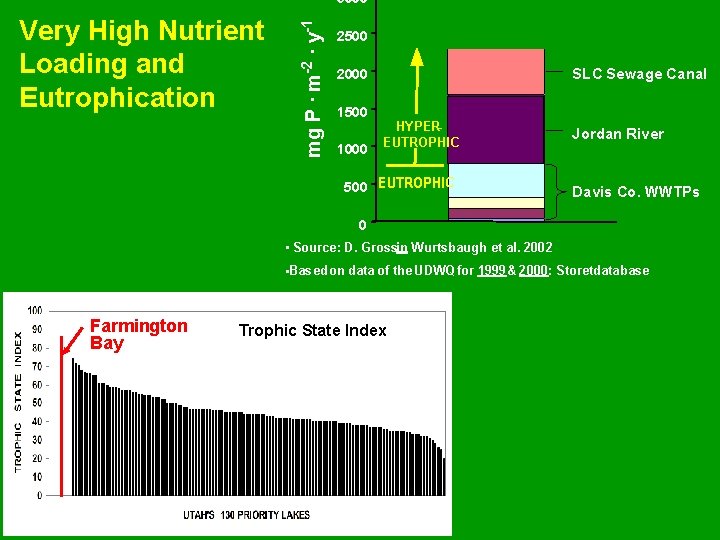
Very High Nutrient Loading and Eutrophication mg P · m -2 · y-1 3000 2500 Surplus Canal 2000 SLC Sewage Canal 1500 1000 HYPEREUTROPHIC 500 EUTROPHIC Jordan River Davis Co. WWTPs 0 • Source: D. Grossin Wurtsbaugh et al. 2002 • Basedon data of the UDWQfor 1999 & 2000: Storetdatabase Farmington Bay Trophic State Index
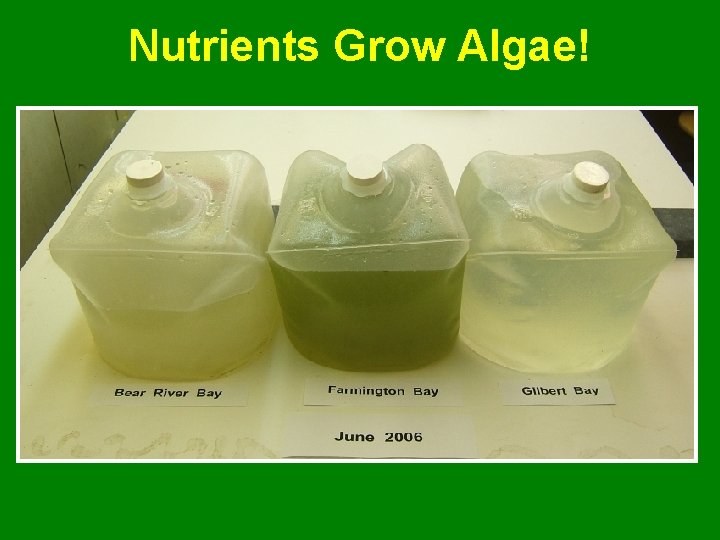
Nutrients Grow Algae!
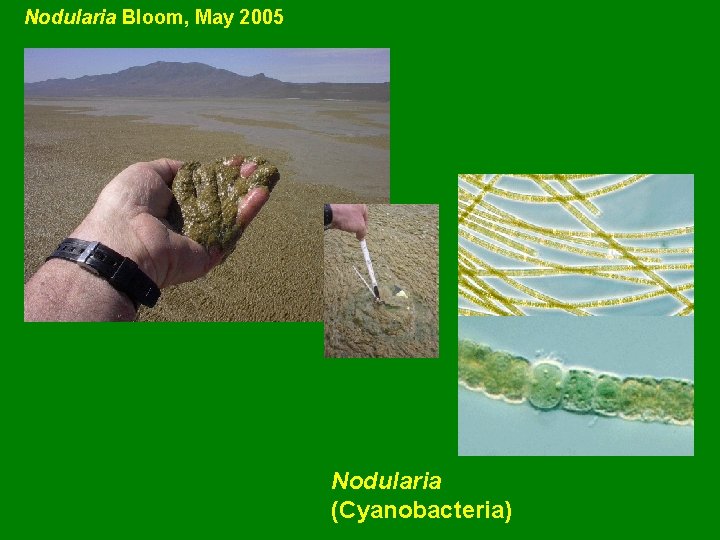
Nodularia Bloom, May 2005 Nodularia (Cyanobacteria)
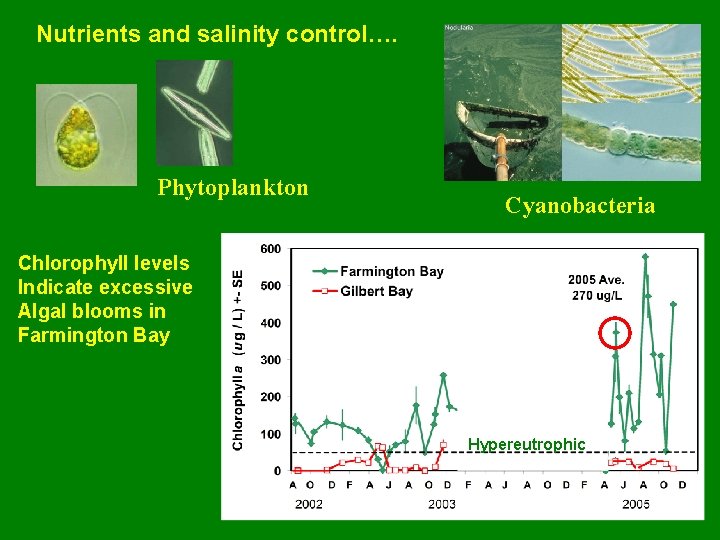
Nutrients and salinity control…. Phytoplankton Cyanobacteria Chlorophyll levels Indicate excessive Algal blooms in Farmington Bay Hypereutrophic
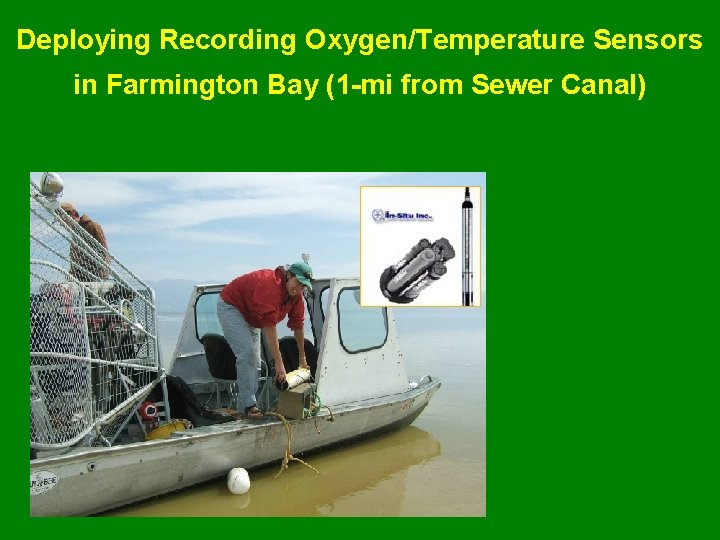
Deploying Recording Oxygen/Temperature Sensors in Farmington Bay (1 -mi from Sewer Canal)
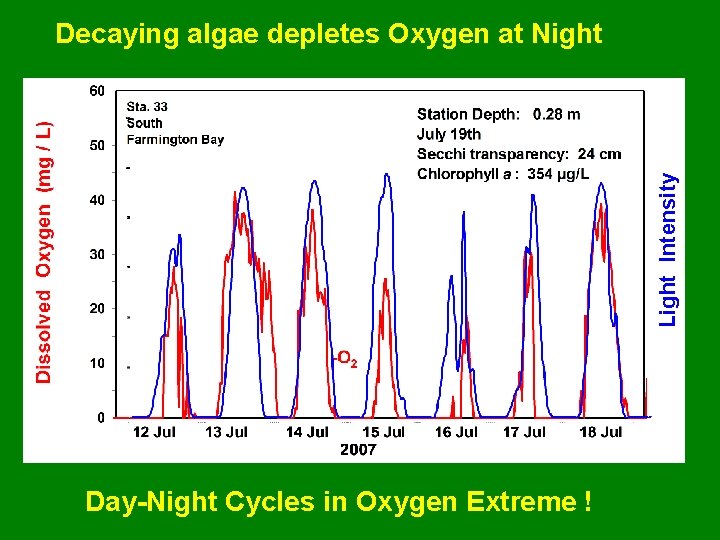
Light Intensity Decaying algae depletes Oxygen at Night Day-Night Cycles in Oxygen Extreme !
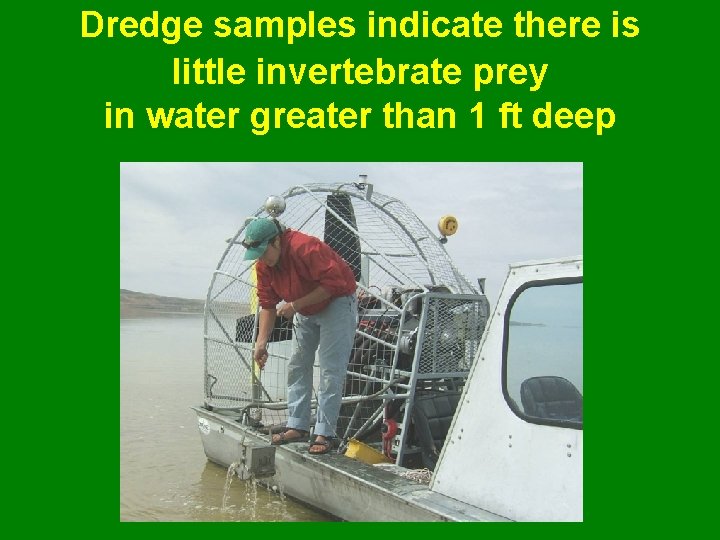
Dredge samples indicate there is little invertebrate prey in water greater than 1 ft deep
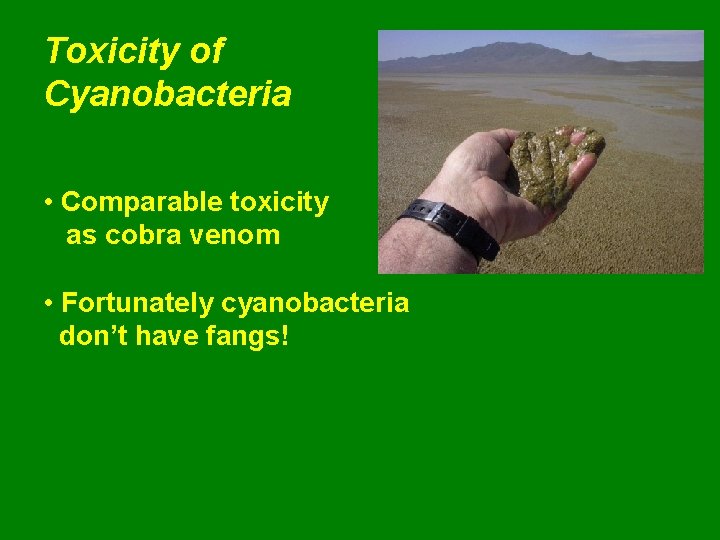
Toxicity of Cyanobacteria • Comparable toxicity as cobra venom • Fortunately cyanobacteria don’t have fangs!
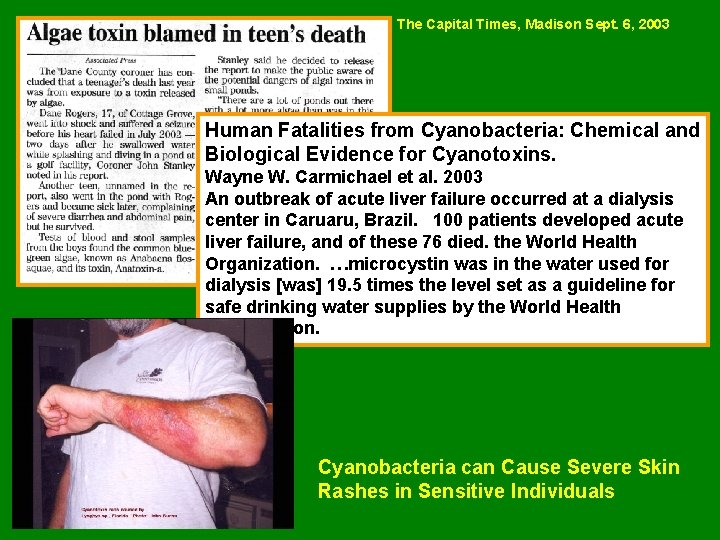
The Capital Times, Madison Sept. 6, 2003 Human Fatalities from Cyanobacteria: Chemical and Biological Evidence for Cyanotoxins. Wayne W. Carmichael et al. 2003 An outbreak of acute liver failure occurred at a dialysis center in Caruaru, Brazil. 100 patients developed acute liver failure, and of these 76 died. the World Health Organization. …microcystin was in the water used for dialysis [was] 19. 5 times the level set as a guideline for safe drinking water supplies by the World Health Organization. Cyanobacteria can Cause Severe Skin Rashes in Sensitive Individuals
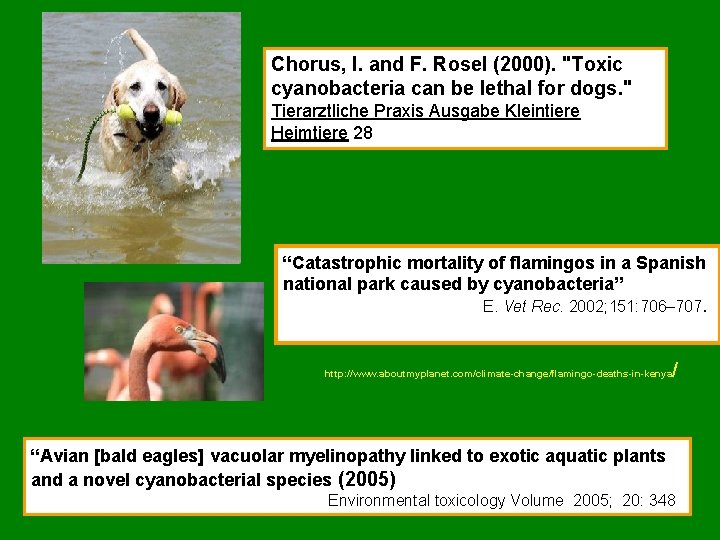
Chorus, I. and F. Rosel (2000). "Toxic cyanobacteria can be lethal for dogs. " Tierarztliche Praxis Ausgabe Kleintiere Heimtiere 28 “Catastrophic mortality of flamingos in a Spanish national park caused by cyanobacteria” E. Vet Rec. 2002; 151: 706– 707. / http: //www. aboutmyplanet. com/climate-change/flamingo-deaths-in-kenya “Avian [bald eagles] vacuolar myelinopathy linked to exotic aquatic plants and a novel cyanobacterial species (2005) Environmental toxicology Volume 2005; 20: 348
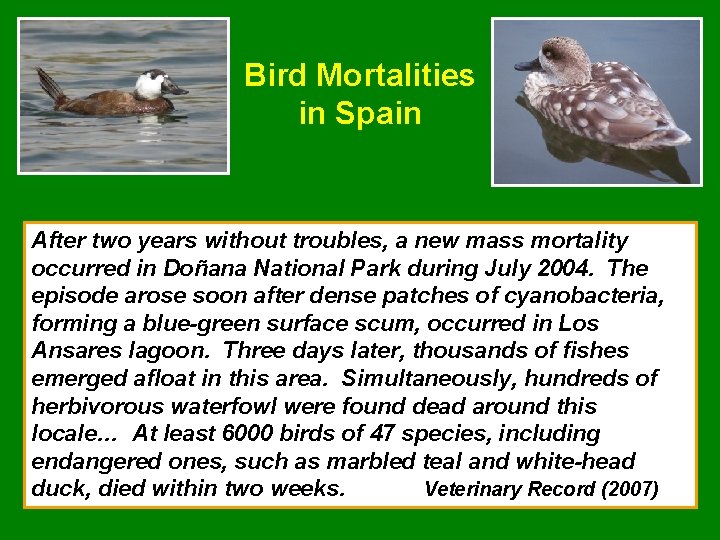
Bird Mortalities in Spain After two years without troubles, a new mass mortality occurred in Doñana National Park during July 2004. The episode arose soon after dense patches of cyanobacteria, forming a blue-green surface scum, occurred in Los Ansares lagoon. Three days later, thousands of fishes emerged afloat in this area. Simultaneously, hundreds of herbivorous waterfowl were found dead around this locale… At least 6000 birds of 47 species, including endangered ones, such as marbled teal and white-head duck, died within two weeks. Veterinary Record (2007)
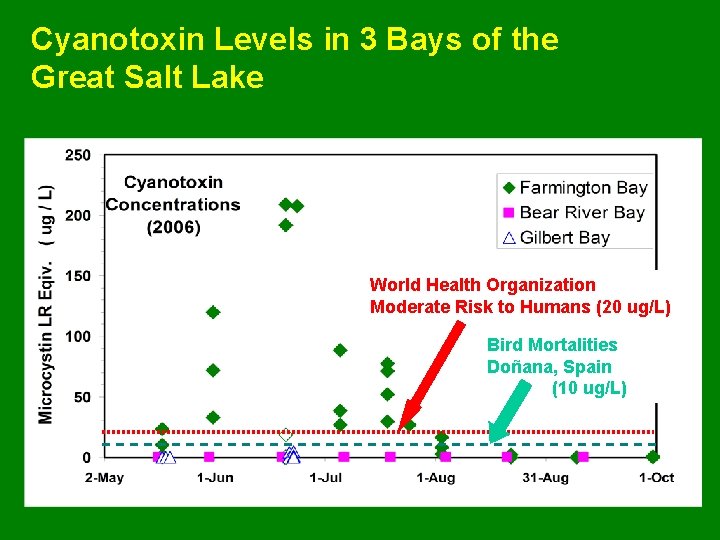
Cyanotoxin Levels in 3 Bays of the Great Salt Lake World Health Organization Moderate Risk to Humans (20 ug/L) Bird Mortalities Doñana, Spain (10 ug/L)
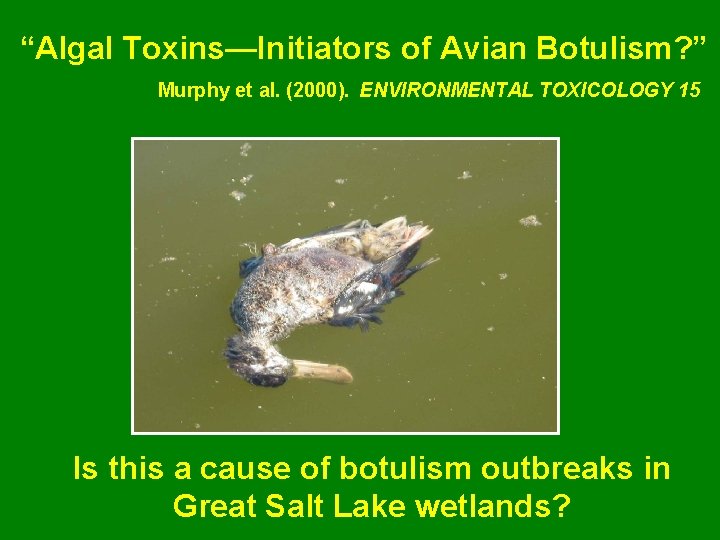
“Algal Toxins—Initiators of Avian Botulism? ” Murphy et al. (2000). ENVIRONMENTAL TOXICOLOGY 15 Is this a cause of botulism outbreaks in Great Salt Lake wetlands?
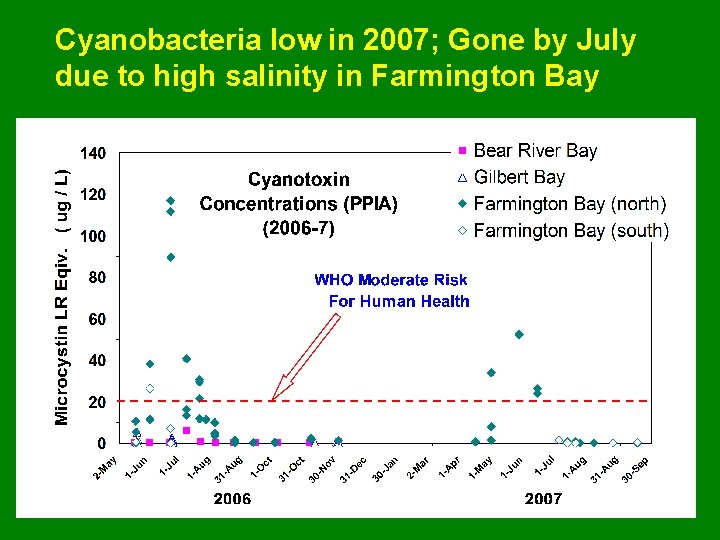
Cyanobacteria low in 2007; Gone by July due to high salinity in Farmington Bay
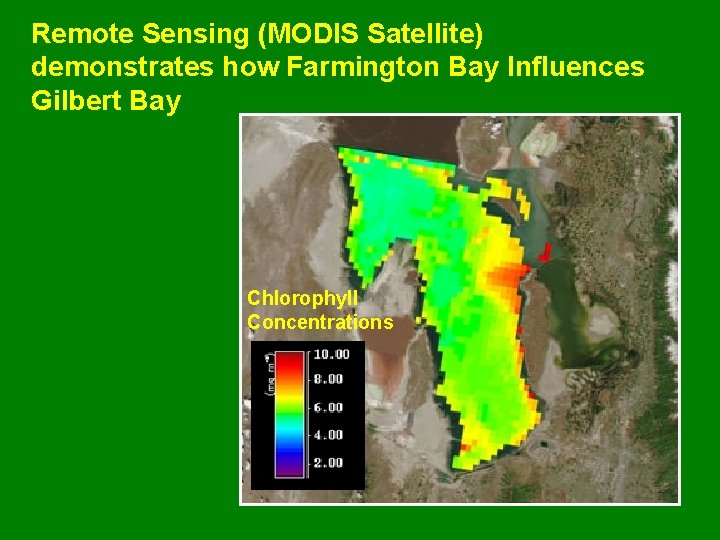
Remote Sensing (MODIS Satellite) demonstrates how Farmington Bay Influences Gilbert Bay Chlorophyll Concentrations
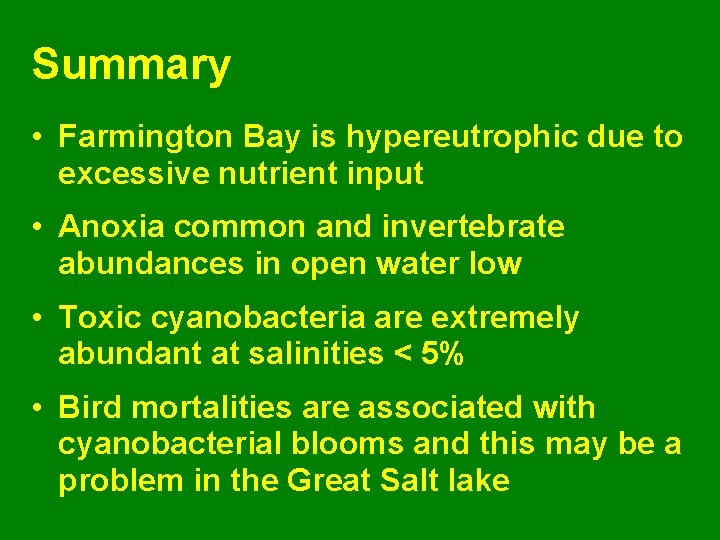
Summary • Farmington Bay is hypereutrophic due to excessive nutrient input • Anoxia common and invertebrate abundances in open water low • Toxic cyanobacteria are extremely abundant at salinities < 5% • Bird mortalities are associated with cyanobacterial blooms and this may be a problem in the Great Salt lake
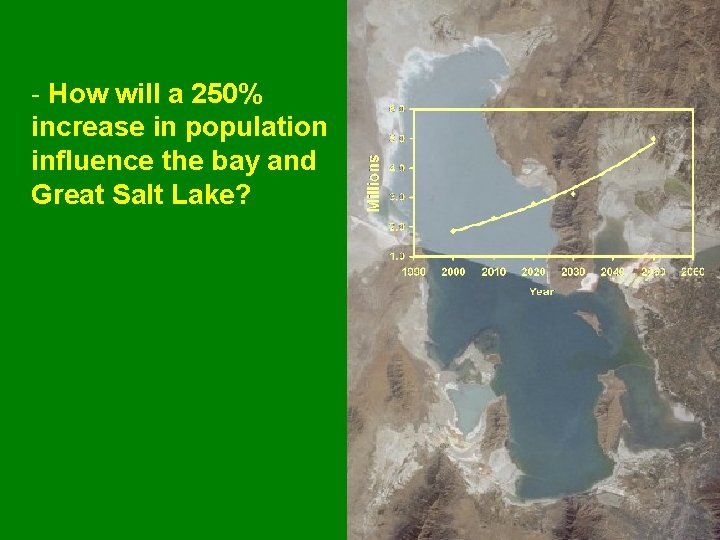
- How will a 250% increase in population influence the bay and Great Salt Lake?
HAVE A GOOD HUNT (But DON’T DRINK THE WATER)
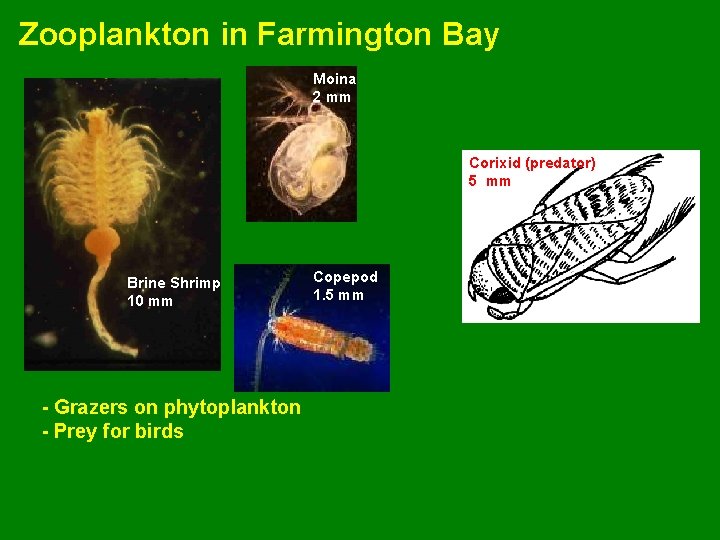
Zooplankton in Farmington Bay Moina 2 mm Corixid (predator) 5 mm Brine Shrimp 10 mm - Grazers on phytoplankton - Prey for birds Copepod 1. 5 mm
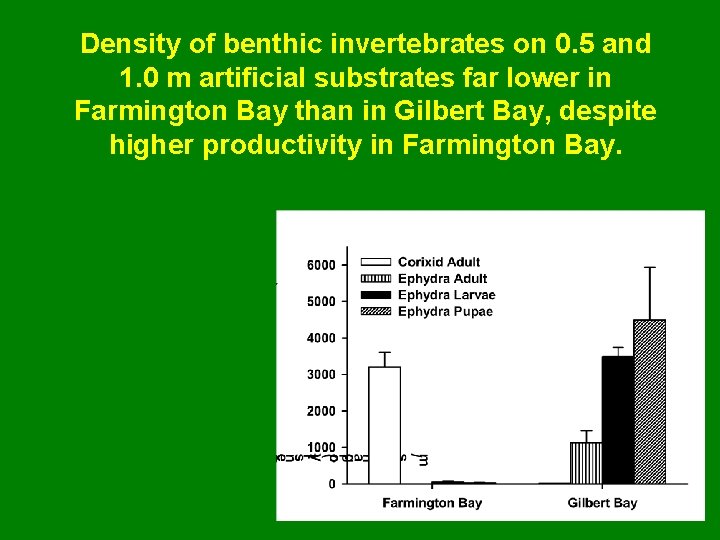
Density of benthic invertebrates on 0. 5 and 1. 0 m artificial substrates far lower in Farmington Bay than in Gilbert Bay, despite higher productivity in Farmington Bay.
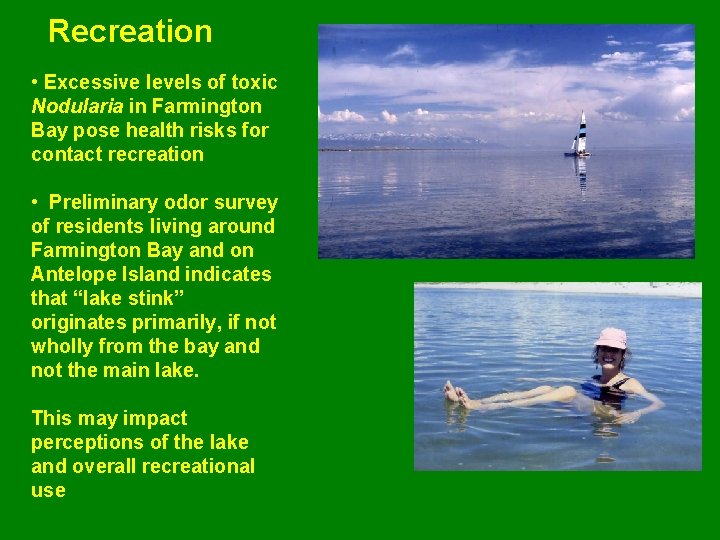
Recreation • Excessive levels of toxic Nodularia in Farmington Bay pose health risks for contact recreation • Preliminary odor survey of residents living around Farmington Bay and on Antelope Island indicates that “lake stink” originates primarily, if not wholly from the bay and not the main lake. This may impact perceptions of the lake and overall recreational use
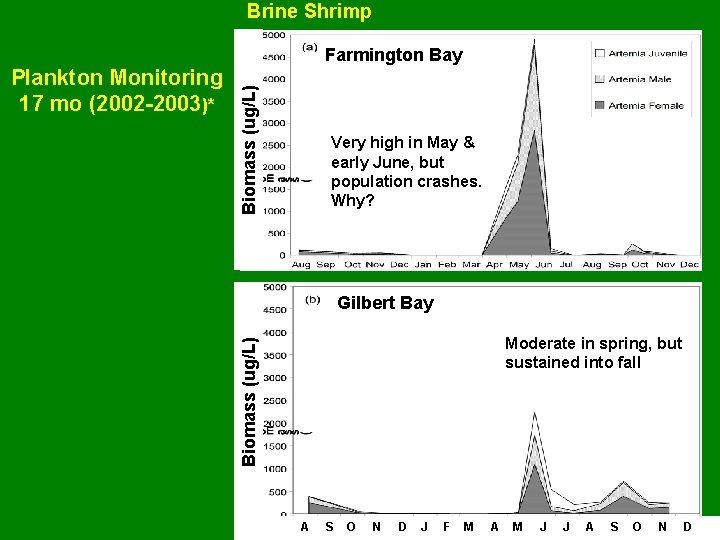
Brine Shrimp Very high in May & early June, but population crashes. Why? - Chlorophyll Gilbert Bay Moderate in spring, but sustained into fall Biomass (ug/L) Plankton Monitoring 17 mo (2002 -2003)* Biomass (ug/L) Farmington Bay A S O N D J F M A M J J A S O N D
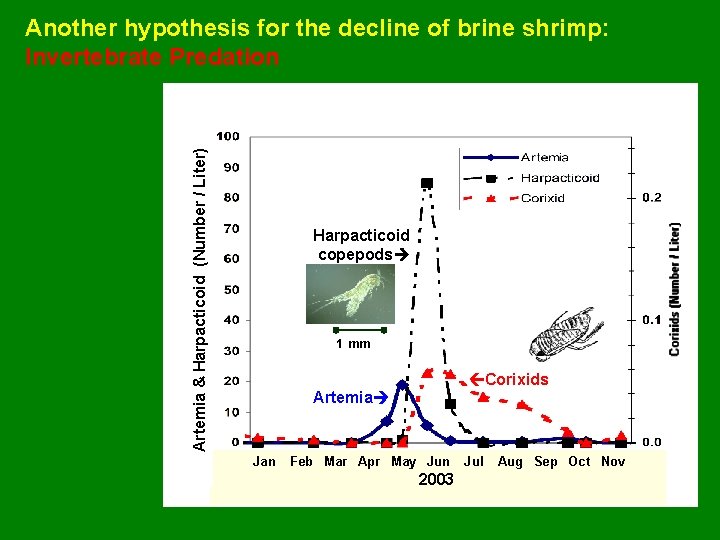
Artemia & Harpacticoid (Number / Liter) Another hypothesis for the decline of brine shrimp: Invertebrate Predation Harpacticoid copepods 1 mm Corixids Artemia Jan Feb Mar Apr May Jun 2003 Jul Aug Sep Oct Nov
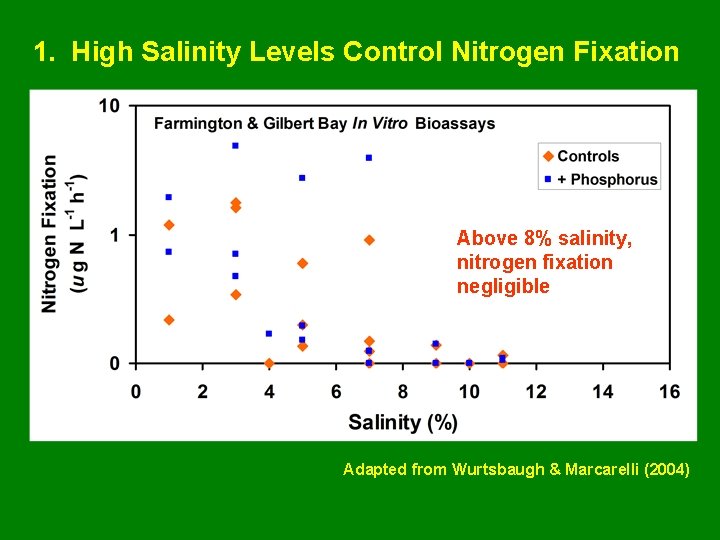
1. High Salinity Levels Control Nitrogen Fixation Above 8% salinity, nitrogen fixation negligible Adapted from Wurtsbaugh & Marcarelli (2004)
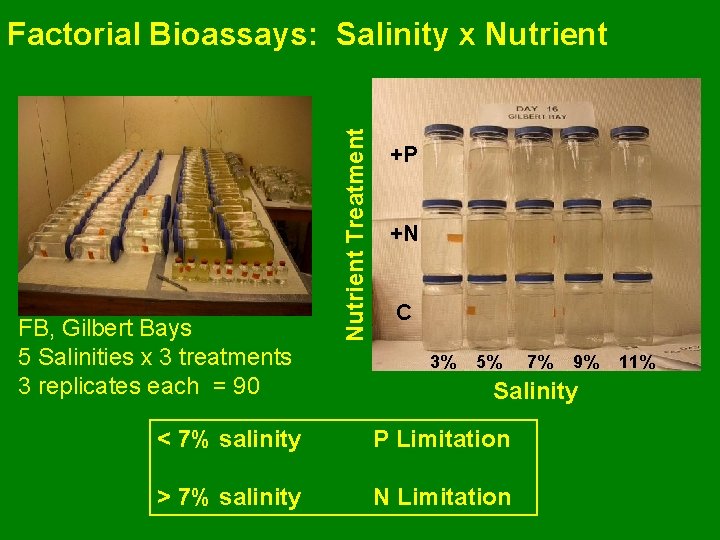
FB, Gilbert Bays 5 Salinities x 3 treatments 3 replicates each = 90 Nutrient Treatment Factorial Bioassays: Salinity x Nutrient +P +N C 3% 5% 7% 9% Salinity < 7% salinity P Limitation > 7% salinity N Limitation 11%
- Slides: 28