
Europeans embark on a new phase of empire
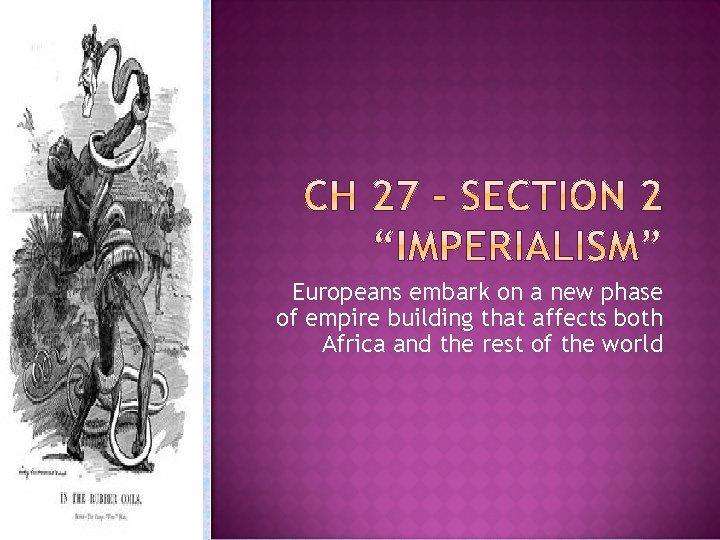
Europeans embark on a new phase of empire building that affects both Africa and the rest of the world
Extending Influence Europeans want to control all aspects of their colonies Influence political, social lives of people Shape economies to benefit Europe Want people to adopt European customs

Forms of Control Europeans develop four forms of control of territory: Colony – governed by a foreign power Protectorate – governs itself, but under outside control Sphere of influence – outside power controls investment, trading Economic imperialism – private business interests assert control

Methods of Management Europeans use two methods to manage colonies: Direct control Indirect control
Indirect Control Limited self-rule for local governments Legislative body includes colonial, local officials Direct Control Paternalism – Europeans provide for local people, but grant no rights Assimilation – adaptation of local people to ruling culture
A British Colony Britain’s rule of Nigeria is a form of imperialism common in Europe Controls economic and political life of the area
Gaining Control Britain conquers southern Nigeria using both diplomacy and force Conquest of northern Nigeria through Royal Niger Company In 1914, Britain claims all of Nigeria
Managing the Colony Nigeria is culturally diverse area, with about 250 ethnic groups British use indirect rule successfully with Hausa. Fulani Yoruba and Igbo chiefs resent limits on their power
Africans Confront Imperialism Broad resistance to imperialism, but Europeans have superior weapons
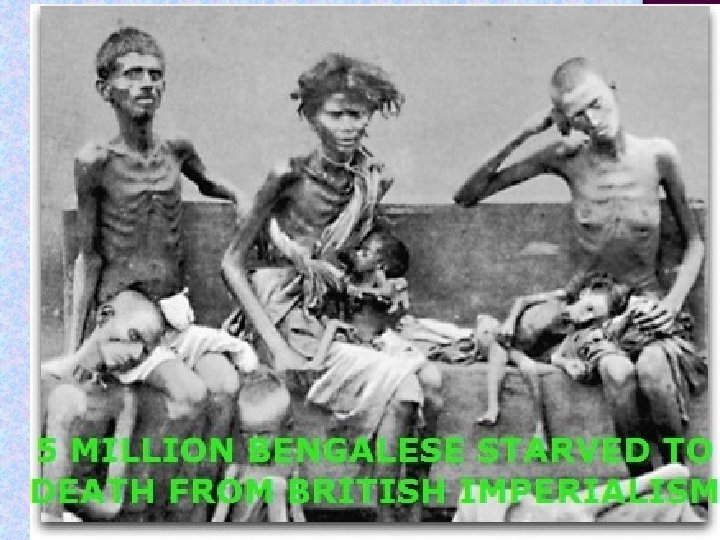
Unsuccessful Movements Algeria actively resists French for almost 50 years Samori Toure fights French in West Africa for 16 years In German East Africa, people put faith in spiritual defense Results in about 75, 000 deaths; famine kills twice as many
Ethiopia: A Successful Movement Menelik II, emperor of Ethiopia in 1889, resists Europeans Plays Europeans against each other Stockpiles arsenal of modern weapons Defeats Italy, remains independent
Negative Effects Africans lose land independence, many lose lives Traditional cultures break down Division of Africa creates problems that continue today

Positive Effects Colonialism reduces local fighting Sanitation improves Hospitals and schools created Technology brings economic growth
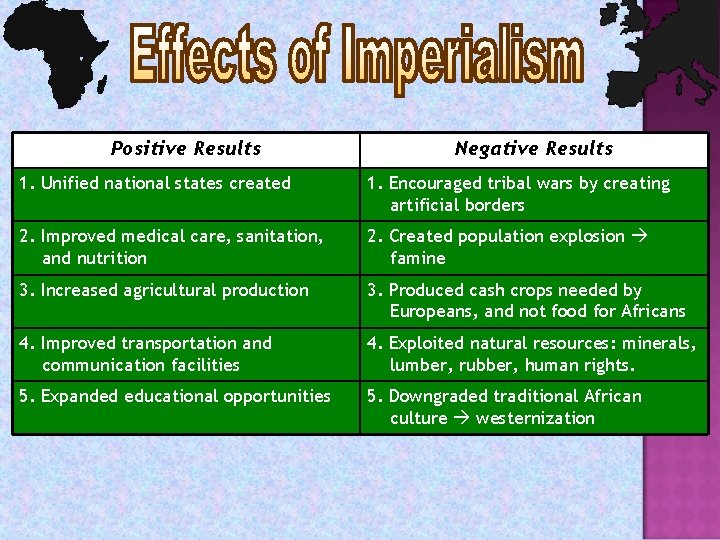
Positive Results Negative Results 1. Unified national states created 1. Encouraged tribal wars by creating artificial borders 2. Improved medical care, sanitation, and nutrition 2. Created population explosion famine 3. Increased agricultural production 3. Produced cash crops needed by Europeans, and not food for Africans 4. Improved transportation and communication facilities 4. Exploited natural resources: minerals, lumber, rubber, human rights. 5. Expanded educational opportunities 5. Downgraded traditional African culture westernization
- Slides: 15