
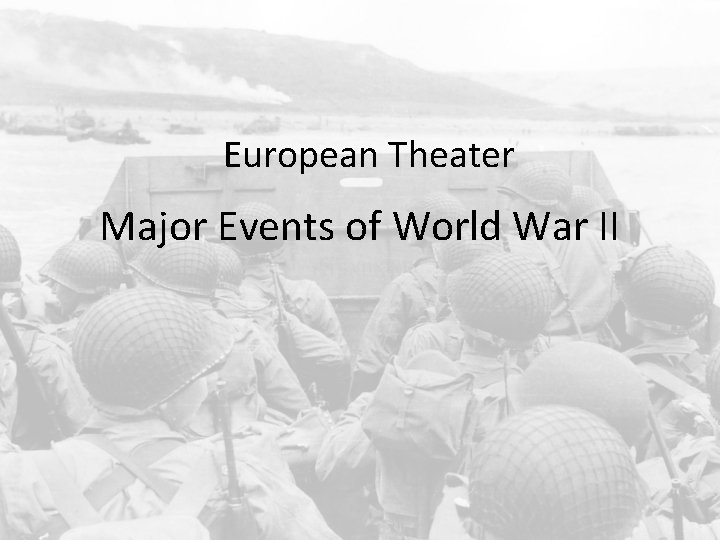
European Theater Major Events of World War II
- Slides: 23
European Theater Major Events of World War II
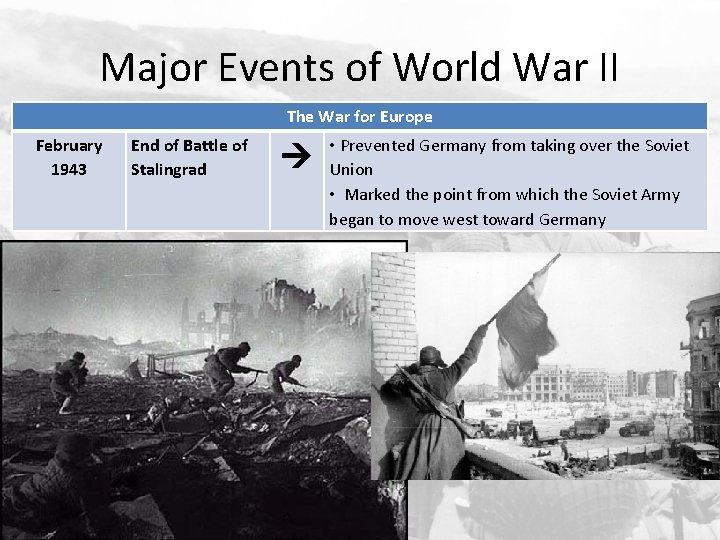
Major Events of World War II The War for Europe February 1943 End of Battle of Stalingrad • Prevented Germany from taking over the Soviet Union • Marked the point from which the Soviet Army began to move west toward Germany
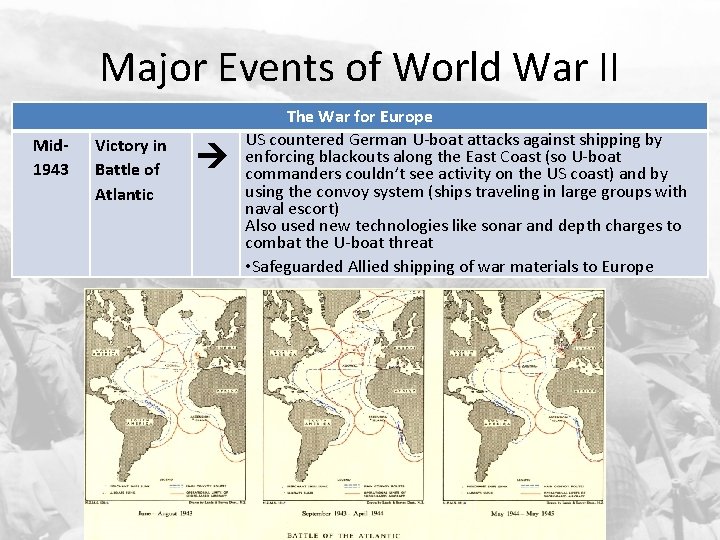
Major Events of World War II Mid 1943 Victory in Battle of Atlantic The War for Europe US countered German U-boat attacks against shipping by enforcing blackouts along the East Coast (so U-boat commanders couldn’t see activity on the US coast) and by using the convoy system (ships traveling in large groups with naval escort) Also used new technologies like sonar and depth charges to combat the U-boat threat • Safeguarded Allied shipping of war materials to Europe
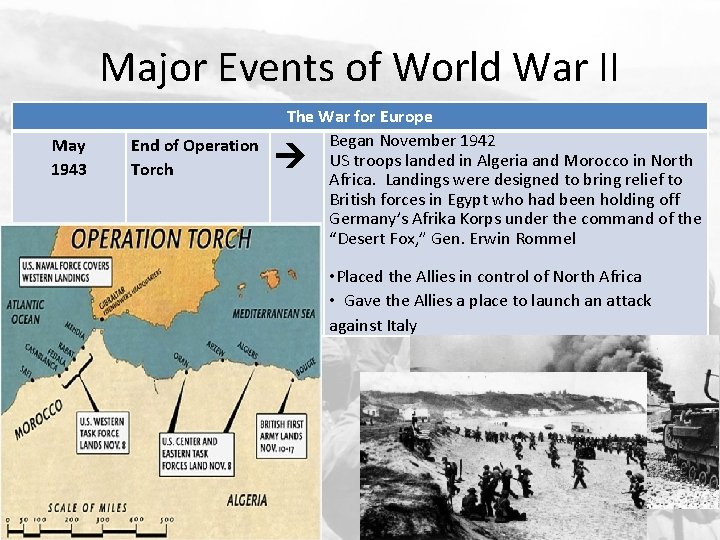
Major Events of World War II May 1943 End of Operation Torch The War for Europe Began November 1942 US troops landed in Algeria and Morocco in North Africa. Landings were designed to bring relief to British forces in Egypt who had been holding off Germany’s Afrika Korps under the command of the “Desert Fox, ” Gen. Erwin Rommel • Placed the Allies in control of North Africa • Gave the Allies a place to launch an attack against Italy
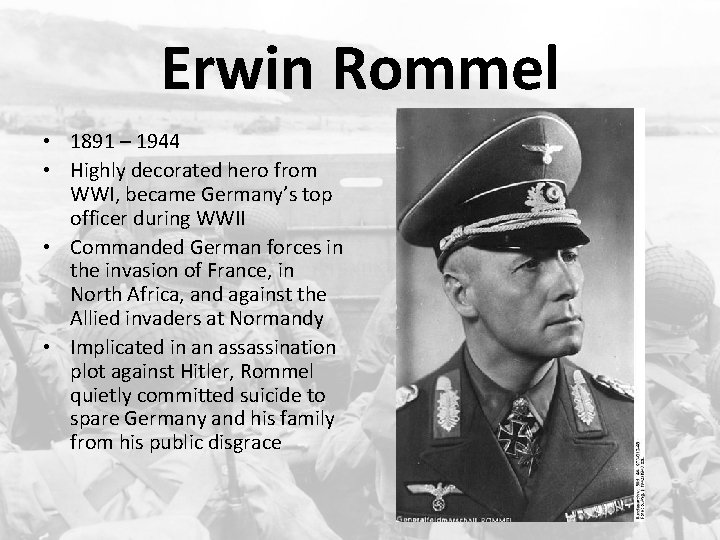
Erwin Rommel • 1891 – 1944 • Highly decorated hero from WWI, became Germany’s top officer during WWII • Commanded German forces in the invasion of France, in North Africa, and against the Allied invaders at Normandy • Implicated in an assassination plot against Hitler, Rommel quietly committed suicide to spare Germany and his family from his public disgrace
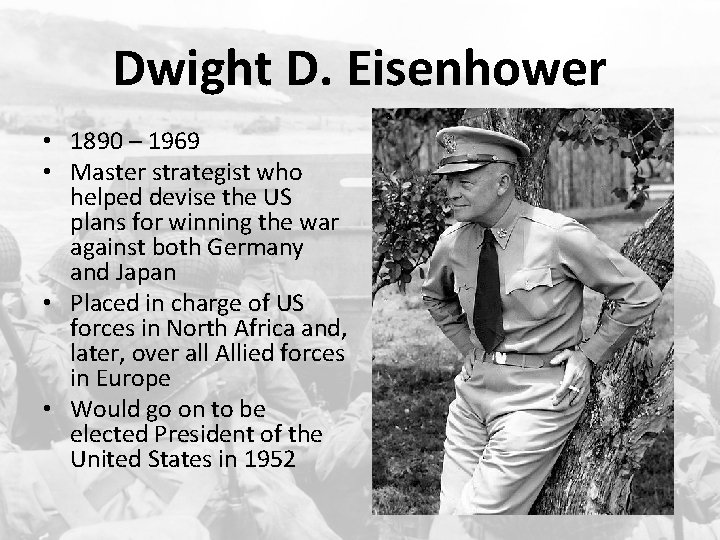
Dwight D. Eisenhower • 1890 – 1969 • Master strategist who helped devise the US plans for winning the war against both Germany and Japan • Placed in charge of US forces in North Africa and, later, over all Allied forces in Europe • Would go on to be elected President of the United States in 1952
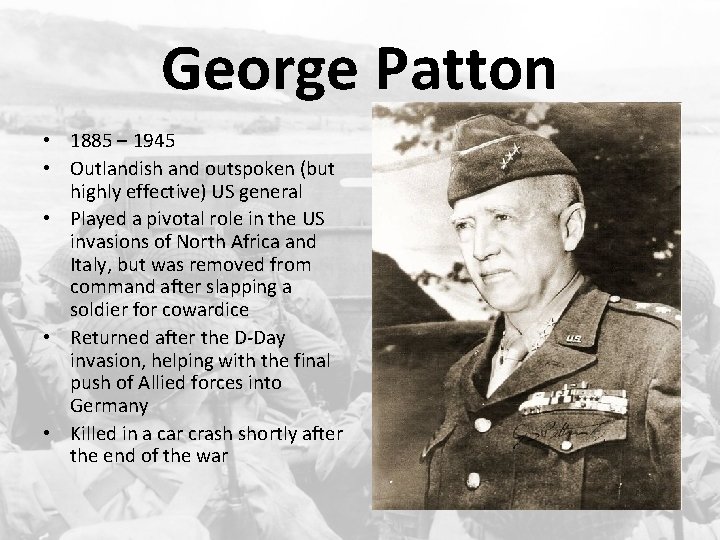
George Patton • 1885 – 1945 • Outlandish and outspoken (but highly effective) US general • Played a pivotal role in the US invasions of North Africa and Italy, but was removed from command after slapping a soldier for cowardice • Returned after the D-Day invasion, helping with the final push of Allied forces into Germany • Killed in a car crash shortly after the end of the war
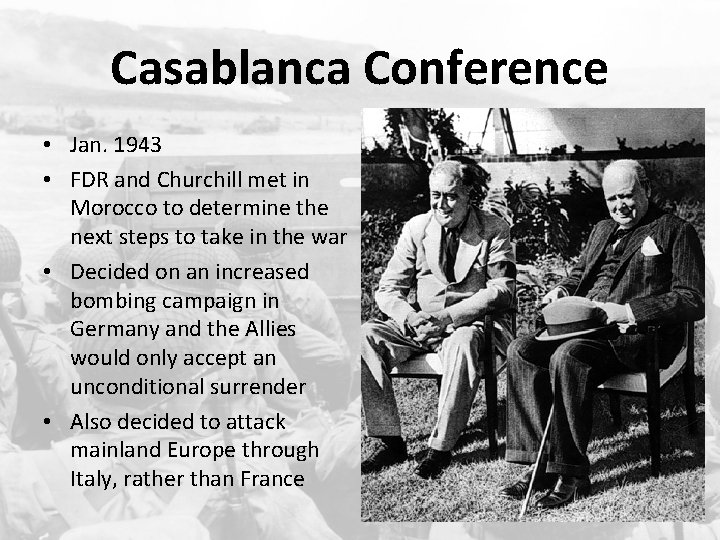
Casablanca Conference • Jan. 1943 • FDR and Churchill met in Morocco to determine the next steps to take in the war • Decided on an increased bombing campaign in Germany and the Allies would only accept an unconditional surrender • Also decided to attack mainland Europe through Italy, rather than France
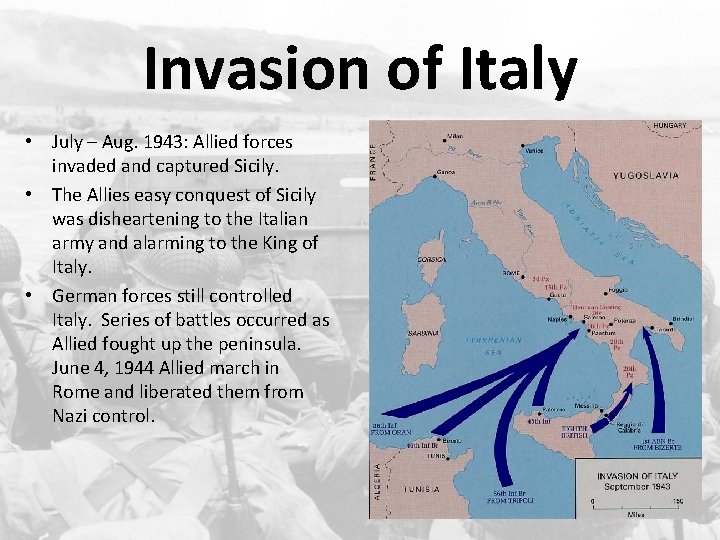
Invasion of Italy • July – Aug. 1943: Allied forces invaded and captured Sicily. • The Allies easy conquest of Sicily was disheartening to the Italian army and alarming to the King of Italy. • German forces still controlled Italy. Series of battles occurred as Allied fought up the peninsula. June 4, 1944 Allied march in Rome and liberated them from Nazi control.
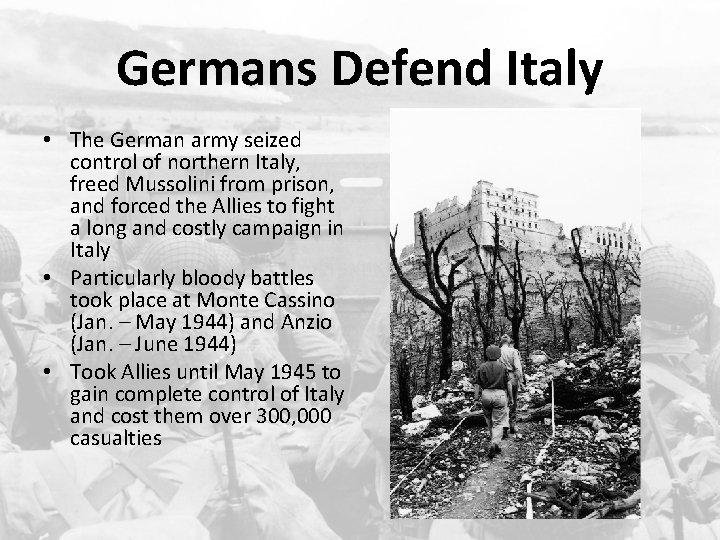
Germans Defend Italy • The German army seized control of northern Italy, freed Mussolini from prison, and forced the Allies to fight a long and costly campaign in Italy • Particularly bloody battles took place at Monte Cassino (Jan. – May 1944) and Anzio (Jan. – June 1944) • Took Allies until May 1945 to gain complete control of Italy and cost them over 300, 000 casualties
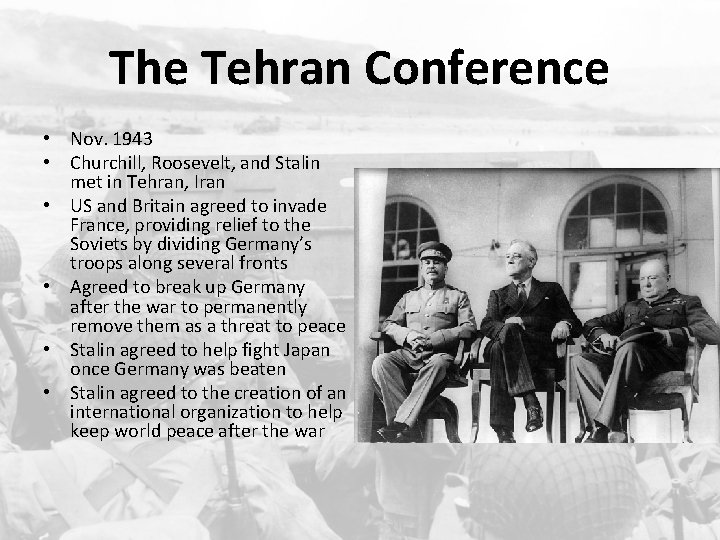
The Tehran Conference • Nov. 1943 • Churchill, Roosevelt, and Stalin met in Tehran, Iran • US and Britain agreed to invade France, providing relief to the Soviets by dividing Germany’s troops along several fronts • Agreed to break up Germany after the war to permanently remove them as a threat to peace • Stalin agreed to help fight Japan once Germany was beaten • Stalin agreed to the creation of an international organization to help keep world peace after the war
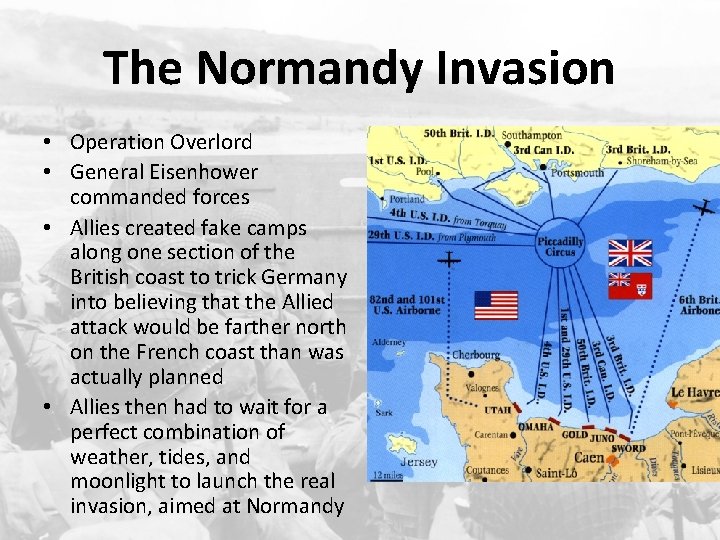
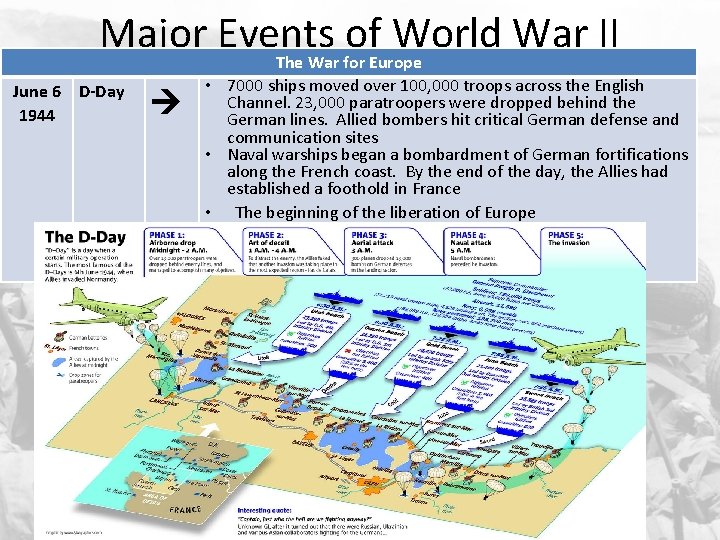
The Normandy Invasion • Operation Overlord • General Eisenhower commanded forces • Allies created fake camps along one section of the British coast to trick Germany into believing that the Allied attack would be farther north on the French coast than was actually planned • Allies then had to wait for a perfect combination of weather, tides, and moonlight to launch the real invasion, aimed at Normandy
Major Events of World War II The War for Europe June 6 D-Day 1944 • 7000 ships moved over 100, 000 troops across the English Channel. 23, 000 paratroopers were dropped behind the German lines. Allied bombers hit critical German defense and communication sites • Naval warships began a bombardment of German fortifications along the French coast. By the end of the day, the Allies had established a foothold in France • The beginning of the liberation of Europe
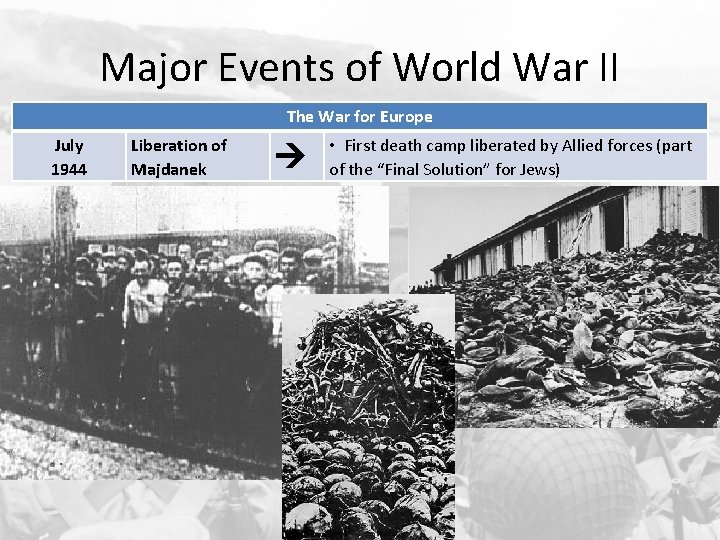
Major Events of World War II The War for Europe July 1944 Liberation of Majdanek • First death camp liberated by Allied forces (part of the “Final Solution” for Jews)
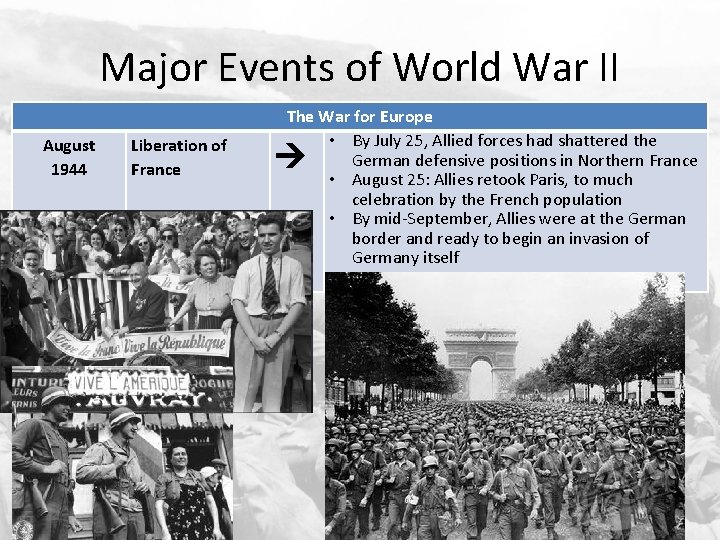
Major Events of World War II August 1944 Liberation of France The War for Europe • By July 25, Allied forces had shattered the German defensive positions in Northern France • August 25: Allies retook Paris, to much celebration by the French population • By mid-September, Allies were at the German border and ready to begin an invasion of Germany itself
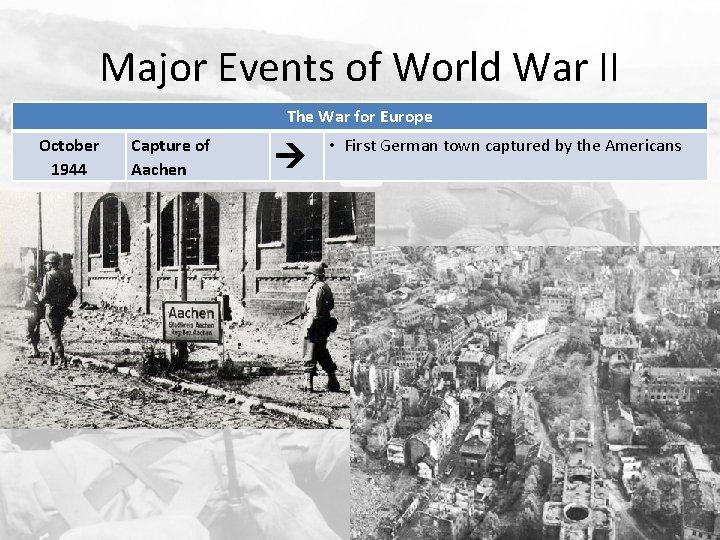
Major Events of World War II The War for Europe October 1944 Capture of Aachen • First German town captured by the Americans
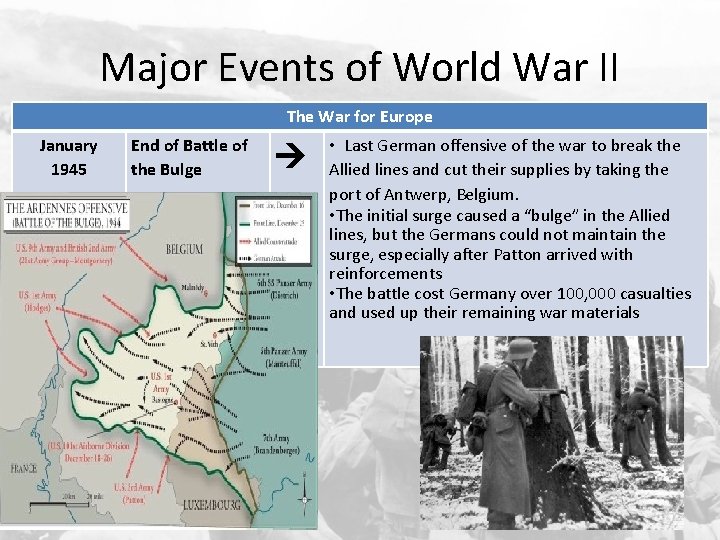
Major Events of World War II The War for Europe January 1945 End of Battle of the Bulge • Last German offensive of the war to break the Allied lines and cut their supplies by taking the port of Antwerp, Belgium. • The initial surge caused a “bulge” in the Allied lines, but the Germans could not maintain the surge, especially after Patton arrived with reinforcements • The battle cost Germany over 100, 000 casualties and used up their remaining war materials
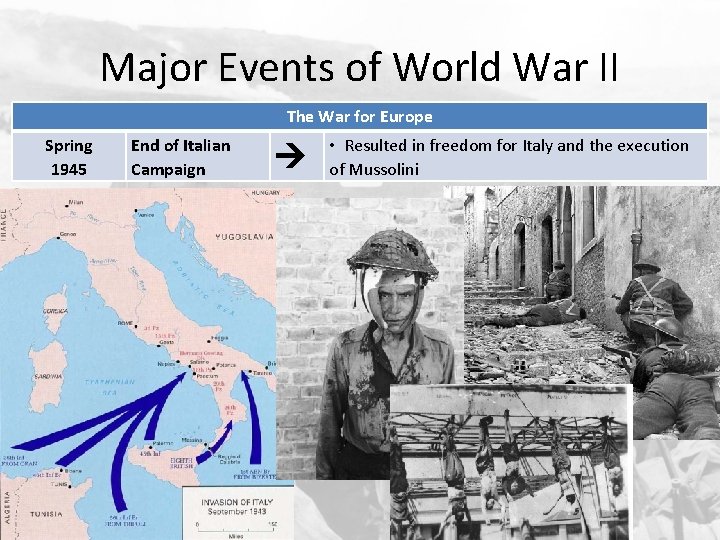
Major Events of World War II The War for Europe Spring 1945 End of Italian Campaign • Resulted in freedom for Italy and the execution of Mussolini
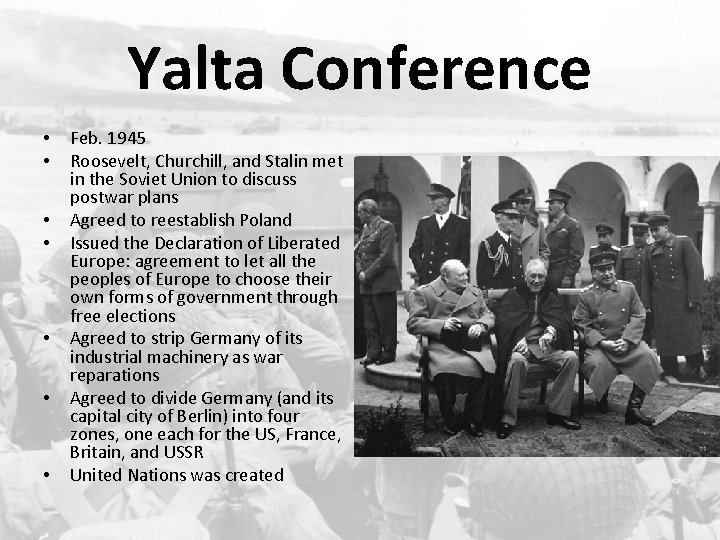
Yalta Conference • • Feb. 1945 Roosevelt, Churchill, and Stalin met in the Soviet Union to discuss postwar plans Agreed to reestablish Poland Issued the Declaration of Liberated Europe: agreement to let all the peoples of Europe to choose their own forms of government through free elections Agreed to strip Germany of its industrial machinery as war reparations Agreed to divide Germany (and its capital city of Berlin) into four zones, one each for the US, France, Britain, and USSR United Nations was created
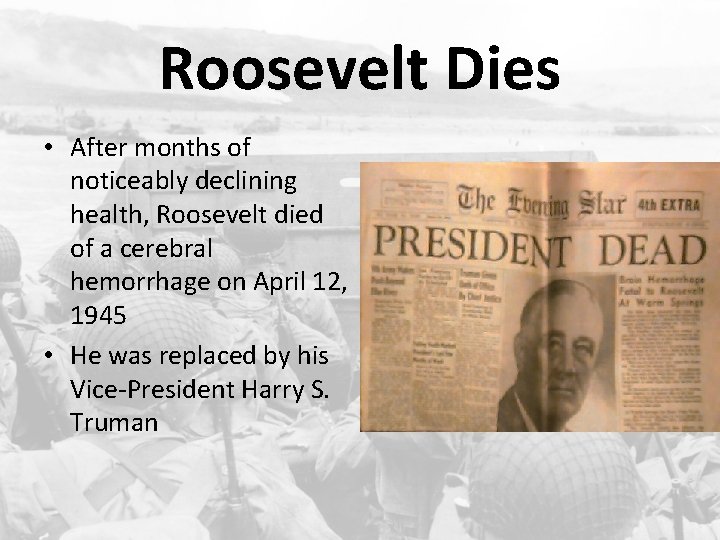
Roosevelt Dies • After months of noticeably declining health, Roosevelt died of a cerebral hemorrhage on April 12, 1945 • He was replaced by his Vice-President Harry S. Truman
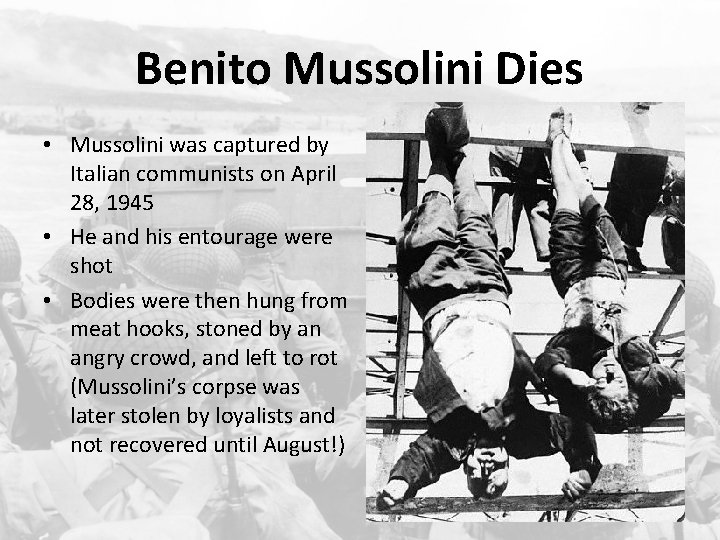
Benito Mussolini Dies • Mussolini was captured by Italian communists on April 28, 1945 • He and his entourage were shot • Bodies were then hung from meat hooks, stoned by an angry crowd, and left to rot (Mussolini’s corpse was later stolen by loyalists and not recovered until August!)
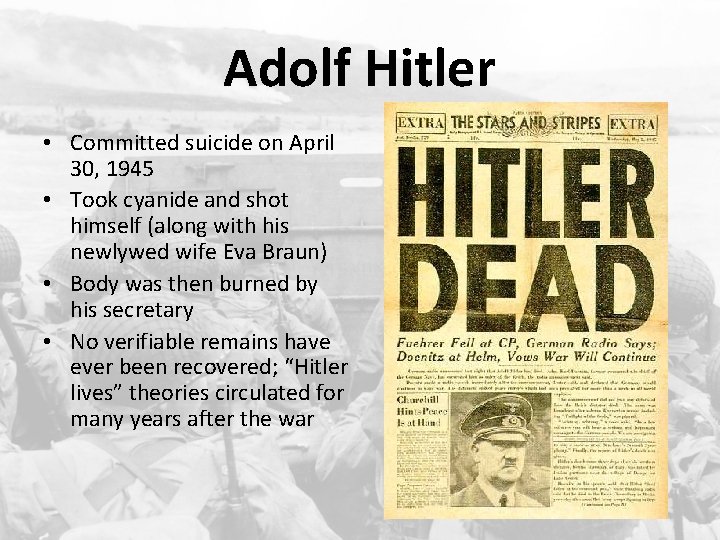
Adolf Hitler • Committed suicide on April 30, 1945 • Took cyanide and shot himself (along with his newlywed wife Eva Braun) • Body was then burned by his secretary • No verifiable remains have ever been recovered; “Hitler lives” theories circulated for many years after the war
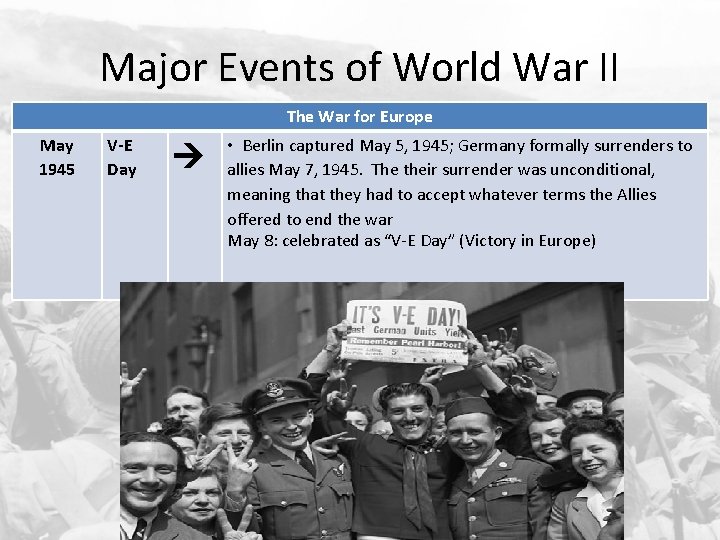
Major Events of World War II The War for Europe May 1945 V-E Day • Berlin captured May 5, 1945; Germany formally surrenders to allies May 7, 1945. The their surrender was unconditional, meaning that they had to accept whatever terms the Allies offered to end the war May 8: celebrated as “V-E Day” (Victory in Europe)