
European Regulation A Nightmare for Entrepreneurs in the
- Slides: 31
European Regulation A Nightmare for Entrepreneurs in the European Union Bratislava, 20 th May 2004 Carlo Stagnaro Director, Free Market Environmentalism Istituto Bruno Leoni www. brunoleoni. it Carlo. Stagnaro@brunoleoni. it
What About Europe? Ø In 1998 -99 the European Parliament voted on 5, 972 bills, i. e. 1 every 4. 18 minutes; Ø European Commission’s “work” includes: l l l 600 directives to regulate meat consumption; 26, 900 words to explain the procedures to export duck’s eggs; It took 10 years for European Union institutions to decide if a “nightdress” can be put on during the day!
What Is Environmental Regulation about? / 1 Ø Often environmental regulation is not about the environment; Ø It is about trade; Ø In fact, it is a form of non-monetary trade barrier; Ø It raises production costs to a level which poor countries’ enterprises can’t afford; Ø It may be also aimed at justifying subsidies for inefficient domestic industries;
What Is Environmental Regulation about? / 2 Ø Other times environmental regulation is not about environment; Ø It is about ‘environmentalism’; Ø It doesn’t rely on sound science, but scare mongering; Ø It doesn’t rely on good economics, but socialism; Ø It doesn’t rely on liberal policies, but interventionism.
Two Examples of Regulation Ø REACH; Ø Mandatory labelling.
REACH stands for “Registration, Evaluation and Authorization of Chemicals”; Ø REACH would create an immense bureaucracy and would result in a dramatic increase of bureaucratic costs; Ø Not only enterprises, but also consumers would be worse off – they would have to pay more for nearly everything. Ø
Registration Ø Registration requirement compels manufacturers and importers to submit information to a central database on hazard, exposure and risk on 30, 000 new and existing substances that are produced or imported in yearly quantities exceeding one metric tonne.
Evaluation Ø Evaluation requires regulators to assess risks for 5, 000 substances that are produced or imported in yearly quantities exceeding 100 tonnes, and also for substances in lower quantities if they are "of concern. "
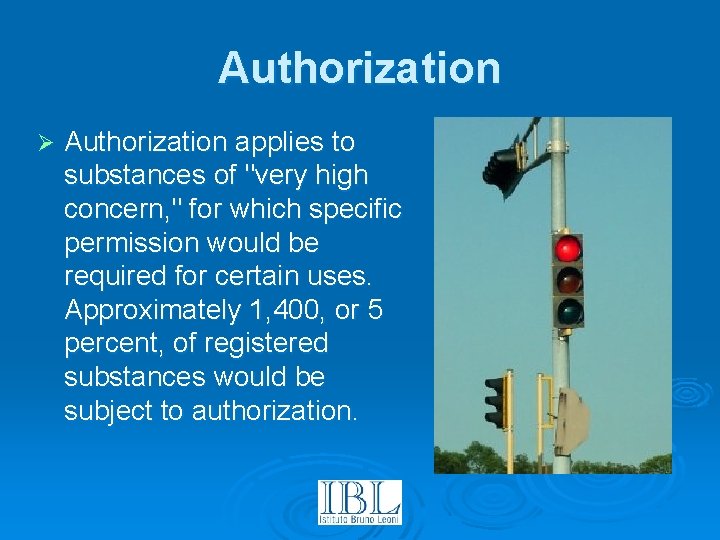
Authorization Ø Authorization applies to substances of "very high concern, " for which specific permission would be required for certain uses. Approximately 1, 400, or 5 percent, of registered substances would be subject to authorization.
How Far Will Reach Go? / 2 Many of the 30, 000 chemicals which are targeted by REACH have been in use for 100+ years; Ø The list of the chemicals that would be affected includes the cancer-treatment drug tamoxifen, as well as all estrogen-replacement drugs such as Premarin; Ø Even alcoholic beverages and some baked goods could be classified as “dangerous; ” Ø REACH doesn't stop at chemicals. Products that use chemicals, such as toys, cosmetics or pesticides also will be subject to the same bans. Ø
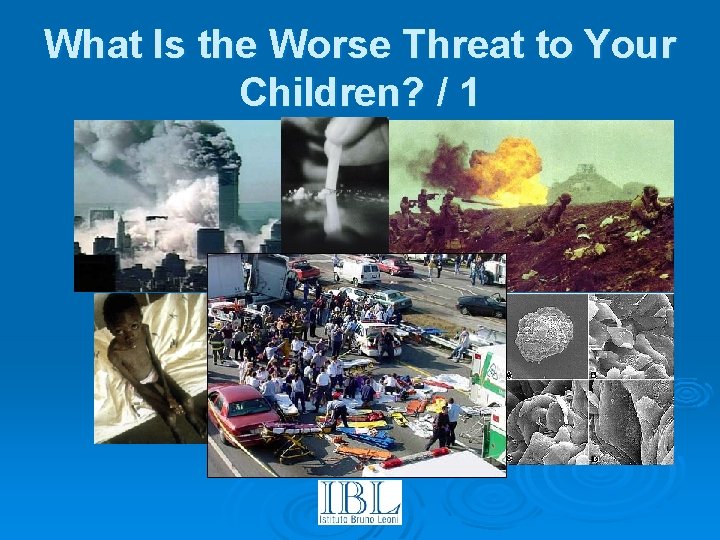
What Is the Worse Threat to Your Children? / 1
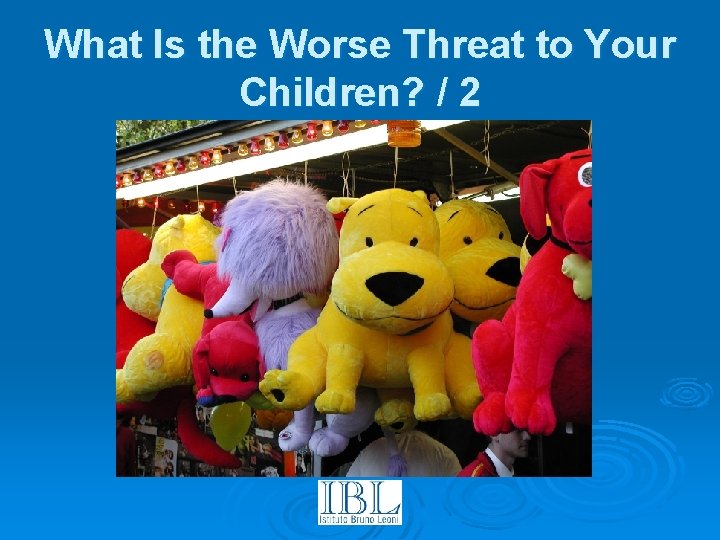
What Is the Worse Threat to Your Children? / 2
The Costs of REACH Ø Increased costs of production; Ø Fewer incentives towards innovation; Ø Lost exports to freer countries; Ø Lost imports from freer countries; Ø REACH WOULD WORK AS A NON- MONETARY PROTECTIONIST BARRIER!
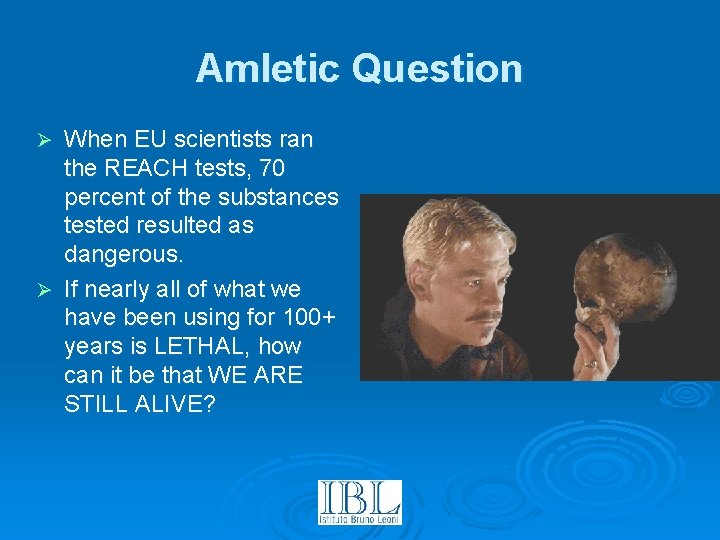
Amletic Question When EU scientists ran the REACH tests, 70 percent of the substances tested resulted as dangerous. Ø If nearly all of what we have been using for 100+ years is LETHAL, how can it be that WE ARE STILL ALIVE? Ø
The Benefits of REACH
Benefits… Chemical industry has to be very careful at selling dangerous products; Ø If industry sold dangerous products, it would have to pay: Ø l l Ø Compensation to harmed people; A huge ticket in terms of reputation; REACH is harmful to our wealth as well as health, because it would delay and make more costly the development of new products.
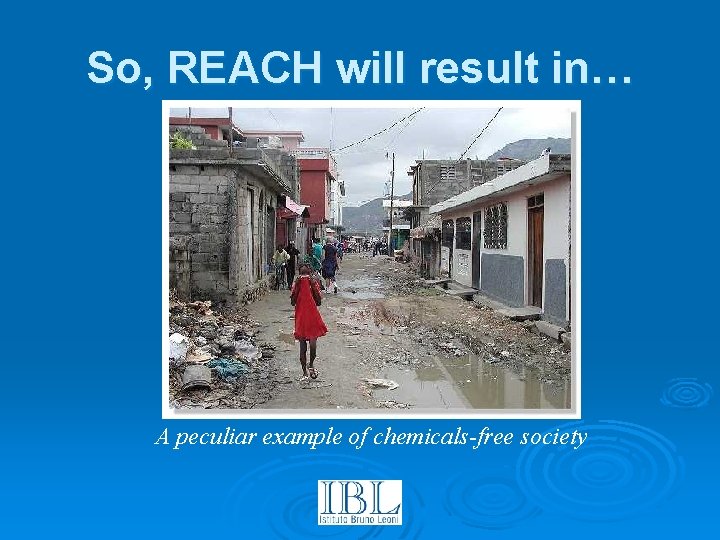
So, REACH will result in… A peculiar example of chemicals-free society
Mandatory labelling Ø Environmentalist and consumers’ organization are strongly asking mandatory labelling for GM foods; Ø A new European Directive is entering in force, which makes it compulsory to inform consumers if a product contains more than 0. 9% GM ingredients.
The Reason for Labelling Is Ideological “The European public is aware that the application of new biotechnologies in the sectors of food, health and environment is an increasingly important reality. My top priority is to protect human health and the environment. Therefore, it is our responsibility as policy makers to take strong political leadership to ensure that these technologies are appropriately regulated. With the new Directive which is operational from today we have a strong basis for a transparent and responsible way of governing the use of GMOs. ” Ø Margot Wallström Ø
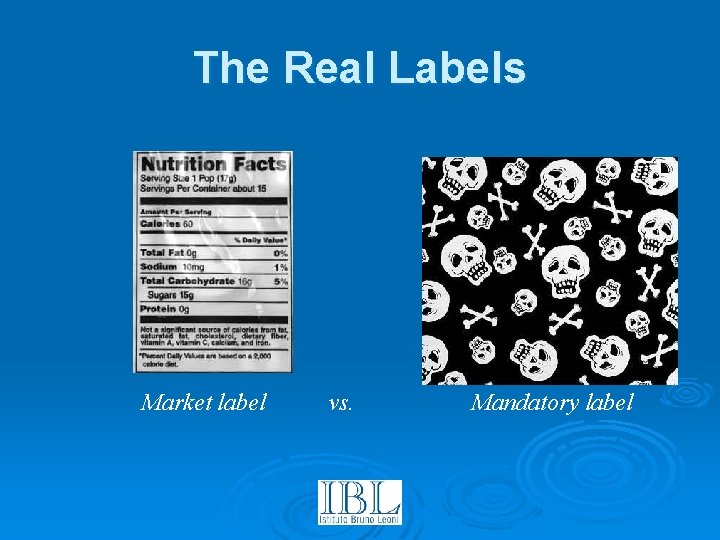
What Is Labelling Really About? Ø Labels would be seen as warnings, rather than neutral information, by most consumers; Ø “If it is mandatory, then it means that GM foods are not safe; ” Ø Mandatory labels rely on a strong presumption that organic foods are safer (which is not true in general).
Again, Protectionism? Ø In truth, mandatory labelling is the result of a protectionist effort on the part of European agricultural industry; Ø Fueling the anti-GMOs scam is a form of unfair competition against US and developing countries’ producers; Ø Consumers are deeply harmed, because their freedom of choice is limited by biased information.
Is Really Important To Know If Your Salad is Bioingeneered? Ø If consumers (or part of) want to know that, the market will provide that kind of information; Ø Several companies are doing advertising that their products are 100% organic (and cost more); Ø So, why should we impose a mandatory labelling?
The Real Labels Market label vs. Mandatory label
The Effects of Labelling Ø Mandatory labelling will not provide a real and science based information; Ø It will simply discourage consumers’ free choice; Ø It will also work as a non-monetary trade barrier; Ø It is part of the struggle of European subsidized farmers against free competition.
Regulation? Ø In general terms, regulation skews the markets because: l l It is the result of lobbying activities, usually on the part of the less efficient industries; It gives false, wrong, or biased information to a public which is rationally ignorant; It works as a trade barrier, thus will result in a general impoverishment; It interferes with genuine market processes.
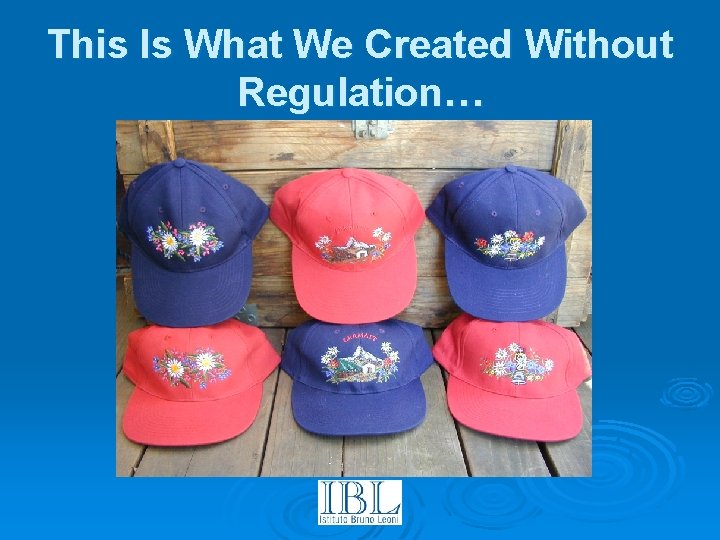
A World Without Regulation? Ø The market is able to self-enforce strong measures against dangerous or polluting products; Ø Industries’ income depends on reputation and ability to meet consumers’ needs (including the ability to provide information which is really demanded by consumers); Ø Free market is plural; regulation is singular. Look at the cap industry…
This Is What We Created Without Regulation…
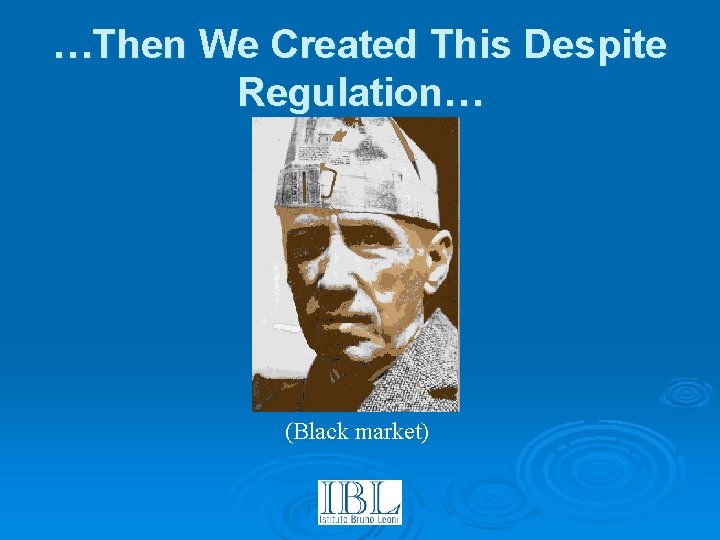
…Then We Created This Despite Regulation… (Black market)
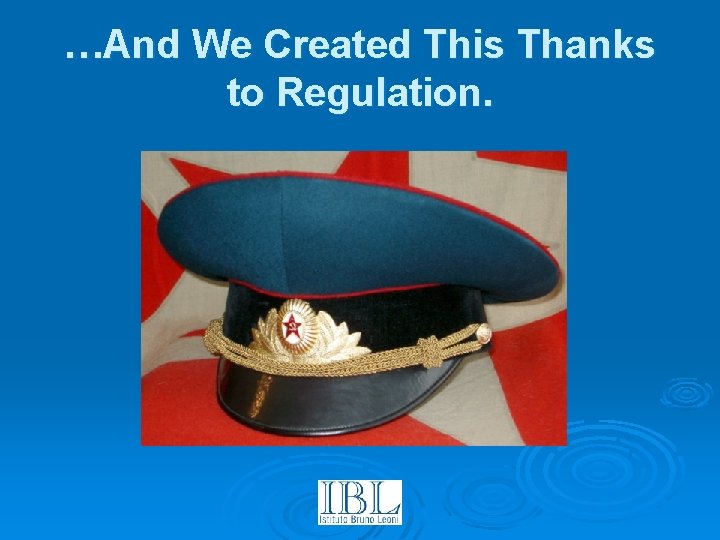
…And We Created This Thanks to Regulation.
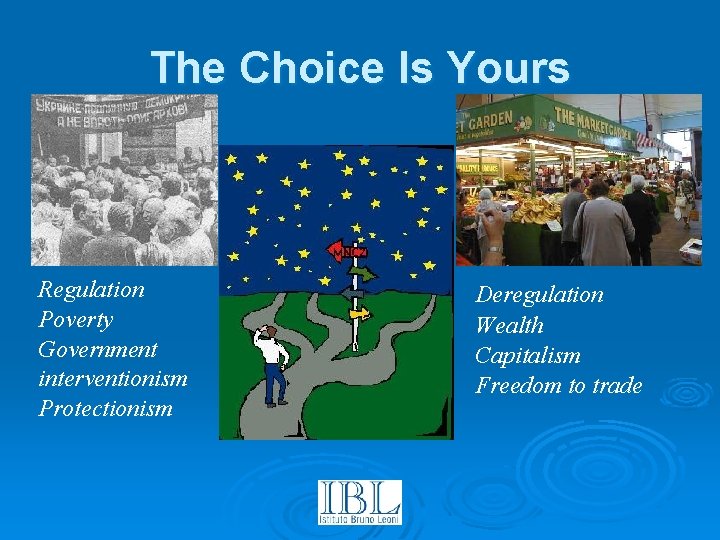
The Choice Is Yours Regulation Poverty Government interventionism Protectionism Deregulation Wealth Capitalism Freedom to trade
Thank you for your attention Carlo Stagnaro Director, Free Market Environmentalism Contact: Carlo. Stagnaro@brunoleoni. it