
EUROPEAN EMPIRES Chapter 5 Section 1 THE SPREAD


- Slides: 8
EUROPEAN EMPIRES Chapter 5, Section 1
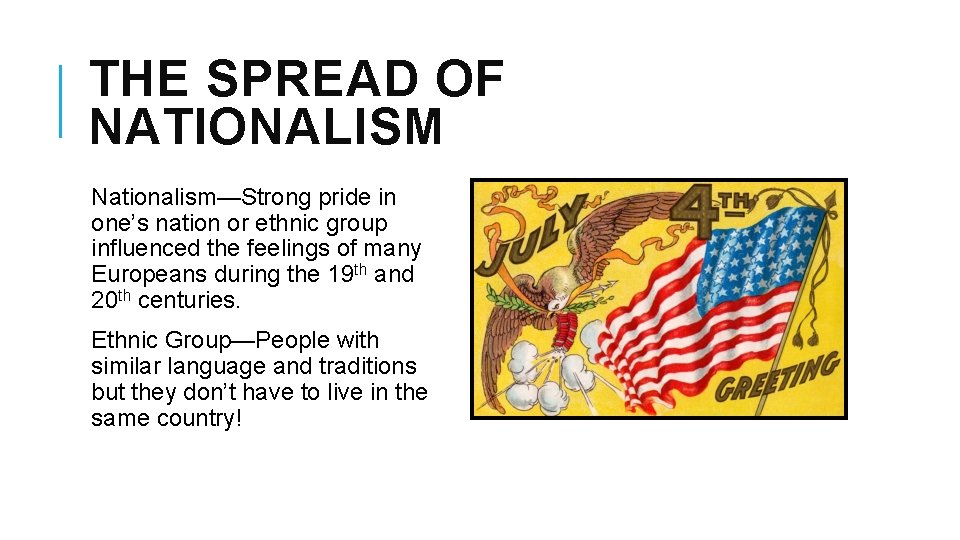
THE SPREAD OF NATIONALISM Nationalism—Strong pride in one’s nation or ethnic group influenced the feelings of many Europeans during the 19 th and 20 th centuries. Ethnic Group—People with similar language and traditions but they don’t have to live in the same country!
CONSTITUTIONAL MONARCHIES Constitutional Monarchy—Country with a king and queen and elected officials. Example: United Kingdom Why Constitutional Monarchies? Previously, monarchs had unlimited power. More European citizens were given the right to vote. Citizens are more apt to support their governments because they have a voice. Citizens demanded the right to elect lawmakers who would limit their monarch’s authority.
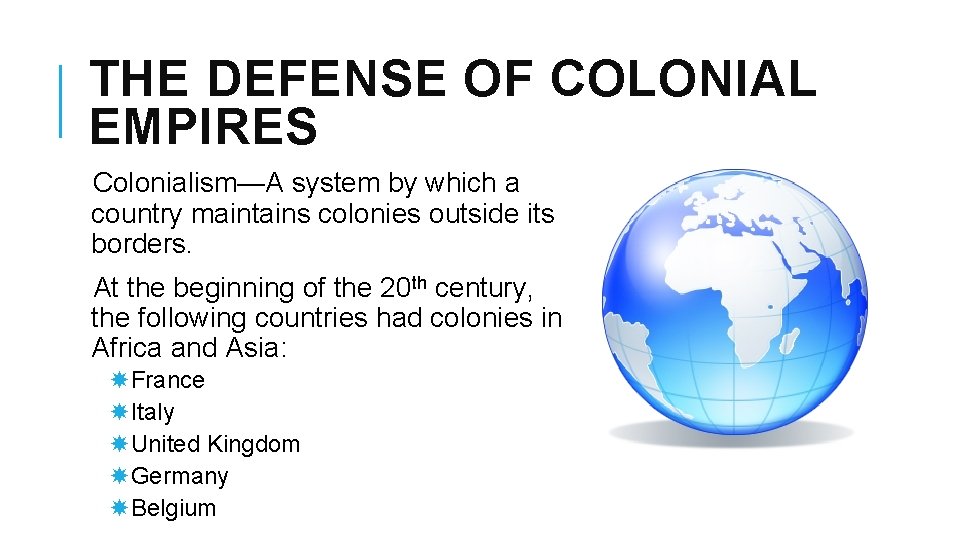
THE DEFENSE OF COLONIAL EMPIRES Colonialism—A system by which a country maintains colonies outside its borders. At the beginning of the 20 th century, the following countries had colonies in Africa and Asia: France Italy United Kingdom Germany Belgium
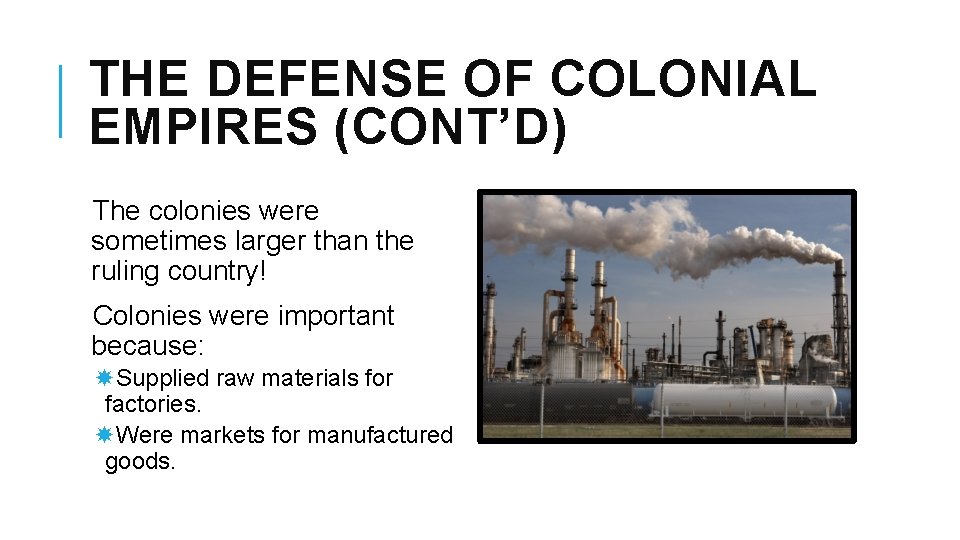
THE DEFENSE OF COLONIAL EMPIRES (CONT’D) The colonies were sometimes larger than the ruling country! Colonies were important because: Supplied raw materials for factories. Were markets for manufactured goods.
THE DEFENSE OF COLONIAL EMPIRES (CONT’D) European nations spent much of their wealth on building strong armies and navies. Military forces defended borders at home and those of their colonies. Colonies were so important that often countries often one another for control and to extend their territories.
AUSTRIA-HUNGARY By the end of the 19 th century, most countries in Western and Northern Europe were industrialized. Most of Eastern Europe—including Russia—remained agricultural. Eastern European countries imported their manufactured goods from Western and Northern Europe. The largest country in Eastern Europe was Austria-Hungary. The empire was a dual-monarchy. Also included parts of modern-day Romania, the Czech Republic, and portions of Poland.
THE END—QUESTIONS?