
EUROPE PHYSICAL GEOGRAPHY Physical Characteristics The continent of
- Slides: 24
EUROPE PHYSICAL GEOGRAPHY
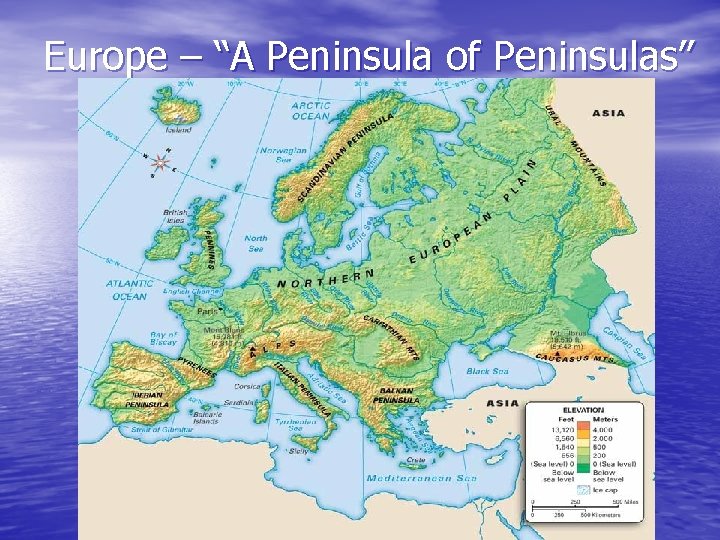
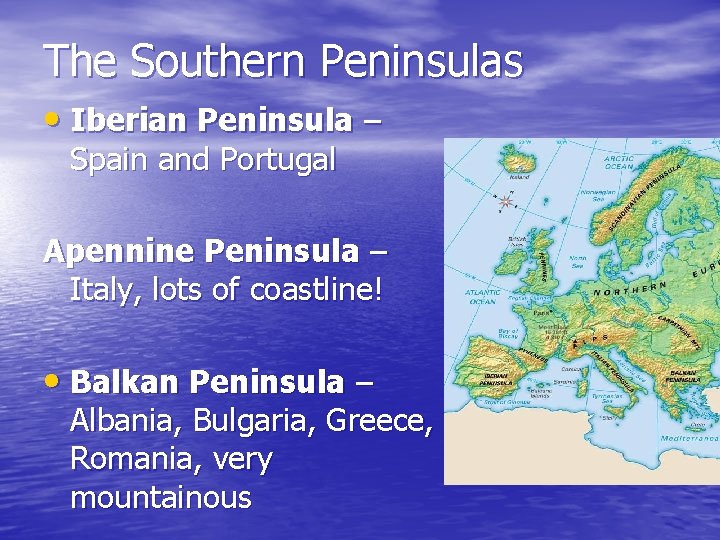
Physical Characteristics • The continent of Europe is a giant peninsula. • Some refer to it as Eurasia. • It is known as “a peninsula of peninsulas. ”
Europe – “A Peninsula of Peninsulas”
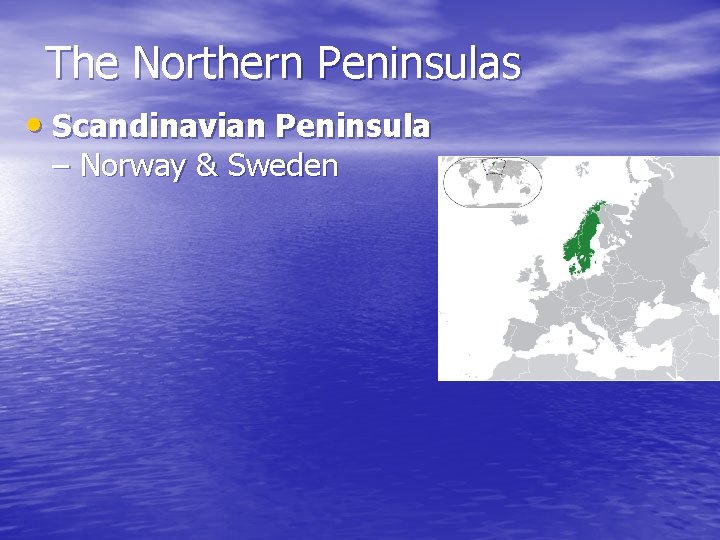
The Northern Peninsulas • Scandinavian Peninsula – Norway & Sweden
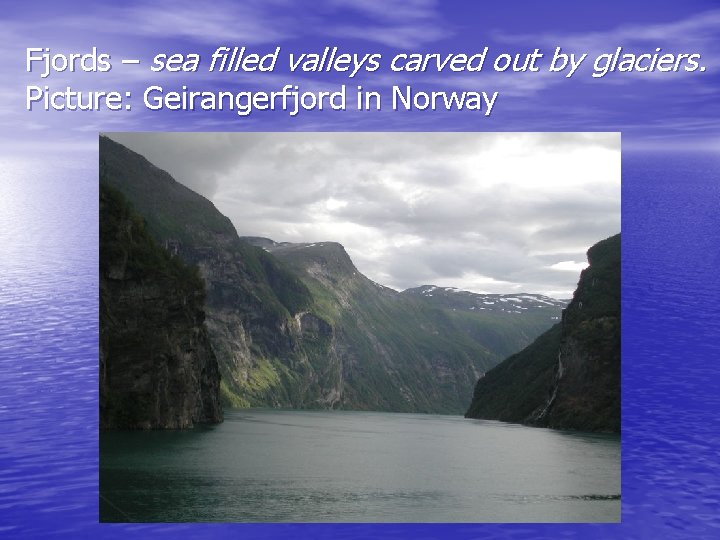
Fjords – sea filled valleys carved out by glaciers. Picture: Geirangerfjord in Norway
The Southern Peninsulas • Iberian Peninsula – Spain and Portugal Apennine Peninsula – Italy, lots of coastline! • Balkan Peninsula – Albania, Bulgaria, Greece, Romania, very mountainous
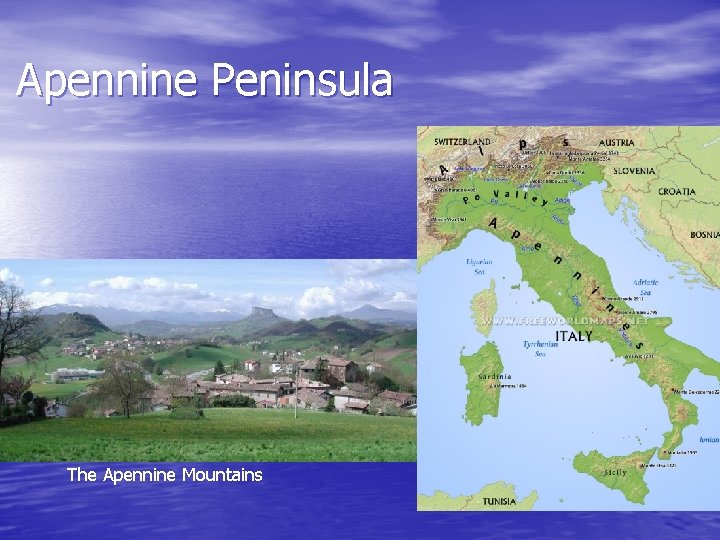
Apennine Peninsula The Apennine Mountains
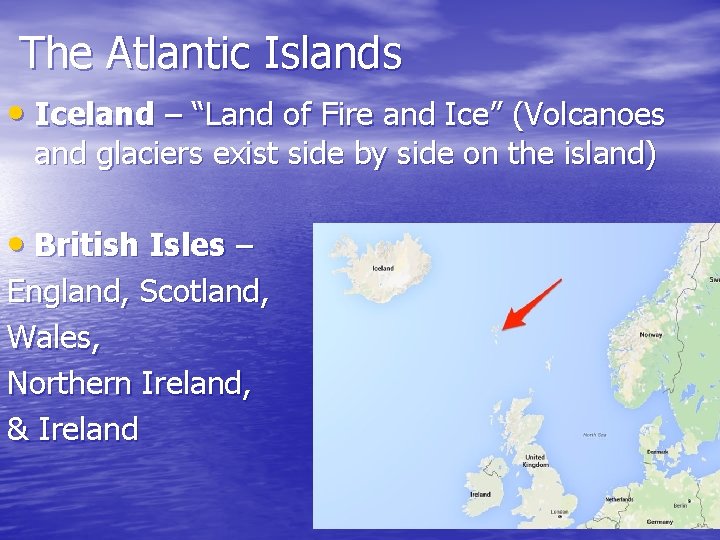
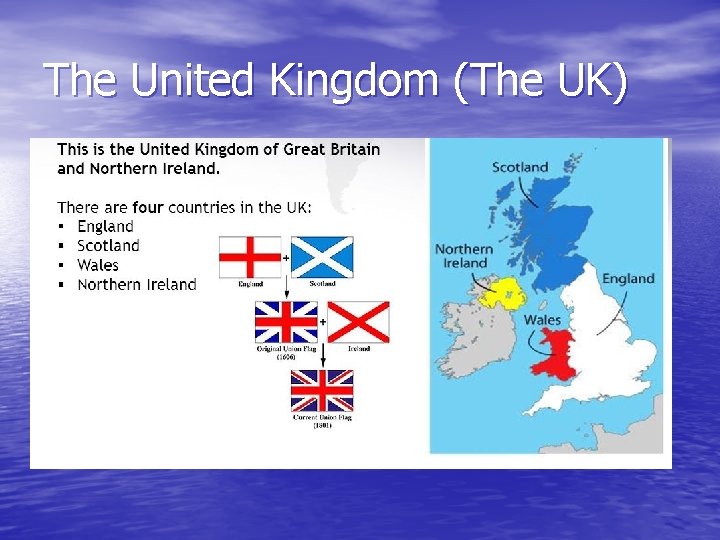
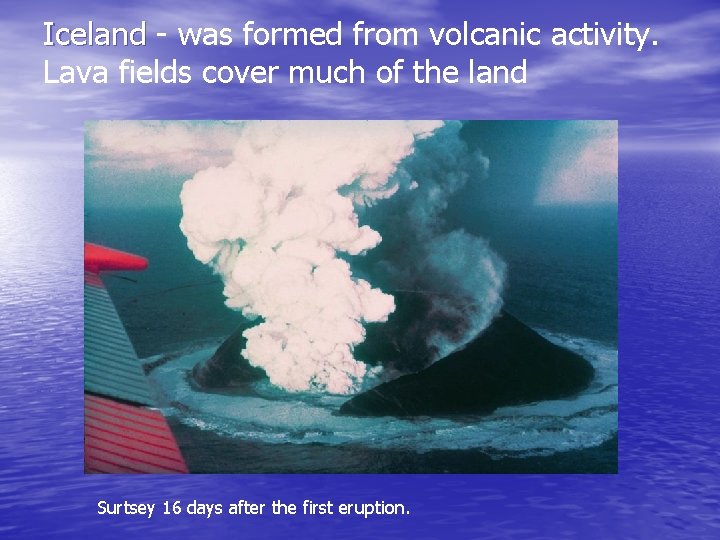
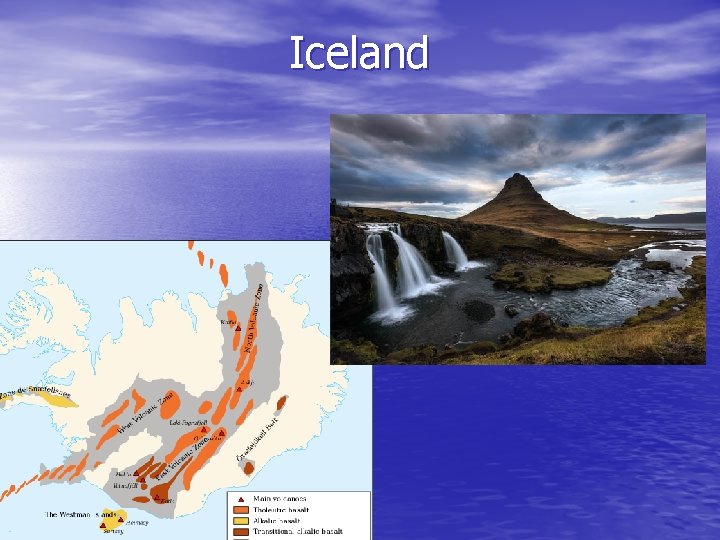
The Atlantic Islands • Iceland – “Land of Fire and Ice” (Volcanoes and glaciers exist side by side on the island) • British Isles – England, Scotland, Wales, Northern Ireland, & Ireland
The United Kingdom (The UK)
Iceland - was formed from volcanic activity. Lava fields cover much of the land Surtsey 16 days after the first eruption.
Iceland
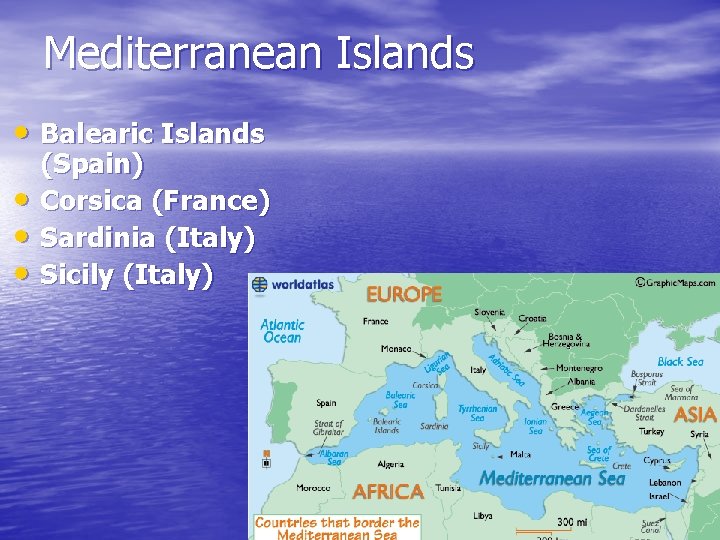
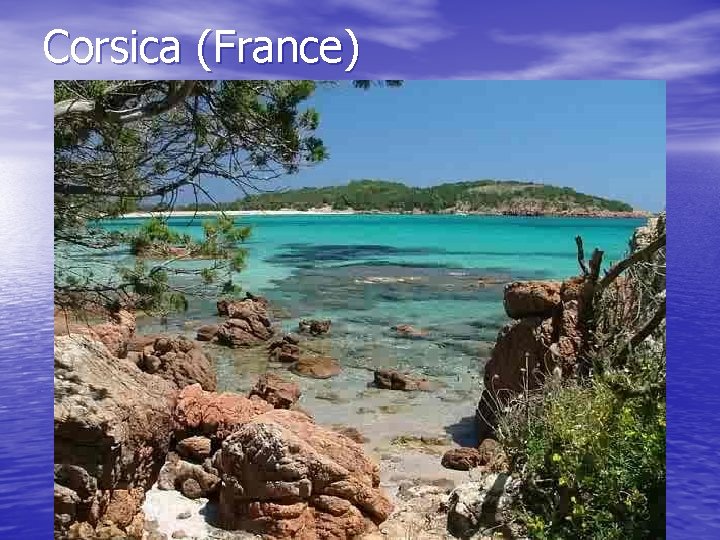
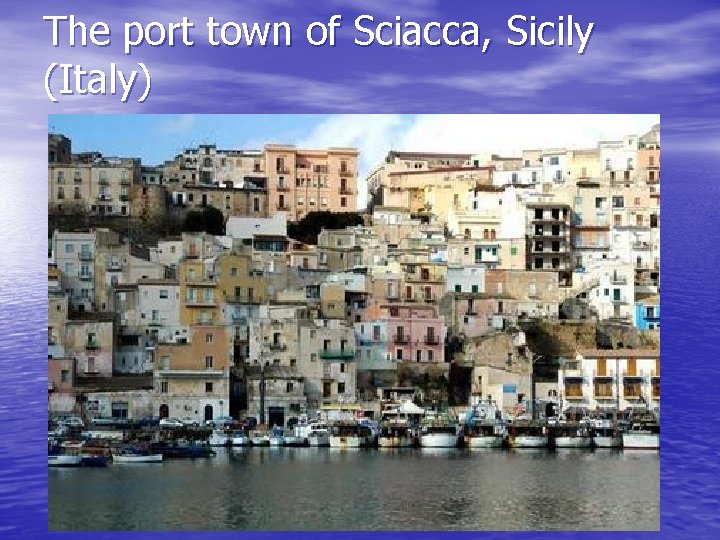
Mediterranean Islands • Balearic Islands • • • (Spain) Corsica (France) Sardinia (Italy) Sicily (Italy)
Corsica (France)
The port town of Sciacca, Sicily (Italy)
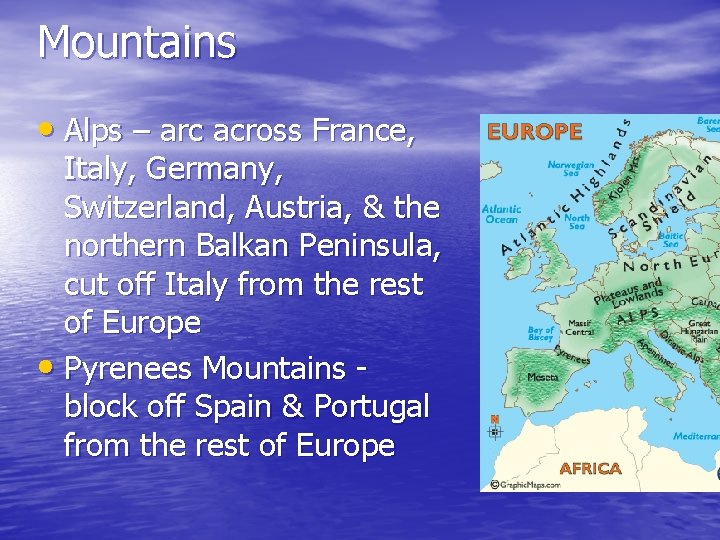
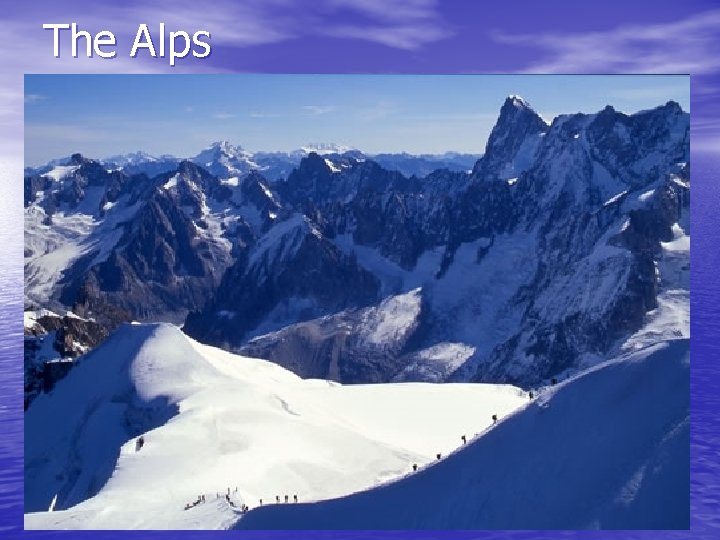
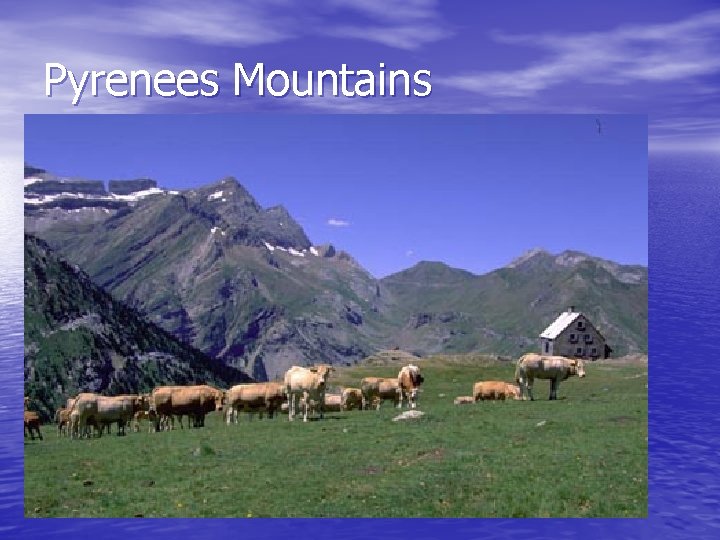
Mountains • Alps – arc across France, Italy, Germany, Switzerland, Austria, & the northern Balkan Peninsula, cut off Italy from the rest of Europe • Pyrenees Mountains block off Spain & Portugal from the rest of Europe
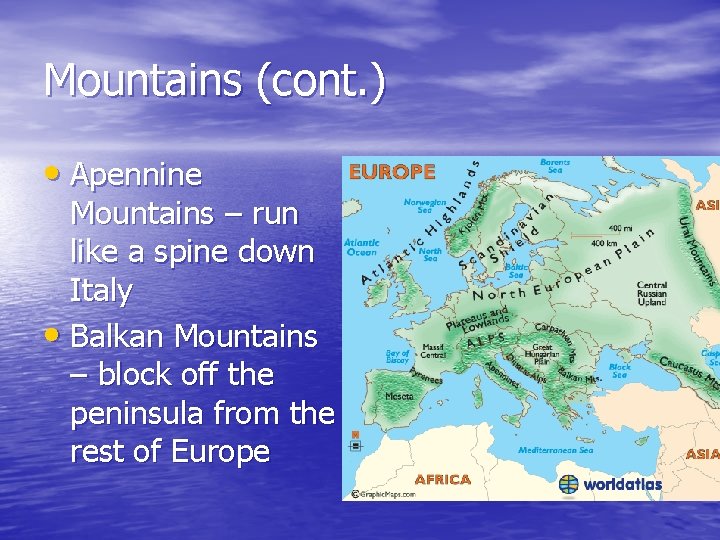
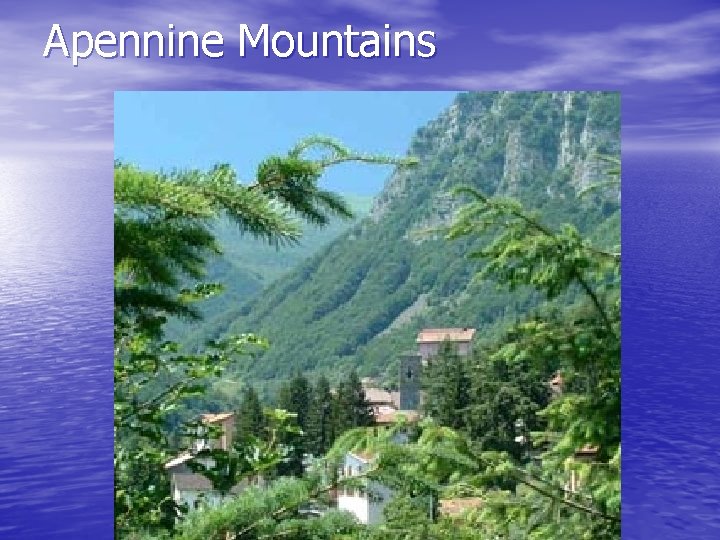
Mountains (cont. ) • Apennine Mountains – run like a spine down Italy • Balkan Mountains – block off the peninsula from the rest of Europe
The Alps
Pyrenees Mountains
Apennine Mountains
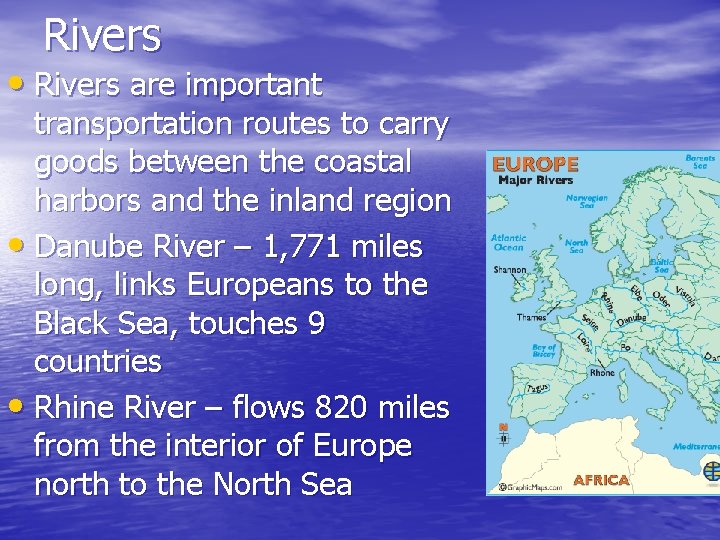
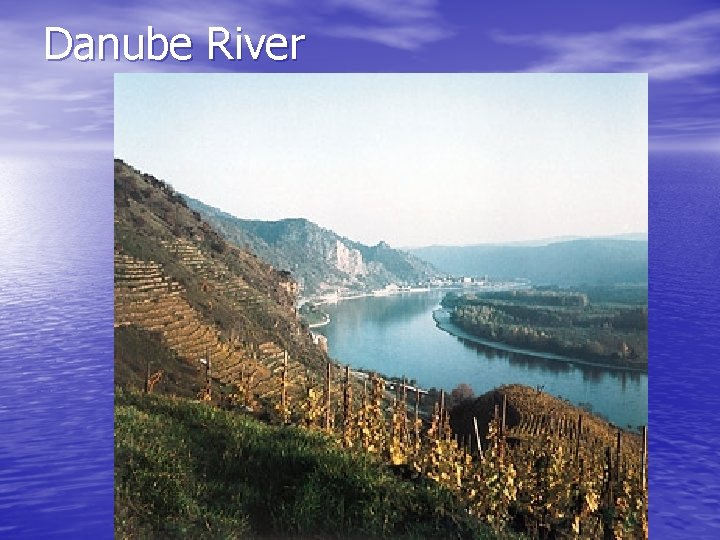
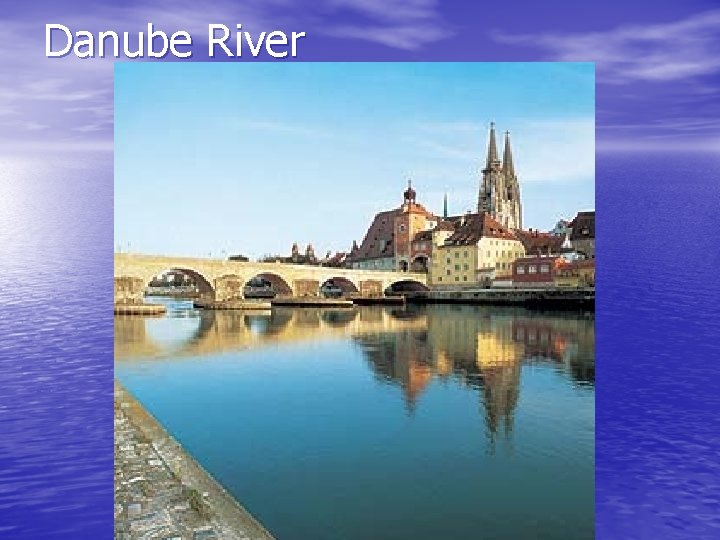
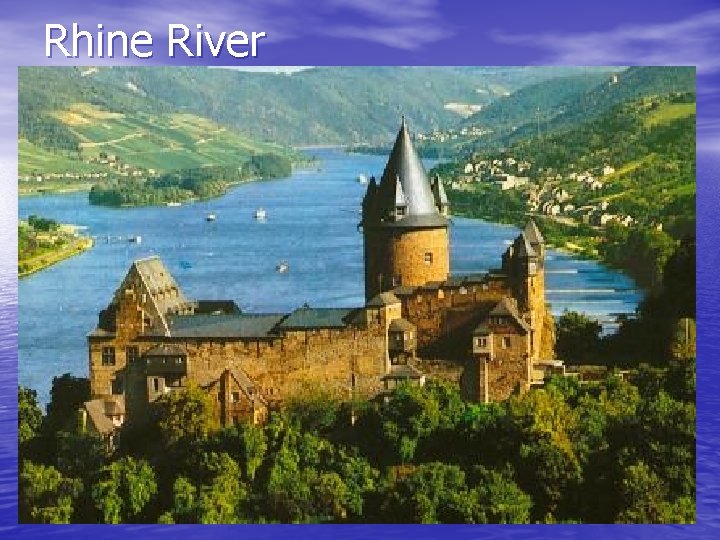
Rivers • Rivers are important transportation routes to carry goods between the coastal harbors and the inland region • Danube River – 1, 771 miles long, links Europeans to the Black Sea, touches 9 countries • Rhine River – flows 820 miles from the interior of Europe north to the North Sea
Danube River
Danube River
Rhine River
Video • National Geographic (3 minutes) • Discovery Channel Physical Geography (20 Min) • Europe Land Resources (20 Min) • Ten Most Beautiful Countries (20 Min)