
Europe in Crisis The Wars of Religion The

- Slides: 17
Europe in Crisis: The Wars of Religion
The French Wars of Religion • 1560, Calvinism and Catholicism had become highly militant (combative) religions. – both wanted to win converts and to eliminate the other’s authority. • This was the main cause of the religious wars in Europe in the 16 th century
Huguenots • The French kings had been persecuting Protestants • French Protestants who were influenced by John Calvin were called Huguenots. – made up only about 7 percent of the total French population, – but made up 40 to 50 percent of the nobility.
Huguenots • The conversion of so many nobles made the Huguenots a threat to the French monarchy – strongly Catholic.
The French Wars of Religion • For roughly 30 years (1562 -1598), there were battles in France between the Catholics and Huguenots
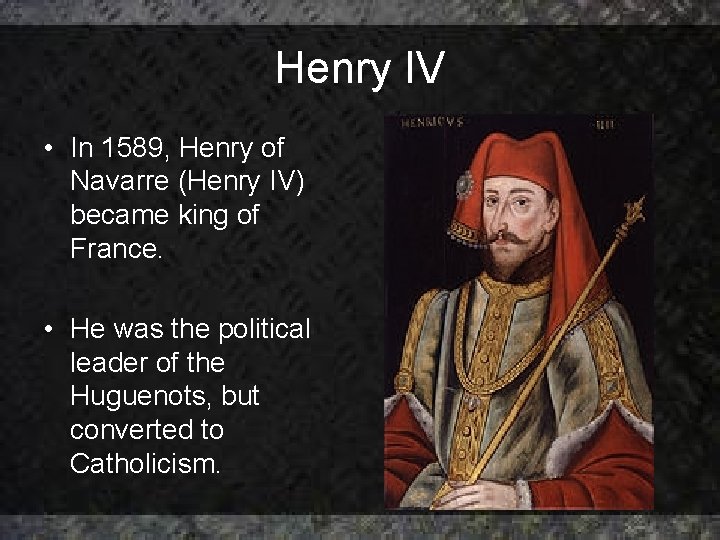
Henry IV • In 1589, Henry of Navarre (Henry IV) became king of France. • He was the political leader of the Huguenots, but converted to Catholicism.
Edict of Nantes http: //www. historyguide. org/earlymod/nantes. html • To solve the religious problem, Henry IV issued the Edict of Nantes in 1598. – Recognized Catholicism as the official religion of France, – But gave Huguenots the right to worship • also gave them full political rights.
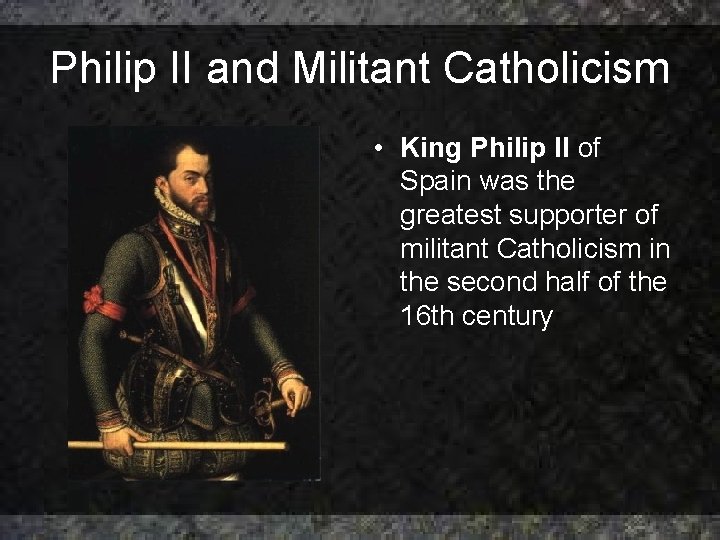
Philip II and Militant Catholicism • King Philip II of Spain was the greatest supporter of militant Catholicism in the second half of the 16 th century
Philip II and Militant Catholicism • To strengthen his control, he insisted on strict conformity to Catholicism and strong monarchical authority
Philip II and Militant Catholicism • Philip II became a champion of Catholic causes. – Led a Holy League against the Turks. Resulted in victory in the Battle of Lepanto in 1571.
Philip II and Militant Catholicism • He was not as successful in the Netherlands. • He tried to strengthen his control in this region, but was strongly opposed by the nobles there
Philip II and Militant Catholicism • Philip also tried to crush Calvinism in the region. – He was faced with a strong rebellion of Calvinists. • Unable to shut it down. – In 1609, a 12 -year truce ended the war
Philip II and Militant Catholicism • Philip’s reign ended in 1598 – At the time, Spain was the most populous empire in the world • He left the empire bankrupt due to heavy spending on war • The power had shifted to England
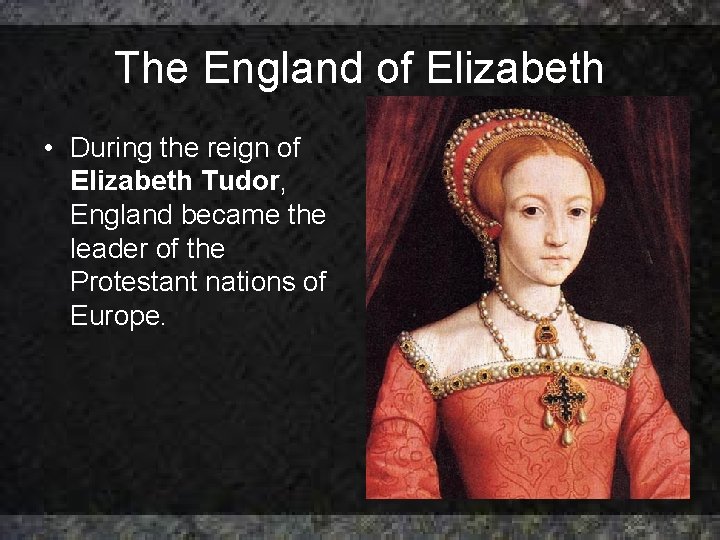
The England of Elizabeth • During the reign of Elizabeth Tudor, England became the leader of the Protestant nations of Europe.
The England of Elizabeth • To solve the religious problem in England, she repealed certain laws favoring Catholics. • A new Act of Supremacy named Elizabeth as the “only supreme governor” of both church and state http: //www. a-london-tourist-guide. com/act-of-supremacy-1559. html
The England of Elizabeth • The Church of England under Elizabeth followed a moderate Protestantism that kept most people satisfied.
The England of Elizabeth • Philip II of Spain wanted to invade England, partly to overthrow Protestantism • In 1588, Philip ordered preparations for an armada (a fleet of warships) to invade England. – The Spanish were no match for the English.