
EUROPE HUMAN GEOGRAPHY HUMAN GEOGRAPHY POPULATION SETTLEMENT ECONOMIC
- Slides: 20
EUROPE HUMAN GEOGRAPHY
HUMAN GEOGRAPHY POPULATION SETTLEMENT ECONOMIC ACTIVITY
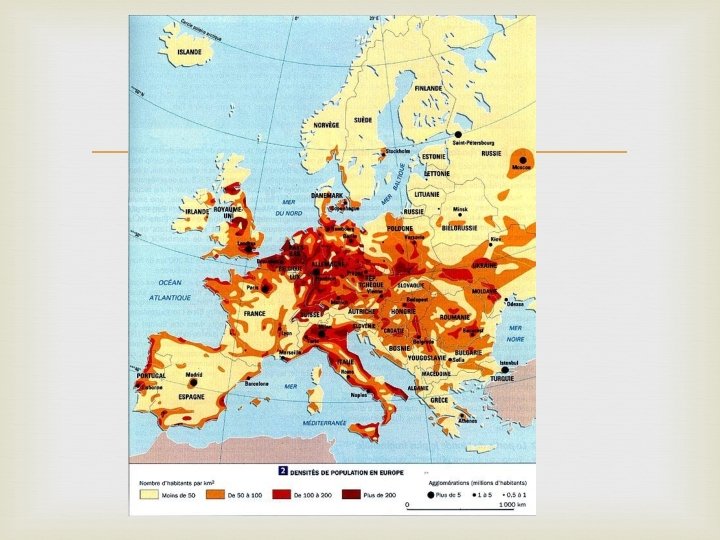
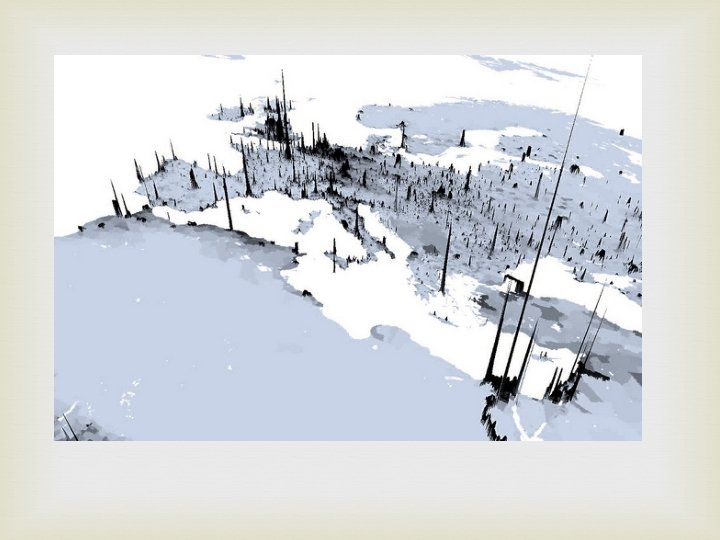
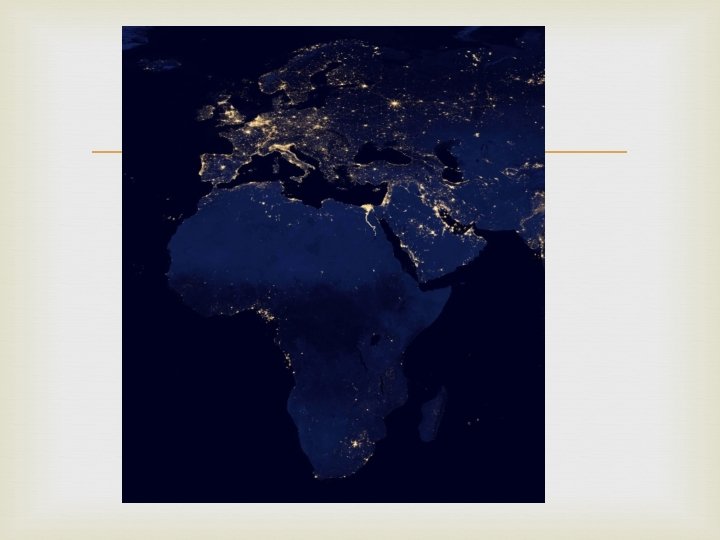
A. EUROPEAN POPULATION Europe is densely populated, there were around 740 million inhabitants, so the density is very high (70 inh/km 2). The distribution of population is quite irregular: There are very densely populated areas (southeast of the UK, Netherlands, Belgium, Germany, north of Italy, and the Italian and Spanish Mediterranean coasts). Some other areas have a very low density such as the northernmost regions or mountain areas.
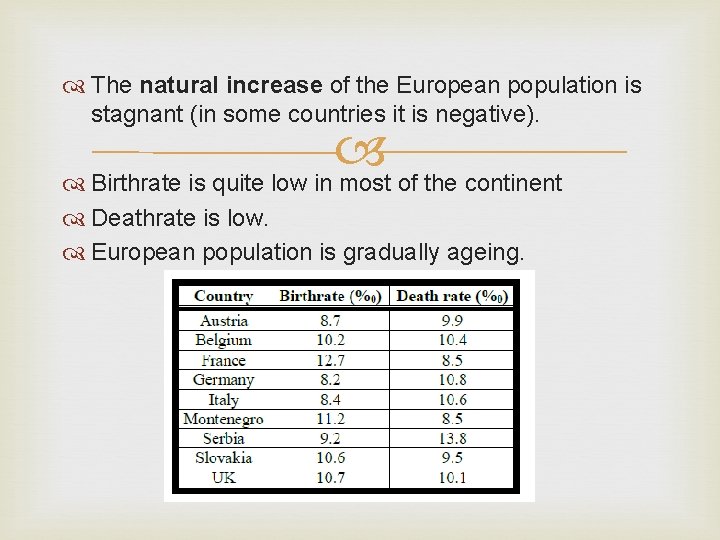
The natural increase of the European population is stagnant (in some countries it is negative). Birthrate is quite low in most of the continent Deathrate is low. European population is gradually ageing.
Migration has also been constant in Europe, although there have been many changes: Until the mid 20 th century many Europeans migrated to other continents (mostly to America or Australia). From the mid 20 th century onwards Western Europe has become a destination for migrants of the world. Most of them come from Africa, Latin America, southeast Asia and Eastern Europe). Lampedusa
Basing on age structure, Europe is an old continent due to its low birthrate and high life expectancy (75 years old).
B. SETTLEMENT In Europe the rate of urbanisation is very high, above all in the west (Monaco, Iceland, Belgium…). On the contrary the southeast that rate is much lower. Cities are mostly medium-sized or small; there are very few large cities (London, Paris, Moscow, Madrid, Berlin, or Athens).
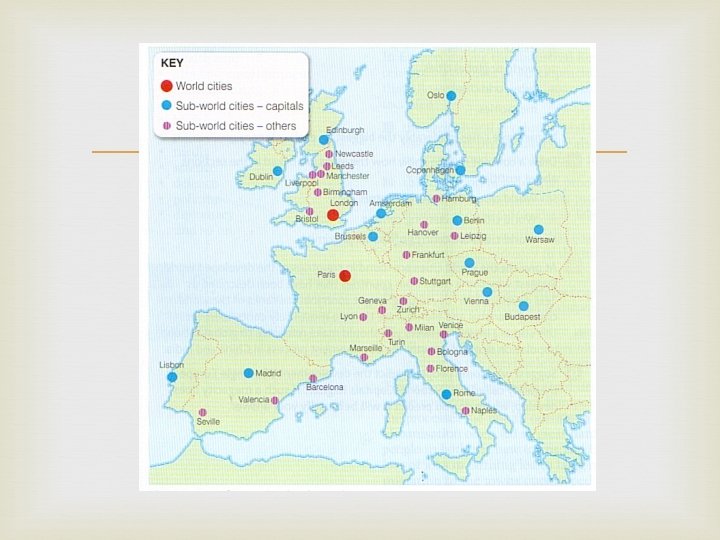
URBAN HIERARCHY Large metropolises of global importance (Paris and London). Metropolises of continental importance (Madrid, Milan, Berlin). National metropolises (Lisbon, Dublin, Naples. . . ). Medium-sized and small cities (Verona, Strasbourg, Toledo).
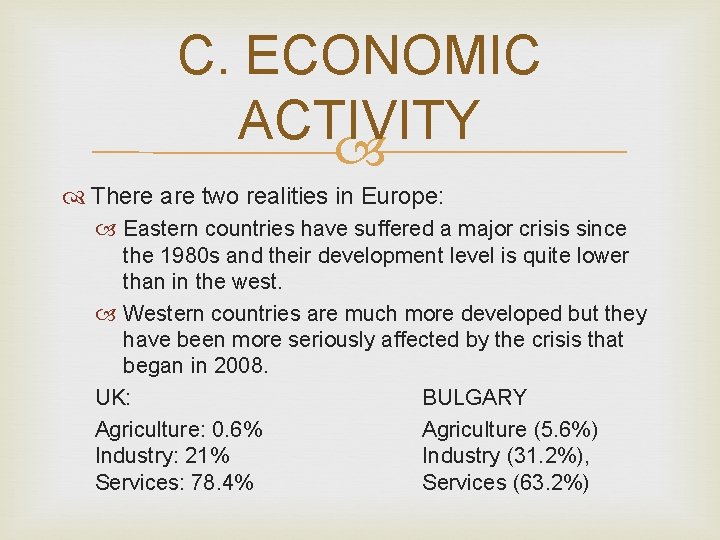
C. ECONOMIC ACTIVITY There are two realities in Europe: Eastern countries have suffered a major crisis since the 1980 s and their development level is quite lower than in the west. Western countries are much more developed but they have been more seriously affected by the crisis that began in 2008. UK: BULGARY Agriculture: 0. 6% Agriculture (5. 6%) Industry: 21% Industry (31. 2%), Services: 78. 4% Services (63. 2%)
PRIMARY SECTOR The importance of primary sector in Europe has declined, both in workers and in contribution to GDP. In Western Europe agriculture is mostly mechanised and has specialised the crops. It is mostly produced for commercialisation. Concerning fishing, Europe is one of the main powers in the world despite the restructuring of the sector.
SECONDARY SECTOR Industry used to be the main economic sector in Europe in the last periods. Despite not being as important as before, industry has a major contribution to GDP and employs many workers. The main energy sources of Europe are oil and natural gas, which are imported from other continents. Despite being limited, renewable energies are growing.
The main sectors are automobile, textiles, food industries, iron and steel, metallurgy, chemicals, electronics, optics, and aeronautical.
TERTIARY SECTOR Most of the Europeans are employed in the tertiary sector and it generates the most wealth of the continent. International trade is essential in Europe and it imports industrial products and energy sources and exports machinery, automobiles, transport materials. . .
European transport is really developed because of a very dense network of roads and railways. It also has major ports (Rotterdam, Hamburg, Algeciras) and airports (London, Frankfurt).
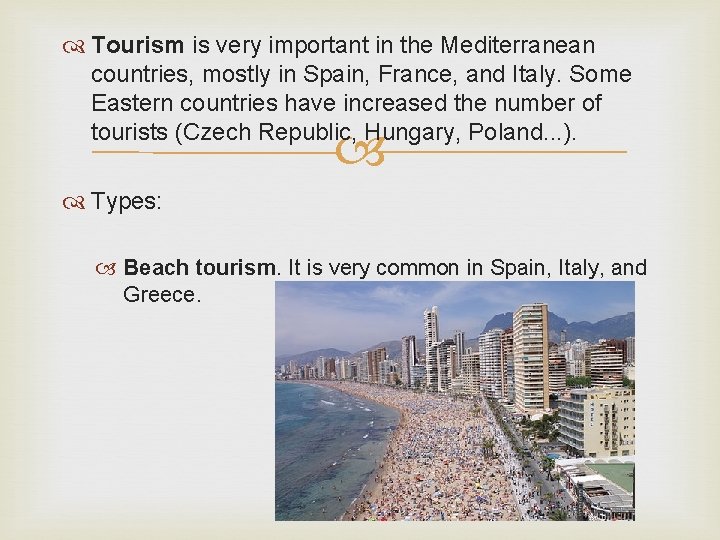
Tourism is very important in the Mediterranean countries, mostly in Spain, France, and Italy. Some Eastern countries have increased the number of tourists (Czech Republic, Hungary, Poland. . . ). Types: Beach tourism. It is very common in Spain, Italy, and Greece.
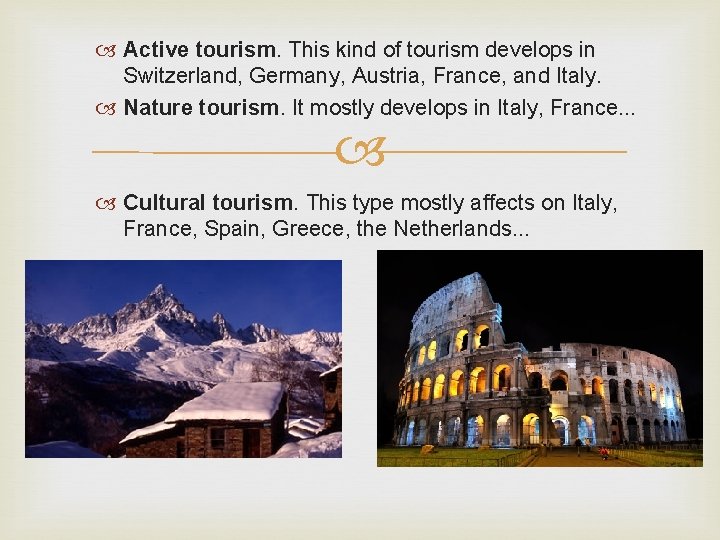
Active tourism. This kind of tourism develops in Switzerland, Germany, Austria, France, and Italy. Nature tourism. It mostly develops in Italy, France. . . Cultural tourism. This type mostly affects on Italy, France, Spain, Greece, the Netherlands. . .