
Eurocode 8 Design of Structures for Earthquake Resistance




- Slides: 32
Eurocode 8 - Design of Structures for Earthquake Resistance –Part 1 Pedro S. Sêco e Pinto Laboratório Nacional de Engenharia Civil and Faculty of Engineering, University of Coimbra, Portugal President of ISSMGE(2005 -2009) Pedro Sêco Pinto
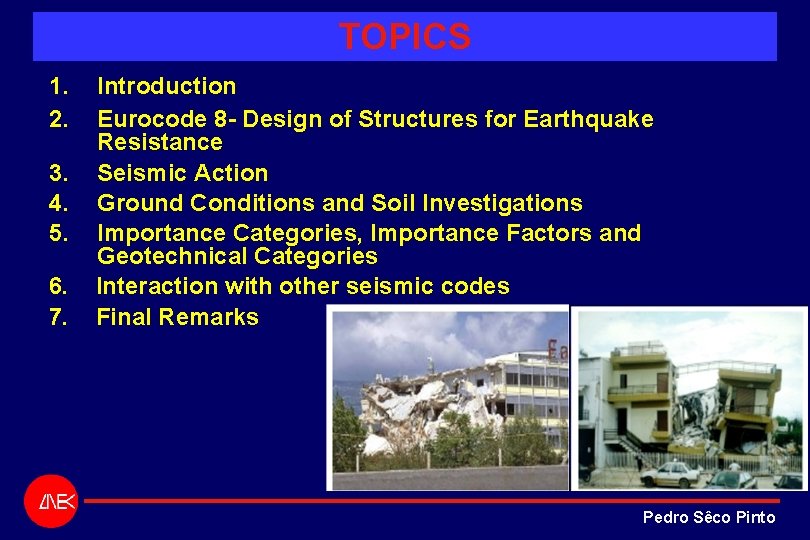
TOPICS 1. 2. 3. 4. 5. 6. 7. Introduction Eurocode 8 - Design of Structures for Earthquake Resistance Seismic Action Ground Conditions and Soil Investigations Importance Categories, Importance Factors and Geotechnical Categories Interaction with other seismic codes Final Remarks Pedro Sêco Pinto
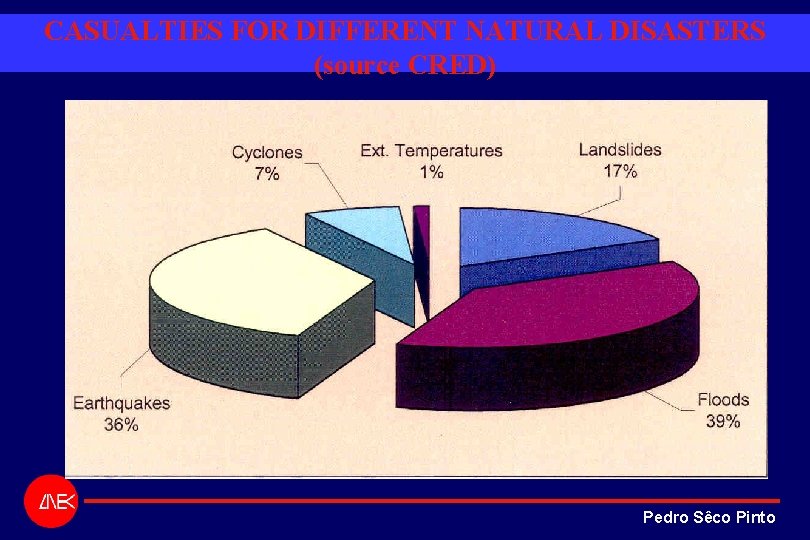
CASUALTIES FOR DIFFERENT NATURAL DISASTERS (source CRED) Pedro Sêco Pinto
SODOMMA EARTHQUAKE Pedro Sêco Pinto
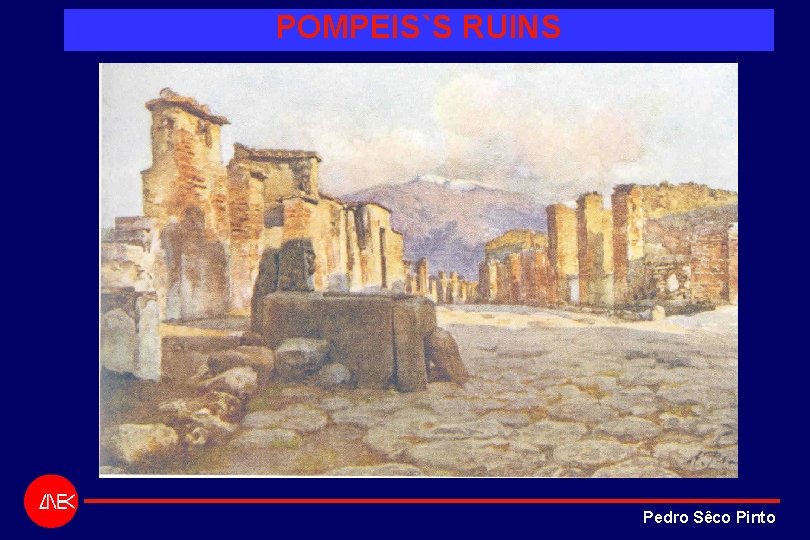
POMPEIS`S RUINS Pedro Sêco Pinto
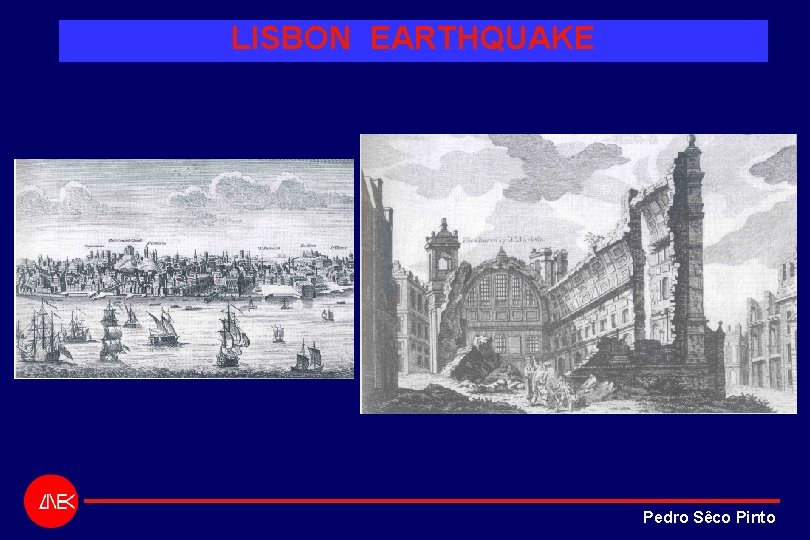
LISBON EARTHQUAKE Pedro Sêco Pinto
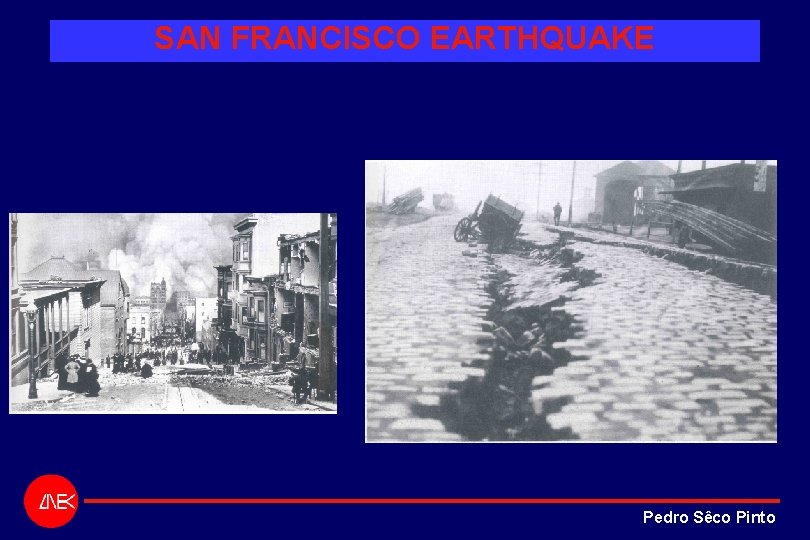
SAN FRANCISCO EARTHQUAKE Pedro Sêco Pinto
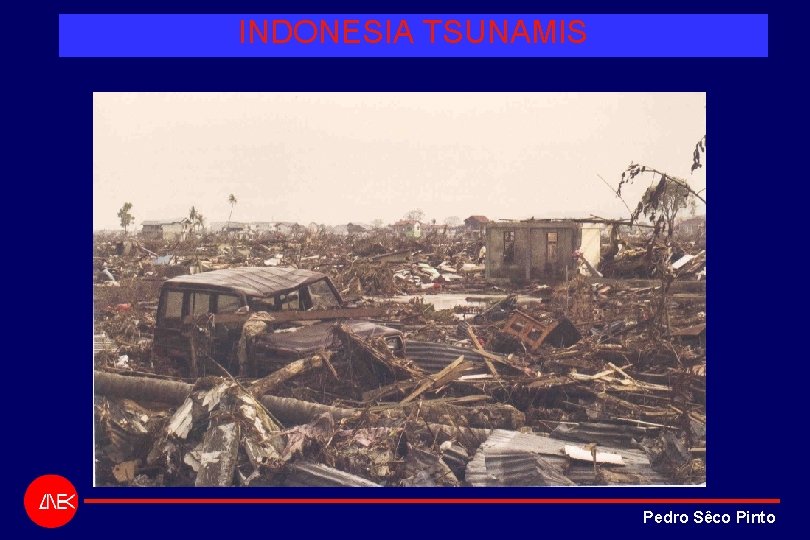
INDONESIA TSUNAMIS Pedro Sêco Pinto
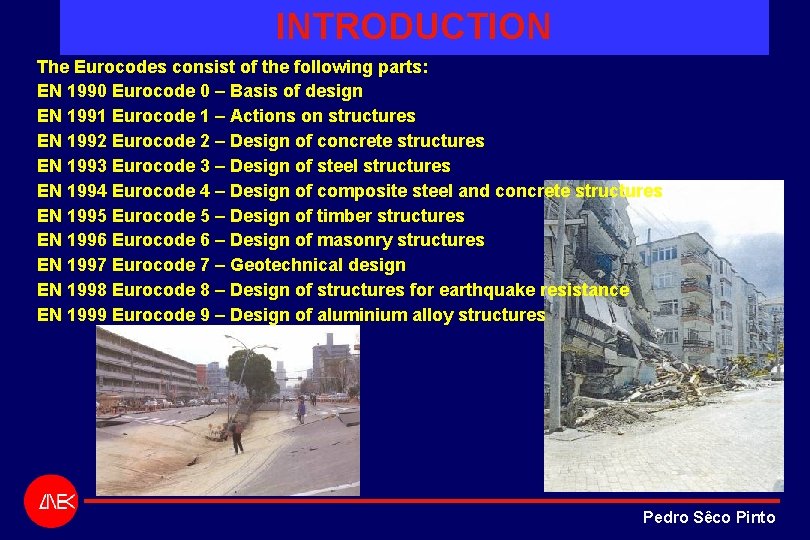
INTRODUCTION The Eurocodes consist of the following parts: EN 1990 Eurocode 0 – Basis of design EN 1991 Eurocode 1 – Actions on structures EN 1992 Eurocode 2 – Design of concrete structures EN 1993 Eurocode 3 – Design of steel structures EN 1994 Eurocode 4 – Design of composite steel and concrete structures EN 1995 Eurocode 5 – Design of timber structures EN 1996 Eurocode 6 – Design of masonry structures EN 1997 Eurocode 7 – Geotechnical design EN 1998 Eurocode 8 – Design of structures for earthquake resistance EN 1999 Eurocode 9 – Design of aluminium alloy structures Pedro Sêco Pinto
INTRODUCTION Eurocode 8 “Design of Structures for Earthquake Resistant” Part 1 – Buildings Part 2 – Bridges Part 3 – Strengthening and repair of existing buildings Part 4 – Tanks, Silos and Pipelines Part 5 – Geotechnical Structures Part 6 – Towers, Masts and Chimneys Pedro Sêco Pinto
EUROCODE 8 EN 1998 -1 asks for a two level seismic design establishing explicitly the two following requirements: • No-collapse requirement: The structure shall be designed and constructed to withstand the design seismic action without local or global collapse, thus retaining its structural integrity and a residual load bearing capacity after the seismic event. • Damage limitation requirement: The structure shall be designed and constructed to withstand a seismic action having a larger probability of occurrence than the design seismic action, without the occurrence of damage and the associated limitations of use, the costs of which would be disproportionately high in comparison with the costs of the structure itself. Pedro Sêco Pinto
EUROCODE 8 In spite of this EN 1998 -1 addresses the issue, starting with the case of ordinary structures, for which it recommends the following two levels: • Design seismic action (for local collapse prevention) with 10% probability of exceedance in 50 years which corresponds to a mean return period of 475 years. • Damage limitation seismic action with 10% probability of exceedance in 10 years which corresponds to a mean return period of 95 years. The damage limitation seismic action is sometimes also referred to as the Serviceability seismic action. Pedro Sêco Pinto
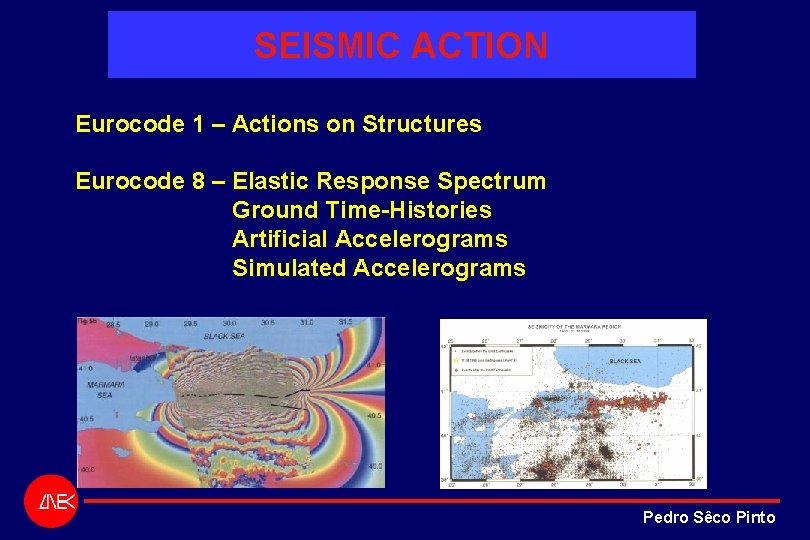
SEISMIC ACTION Eurocode 1 – Actions on Structures Eurocode 8 – Elastic Response Spectrum Ground Time-Histories Artificial Accelerograms Simulated Accelerograms Pedro Sêco Pinto
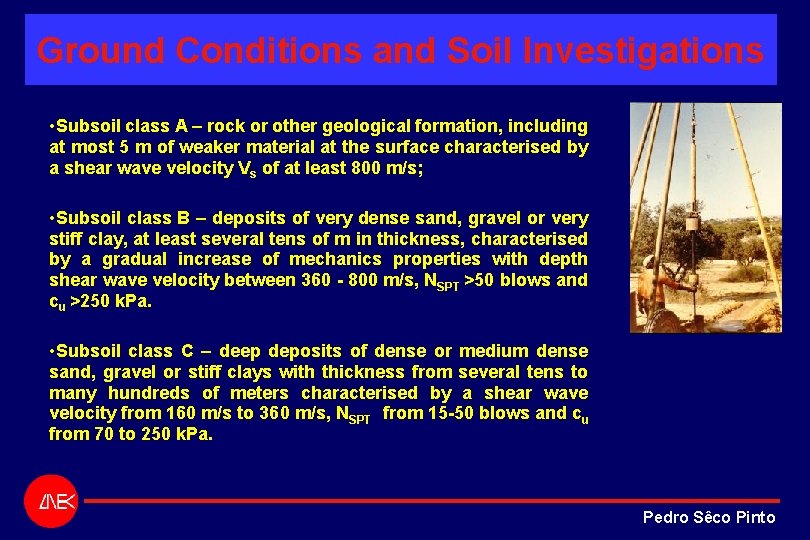
Ground Conditions and Soil Investigations • Subsoil class A – rock or other geological formation, including at most 5 m of weaker material at the surface characterised by a shear wave velocity Vs of at least 800 m/s; • Subsoil class B – deposits of very dense sand, gravel or very stiff clay, at least several tens of m in thickness, characterised by a gradual increase of mechanics properties with depth shear wave velocity between 360 - 800 m/s, NSPT >50 blows and cu >250 k. Pa. • Subsoil class C – deep deposits of dense or medium dense sand, gravel or stiff clays with thickness from several tens to many hundreds of meters characterised by a shear wave velocity from 160 m/s to 360 m/s, NSPT from 15 -50 blows and cu from 70 to 250 k. Pa. Pedro Sêco Pinto
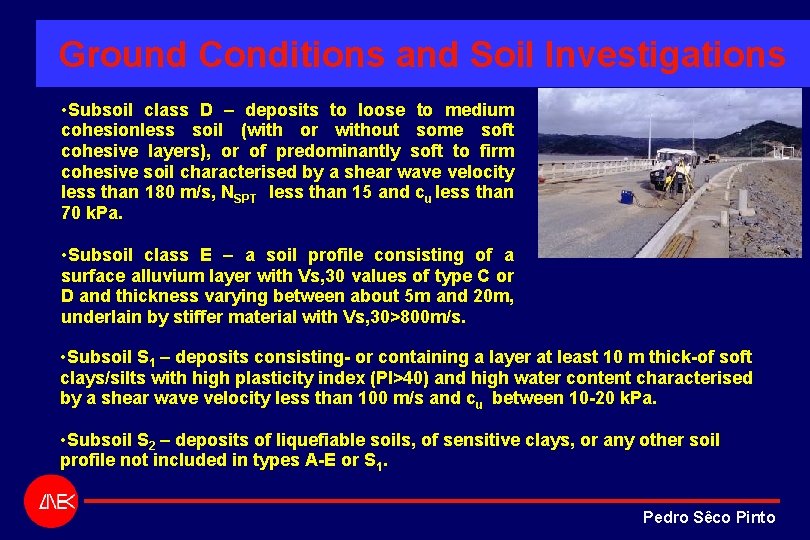
Ground Conditions and Soil Investigations • Subsoil class D – deposits to loose to medium cohesionless soil (with or without some soft cohesive layers), or of predominantly soft to firm cohesive soil characterised by a shear wave velocity less than 180 m/s, NSPT less than 15 and cu less than 70 k. Pa. • Subsoil class E – a soil profile consisting of a surface alluvium layer with Vs, 30 values of type C or D and thickness varying between about 5 m and 20 m, underlain by stiffer material with Vs, 30>800 m/s. • Subsoil S 1 – deposits consisting- or containing a layer at least 10 m thick-of soft clays/silts with high plasticity index (PI>40) and high water content characterised by a shear wave velocity less than 100 m/s and cu between 10 -20 k. Pa. • Subsoil S 2 – deposits of liquefiable soils, of sensitive clays, or any other soil profile not included in types A-E or S 1. Pedro Sêco Pinto
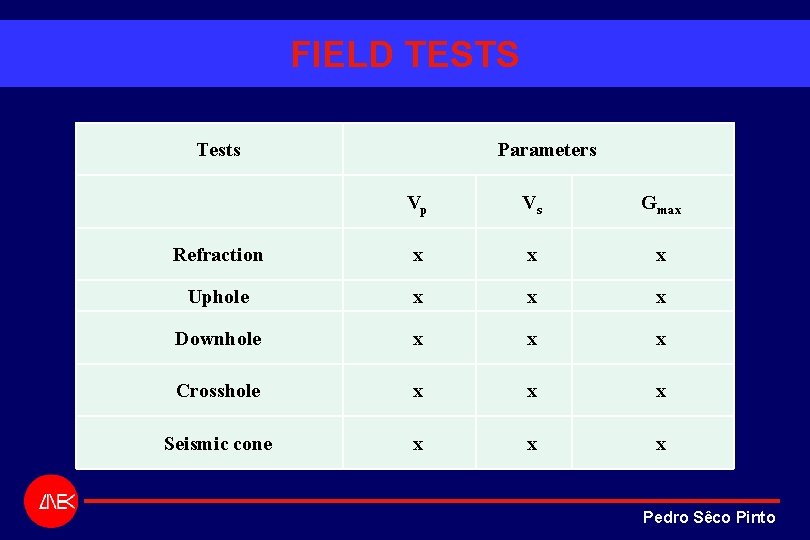
FIELD TESTS Tests Parameters Vp Vs Gmax Refraction x x x Uphole x x x Downhole x x x Crosshole x x x Seismic cone x x x Pedro Sêco Pinto
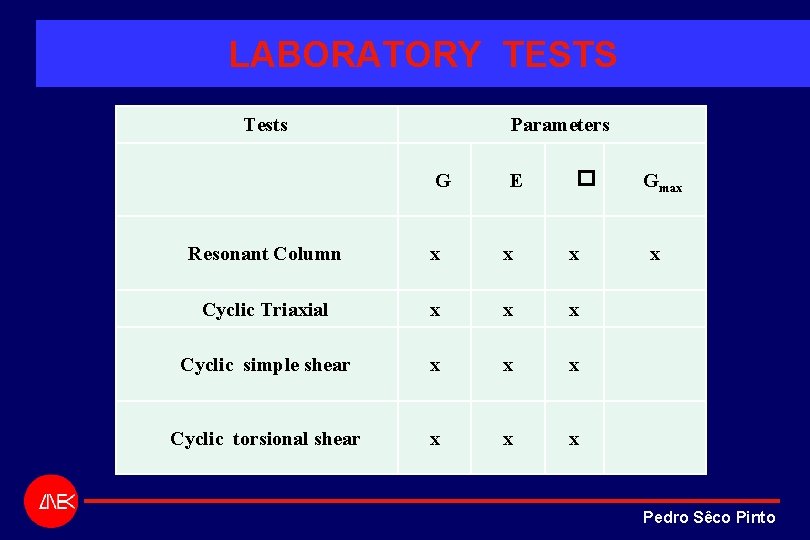
LABORATORY TESTS Tests Parameters G E � Resonant Column x x x Cyclic Triaxial x x x Cyclic simple shear x x x Cyclic torsional shear x x x Gmax x Pedro Sêco Pinto
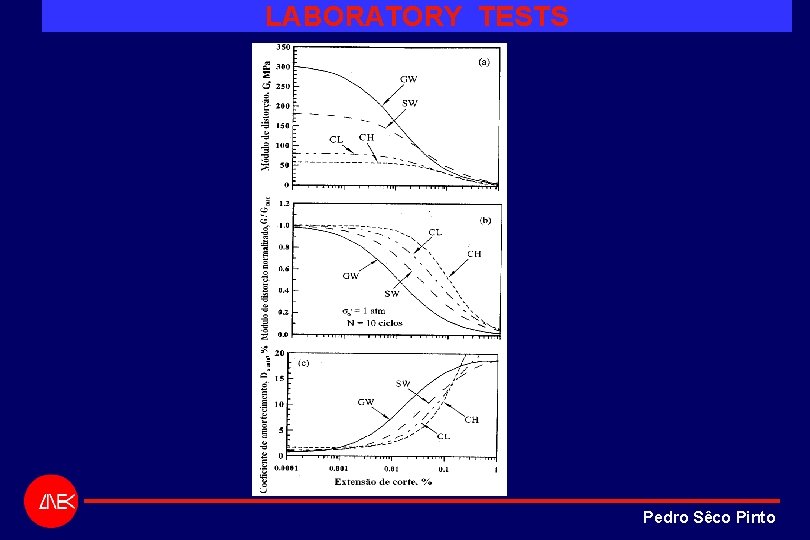
LABORATORY TESTS Pedro Sêco Pinto
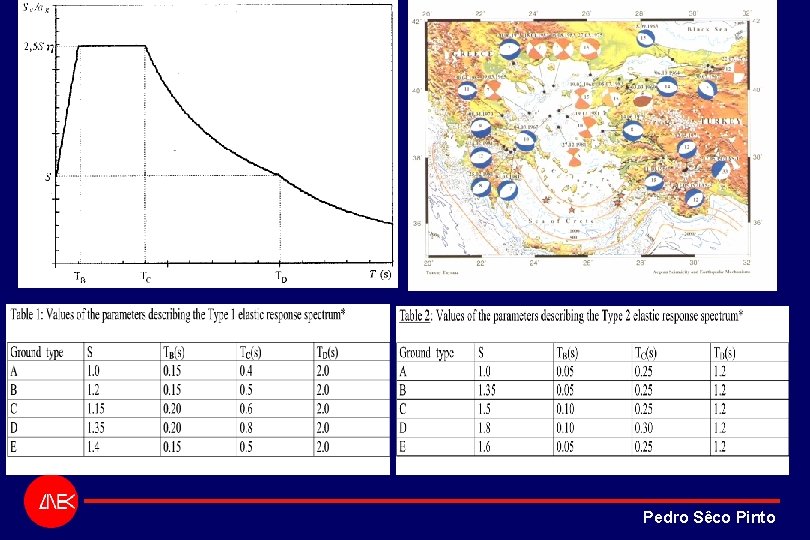
Pedro Sêco Pinto
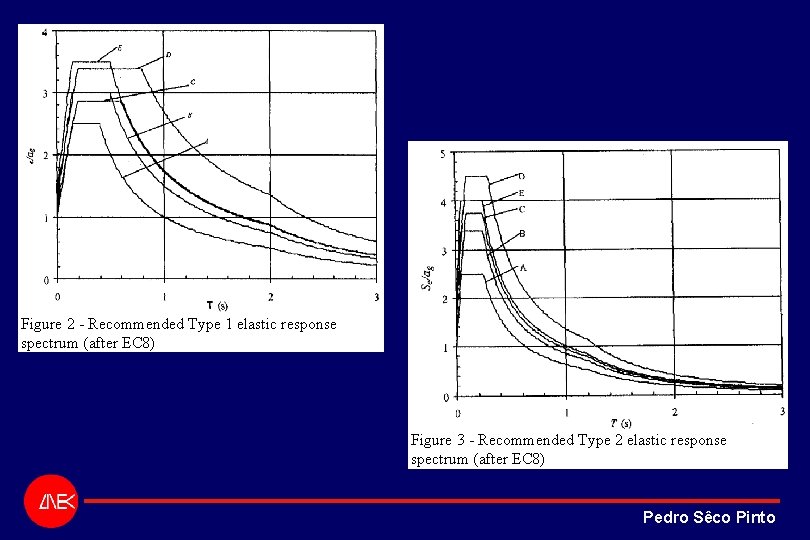
Figure 2 - Recommended Type 1 elastic response spectrum (after EC 8) Figure 3 - Recommended Type 2 elastic response spectrum (after EC 8) Pedro Sêco Pinto
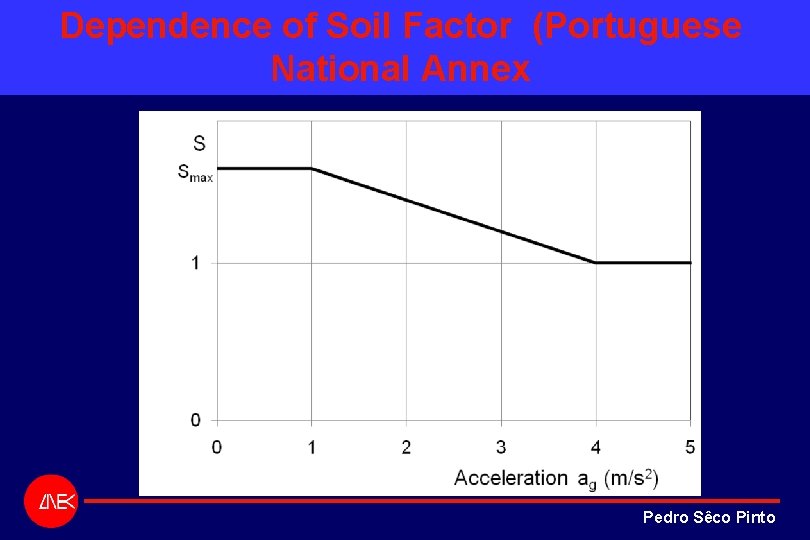
Dependence of Soil Factor (Portuguese National Annex Pedro Sêco Pinto
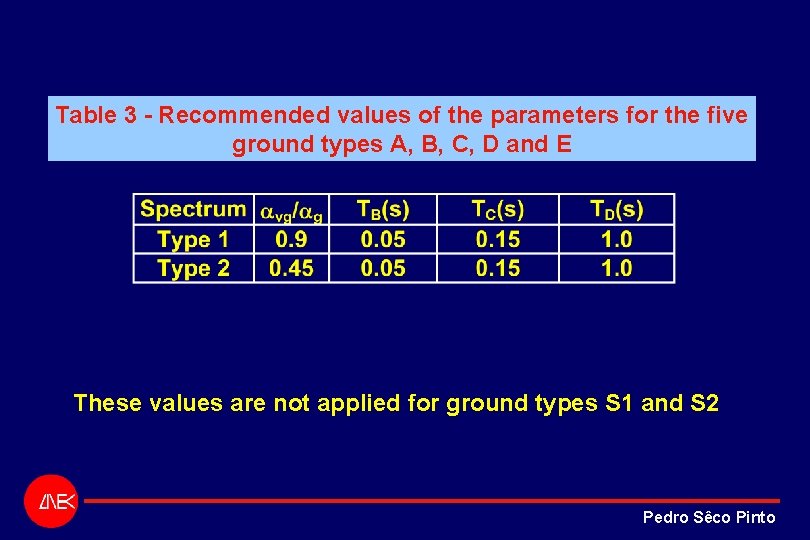
Table 3 - Recommended values of the parameters for the five ground types A, B, C, D and E These values are not applied for ground types S 1 and S 2 Pedro Sêco Pinto
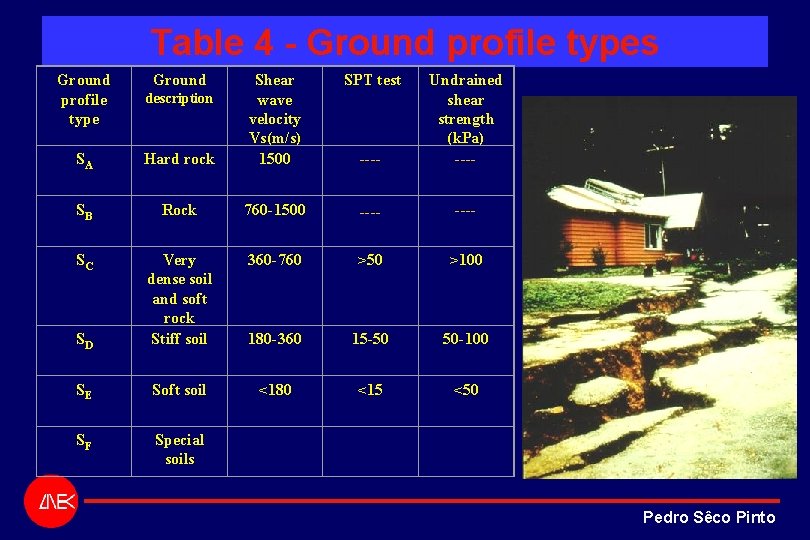
Table 4 - Ground profile types Ground profile type Ground SPT test Hard rock Shear wave velocity Vs(m/s) 1500 ---- Undrained shear strength (k. Pa) ---- description SA SB Rock 760 -1500 ---- SC 360 -760 >50 >100 SD Very dense soil and soft rock Stiff soil 180 -360 15 -50 50 -100 SE Soft soil <180 <15 <50 SF Special soils Pedro Sêco Pinto
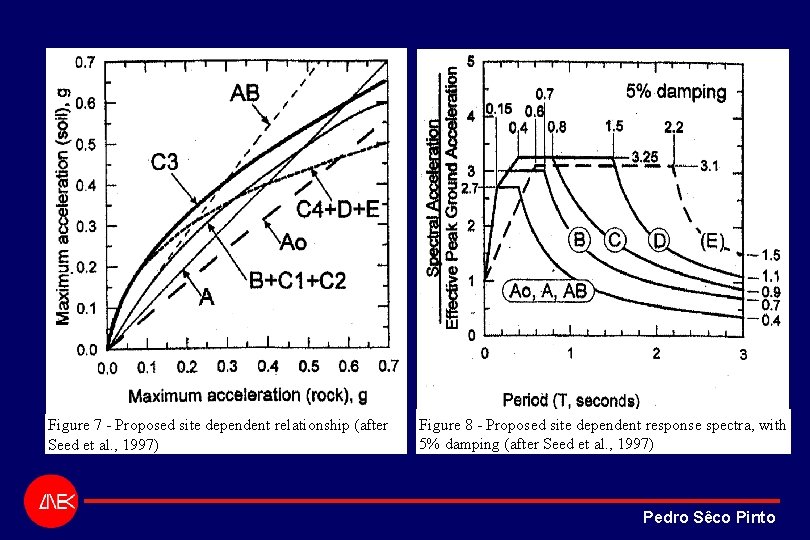
Figure 7 - Proposed site dependent relationship (after Seed et al. , 1997) Figure 8 - Proposed site dependent response spectra, with 5% damping (after Seed et al. , 1997) Pedro Sêco Pinto
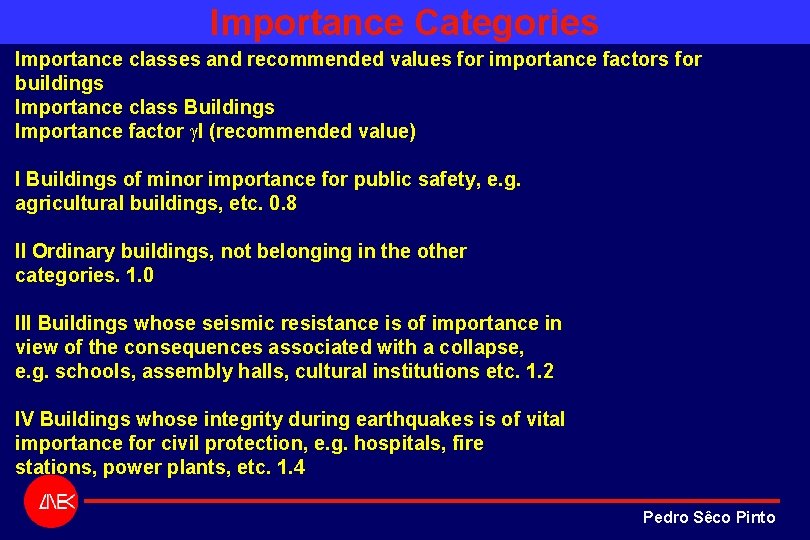
Importance Categories Importance classes and recommended values for importance factors for buildings Importance class Buildings Importance factor I (recommended value) I Buildings of minor importance for public safety, e. g. agricultural buildings, etc. 0. 8 II Ordinary buildings, not belonging in the other categories. 1. 0 III Buildings whose seismic resistance is of importance in view of the consequences associated with a collapse, e. g. schools, assembly halls, cultural institutions etc. 1. 2 IV Buildings whose integrity during earthquakes is of vital importance for civil protection, e. g. hospitals, fire stations, power plants, etc. 1. 4 Pedro Sêco Pinto
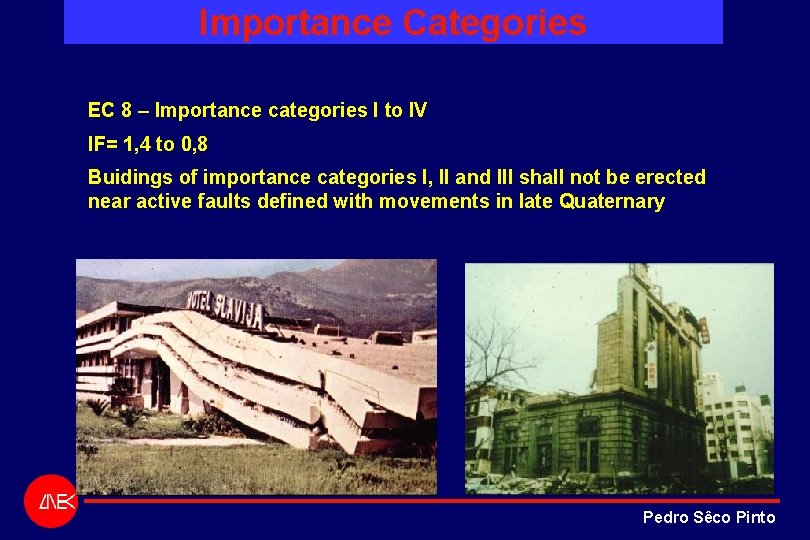
Importance Categories EC 8 – Importance categories I to IV IF= 1, 4 to 0, 8 Buidings of importance categories I, II and III shall not be erected near active faults defined with movements in late Quaternary Pedro Sêco Pinto
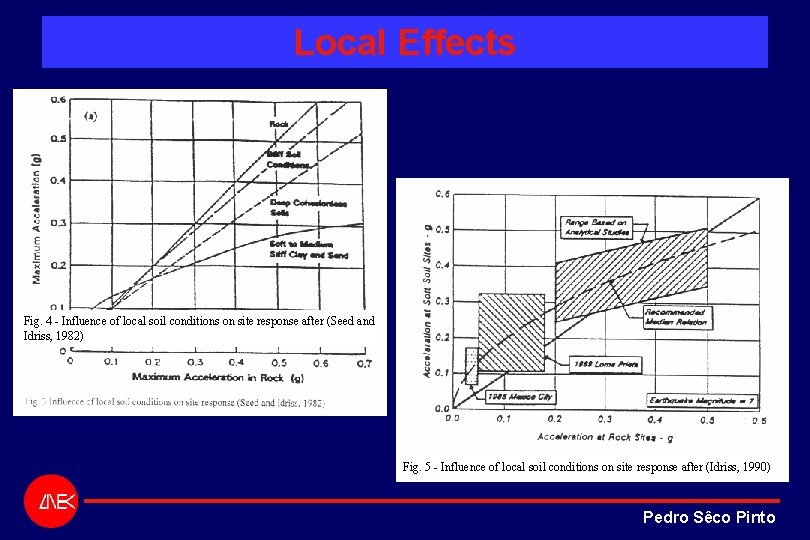
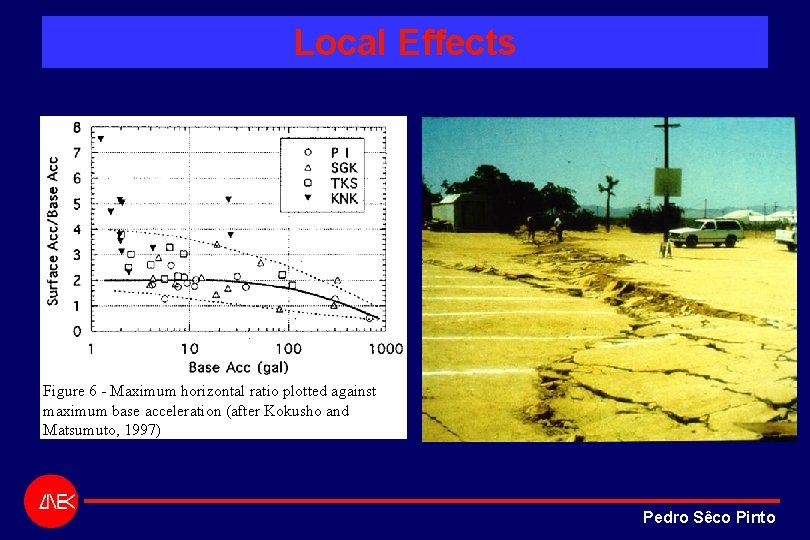
Local Effects Fig. 4 - Influence of local soil conditions on site response after (Seed and Idriss, 1982) Fig. 5 - Influence of local soil conditions on site response after (Idriss, 1990) Pedro Sêco Pinto
Local Effects Figure 6 - Maximum horizontal ratio plotted against maximum base acceleration (after Kokusho and Matsumuto, 1997) Pedro Sêco Pinto
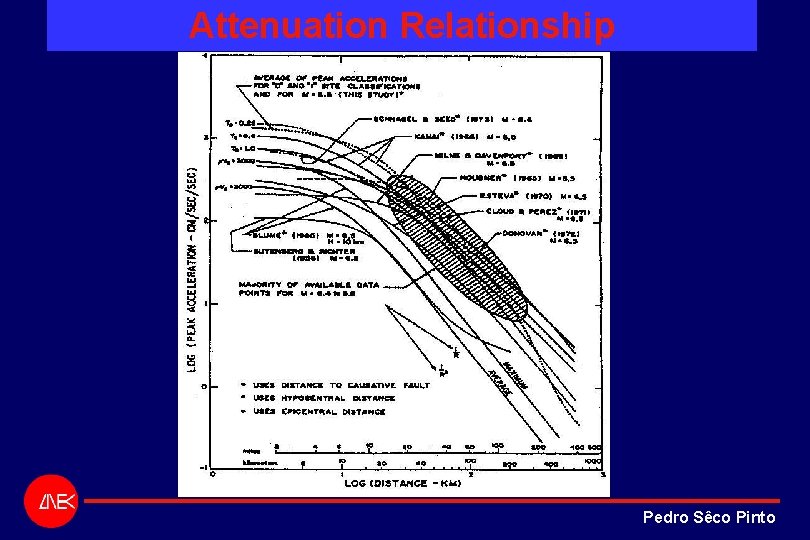
Attenuation Relationship Pedro Sêco Pinto
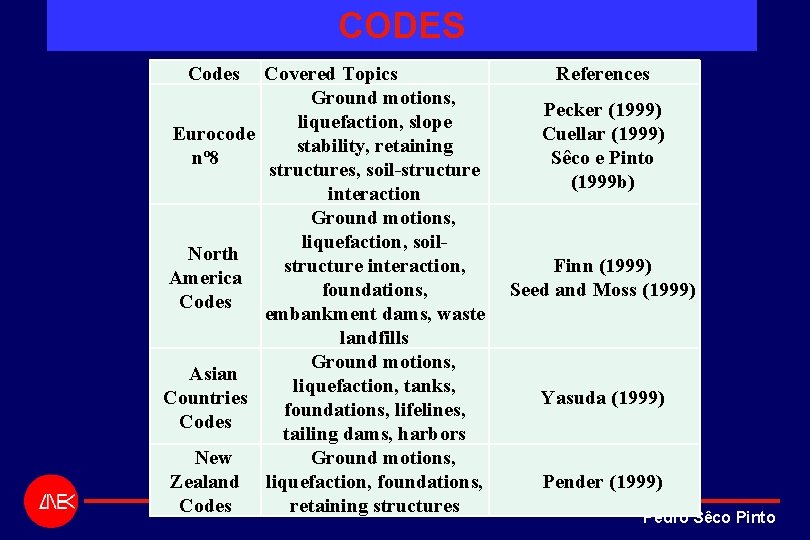
CODES Codes Covered Topics Ground motions, liquefaction, slope Eurocode stability, retaining nº 8 structures, soil-structure interaction Ground motions, liquefaction, soil. North structure interaction, America foundations, Codes embankment dams, waste landfills Ground motions, Asian liquefaction, tanks, Countries foundations, lifelines, Codes tailing dams, harbors New Ground motions, Zealand liquefaction, foundations, Codes retaining structures References Pecker (1999) Cuellar (1999) Sêco e Pinto (1999 b) Finn (1999) Seed and Moss (1999) Yasuda (1999) Pender (1999) Pedro Sêco Pinto
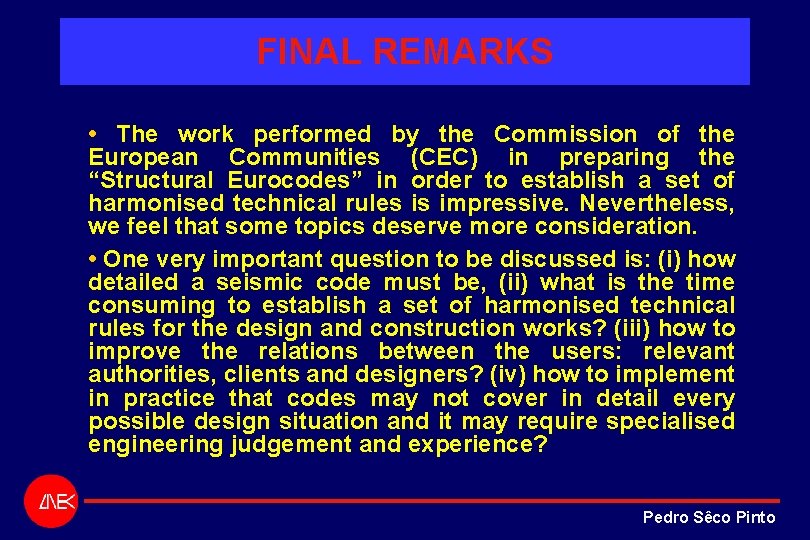
FINAL REMARKS • The work performed by the Commission of the European Communities (CEC) in preparing the “Structural Eurocodes” in order to establish a set of harmonised technical rules is impressive. Nevertheless, we feel that some topics deserve more consideration. • One very important question to be discussed is: (i) how detailed a seismic code must be, (ii) what is the time consuming to establish a set of harmonised technical rules for the design and construction works? (iii) how to improve the relations between the users: relevant authorities, clients and designers? (iv) how to implement in practice that codes may not cover in detail every possible design situation and it may require specialised engineering judgement and experience? Pedro Sêco Pinto
FINAL REMARKS • It is important to notice that true innovators have a mantra. They are constantly daring to make things better. They challenge the commonly accepted. They see no limits. We should not forget that growth, evolution and invention sustain the life. • So we need to keep challenging ourselves to think better, do better and be better. Confront our limitations. Failure is a gift anyway. It takes us closer our dreams, equips us with more knowledge. Success and failure go hand to hand. • In dealing with Eurocodes we should not forget : • Improve: Always be getting better; • Observe: We need to keep our eyes open to absorb the changes; • Adapt: The conditions are different, so we need to keep monitoring the process; • Connect: We need to receive different inputs Pedro Sêco Pinto