
Eukaryotic vs Prokaryotic Cells Do now activity Key
- Slides: 12
Eukaryotic vs. Prokaryotic Cells Do now activity: Key Words 1. Describe the role of the nerve cell in the human body Eukaryotic Prokaryotic Membrane Organelles Nucleus 2. Compare the function of the root hair cell and palisade cell in the plant 3. Can you give any examples of eukaryotic or prokaryotic cells?
Progress indicators GOOD PROGRESS: Identify organelles found in eukaryotic and prokaryotic organisms OUTSTANDING PROGRESS: Label diagrams of bacteria cells and relate the structure of the bacteria cell to it’s function
Word Consciousness Eukaryotic – A cell with a “true” nucleus (in a membrane). This includes animal and plant cells Prokaryotic – A cell with no “true” nucleus. For example bacteria cells. Organelles – Small components that make up the cell. E. g. nucleus, mitochondria, chloroplasts Nucleus – an organelle that contains the cells genetic material Genetic Material – The material used to store information, usually in the form of DNA – stands for Deoxyribose Nucleic Acid. It is the genetic material in cells.
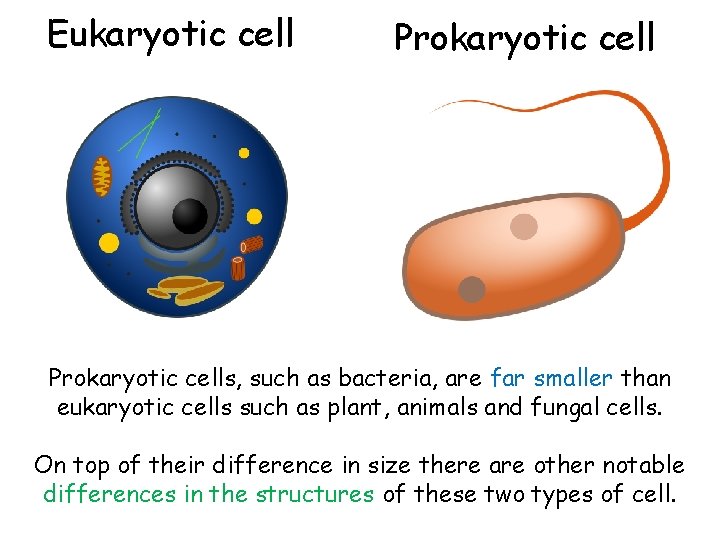
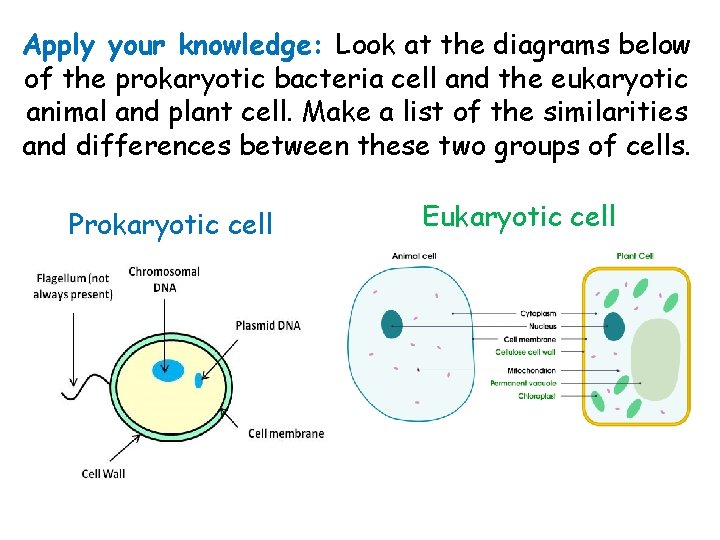
Eukaryotic cell Prokaryotic cells, such as bacteria, are far smaller than eukaryotic cells such as plant, animals and fungal cells. On top of their difference in size there are other notable differences in the structures of these two types of cell.
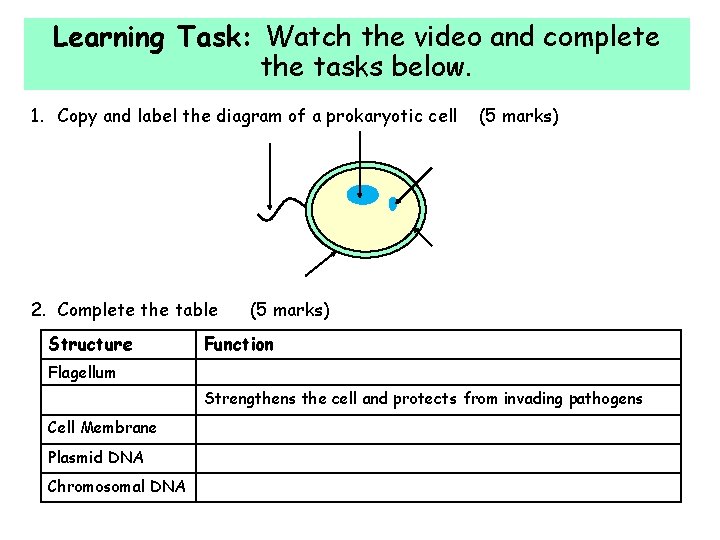
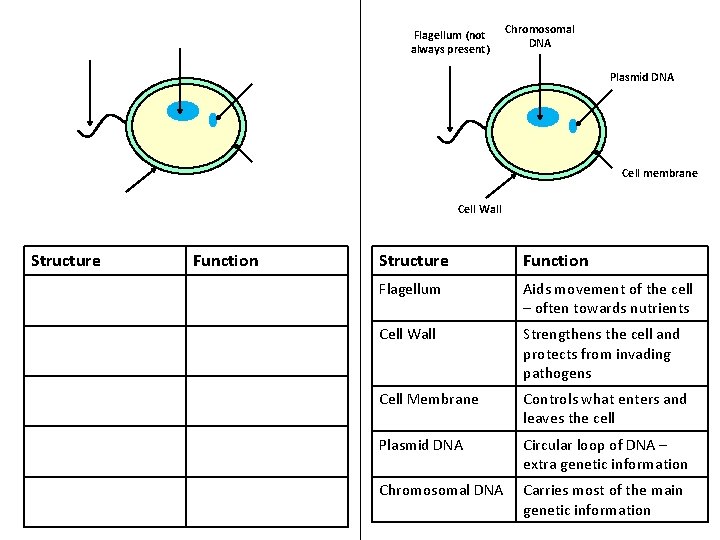
Learning Task: Watch the video and complete the tasks below. 1. Copy and label the diagram of a prokaryotic cell 2. Complete the table Structure (5 marks) Function Flagellum Strengthens the cell and protects from invading pathogens Cell Membrane Plasmid DNA Chromosomal DNA
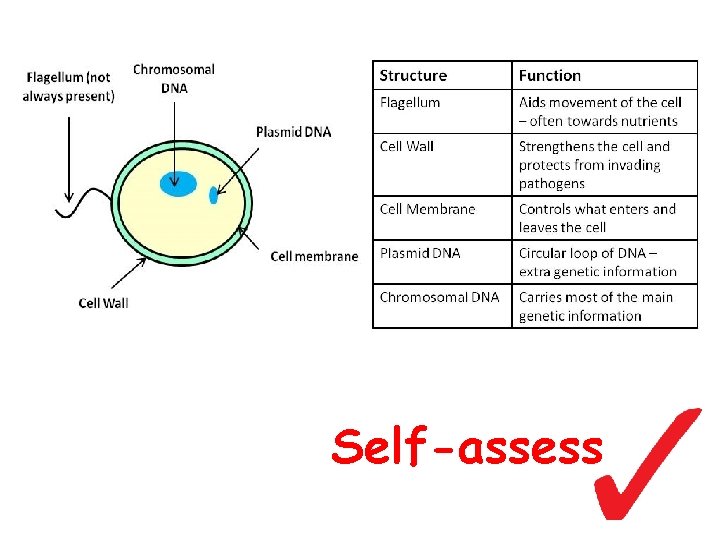
Self-assess
Apply your knowledge: Look at the diagrams below of the prokaryotic bacteria cell and the eukaryotic animal and plant cell. Make a list of the similarities and differences between these two groups of cells. Prokaryotic cell Eukaryotic cell
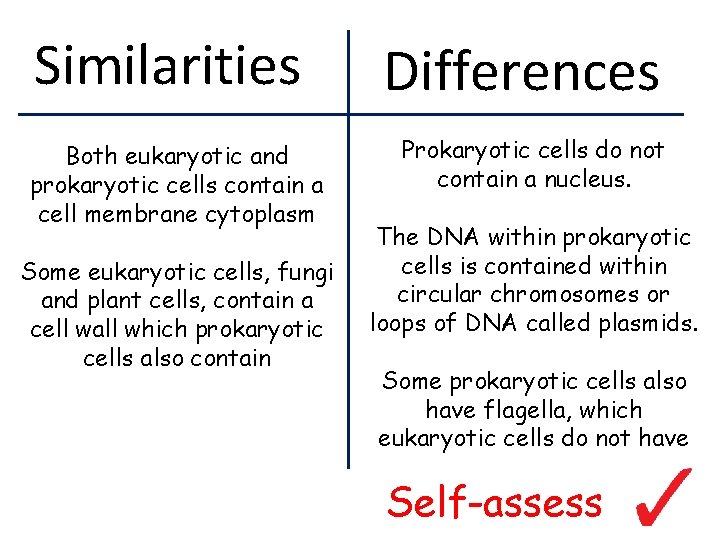
Similarities Both eukaryotic and prokaryotic cells contain a cell membrane cytoplasm Some eukaryotic cells, fungi and plant cells, contain a cell wall which prokaryotic cells also contain Differences Prokaryotic cells do not contain a nucleus. The DNA within prokaryotic cells is contained within circular chromosomes or loops of DNA called plasmids. Some prokaryotic cells also have flagella, which eukaryotic cells do not have Self-assess
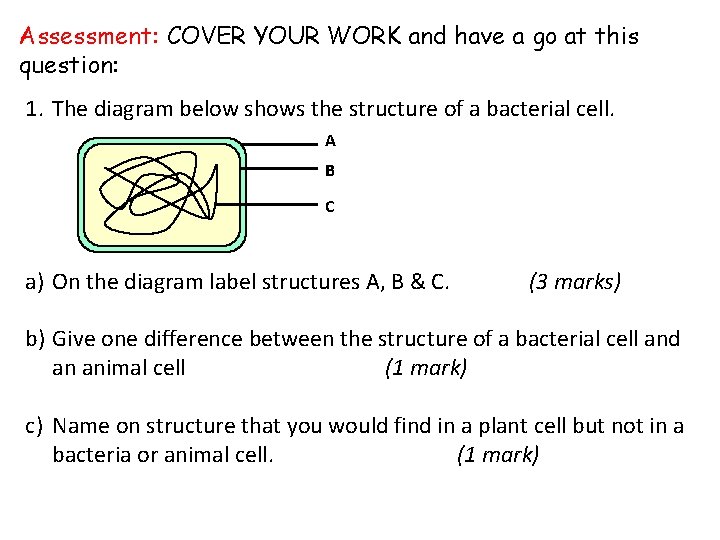
Assessment: COVER YOUR WORK and have a go at this question: 1. The diagram below shows the structure of a bacterial cell. A B C a) On the diagram label structures A, B & C. (3 marks) b) Give one difference between the structure of a bacterial cell and an animal cell (1 mark) c) Name on structure that you would find in a plant cell but not in a bacteria or animal cell. (1 mark)
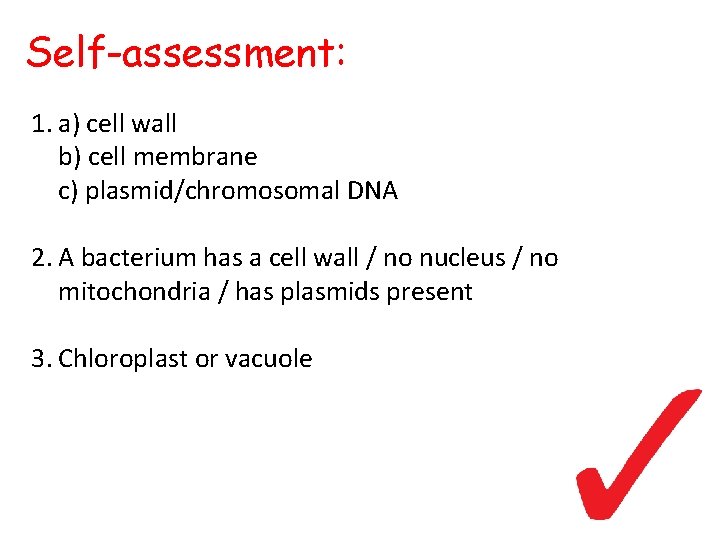
Self-assessment: 1. a) cell wall b) cell membrane c) plasmid/chromosomal DNA 2. A bacterium has a cell wall / no nucleus / no mitochondria / has plasmids present 3. Chloroplast or vacuole
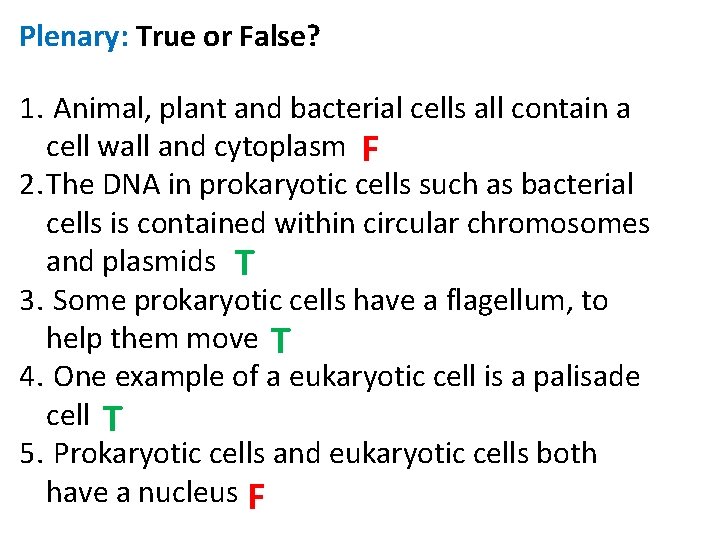
Plenary: True or False? 1. Animal, plant and bacterial cells all contain a cell wall and cytoplasm F 2. The DNA in prokaryotic cells such as bacterial cells is contained within circular chromosomes and plasmids T 3. Some prokaryotic cells have a flagellum, to help them move T 4. One example of a eukaryotic cell is a palisade cell T 5. Prokaryotic cells and eukaryotic cells both have a nucleus F
Flagellum (not always present) Chromosomal DNA Plasmid DNA Cell membrane Cell Wall Structure Function Flagellum Aids movement of the cell – often towards nutrients Cell Wall Strengthens the cell and protects from invading pathogens Cell Membrane Controls what enters and leaves the cell Plasmid DNA Circular loop of DNA – extra genetic information Chromosomal DNA Carries most of the main genetic information