
Eukaryotic Microorganisms Chapter 6 Copyrightitems 2016by 2010 Elsevier
Eukaryotic Microorganisms Chapter 6 Copyrightitems © 2016©by 2010 Elsevier All rights reserved. Mosby items and derived by. Inc. Mosby, Inc. , an affiliate of Elsevier Inc. 1
Learning Objectives Lesson 6. 1: Fungi and Algae 1. 2. 3. Describe, compare, and differentiate the characteristics of fungi, algae, protozoans, and helminths Describe the defining characteristics of fungi and explain the difference between their sexual and asexual reproduction Identify the medically important fungi Copyright © 2016 by Elsevier Inc. All rights reserved. 2
Learning Objectives Lesson 6. 1: Fungi and Algae (Cont. ) 4. 5. Name the defining characteristics of algae, classify them, and describe the difficulties in their classification Describe the general characteristics of asexual and sexual reproduction of algae Copyright © 2016 by Elsevier Inc. All rights reserved. 3
Fungi Study of fungi: Mycology Few fungi are pathogenic and virulent Immune system usually fights fungal invasion Have important symbiotic relationships with other organisms Play a major role in decomposition Mycorrhizae: Fungi on roots of plants Copyright © 2016 by Elsevier Inc. All rights reserved. 4
Fungal Characteristics Fungal colonies are vegetative Generally grow as filamentous, multicellular organisms They form filaments, called hyphae, or unicellular organisms Mycelium is a collective mass of hyphae Copyright © 2016 by Elsevier Inc. All rights reserved. 5
Fungal Characteristics (Cont. ) Can be small or immense They are free-living and heterotrophic They appear as yeast, molds, fleshy fungi Have cell wall composed of strong flexible polysaccharide called chitin Copyright © 2016 by Elsevier Inc. All rights reserved. 6
Fungal Characteristics (Cont. ) Differ from plants Ø Do not contain chlorophyll Do not use photosynthesis Some synthesize toxins Ø Ø Ø Ergot alkaloids Psychotropic agents Aflatoxins Copyright © 2016 by Elsevier Inc. All rights reserved. 7
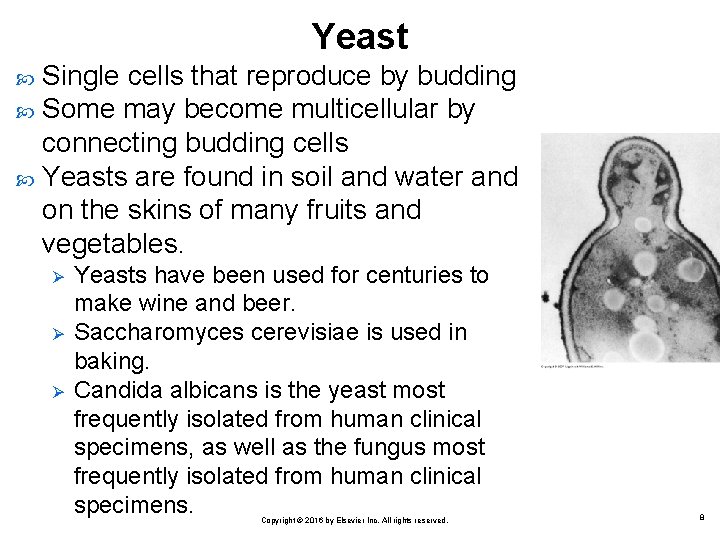
Yeast Single cells that reproduce by budding Some may become multicellular by connecting budding cells Yeasts are found in soil and water and on the skins of many fruits and vegetables. Ø Ø Ø Yeasts have been used for centuries to make wine and beer. Saccharomyces cerevisiae is used in baking. Candida albicans is the yeast most frequently isolated from human clinical specimens, as well as the fungus most frequently isolated from human clinical specimens. Copyright © 2016 by Elsevier Inc. All rights reserved. 8
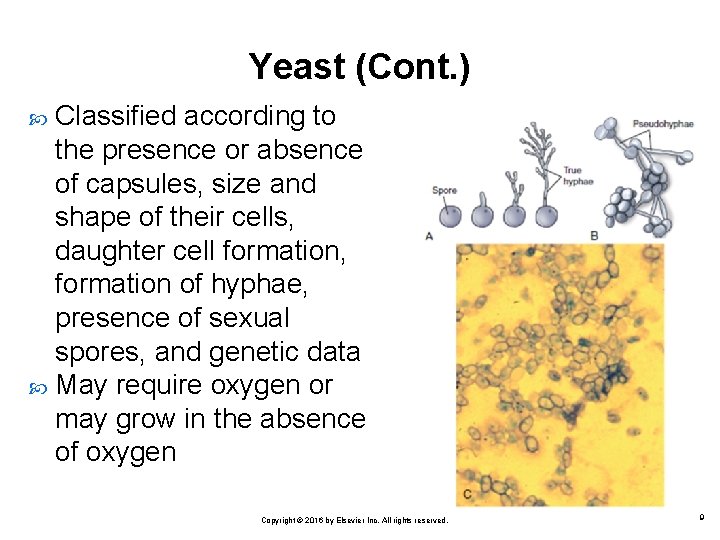
Yeast (Cont. ) Classified according to the presence or absence of capsules, size and shape of their cells, daughter cell formation, formation of hyphae, presence of sexual spores, and genetic data May require oxygen or may grow in the absence of oxygen Copyright © 2016 by Elsevier Inc. All rights reserved. 9
Molds fungi that are often seen in water and soil and on food. Rapidly growing Asexual reproduction Develop hyphae that develop characteristic culture Copyright © 2016 by Elsevier Inc. All rights reserved. 10
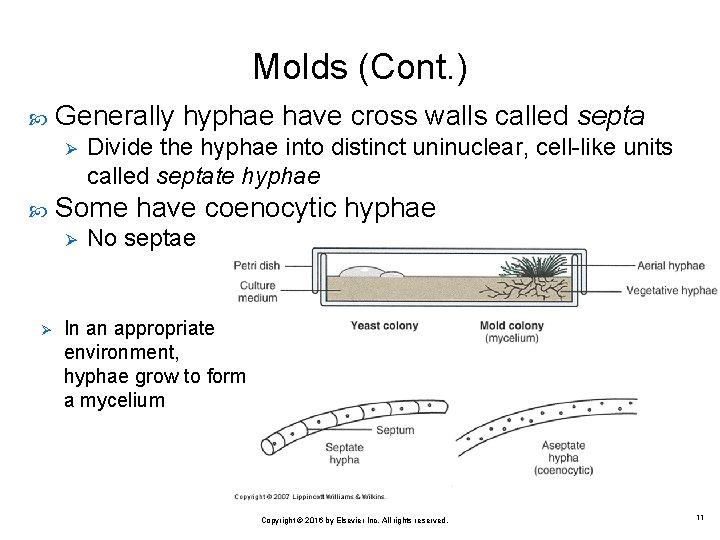
Molds (Cont. ) Generally hyphae have cross walls called septa Ø Some have coenocytic hyphae Ø Ø Divide the hyphae into distinct uninuclear, cell-like units called septate hyphae No septae In an appropriate environment, hyphae grow to form a mycelium Copyright © 2016 by Elsevier Inc. All rights reserved. 11
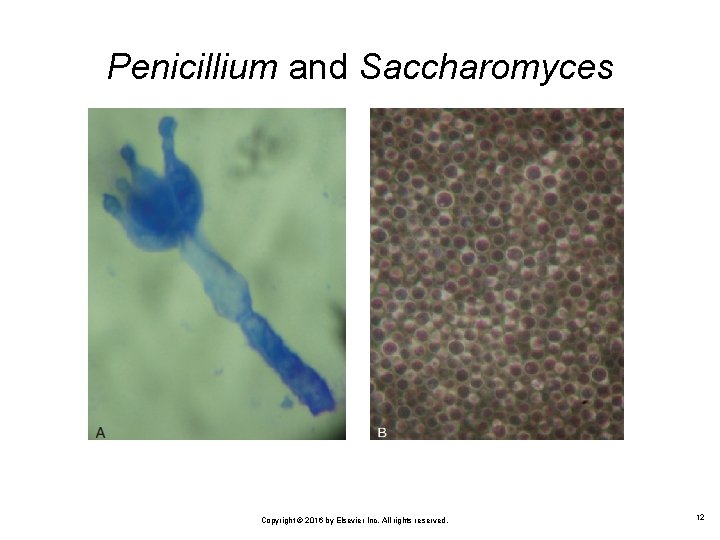
Penicillium and Saccharomyces Copyright © 2016 by Elsevier Inc. All rights reserved. 12
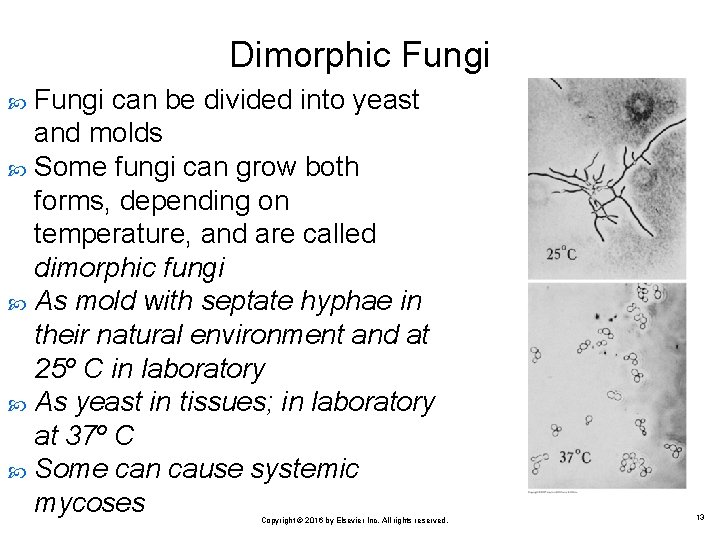
Dimorphic Fungi can be divided into yeast and molds Some fungi can grow both forms, depending on temperature, and are called dimorphic fungi As mold with septate hyphae in their natural environment and at 25º C in laboratory As yeast in tissues; in laboratory at 37º C Some can cause systemic mycoses Copyright © 2016 by Elsevier Inc. All rights reserved. 13
Life Cycle of Fungi All fungi have some form of asexual reproduction Most fungi can also produce sexually Sexual reproduction introduces variation into the population Often occurs during changing environment Copyright © 2016 by Elsevier Inc. All rights reserved. 14
Asexual Reproduction Yeast typically bud in a manner similar to binary fission Filamentous fungi reproduce by fragmentation of their hyphae and by spore formation Asexual reproduction Formation of sporangia Sporangia release spores into environment Spores can cause infection after inhalation Copyright © 2016 by Elsevier Inc. All rights reserved. 15
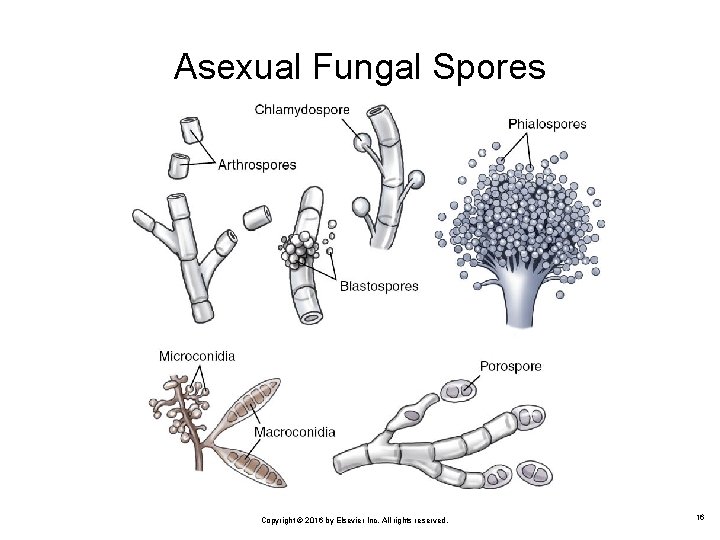
Asexual Fungal Spores Copyright © 2016 by Elsevier Inc. All rights reserved. 16
Sexual Reproduction Introduces genetic variation Occurs when nutrients are limited or other unfavorable conditions are present Mating types are designated as “+” and “–” Fungal spores are compact and lightweight Can be dispersed widely throughout the environment by air, water, other organisms Germinate when arriving at a favorable environment Copyright © 2016 by Elsevier Inc. All rights reserved. 17
Classification of Fungi Zygomycota Ø Multinucleate molds; most are saprobes • Fungi that get nutrition from nonliving organic material; the others are obligate parasites of insects or other fungi Ascomycota Ø Ø Primary fungi causing food spoilage Beneficial: Penicillium • Mold responsible for production of penicillin Copyright © 2016 by Elsevier Inc. All rights reserved. 18
Classification of Fungi (Cont. ) Basidiomycota Ø Deuteromycota Ø Mushrooms (fleshy fungi) and fruiting bodies “Imperfect fungi” because sexual reproduction is still unknown Lichens Ø Consist of hyphae (mold) of a fungus and cyanobacteria or green algae • Symbiotic Copyright © 2016 by Elsevier Inc. All rights reserved. 19
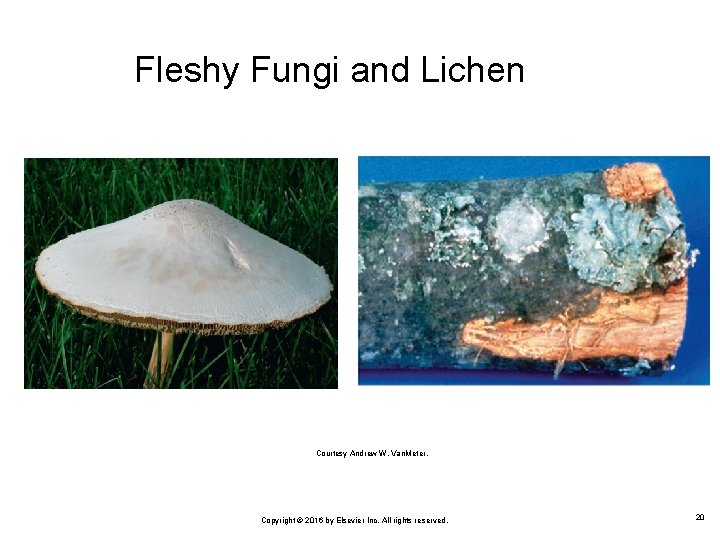
Fleshy Fungi and Lichen Courtesy Andrew W. Van. Meter. Copyright © 2016 by Elsevier Inc. All rights reserved. 20
Algae Photosynthetic organisms Widespread in fresh and marine waters Main component of plankton Others are found in soil, on rocks, or on plants; some even exist in hot springs or snow banks Copyright © 2016 by Elsevier Inc. All rights reserved. 21
Algae (Cont. ) Medical concern Ø Food poisoning caused by toxins of marine algae such as dinoflagellates Overgrowth of dinoflagellates causes the “red tide” Marine animals feed on dinoflagellates Ø Accumulate toxin given off by the algae Toxin can persist for several months Shellfish poisoning in humans Copyright © 2016 by Elsevier Inc. All rights reserved. 22
Algae (Cont. ) Toxic algal form Ø Pfiesteria piscicida • • Implicated in several massive fish kills in the United States Disease first reported in fish Has been observed in humans also, especially in people working around waters with an abundance of the organism Agricultural runoff promotes the sudden increase of Pfiesteria Copyright © 2016 by Elsevier Inc. All rights reserved. 23
Characteristics of Algae Two things in common Ø Ø All are photosynthetic All are aquatic They are not a unified group Ø Ø Differ in distribution, morphology, reproduction, and biochemical preferences Classification is problematic and has not been completely determined Copyright © 2016 by Elsevier Inc. All rights reserved. 24
Learning Objectives Lesson 6. 2: Protozoans, Slime Molds, and Helminths 6. 7. 8. Identify the three defining and the common characteristics of protozoans Describe the general life cycle of protozoans and explain the importance of the macronucleus and micronucleus Discuss the fundamental differences between cellular and plasmodial slime molds Copyright © 2016 by Elsevier Inc. All rights reserved. 25
Learning Objectives Lesson 6. 2: Protozoans, Slime Molds, and Helminths (Cont. ) Describe the main characteristics of parasitic helminths 10. Describe the life cycles of flukes, tapeworms, and roundworms and classify them into the appropriate categories 9. Copyright © 2016 by Elsevier Inc. All rights reserved. 26
Protozoans Defined by three common characteristics Ø Ø Ø Eukaryotes Unicellular Lack a cell wall Many are free-living; others are potential parasites of humans and other animals Copyright © 2016 by Elsevier Inc. All rights reserved. 27
Characteristics of Protozoans Diverse group of microbes With the exception of one subgroup, they are motile due to cilia, flagella, and/or pseudopodia Require moist environment to survive Ø Ø Most live in ponds, streams, lakes, and oceans Others live in moist soil, beach sand, and decaying organic matter Copyright © 2016 by Elsevier Inc. All rights reserved. 28
Characteristics of Protozoans (Cont. ) Most are chemoheterotrophs (they must eat their food) and obtain nutrients from various sources Ø Ø Bacteria Decaying organic matter Other protozoans Host tissue Copyright © 2016 by Elsevier Inc. All rights reserved. 29
Characteristics of Protozoans (Cont. ) Some protozoans are photoautotrophic, such as dinoflagellates and euglenids A typical protozoan life cycle has 2 stages – a trophozoite and a cyst. Ø Ø The trophozoite is the motile, feeding, dividing stage. The cyst is the dormant, survival stage, when environment becomes Cysts can be distributed by air, which may play a role in transmitting diseases such as amoebic dysentery Copyright © 2016 by Elsevier Inc. All rights reserved. 30
Life Cycle of Protozoans Ranges from simple to complex Some exist as trophozoites only Others alternate between trophozoite stage and cyst stage Main method of reproduction is asexual Ø Ø Ø Schizogony—multiple fission; the nucleus undergoes multiple divisions before the cell divides Budding Fission Copyright © 2016 by Elsevier Inc. All rights reserved. 31
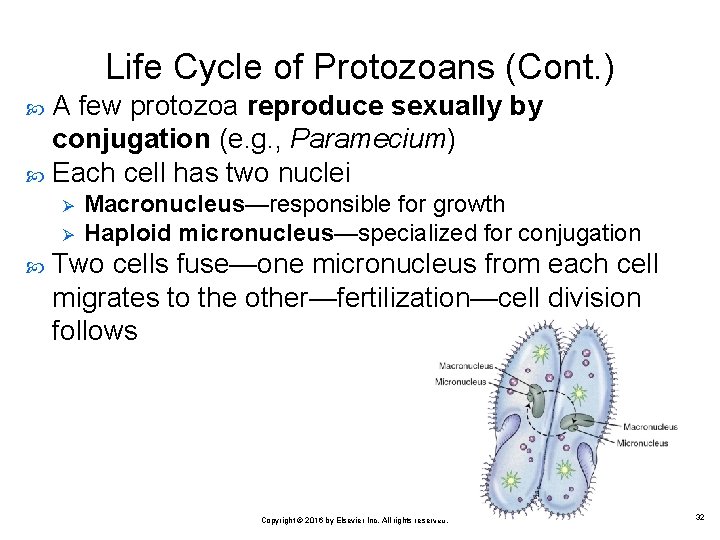
Life Cycle of Protozoans (Cont. ) A few protozoa reproduce sexually by conjugation (e. g. , Paramecium) Each cell has two nuclei Ø Ø Macronucleus—responsible for growth Haploid micronucleus—specialized for conjugation Two cells fuse—one micronucleus from each cell migrates to the other—fertilization—cell division follows Copyright © 2016 by Elsevier Inc. All rights reserved. 32
Classification of Protozoans Classification has changed—advances in molecular genetics Previously classified according to locomotion Ø Ø Sarcodina Mastigophora Ciliophora Sporozoa Copyright © 2016 by Elsevier Inc. All rights reserved. 33
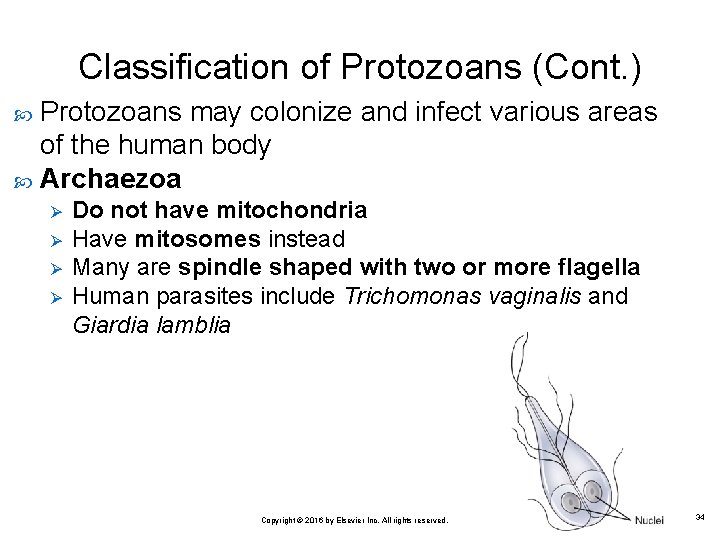
Classification of Protozoans (Cont. ) Protozoans may colonize and infect various areas of the human body Archaezoa Ø Ø Do not have mitochondria Have mitosomes instead Many are spindle shaped with two or more flagella Human parasites include Trichomonas vaginalis and Giardia lamblia Copyright © 2016 by Elsevier Inc. All rights reserved. 34
Classification of Protozoans (Cont. ) Microspora Ø Ø Do not have mitochondria Obligate intercellular parasites in animals, including humans Ciliophora Ø Ø Ø Found everywhere there is water Obligate and opportunistic parasites Have cilia for movement Generally harmless Only human pathogen: Balantidium coli Copyright © 2016 by Elsevier Inc. All rights reserved. 35
Classification of Protozoans (Cont. ) Euglenozoa Ø Ø Ø Large group of flagellated protozoa Photoautotrophic; eyespot—senses light and directs cell into appropriate direction for photosynthesis Facultative chemoheterotrophs—ingest organic matter usually by phagocytosis • Hemoflagellates are blood parasites, transmitted by the bite of blood-feeding insects Copyright © 2016 by Elsevier Inc. All rights reserved. 36
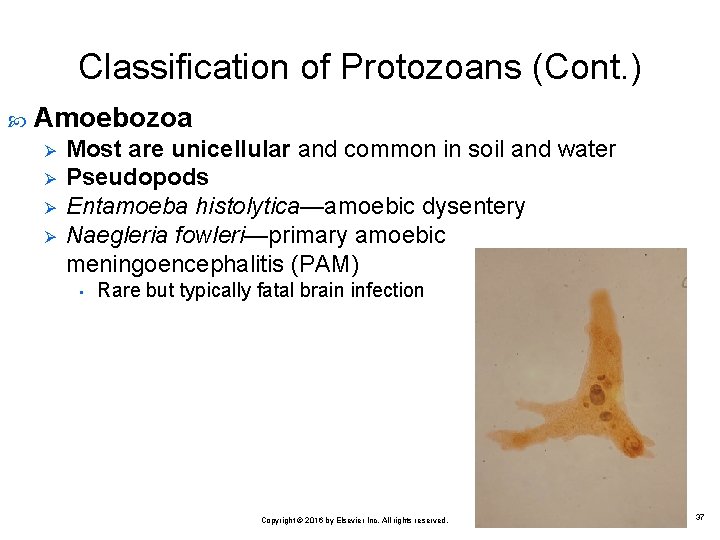
Classification of Protozoans (Cont. ) Amoebozoa Ø Ø Most are unicellular and common in soil and water Pseudopods Entamoeba histolytica—amoebic dysentery Naegleria fowleri—primary amoebic meningoencephalitis (PAM) • Rare but typically fatal brain infection Copyright © 2016 by Elsevier Inc. All rights reserved. 37
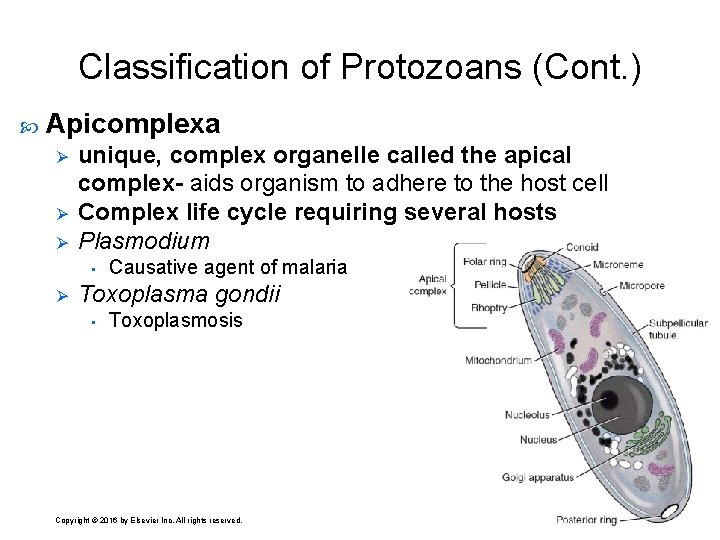
Classification of Protozoans (Cont. ) Apicomplexa Ø Ø Ø unique, complex organelle called the apical complex- aids organism to adhere to the host cell Complex life cycle requiring several hosts Plasmodium • Ø Causative agent of malaria Toxoplasma gondii • Toxoplasmosis Copyright © 2016 by Elsevier Inc. All rights reserved. 38
Helminths Not microbes Interesting to microbiologists because parasitic helminths produce microscopic infective and diagnostic stages in their life cycle Ø Usually eggs or larvae Often found in blood, feces, and urine Must be distinguished from microbes Copyright © 2016 by Elsevier Inc. All rights reserved. 39
Characteristics of Helminths Many parasitic helminths spend much of their life cycle in a mammalian host Most of the helminths affecting humans are either flatworms or roundworms Adult animals usually large enough to be seen with the naked eye Eggs and larvae Ø Microscopic Copyright © 2016 by Elsevier Inc. All rights reserved. 40
Life Cycle of Helminths Includes fertilized egg, larvae, and adult Can be extremely complex, involving a succession of intermediate hosts and a definite (final) host Larval development usually in intermediate host Adulthood and mating generally in the definite host Copyright © 2016 by Elsevier Inc. All rights reserved. 41
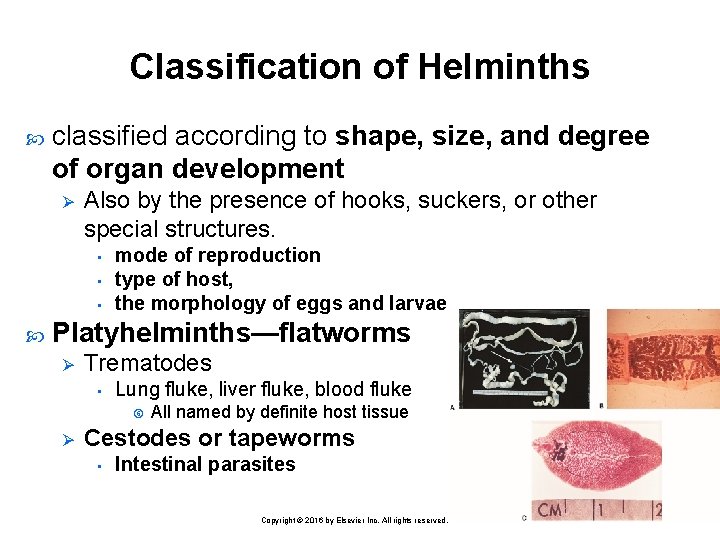
Classification of Helminths classified according to shape, size, and degree of organ development Ø Also by the presence of hooks, suckers, or other special structures. • • • mode of reproduction type of host, the morphology of eggs and larvae Platyhelminths—flatworms Ø Trematodes • Lung fluke, liver fluke, blood fluke Ø All named by definite host tissue Cestodes or tapeworms • Intestinal parasites Copyright © 2016 by Elsevier Inc. All rights reserved. 42
Classification of Helminths Nematodes—roundworms Ø Enterobius vermicularis • • Ø Ascaris lumbricoides • • Ø Human parasite without intermediate host Eggs excreted in feces and larvae can migrate into blood Necator americanus and Ancylostoma duodenale • • • Ø Pinworm—spends life in human host and migrates to anal area to deposit eggs Eggs transmitted to other host by ingestion or fomite Hookworm Larvae burrow through the feet and enter the lymph or blood to get to lungs Adults live in small intestine of humans after sputum is swallowed Wuchereria bancrofti • • • Cause filariasis Adult worms live in the lymph tissue and cause elefantitis Larval worms travel into the blood stream and can be transmitted to others via mosquitos Copyright © 2016 by Elsevier Inc. All rights reserved. 43
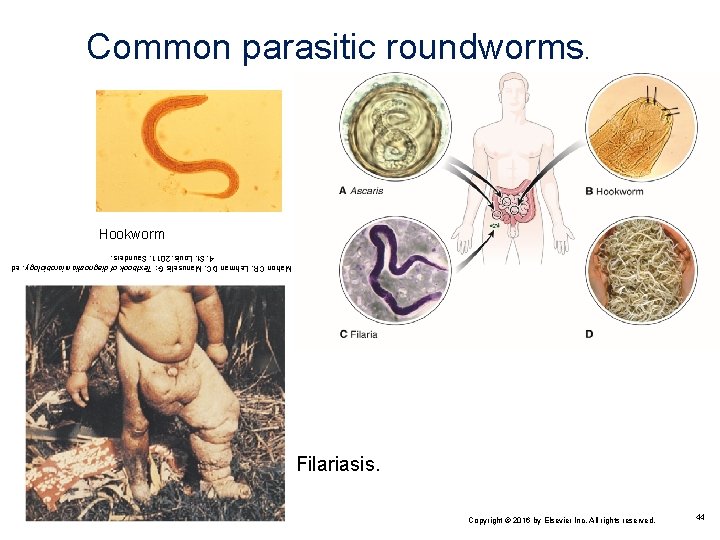
Copyright © 2016 by Elsevier Inc. All rights reserved. 44 Filariasis. From Mahon CR, Lehman DC, Manuselis G: Textbook of diagnostic microbiology, ed 4, St. Louis, 2011, Saunders. Hookworm Common parasitic roundworms.
Physical and Chemical Methods of Control Chapter 7 Copyright © 2016 by Elsevier Inc. All rights reserved. 45
Learning Objectives Lesson 7. 1: Microbial and Physical Control 1. 2. 3. Describe the factors that need to be considered before deciding on the most appropriate method to be used for microbial control Differentiate among sterilization, disinfection, antisepsis, degermination, sanitization, and pasteurization and explain their practical uses Define microbial death and describe its significance in microbial control Copyright © 2016 by Elsevier Inc. All rights reserved. 46
Learning Objectives Lesson 7. 1: Microbial and Physical Control (Cont. ) 4. 5. Describe the different physical methods that can be used in the control of microbial growth Define the terms microbicidal and microbiostatic Copyright © 2016 by Elsevier Inc. All rights reserved. 47
General Considerations Site to be treated Ø Environmental conditions Ø Nature of site will determine the method of treatment Example: Warm disinfectant is usually more effective Susceptibility of the microorganisms Ø Needs to be considered for any treatment Copyright © 2016 by Elsevier Inc. All rights reserved. 48
Resistance of Microbes Least resistant organisms Ø Include most bacterial vegetative cells, most fungal spores and hyphae, yeast, enveloped viruses, protozoan trophozoites Moderate resistance organisms Ø Ø Some fungal sexual spores, protozoan cysts, some viruses Pseudomonas, Mycobacterium, and Staphylococcus species Copyright © 2016 by Elsevier Inc. All rights reserved. 49
Resistance of Microbes (Cont. ) Highest resistance organisms Ø Bacterial endospores and prions • • Endospores are considered the most resistant microbial form Destruction of endospores results in destruction of all other organisms Cysts are other structures that some microorganisms can form to help protect them in harsh conditions Cysts are formed mostly by protozoans and other eukaryotic microorganisms, but there are some bacteria capable of forming this structure Copyright © 2016 by Elsevier Inc. All rights reserved. 50
Terminology Sterilization Ø When all forms of microbial life, including endospores and prions, are eliminated Commercial sterilization Ø Ø Temperatures that are used to kill all living microbes may also result in degrading the quality of food Just enough heat is used to destroy endospores of Clostridium botulinum Copyright © 2016 by Elsevier Inc. All rights reserved. 51
Terminology (Cont. ) Disinfection Ø Ø Destruction of vegetative microbes via chemical or physical methods Disinfection is for inert substances Disinfection of living tissues is antisepsis Antiseptics are solutions used to disinfect skin and other living tissues. Degermination Ø Mechanical removal of most of the microbes in a limited area Copyright © 2016 by Elsevier Inc. All rights reserved. 52
Terminology (Cont. ) Sanitization Ø Ø Reduction of microbes in significant numbers to prevent infection, disease, and transmission of infection and disease Example: Sanitization of glassware, tableware, etc. Pasteurization Ø Using heat to kill vegetative bacteria and reducing the number of microbes that have potential for food spoilage Copyright © 2016 by Elsevier Inc. All rights reserved. 53
Terminology (Cont. ) Sepsis refers to the presence of pathogens in blood or tissues, whereas asepsis means the absence of pathogens. Asepsis refers to the absence of pathogens Microbicidal agent Ø Agent designed to destroy microbes • Bacteriocidal, fungicidal, virucidal Microbiostatic Ø Microbial growth is at standstill • Bacteriostatic, fungistatic Copyright © 2016 by Elsevier Inc. All rights reserved. 54
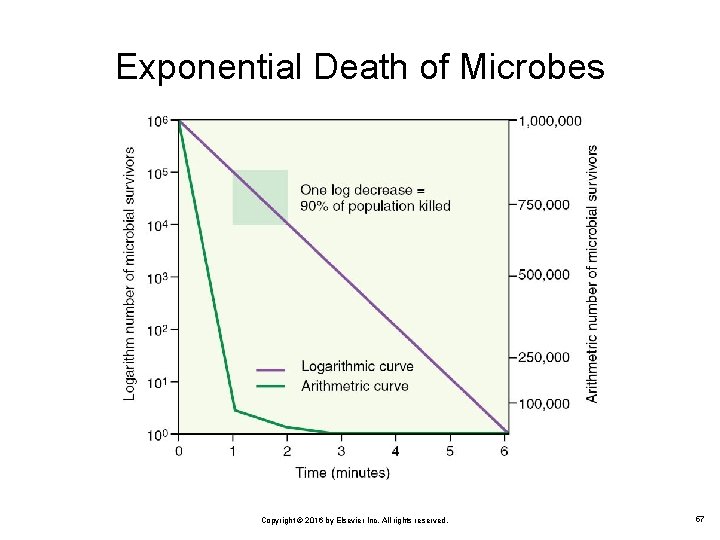
Microbial Death Permanent loss of the reproductive ability of microbes Permanent loss of all vital activities Lethal agents do not always alter the appearance of microbial cells Cells within a culture have different susceptibility depending on their level of metabolic activity Copyright © 2016 by Elsevier Inc. All rights reserved. 55
Microbial Death (Cont. ) Effectiveness of an agent is influenced by factors other than time Ø Ø Ø Number of microorganisms dictates the amount of time required for destruction The nature of the organism to be destroyed Temperature p. H Overall concentration of the agent Presence of other materials Copyright © 2016 by Elsevier Inc. All rights reserved. 56
Exponential Death of Microbes Copyright © 2016 by Elsevier Inc. All rights reserved. 57
Questions to Be Asked Is the goal disinfection or sterilization? Will the item be discarded, or is it necessary to be reused? If dealing with a reusable item, which temperature, pressure, chemical, or radiation is acceptable? Will the treatment leave undesirable residue? Is the agent able to penetrate to the necessary extent? Ø Example: Removal of biofilm Is the process cost- and labor-efficient, in addition to being safe? Copyright © 2016 by Elsevier Inc. All rights reserved. 58
Physical Methods Most used physical method is temperature Thermal death point (TDP) Ø Lowest temperature at which all microbes in a particular liquid will be killed in 10 minutes Thermal death time (TDT) Ø Length of time required to kill the microorganism in a particular liquid at a given temperature Copyright © 2016 by Elsevier Inc. All rights reserved. 59
Temperature and Optimal Growth of Microbes Copyright © 2016 by Elsevier Inc. All rights reserved. 60
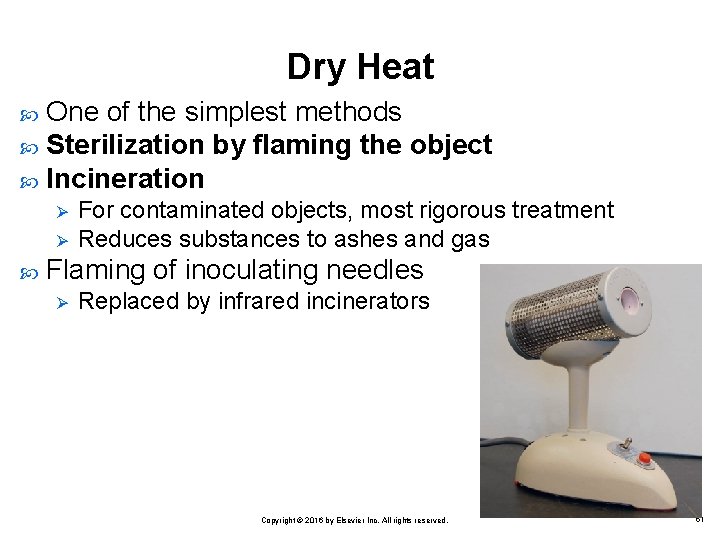
Dry Heat One of the simplest methods Sterilization by flaming the object Incineration Ø Ø For contaminated objects, most rigorous treatment Reduces substances to ashes and gas Flaming of inoculating needles Ø Replaced by infrared incinerators Copyright © 2016 by Elsevier Inc. All rights reserved. 61
Dry Heat (Cont. ) Other than incineration, dry heat is less efficient than moist/wet heat sterilization Requires longer times and/or higher temperatures Requires temperatures of 160º to 170º C for 2 to 4 hours Advantage: Can be used on powders and other heat-stable objects that would be adversely affected by steam (e. g. , rusting) Copyright © 2016 by Elsevier Inc. All rights reserved. 62
Moist Heat Requires special equipment Effective method of control Requires lower temperatures and shorter period of time than dry heat Different types of methods available Copyright © 2016 by Elsevier Inc. All rights reserved. 63
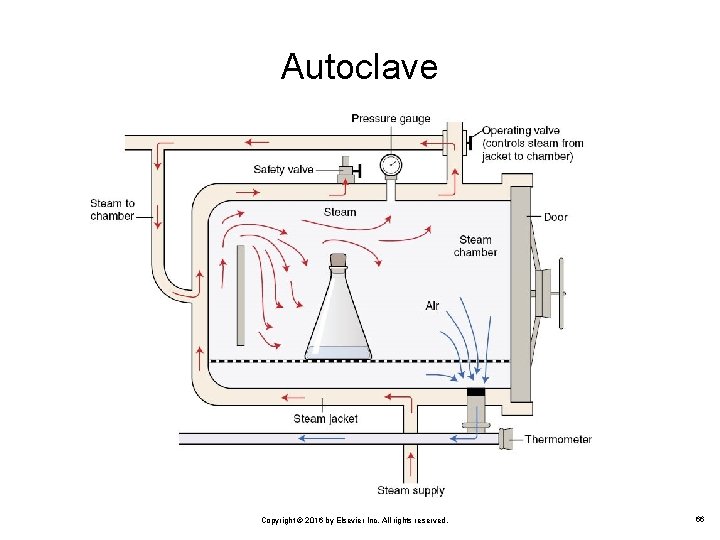
Steam Under Pressure Steam sterilization under pressure is the most effective control method Sterilization using wet heat needs temperatures above the boiling point Can be achieved with steam under pressure Autoclave is a widely used instrument Copyright © 2016 by Elsevier Inc. All rights reserved. 64
Autoclave Consists of pressure chamber, pipes to supply and release the steam, and valves to remove air—control of pressure; also gauges to monitor the procedure Steam heated to 121º C under pressure 15 psi (pounds per square inch) above normal pressure Effective for heat-resistant materials, such as glass, media, etc. Usually takes 20 minutes Will inactivate all fungi, bacteria, viruses, and even most heat-resistant bacterial spores. Will not necessarily eliminate all prions, Copyright © 2016 by Elsevier Inc. All rights reserved. 65
Autoclave Copyright © 2016 by Elsevier Inc. All rights reserved. 66
Flowing Steam For substances that cannot withstand the high temperature of the autoclave Can be subjected to intermittent sterilization called tyndallization Items are exposed to free-flowing steam for 30 to 60 minutes Designed to reduce the level of sporulating bacteria Copyright © 2016 by Elsevier Inc. All rights reserved. 67
Flowing Steam (Cont. ) Based on the following assumptions: Ø Ø Ø Some spores will survive the procedure Spores will germinate given the appropriate environment Germination will result in fewer resistant vegetative cells After subsequent exposure, more will be eliminated Procedure is repeated 3 days in a row Copyright © 2016 by Elsevier Inc. All rights reserved. 68
Boiling Water Boiling in water for 10 to 15 minutes will kill most vegetative bacteria and viruses Ineffective against bacterial and fungal spores and prions Cannot sterilize but useful to quickly decontaminate and disinfect in home and clinical environments Boiling for 30 minutes will kill most nonsporing pathogens, including some resistant species such as the tuberculosis bacillus and staphylococci Boiling recommended for disinfecting unsafe drinking water Useful to disinfect utensils, bedding, etc. Copyright © 2016 by Elsevier Inc. All rights reserved. 69
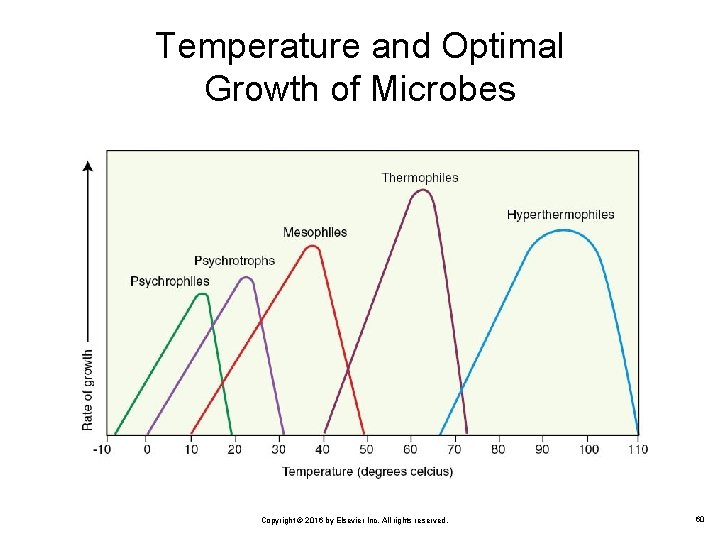
Refrigeration Cold temperatures are only bacteriostatic for many microbes Halts the growth of many pathogens that are predominantly mesophiles Some pathogens are capable of reproduction in a refrigerated environment Copyright © 2016 by Elsevier Inc. All rights reserved. 70
Freezing Slow freezing forms ice crystals that puncture the cell membrane Quick freezing Ø Ø Many microbes can survive ultralow temperatures for years Used to store bacteria and viruses Bacteria, viruses, and tapeworms can survive in frozen foods for days and months Ø Needs to be considered when thawing Copyright © 2016 by Elsevier Inc. All rights reserved. 71
Desiccation and Lyophilization Desiccation (drying) inhibits microbial growth Used by many cultures for food preservation Lyophilization combines freezing and drying to preserve microbes, other cells, and materials for many years Copyright © 2016 by Elsevier Inc. All rights reserved. 72
Osmotic Pressure Hypertonic environment will lead to the loss of water from the cell High salt or sugar concentration Ø Used for food preservation Not always effective against molds Ø Have a greater ability to grow in hypertonic environments Copyright © 2016 by Elsevier Inc. All rights reserved. 73
Radiation Ionizing and nonionizing Controversial Effects of radiation depends on: Ø Ø Time of exposure Distance from source Shielding Ability to penetrate Copyright © 2016 by Elsevier Inc. All rights reserved. 74
Ionizing Radiation Gamma rays Ø Electron beams Ø Ø Deep penetration but requires long exposure for sterilization Very effective in killing microbes within a few seconds Cannot be used to sterilize thick objects or those that are covered with organic matter X-rays Ø Need too much time to be useful for control of microbial growth Copyright © 2016 by Elsevier Inc. All rights reserved. 75
Nonionizing Radiation UV light Visible light Infrared radiation Microwave Ø Do not have a direct effect on microbes, but moisture-containing foods are heated, killing most vegetative pathogens Radio waves Copyright © 2016 by Elsevier Inc. All rights reserved. 76
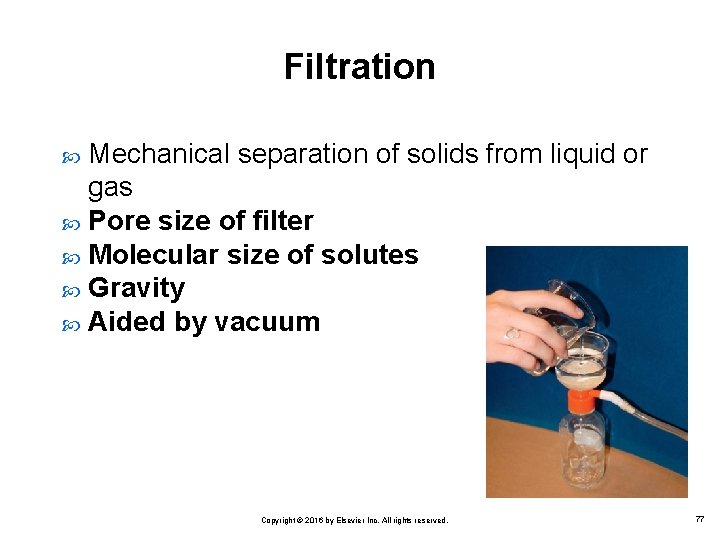
Filtration Mechanical separation of solids from liquid or gas Pore size of filter Molecular size of solutes Gravity Aided by vacuum Copyright © 2016 by Elsevier Inc. All rights reserved. 77
Chemical Control Bacteriostatic Bacteriocidal Chemicals for control of microbial growth are used for both nonliving items and living tissues Disinfectant Ø Nonliving Antiseptics Ø Disinfectants for living tissue Copyright © 2016 by Elsevier Inc. All rights reserved. 78
Learning Objectives Lesson 7. 2: Chemical Control and Food Preservation 6. 7. 8. 9. Describe the factors influencing antimicrobial effectiveness Compare and contrast the methods used to measure the effectiveness of disinfectants and antiseptics Compare and contrast the different types of antimicrobial chemicals and discuss the advantages and disadvantages of each Describe the different methods used in food preservation and explain their effectiveness in the control of microbial growth Copyright © 2016 by Elsevier Inc. All rights reserved. 79
Factors Influencing Antimicrobial Effectiveness Population size Ø Longer period of time required to kill or reduce large population Population composition Duration of exposure Local environment Ø Formation of biofilm Concentration of the chemical agent Temperature Organic matter Copyright © 2016 by Elsevier Inc. All rights reserved. 80
Factors Influencing Antimicrobial Effectiveness (Cont. ) Type of microorganisms, numbers, possible presence of spores Physical situation Noncorrosive or nonstaining properties Available contact between disinfectant and microorganism Possible interaction between disinfectant and materials Allowable contact time Concentration of the chemical Copyright © 2016 by Elsevier Inc. All rights reserved. 81
Phenols and Phenolics Phenol Ø Carbolic acid Phenolics Ø Substances chemically related to phenol Disinfectant that denatures proteins Disrupts cell membranes of a wide variety of pathogens Efficacy of phenol remains one standard to which the actions of other antimicrobial agents can be compared Copyright © 2016 by Elsevier Inc. All rights reserved. 82
Phenols and Phenolics (Cont. ) Effective even in the presence of organic contaminants Ø Ø Vomit Feces Saliva Pus Intense odor Can irritate skin and mucous membranes Still used for general disinfection of drains and animal quarters Rarely used as a medical germicide Copyright © 2016 by Elsevier Inc. All rights reserved. 83
Halogens Reactive nonmetallic elements Iodine Ø Ø With appropriate time and concentration, can kill all microbes Weak solutions used as topical antiseptic before surgery Chlorine Ø Used as disinfectant for more than 200 years Bromine Fluorine Copyright © 2016 by Elsevier Inc. All rights reserved. 84
Alcohols Bacteriocidal, fungicidal, and virucidal Ineffective against fungal spores and bacterial endospores Ethanol Ø Isopropanol Ø Drinking alcohol Rubbing alcohol Most effective at 70% solution Copyright © 2016 by Elsevier Inc. All rights reserved. 85
Surfactants Surface-active chemicals Reduce surface tension of solvents Ø Solvent becomes more effective Soaps and detergents Do not directly affect microbial cells but reduce or prevent their attachment to surfaces Copyright © 2016 by Elsevier Inc. All rights reserved. 86
Quaternary Compounds “Quats” Most popular detergents for microbial control Colorless, tasteless, harmless to humans except in high concentration Ineffective against naked viruses, mycobacteria, and endospores Copyright © 2016 by Elsevier Inc. All rights reserved. 87
Heavy Metals Mercury, silver, gold, copper, arsenic, zinc Alter proteins Silver used in some surgical dressings, burn creams, catheters Copper is used to control algal growth in fish tanks Copyright © 2016 by Elsevier Inc. All rights reserved. 88
Alkylating Agents Diverse group of chemicals Often toxic Inactivate nucleic acids and proteins Aldehydes Ø Formaldehyde and glutaraldehyde Ethylene oxide (ETO) Ø Ø Specially designed ETO sterilizers Toxic and explosive properties make them hazardous Copyright © 2016 by Elsevier Inc. All rights reserved. 89
Food Preservation Refers to a variety of techniques in handling, preparing, and treating food Ø Ø Ø Slow down food spoilage Prevent food-borne illnesses Maintain nutritional value, texture, flavor Copyright © 2016 by Elsevier Inc. All rights reserved. 90
Pasteurization Method in which just enough heat is applied to: Ø Kill potential pathogens and kill/reduce microbes that could lead to food spoilage • Doesn’t change the flavor and food value Copyright © 2016 by Elsevier Inc. All rights reserved. 91
Types of Pasteurization High temperature short time (HTST) Ø Ø Batch process Continuous flow process Ultra-high temperature (UHT) Ø Ø Liquid at temperature of 138º C for a fraction of a second Products can be stored at room temperature without microbial spoilage Copyright © 2016 by Elsevier Inc. All rights reserved. 92
Other Methods Pressure canning Food irradiation Drying Freezing Pickling Curing Fermentation Jams, jellies, marmalades Copyright © 2016 by Elsevier Inc. All rights reserved. 93
- Slides: 93