
Eukaryotic Cell Structure Pg 174 181 Organelles little
- Slides: 20
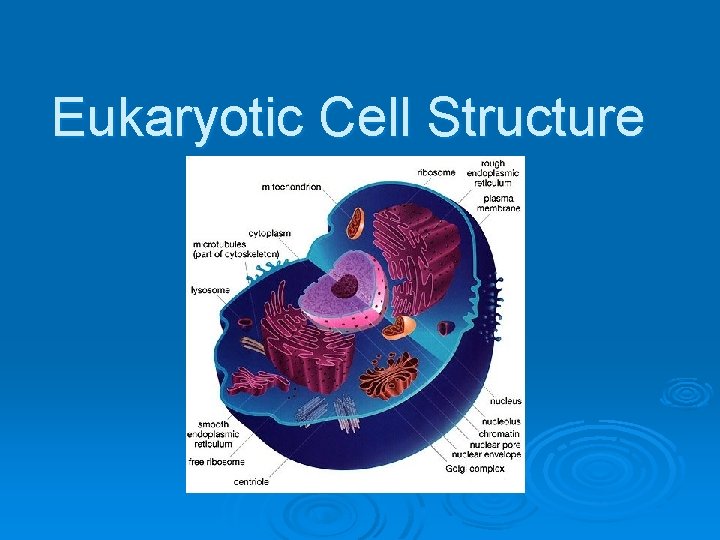
Eukaryotic Cell Structure Pg 174 -181
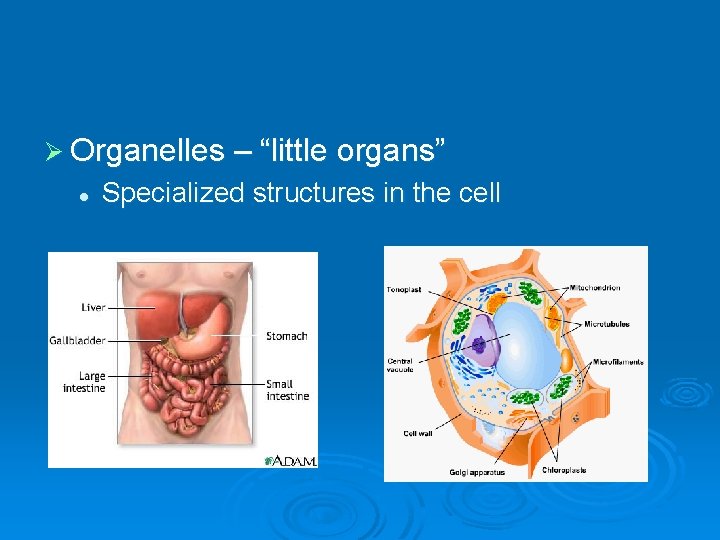
Ø Organelles – “little organs” l Specialized structures in the cell
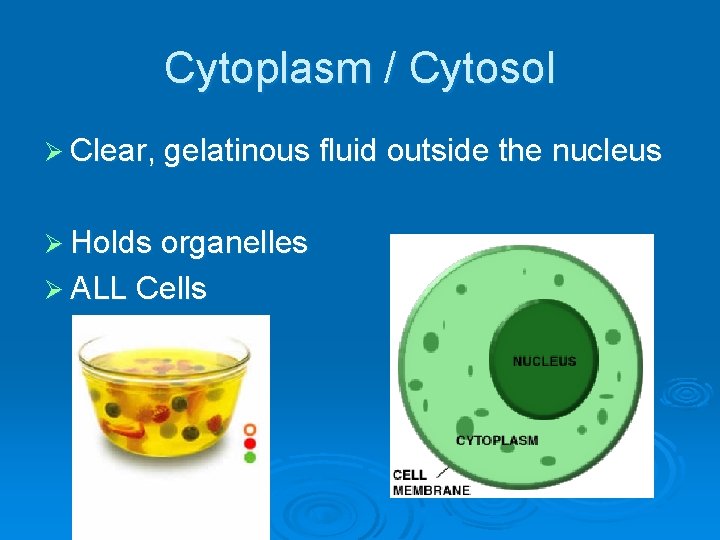
Cytoplasm / Cytosol Ø Clear, gelatinous fluid outside the nucleus Ø Holds organelles Ø ALL Cells
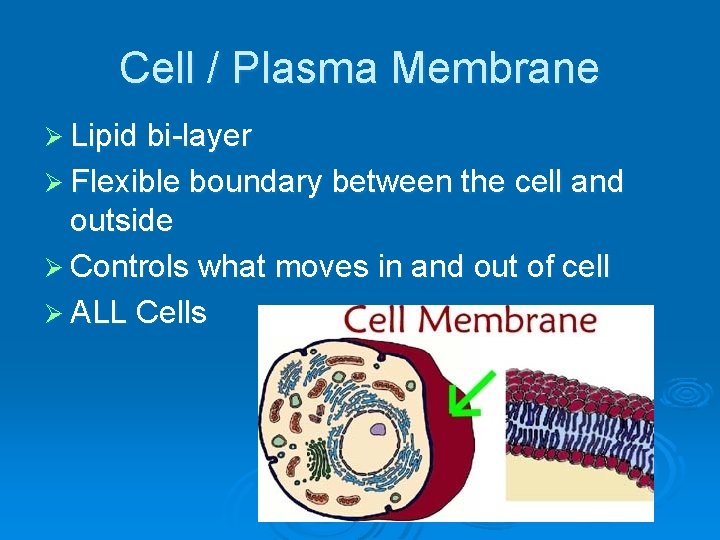
Cell / Plasma Membrane Ø Lipid bi-layer Ø Flexible boundary between the cell and outside Ø Controls what moves in and out of cell Ø ALL Cells
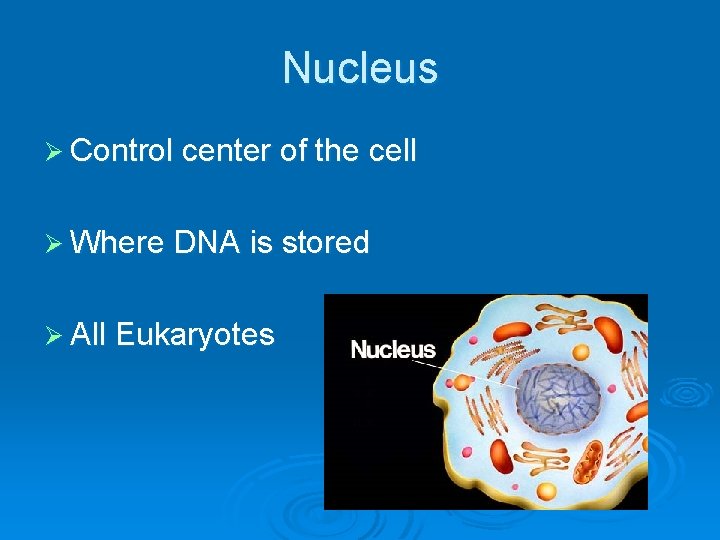
Nucleus Ø Control center of the cell Ø Where DNA is stored Ø All Eukaryotes
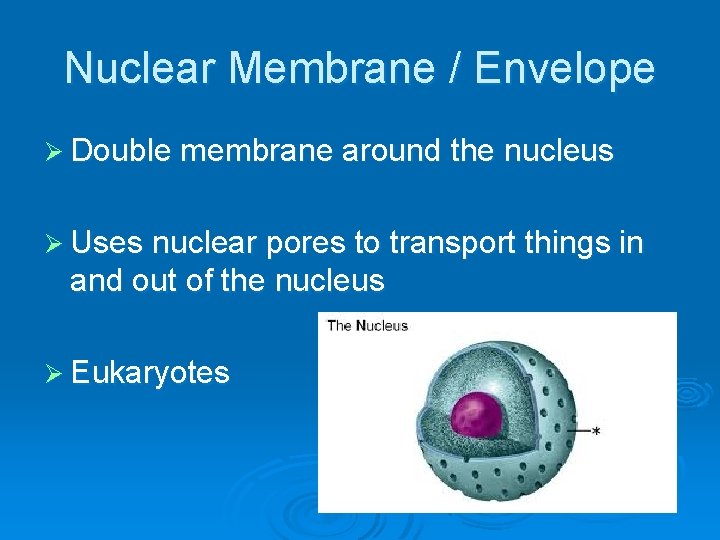
Nuclear Membrane / Envelope Ø Double membrane around the nucleus Ø Uses nuclear pores to transport things in and out of the nucleus Ø Eukaryotes
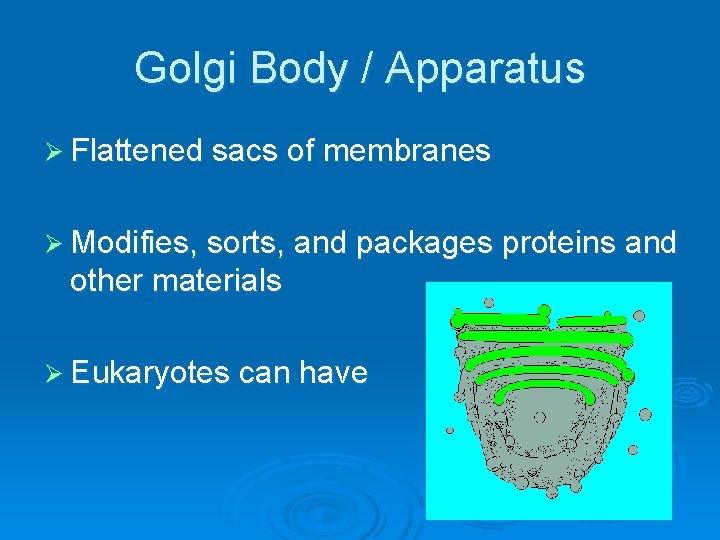
Golgi Body / Apparatus Ø Flattened sacs of membranes Ø Modifies, sorts, and packages proteins and other materials Ø Eukaryotes can have
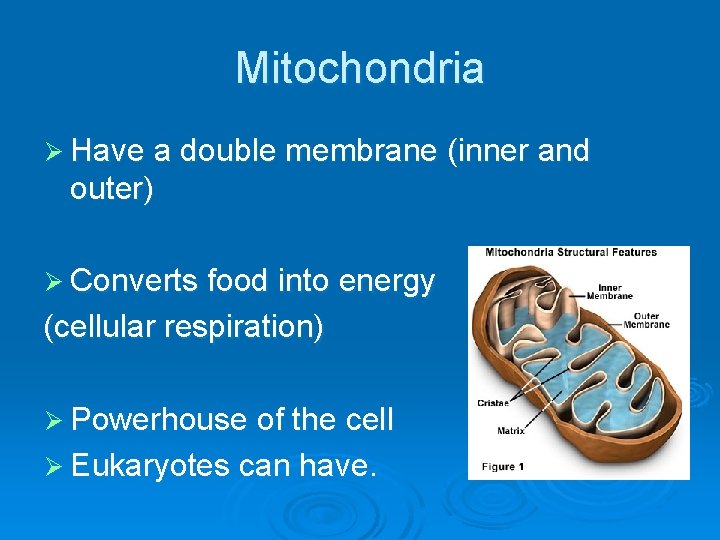
Mitochondria Ø Have a double membrane (inner and outer) Ø Converts food into energy (cellular respiration) Ø Powerhouse of the cell Ø Eukaryotes can have.
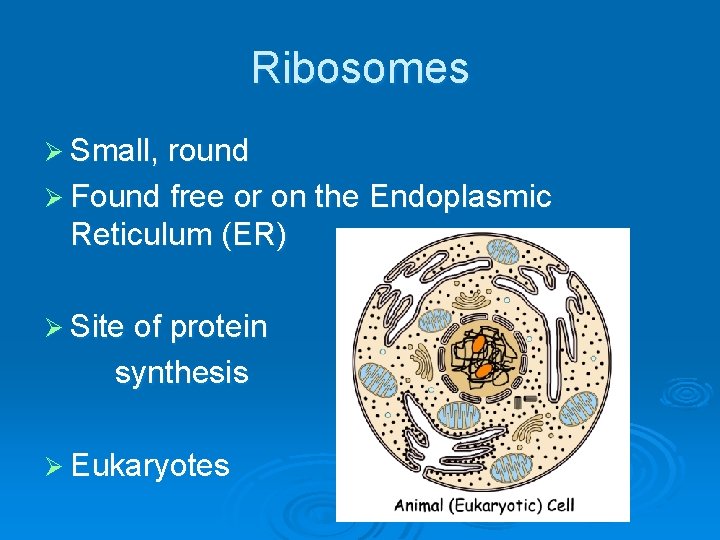
Ribosomes Ø Small, round Ø Found free or on the Endoplasmic Reticulum (ER) Ø Site of protein synthesis Ø Eukaryotes
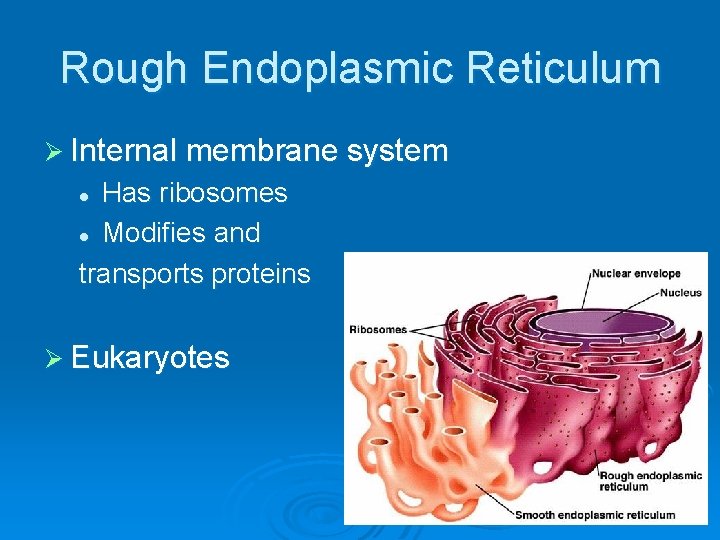
Rough Endoplasmic Reticulum Ø Internal membrane system Has ribosomes l Modifies and transports proteins l Ø Eukaryotes
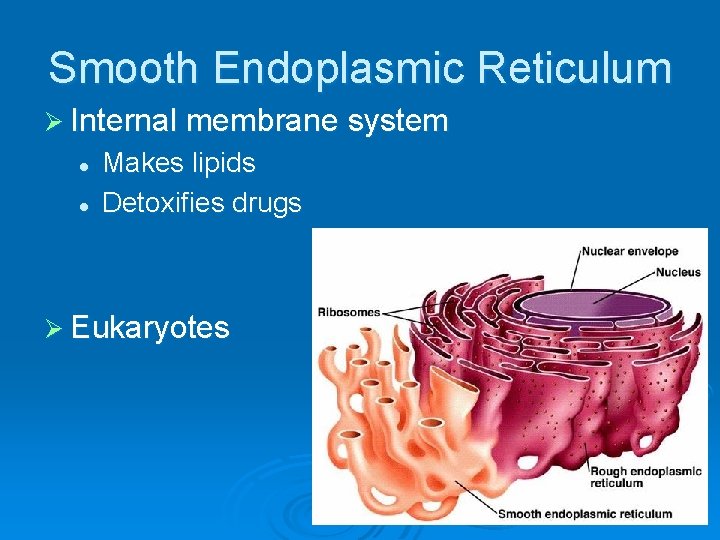
Smooth Endoplasmic Reticulum Ø Internal membrane system l l Makes lipids Detoxifies drugs Ø Eukaryotes
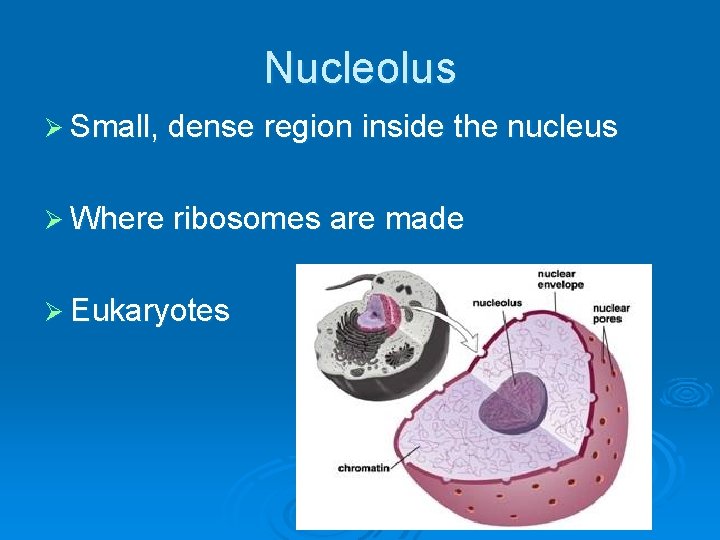
Nucleolus Ø Small, dense region inside the nucleus Ø Where ribosomes are made Ø Eukaryotes
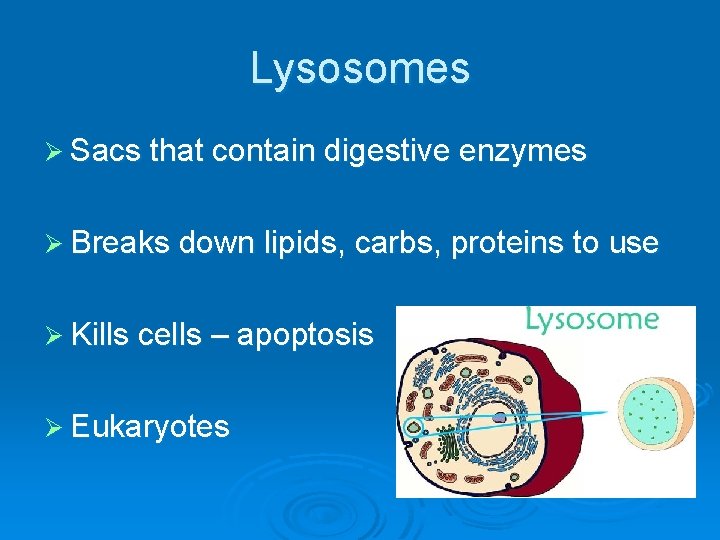
Lysosomes Ø Sacs that contain digestive enzymes Ø Breaks down lipids, carbs, proteins to use Ø Kills cells – apoptosis Ø Eukaryotes
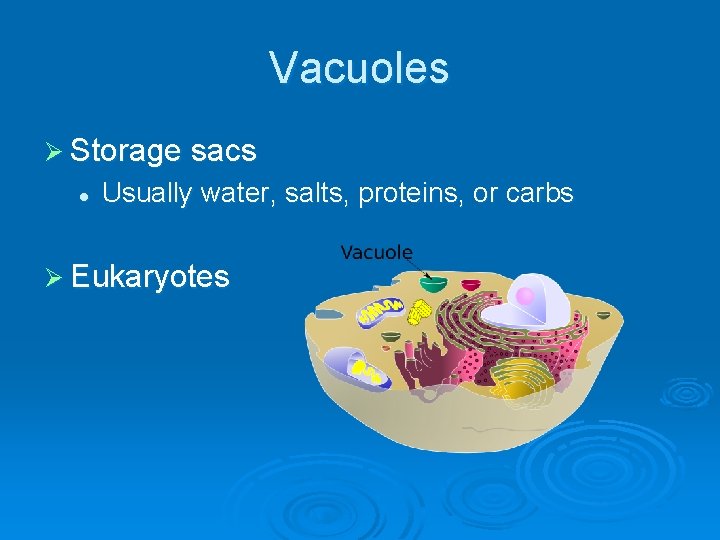
Vacuoles Ø Storage sacs l Usually water, salts, proteins, or carbs Ø Eukaryotes
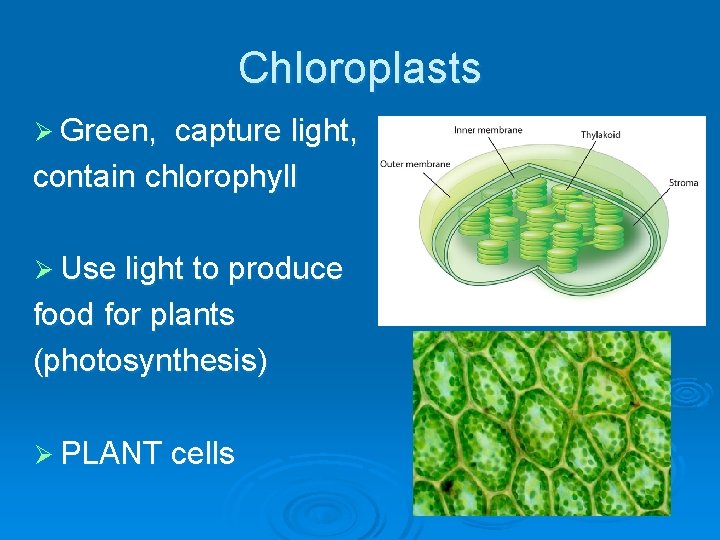
Chloroplasts Ø Green, capture light, contain chlorophyll Ø Use light to produce food for plants (photosynthesis) Ø PLANT cells
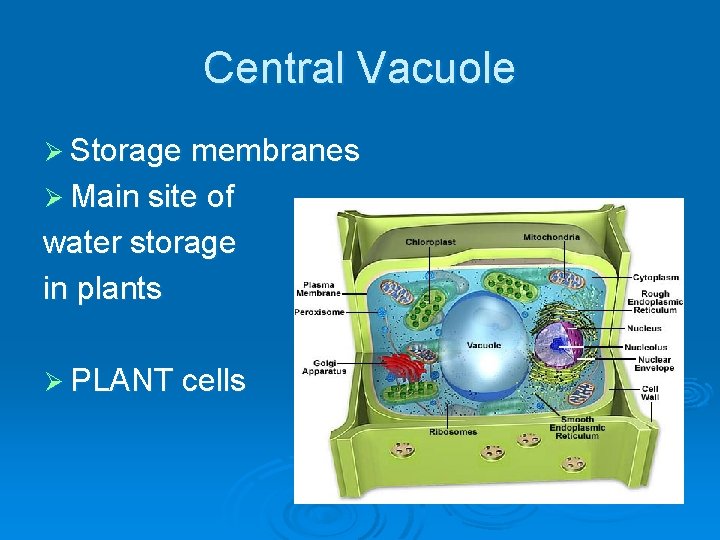
Central Vacuole Ø Storage membranes Ø Main site of water storage in plants Ø PLANT cells
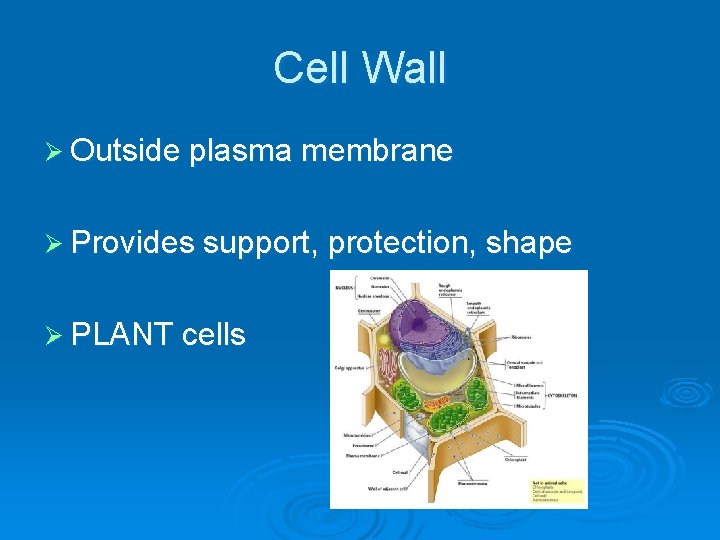
Cell Wall Ø Outside plasma membrane Ø Provides support, protection, shape Ø PLANT cells
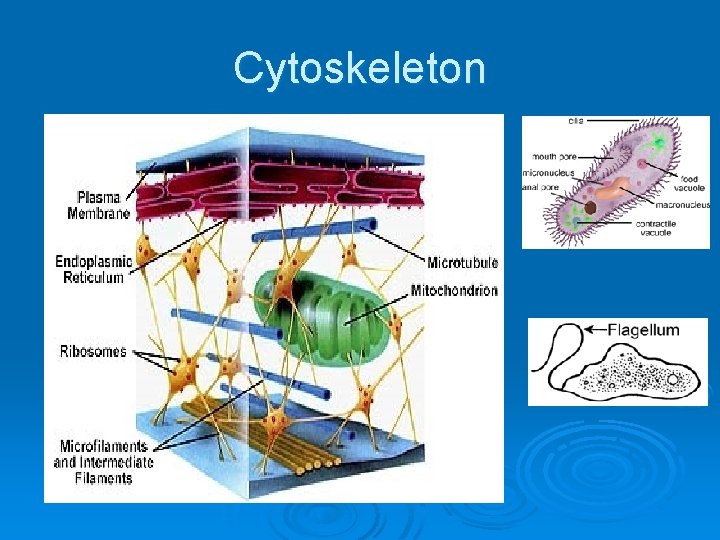
Cytoskeleton Ø Microfilaments l l l thread like proteins (actin) Form tough, flexible framework Help cells move Ø Microtubules l l Hollow tube structures Maintains cell shape Used in cell division Used to build cilia and flagella
Cytoskeleton
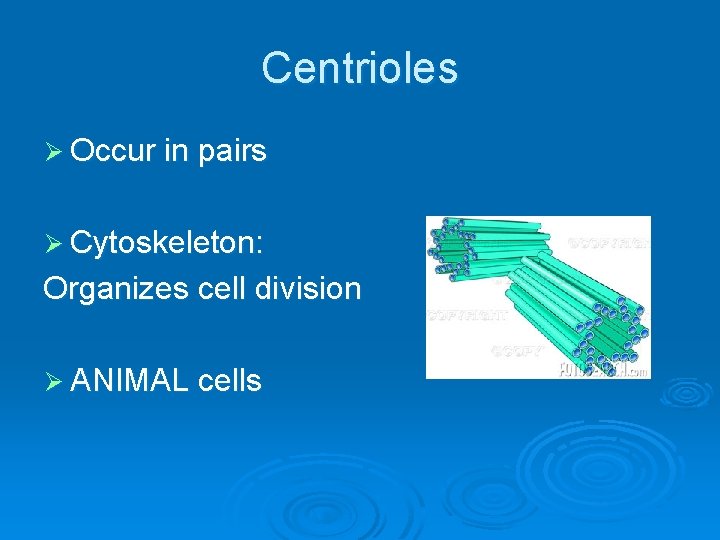
Centrioles Ø Occur in pairs Ø Cytoskeleton: Organizes cell division Ø ANIMAL cells