
Eukaryotic Cell Structure pages 62 66 organelle membranebound
Eukaryotic Cell Structure (pages 62 -66) • organelle: membrane-bound cell structures that have special functions • vesicle: membrane-bound sac that transports substances in cells
Eukaryotic Cell Structure (pages 62 -66) • cytoplasm: everything between the plasma membrane and the nucleus • cytosol: the fluid portion of the cell – more jellylike than water like because there are many sugars and proteins and minerals, etc. dissolved in this fluid
Ribosomes
Ribosomes

Ribosomes • very small, dot like, even in electron microscope photos – not considered an organelle • no separate membrane • found in all cells including prokaryotes, extremely numerous

Ribosomes • where proteins are assembled • most float free in the cytoplasm, some are attached to membranes
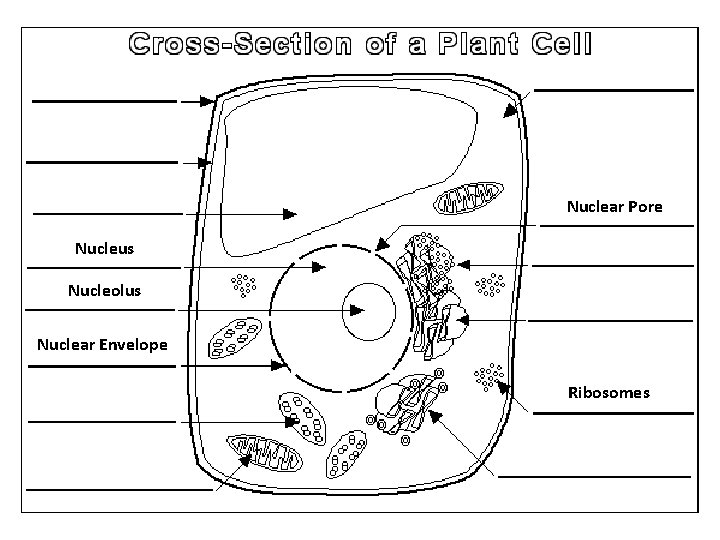
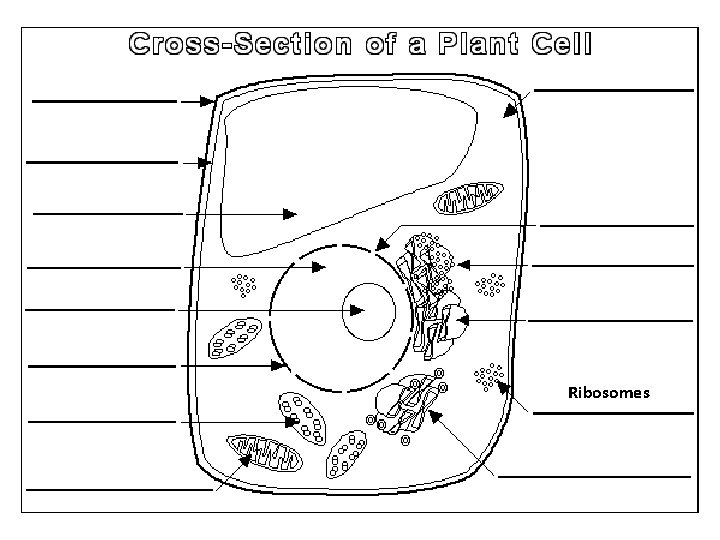
Nuclear Pore Nucleus Nucleolus Nuclear Envelope Ribosomes
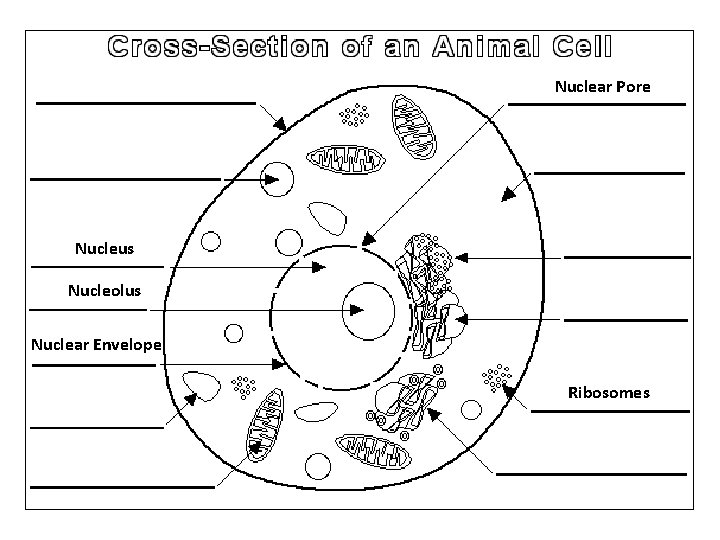
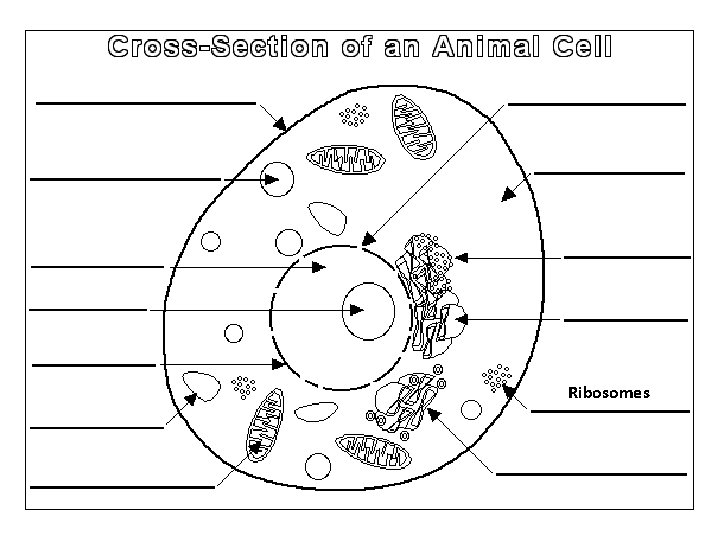
Nuclear Pore Nucleus Nucleolus Nuclear Envelope Ribosomes
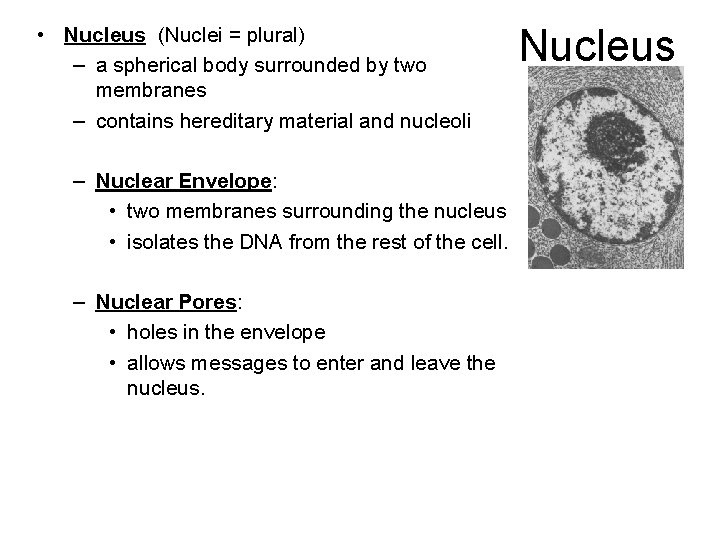
• Nucleus (Nuclei = plural) – a spherical body surrounded by two membranes – contains hereditary material and nucleoli – Nuclear Envelope: • two membranes surrounding the nucleus • isolates the DNA from the rest of the cell. – Nuclear Pores: • holes in the envelope • allows messages to enter and leave the nucleus. Nucleus

– Nucleolus: (Nucleoli = plural) • spherical structure inside the nucleus • assembles the pieces that make up ribosomes – Chromatin • Hereditary material • DNA of cell • instructions that tell the cell what proteins to create; proteins (enzymes) control the activities of the cell • Each individual strand of DNA in a nucleus is called a chromosome. Chromosomes become visible with a light microscope when a cell divides because they condense. • All the chromosome strands within a nucleus = chromatin.
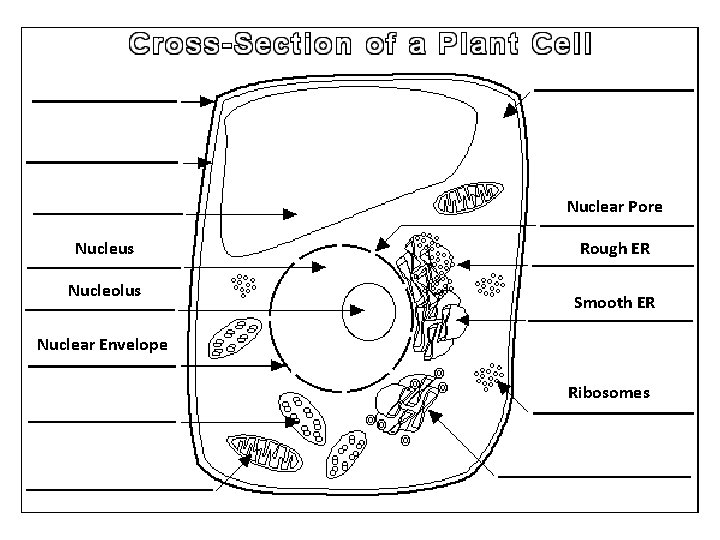
Nuclear Pore Nucleus Nucleolus Rough ER Smooth ER Nuclear Envelope Ribosomes
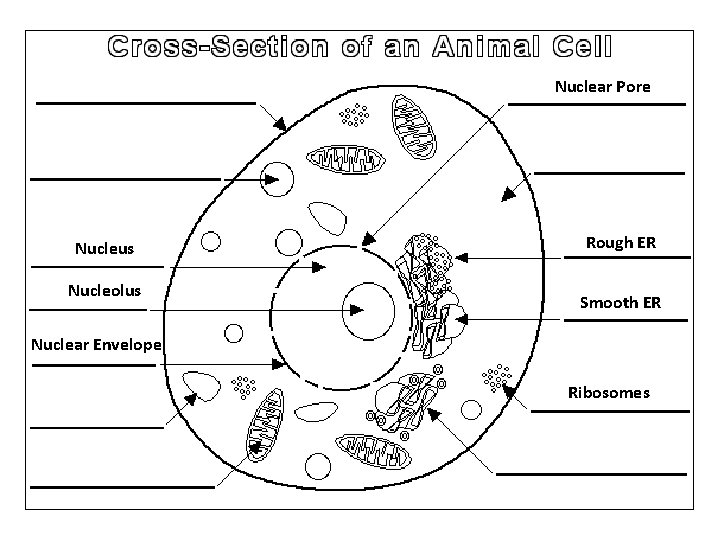
Nuclear Pore Nucleus Nucleolus Rough ER Smooth ER Nuclear Envelope Ribosomes
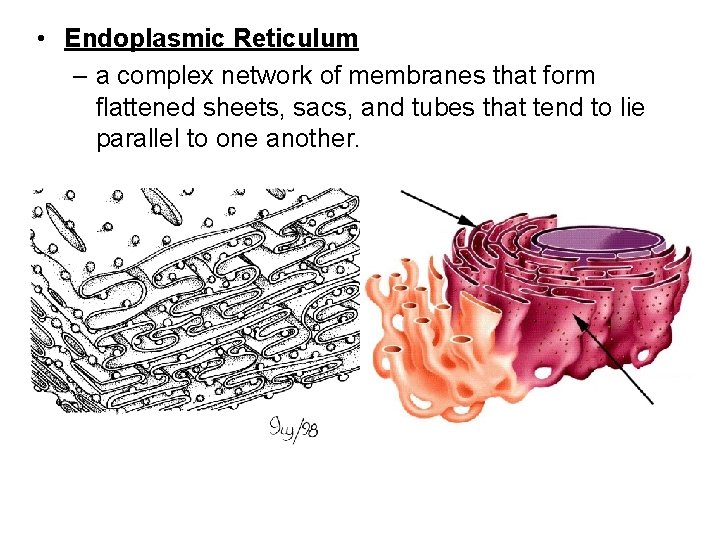
• Endoplasmic Reticulum – a complex network of membranes that form flattened sheets, sacs, and tubes that tend to lie parallel to one another.
• Endoplasmic Reticulum – synthesize and transport lipids and proteins – attached to both plasma and nuclear membranes
• RER = rough endoplasmic reticulum – has attached ribosomes – synthesize proteins • these proteins are not used for “food” • used to perform functions in cell/organism
• SER = smooth endoplasmic reticulum – no attached ribosomes – contains enzymes to perform special tasks such as synthesizing lipids and detoxifying drugs • these lipids are not used for “food” • used to perform functions in cell/organism Animals getting tipsy on marula fruit!
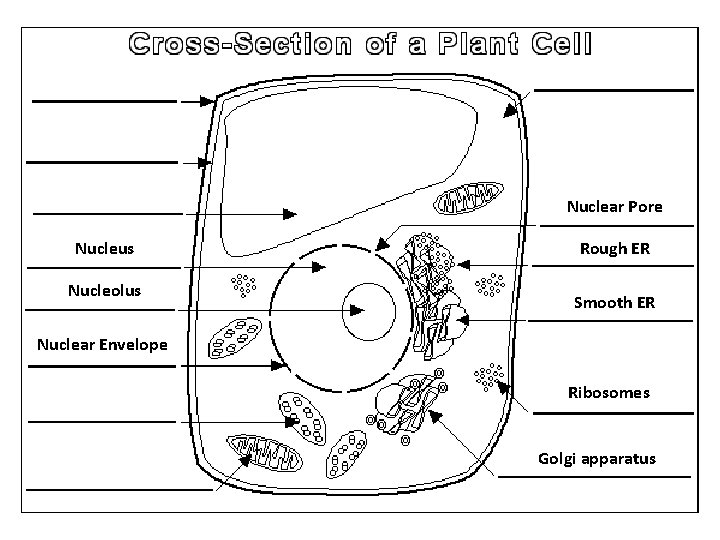
Nuclear Pore Nucleus Nucleolus Rough ER Smooth ER Nuclear Envelope Ribosomes Golgi apparatus
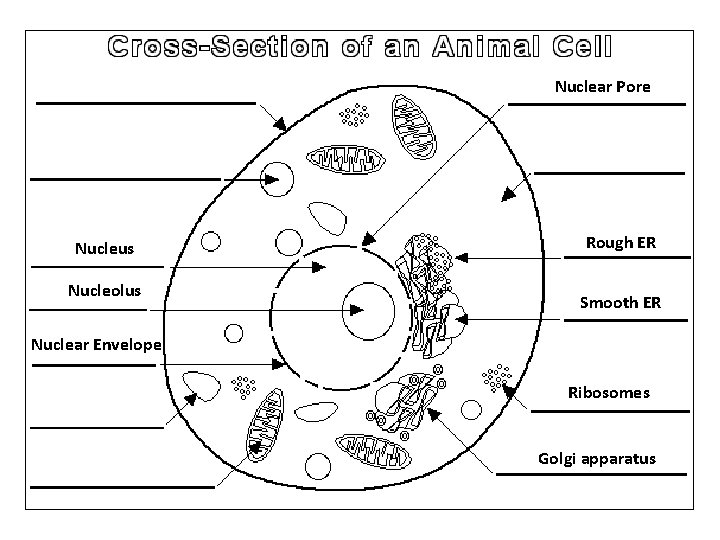
Nuclear Pore Nucleus Nucleolus Rough ER Smooth ER Nuclear Envelope Ribosomes Golgi apparatus
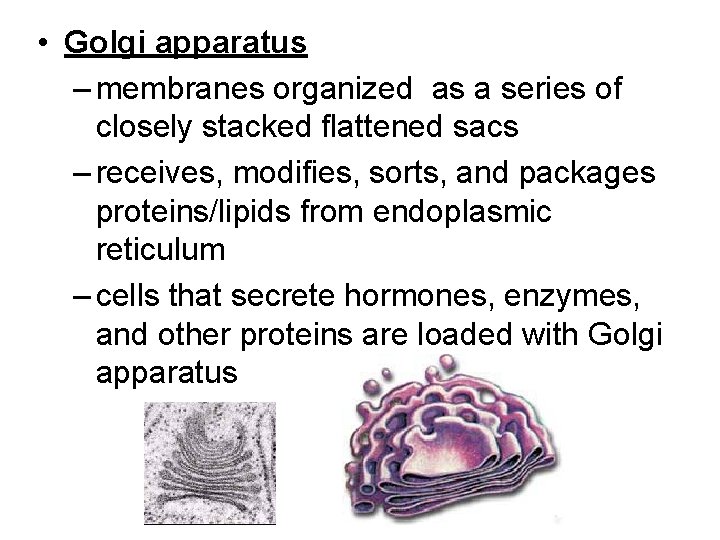
• Golgi apparatus – membranes organized as a series of closely stacked flattened sacs – receives, modifies, sorts, and packages proteins/lipids from endoplasmic reticulum – cells that secrete hormones, enzymes, and other proteins are loaded with Golgi apparatus
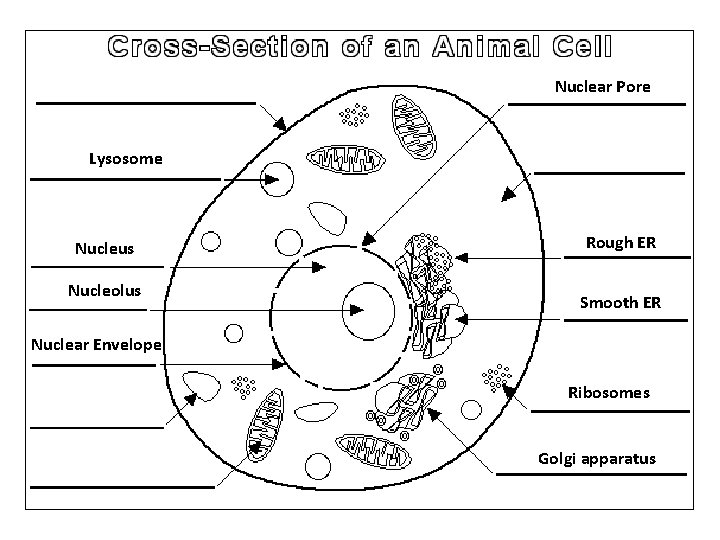
Nuclear Pore Lysosome Nucleus Nucleolus Rough ER Smooth ER Nuclear Envelope Ribosomes Golgi apparatus
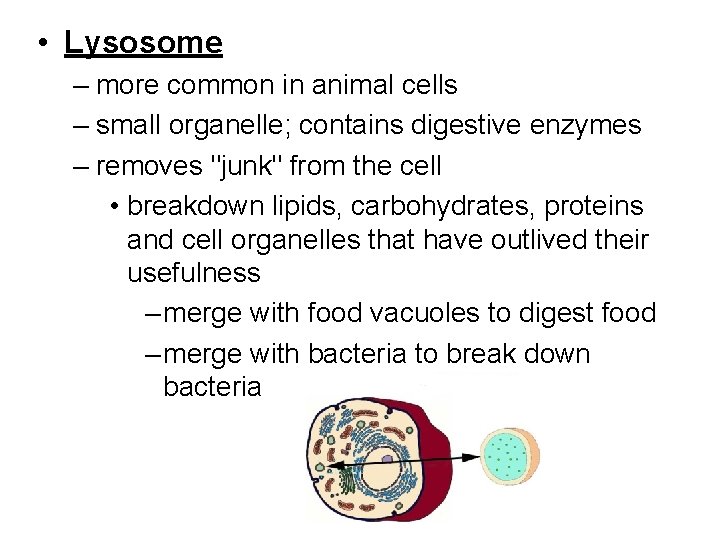
• Lysosome – more common in animal cells – small organelle; contains digestive enzymes – removes "junk" from the cell • breakdown lipids, carbohydrates, proteins and cell organelles that have outlived their usefulness – merge with food vacuoles to digest food – merge with bacteria to break down bacteria
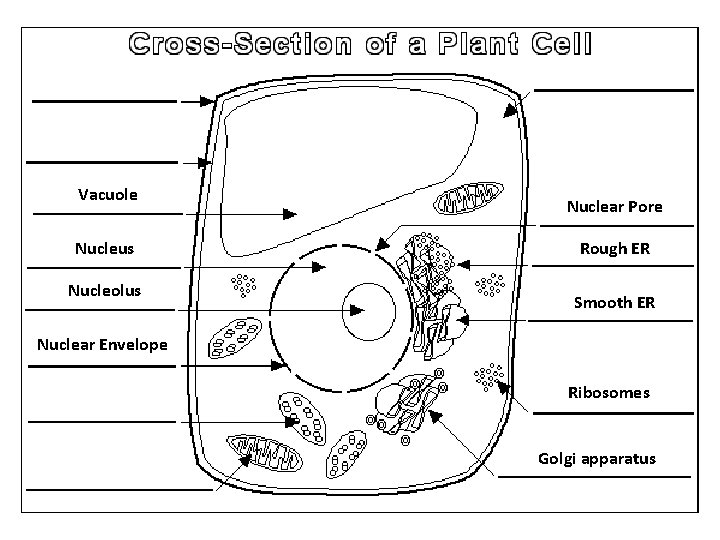
Vacuole Nucleus Nucleolus Nuclear Pore Rough ER Smooth ER Nuclear Envelope Ribosomes Golgi apparatus
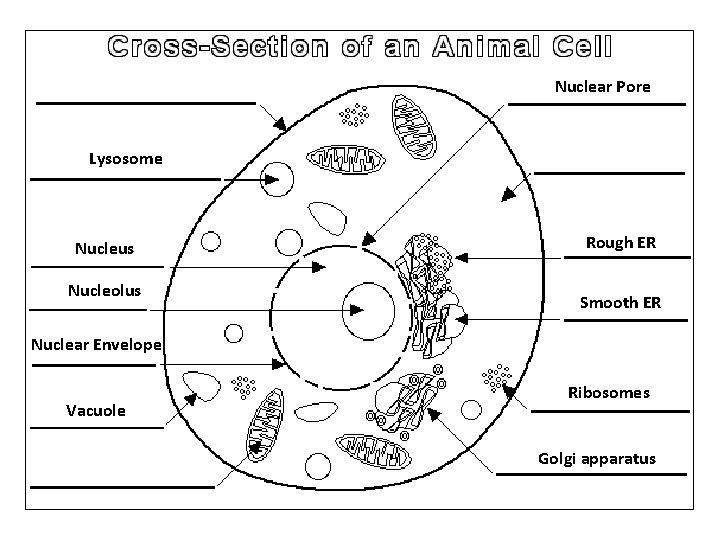
Nuclear Pore Lysosome Nucleus Nucleolus Rough ER Smooth ER Nuclear Envelope Vacuole Ribosomes Golgi apparatus
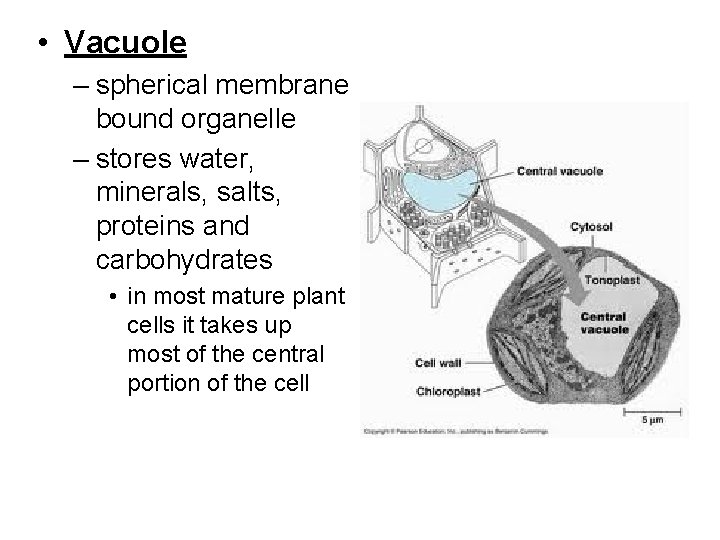
• Vacuole – spherical membrane bound organelle – stores water, minerals, salts, proteins and carbohydrates • in most mature plant cells it takes up most of the central portion of the cell
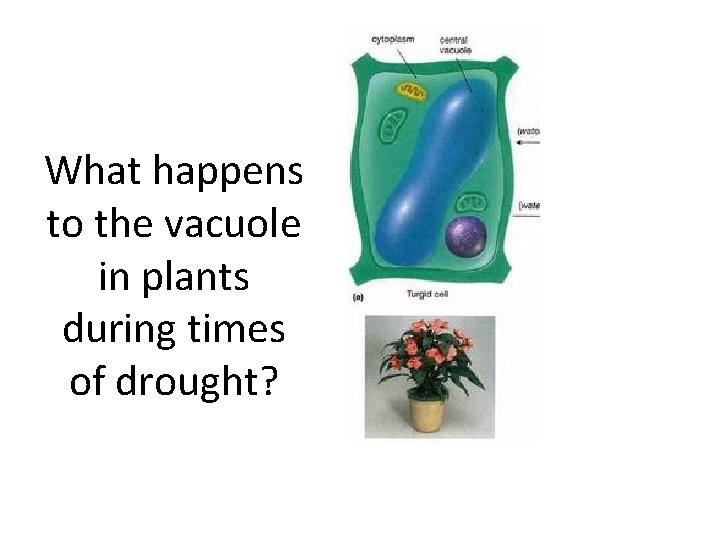
What happens to the vacuole in plants during times of drought?
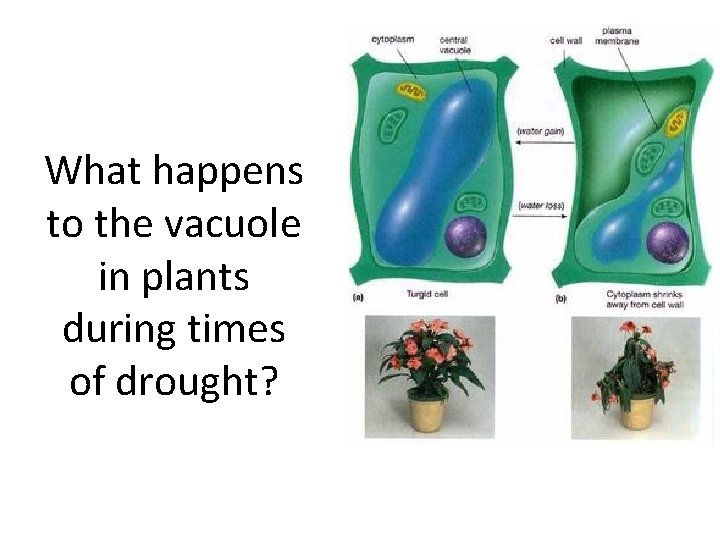
What happens to the vacuole in plants during times of drought?
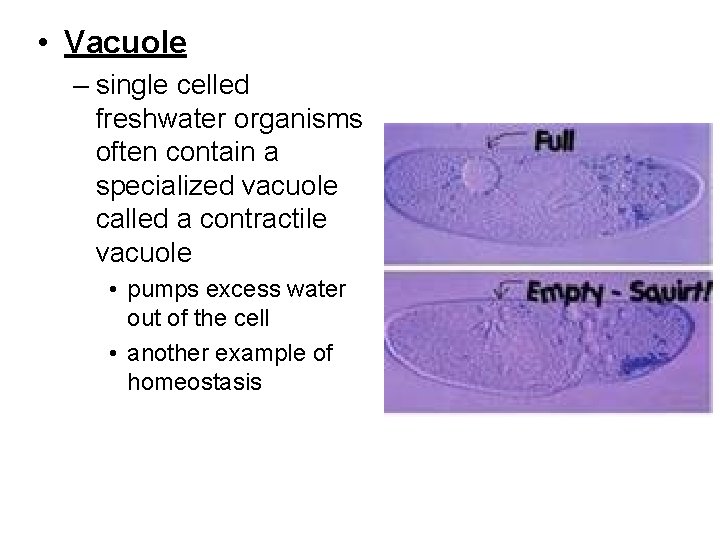
• Vacuole – single celled freshwater organisms often contain a specialized vacuole called a contractile vacuole • pumps excess water out of the cell • another example of homeostasis
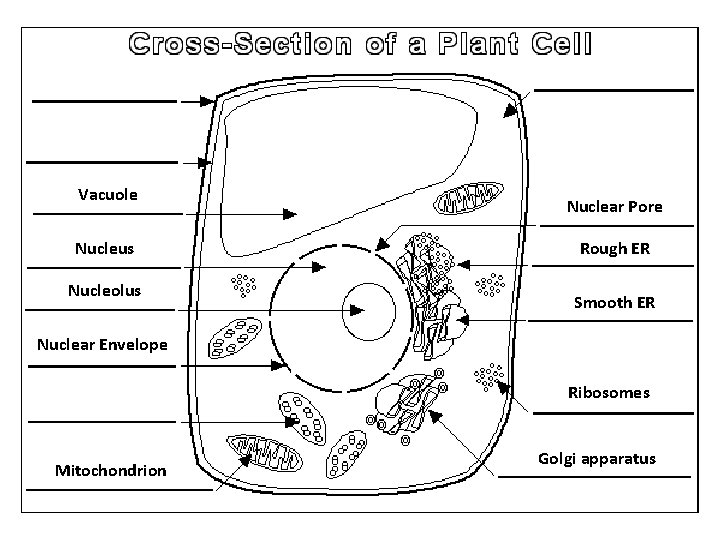
Vacuole Nucleus Nucleolus Nuclear Pore Rough ER Smooth ER Nuclear Envelope Ribosomes Mitochondrion Golgi apparatus
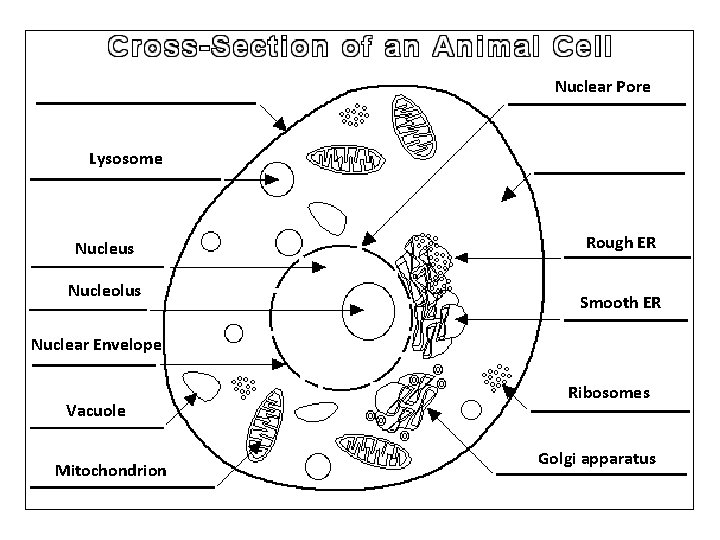
Nuclear Pore Lysosome Nucleus Nucleolus Rough ER Smooth ER Nuclear Envelope Vacuole Mitochondrion Ribosomes Golgi apparatus
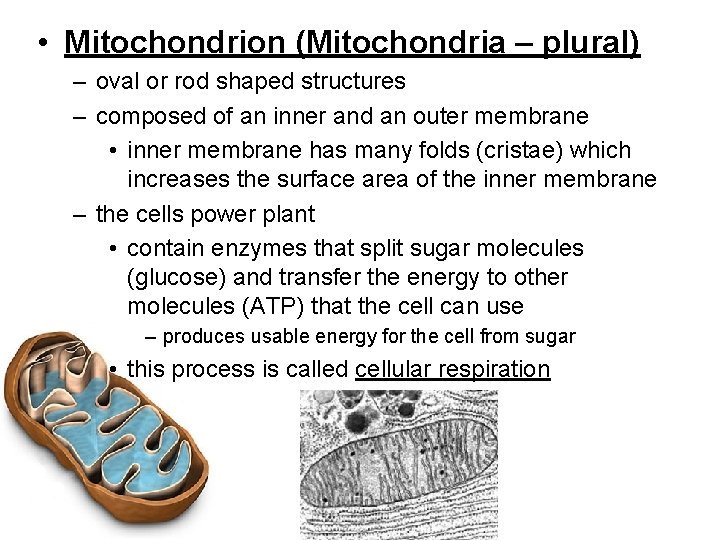
• Mitochondrion (Mitochondria – plural) – oval or rod shaped structures – composed of an inner and an outer membrane • inner membrane has many folds (cristae) which increases the surface area of the inner membrane – the cells power plant • contain enzymes that split sugar molecules (glucose) and transfer the energy to other molecules (ATP) that the cell can use – produces usable energy for the cell from sugar • this process is called cellular respiration
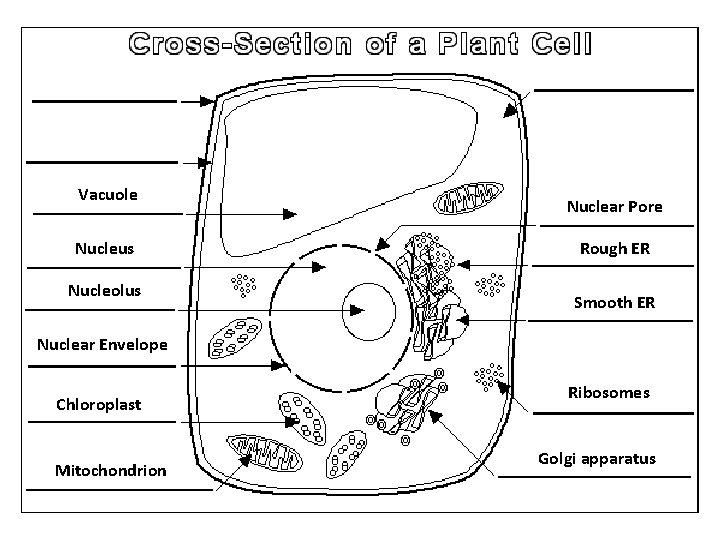
Vacuole Nucleus Nucleolus Nuclear Pore Rough ER Smooth ER Nuclear Envelope Chloroplast Mitochondrion Ribosomes Golgi apparatus
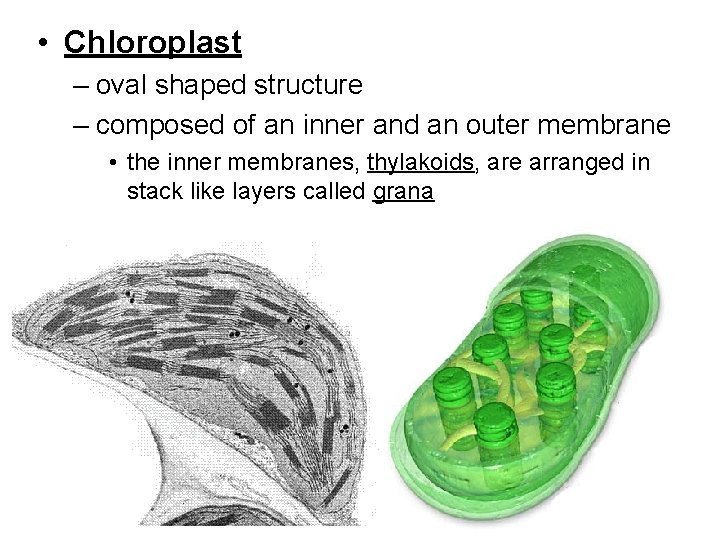
• Chloroplast – oval shaped structure – composed of an inner and an outer membrane • the inner membranes, thylakoids, are arranged in stack like layers called grana
• Chloroplast – chlorophyll (green pigment) and all the enzymes necessary to convert light energy, carbon dioxide, and water into chemical energy (sugars) in a process called photosynthesis is packed within the thylakoids – produces sugar (food) for plant cells
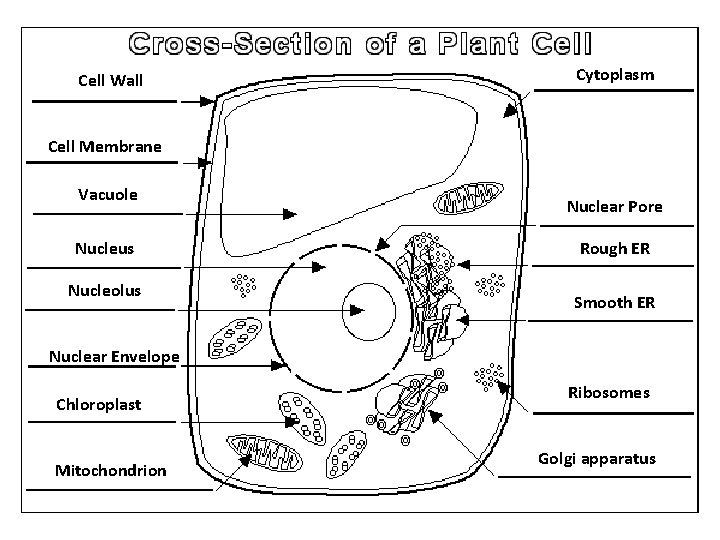
Cell Wall Cytoplasm Cell Membrane Vacuole Nucleus Nucleolus Nuclear Pore Rough ER Smooth ER Nuclear Envelope Chloroplast Mitochondrion Ribosomes Golgi apparatus
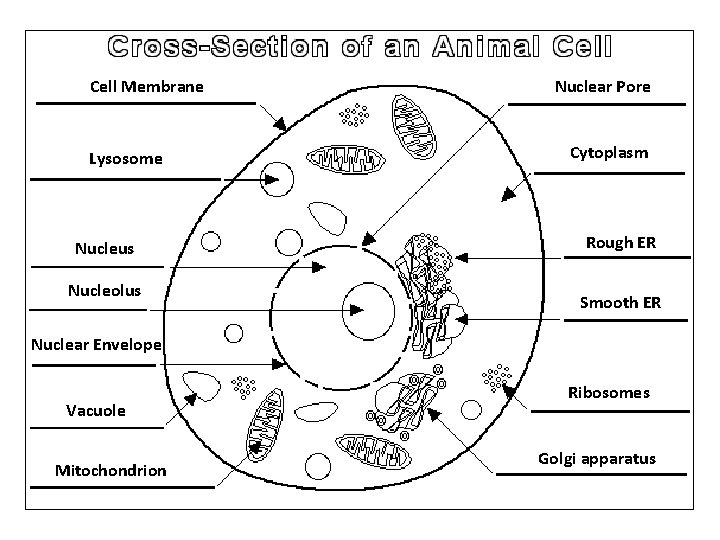
Cell Membrane Lysosome Nucleus Nucleolus Nuclear Pore Cytoplasm Rough ER Smooth ER Nuclear Envelope Vacuole Mitochondrion Ribosomes Golgi apparatus
• Endosymbiotic Theory – all chloroplasts & mitochondria have their own DNA – Lynn Margulis, an American biologist, proposed in 1970 that mitochondria and chloroplasts are actually the descendents of prokaryotes that took up a symbiotic relationship in eukaryotic cells. This idea is called the endosymbiotic theory.
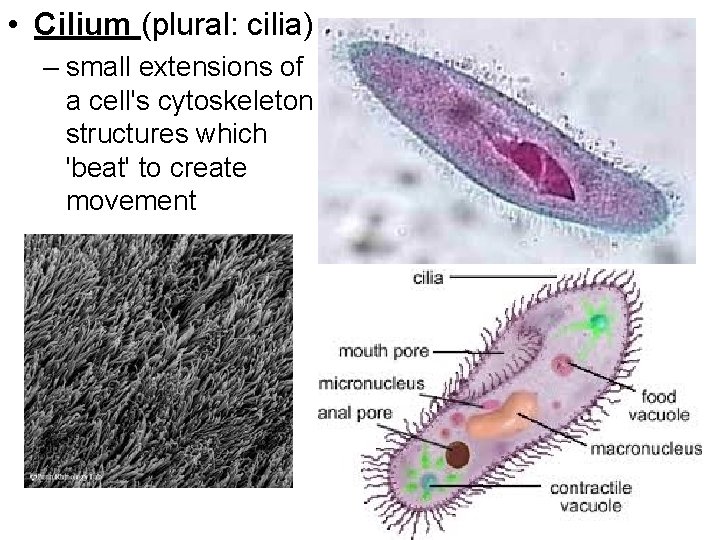
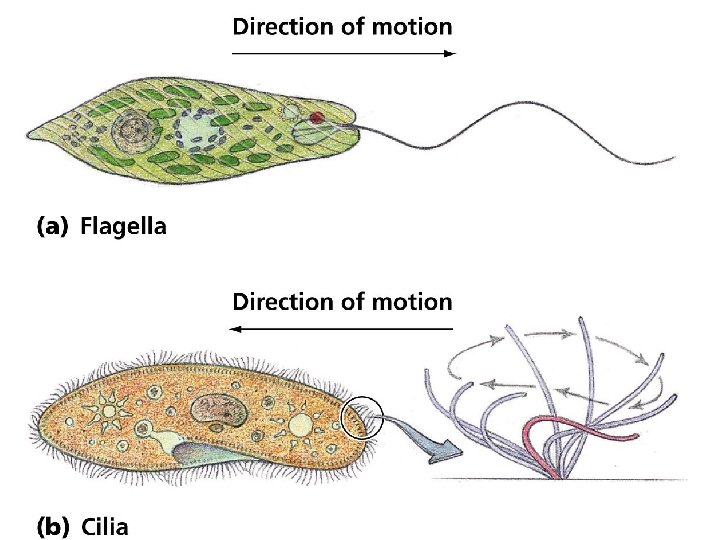
• Cilium (plural: cilia) – small extensions of a cell's cytoskeleton structures which 'beat' to create movement
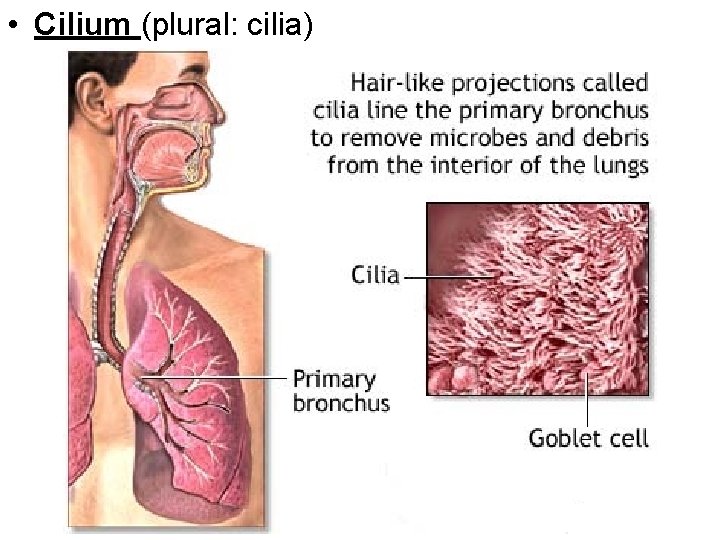
• Cilium (plural: cilia)
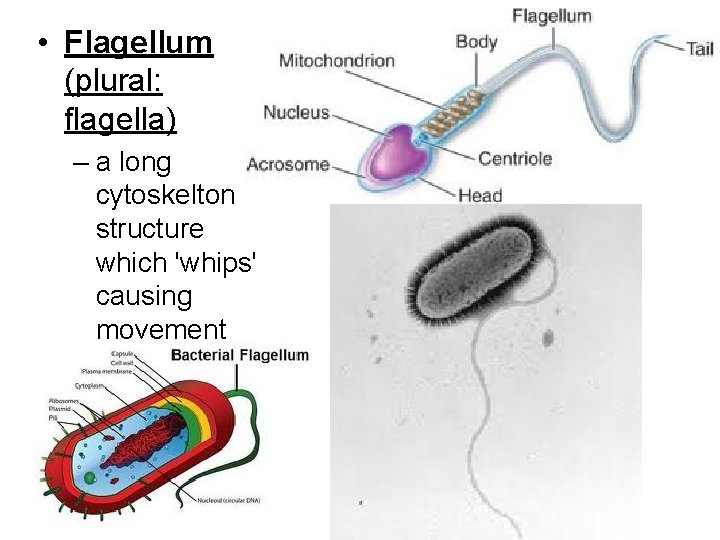
• Flagellum (plural: flagella) – a long cytoskelton structure which 'whips' causing movement
- Slides: 40