
Eukaryotic Cell Structure Organelles little organs are specialized
- Slides: 12
Eukaryotic Cell Structure Organelles (little organs) are specialized structures within a cell that perform specific functions
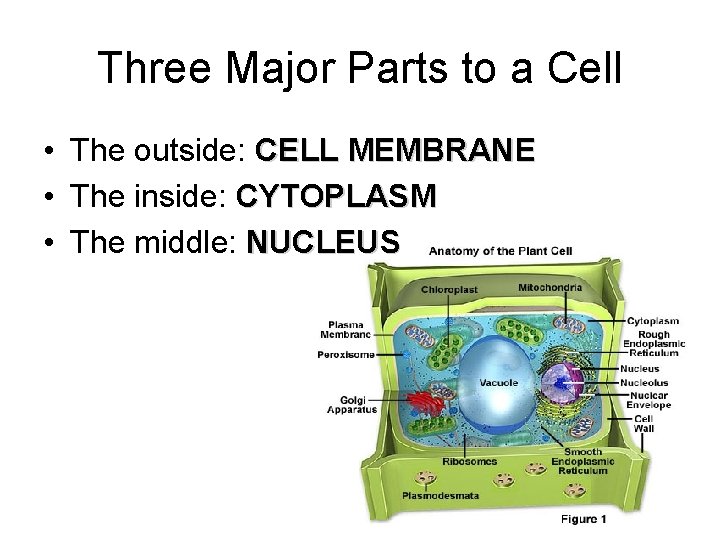
Three Major Parts to a Cell • The outside: CELL MEMBRANE • The inside: CYTOPLASM • The middle: NUCLEUS
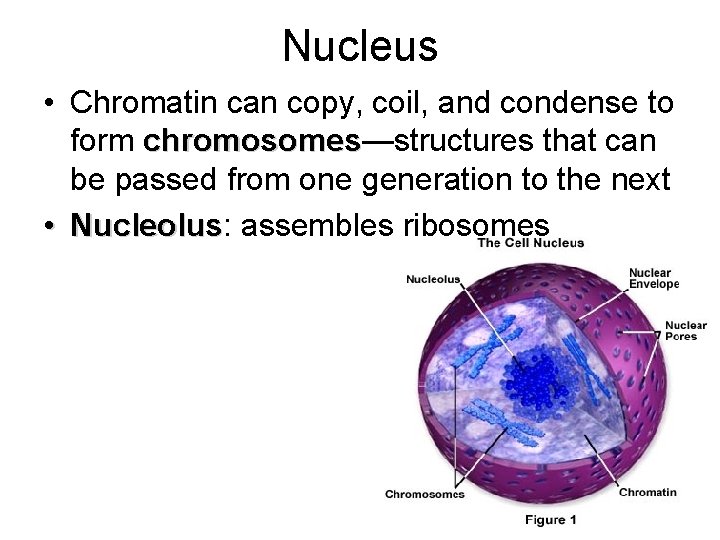
Nucleus • The nucleus contains nearly all the cell’s DNA and with it the coded instructions for making proteins and other important molecules • Surrounded by the nuclear envelope, envelope a double membrane with pores to allow material in and out of the nucleus • Chromatin: Chromatin DNA bound to protein; spread throughout nucleus
Nucleus • Chromatin can copy, coil, and condense to form chromosomes—structures that can chromosomes be passed from one generation to the next • Nucleolus: Nucleolus assembles ribosomes
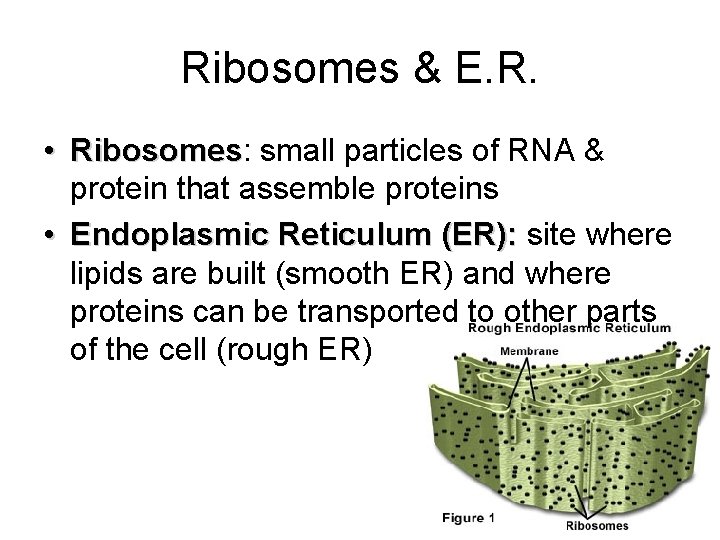
Ribosomes & E. R. • Ribosomes: Ribosomes small particles of RNA & protein that assemble proteins • Endoplasmic Reticulum (ER): site where lipids are built (smooth ER) and where proteins can be transported to other parts of the cell (rough ER)
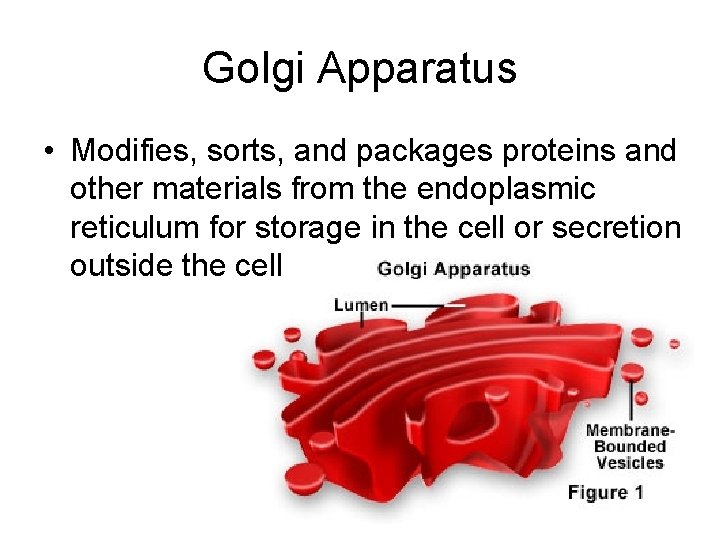
Golgi Apparatus • Modifies, sorts, and packages proteins and other materials from the endoplasmic reticulum for storage in the cell or secretion outside the cell
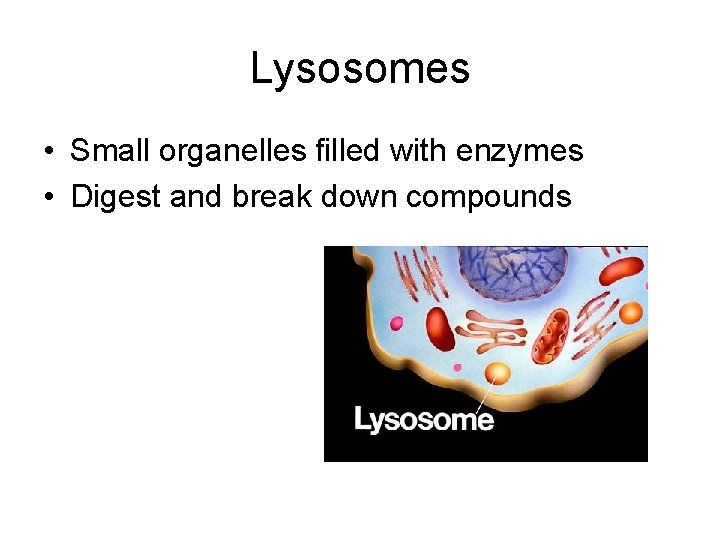
Lysosomes • Small organelles filled with enzymes • Digest and break down compounds
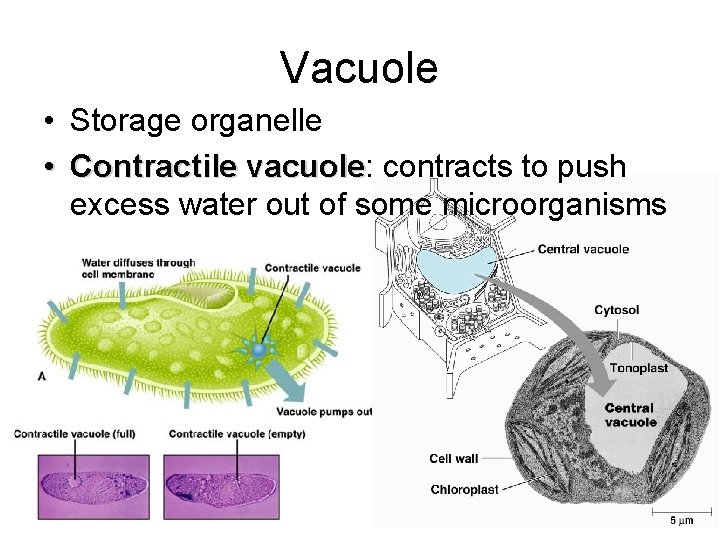
Vacuole • Storage organelle • Contractile vacuole: vacuole contracts to push excess water out of some microorganisms
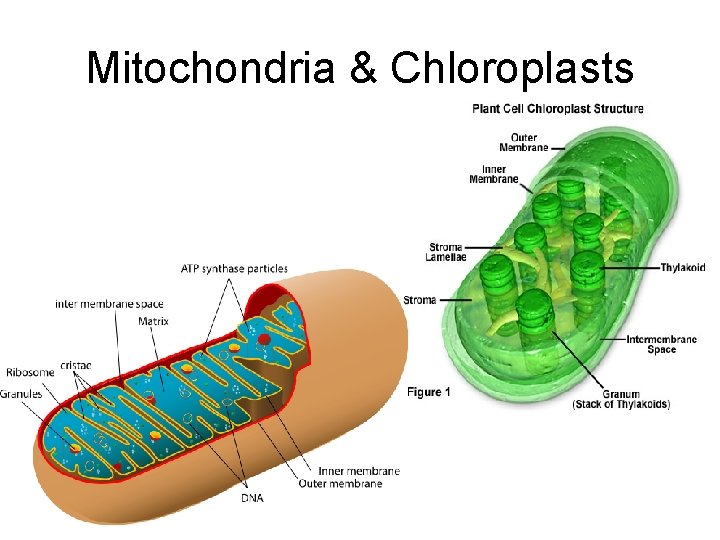
Mitochondria • Organelles that convert the chemical energy stored in food into compounds that are more convenient for the cell to use • The “powerhouse” of the cell • Mitochondria have their own DNA • Singular: mitochondrion
Chloroplasts • Organelles that capture the energy from sunlight and convert it into chemical energy in a process called photosynthesis • Found in plant and algal cells – NOT in animal cells • Chloroplasts have their own DNA
Mitochondria & Chloroplasts
Cytoskeleton • A network of protein filaments that helps the cell to maintain its shape; the cytoskeleton is also involved in movement • Microtubules and microfilaments: microfilaments protein molecules that help in movement and support • Centrioles: Centrioles help organize chromosomes during cell division • Cilia and flagella: flagella organelles used in movement