
Eukaryotic Cell Structure and Function Characteristics of All
- Slides: 25
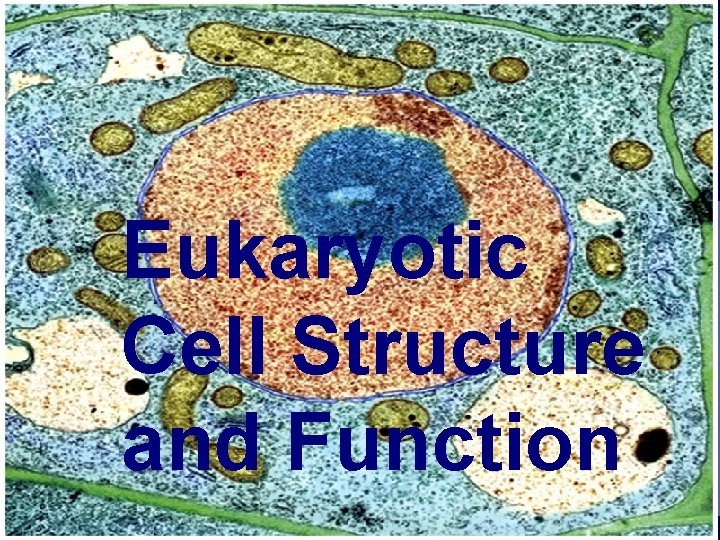
Eukaryotic Cell Structure and Function
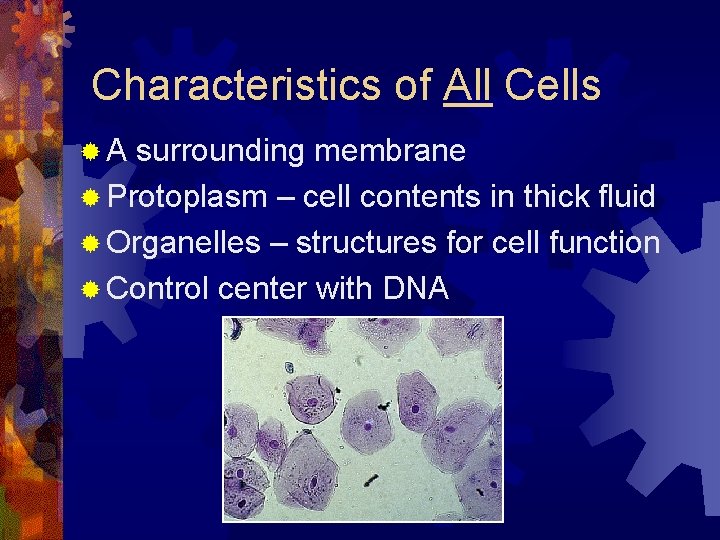
Characteristics of All Cells ®A surrounding membrane ® Protoplasm – cell contents in thick fluid ® Organelles – structures for cell function ® Control center with DNA
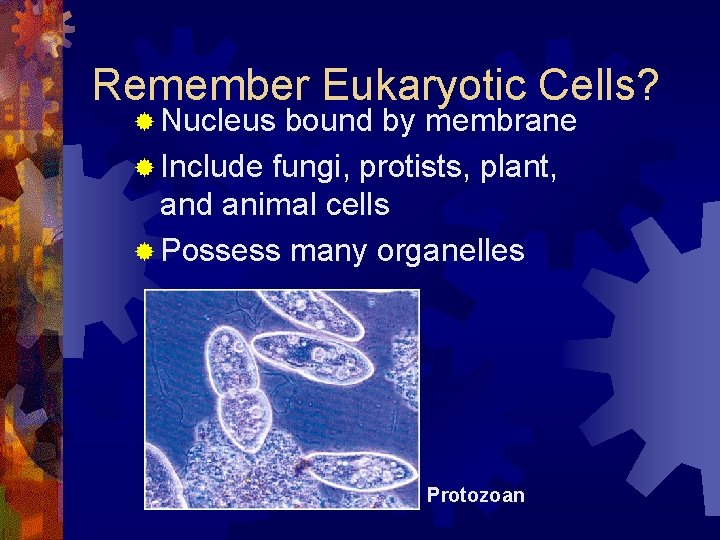
Remember Eukaryotic Cells? ® Nucleus bound by membrane ® Include fungi, protists, plant, and animal cells ® Possess many organelles Protozoan
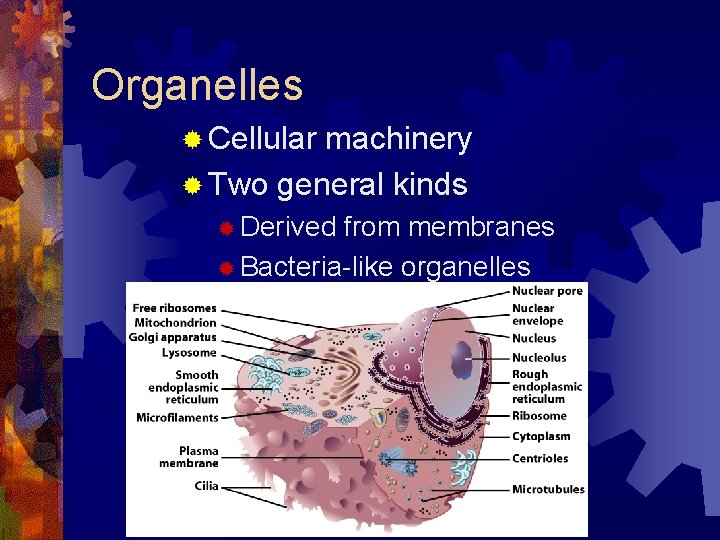
Organelles ® Cellular machinery ® Two general kinds ® Derived from membranes ® Bacteria-like organelles
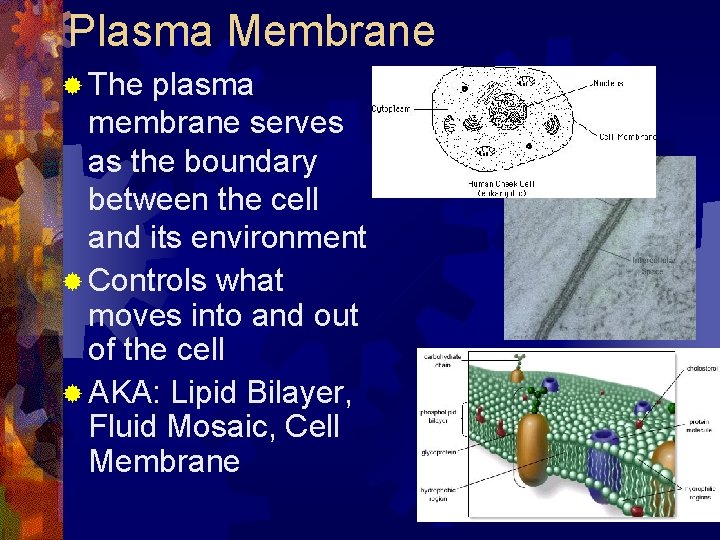
Plasma Membrane ® The plasma membrane serves as the boundary between the cell and its environment ® Controls what moves into and out of the cell ® AKA: Lipid Bilayer, Fluid Mosaic, Cell Membrane
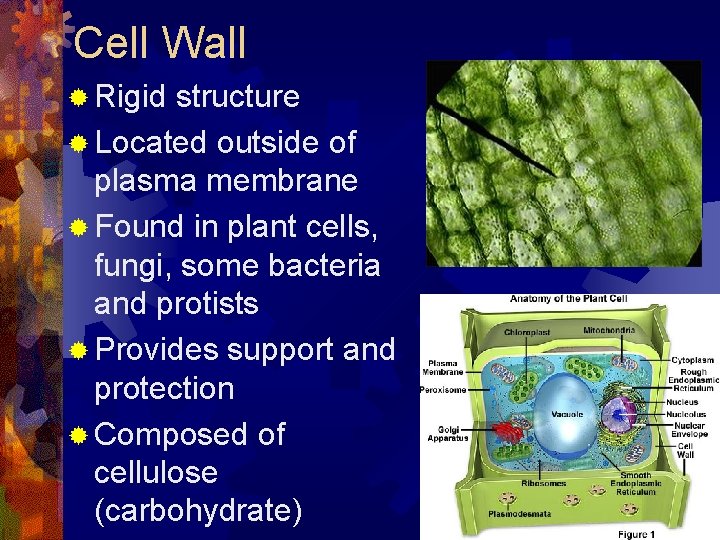
Cell Wall ® Rigid structure ® Located outside of plasma membrane ® Found in plant cells, fungi, some bacteria and protists ® Provides support and protection ® Composed of cellulose (carbohydrate)
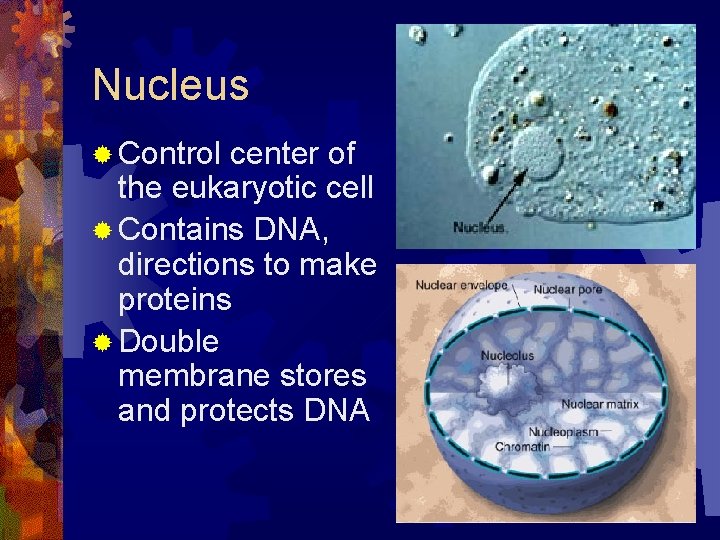
Nucleus ® Control center of the eukaryotic cell ® Contains DNA, directions to make proteins ® Double membrane stores and protects DNA
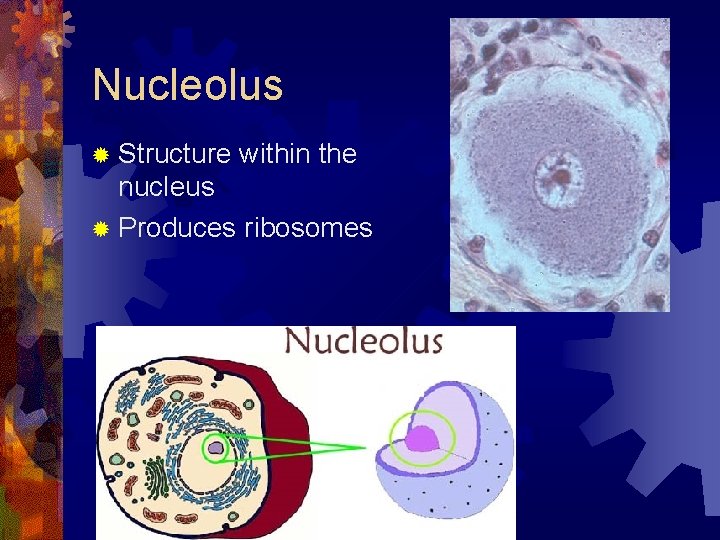
Nucleolus ® Structure within the nucleus ® Produces ribosomes
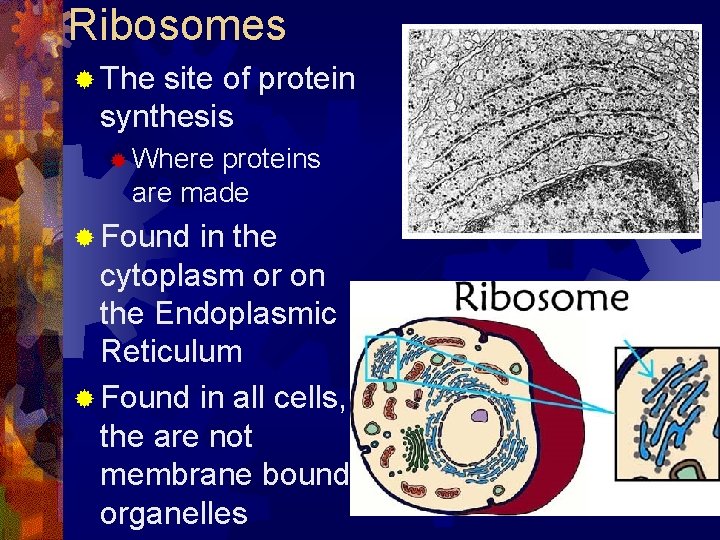
Ribosomes ® The site of protein synthesis ® Where proteins are made ® Found in the cytoplasm or on the Endoplasmic Reticulum ® Found in all cells, the are not membrane bound organelles
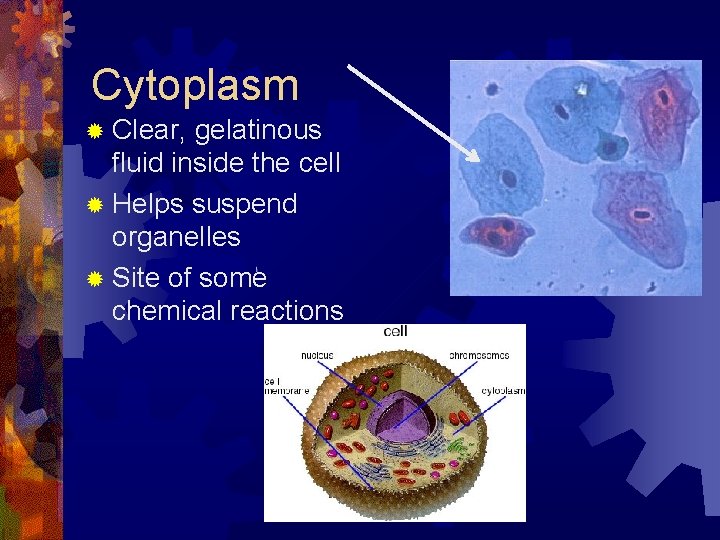
Cytoplasm ® Clear, gelatinous fluid inside the cell ® Helps suspend organelles ® Site of some chemical reactions
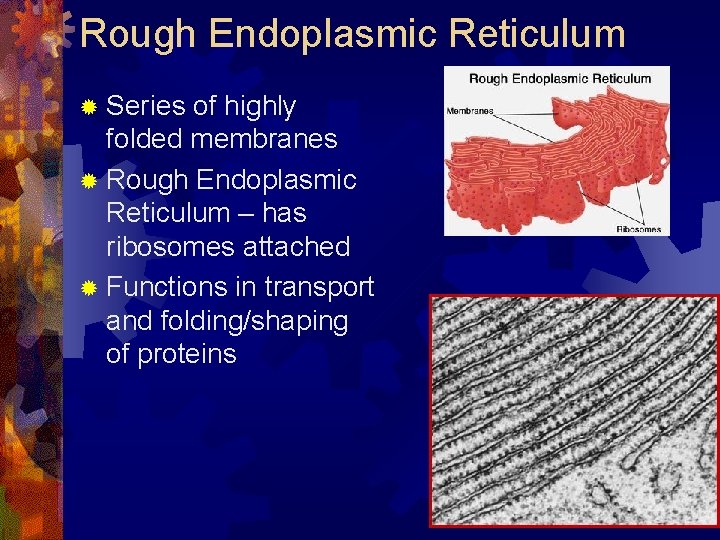
Rough Endoplasmic Reticulum ® Series of highly folded membranes ® Rough Endoplasmic Reticulum – has ribosomes attached ® Functions in transport and folding/shaping of proteins
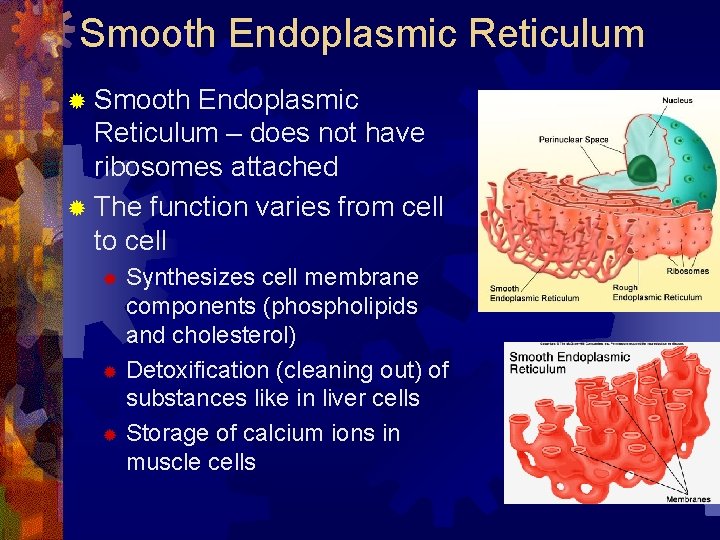
Smooth Endoplasmic Reticulum ® Smooth Endoplasmic Reticulum – does not have ribosomes attached ® The function varies from cell to cell Synthesizes cell membrane components (phospholipids and cholesterol) ® Detoxification (cleaning out) of substances like in liver cells ® Storage of calcium ions in muscle cells ®
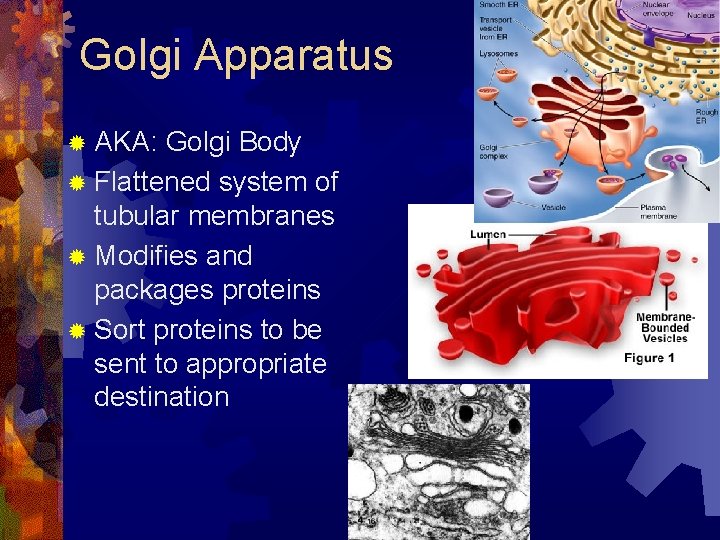
Golgi Apparatus ® AKA: Golgi Body ® Flattened system of tubular membranes ® Modifies and packages proteins ® Sort proteins to be sent to appropriate destination
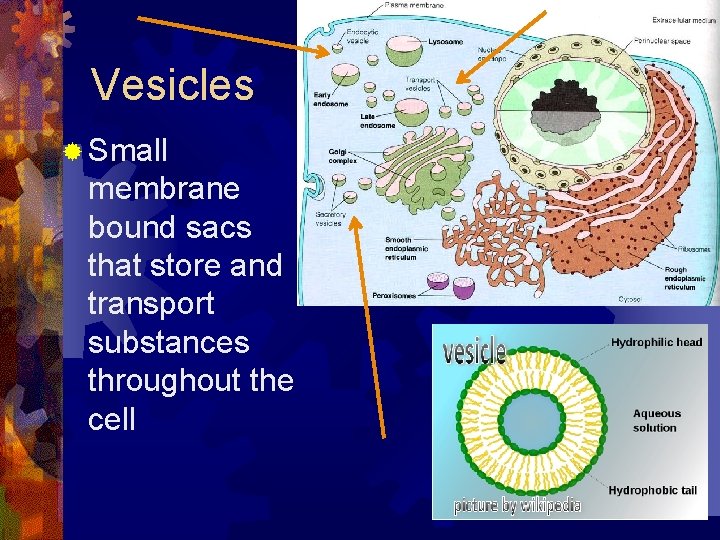
Vesicles ® Small membrane bound sacs that store and transport substances throughout the cell
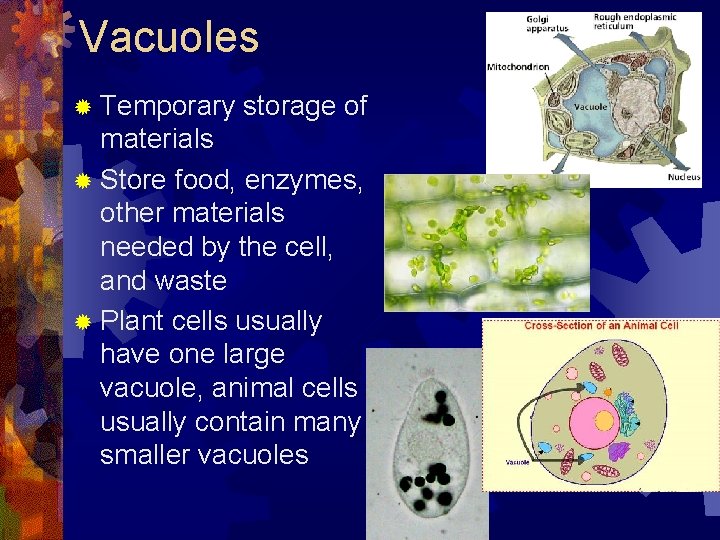
Vacuoles ® Temporary storage of materials ® Store food, enzymes, other materials needed by the cell, and waste ® Plant cells usually have one large vacuole, animal cells usually contain many smaller vacuoles
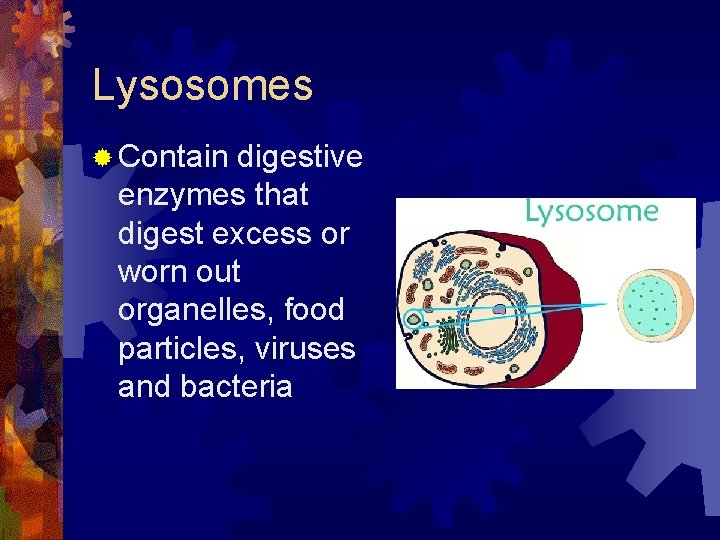
Lysosomes ® Contain digestive enzymes that digest excess or worn out organelles, food particles, viruses and bacteria
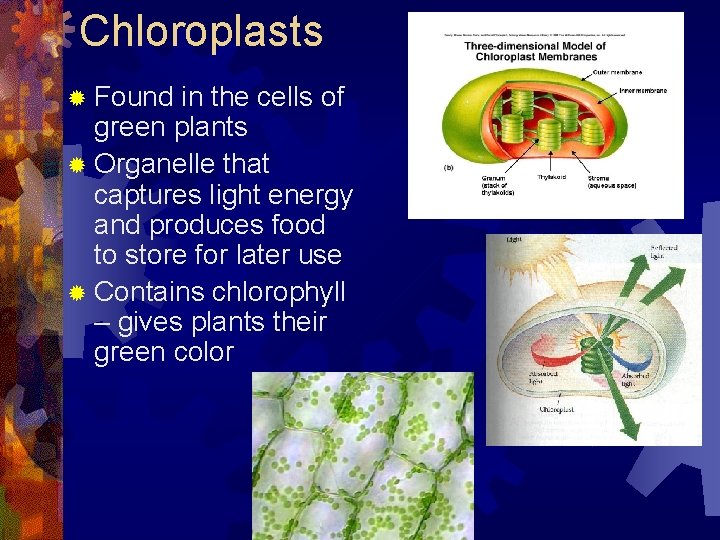
Chloroplasts ® Found in the cells of green plants ® Organelle that captures light energy and produces food to store for later use ® Contains chlorophyll – gives plants their green color
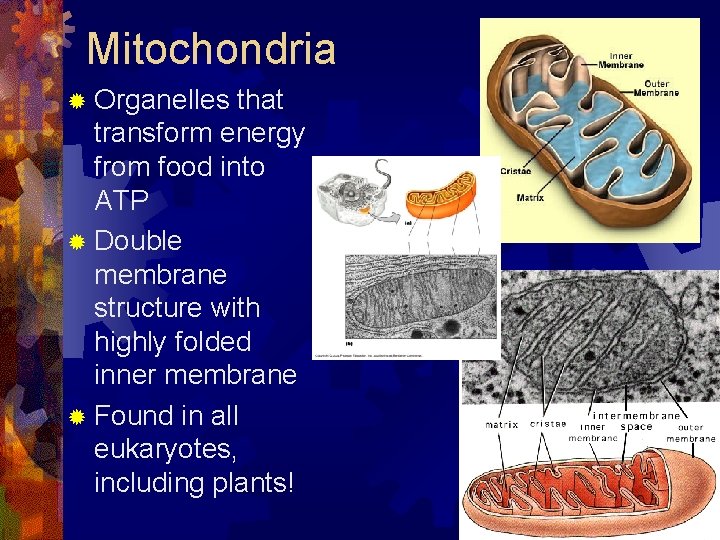
Mitochondria ® Organelles that transform energy from food into ATP ® Double membrane structure with highly folded inner membrane ® Found in all eukaryotes, including plants!
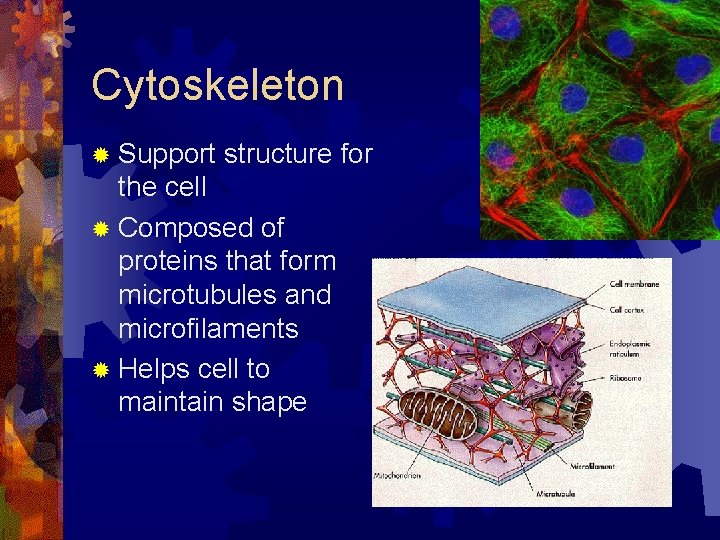
Cytoskeleton ® Support structure for the cell ® Composed of proteins that form microtubules and microfilaments ® Helps cell to maintain shape
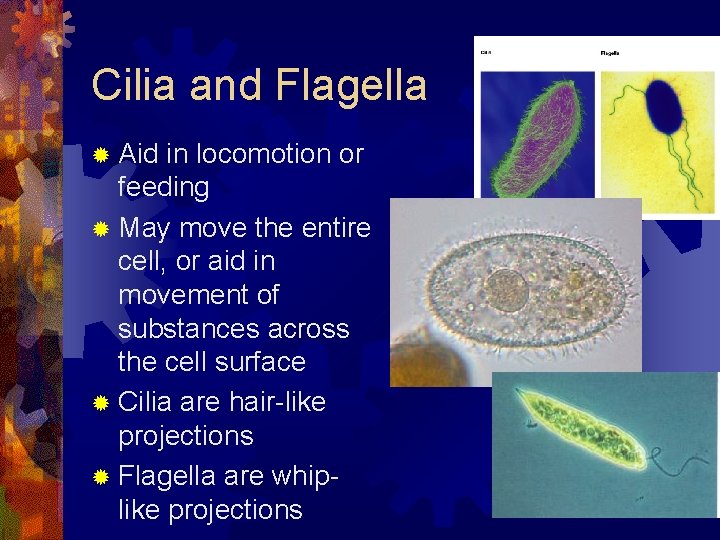
Cilia and Flagella ® Aid in locomotion or feeding ® May move the entire cell, or aid in movement of substances across the cell surface ® Cilia are hair-like projections ® Flagella are whiplike projections
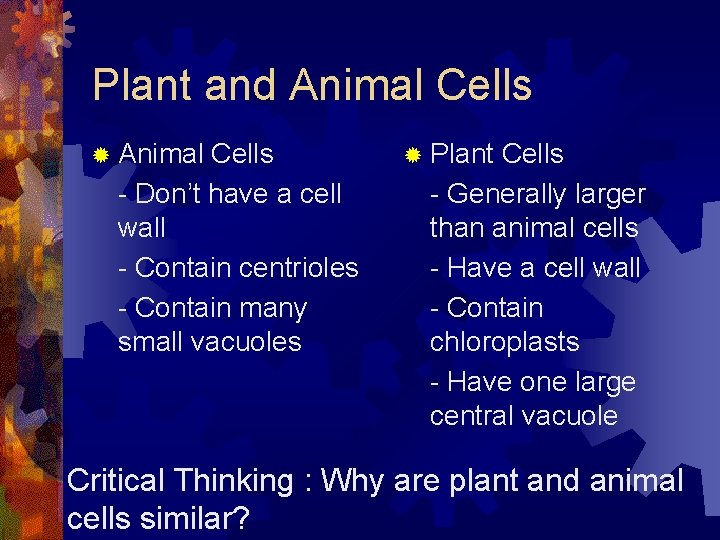
Plant and Animal Cells ® Animal Cells - Don’t have a cell wall - Contain centrioles - Contain many small vacuoles ® Plant Cells - Generally larger than animal cells - Have a cell wall - Contain chloroplasts - Have one large central vacuole Critical Thinking : Why are plant and animal cells similar?
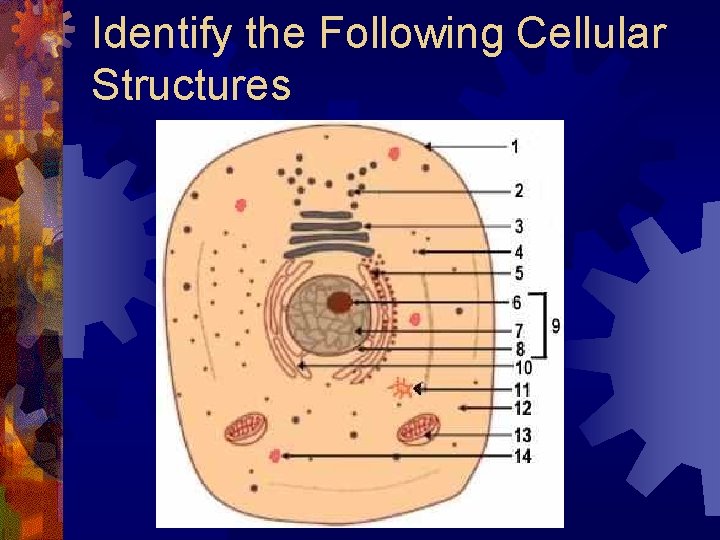
Identify the Following Cellular Structures
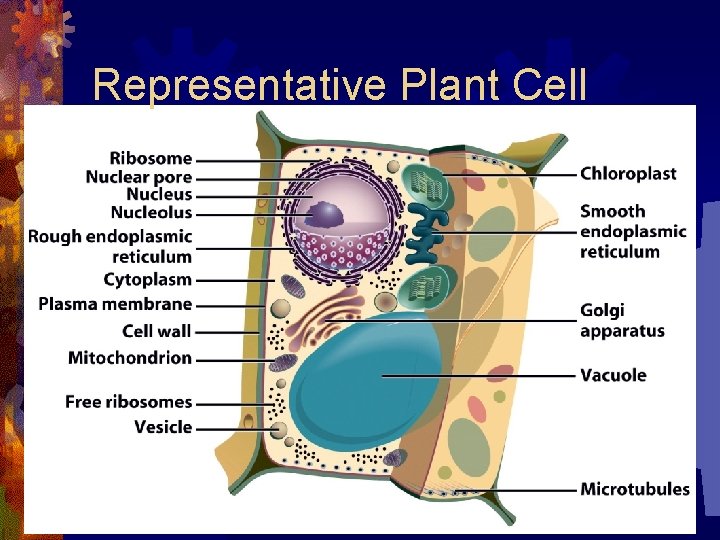
Representative Plant Cell
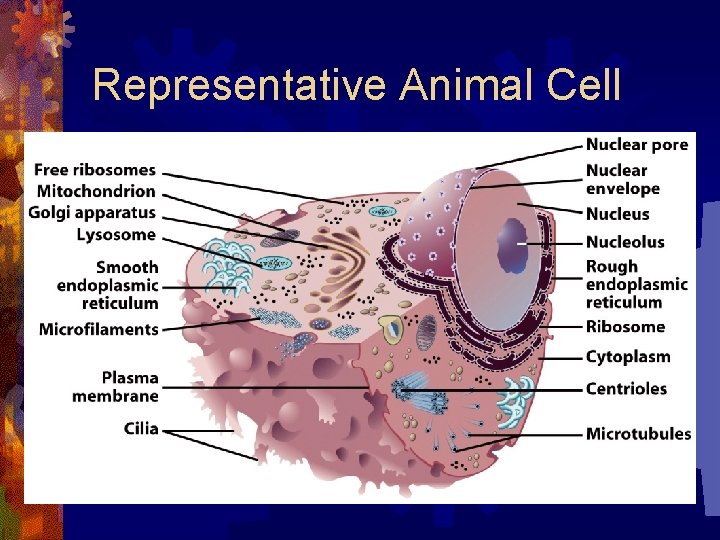
Representative Animal Cell
Inner Life of the Cell ® Long Version ® Short Version