
Eukaryotic cell structure 7 2 Cell Types of
- Slides: 24
Eukaryotic cell structure 7. 2
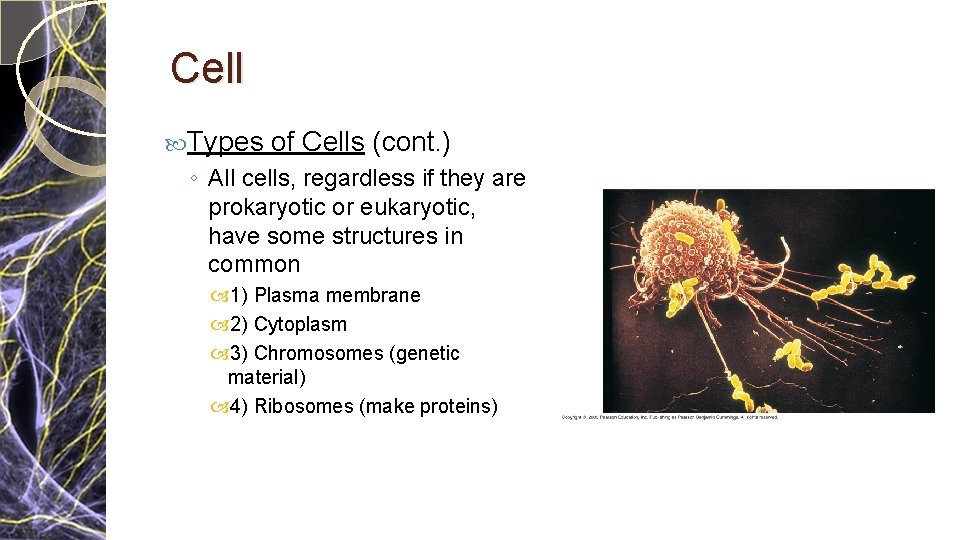
Cell Types of Cells (cont. ) ◦ All cells, regardless if they are prokaryotic or eukaryotic, have some structures in common 1) Plasma membrane 2) Cytoplasm 3) Chromosomes (genetic material) 4) Ribosomes (make proteins)
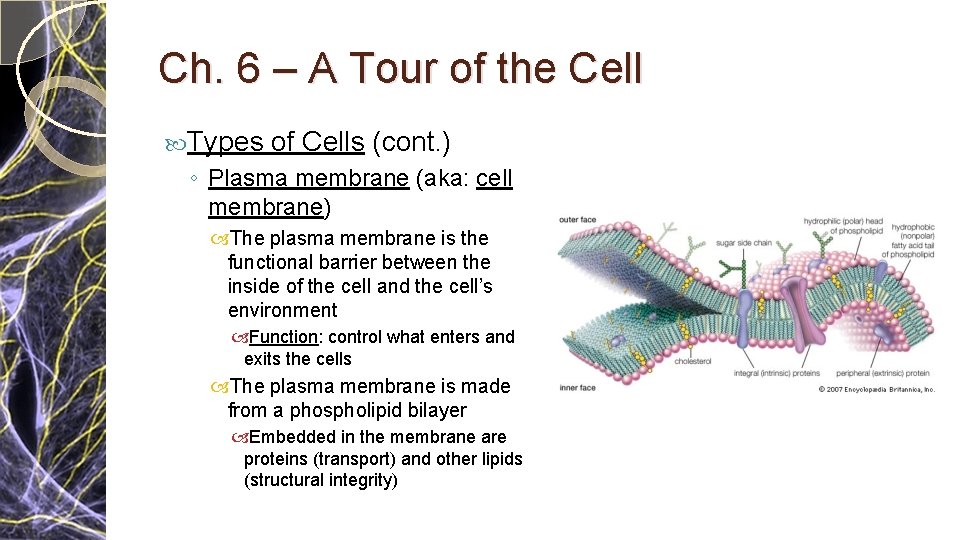
Ch. 6 – A Tour of the Cell Types of Cells (cont. ) ◦ Plasma membrane (aka: cell membrane) The plasma membrane is the functional barrier between the inside of the cell and the cell’s environment Function: control what enters and exits the cells The plasma membrane is made from a phospholipid bilayer Embedded in the membrane are proteins (transport) and other lipids (structural integrity)
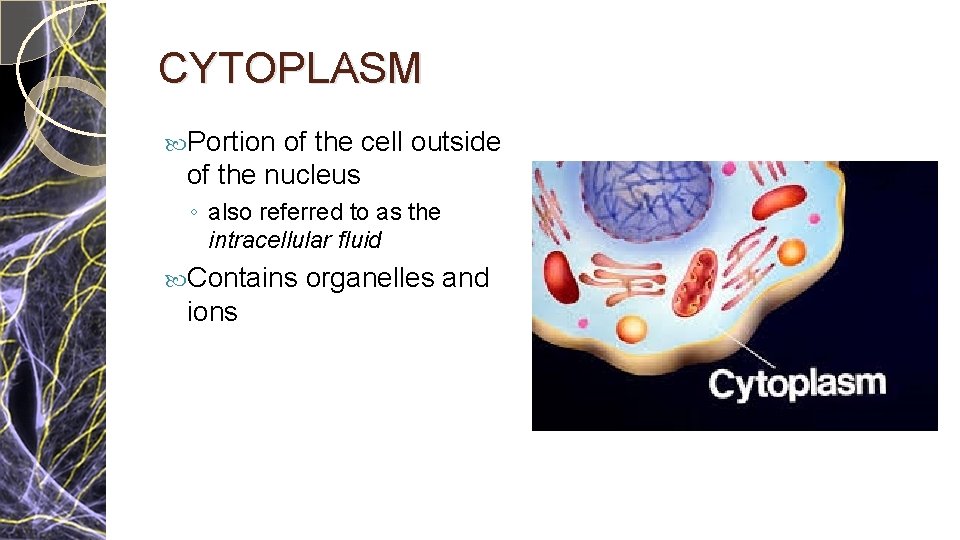
CYTOPLASM Portion of the cell outside of the nucleus ◦ also referred to as the intracellular fluid Contains ions organelles and
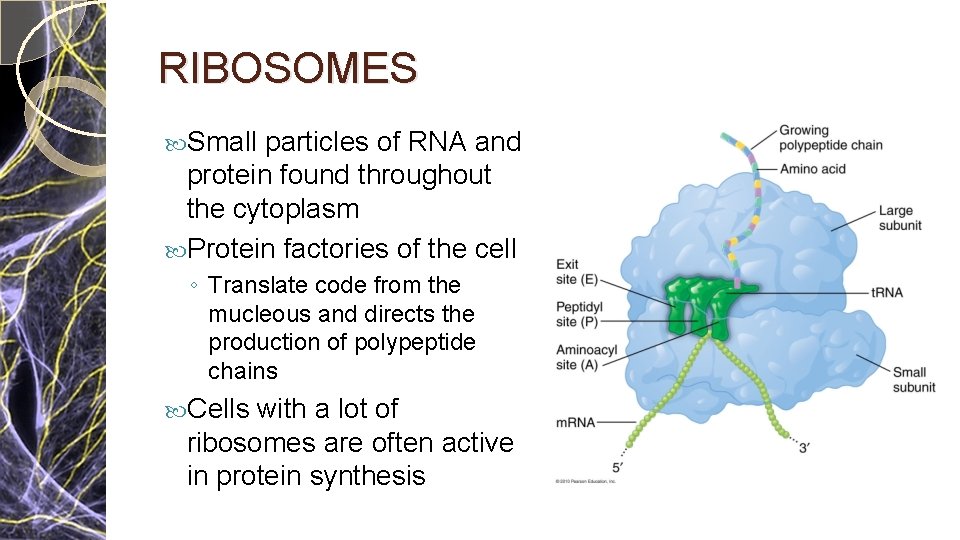
RIBOSOMES Small particles of RNA and protein found throughout the cytoplasm Protein factories of the cell ◦ Translate code from the mucleous and directs the production of polypeptide chains Cells with a lot of ribosomes are often active in protein synthesis
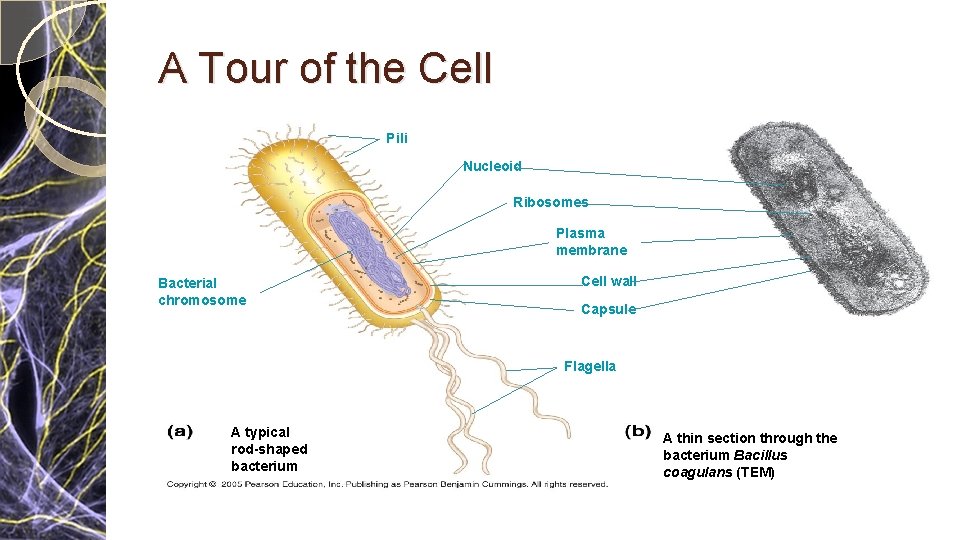
A Tour of the Cell Prokaryotic Cells ◦ Prokaryotic cells: cells that lack organelles All prokaryotic cells lack a nucleus and other organelles These cells carry out the same functions necessary for life as eukaryotic cells, they just don’t have a specialized region where these functions are carried out DNA is found in a “nucleoid” region Other cell processes take place in the cytoplasm
A Tour of the Cell Pili Nucleoid Ribosomes Plasma membrane Bacterial chromosome Cell wall Capsule Flagella A typical rod-shaped bacterium A thin section through the bacterium Bacillus coagulans (TEM)
Ch. 6 – A Tour of the Cell B) Eukaryotic Cells ◦ Eukaryotic cells: contain a nucleus and other membranebound organelles ◦ There a few differences between animal, plant, fungal, and protist cells in regards to their organelles Eukaryotic cells are generally larger in size than prokaryotic cells If a cell gets too large, it can’t efficiently transport the materials it needs for respiration into the cell This is one of the reasons why cells have to divide
Ch. 6 – A Tour of the Cell Organelles ◦ 1) Nucleus The nucleus contains the cells genetic information in the form of DNA The DNA codes for proteins that perform functions within the cell The nucleus is surrounded by the nuclear membrane (aka: nuclear envelope) Within the nucleus is the nucleolus Nucleolus: produces ribosomes
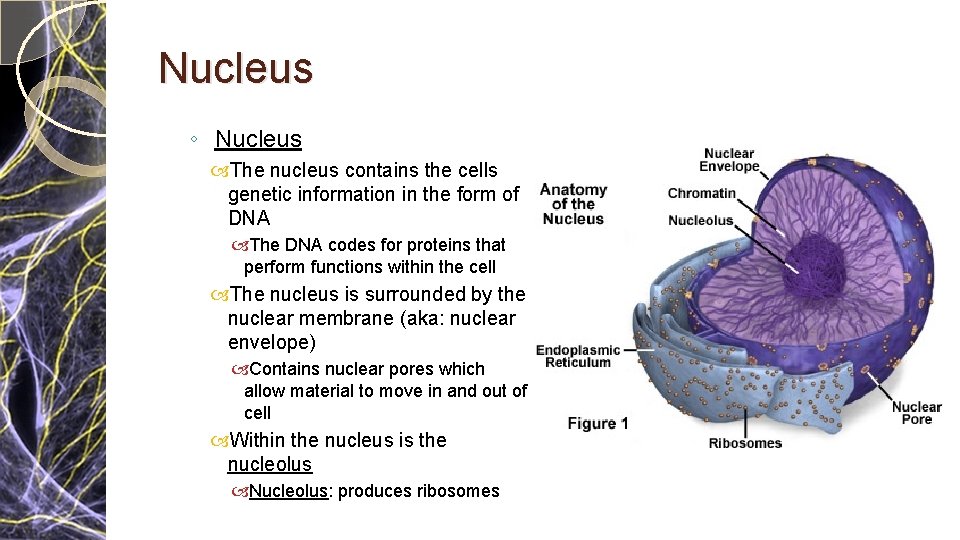
Nucleus ◦ Nucleus The nucleus contains the cells genetic information in the form of DNA The DNA codes for proteins that perform functions within the cell The nucleus is surrounded by the nuclear membrane (aka: nuclear envelope) Contains nuclear pores which allow material to move in and out of cell Within the nucleus is the nucleolus Nucleolus: produces ribosomes
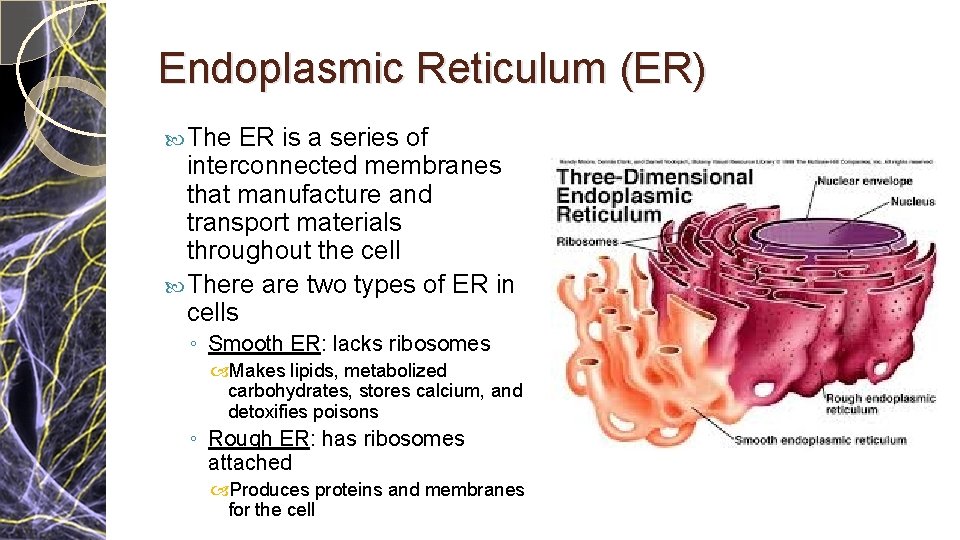
Endoplasmic Reticulum (ER) The ER is a series of interconnected membranes that manufacture and transport materials throughout the cell There are two types of ER in cells ◦ Smooth ER: lacks ribosomes Makes lipids, metabolized carbohydrates, stores calcium, and detoxifies poisons ◦ Rough ER: has ribosomes attached Produces proteins and membranes for the cell
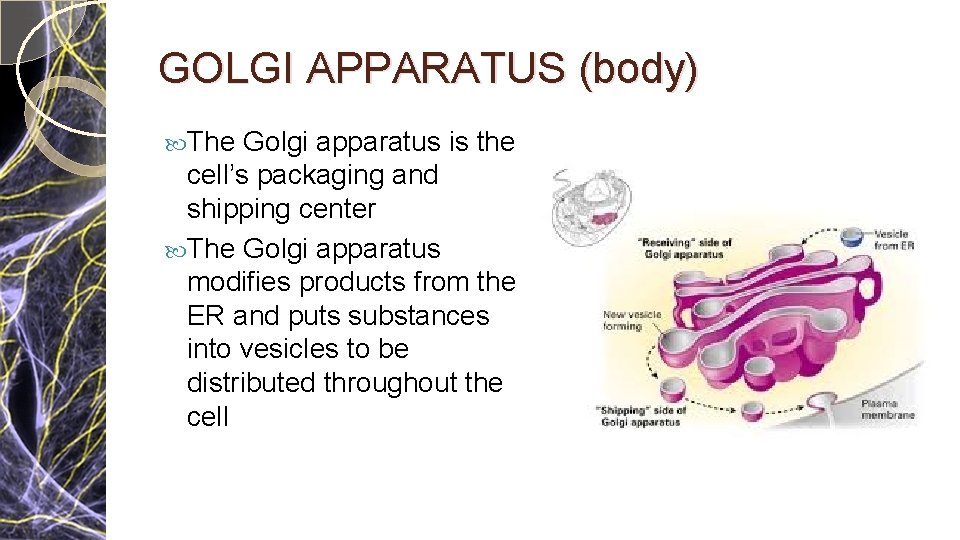
GOLGI APPARATUS (body) The Golgi apparatus is the cell’s packaging and shipping center The Golgi apparatus modifies products from the ER and puts substances into vesicles to be distributed throughout the cell
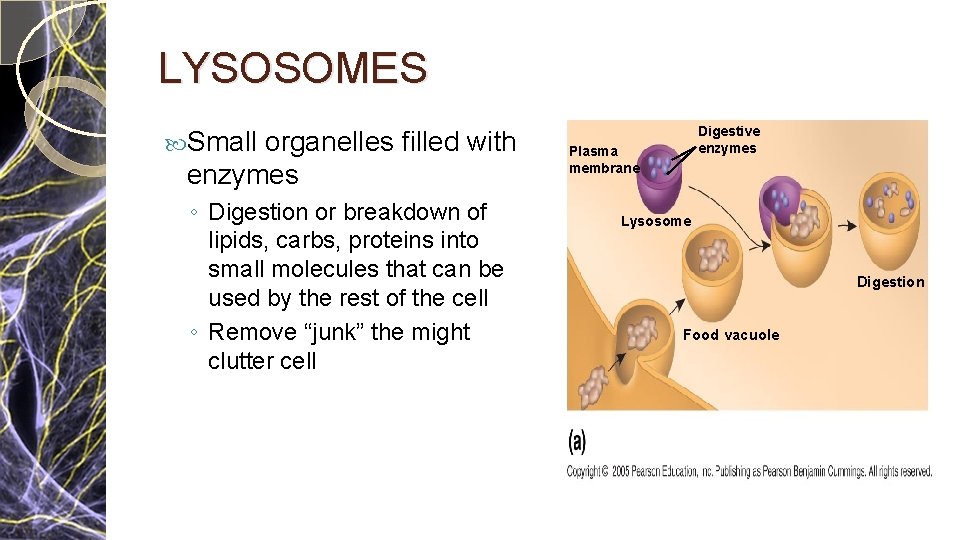
LYSOSOMES Small organelles filled with enzymes ◦ Digestion or breakdown of lipids, carbs, proteins into small molecules that can be used by the rest of the cell ◦ Remove “junk” the might clutter cell Digestive enzymes Plasma membrane Lysosome Digestion Food vacuole
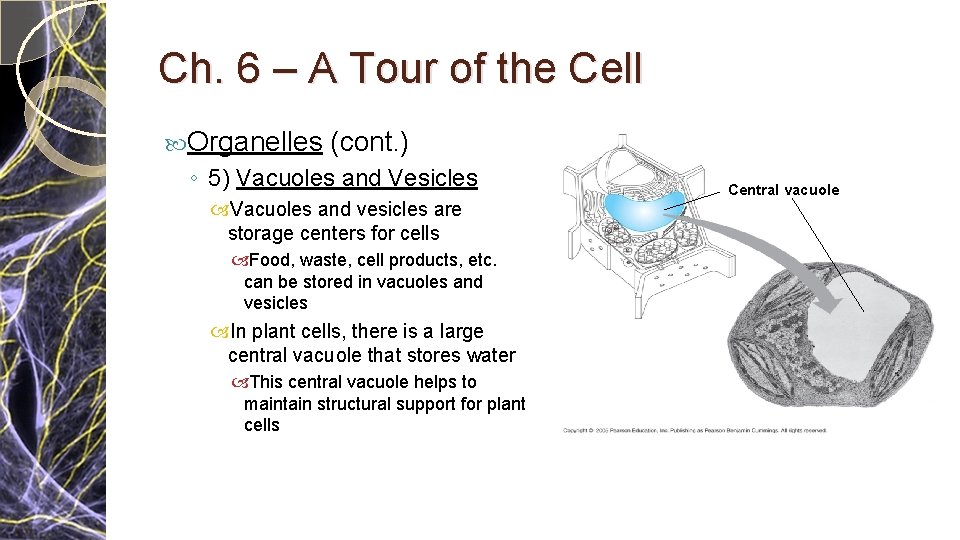
Ch. 6 – A Tour of the Cell Organelles (cont. ) ◦ 5) Vacuoles and Vesicles Vacuoles and vesicles are storage centers for cells Food, waste, cell products, etc. can be stored in vacuoles and vesicles In plant cells, there is a large central vacuole that stores water This central vacuole helps to maintain structural support for plant cells Central vacuole
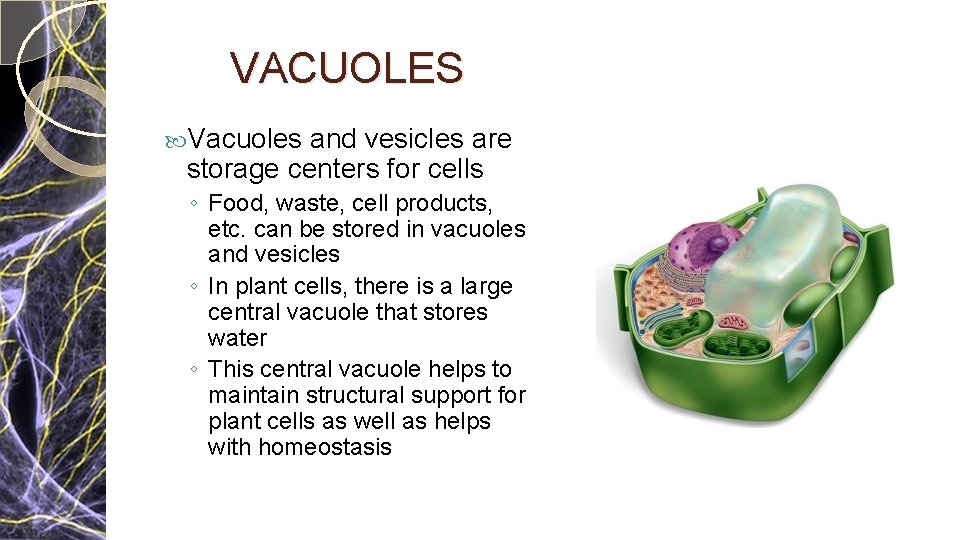
VACUOLES Vacuoles and vesicles are storage centers for cells ◦ Food, waste, cell products, etc. can be stored in vacuoles and vesicles ◦ In plant cells, there is a large central vacuole that stores water ◦ This central vacuole helps to maintain structural support for plant cells as well as helps with homeostasis
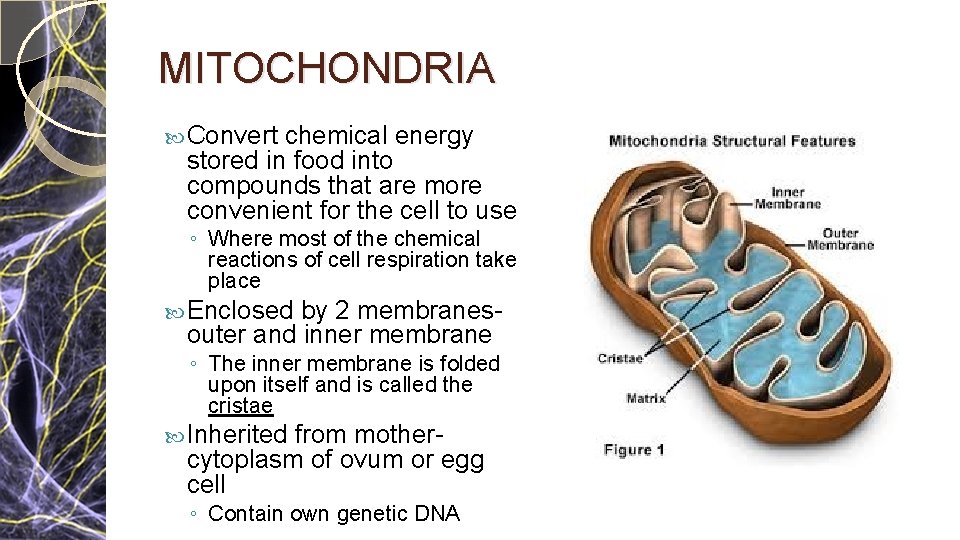
MITOCHONDRIA Convert chemical energy stored in food into compounds that are more convenient for the cell to use ◦ Where most of the chemical reactions of cell respiration take place Enclosed by 2 membranesouter and inner membrane ◦ The inner membrane is folded upon itself and is called the cristae Inherited from mothercytoplasm of ovum or egg cell ◦ Contain own genetic DNA
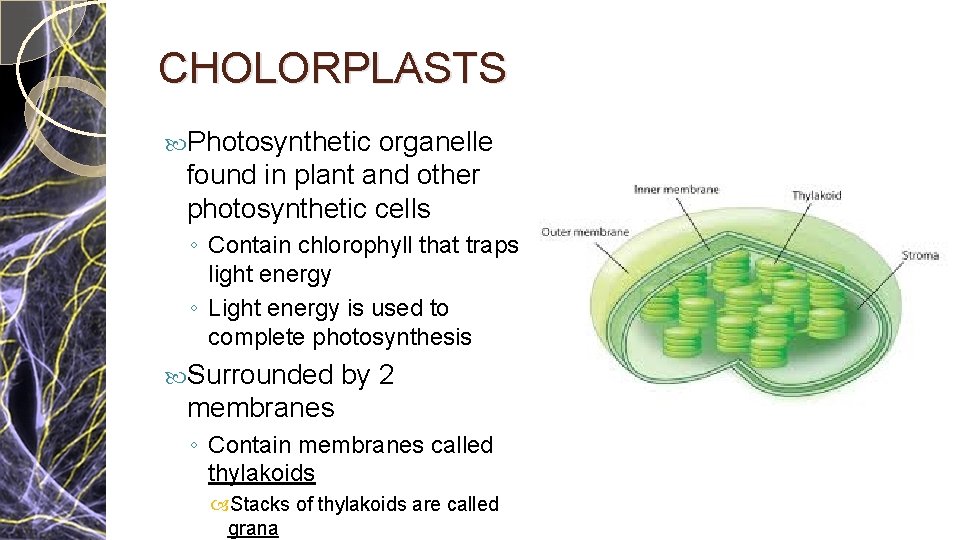
CHOLORPLASTS Photosynthetic organelle found in plant and other photosynthetic cells ◦ Contain chlorophyll that traps light energy ◦ Light energy is used to complete photosynthesis Surrounded by 2 membranes ◦ Contain membranes called thylakoids Stacks of thylakoids are called grana
Ch. 6 – A Tour of the Cell Other Cellular Structures ◦ There are other structures found in cells that aren’t considered organelles but are important in cell functioning Not organelles because they do not have a membrane around them ◦ These include: 1) Centrioles 2) Cilia and Flagella 3) Cytoskeleton 4) Cell Wall
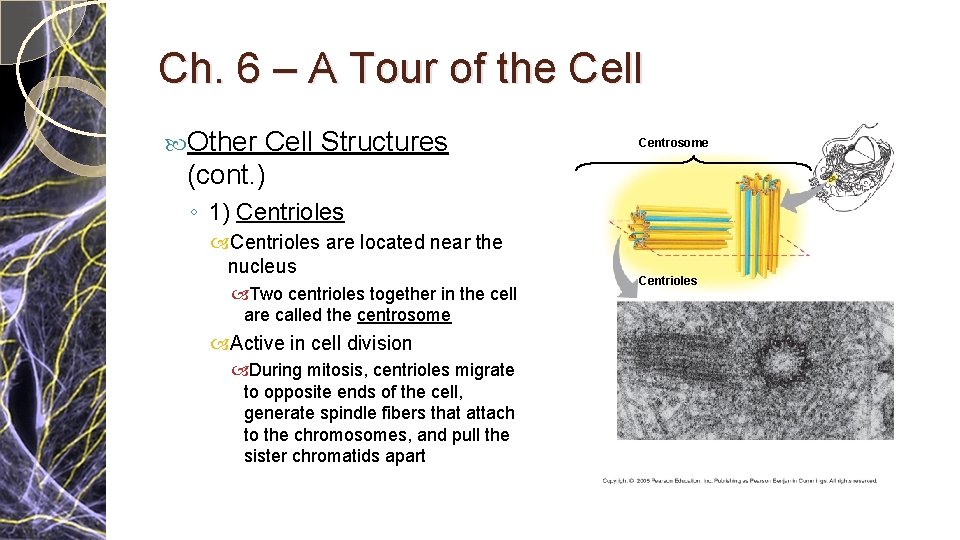
Ch. 6 – A Tour of the Cell Other Cell Structures (cont. ) Centrosome ◦ 1) Centrioles are located near the nucleus Two centrioles together in the cell are called the centrosome Active in cell division During mitosis, centrioles migrate to opposite ends of the cell, generate spindle fibers that attach to the chromosomes, and pull the sister chromatids apart Centrioles
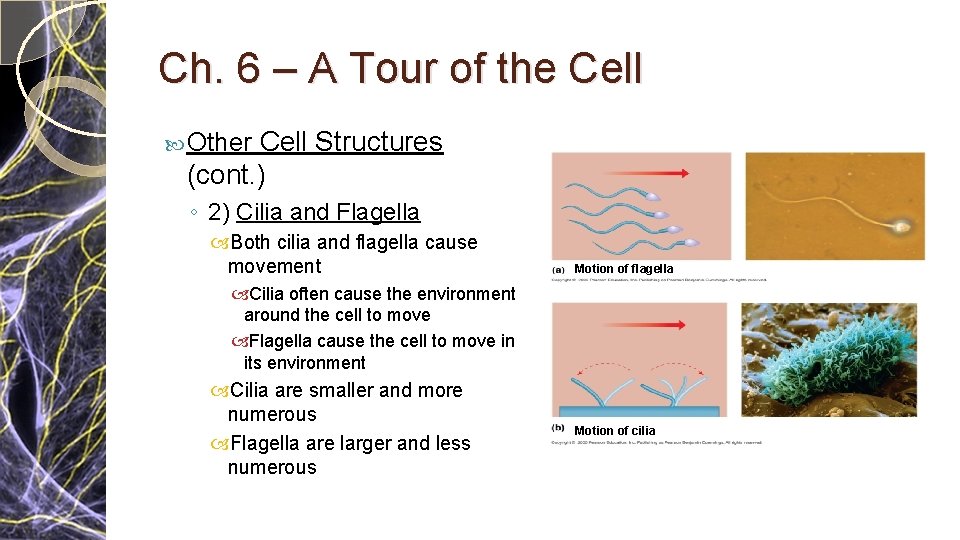
Ch. 6 – A Tour of the Cell Structures (cont. ) Other ◦ 2) Cilia and Flagella Both cilia and flagella cause movement Motion of flagella Cilia often cause the environment around the cell to move Flagella cause the cell to move in its environment Cilia are smaller and more numerous Flagella are larger and less numerous Motion of cilia
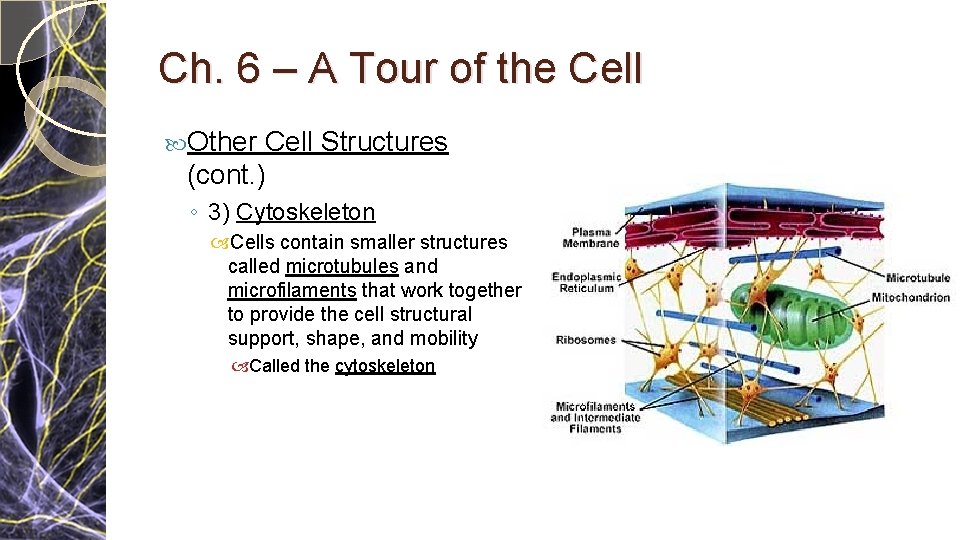
Ch. 6 – A Tour of the Cell Other Cell Structures (cont. ) ◦ 3) Cytoskeleton Cells contain smaller structures called microtubules and microfilaments that work together to provide the cell structural support, shape, and mobility Called the cytoskeleton
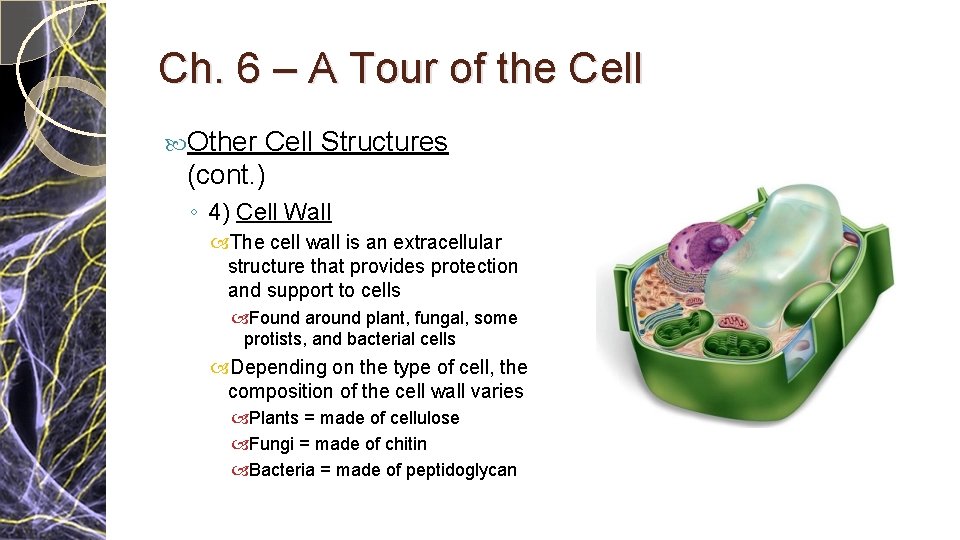
Ch. 6 – A Tour of the Cell Other Cell Structures (cont. ) ◦ 4) Cell Wall The cell wall is an extracellular structure that provides protection and support to cells Found around plant, fungal, some protists, and bacterial cells Depending on the type of cell, the composition of the cell wall varies Plants = made of cellulose Fungi = made of chitin Bacteria = made of peptidoglycan
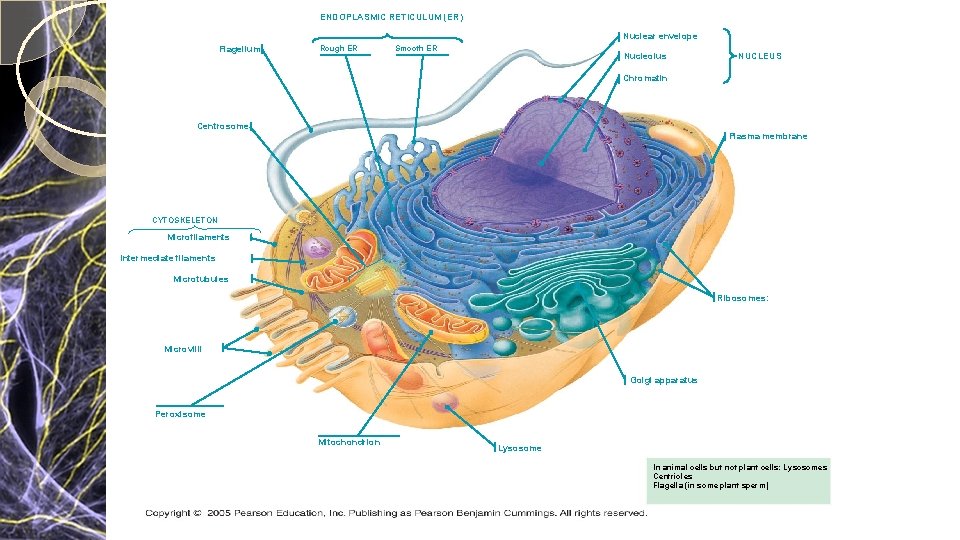
ENDOPLASMIC RETICULUM (ER) Nuclear envelope Flagellum Rough ER Smooth ER Nucleolus NUCLEUS Chromatin Centrosome Plasma membrane CYTOSKELETON Microfilaments Intermediate filaments Microtubules Ribosomes: Microvilli Golgi apparatus Peroxisome Mitochondrion Lysosome In animal cells but not plant cells: Lysosomes Centrioles Flagella (in some plant sperm)
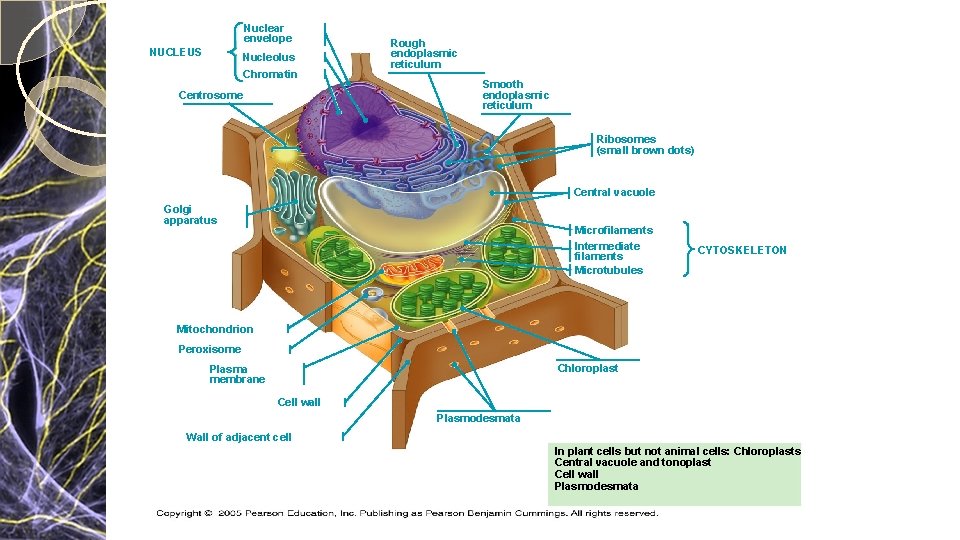
Nuclear envelope NUCLEUS Nucleolus Chromatin Centrosome Rough endoplasmic reticulum Smooth endoplasmic reticulum Ribosomes (small brown dots) Central vacuole Golgi apparatus Microfilaments Intermediate filaments Microtubules CYTOSKELETON Mitochondrion Peroxisome Chloroplast Plasma membrane Cell wall Plasmodesmata Wall of adjacent cell In plant cells but not animal cells: Chloroplasts Central vacuole and tonoplast Cell wall Plasmodesmata