
EUKARYOTE CELL ULTRASTRUCTURE Primary Cell Structure That which
- Slides: 29
EUKARYOTE CELL ULTRASTRUCTURE
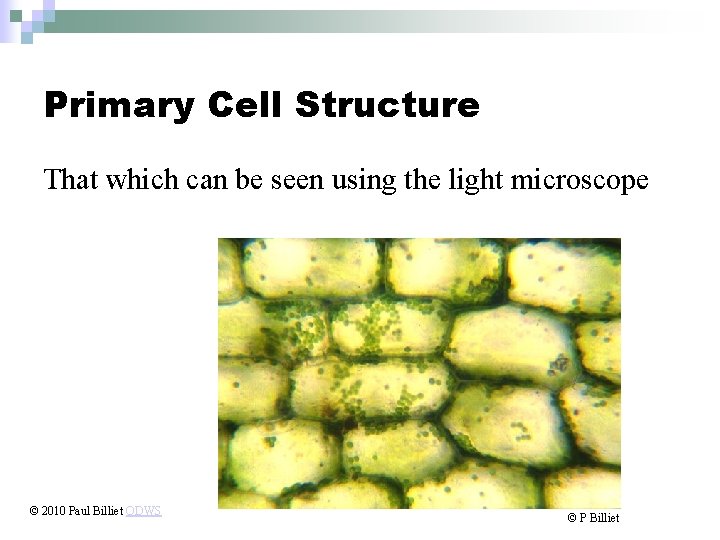
Primary Cell Structure That which can be seen using the light microscope © 2010 Paul Billiet ODWS © P Billiet
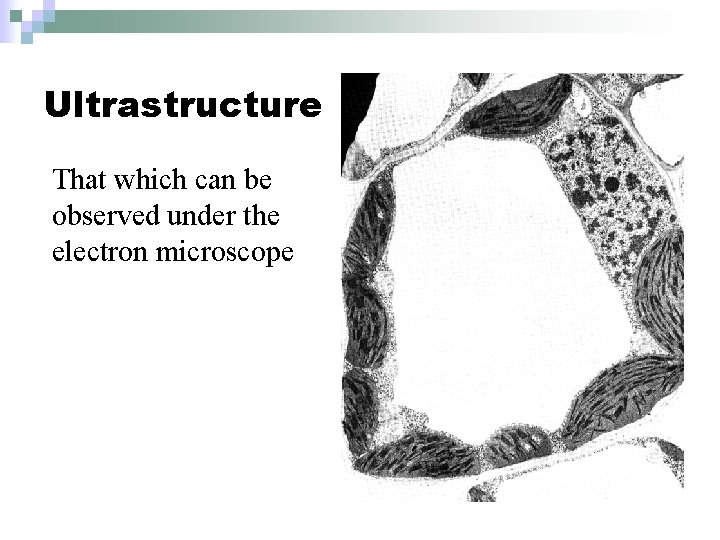
Ultrastructure That which can be observed under the electron microscope
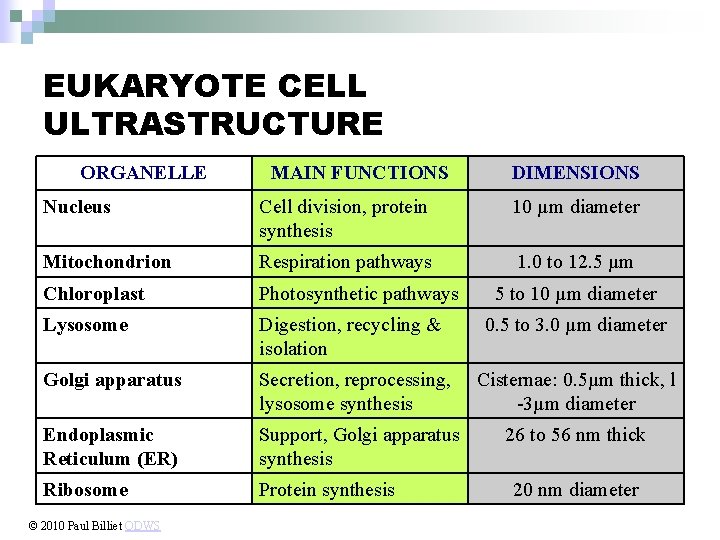
EUKARYOTE CELL ULTRASTRUCTURE ORGANELLE MAIN FUNCTIONS DIMENSIONS Nucleus Cell division, protein synthesis 10 µm diameter Mitochondrion Respiration pathways 1. 0 to 12. 5 µm Chloroplast Photosynthetic pathways Lysosome Digestion, recycling & isolation 0. 5 to 3. 0 µm diameter Golgi apparatus Secretion, reprocessing, lysosome synthesis Cisternae: 0. 5µm thick, l -3µm diameter Endoplasmic Reticulum (ER) Support, Golgi apparatus synthesis 26 to 56 nm thick Ribosome Protein synthesis © 2010 Paul Billiet ODWS 5 to 10 µm diameter 20 nm diameter
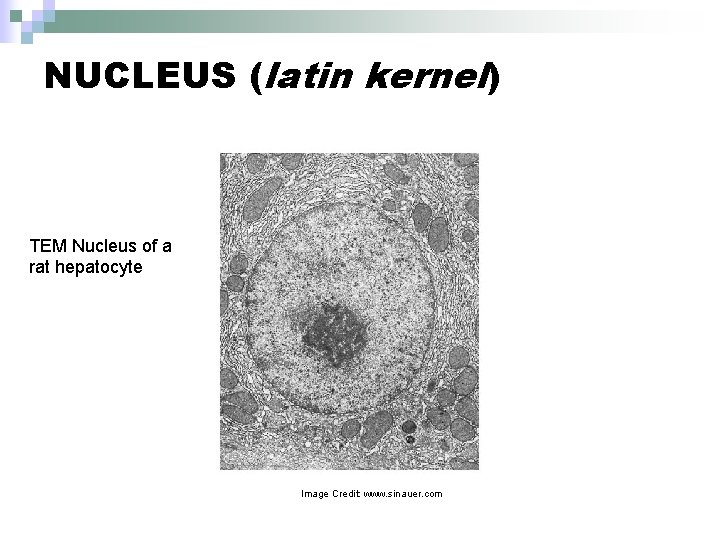
NUCLEUS (latin kernel) TEM Nucleus of a rat hepatocyte Image Credit: www. sinauer. com
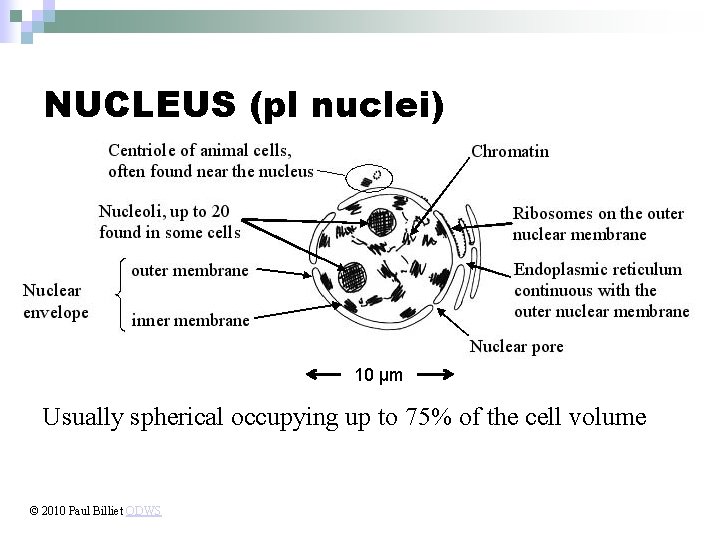
NUCLEUS (pl nuclei) 10 µm Usually spherical occupying up to 75% of the cell volume © 2010 Paul Billiet ODWS
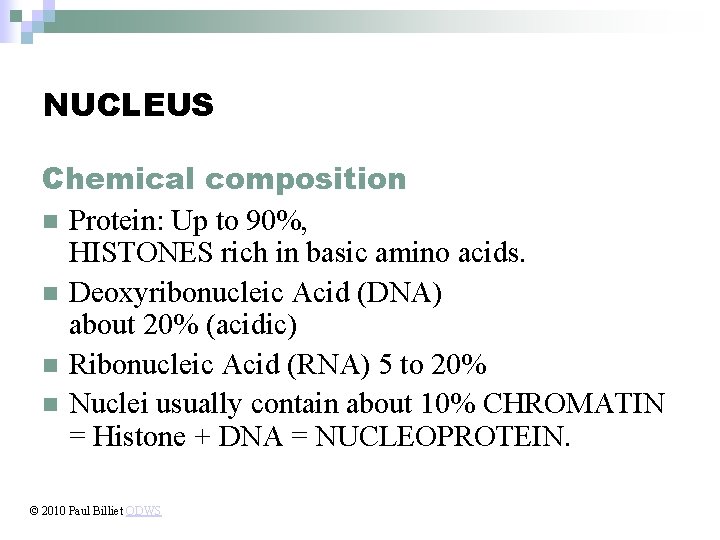
NUCLEUS Chemical composition n Protein: Up to 90%, HISTONES rich in basic amino acids. n Deoxyribonucleic Acid (DNA) about 20% (acidic) n Ribonucleic Acid (RNA) 5 to 20% n Nuclei usually contain about 10% CHROMATIN = Histone + DNA = NUCLEOPROTEIN. © 2010 Paul Billiet ODWS
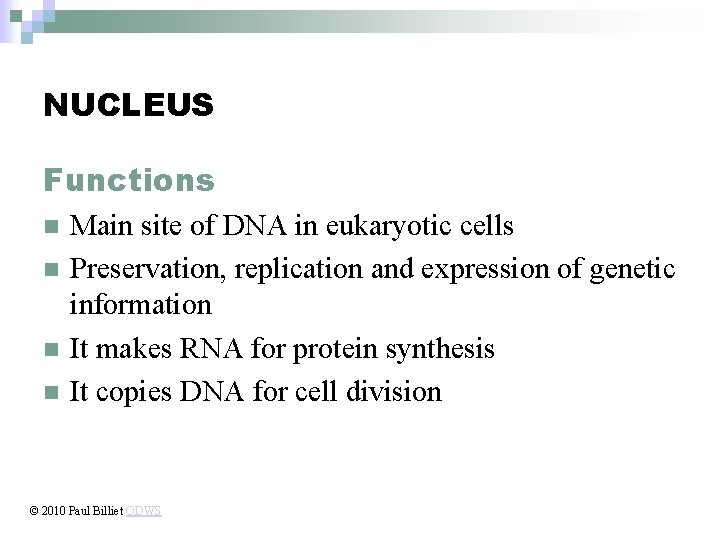
NUCLEUS Functions n n Main site of DNA in eukaryotic cells Preservation, replication and expression of genetic information It makes RNA for protein synthesis It copies DNA for cell division © 2010 Paul Billiet ODWS
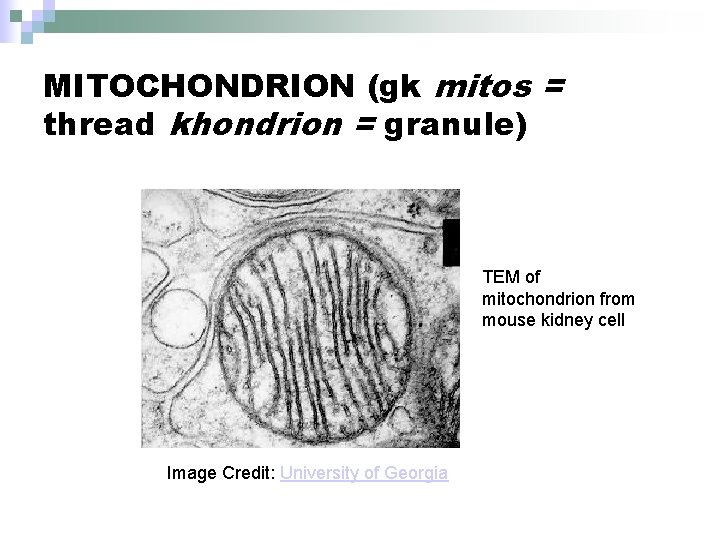
MITOCHONDRION (gk mitos = thread khondrion = granule) TEM of mitochondrion from mouse kidney cell Image Credit: University of Georgia
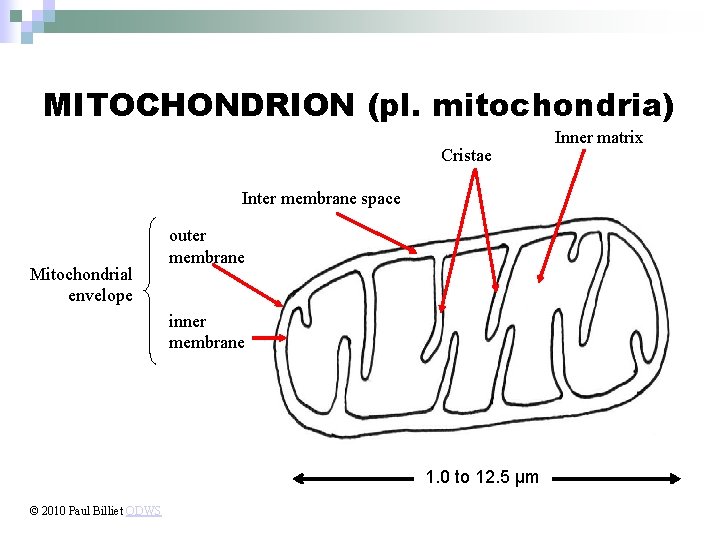
MITOCHONDRION (pl. mitochondria) Cristae Inter membrane space Mitochondrial envelope outer membrane inner membrane 1. 0 to 12. 5 µm © 2010 Paul Billiet ODWS Inner matrix
MITOCHONDRION Pigments Cytochromes Functions n The inner membrane contains the enzyme necessary for the synthesis of Adenosine Triphosphate (ATP) n The mitochondria are closely associated with the pathways of respiration n These metabolic pathways are divided up and supported by the membranes © 2010 Paul Billiet ODWS
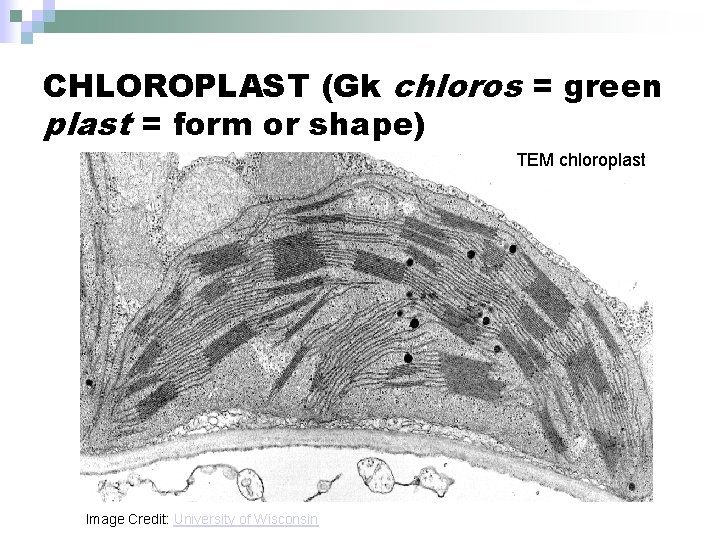
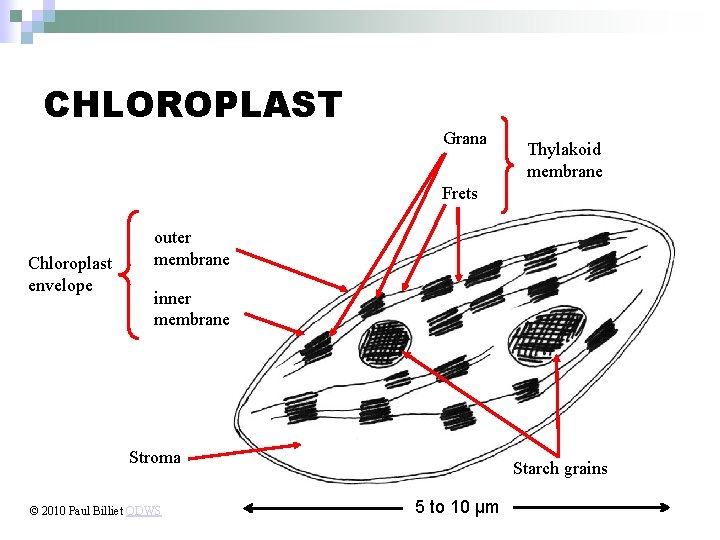
CHLOROPLAST (Gk chloros = green plast = form or shape) TEM chloroplast Image Credit: University of Wisconsin
CHLOROPLAST Grana Thylakoid membrane Frets Chloroplast envelope outer membrane inner membrane Stroma © 2010 Paul Billiet ODWS Starch grains 5 to 10 µm
CHLOROPLAST Pigments Mainly chlorophylls with carotenoids and others Function: Photosynthesis n The metabolic pathways are closely associated with the membranes as in the case of the mitochondrion © 2010 Paul Billiet ODWS
Organelles and evolution n n Both chloroplasts and mitochondria are double membrane bound They involved in energy reactions They contain extranuclear DNA and characteristic small ribosomes of their own This has led biologists to believe that there may be some similarity in their origins in the cells of eukaryotes. The endosymbiotic theory © 2010 Paul Billiet ODWS
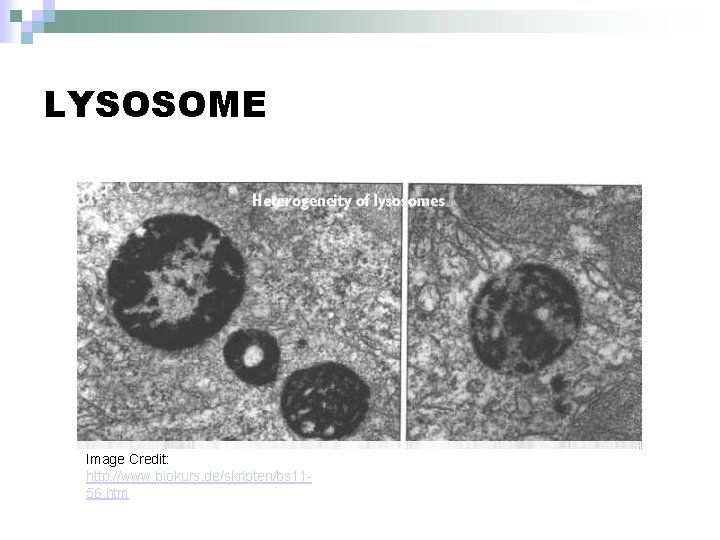
LYSOSOME Image Credit: http: //www. biokurs. de/skripten/bs 1156. htm
LYSOSOME n n Not discovered by electron microscopy but by centrifugation and enzyme analysis Some scientists suggest that they are not present in plant cells Structure: Simple, spherical, single membrane bound n Lysosomes contain a large number of CATABOLIC enzymes. Catabolic enzymes digest materials by hydrolysis © 2010 Paul Billiet ODWS
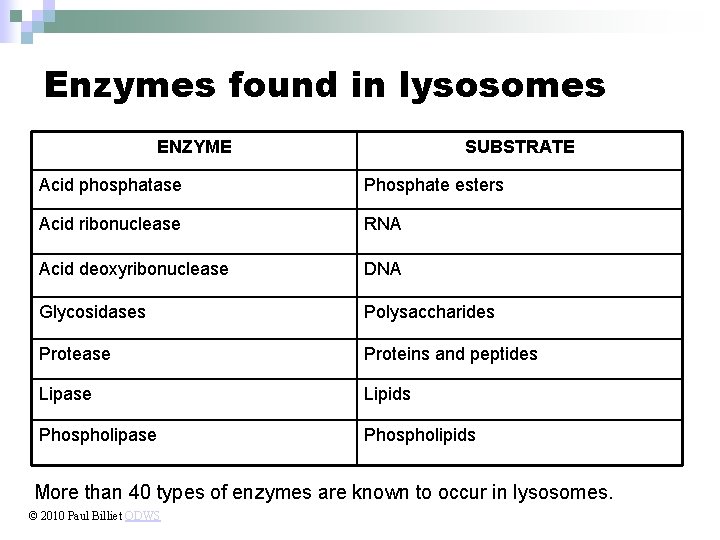
Enzymes found in lysosomes ENZYME SUBSTRATE Acid phosphatase Phosphate esters Acid ribonuclease RNA Acid deoxyribonuclease DNA Glycosidases Polysaccharides Protease Proteins and peptides Lipase Lipids Phospholipase Phospholipids More than 40 types of enzymes are known to occur in lysosomes. © 2010 Paul Billiet ODWS
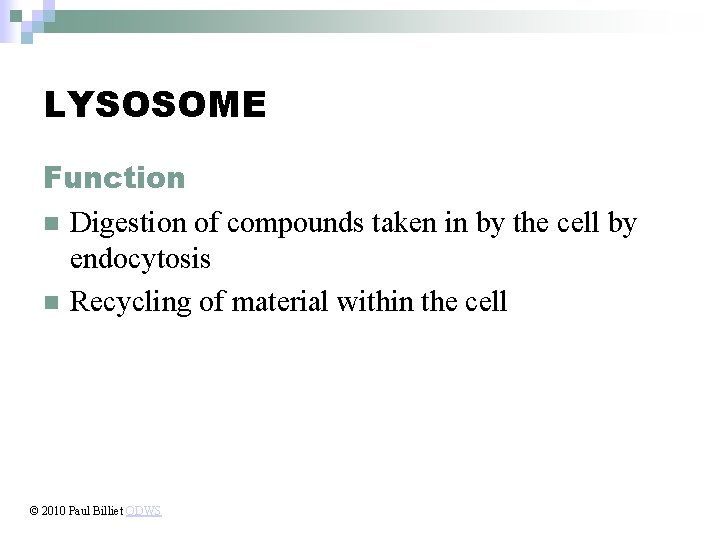
LYSOSOME Function n Digestion of compounds taken in by the cell by endocytosis n Recycling of material within the cell © 2010 Paul Billiet ODWS
GOLGI APPARATUS Image Credit: International Journal of Morphology
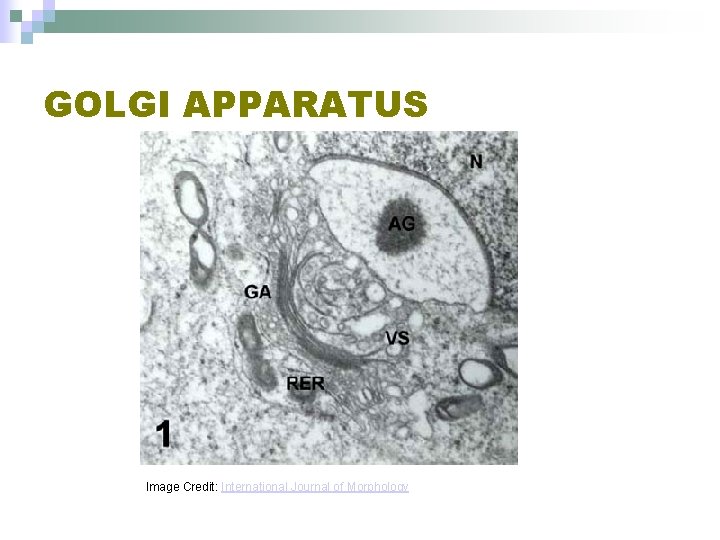
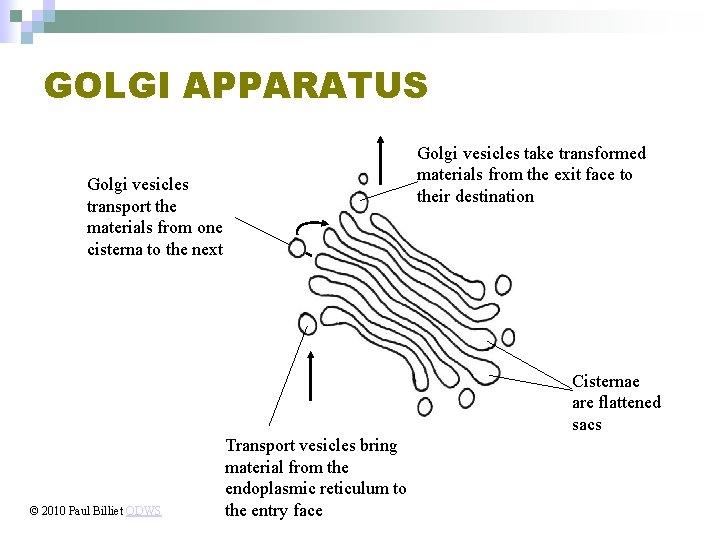
GOLGI APPARATUS Golgi vesicles take transformed materials from the exit face to their destination Golgi vesicles transport the materials from one cisterna to the next Cisternae are flattened sacs © 2010 Paul Billiet ODWS Transport vesicles bring material from the endoplasmic reticulum to the entry face
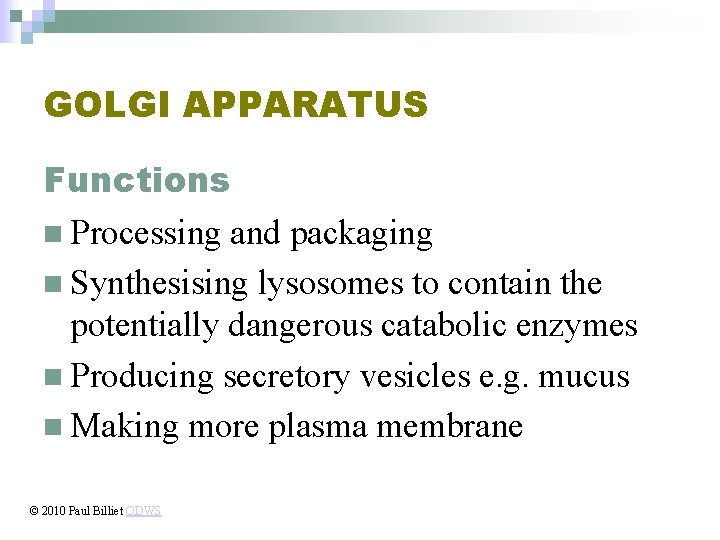
GOLGI APPARATUS Functions n Processing and packaging n Synthesising lysosomes to contain the potentially dangerous catabolic enzymes n Producing secretory vesicles e. g. mucus n Making more plasma membrane © 2010 Paul Billiet ODWS
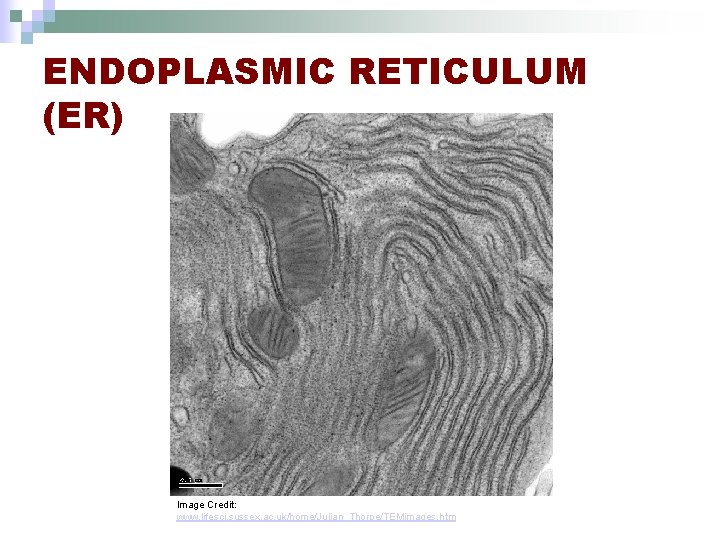
ENDOPLASMIC RETICULUM (ER) Image Credit: www. lifesci. sussex. ac. uk/home/Julian_Thorpe/TEMimages. htm
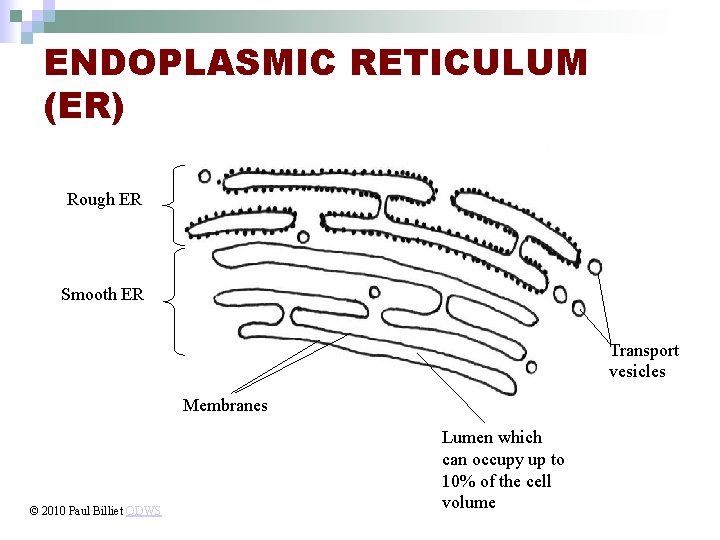
ENDOPLASMIC RETICULUM (ER) Rough ER Smooth ER Transport vesicles Membranes © 2010 Paul Billiet ODWS Lumen which can occupy up to 10% of the cell volume
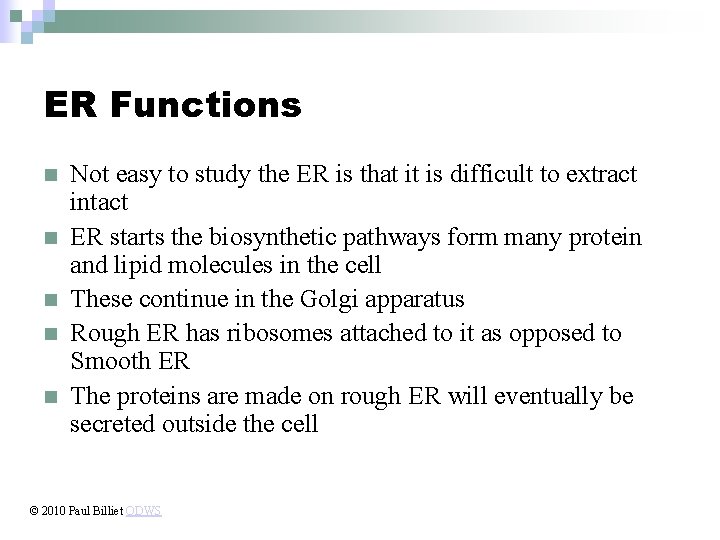
ER Functions n n n Not easy to study the ER is that it is difficult to extract intact ER starts the biosynthetic pathways form many protein and lipid molecules in the cell These continue in the Golgi apparatus Rough ER has ribosomes attached to it as opposed to Smooth ER The proteins are made on rough ER will eventually be secreted outside the cell © 2010 Paul Billiet ODWS
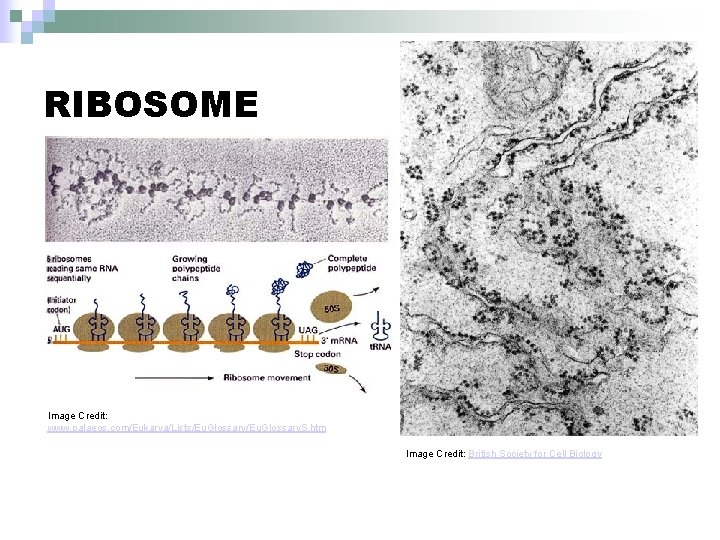
RIBOSOME Image Credit: www. palaeos. com/Eukarya/Lists/Eu. Glossary. S. htm Image Credit: British Society for Cell Biology
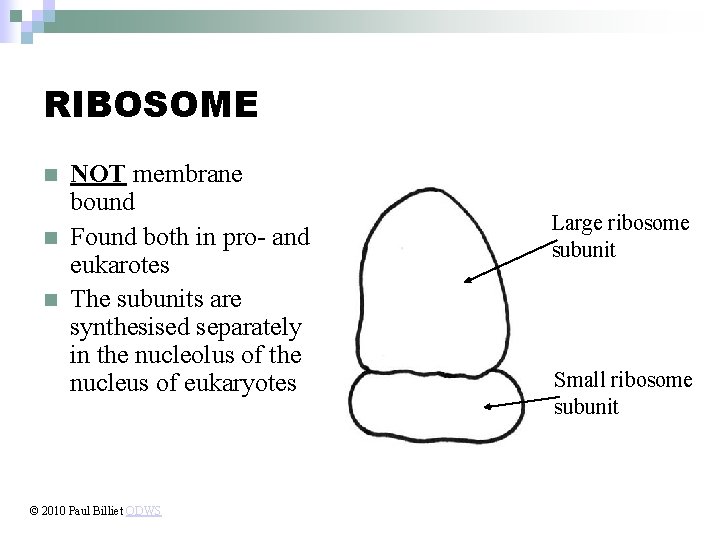
RIBOSOME n n n NOT membrane bound Found both in pro- and eukarotes The subunits are synthesised separately in the nucleolus of the nucleus of eukaryotes © 2010 Paul Billiet ODWS Large ribosome subunit Small ribosome subunit
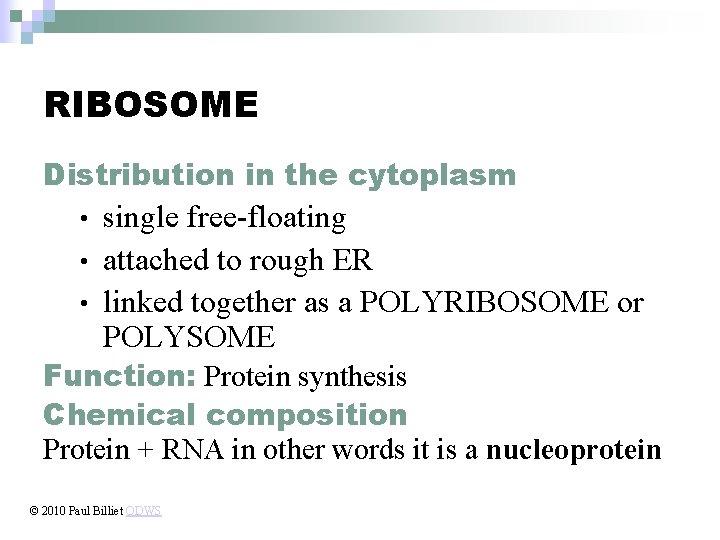
RIBOSOME Distribution in the cytoplasm single free-floating • attached to rough ER • linked together as a POLYRIBOSOME or POLYSOME • Function: Protein synthesis Chemical composition Protein + RNA in other words it is a nucleoprotein © 2010 Paul Billiet ODWS
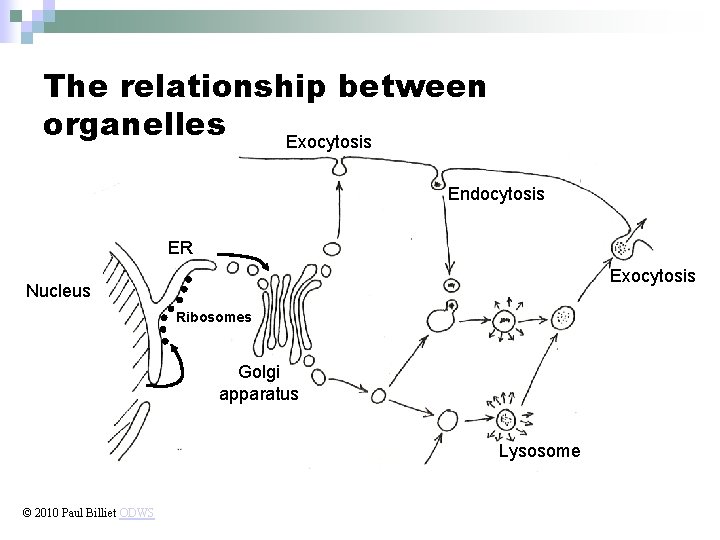
The relationship between organelles Exocytosis Endocytosis ER Exocytosis Nucleus Ribosomes Golgi apparatus Lysosome © 2010 Paul Billiet ODWS