
EUBACTERIA and ARCHAEBACTERIA pp 360 372 Classifying Prokaryotes
EUBACTERIA and ARCHAEBACTERIA pp. 360 -372
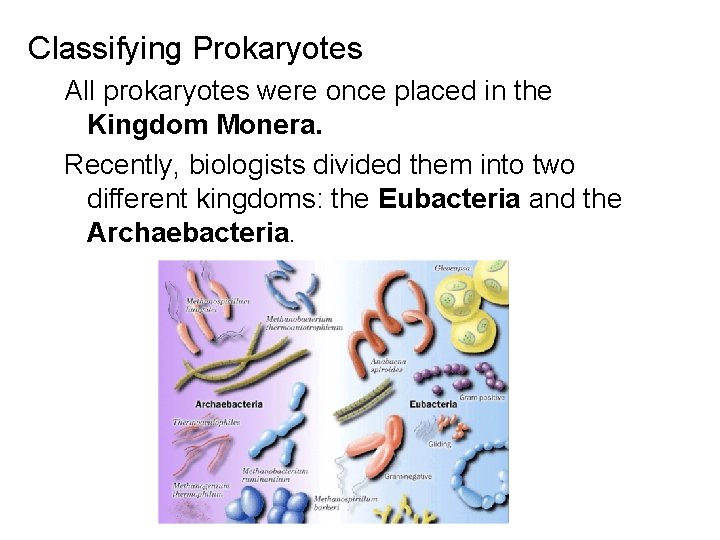
Classifying Prokaryotes All prokaryotes were once placed in the Kingdom Monera. Recently, biologists divided them into two different kingdoms: the Eubacteria and the Archaebacteria.
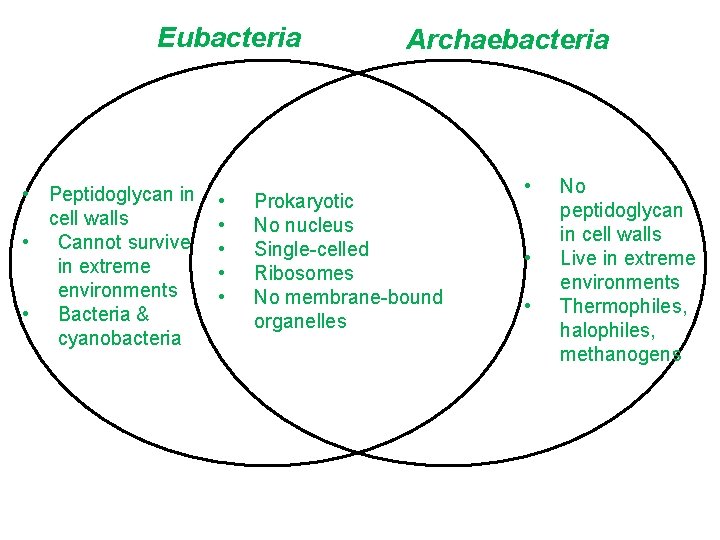
Eubacteria • Peptidoglycan in cell walls • Cannot survive in extreme environments • Bacteria & cyanobacteria • • • Archaebacteria Prokaryotic No nucleus Single-celled Ribosomes No membrane-bound organelles • • • No peptidoglycan in cell walls Live in extreme environments Thermophiles, halophiles, methanogens
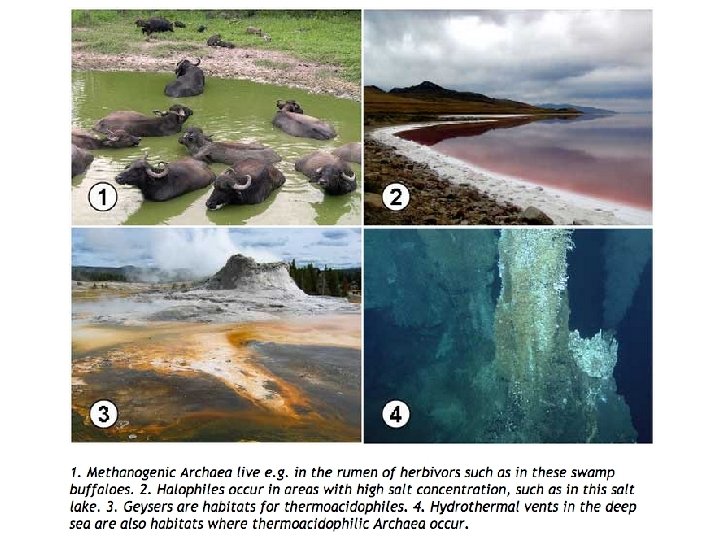
1. Archaebacteria • DNA shows a closer evolutionary relationship to eukaryotes • Many archaebacteria live in extreme environments. • Methanogens live in oxygen-free environments (ex. thick mud & animal digestive tracts) • Halophiles live in salty environments • Thermophiles live in hot environments (ex. hot springs)
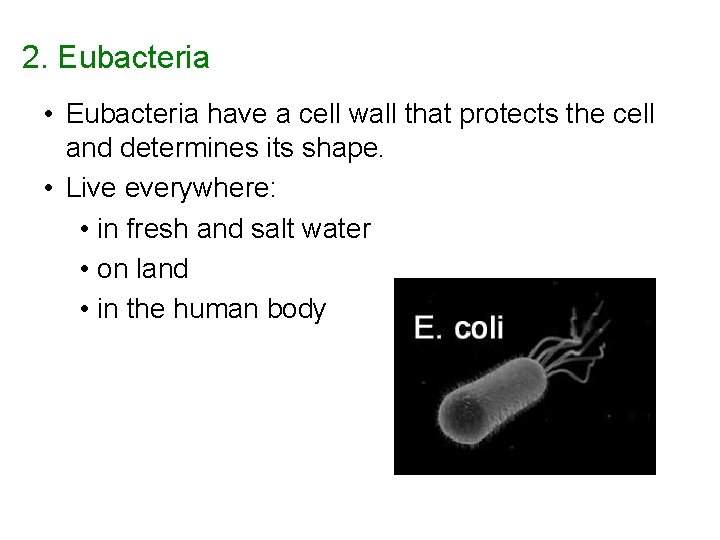
2. Eubacteria • Eubacteria have a cell wall that protects the cell and determines its shape. • Live everywhere: • in fresh and salt water • on land • in the human body
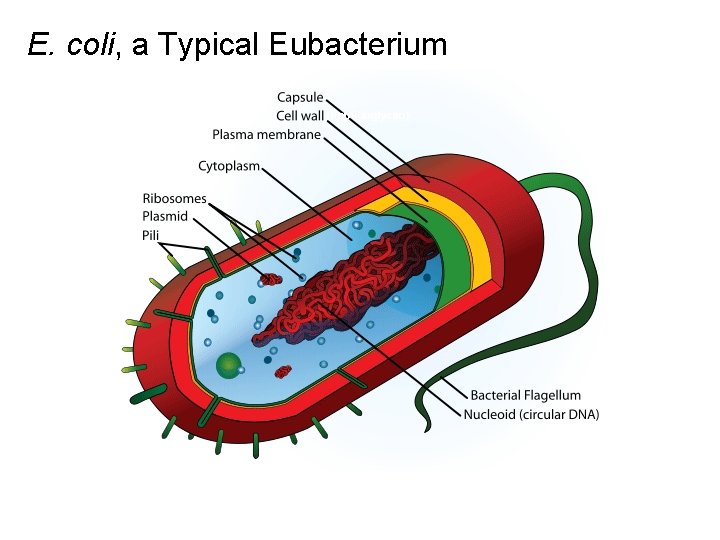
E. coli, a Typical Eubacterium (Peptidoglycan)
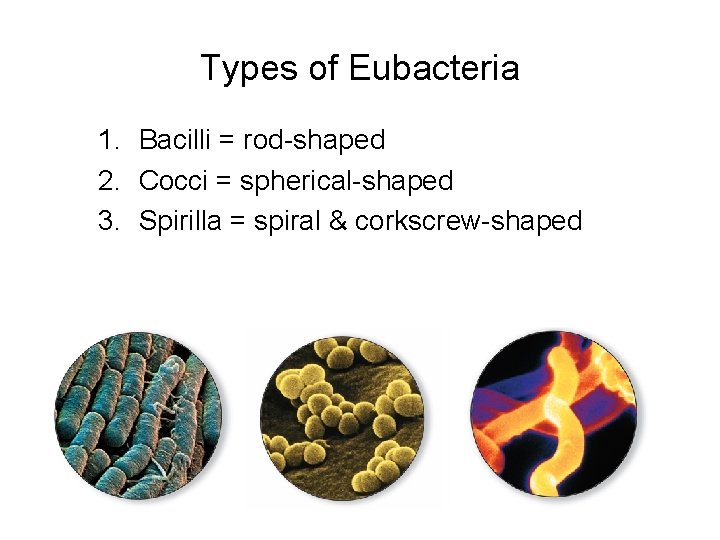
Types of Eubacteria 1. Bacilli = rod-shaped 2. Cocci = spherical-shaped 3. Spirilla = spiral & corkscrew-shaped
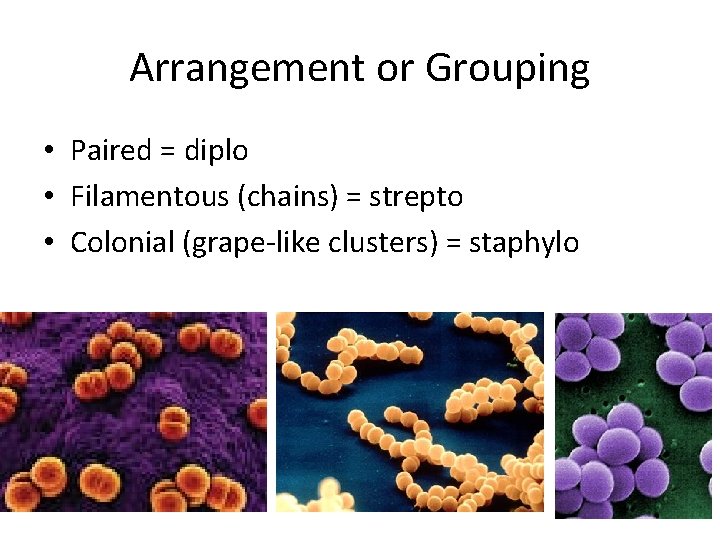
Arrangement or Grouping • Paired = diplo • Filamentous (chains) = strepto • Colonial (grape-like clusters) = staphylo
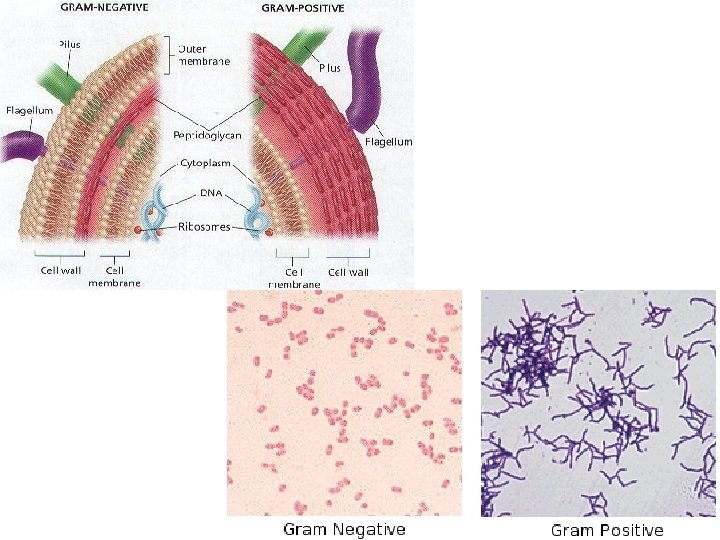
Identifying Prokaryotes: • Two different types of cell walls are found in eubacteria. • A method called gram staining tells them apart. ØGram-positive bacteria have thick cell walls with large amounts of peptidoglycan. ØGram-negative bacteria have thinner cell walls inside an outer lipid layer. Copyright Pearson Prentice Hall
- Slides: 11