
Etymology n Beer latin n biber to drink
Etymology n Beer ? latin: n biber – to drink n
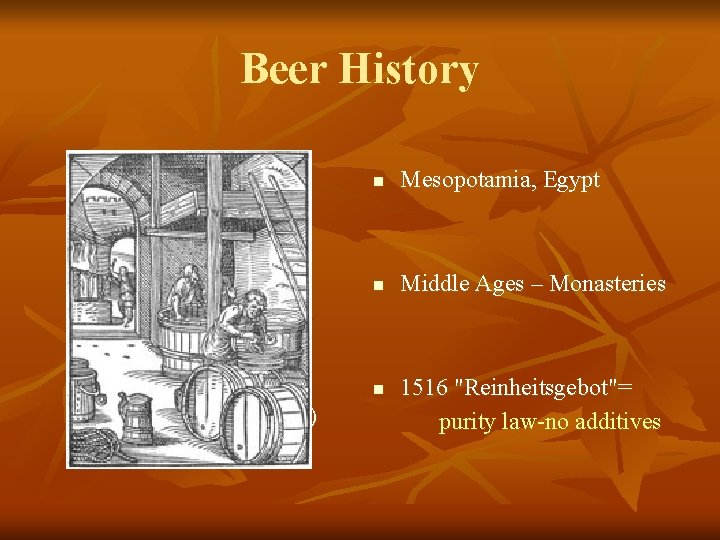
Beer History n Mesopotamia, Egypt n Middle Ages – Monasteries n Beer-brewing (1568) 1516 "Reinheitsgebot"= purity law-no additives
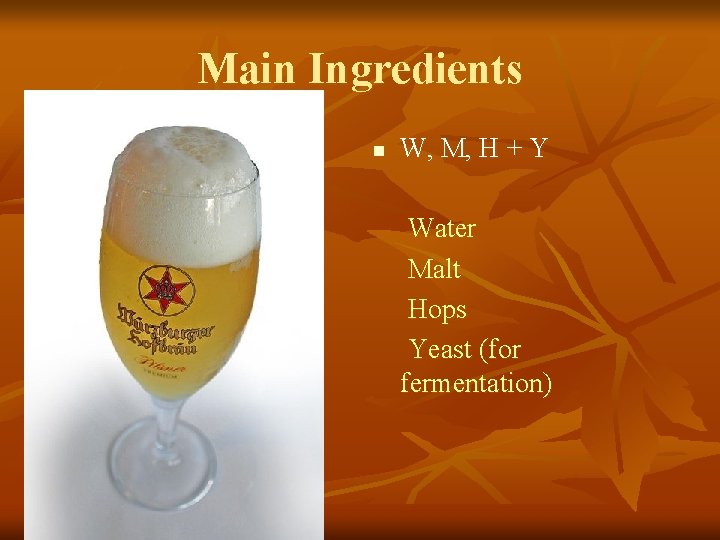
Main Ingredients n W, M, H + Y Water Malt Hops Yeast (for fermentation)
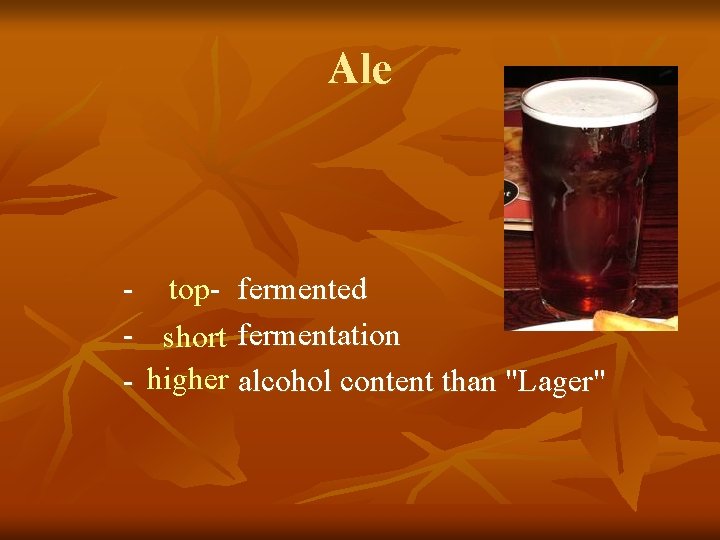
Ale - top- fermented - short fermentation - higher alcohol content than "Lager"
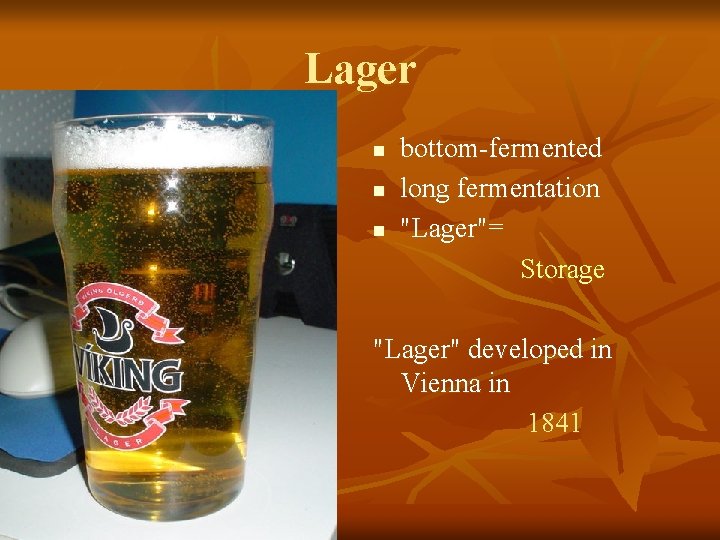
Lager n n n bottom-fermented long fermentation "Lager"= Storage "Lager" developed in Vienna in 1841
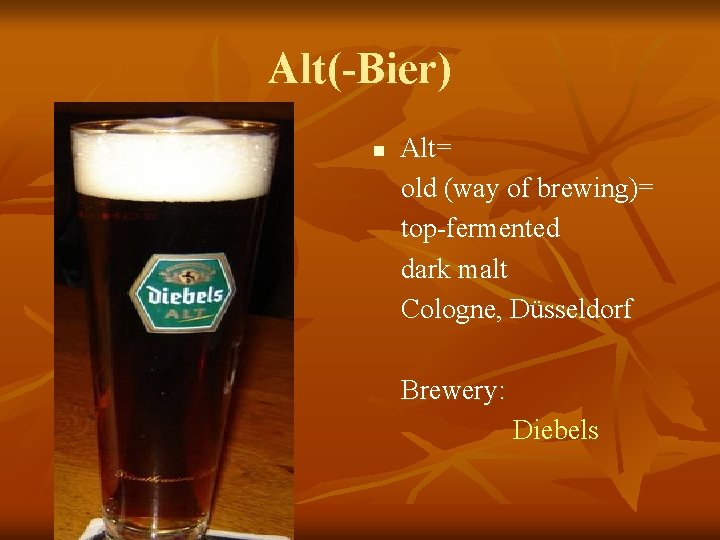
Alt(-Bier) n Alt= old (way of brewing)= top-fermented dark malt Cologne, Düsseldorf Brewery: Diebels
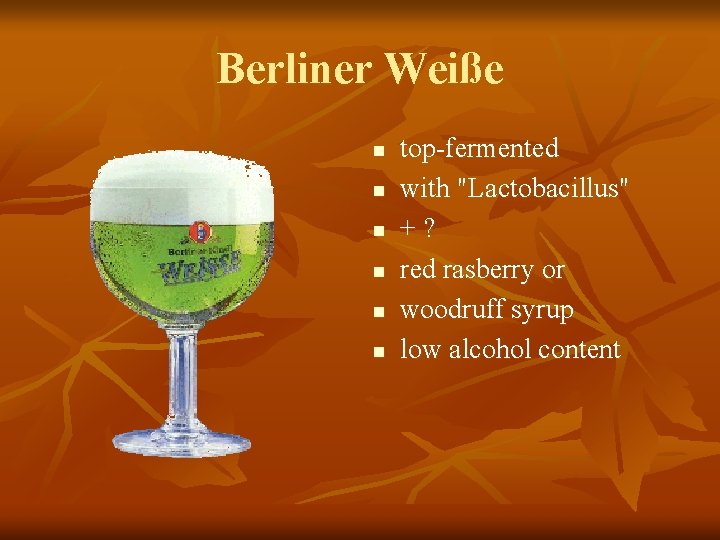
Berliner Weiße n n n top-fermented with "Lactobacillus" +? red rasberry or woodruff syrup low alcohol content
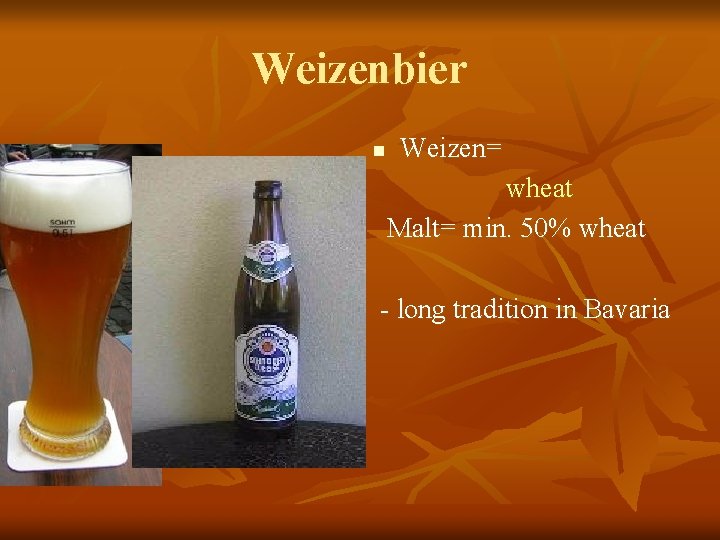
Weizenbier n Weizen= wheat Malt= min. 50% wheat - long tradition in Bavaria
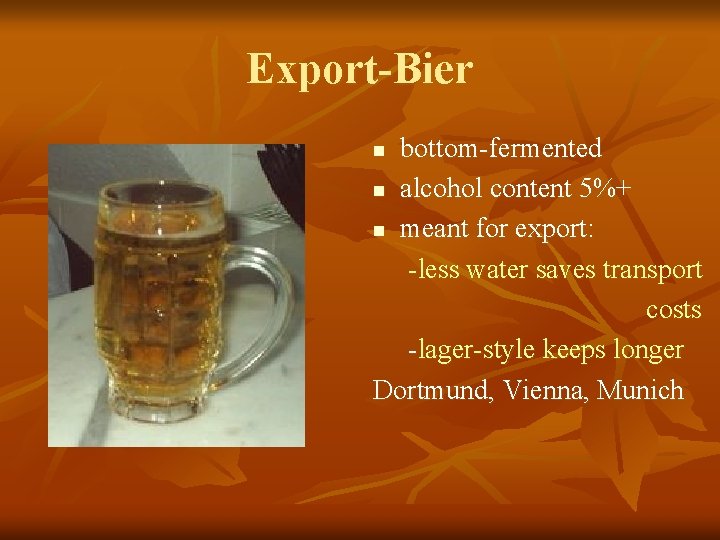
Export-Bier bottom-fermented n alcohol content 5%+ n meant for export: -less water saves transport costs -lager-style keeps longer Dortmund, Vienna, Munich n
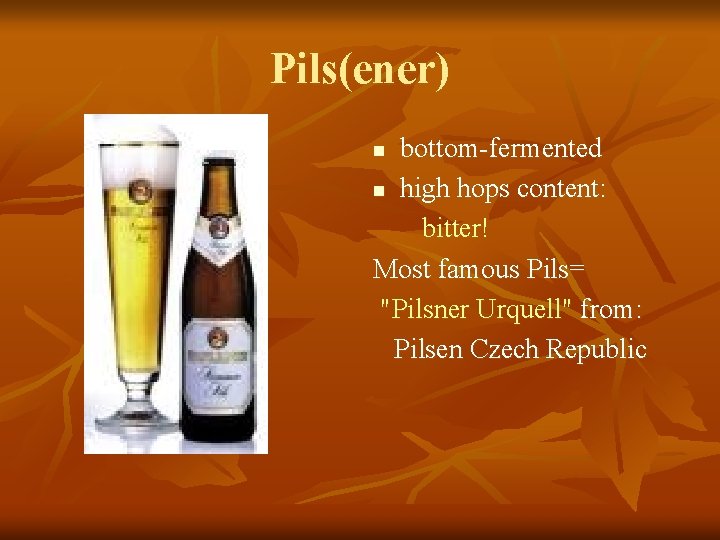
Pils(ener) bottom-fermented n high hops content: bitter! Most famous Pils= "Pilsner Urquell" from: Pilsen Czech Republic n
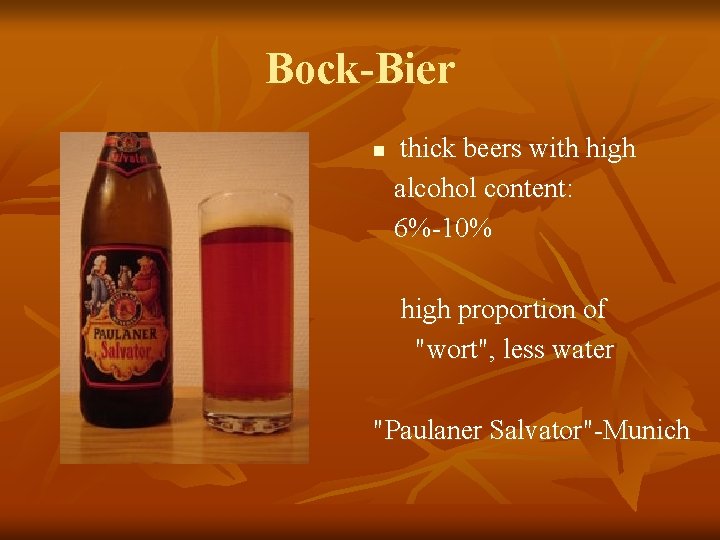
Bock-Bier n thick beers with high alcohol content: 6%-10% high proportion of "wort", less water "Paulaner Salvator"-Munich
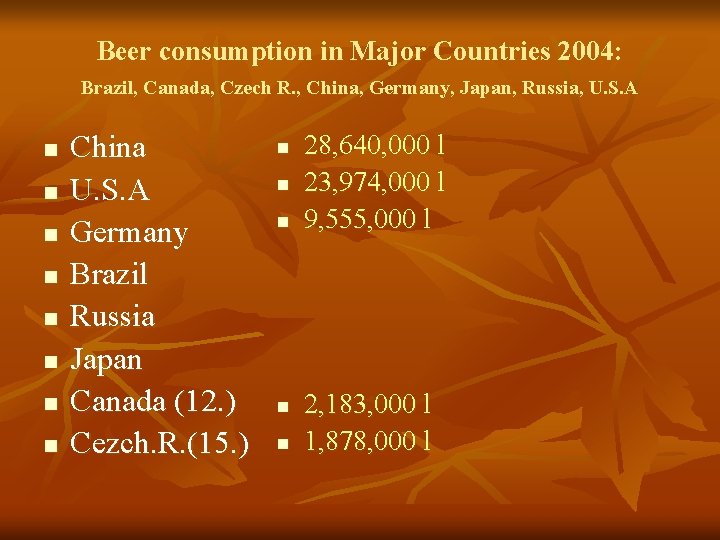
Beer consumption in Major Countries 2004: Brazil, Canada, Czech R. , China, Germany, Japan, Russia, U. S. A n n n n China U. S. A Germany Brazil Russia Japan Canada (12. ) Cezch. R. (15. ) n n n 28, 640, 000 l 23, 974, 000 l 9, 555, 000 l 2, 183, 000 l 1, 878, 000 l
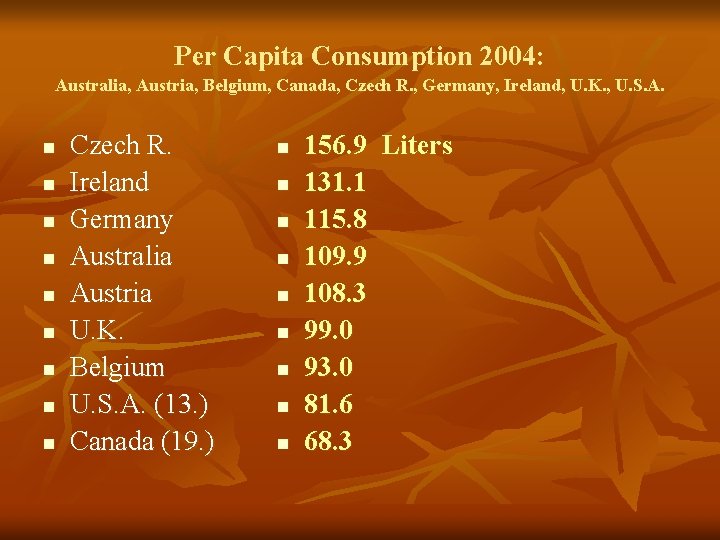
Per Capita Consumption 2004: Australia, Austria, Belgium, Canada, Czech R. , Germany, Ireland, U. K. , U. S. A. n n n n n Czech R. Ireland Germany Australia Austria U. K. Belgium U. S. A. (13. ) Canada (19. ) n n n n n 156. 9 Liters 131. 1 115. 8 109. 9 108. 3 99. 0 93. 0 81. 6 68. 3
- Slides: 14